Ann Language School
Ann Language School
- To station
- 1 min on foot · Higashi-Ikebukuro Station
- Dormitory fee
- From ¥23,000 per month ›
- Admission
- 4 times a year · choose your intake month ›
Compare side by side with other schools →
Tuition and conditions may change depending on the intake. If you contact us, we will check with the school and give you accurate details.
Nearby schools comparedBy distance · no ads or paid placement
- Ann Language SchoolThis schoolTuition/yr¥903,000Progression—IntakesJan · Apr · Jul · Oct
- Teikyo Heisei University Affiliated Japanese Language School0.4km›Tuition/yr—Progression96%IntakesApr · Oct
- Melos Language Academy0.8km›Tuition/yr¥904,000Progression—IntakesJan · Apr · Jul · Oct
- Tokyo International Exchange Institute Ikebukuro Campus0.8km›Tuition/yr¥928,000Progression85%IntakesApr · Oct
— means SALLAE has not yet found the data.
About the school
A school that focuses on progression to graduate schools and universities. Four of its 5 courses are progression courses (2 years, 1 year 9 months, 1 year 6 months, 1 year 3 months), and it also offers S classes chosen by selection exam, special classes for top universities, one-on-one coaching on graduate school research plans, and a drawing major for art university entrance exams (the school's 2021 page listed acceptances at the University of Tokyo and the Hitotsubashi University graduate school). It is in Toshima-ku, Tokyo, a 1-minute walk from Higashi-Ikebukuro Station, in an eight-story building the school owns, opened in 1989; the website lists a capacity of 800, and many students come from China, Vietnam and Myanmar. It has a school dormitory and mother-tongue consultation with staff from students' home countries.
Published data and school website
Tuition
If you saw a lower amount elsewhere, it may not include the admission fee and application fee
Median 1-year tuition in other areas — Kyoto ¥911,000(7 schools) · Kanagawa ¥880,000(8 schools) · Okinawa ¥858,000(6 schools) · Tokyo ¥840,600(56 schools) · Fukuoka ¥835,000(12 schools) · Hyogo ¥825,500(7 schools) · Osaka ¥814,000(27 schools) · Shizuoka ¥790,000(9 schools) · Chiba ¥745,333(10 schools) · Aichi ¥740,667(5 schools)
Total by intake
| Intake · length | Full course |
|---|---|
| January intake · 1 year 3 months | ¥1,083,000 |
| October intake · 1 year 6 months | ¥1,263,000 |
| July intake · 1 year 9 months | ¥1,443,000 |
| April intake · 2 years | ¥1,638,000 |
Cost details, tables by course and notes · 4 items
- One-time fees
- ¥903,000Tuition (1 year) ¥660,000 · Admission fee ¥55,000 · Application fee ¥30,000 · Materials and facilities (1 year) ¥60,000 · Extracurricular classes ¥15,000 · Other costs ¥53,000 · JLPT exam fee (¥7,500 per attempt) × 4 = ¥30,000
According to the school guide, one year's fees are paid in one lump sum at enrollment. SALLAE will check with the school whether you can pay in installments.
| Intake · course | Extra 2nd-year costs | All |
|---|---|---|
| January · 1 year 3 months | ¥180,000 | ¥1,083,000 |
| October · 1 year 6 months | ¥360,000 | ¥1,263,000 |
| Jul · 1 year 9 months | ¥540,000 | ¥1,443,000 |
| April · 2 years | ¥735,000 | ¥1,638,000 |
Costs paid in addition for the second year. The application fee and admission fee are not charged again. Second-year tuition ¥660,000, materials and facilities ¥60,000 (April intake). Extracurricular classes ¥15,000 apply to the April intake only; the others are ¥0
Tuition, Ikebukuro campus (from the July 2026 intake); 10% tax is included
Total including other costs: April intake ¥903,000, July intake ¥893,000, October intake ¥890,500, January intake ¥880,500
The table does not say what "other costs" include.
The tuition for the regular 2-year course is not in this table.
School website · 2025-12-16 updated
Admission & dates
- Apr intake
- 2-year course
- Jul intake
- 1 year 9 months course
- Oct intake
- 1 year 6 months course
- Jan intake
- 1 year 3 months course
Deadline and capacity rules
Applicants must have completed 12 or more years of school education or hold a qualification of equivalent level. Intakes are in January, April, July and October each year
School website · Confirmed 2026-09-26
Classes
- Class size
- Max 20 students
- Class assignment
- Level-based 9 levels
- Elective classes
- Math · Comprehensive subjects · Science · TOEIC and TOEFL · Entrance-exam English · Art major · EJU preparation: 1st session February–May, 2nd session July–October. Course fee ¥20,000 (as many times as you like while enrolled). The art major costs ¥330,000 per term
Materials · Subjects · Timetable · Details
- Materials
- Beginner: Minna no Nihongo I and II, J.BRIDGE / Intermediate: Chukyu e Ikou TRY N3, Chukyu o Manabou TRY N2 / Advanced: Bunka e no Manazashi, Choukai/Happyo Workbook
- Subject
- Hiragana and katakana · Basic kanji, Level 3 kanji, Level 2 kanji, Level 1 kanji · Beginner vocabulary and sentence patterns, intermediate vocabulary and sentence patterns, upper-intermediate vocabulary and sentence patterns, advanced vocabulary and sentence patterns · Communication skills · Building the four skills · Logical language ability · Academic language ability · Essay writing · Summarizing · Speeches · Discussion · Project work · Presentations · Debate Copied from the table of main learning content by level: beginner adds characters, basic kanji and beginner sentence patterns; intermediate adds essays, summaries, speeches and discussion; advanced adds project work, presentations and debate.
Beginner, intermediate and advanced levels are each divided into 1 to 3, with special classes and S classes (S1, S2). A team of 3 or 4 teachers teaches each class, and 1 of them is the homeroom teacher
What each level aims for · 3 levels
- Beginner
- 6–9 monthsThe goal is to gain the Japanese ability to handle simple everyday matters and what is needed in social life using basic beginner sentence patterns and vocabulary. Practice asking for directions at stations and department stores
- Intermediate
- 9 monthsThe goal is to understand plain texts on a given theme and write coherent texts. Students do group discussions, research activities and presentations
- Advanced
- 3–6 monthsStudents read general texts such as newspapers and magazines and grasp the main points. Project work ranging from debates and research activities to research reports (preparation for the EJU, N1 and N2)
School website · Confirmed 2026-09-26
Documents
- Admission application form
- Résumé
- Statement of reason for study
- Certificate of Japanese study
- Full copy of the family register
- Graduation certificate from your last school
- 1 copy of passport
- Photo8 color photos, 3 × 4 cm
Sponsor documents · Only if applicable
Submitted by the person paying the tuition (financial sponsor)
- Financial sponsorship statementPrescribed form
- Proof of sponsor's financial capacity
Only if applicable
- Certificate of leave of absence (if currently on leave)
The list ends with "etc." and is not complete. No document standards by nationality are given. SALLAE is confirming this with the school.
School website · Confirmed 2026-09-26
Admission process
- Request an admission consultation — For enrollment procedures, please consult us first.
- Document screening — Application forms and supporting documents are reviewed.
- Applicant interview — Student selection is by interview, held in person on site or online, and is fair, focusing on the student's ability to pay and motivation
- Guarantor interview — Guarantor interview
School website · Confirmed 2026-09-26
Short-term study
- Open now?
- Rolling admissions, so availability varies from time to time — SALLAE will confirm with the school
Course without a student visa
- Short-term students (those who already hold a status of residence) — For those who already hold a status of residence. In principle, 3-month terms, with intakes in April, July, October and January. After a level check, students study in the same classes as long-term students
- Business Japanese for working adults — Business Japanese for engineers and people in business diplomacy, plus business manners and plain Japanese for technical intern trainees and others
- Japanese experience tour — Programs from 1 day to about 1 month to suit your schedule. Japanese classes in the morning; cultural exchange, various experience courses (kimono, tea ceremony, etc.) and field trips in the afternoon
★Short-term courses are not listed in the published data — it counts only student-visa courses.
School website · 2021-08-18 updated
Reviews 7
External reviewAuto-translatedPersonal review · Google review · Oct 2025
I really recommend this school. The teachers are very nice and polite, and they teach really well.
이 학교 정말 추천해요. 선생님들이 아주 좋고 예의 바르고, 정말 잘 가르쳐 줘요.
External reviewAuto-translatedPersonal review · Google review · Aug 2025
My impression is that the staff are unfriendly and mean. I don't recommend this school. Compared to ordinary Japanese people, the staff are arrogant and nasty.
직원이 불친절하고 심술궂다는 인상이에요. 이 학교는 추천하지 않아요. 보통 일본 사람들과 비교하면 직원이 거만하고 못됐어요.
External reviewAuto-translatedPersonal review · Google review · Apr 2025
I didn't get any help from the teachers, the timer for checking attendance is old and a hassle, and the various procedures take a very long time, which is annoying. The way they divide the classes is also strange. This is not a school I recommend!
선생님에게 도움을 받지 못했고, 출석을 체크하는 타이머도 낡아서 번거롭고, 이런저런 절차도 시간이 아주 오래 걸려서 귀찮아요. 반을 나누는 방식도 이상해요. 추천하는 학교가 아니에요!
External reviewAuto-translatedPersonal review · Google review · Nov 2020
The Chinese teacher is really reliable! They solve all kinds of problems and often take the Chinese students' side. That's rare at other schools... The teacher even demands rights from the school on behalf of the students.
중국인 선생님이 정말 든든해요! 여러 가지 일을 해결해 주고, 중국 학생 편을 많이 들어 줘요. 다른 학교에선 드문 일이에요… 선생님이 학생을 위해 학교에 권리를 요구해 주기도 해요.
External reviewAuto-translatedPersonal review · Google review · Oct 2020
I attended a 3-month course during my working holiday in 2008, and I made friends and became close with the teachers during that time, so it remains a good memory for me.
2008년 워킹홀리데이 중에 3개월 과정으로 다녔는데, 그동안 친구도 사귀고 선생님들과도 친해져서 좋은 기억으로 남아 있어요.
External reviewAuto-translatedPersonal review · Google review · Mar 2020
It's a very good school. I studied at this school for 2 years. The teachers are really kind, too. I'm grateful to all the teachers and staff at this school. I really enjoyed my time studying here.
아주 좋은 학교예요. 저는 이 학교에서 2년 동안 공부했어요. 선생님들도 정말 다정해요. 이 학교 선생님과 직원 여러분께 고마워요. 여기서 공부하는 동안 정말 즐거웠어요.
External reviewAuto-translatedPersonal review · Google review · Feb 2020
I recommend this school. There are many staff members from other countries, which is great for foreign students like us. For example, I'm from Myanmar, and the Myanmar staff are kind and help with everything, so I don't worry even if a problem comes up. The teachers also teach well, so I think it's a good school for me. Thank you.
이 학교 추천해요. 다른 나라 출신 직원이 많아서 우리 같은 외국인 학생에게 좋아요. 예를 들어 저는 미얀마 사람인데, 미얀마 직원들이 친절하고 뭐든 도와줘서 문제가 생겨도 걱정하지 않아요. 선생님들도 잘 가르쳐 줘서 저한테 좋은 학교라고 생각해요. 고마워요.
External reviews are public posts that SALLAE collected and rewrote in the writer’s own voice. SALLAE keeps the original links.
University prep
- Career homeroom — About 10 "career homeroom" sessions are held a year, with guidance from finding a target school to interview preparation. July and October intake students also get pull-out guidance
- Graduate school progression guidance — A graduate school information session is held on entry, followed by one-on-one guidance between teacher and student. A professor emeritus of Tohoku University is on the full-time staff
- Interview practice — Guidance on what is commonly asked in interviews, how to answer, and manners in dress and behavior. Before the exam, interview practice is held many times, led by the homeroom teacher
- Study counseling — Each term, study counseling is held, giving advice suited to each person on study progress, study methods and career options
- Vocational school trial classes — On Dec 5, a further-study guidance session for beginner classes. Four vocational schools took part, and students split up to try a sample class at each school
- Welfare vocational school with tuition waiver — Passed Japan Welfare Education College with about N3. While enrolled, worked part-time at Jiseikai (hourly wage ¥1,050–1,350); working for 5 years after graduation waives tuition of ¥1,500,000 and a loan of ¥600,000
- Job placement — We support not only our own graduates but also foreign students, working adults and others who want to work in Japan.
Schedule to admission
- Setting your goal
- Early April · The school explains the year ahead and the schedule up to admission, and clarifies each student's goal.
- Writing the application
- Early June · The school teaches how to fill in application forms. Students also start considering schools that fit their future goals.
- Choosing where to apply
- Late June · Students consider schools that fit their future goals.
- Choosing target schools
- July · Students attend joint progression information sessions, hear directly from universities and other schools, and actively join open campuses, then decide on their first to third choices
- Interview basics
- Early August · Students learn the basics of conduct, manners and answering questions in an interview.
- Interview prep by school
- Mid-August · Students prepare for interviews for each of their target schools.
- Statement of purpose
- Late August · The school teaches how to write a statement of purpose. Students begin writing one tailored to their target school.
- Corrections, individual guidance
- From early September · The school corrects and polishes the statement of purpose until it is complete. Interview practice also begins. · After that, the school gives individual guidance tailored to each student's target school, including application preparation and interview practice, until admission
- Graduate school, step 1
- From April · Consult teachers and decide on a research topic / Consult teachers and choose target schools (those that fit your research topic) · Attend progression consultation sessions (you may be able to meet professors) / Contact graduate school professors · Take the TOEFL and TOEIC · Some graduate schools accept applications at this time (Waseda, Keio and others)
- Graduate school, step 2
- From May · Write a research plan and study your specialty and languages (Japanese, English) · Collect documents for application / Apply (some universities have early application periods, especially in the sciences) · Practice past exams and interviews
- Graduate school, step 3
- From July to March of the following year · Take exams, receive admission results and complete enrollment procedures · Visa change procedures
School website · 2021-08-18 updated
Daily-life support
- Native-language consultation — Staff from students' home countries at the 1st-floor office can help in your own language: English, Chinese, Vietnamese, Mongolian, Nepali, Burmese and Hindi
- Accompaniment to the hospital — Staff who can accompany students to the hospital when they are ill are always on site
- Life guidance — A guide to daily-life guidance has been prepared and is explained at orientation. A system is in place so students can ask for advice at any time
- Disaster and crime prevention — Disaster-prevention talks and drills, and an emergency manual. On Dec 8, 2023, Mejiro Police Station gave a crime-prevention seminar on fraud
- Airport pickup — Free transfer from Narita International Airport to the dormitory on your first arrival in Japan (only on dates designated by the school)
- Can I commute to school by bicycle? — There is a ward-run bicycle parking lot near the school. Use costs about ¥6,000–12,000 for 1 year. Parking registration is required
- Commuter pass — Student discounts apply only in some cases. You can buy commuter passes for school on Toei buses, the Toden Arakawa Line and Toei subways
Bicycles and commuter passes are copied from the Q&A shared by the 4 campuses; hospital escort and daily-life guidance are copied from the 2024 Ikebukuro self-evaluation sheet.
School website · Confirmed 2026-09-26
Scholarship
⚠ The honor student award amount differs by source. Please confirm with the school. An Language School outstanding student award ¥20,000 (once during enrollment) · Ikebukuro campus page (Aug 2021): ¥30,000. It is not stated which is the current amount.
- Ann Language School Scholarship
- Monthly ¥20,000 × 1 yearSelected from model students with 100% attendance, excellent grades and good study attitude who have kept up their effort since enrollment; the school pays ¥20,000 per month (every 3 months) for 1 year
- Learning incentive payment system for privately financed international students (MEXT)
- Monthly ¥30,000 × 1 yearSelected from students with excellent grades and good study attitude who aim to go on to further study after Japanese language school. ¥30,000 per month for 1 year from the Ministry of Education, Culture, Sports, Science and Technology. Many students from this school receive it
- Reservation system for the scholarship for privately financed international students (MEXT)
- Monthly ¥30,000 × 1 yearSelected from students with excellent Japan Student Examination results who aim to go on to further study at their own expense after Japanese language school. Paid after entering the further-study school by MEXT, ¥30,000 per month (for 1 year)
- Kyoritsu Maintenance Co., Ltd. Scholarship Fund
- Monthly ¥60,000 × 1 yearSelected from students with excellent grades, good study attitude and high Japanese ability. ¥60,000 per month for 1 year from the foundation. The school is registered as 1 of 46 schools eligible for the scholarship
- Ann Language School outstanding student award
- ¥20,000 OnceSelected each term from students with excellent grades and good study attitude; they are honored with an award and the school gives a ¥20,000 incentive (once during enrollment)
- Ann Language School perfect attendance award
- ¥5,000 Once Open to all students with 100% attendance over 6 months and no late arrivals or early departures. They are honored with an award and the school gives a ¥5,000 incentive (as many times as you like if perfect attendance continues)
- Chairman's Award
- ¥20,000 OnceFor students selected as model students in every aspect of life, with excellent grades and good study attitude throughout their enrollment. ¥20,000 at graduation
- Class S university scholarship
- ¥100,000 OnceUniversity of Tokyo, Kyoto University / Enrolled at this school for at least 1 year and with attendance of 90% or higher / Paid after entering the school you progress to (from April on); student ID required / For those entering a 4-year undergraduate program
- Class A university scholarship
- ¥70,000 OnceHokkaido University, Tohoku University, Kyushu University, University of Tsukuba, Osaka University, Tokyo Institute of Technology, Tokyo University of Foreign Studies, Yokohama National University, Hitotsubashi University, Keio University, Waseda University, Sophia University
- Class B university scholarship
- ¥50,000 OnceChiba University, Kobe University, Nagoya University, Kyoto Prefectural University, Ochanomizu University, International Christian University, Aoyama Gakuin University, Tokyo University of Science, Rikkyo University, Meiji University, Chuo University, Hosei University, Doshisha University, Ritsumeikan University
- Class C university scholarship
- ¥30,000 OnceTokyo University of Agriculture and Technology, University of Electro-Communications, Tokyo University of the Arts, Osaka Prefecture University, Osaka City University, Nagoya City University, Shiga University, Shizuoka University, Kanazawa University, Okayama University, Kumamoto University, Tokyo Gakugei University, Saitama University, Yokohama City University, Hiroshima University, Ibaraki University, Nara Women's University, Gakushuin University, Tokyo University of Marine Science and Technology, Tsuda University, Kwansei Gakuin University, Kansai University, Kindai University
- EJU score incentive, S: 350–400
- ¥30,000 Once Based on the 2021 Ikebukuro campus page (all of the EJU and JLPT incentives below).
- EJU score incentive, A: 300–349
- ¥20,000 Once
- EJU score incentive, B: 250–299
- ¥10,000 Once
- EJU score incentive, C: 200–249
- ¥5,000 Once
- JLPT score incentive, N1
- ¥20,000 Once
- JLPT score incentive, N2
- ¥7,000 Once
- JLPT score incentive, N3
- ¥2,000 Once
School website · Confirmed 2026-09-26
School life
For 1 year
- 4
- Entrance ceremony, orientation · Further-study information session
- 5
- Field trip
- 6
- Term-end exams · EJU · Summer break
- 7
- Entrance ceremony, orientation · JLPT · Further-study information session
- 8
- Industrial facility tour
- 9
- Term-end exams · Autumn break
- 10
- Entrance ceremony, orientation · Further-study information session
- 11
- Examination for Japanese University Admission for International Students (EJU)
- 12
- JLPT · Term-end exams · Winter break
- 1
- Entrance ceremony and orientation · Welcome party for new students
- 2
- Lunar New Year party · Further-study information session
- 3
- Term-end exams · Completion ceremony · Spring break
Spring term starts Apr 12, summer term Jul 12, autumn term Oct 11, winter term Jan 11
- New students join a day-trip event to Tokyo Disneyland. In 2023 it was Yokohama Hakkeijima Sea Paradise
- Field trip to Fuji-Q Highland (May 17, 2024). The 2023 field trip was also to Fuji-Q Highland
- Class field trips to places such as the National Museum of Nature and Science, Koishikawa Korakuen Garden and Axel Aqua Park Shinagawa
- Lunar New Year party and exchange events
- Outstanding-student awards are chosen each term; perfect-attendance awards go to students with 100% attendance over 6 months and no late arrivals or early departures
- Optional cultural courses: tea ceremony (taught by Prof. Soju Ezura, Omotesenke) and flower arranging (ikebana)
- The school actively engages with the community, for example by visiting elementary schools in the ward
- Vietnamese instant noodles donated by Acecook, and long-life bread provided in kind through the Japan Student Services Organization's food support program
- A new school building was completed in January 2020, an eight-story building owned by the school
- Any graduate can register with the alumni association and attend the alumni party held every 2 years
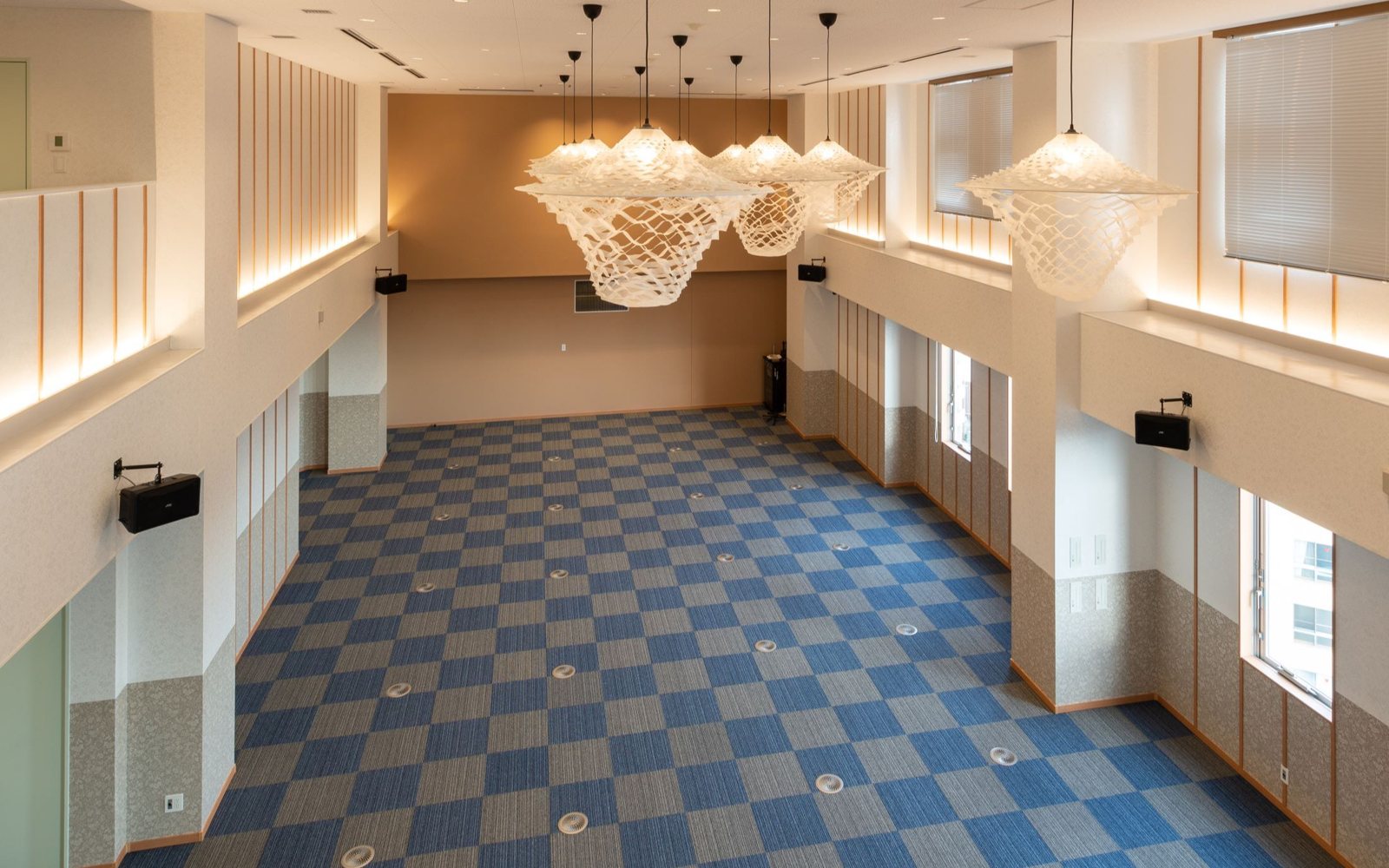
On campus
- 1st floor
- Administration office and reception lobby — A wide counter lets students talk calmly about problems or things they want advice on, with staff from students' home countries on hand
- Library room — A library with many Japanese-language materials. You can use your own laptop by connecting a LAN cable
- Self-study room
- Lounge
- Rooftop plaza
Academic calendar
- Saturdays, Sundays and public holidays
- · Based on the 2021 An Language School student calendar
- Spring break
- About 20 days
- Summer vacation
- About 15 days
- Obon holiday
- 6 days
- Autumn break
- About 15 days
- Winter break
- About 23 days · You can return home temporarily during long school breaks
School website · Confirmed 2026-09-26
Access
- Transit
- Tokyo Metro Yurakucho Line Higashi-Ikebukuro Station, 1 min walk Exit 3
Tokyo Sakura Tram (Toden Arakawa Line) Higashi-Ikebukuro-yonchome Station on foot 1 min
JR Yamanote Line, Ikebukuro Station, 10 min walkEast exit - Nearby
- Ikebukuro East Exit (Sunshine 60). It is a 15-second walk from Exit 3 of Higashi-Ikebukuro Station, and you only cross a 6 m-wide road, so you can get to school almost without getting wet in the rain
- Dormitory
- Available · Dormitory fee ¥23,000–60,000 per month; utilities ¥5,000 per month (settled at actual cost). Buildings: Dai-9 Namiki Heim, Yamaguchi Building, Sugar Hills I, Palace Minami-Ikebukuro, Heim Pegasus, Kawaguchi Building · Based on school website
School website · Confirmed 2026-09-26
Dormitory — Initial move-in costs: dormitory entry fee (1 month's rent, non-refundable on move-out), management fee ¥10,000, 3 months' rent (non-refundable even if you leave mid-term), utilities ¥15,000 (for 3 months, settled monthly)
School website · Confirmed 2026-09-26
SALLAE has organized the school website and published data in English.
The update date is the day that material was last revised.
Photos are materials published by the school.
This information is compiled from official sources and is not updated daily. Please confirm with the official contact before signing or applying.