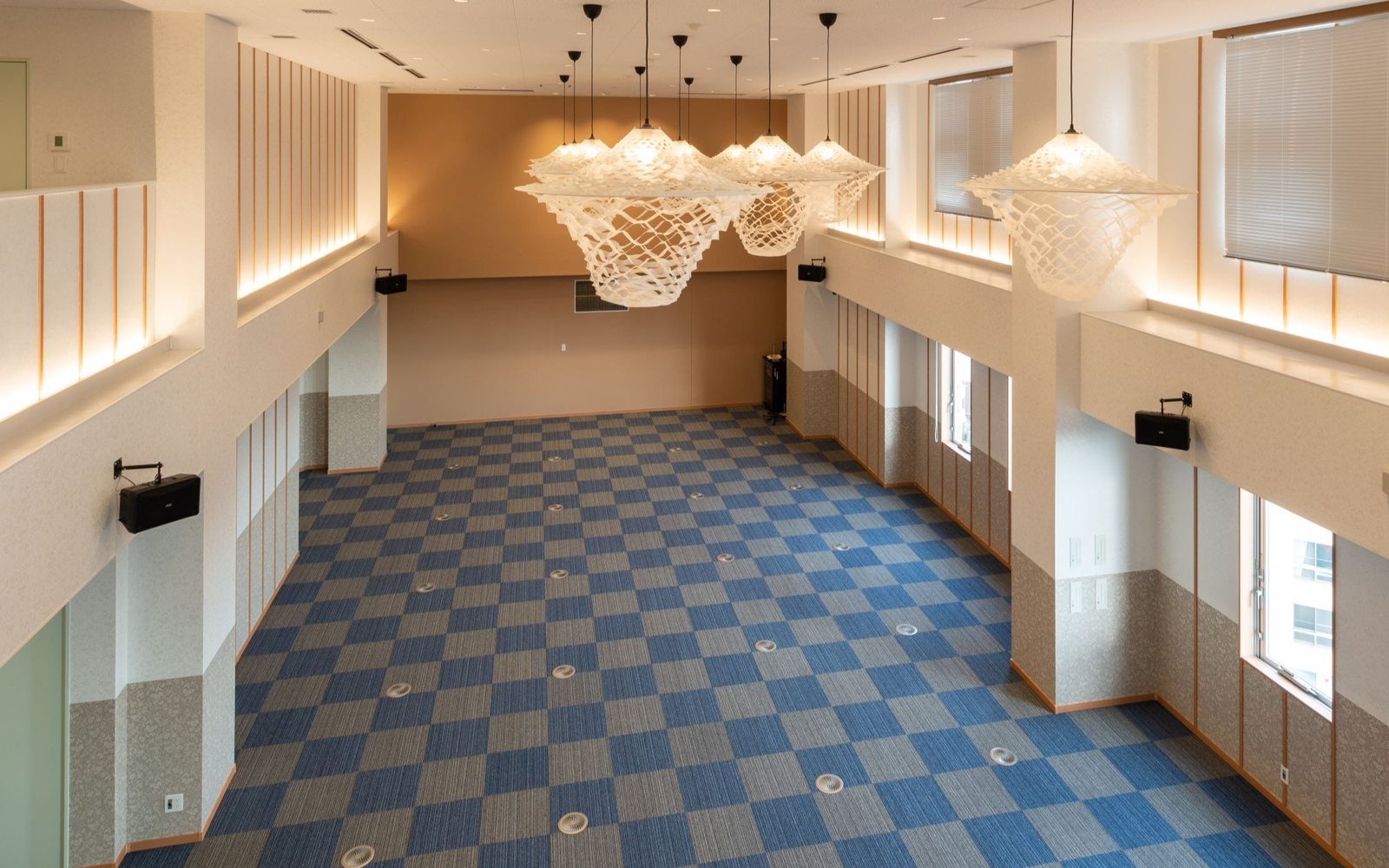
Ann Language School Narimasu Campus
Ann Language School Narimasu Campus
- Course
- Further-study course only
- Tuition
- On the cheaper side for Tokyo ›
- To station
- 3 min on foot · Narimasu Station
- Dormitory fee
- From ¥25,000 per month ›
Compare side by side with other schools →
Tuition and conditions may change depending on the intake. If you contact us, we will check with the school and give you accurate details.
Nearby schools comparedBy distance · no ads or paid placement
- Ann Language School Narimasu CampusThis schoolTuition/yr¥727,000Progression84%IntakesJan · Apr · Jul · Oct
- Kokusho Japanese Language School5.1km›Tuition/yr¥880,000Progression78%IntakesJan · Apr · Jul · Oct
- Chuo College of Information Technology7.1km›Tuition/yr¥736,000Installments OKProgression77%IntakesApr · Oct
- TCC Japanese Language School7.6km›Tuition/yr¥673,000Progression—IntakesJan · Apr · Jul · Oct
— means SALLAE has not yet found the data.
About the school
A school that focuses on progression to universities and vocational schools. All 4 of its study-abroad courses (2 years, 1 year 9 months, 1 year 6 months, 1 year 3 months) are progression courses, and in the school's May 2026 report, 106 of the 146 students who completed the course in FY2025 went on to universities, vocational schools and the like. It is an An Language School campus opened in 2009, a 3-minute walk from Narimasu Station on the Tobu Tojo Line, with several student dormitories with furniture and appliances within walking distance. Most students come from Vietnam, Myanmar and Sri Lanka.
Published data and school website
Tuition
If you saw a lower amount elsewhere, it may not include the admission fee and application fee
Median 1-year tuition in other areas — Kyoto ¥911,000(7 schools) · Kanagawa ¥880,000(8 schools) · Okinawa ¥858,000(6 schools) · Tokyo ¥840,600(56 schools) · Fukuoka ¥835,000(12 schools) · Hyogo ¥825,500(7 schools) · Osaka ¥814,000(27 schools) · Shizuoka ¥790,000(9 schools) · Chiba ¥745,333(10 schools) · Aichi ¥740,667(5 schools)
Total by intake
| Intake · length | Full course |
|---|---|
| 1 year 3 months | ¥883,000 |
| 1 year 6 months | ¥1,039,000 |
| 1 year 9 months | ¥1,194,000 |
| 2 years | ¥1,350,000 |
Cost details · Course tables · Notes
- Per term
- ¥155,667 3 months
- One-time fees
- ¥104,665Application fee · Admission fee
| Duration | Total |
|---|---|
| 1 year 3 months | ¥883,000 |
| 1 year 6 months | ¥1,038,667 |
| 1 year 9 months | ¥1,194,334 |
| 2 years | ¥1,350,001 |
★"Per term" and "One-time at start" were calculated by SALLAE from each course's total. The courses this school actually offers are 1 year 3 months onward — all amounts in the table are values calculated by SALLAE.
Calculated by SALLAE · verified 2026-09-16
Admission & dates
- Apr intake
- 2-year course
- Jul intake
- 1 year 9 months course
- Oct intake
- 1 year 6 months course
- Jan intake
- 1 year 3 months course
Deadline and capacity rules
Intakes are in January, April, July and October each year (the short 3-month course also starts in April, July, October and January, i.e. months 4,7,10,1). Applicants must have completed 12 or more years of school education or hold an equivalent qualification. Selection consists of document screening, an applicant interview and a guarantor interview.
School website · Confirmed 2026-09-26
Classes
- Class assignment
- Level-based 8 stages
Materials · Subjects · Timetable · Details
- Materials
- Beginner: Minna no Nihongo I and II, J.BRIDGE; intermediate: Chukyu e Ikou, TRY N3, Chukyu o Manabou, TRY N2; advanced: Bunka e no Manazashi and others.
Each class is handled by a team of 3 or 4 teachers, 1 of whom is the homeroom teacher. Class size is roughly 15–20 students.
What each level aims for · 3 levels
- Beginner I–III
- 6–9 monthsThe goal is to handle everyday and social-life matters using basic beginner sentence patterns and vocabulary. Practice includes asking for directions at stations and department stores.
- Intermediate I–III
- 9 monthsAt intermediate level, students learn to speak at some length and coherently and to handle interpersonal communication such as requests, permission and apologies. They do group discussions, research and presentations.
- Advanced I–II
- 3–6 monthsAt advanced level, students learn to state logical opinions on social topics and to read newspapers, magazines and similar texts and grasp the main points. Debates and project work.
School website · Confirmed 2026-09-26
Documents
- Admission application form
- Résumé
- Statement of reason for study
- Certificate of Japanese study
- Full copy of the family register
- Graduation certificate from your last school
- 1 copy of passport
- Photo8 color photos, 3 × 4 cm
Sponsor documents · Only if applicable
Submitted by the person paying the tuition (financial sponsor)
- Financial sponsorship statementPrescribed form
- Proof of sponsor's financial capacity
Only if applicable
- Certificate of leave of absence (if currently on leave)
The list of documents to submit ends with "photos (color, 3 × 4 cm, 8 copies), etc." SALLAE is confirming this with the school.
School website · Confirmed 2026-09-26
Admission process
- Request an admission consultation — Inquire by email form or phone (weekdays, Monday–Friday, 9:00–17:00; closed on school holidays and public holidays). There is also a materials request form.
- Submit application documents — Submit the application form, résumé, statement of reasons for study, proof of Japanese study, financial sponsorship statement (prescribed form), family register copy and other documents.
- Document screening — Document screening
- Interview — Selection consists of an applicant interview and a guarantor interview. Interviews are held in person or online.
- Placement test
- Classes are formed based on a combination of test results, how well students keep up in class, and their own wishes.
School website · Confirmed 2026-09-26
Short-term study
- Open now?
- Rolling admissions, so availability varies from time to time — SALLAE will confirm with the school
★Short-term courses are not listed in the published data — it counts only student-visa courses.
School website · Confirmed 2026-09-26
Graduate outcomes
| FY2025 | Admitted |
|---|---|
| Employment | 9 students |
| Graduates | 146 students |
All schools accepted to so far
See 15 more schools
+55 more schools
Prepared May 13, 2026. 146 completers, 126 meeting the criteria (86.3%), 0 withdrawals. Progression 106, change of status of residence 9, test certificates 59. · Approved changes to a Schedule I status of residence under the Immigration Control Act: 2-year progression course 2, 1-year 9-month course 2, 1-year 6-month course 5. · School website · Updated 2026-05-15
Reviews
If you study here or used to, tell others what the classes, teachers and daily life were like. It helps anyone deciding on this school.
Write the first reviewUniversity prep
- Career guidance — Homeroom teachers, career guidance staff and other teachers give guidance together.
- Study counseling — Each term, study counseling is held, giving advice suited to each person on study progress, study methods and career options.
- Progression information session — Information sessions are actively held on campus, and attendance off campus is also supported. In the annual calendar, further-study information sessions are in April, July, October and February.
- Interview practice — Guidance on what is commonly asked in interviews, how to answer, and manners in dress and behavior; before the exam, interview practice is held many times, led by the homeroom teacher.
- Graduate school progression guidance — A graduate school information session is held on entry, followed by individual guidance between teacher and student on research themes, research plans and contact with supervising professors.
- Supplementary classes for achieving your career goals — Supplementary entrance-exam classes are held for those who want them and have been effective.
- Application support — Application support is given in a way that fosters independence, matched to each student's ability.
- Exam prep courses (EJU, English) — You can take courses for the EJU (mathematics, comprehensive subjects, science) and for TOEIC, TOEFL and entrance-exam English.
School website · Confirmed 2026-09-26
Daily-life support
- Staff from China, Vietnam, Myanmar, Nepal and other countries — Staff from China, Vietnam, Myanmar, Nepal and other countries support all aspects of student life abroad.
- Airport pickup — Free transfer from Narita International Airport to the dormitory on your first arrival in Japan (only on dates designated by the school)
- Reliable health support — Guidance is given each term, and a health checkup is held once a year.
- Support in case of illness, injury or accidents — In case of illness, injury or accident, support in your native language is given quickly by phone or social media. A native-language contact and support system is also in place for emergencies.
- Support for understanding and adapting to Japanese society — Done in class and in individual interviews. Daily-life safety classes are held.
- Guidance on complying with the Immigration Control Act — Alongside whole-school guidance each term, it is also given daily in students' native languages.
- Disaster drill — Guidance is given daily, and a drill is held once a year.
- Commuter pass — Student discounts apply only in some cases. You can buy commuter passes for school on Toei buses, the Toden Arakawa Line and Toei subways.
- Can I commute to school by bicycle? — There is a ward-run bicycle parking lot near the school; use costs about ¥6,000–12,000 for 1 year. Parking registration is required.
Self-evaluation form: FY2023
School website · 2024-05-09 updated
Scholarship
- Ann Language School outstanding student award
- ¥20,000 OnceEach term, students with excellent grades and good study attitude are selected, and the school gives a ¥20,000 incentive. Once only during enrollment.
- Ann Language School perfect attendance award
- ¥5,000 Once Open to all students with 100% attendance over 6 months and no late arrivals or early departures. ¥5,000 incentive. As many times as you like if perfect attendance continues.
- Learning incentive payment system for privately financed international students
- Monthly ¥30,000 × 1 yearSelected from students with excellent grades and good study attitude who aim to go on to further study after completion. ¥30,000 per month for 1 year from the Ministry of Education, Culture, Sports, Science and Technology. Many students from this school receive it.
- Reservation system for the scholarship for privately financed international students
- Monthly ¥30,000 × 1 yearSelected from students with excellent Japan Student Examination results who aim to go on to further study at their own expense after completion. After entering the further-study school, MEXT pays ¥30,000 per month.
- Ann Language School Scholarship
- Monthly ¥20,000 × 1 yearSelected from model students with 100% attendance, excellent grades and good study attitude who have kept up their effort since enrollment. The school pays ¥20,000 per month (every 3 months) for 1 year.
- Kyoritsu Maintenance Co., Ltd. Scholarship Fund
- Monthly ¥60,000 × 1 yearSelects students with excellent grades, good study attitude and strong Japanese ability. ¥60,000 per month for 1 year from the foundation. One of 46 schools eligible for the scholarship.
- Chairman's Award
- ¥20,000 Once¥20,000 at graduation for students selected as model students in every aspect of life, with excellent grades and good study attitude throughout their enrollment.
- Class S university scholarship
- ¥100,000 OnceFor those entering the University of Tokyo or Kyoto University. Enrolled at this school for at least 1 year and with attendance of 90% or higher. Paid after entering the school you progress to (from April on) on presentation of a student ID.
- Class A university scholarship
- ¥70,000 OnceHokkaido University, Tohoku University, Kyushu University, University of Tsukuba, Osaka University, Tokyo Institute of Technology, Tokyo University of Foreign Studies, Yokohama National University, Hitotsubashi University, Keio University, Waseda University, Sophia University
- Class B university scholarship
- ¥50,000 OnceChiba University, Kobe University, Nagoya University, Kyoto Prefectural University, Ochanomizu University, International Christian University, Aoyama Gakuin University, Tokyo University of Science, Rikkyo University, Meiji University, Chuo University, Hosei University, Doshisha University, Ritsumeikan University
- Class C university scholarship
- ¥30,000 OnceTokyo University of Agriculture and Technology, University of Electro-Communications, Tokyo University of the Arts, Osaka Prefecture University, Osaka City University, Nagoya City University, Shiga University, Shizuoka University, Kanazawa University, Okayama University, Kumamoto University, Tokyo Gakugei University, Saitama University, Yokohama City University, Hiroshima University, Ibaraki University, Nara Women's University, Gakushuin University, Tokyo University of Marine Science and Technology, Tsuda University, Kwansei Gakuin University, Kansai University, Kindai University
School website · Confirmed 2026-09-26
Students
265 enrolled (2025) · Capacity 320 National median: 180 students
Based on the 265 students enrolled in 2025.
Public data from the Association for the Promotion of Japanese Language Education (Nisshinkyo) · verified 2026-09-20
School life
For 1 year
- Apr
- Entrance ceremony, orientation · Further-study information session
- May
- Field trip
- Jun
- Term-end exams · EJU · Summer break
- Jul
- Entrance ceremony, orientation · JLPT · Further-study information session
- Aug
- Industrial facility tour
- Sep
- Term-end exams · Autumn break
- Oct
- Entrance ceremony, orientation · Further-study information session
- Nov
- Examination for Japanese University Admission for International Students (EJU)
- Dec
- JLPT · Term-end exams · Winter break
- Jan
- Entrance ceremony and orientation · Welcome party for new students
- Feb
- Lunar New Year party · Further-study information session
- Mar
- Term-end exams · Completion ceremony · Spring break
- Events introduced with photos: entrance ceremony, field trips, Lunar New Year party, exchange events, sports day and completion ceremony.
- As part of off-campus activities there are school trips, overnight and day trips, to experience living Japanese language and culture.
- The school supports participation in exchange activities with the local community and with elementary schools.
- You can return home temporarily during long school breaks. For overseas travel, you must obtain a visa at that country's embassy.
- Register with the alumni association and join the alumni party held every 2 years!
On campus
- Classroom
- Library room — If you connect a LAN cable in the library, you can also use your own laptop.
- Counseling room
- Lounge
Academic calendar
- Spring break
- About 20 days
- Summer vacation
- About 15 days
- Obon holiday
- 6 days
- Autumn break
- About 15 days
- Winter break
- About 23 days
School website · Confirmed 2026-09-26
Access
- Transit
- Tobu Tojo Line Narimasu Station, 3 min walk
Tokyo Metro, Narimasu Station, 6 min walk - Nearby
- About 10 minutes by train from Narimasu to Ikebukuro. The 600,000 m² Hikarigaoka Park is about 10 minutes from the station. Opened in October 2009.
- Dormitory
- Available¥30,000–60,000 per month · Student dormitories furnished with furniture and appliances. Example dormitory fees are ¥30,000 and ¥25,000 per month. There are several within walking distance of the school. · Based on school website
School website · Confirmed 2026-09-26
Student dormitory — At move-in you need to pay the dormitory entry fee (1 month's rent, non-refundable), a management fee of ¥10,000, 3 months' rent, utilities of ¥15,000 (for 3 months) and ¥10,000 for bedding.
School website · Confirmed 2026-09-26
SALLAE has organized the school website and published data in English.
The update date is the day that material was last revised.
Photos are materials published by the school.
This information is compiled from official sources and is not updated daily. Please confirm with the official contact before signing or applying.