Aoyama School of Japanese
Aoyama School of Japanese
- Employment results
- Employment, etc.: 18% ›
- Course
- Further-study course only ›
- Tuition
- On the cheaper side for Tokyo ›
- Progression
- Universities etc. 58% · National median 86% ›
Compare side by side with other schools →
Tuition and conditions may change depending on the intake. If you contact us, we will check with the school and give you accurate details.
Nearby schools comparedBy distance · no ads or paid placement
- Aoyama School of JapaneseThis schoolTuition/yr¥787,000Progression58%IntakesApr · Jul · Oct
- Coach Academy Second Affiliated Japanese Language School2.2km›Tuition/yr¥890,000Progression95%IntakesJan · Apr · Jul · Oct
- Tokyo Sanritsu Gakuin2.9km›Tuition/yr¥786,000Progression86%IntakesJan · Apr · Jul · Oct
- International Humanities and Foreign Languages Institute5.1km›Tuition/yr¥818,000Progression—IntakesJan · Apr · Jul · Oct
— means SALLAE has not yet found the data.
About the school
A school where more than half of completers go on to further study. In FY2025, 26 of the 46 completers went on to universities and the like, and 8 changed their status of residence for employment and so on. Students who want further study get individual guidance from choosing a school through the entrance exam. A small school that opened in Shibuya and Aoyama in 1976, it moved to Kyodo, Setagaya-ku in 2022 and is in a residential area a 10-minute walk from Kyodo Station on the Odakyu Line. It uses its own materials, holds classes in 4 periods of 50 minutes in the morning and afternoon, and introduces student residence halls (breakfast and dinner included), share houses and furnished apartments.
Published data and school website
Tuition
If you saw a lower amount elsewhere, it may not include the admission fee and application fee
Median 1-year tuition in other areas — Kyoto ¥911,000(7 schools) · Kanagawa ¥880,000(8 schools) · Okinawa ¥858,000(6 schools) · Tokyo ¥840,600(56 schools) · Fukuoka ¥835,000(12 schools) · Hyogo ¥825,500(7 schools) · Osaka ¥814,000(27 schools) · Shizuoka ¥790,000(9 schools) · Chiba ¥745,333(10 schools) · Aichi ¥740,667(5 schools)
Admission & dates
- Apr intake
- 2-year course
- Jul intake
- 1 year 9 months course
- Oct intake
- 1 year 6 months course
- Japanese level
- JLPT N5
October 2022 intake flyer: JLPT N5 required for admission. Current long-term course guide: learn hiragana and katakana before arriving in Japan.
Deadline and capacity rules
Intakes are 3 times a year: April, July and October. Ask the school about the application period and capacity.
School website · 2026-06-16 updated
Classes
- Morning
- 09:00-12:40 Each class hour is 50 minutes, 4 periods a day
- Afternoon
- 13:30-17:10 Each class hour is 50 minutes, 4 periods a day
- AM/PM placement
- Classes are divided into morning and afternoon classes.
- Elective classes
- EJU preparation course (for those who wish to take it) · JLPT preparation course (for those who wish to take it) · Students who want to can also take preparation courses for the EJU or the JLPT.
Materials · Subjects · Timetable · Details
- Materials
- Aoyama School original materials: basic = Nihongo I and II; intermediate = Nihongo III and IV, Reader I; advanced = second half of Nihongo IV, Reader II, plus newspapers, magazines, novels and video.
- Subject
- Grammar · Characters · Conversation · Listening · Writing · Reading material · The basic course covers grammar, characters, conversation, listening, composition and reading. At intermediate level reading and listening increase, with weekly composition guidance.
Class hours, long-term course morning classes
| Time | |
|---|---|
| Period 1 | 09:00-09:50 |
| Period 2 | 09:55-10:45 |
| Period 3 | 10:55-11:45 |
| Period 4 | 11:50-12:40 |
Class hours, long-term course afternoon classes
| Time | |
|---|---|
| Period 1 | 13:30-14:20 |
| Period 2 | 14:25-15:15 |
| Period 3 | 15:25-16:15 |
| Period 4 | 16:20-17:10 |
Students new to Japanese spend a few months on the basics, with supplementary lessons by proficiency. 4 periods a day, closed on weekends and public holidays. Learn hiragana and katakana before arriving in Japan.
What each level aims for · 3 levels
- Basic
- The basic course builds the four skills of reading, writing, speaking and listening. Nihongo I covers basic sentence structures and verb conjugation; Nihongo II adds complex and compound sentences, honorific language and vocabulary.
- Intermediate
- Students learn more advanced grammar, kanji and vocabulary, read texts and can handle fairly complex everyday conversation. They study spoken and written language, with weekly composition guidance.
- Advanced
- Reading newspapers and novels, writing reports, listening to news and dramas, and the expressive ability to hold discussions. Students who want to go on to further study aim for Japanese that is fully sufficient at their destination school.
School website · 2026-06-16 updated
Documents
- Admission application formSchool's prescribed form, with a photo attached
- RésuméFilled in by the applicant; list every trip to Japan if you have been before
- Graduation certificate from your last school (original)Returned after the procedure is finished
- Transcript from last school attended
- 6 photos3 × 4 cm, with name and nationality written on the back
- Copy of passport
Sponsor documents · 6 application requirements
Submitted by the person paying the tuition (financial sponsor)
- Financial sponsorship statementSchool form
- Deposit balance certificate
- Family documents showing the relationship to the applicantFamily register or birth certificate
- Copy of the sponsor's passport or ID
Application requirements
The application fee for the long-term course is ¥20,000. If the Certificate of Eligibility is not issued, the application fee already paid is not refunded. All certificates must be originals, and none are returned except the graduation certificate. Certificates must have been issued within 1 month, and copies or older certificates are not accepted. Attach a Japanese or English translation to every document. If the space on the school's prescribed form is not enough, or if there are special circumstances, prepare and submit a separate explanation. Additional documents may be requested if necessary.
There is no separate document list by nationality, and the Korean page carries an English document list (a file from March 2018). The Chinese version of the list (2018) additionally asks for documents such as proof of employment, income and tax payment. SALLAE is confirming this with the school.
School website · 2018-03-01 updated
Admission process
- Request an admission consultation — Ask the school about the application period and capacity (TEL 03-5426-5888, mail@aoyamaschool.com, inquiry form).
- Submit documents and pay application fee — Gather the applicant's documents and the sponsor's documents, submit them and pay the application fee.
- Document screening and interview — In admission screening, the school checks academic ability, motivation to study, ability to pay and Japanese ability against supporting documents, and staff hold interviews.
- Refund rules when the Certificate of Eligibility is not issued or the visa is refused — Refunds when the Certificate of Eligibility is not issued or the visa is refused follow the ASJ tuition refund rules.
- Placement test
- A test at entry is used to place each student in a class that matches their ability.
School website · 2026-07-06 updated
Short-term study
- Visa
- Temporary visitor or Working holiday(not a student visa)
- Duration
- 4 to 10 weeks
- Open now?
- Rolling admissions, so availability varies from time to time — SALLAE will confirm with the school
Course without a student visa
- Short-term auditing course — Join long-term course classes and choose from 4 to 10 weeks in 1-week units. A status of residence such as short-term stay or family stay is required.
- Summer course — Adds sightseeing and cultural experiences on afternoons and holidays to the short-term audit course. Starts in July; details are posted in mid-March each year and applications open in April.
- Unit course (5 days) — Unit courses are not currently offered. Tuition is ¥29,000 for 5 days (materials and consumption tax included).
- Private Japanese lessons — Most students are businesspeople posted to Japan for 2 or 3 years, and their families. At the school, your home or your office, from 9:00 to 19:00, from 60 minutes per lesson. Free trial available.
- JLPT preparation online course — Online classes by Zoom. Starts in April and September. Anyone can join, whether in Japan or abroad.
★Short-term courses are not listed in the published data — it counts only student-visa courses.
School website · 2026-07-02 updated
Graduate outcomes
| FY2025 | Admitted |
|---|---|
| Employment | 8 students |
| Graduates | 46 students |
FY2025 Report No. 44 (prepared March 13, 2026): 46 completers, 45 meeting the criteria (97.8%), 26 progressed to further study, 8 changed status of residence, 41 A2-equivalent. · 8 changes of status of residence were approved (FY2025 Report No. 44). · School website · Updated 2026-03-13
Reviews
If you study here or used to, tell others what the classes, teachers and daily life were like. It helps anyone deciding on this school.
Write the first reviewUniversity prep
- Individual guidance for students wishing to go on to further study — For students who want to go on to further study, individual guidance covers everything from choosing a school to the entrance exam.
- Individual interviews are held every term. — Personal interviews are held every term, mainly about how to go about studying, and the school also listens to other concerns and advises so students can concentrate on study.
- Career support — Graduates' paths vary, including further study, employment, and going home to use Japanese; the school responds individually, putting the student's wishes first.
- Special lectures and visiting lectures by university professors — Special lecture by a Wako University professor (Jan 2024, S class), visiting lecture by Reitaku University (Sep 2024), and the Global Diversity Award at that university's presentation contest (Feb 2025).
- Lecture on business manners and working in Japan, and JIMTOF visit — Supporter Hideo Shibata lectured on business manners and working in Japan (Feb 2023). Visit to JIMTOF in Nov 2024.
School website · 2022-02-09 updated
Daily-life support
- We support even small things — Support even for small things such as hospitals, a lost wallet and how to ride trains. First consult a teacher.
- Residence registration and joining National Health Insurance — Staff accompany long-term course students as needed. A residence card is needed, and the procedure must be done within 14 days of starting to live in Japan.
- Bank account opening — School staff accompany you and handle the account-opening procedure.
- Japanese language school student accident compensation insurance — Long-term course students join the Japanese language school student accident compensation insurance. Short-term audit, summer and unit course students arrange insurance in their home countries.
- Evacuation drill — On Jun 26, 2024, an evacuation drill from the school to Setagaya Ward's Minami Park. A Setagaya Fire Station officer explained how to respond to earthquakes and fires.
School website · 2022-02-09 updated
Students
96 enrolled (2025) · Capacity 172 National median: 180 students
Based on the 96 students enrolled in 2025.
Public data from the Association for the Promotion of Japanese Language Education (Nisshinkyo) · verified 2026-09-20
School life
For 1 year
- 4
- Spring break · April-intake entrance ceremony and orientation
- 5
- Outing
- 6
- Proficiency test
- 7
- Jul intake entrance ceremony and orientation
- 8
- Summer vacation
- 9
- Proficiency test · Speech event (autumn) · Photo exhibition
- 10
- Oct intake entrance ceremony and orientation
- 12
- Proficiency test · Winter break
- 1
- Lunar New Year, New Year party
- 3
- Speech event (spring) · Proficiency test · Graduation ceremony
The annual schedule as revised in May 2026.
- Speech contests are held twice a year, in spring and autumn. At the 94th on Feb 19, 2026, 12 class representatives spoke.
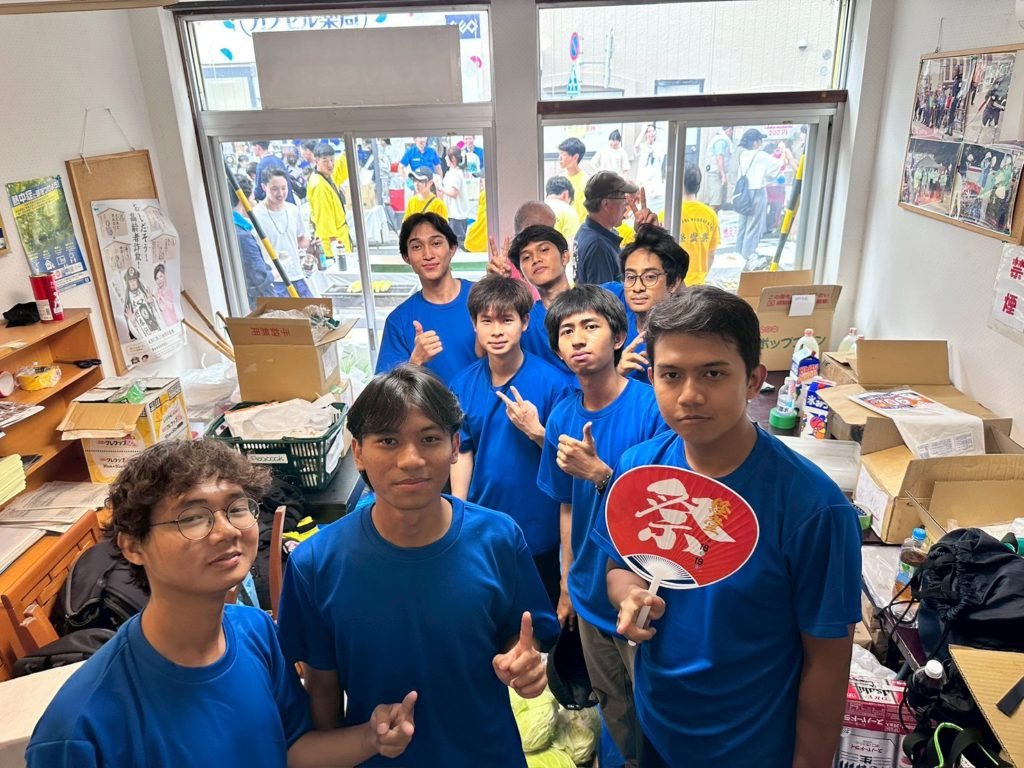
- Students volunteer at the Kyodo Festival (Kyodo Nodai-dori Shopping Street).
- A BBQ at Showa Kinen Park in May. Morning and afternoon classes took part together.
- Autumn sports day: three-legged race, big jump rope, sweets-eating race, ball toss, relay and tug of war.
- The New Year party is held at school: games and chat in groups, eating rice cakes and finally a bingo game (Jan 16, 2026).
- Field trips: Miraikan (Mar 12, 2025), autumn leaves at Baji Koen (Dec 6, 2024) and a trip to Tama Zoological Park (Mar 2024).
- Bowling tournament (Oct 22, 2024, Kyodo Bowl). Volunteering at the Kitazawa Hachiman Grand Festival (Sep 8, 2024).
- Shaved ice (last day before summer break), hometown experience (August; optional) and photo contest (autumn)
2026–2027 academic calendar
- Saturdays, Sundays and public holidays
- Saturdays, Sundays and public holidays
- Spring break
- Late March to early April
- Summer vacation
- Aug
- Winter break
- Dec
School website · 2026-05-11 updated
Access
- Transit
- Odakyu Line, Kyodo Station, 10 min walk
Odakyu Line, Chitose-Funabashi Station, 7 min walk - Nearby
- The 3rd stop from Shinjuku on the Odakyu Line express. From Narita and Haneda, take the Airport Limousine bus to Shinjuku (from Narita, the NEX train is also possible). Moved from Tomigaya, Shibuya-ku in September 2022.
- Dormitory
- Available¥30,000–¥50,000 per month · Housing support: introductions to student residence halls (breakfast and dinner included), share houses and furnished apartments. · Based on school website
School website · 2023-06-26 updated
Housing — The school introduces housing: student residence halls (with a resident manager, breakfast and dinner included), share houses (shared kitchen, bath and toilet) and furnished apartments.
School website · 2022-02-09 updated
SALLAE has organized the school website and published data in English.
The update date is the day that material was last revised.
Photos are materials published by the school.
This information is compiled from official sources and is not updated daily. Please confirm with the official contact before signing or applying.