Asuka Gakuin
Asuka Gakuin
- To station
- 1 min walk · Hinodecho Station
- Admission
- 4 times a year · choose your intake month ›
Compare side by side with other schools →
Tuition and conditions may change depending on the intake. If you contact us, we will check with the school and give you accurate details.
Nearby schools comparedBy distance · no ads or paid placement
- Asuka GakuinThis schoolTuition/yr¥878,000Progression88%IntakesJan · Apr · Jul · Oct
- Aishin International Academy0.5km›Tuition/yr¥890,000Progression68%IntakesApr · Jul · Oct
- Yokohama International Education Academy0.8km›Tuition/yr¥880,000Progression—IntakesJan · Apr · Jul · Oct
- Japan Language School Yokohama0.8km›Tuition/yr¥790,000Progression—IntakesApr · Oct
— means SALLAE has not yet found the data.
About the school
A progression-focused school: its 4 progression courses account for 697 of the 714-student capacity under the school rules, and it also offers exam-prep classes in English, mathematics and world history. Of the 261 students who completed the course in fiscal 2025, 217 went on to Japanese universities and similar institutions. Founded in 1986, it is 30 seconds from the ticket gate of Keikyu Hinodecho Station in Naka-ku, Yokohama. Both the morning classes (9:30–12:45) and the afternoon classes (13:15–16:30) run Monday to Friday, 20 hours a week. The 566 students enrolled in 2025 were mostly from Nepal, Vietnam and China, with 1 from Korea. The dormitory has 2–3 per room at ¥35,000 a month (utilities of ¥5,000 extra).
Published data and school website
Tuition
If you saw a lower amount elsewhere, it may not include the admission fee and application fee
Median 1-year tuition in other areas — Kyoto ¥911,000(7 schools) · Kanagawa ¥880,000(8 schools) · Okinawa ¥858,000(6 schools) · Tokyo ¥840,600(56 schools) · Fukuoka ¥835,000(12 schools) · Hyogo ¥825,500(7 schools) · Osaka ¥814,000(27 schools) · Shizuoka ¥790,000(9 schools) · Chiba ¥745,333(10 schools) · Aichi ¥740,667(5 schools)
Total by intake
| Intake · length | Full course |
|---|---|
| 1 year 3 months | ¥1,067,000 |
| 1 year 6 months | ¥1,256,000 |
| 1 year 9 months | ¥1,445,000 |
| 2 years | ¥1,634,000 |
Cost details · Course tables · Notes
- Per term
- ¥189,000 3 months
- One-time fees
- ¥122,000Application fee · Admission fee
| Duration | Total |
|---|---|
| 1 year 3 months | ¥1,067,000 |
| 1 year 6 months | ¥1,256,000 |
| 1 year 9 months | ¥1,445,000 |
| 2 years | ¥1,634,000 |
★"Per term" and "One-time at start" were calculated by SALLAE from each course's total. The courses this school actually offers are 1 year 3 months onward — all amounts in the table are values calculated by SALLAE.
Calculated by SALLAE · verified 2026-09-16
Admission & dates
- Apr intake
- 2-year course · Application early November of the previous year
- Jul intake
- 1 year 9 months course · Application Early March of the same year
- Oct intake
- 1 year 6 months course · Application Early May of the same year
- Jan intake
- 1 year 3 months course · Application Early September of the previous year
Deadline and capacity rules
Applicants must have completed high school or higher in their home country (in Japan, you cannot advance to a university or vocational school without 12 years of school education). Results announced: April intake end of February, July intake end of May, October intake end of August, January intake end of November
School website · 2026-08-28 updated
Classes
- Morning
- 09:30-12:45 Morning classes: periods 1–2 9:30–11:00, periods 3–4 11:15–12:45
- Afternoon
- 13:15-16:30 Afternoon classes: periods 1–2 13:15–14:45, periods 3–4 15:00–16:30
- AM/PM placement
- Both the morning and afternoon sessions have limited capacity, so you may not always be able to choose
- Class assignment
- Level-based 3 stages
Materials · Subjects · Timetable · Details
- Subject
- Japanese · Exam preparation tutoring in English, math and world history · Japanese 20 hours a week; exam-prep supplementary classes in English, mathematics and world history 2 hours a week each. As a rule, students in the general course cannot take the exam-prep classes
Students gauge their ability through regular exams every 3 months. Intermediate and above are divided by level and by purpose. Learning is evaluated on a 5-point scale combining exam results, attendance and everyday class attitude
What each level aims for · 3 levels
- Beginner
- 6–9 monthsLearn basic grammar, kanji and vocabulary, and acquire conversation useful in daily life. Steadily build up basic sentence patterns and develop the ability to express your own thoughts and wishes
- Intermediate
- 6–9 monthsLearn grammar systematically, expand vocabulary and kanji, and build the ability to state your opinions logically. Preparation for the JLPT and EJU, and for essay writing. JLPT N2 level
- Advanced
- 3–6 monthsLearn advanced Japanese expressions, vocabulary and kanji, and master fine nuances of expression. Students become able to exchange opinions and express themselves in writing. JLPT N1 level
School website · 2025-01-08 updated
Documents
- Admission application formSchool form, handwritten by the applicant
- Résumé · Statement of reasons for studying JapaneseSchool form, handwritten by the applicant
- Diploma from your last school (original) and transcript
- Photo8 sheets) (taken within 6 months, 4 cm × 3 cm
- Certificate of employment
- Copy of passport
Sponsor documents · Only if applicable · 1 application requirement
Submitted by the person paying the tuition (financial sponsor)
- Bank balance certificate¥3,000,000 or more
- Financial sponsorship statementInstitute's own form
- Certificate of employmentBusiness owners: certified copy of the commercial register
- Notarized certificate of family relationshipOr a birth certificate, etc.
Only if applicable
- Statement of financial support (school form) (If a relative in Japan is the financial supporter)
- Tax certificates for the past 3 years (if a relative in Japan is the expense sponsor)
- Bank balance certificate (¥3,000,000 or more) (if a relative in Japan is the expense sponsor)
- Certificate of employment (for business owners, a certified copy of the company registry) (If a relative in Japan is the financial supporter)
- Certificate of residence (juminhyo) for all family members (for foreign nationals, a certificate of alien registration record items) (If a relative in Japan is the financial supporter)
- Documents proving family relationship (a family register copy, etc., if a relative in Japan is the financial supporter)
Application requirements
The financial supporter must be a close relative, ideally within the third degree of kinship (from the English admission guide).
This is the document list in the Korean version. The Japanese version (for mainland China) and the English version also list a transcript, proof of 150 or more hours of Japanese study and a family table (school form); it does not state whether additional documents are required depending on nationality. SALLAE is confirming this with the school.
School website · 2026-08-28 updated
Admission process
⚠ The first tuition payment after acceptance differs depending on the source. Please confirm with the school. Pay the admission fee, tuition (12 months) and materials and facility fees · Korean-version admission guide (from application to enrollment): admission fee, tuition (6 months), materials and facility fees. The school rules set tuition by the year. The Korean version appears to be an old translation, so please confirm with the school
- Request an admission consultation — Contact
- Application — Submit the application documents to the school and the school issues a receipt. (Pay the application fee)
- Selection method — The school reviews the application documents and conducts selection. Applicants are selected through an interview and test, held locally or online
- Immigration application — The school submits the documents to the Immigration Services Agency.
- CoE application results announced — January intake: end of November; April intake: end of February; July intake: end of May; October intake: end of August. Pay the admission fee, tuition (12 months) and materials and facility fees, and receive the Certificate of Eligibility and the admission permit from the school
- Obtaining a visa — Take the Certificate of Eligibility and the admission permit to the Japanese embassy (or consulate) to obtain a student visa. The Certificate of Eligibility is valid for 3 months from the date of issue
- Entry into Japan — After arriving in Japan, please come directly to the school office as soon as possible.
- Placement test
- Before classes begin, learners' Japanese ability is assessed by a test or similar means, and classes are organized appropriately.
- Application form
- Korean version is available
School website · 2026-08-28 updated
Short-term study
- Open now?
- Rolling admissions, so availability varies from time to time — SALLAE will confirm with the school
Course without a student visa
- Short-term course — A course for those who want to learn everyday conversation. Offered in April, July, October and January (3 months each). Beginner 3 days a week, intermediate and advanced 2 days a week. Daily classes. Admission fee ¥33,000, tuition (3 months) ¥168,000
★Short-term courses are not listed in the published data — it counts only student-visa courses.
School website · 2025-01-08 updated
Graduate outcomes
| FY2025 | Admitted |
|---|---|
| Employment | 9 students |
| Graduates | 261 students |
Prepared May 7, 2026: 261 completers, 248 meeting the criteria (94.3%), 2 withdrawals. Progression: 2-year 119, 1 year 9 months 49, 1 year 6 months 49 · Number approved for a change to a status of residence listed in the upper column of Schedule I-1 or I-2 of the Immigration Control Act: 4, 3, 2 (2-year, 1 year 9 months, 1 year 6 months) · School website · Updated 2026-06-10
Reviews
If you study here or used to, tell others what the classes, teachers and daily life were like. It helps anyone deciding on this school.
Write the first reviewUniversity prep
- Progression guidance — For students who wish to continue their studies, homeroom teachers and experienced teachers give full support. We offer various advice, including points to watch out for in interviews
- On-campus further-study briefing — Annual events: summer ☆ progression information session, autumn ☆ progression information session
School website · 2026-08-28 updated
Daily-life support
- Part-time job introductions — While enrolled, work is generally allowed only within 28 hours a week and only with permission to engage in activities outside the status of residence. The school also provides part-time job information to students and makes introductions
- National Health Insurance — Be sure to enroll in National Health Insurance
- Health checkup — Health checkups are held at least once a year as separately specified. Annual events: ☆ Orientation ☆ Health checkup
- Number of life guidance staff — At least 9 student life advisers
- Monthly living costs (per the school) — Living costs: ¥90,000–¥100,000 a month (¥70,000–¥90,000 when sharing). Renting an apartment requires about 6 months' rent, including security deposit and key money
School website · 2026-08-28 updated
Scholarship
- Japan Student Services Organization (JASSO) learning incentive for privately financed international students
- Scholarships are awarded to students who are highly rated for grades and attendance and have an excellent attitude to study (JASSO Honors Scholarship for Privately Financed International Students, LSH Asia Scholarship, and others)
- LSH Asia Scholarship (specified nonprofit corporation)
- FY2026 L.S.H Asia Scholarship recipients
- Asuka Gakuin Scholarship
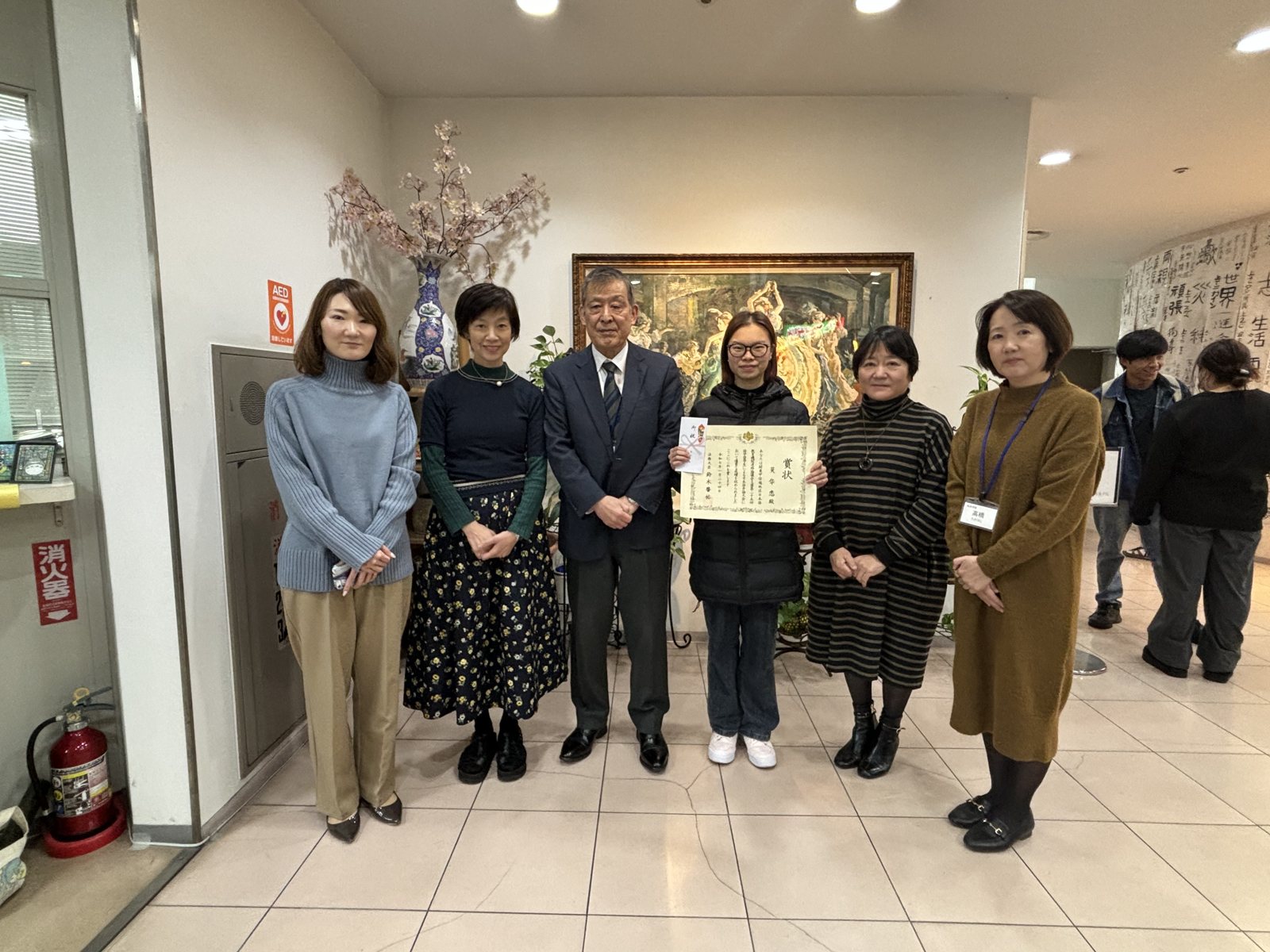
- Congratulations on receiving the Asuka Gakuin Scholarship for the first half of fiscal 2026
- Reservation system for the Honors Scholarship for Privately Financed International Students
- After a university or similar institution has been decided, you can receive a recommendation under the reservation system for the Honors Scholarship for Privately Financed International Students
School website · 2026-08-28 updated
Students
Enrolled: 566 (2025) · Capacity: 594 National median: 180 students
Based on the 566 students enrolled in 2025.
Public data from the Association for the Promotion of Japanese Language Education (Nisshinkyo) · verified 2026-09-20
School life
For 1 year
- 4
- Apr 7 (Mon) New term
- 6
- Jun 4 Asuka Gakuin regular exam · Jun 15 EJU
- 7
- Jul 1 New term · Jul 6 JLPT · Jul 7 Tanabata · Jul 19 to Aug 17 Summer break
- 8
- Classes resume on Aug 18 (Mon)
- 9
- Sep 3 (Wed) Asuka Gakuin regular exam · Sep 27 to Oct 1 Autumn break
- 10
- October intake · Oct 16 (Thu) Field trip (2nd-year students: Hakone) · Oct 23 (Thu) Field trip (1st-year students: Hakkeijima)
- 11
- Nov 9 EJU
- 12
- Dec 3 (Wed) Asuka Gakuin regular exam · Dec 7 (Sun) JLPT · Dec 25 (Thu) to Jan 5 (Mon) Winter break
- 1
- Jan 6 (Tue) New term
- 2
- Feb 18 (Wed) Asuka Gakuin international student regular exam
- 3
- Mar 6 Asuka Gakuin graduation ceremony · Mar 19 to Apr 6 Spring break for international students
Dates are transcribed from the monthly notices the school posted from April 2025 to March 2026 · The 2 days after each regular exam are days off
- Ball game tournament and cherry blossom viewing
- At Asuka Gakuin, students write their dreams and hopes on Tanabata paper strips
- On-campus further-study briefing
- Field trip (2nd-year students: Hakone), field trip (1st-year students: Hakkeijima)
- Field trip for the new October intake
- Setsubun
- ☆ Orientation ☆ Health checkup
2026–2027 academic calendar
- Saturdays, Sundays and public holidays
- No classes
- Summer vacation
- Jul 18–Aug 16 · For the July 2026 intake: Aug 1 (Sat) to Aug 16 (Sun). Under the school rules, summer vacation is Jul 22 to Aug 18
- Autumn break
- Sep 27–Oct 1 Autumn break · Sep 19 (Sat)–23 (Wed) Silver Week (school closed)
- Winter break
- Dec 25–Jan 5 · Winter vacation (Dec 23 to Jan 6)
- Spring break
- Mar 19–Apr 6 Spring break for international students · Spring vacation (Mar 25 to Apr 8)
- Golden Week
- Closed according to the calendar
- Regular exam break
- The 2 days after each regular exam (days off) · The 2 days after each regular exam: Jun 5–6, Sep 4–5 (exam break), Dec 4–5 (exam break), Feb 19 (Thu) and 20 (Fri) (exam break)
School website · 2026-09-01 updated
Access
⚠ The money paid when moving into the dormitory differs depending on the source. Please confirm with the school. Initial costs: dormitory entry fee ¥10,000, deposit ¥35,000, dormitory fee (6 months) ¥210,000, utilities (6 months) ¥30,000; total ¥285,000 · Korean-version school guide: dormitory entry fee ¥35,000, deposit ¥10,000, rent for 3 months ¥105,000, utilities for 3 months ¥15,000 = ¥165,000 (the English version also gives ¥165,000 for 3 months). Even on the same page, the figures differ by language version. The monthly fee of ¥35,000 and utilities of ¥5,000 are the same. How many months are paid up front needs to be confirmed with the school
- Transit
- Keikyu Line Hinodecho Station, 1 min walk30 seconds from the ticket gate
- Nearby
- Next to Hinodecho Station, 2 stops from Yokohama Station by train. From Narita Airport, the direct YCAT limousine bus takes 80–100 min; from Haneda Airport, 30–40 min; from YCAT to Asuka Gakuin by taxi, about 10 min
- Dormitory
- Available¥35,000–¥40,000 per month · Dormitory (2–3 per room). Monthly dormitory fee ¥35,000 plus ¥5,000 (utilities). Asuka Gakuin dormitory (Enokicho, Minami-ku, Yokohama, and other locations) · Based on school website
School website · 2018-10-04 updated
Dormitory — Initial costs: dormitory entry fee ¥10,000, deposit ¥35,000, dormitory fee (6 months) ¥210,000, utilities (6 months) ¥30,000; total ¥285,000. For details, please contact Asuka Gakuin
School website · 2026-08-28 updated
SALLAE has organized the school website and published data in English.
The update date is the day that material was last revised.
Photos are materials published by the school.
This information is compiled from official sources and is not updated daily. Please confirm with the official contact before signing or applying.