Chuo College of Information Technology
Chuo College of Information Technology
- Course
- Further-study course only ›
- To station
- 3 min walk · Shiki Station
- Admission
- Twice a year · April and October ›
Compare side by side with other schools →
Tuition and conditions may change depending on the intake. If you contact us, we will check with the school and give you accurate details.
Nearby schools comparedBy distance · no ads or paid placement
- Chuo College of Information TechnologyThis schoolTuition/yr¥736,000Installments OKProgression77%IntakesApr · Oct
- Ann Language School Narimasu Campus7.1km›Tuition/yr¥727,000Progression84%IntakesJan · Apr · Jul · Oct
- Urawa International Education Center9.6km›Tuition/yr¥749,000Progression79%IntakesJan · Apr · Jul · Oct
- Yono Gakuin Japanese Language School10.2km›Tuition/yr¥849,000Progression—IntakesApr · Jul · Oct
— means SALLAE has not yet found the data.
About the school
A Japanese-language department focused on progression, with only 2 courses, 2-year progression and 1 year 6 months, guiding students toward further study through homeroom interviews, exams and interview preparation. In fiscal 2025, 58 of the 76 students who completed went on to universities and similar institutions (Report No. 44). The course was established in 2000 within Chuo Computer and Communication College, an IT and business school, and after completion students can also move on to the college's specialized courses. Because it is run by an educational foundation, students can buy student commuter passes. It is in Niiza, Saitama, a 3-minute walk from Shiki Station on the Tobu Tojo Line, 20 minutes by express from Ikebukuro, with a capacity of 160 students.
Published data and school website
Tuition
If you saw a lower amount elsewhere, it may not include the admission fee and application fee
Median 1-year tuition in other areas — Kyoto ¥911,000(7 schools) · Kanagawa ¥880,000(8 schools) · Okinawa ¥858,000(6 schools) · Tokyo ¥840,600(56 schools) · Fukuoka ¥835,000(12 schools) · Hyogo ¥825,500(7 schools) · Osaka ¥814,000(27 schools) · Shizuoka ¥790,000(9 schools) · Chiba ¥745,333(10 schools) · Aichi ¥740,667(5 schools)
Total by intake
| Intake · length | Full course |
|---|---|
| 1 year 6 months | ¥1,044,000 |
| 2 years | ¥1,352,000 |
Cost details · Course tables · Notes
- Per term
- ¥154,000 3 months
- One-time fees
- ¥120,000Application fee · Admission fee
| Duration | Total |
|---|---|
| 1 year 6 months | ¥1,044,000 |
| 1 year 9 months | ¥1,198,000 |
| 2 years | ¥1,352,000 |
★"Per term" and "One-time at start" were calculated by SALLAE from each course's total. The courses this school actually offers are 1 year 6 months onward — all amounts in the table are values calculated by SALLAE.
Calculated by SALLAE · verified 2026-09-16
Whether it is refundable
- After the Certificate of Eligibility issued by Japan's Ministry of Justice has been given to the applicant
- Tuition once paid cannot be refunded, regardless of the reason it was paid
- However, if the applicant cannot enroll for reasons other than their own, such as visa denial
- As a rule, the full tuition is refunded after deducting the admission fee, application fee and the remittance fee for the refund
- If you withdraw during a term (common to Years 1 and 2)
- Tuition cannot be refunded regardless of the reason
Departments you can continue to at this school
After completing the Japanese department, you can apply to the school's specialized courses (departments).
- IT and Web Department
- 2 years · First year ¥740,000 · JLPT N3 or above
- AI Project Department
- 2 years · First year ¥740,000 · JLPT N3 or above
- Business Design Department
- 2 years · First year ¥740,000 · JLPT N3 or above
For N2 or above, an EJU score of 200 or more; for N3, 170 or more (total of reading and listening/listening-reading). Those taking the exam by December 2026 are also eligible
Year 1 paid in a lump sum: subtotal ¥1,000,000, international student tuition reduction ¥260,000, total payable ¥740,000. In installments: ¥790,000
Entrance exam schedule and documents by department (school official site) ↗Based on the 2027 admission guidelines for international students · School website · Checked 2026-11-03
Admission & dates
- Apr intake
- 2-year course · Apply Aug 1 to Oct 20, 2026 · Classes 1,600 hr
- Oct intake
- 1 year 6 months course · Apply Mar 1 to May 20, 2027 · Classes 1,200 hr
- Japanese level
- JLPT N5 level or above
Applicants' Japanese ability: at least 150 hours of study and a passing result on an exam equivalent to JLPT N5 or above are required
Deadline and capacity rules
2-year progression course starts in April and 1.5-year course in October; both graduate in March 2029. Applications close as soon as capacity is reached. Acceptance announced around late February (April intake) and late August (October intake). About 6 months until the visa is obtained
School website · Confirmed 2026-09-26
Classes
- Morning
- 09:10-12:20 2nd year: 45 min × 4 periods, 5 days a week (Mon–Fri)
- Afternoon
- 13:10-16:20 1st year: 45 min × 4 periods, 5 days a week (Mon–Fri)
- AM/PM placement
- 2nd year 9:10–12:20, 1st year 13:10–16:20 (half-day system, morning and afternoon)
- Class size
- Max 20 students
- Class assignment
- Level-based 5 stages
Materials · Subjects · Timetable · Details
- Materials
- Minna no Nihongo Beginner I and II, Chukyu e Ikou (Lessons 1–10), Chukyu o Manabou (Lessons 1–8)
Class hours by subject
| Level | 2 years | 1 year 6 months |
|---|---|---|
| Beginner 1 | 300 hr | — |
| Beginner 2 | 300 hr | 200 hours |
| Intermediate 1·2 | 200 hours | 200 hours |
| Advanced 1·2 | 300 hr | 300 hr |
5 levels from beginner to advanced. About 800 total class hours per year. The aim is to obtain JLPT N1 to N3 by graduation
What each level aims for · 5 levels
- Beginner I
- Beginner I aims at acquiring the Japanese needed for communication so you can get by in daily life
- Beginner II
- Beginner II aims at being able to convey your own intentions and wishes when needed. The aim is to obtain N4
- Intermediate I
- Apply the basics of basic Japanese and acquire smooth communication ability. State opinions on everyday themes. The aim is to obtain N3
- Intermediate II
- Building on Intermediate I, acquire more advanced practical application skills. State opinions on more advanced themes. The aim is to obtain N2
- Advanced
- Encounter real Japanese through newspapers, magazines and news, and learn to choose between expressions. Hold debates, speeches and more. The aim is to obtain N1
School website · Confirmed 2026-09-26
Documents
- Admission application formOriginal). Download from the website (4 copies
- Diploma of last school attended (original). The original is returned after the Immigration Services Agency checks it
- Transcript of last school attended (copy)
- Japanese study history: a certificate stating the study period, attendance rate, content studied, course name, the course's target completion level and the textbooks used
- Proof of Japanese ability: certificates of passing various exams equivalent to JLPT N5 or above
- Passport copy. It must show the applicant's place of birth. If you have been to Japan before, the stamp pages showing entry and exit dates
- 8 photos of the applicant (4 cm tall × 3 cm wide). Plain background, taken within 3 months of the application submission date. Also send the ID photo data
Financial supporter's documents · only if applicable · 4 application requirements
Submitted by the person paying the tuition (financial sponsor)
- Financial sponsorship statementOriginal). Download from the website (1 copy
- Documents proving the relationship between the financial supporter and the applicant (originals). Issued by a public authority, such as a family register, birth certificate or certificate of family relationship
- Bank balance certificate (original). For an account in the financial supporter's name, showing the bank's address and phone number and the issuer's title, name and signature or seal
- Deposit and withdrawal statement (original) or a copy of the passbook. For the account in item 3 above, showing deposits and withdrawals for the past year
- Financial supporter's income certificate and tax payment certificate (originals). Issued by a public authority or company, proving income and taxes paid over the past 3 years
Only if applicable
- Certificate of enrollment (original) (If you are currently enrolled at a university or graduate school, please submit this)
- Certificate of employment (original). Issued by the most recent workplace (If the applicant has work experience)
- Documents showing how assets were built up over the past year (originals) (If the financial supporter cannot submit item 4 above)
- Resident tax assessment and payment certificate (past 3 years) (Sponsor residing in Japan)
- Documents proving the financial supporter's occupation (original). A certificate of employment or, for the self-employed, a document issued by a public authority proving that the business is operating (Sponsor residing in Japan)
- Copy of the certificate of residence (juminhyo), showing all household members (Sponsor residing in Japan)
- Copy of an ID with a face photo. If the financial supporter is a foreign national, a copy of the residence card (Sponsor residing in Japan)
Application requirements
The Japanese study history, certificate of enrollment, certificate of employment and financial supporter's documents must have been issued within 3 months of the application submission date All documents require a Japanese translation Submitted documents other than the diploma and the Japanese exam pass certificate are not returned Other documents must be submitted depending on nationality, application history and other factors. For individual required documents, please inquire
It is not stated which documents (such as relationship certificates) must be submitted depending on nationality. SALLAE is confirming this with the school.
School website · 2024-12-12 updated
Admission process
- Request an admission consultation — You can consult about admission preparation and procedures in Korean.
- Study abroad consultation and internal screening — Up to 6 months before enrollment. Internal screening based on the required documents sent by email. A staff member visits the location and, if necessary, holds a three-way interview with the parents and the agent
- Application — Mail the required documents (by EMS, DHL, etc.) 4 to 5 months before enrollment. Before mailing, email the data for checking
- The school applies to the Immigration Services Agency — The school applies for the status of residence on your behalf at the Immigration Services Agency. Before applying, a staff member checks the documents you sent
- The Tokyo Regional Immigration Services Bureau issues the Certificate of Eligibility to the academy, and tuition is paid. — The result arrives at the school from the Immigration Services Agency. An invoice is emailed to applicants who have been issued a Certificate of Eligibility, and tuition is paid into the bank account designated by the school
- Visa application — After tuition payment is confirmed, the school mails the visa application documents (by EMS, DHL, etc.). Apply for a visa at the Japanese embassy or consulate in your home country
- Buying a plane ticket and preparing for travel — After the visa is issued, buy a plane ticket and email the e-ticket receipt to the school. If you need airport pick-up, tell the school before buying the ticket
- After entry
- Online support using Microsoft Teams lets students join classes from home even in unforeseen situations. Homeroom teachers share needed information with students via Teams and other tools
School website · Confirmed 2026-09-26
Progression
| FY2025 | Admitted |
|---|---|
| Graduates | 76 students |
See 7 more schools
All schools accepted to so far
See 10 more schools
See 27 more schools
Completed 76, met the standard 75 (98.7%), withdrawn 0. Progression: 2-year course 49, 1.5-year course 9; status-of-residence changes 0; exam proof 58 and 13 · School website · 2026-04-01 updated
Reviews
If you study here or used to, tell others what the classes, teachers and daily life were like. It helps anyone deciding on this school.
Write the first reviewUniversity prep
- Provision of the information needed for career guidance — By providing information on destinations such as universities, graduate schools and vocational schools, the school supports international students in setting their own individual goals
- Individual meetings with homeroom teacher — Small-group homeroom system. Career paths are decided through individual interviews with the homeroom teacher
- On-campus briefing — School information sessions are held with representatives of universities and vocational schools. Career guidance runs from external joint sessions to in-school sessions, getting students thinking about progression from the 1st year
- Preparation for the JLPT, EJU, essays and interviews — Class preparation for the JLPT, EJU, essays and interviews. Just before interview exams, thorough individual interview practice
- Life guidance with an eye on life after progression — If part-time work exceeds the permitted hours, the status of residence cannot be renewed. Life guidance on part-time work and income is also given
- Guidance for students who want to find jobs — In fiscal 2025, more students wanted to find jobs, so they were guided to start early and prepare in a planned way. They were also guided to go on to further study wherever possible
School website · Confirmed 2026-09-26
Daily-life support
- Student support in multiple languages — Dedicated student support staff who speak Japanese, English, Vietnamese and Chinese are always on site. Nepali and other languages are also possible if needed
- Student commuter passes available — Commuter passes can be bought. Tobu Tojo Line, Mizuhodai Station to Shiki Station: regular pass ¥5,900 a month, student pass ¥1,880 a month
- Airport pickup — If you need airport pick-up, please tell us before buying your plane ticket
- Orientation and life guidance — Orientation immediately after enrollment and regularly afterward. The student life staff regularly teach Japanese rules and culture. Guidance in students' native languages is available
- Checks of part-time work and bank accounts — A life survey is held once a month, in which students write down part-time job information and bankbooks are checked
- Health checkup — Health checkups are held regularly, and students who need to see a doctor are followed up
- Disaster prevention education — Evacuation drills and disaster-prevention lectures that were held before COVID were resumed from fiscal 2024
- Contact with the sponsor — Information is also provided, and regular reports are made, to financial supporters as before
Monthly living costs · School information
| Item | 1 month |
|---|---|
| Housing costs | ¥32,000 |
| Utilities (electricity, water, gas) | ¥15,000 |
| Phone purchase | ¥3,000 |
| Food costs | ¥40,000 |
| Social expenses | ¥10,000 |
| Shopping | ¥20,000 |
| Other | ¥5,000 |
| Total | ¥125,000 |
If living in Colosseo Shiki: part-time income ¥1,200 × 28 hours × 4 weeks = ¥134,400, total expenses ¥125,000, leaving about ¥10,000
School website · Confirmed 2026-09-26
Students
Enrolled: 137 (2025) · Capacity 160 National median: 180 students
Based on the 137 students enrolled in 2025.
Public data from the Association for the Promotion of Japanese Language Education (Nisshinkyo) · verified 2026-09-20
School life
For 1 year
- 4
- Entrance ceremony · Orientation · ID photo session
- 5
- Spring field trip · Health checkup
- 6
- 1st EJU · Progression briefing · First-term midterm exam
- 7
- 1st JLPT
- 8
- Summer field trip · Summer vacation (2 weeks)
- 9
- First semester final exam
- 10
- October-intake enrollment · Orientation · Start of second-term classes
- 11
- 2nd EJU
- 12
- 2nd JLPT · Second-term midterm exam · Christmas party and new student welcome party · Winter break
- 1
- Speech contest
- 2
- Graduation trip · Graduation exam
- 3
- Second-term final exam · Graduation ceremony · Spring break
JLPT mock exams in each of the spring, summer, autumn and winter annual study plans
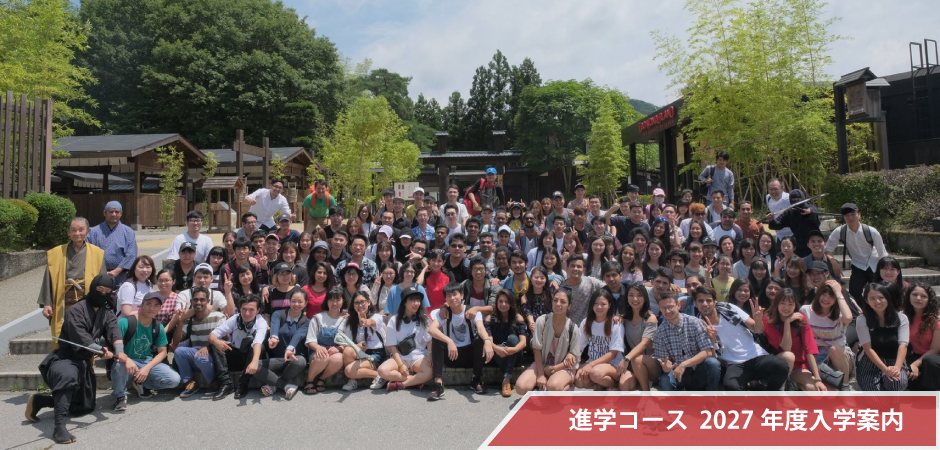
- Walk through a town where Japanese history and culture remain
- Bus trip to Mt. Fuji
- Factory tour to see cutting-edge Japanese technology
- Speech contest
- Christmas party
- Graduation trip to enjoy the snow
On campus
- Classroom
- Projectors — A projector is installed in every classroom
- On campus
- High-speed Wi-Fi — IT facilities only an IT vocational school has. The Japanese main course also holds classes using this equipment
2026–2027 academic calendar
- Saturdays and Sundays
- Weekly
- National holidays
- Holidays stipulated by the Act on National Holidays
- Summer break
- Aug 1 to Aug 31 · Summer vacation (2 weeks)
- Winter break
- Dec 21 to Jan 7
- Spring break
- Mar 21 to Apr 8
School website · Confirmed 2026-09-26
Access
- Transit
- Tobu Tojo Line Shiki Station, 3 min walk
- Nearby
- 20 minutes by express to Ikebukuro and 30 minutes to Shinjuku. Large supermarkets and more are nearby, and a little further out are quiet residential areas
- Dormitory
- Available · Twin room rent ¥32,000 per person per month. 15 min walk to school · Based on the school website
School website · Confirmed 2026-09-26
Dormitory — Student dormitory Colosseo Shiki (2 floors). No security deposit, key money or agent fee (¥0); comprehensive housing guarantee for international students ¥8,000 for 2 years, fire insurance ¥18,000 for 2 years. Stay of 9 months or more (leaving earlier incurs a penalty)
School website · Confirmed 2026-09-26
SALLAE has organized the school website and published data in English.
The update date is the day that material was last revised.
Photos are materials published by the school.
This information is compiled from official sources and is not updated daily. Please confirm with the official contact before signing or applying.