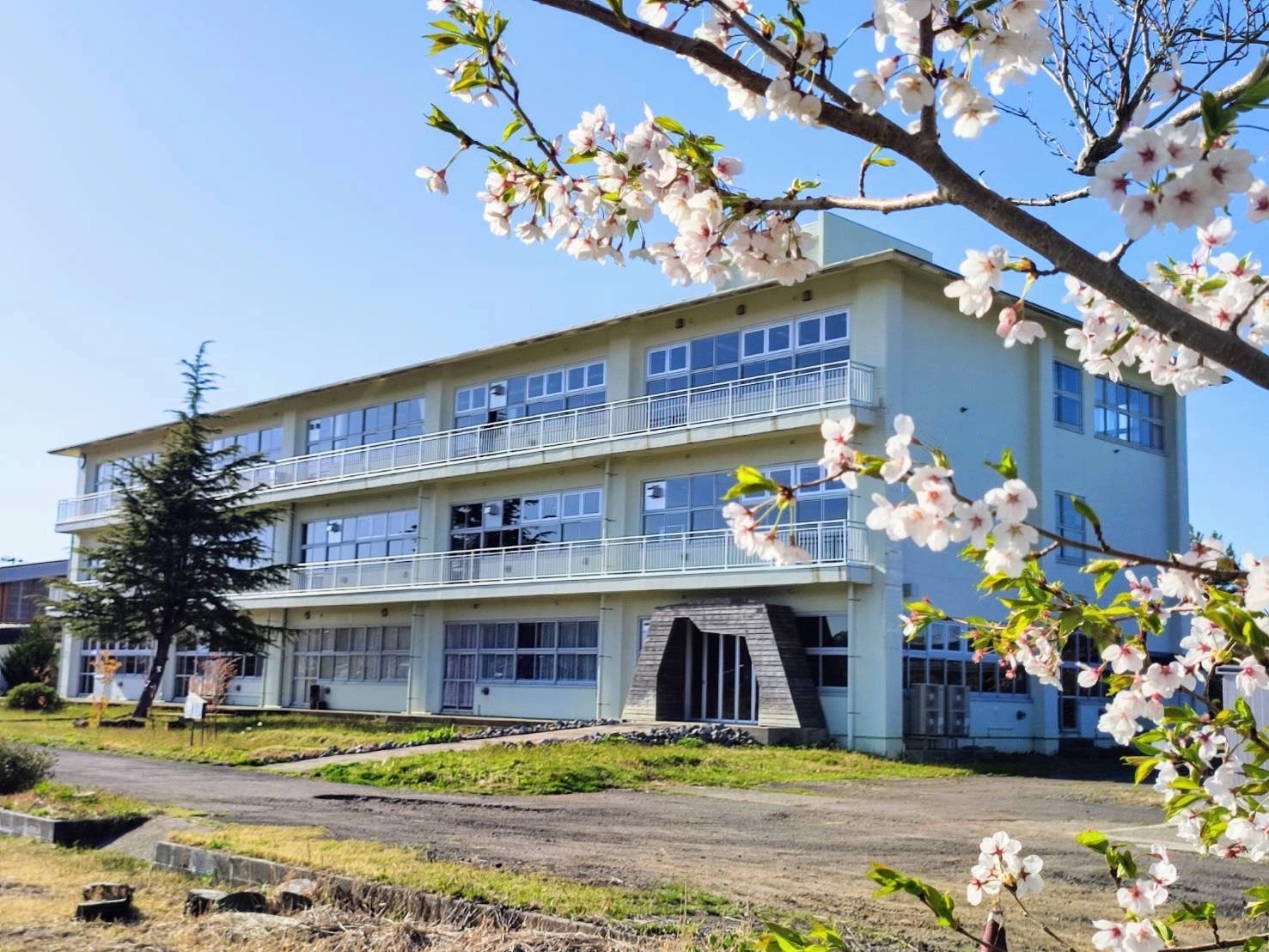
Cinq Perles Japanese Language Institute
Cinq Perles Japanese Language Institute
Compare side by side with other schools →
Tuition and conditions may change depending on the intake. If you contact us, we will check with the school and give you accurate details.
Nearby schools comparedBy distance · no ads or paid placement
- Cinq Perles Japanese Language InstituteThis schoolTuition/yr¥818,000Progression—IntakesApr · Oct
- Osaki City Osaki Japanese Language School103.2km›Tuition/yr¥880,000Progression—IntakesApr · Oct
- Richinomori Japanese Language School Sendai Campus125.2km›Tuition/yr¥740,000Progression86%IntakesApr
- Kokusai Academy Language School128.2km›Tuition/yr¥837,000Progression97%IntakesApr
— means SALLAE has not yet found the data.
About the school
A small Japanese-language school run by an educational foundation in Nikaho, Akita. Against a capacity of 80, 39 students were enrolled (2025), most of them from Nepal, and enrollment is in April and October. The 2-year course has 8 levels and the 1 year 6 months course has 6 levels. An apartment-type dormitory at ¥20,000–¥50,000 a month is 18 minutes from the school by shuttle bus, and airport pick-up is provided.
Published data and school website
Tuition
⚠ 1 year 6 months course total varies by source — please confirm with the school. Ministry of Education, Culture, Sports, Science and Technology publication: 1 year 6 months progression course, total ¥1,202,000 · School website: 1 year 6 months progression course, total ¥1,242,000. The published figure appears to exclude the ¥20,000 application fee.
If you saw a lower amount elsewhere, it may not include the admission fee and application fee
Median 1-year tuition in other areas — Kyoto ¥911,000(7 schools) · Kanagawa ¥880,000(8 schools) · Okinawa ¥858,000(6 schools) · Tokyo ¥840,600(56 schools) · Fukuoka ¥835,000(12 schools) · Hyogo ¥825,500(7 schools) · Osaka ¥814,000(27 schools) · Shizuoka ¥790,000(9 schools) · Chiba ¥745,333(10 schools) · Aichi ¥740,667(5 schools)
Total by intake
| Intake · length | Full course |
|---|---|
| 1 year 6 months | ¥1,192,000 |
| 2 years | ¥1,566,000 |
Cost details · Course tables · Notes · 1
- Per term
- ¥187,000 3 months
- One-time fees
- ¥70,000Application fee · Admission fee
| Duration | Total |
|---|---|
| 1 year 6 months | ¥1,192,000 |
| 1 year 9 months | ¥1,379,000 |
| 2 years | ¥1,566,000 |
★"Per term" and "One-time at start" were calculated by SALLAE from each course's total. The courses this school actually offers are 1 year 6 months onward — all amounts in the table are values calculated by SALLAE.
Calculated by SALLAE · Confirmed 2026-09-21
Admission & dates
- Apr intake
- 2-year course · Application Oct 20 – Nov 10 of the year before enrollment · Classes 1,600 hr
- Oct intake
- 1 year 6 months course · Application Mar 1 – May 20 of the year before enrollment · Classes 1,200 hr
- Japanese level
- JLPT N5 level or above
2-year progression course: at least 150 hours of Japanese study and about N5 or above. 1 year 6 months course: at least 300 hours and about N4 or above.
Deadline and capacity rules
The April-intake guidance page also says Nov 20, and the application deadline may vary depending on nationality and how full the capacity is.
School website · Confirmed 2026-09-21
Classes
- Morning
- 08:45-12:15
- Afternoon
- 13:15-16:45
- Class size
- Max 20 students
- Class assignment
- Level-based 8 stages
Materials · Subjects · Timetable · Details
- Materials
- Classes mainly use Dekiru Nihongo
- Subject
- Integrated Japanese · Characters and vocabulary · Listening · Conversation · Reading · Writing · Grammar
Weekly timetable 20 hours over 5 days
| Mon | Tue | Wed | Thu | Fri | |
|---|---|---|---|---|---|
| Period 1 | Comprehensive Japanese | Comprehensive Japanese | Comprehensive Japanese | Comprehensive Japanese | Comprehensive Japanese |
| Period 2 | Comprehensive Japanese | Comprehensive Japanese | Comprehensive Japanese | Comprehensive Japanese | Comprehensive Japanese |
| Period 3 | Characters and vocabulary | Listening comprehension | Characters and vocabulary | Characters and vocabulary | Characters and vocabulary |
| Period 4 | Conversation | Reading comprehension | Composition | Grammar | Grammar |
The 2-year progression course runs from Beginner I to Advanced II, and the 1 year 6 months course from Beginner II to Advanced I. 20 hours a week over 5 days, up to 4 periods a day.
Target for each level · 14 levels
- Beginner I
- 3 months N5–N4. Can talk in short sentences about greetings, self-introductions and familiar matters. Learn at least 160 kanji and at least 800 words.
- Beginner II
- 3 months N4. Can handle basic personal information and basic everyday conversation. Learn at least 320 kanji and at least 1,500 words.
- Intermediate I
- 3 months N3. Can speak in an organized way about familiar topics. Learn at least 500 kanji and at least 3,000 words.
- Intermediate II
- 3 months N3–N2. Can discuss and negotiate on topics of interest. Learn at least 800 kanji and at least 4,500 words.
- Upper-intermediate I
- 3 months N2. Can explain abstract matters and interact appropriately for the situation, including honorific language. At least 1,100 kanji and about 6,000 words.
- Upper-intermediate II
- 3 months N2–N1. Can explain somewhat specialized topics. At least 1,400 kanji and 7,500 words. Essay guidance for university entrance exams.
- Advanced I
- 3 months N1. Can understand and discuss a wide range of social and specialized topics. At least 1,700 kanji and 9,000 words. Short essay and report guidance.
- Advanced II
- 3 months N1. Can comprehensively understand academic Japanese and give presentations. At least 2,000 kanji and 10,000 words.
- Beginner II
- 3 months N4. Can handle basic personal information and basic everyday conversation. Learn at least 320 kanji and at least 1,500 words.
- Intermediate I
- 3 months N3. Can speak in an organized way about familiar topics. Learn at least 500 kanji and at least 3,000 words.
- Intermediate II
- 3 months N3–N2. Can discuss and negotiate on topics of interest. Learn at least 800 kanji and at least 4,500 words.
- Upper-intermediate I
- 3 months N2. Can explain abstract matters and interact appropriately for the situation, including honorific language. At least 1,100 kanji and about 6,000 words.
- Upper-intermediate II
- 3 months N2–N1. Can explain somewhat specialized topics. At least 1,400 kanji and 7,500 words. Essay guidance for university entrance exams.
- Advanced I
- 3 months N1. Can understand and discuss a wide range of social and specialized topics. At least 1,700 kanji and 9,000 words. Short essay and report guidance.
School website · Confirmed 2026-09-21
Documents
- Admission application form
- Résumé
- Statement of reason for studying abroad
- Written pledge
- Health status declaration
- Attach 7 ID photos, taken within 3 months of application: upper body, no hat, plain background, and clear.
- Diploma from the highest level of educationCopy
- Academic transcript from the highest level of educationOriginal
- Original JLPT certificate and score report. Also submit Japanese grades from high school or university, or a completion certificate from a Japanese-language school.
- Copy every page of the passport except blank ones
Sponsor documents · Only if applicable · 5 application requirements
Submitted by the person paying the tuition (financial sponsor)
- Statement of financial support
- Submit any one official document, such as a family register copy, birth certificate or notarized certificate of family relationship
- Bank balance certificate (original). In the financial supporter's name, issued within the last 3 months.
- Submit the original deposit and withdrawal statement for the past 3 years, or a copy of the passbook
- Certificate of employment or occupation
- Sponsor's tax payment certificateOriginal
Only if applicable
- Certificate of enrollment (original) and academic transcript (original) (If the applicant is currently enrolled in school)
- Certificate of employment (if the applicant is currently employed)
- Copy of business license (If the sponsor is a self-employed person)
Application requirements
Submit originals, not copies, for all certificates unless instructed otherwise. Certificates not in Japanese must come with a Japanese translation; write the translator's name, address and phone number below the translation, with a seal or signature to the right of the name. Bank balance certificates must be in the expense sponsor's name and issued within 3 months. Application documents must be prepared within 3 months before applying. In principle, application documents cannot be returned (certificates issued only once will be returned).
No standards by nationality are specified. SALLAE is confirming this with the school.
School website · Confirmed 2026-09-21
Admission process
- Request an admission consultation — You can check eligibility, required documents and the schedule.
- Email the documents required for application to the school — Email the documents required for application to the school
- Entrance exam (written test and interview) — Entrance exam (written test and interview)
- Submit required documents (mailed to the school) — Submit required documents (mailed to the school)
- Screening by the Immigration Services Agency of Japan — The Japanese language school handles the Certificate of Eligibility application, and the Immigration Services Agency reviews it.
- Tuition payment — After tuition and other fees are paid, the Certificate of Eligibility and the admission permit are sent.
- Visa application (Japanese consulate) and enrollment — Enrollment follows after the visa is issued at a Japanese overseas mission.
- Placement test
- The entrance exam consists of a written test and an interview.
School website · Confirmed 2026-09-21
Reviews
If you study here or used to, tell others what the classes, teachers and daily life were like. It helps anyone deciding on this school.
Write the first reviewUniversity prep
- Individual guidance for students wishing to go on to further study — Guidance and advice are given to match each student's progression wishes, starting from how to choose the schools to apply to.
- Document and interview preparation — We guide students in emailing professors at their preferred schools, writing essays, research plans and statements of purpose, and practicing interviews.
- Extensive progression information — We have brochures and admission guidelines from universities, graduate schools and vocational schools across Japan, and introduce the information needed for entrance exams.
School website · Confirmed 2026-09-21
Daily-life support
- Airport pickup — Airport pickup
- Shuttle bus — A shuttle bus runs from the dormitory to the school: Nikaho to school (about 18 minutes by car)
- Multilingual support — Staff who speak English, Chinese, Vietnamese and Nepali are available.
- Part-time work — Introductions to farm work, supermarkets, convenience stores, restaurants, hotels and more. With permission, up to 28 hours a week; during long school holidays, up to 8 hours a day and 40 hours a week.
- National Health Insurance — All international students enroll in National Health Insurance. The out-of-pocket share of medical costs is 30%, and insurance premiums are paid by the student.
School website · Confirmed 2026-09-21
Students
39 enrolled (2025) · Capacity 80 National median: 180 students
Based on the 39 students enrolled in 2025.
Published by MEXT · Confirmed 2026-09-20
School life
For 1 year
- Apr
- April-intake entrance ceremony · Orientation · Cherry blossom viewing · Disaster prevention training
- May
- Traffic safety training · Evacuation drill
- Jun
- EJU · 1st regular exam · Health checkup
- Jul
- JLPT · Field trip
- Aug
- Summer vacation
- Sep
- 2nd regular exam · Excursion
- Oct
- Oct intake entrance ceremony
- Nov
- 2nd EJU
- Dec
- 2nd JLPT · 3rd regular exam · Winter break
- Jan
- Progression information session
- Feb
- 4th regular exam
- Mar
- Graduation ceremony · Spring break
* Subject to change.
On campus
- On campus
- Classrooms 1, 2 and 3 — A space where classes are held.
- On campus
- Library room — Books are available for use.
- On campus
- Multipurpose hall — A shared event space.
School website · Confirmed 2026-09-21
Access
⚠ The dorm entry fee differs by source. Please confirm with the school. Dormitory entry fee ¥15,000 · Dormitory entry fee ¥40,000 The official sources differ on the dormitory entry fee, so it needs to be confirmed.
⚠ Dormitory fees varies by source — please confirm with the school. Fee ¥20,000 · Dormitory fee ¥20,000–¥50,000 The fee varies with room size (1K to 3DK, etc.) and the number of residents
- Nearby
- 64 Kotaki Butai, Kisakata-machi, Nikaho, Akita. A shuttle bus runs from the dormitory to the school (about 18 minutes by car).
- Dormitory
- Available · Same type as an ordinary apartment. Dormitory fee ¥20,000–¥50,000 a month. A free school bus runs from the dormitory to the school. · Based on school website
School website · Confirmed 2026-09-21
Dormitory — No meals are provided, and utilities and similar costs are paid by the resident at actual cost. The amount varies with room size, number of residents and season, and you may not be able to get your preferred type of room.
School website · Confirmed 2026-09-21
Japanese language institution certified by MEXT Certification no. 20241050002 · Certified 2024.10.30 →
SALLAE has organized the school website and published data in English.
The update date is the day that material was last revised.
Photos are materials published by the school.
This information is compiled from official sources and is not updated daily. Please confirm with the official contact before signing or applying.