Chiba Institute of Science
千葉科学大学
Opening soonApplications open 1/4 · Privately Funded International Student Admissions, Domestic Round II (exclusive application)
- Exam location
- Online from outside Japan ›
- Japanese requirement
- EJU Japanese 250+ ›
- First-year fees
- from ¥810,800 ›
Compare with other universities →
Fees and conditions can change over time. Always check the school's guidelines before you apply.
Fees and conditions can change over time.
About the school
A private university founded in 2004. It has 1,152 students, including 451 international students (undergraduate 443 · graduate 8). It has 2 campuses (Chiba Institute of Science, Marina, Chiba Institute of Science, Main); which one you attend depends on your department.
History · 6
- 2003
- Chiba Institute of Science was approved under Kake Gakuen educational corporation.
- 2004
- Chiba Institute of Science opened with the Faculty of Pharmacy, Department of Pharmacy, and 3 departments in the Faculty of Risk and Crisis Management.
- 2010
- An international student preparatory course was established at Chiba Institute of Science.
- 2014
- The Faculty and Department of Nursing were established.
- 2019
- The Department of Crisis Management Systems was renamed the Department of Risk and Crisis Management, and the Department of Medical Crisis Management was renamed the Department of Health and Medical Services.
- 2026
- Ohshiro Gakuen educational corporation began operating Chiba Institute of Science in April 2026.
千葉科学大学 入学者・在学者・卒業者情報
Admission requirements and dates
Chiba Institute of Science admits international students through 4 routes.Pick your situation below to see only the routes that fit · Based on the guidelines for April 2027 entry
EJUThe exam Japanese universities use for international student admission · June and November · also held outside Japan = Examination for Japanese University Admission · JLPTJapanese-Language Proficiency Test · N1 is the highest, then N2 = Japanese-Language Proficiency Test
Domestic Round I (documents + interview)
Official name: 国内Ⅰ期
For Japan residents who already have a Student visa or similar status. Pharmacy and Risk and Crisis Management use Zoom interviews; Nursing has a written test and interview.
Applications for this year have closed — below are the remaining dates for those who applied
Apply 10/12-11/3; exam 11/28
- Apply 10/12~11/3
- →
- Exam 11/281 day left
- →
- Results 12/15
- →
- Enroll ~1/21
Other requirements · You must not have Japanese nationality or permanent residence. You must have completed, or expect to complete before enrollment, 12 years of school abroad, or meet another basic qualification listed in the guide (a-f). You must live in Japan and already hold a residence status such as Student when applying. If attending a Japanese language school, vocational school, university, or high school in Japan, you generally need proof of at least 85% attendance.
Domestic Round II (exclusive application)
Official name: 国内Ⅱ期
For Japan residents who missed Round I and will apply exclusively.
Applications open 1/4 · in 38 days
Apply 1/4-2/2; exam 2/27
- Apply 1/4~2/2opens in 38 days
- →
- Exam 2/27
- →
- Results 3/12
- →
- Enroll ~3/25
Other requirements · You must not have Japanese nationality or permanent residence. You must have completed, or expect to complete before enrollment, 12 years of school abroad, or meet another basic qualification listed in the guide (a-f). You must live in Japan and already hold a residence status such as Student when applying. If attending a Japanese language school, vocational school, university, or high school in Japan, you generally need proof of at least 85% attendance. For Round II, your current residence status, such as Student, must be valid for renewal on or after April 22, 2027.
Designated School Selection (Faculty of Risk and Crisis Management, exclusive application)
Official name: 指定校選抜
For students at a designated Japanese language school who can get a principal recommendation. Only Risk and Crisis Management is eligible.
Applications open 1/4 · in 38 days
Round I: apply 10/12-11/3, exam 11/28; Round II: apply 1/4-2/2, exam 2/27.
Other requirements · You must not have Japanese nationality or permanent residence. You must have completed, or expect to complete before enrollment, 12 years of school abroad, or meet another basic qualification listed in the guide (a-f). You must attend a designated Japanese language school and have over 90% attendance when applying. You must apply exclusively, promise to enroll if accepted, and be recommended by the school head for your academic work and character. You must already hold a residence status such as Student.
Overseas Rounds I and II (Japanese written test + interview)
Official name: 海外Ⅰ期・Ⅱ期
For people living overseas. You take a Japanese written test and interview. If you want the university to apply for your COE, you must apply exclusively.
Applications for this year have closed — below are the remaining dates for those who applied
Round I: apply 9/2-9/16, exam 10/10; Round II: apply 10/12-11/4, exam 11/28.
Applications for this year have closed
Enrollment procedures for both overseas rounds must be completed by March 25, 2027. If you ask the university to apply for a Certificate of Eligibility (COE) on your behalf, procedures follow COE issuance and your application must be exclusive.
Other requirements · You must not have Japanese nationality or permanent residence. You must have completed, or expect to complete before enrollment, 12 years of school abroad, or meet another basic qualification listed in the guide (a-f). You must be able to obtain a Student visa or similar status by enrollment in April 2027.
Good to know before applying
- Nursing students need at least everyday conversational Japanese for hospital practice in July of year 1. Without it, they may not pass required courses or advance to year 2.
- Non-native Japanese speakers in Pharmacy, Aviation Technology and Crisis Management, or Animal Risk and Crisis Management must obtain one of these before advancing to year 2: JLPT N2; BJT at least 400; J.TEST A-C at least 600; JPT at least 525; or EJU reading and listening/reading at least 220.
- The Pilot Course in Aviation Technology and Crisis Management does not accept applicants through privately funded international student admissions.
- National qualifications earned after enrollment are valid only in Japan. Applicants must check whether they can use or convert them outside Japan.
- A notice dated October 26, 2026 says financial support documents for domestic admissions, such as the support form, bank balance, employment, and income certificates, are no longer required at application. They may be submitted by the university-set date between the results announcement and enrollment deadline. Financial capacity is still checked.
- The admissions schedule also lists International Student Recommendation Admissions (apply 11/23-12/3; interview 12/12; results 12/25; enrollment 3/25). Details are in a separate booklet and not in the 2 guides reviewed here.
- Overseas applicants must contact the Admissions Office before applying. Partner overseas centers will send the exam location and schedule. Some countries may require a certificate showing no active tuberculosis for the COE application. Admission is finalized only after enrollment procedures, entry into Japan, and signing the pledge at the entrance ceremony.
- There are no additional or waitlist offers in privately funded international student admissions.
- After payment is confirmed, the university sends students with Student residence status an admission letter and other documents. You must renew your residence period yourself. Low attendance at a Japanese language school may prevent renewal and cause cancellation of admission. If your residence card expires before May 31, 2027, submit the renewed card by March 25.
千葉科学大学 2027年度 私費外国人
Fees
- First-year fees
- ¥810,800 ~ ¥2,195,000
- Application fee
- ¥10,000
- Admission fees are ¥300,000 for Pharmacy and ¥250,000 for Risk and Crisis Management and Nursing.
- The admission fee and ¥25,000 student association fee are paid only in the entry year.
- Standard annual fees are ¥1,870,000 for Pharmacy; ¥1,050,000 for Risk and Crisis Management and Aviation Management; ¥1,470,000 for Health and Medical Services, Aviation Engineering and Drone, and Animal Risk and Crisis Management; and ¥1,680,000 for Nursing.
- For 2027 and 2028 entrants applying from Japan, special study support lowers annual fees excluding admission to ¥535,800 for Risk and Crisis Management, Aviation Technology, and Animal Risk and Crisis Management, and ¥685,800 for Pharmacy, Health and Medical Services, and Nursing.
- Students applying directly from overseas who receive pre-arrival support such as COE application are excluded.
- Calculated first-year totals after support are ¥810,800 for Risk and Crisis Management, Aviation Technology, and Animal Risk and Crisis Management; ¥960,800 for Health and Medical Services and Nursing; and ¥1,010,800 for Pharmacy.
- Standard totals are ¥1,325,000 for Risk and Crisis Management and Aviation Management; ¥1,745,000 for Health and Medical Services, Aviation Engineering and Drone, and Animal Risk and Crisis Management; ¥1,955,000 for Nursing; and ¥2,195,000 for Pharmacy.
- Minimum and maximum figures use these calculated totals.
- Admission fees are not refundable.
- Materials, practical training clothing, and other association fees cost extra.
- A university-approved laptop costing about ¥230,000 is recommended.
- Application fee: ¥10,000.
Places and fees by department 7
| Department | Places | First-year fees (¥) | |
|---|---|---|---|
| Faculty of Pharmacy | |||
| Department of Pharmacy (6-year program) | A small number of places (privately funded international student admissions). | ¥2,195,000after reduction 1,010,800 | |
| Faculty of Risk and Crisis Management | |||
| Department of Risk and Crisis Management | A small number of places (privately funded international student admissions). | ¥1,325,000after reduction 810,800 | |
| Department of Health and Medical Services | A small number of places (privately funded international student admissions). | ¥1,745,000after reduction 960,800 | |
| Department of Aviation Technology and Crisis Management, Aviation Engineering and Drone Course | A small number of places (privately funded international student admissions). | ¥1,745,000after reduction 810,800 | |
| Department of Aviation Technology and Crisis Management, Aviation Management Course | A small number of places (privately funded international student admissions). | ¥1,325,000after reduction 810,800 | |
| Department of Animal Risk and Crisis Management | A small number of places (privately funded international student admissions). | ¥1,745,000after reduction 810,800 | |
| Faculty of Nursing | |||
| Department of Nursing | A small number of places (privately funded international student admissions). | ¥1,955,000after reduction 960,800 | |
Places are the total across all international student admissions. Fees are for 2027 entry.
For 2027 entry · from the school's guidelines
Documents to prepare
Application form printed after online application; photo data; statement of purpose (about 600 characters for overseas applicants); original transcript and graduation certificate; applicant report prepared by the head or teacher of a Japanese school (domestic applicants; invalid if opened); Japanese ability certificate (optional); Japanese school attendance and grade certificates (required domestically, optional overseas); financial support form and proof of funds such as bank balance, employment, and income certificates; passport copy (plus both sides of residence card for domestic applicants); recommendation (designated schools only); and request for university COE application (overseas applicants who want it). Attach Japanese translations to documents in other languages.
Graduate outcomes
How these are counted
Undergraduate graduates in academic year 2025. There were 191 employed graduates, but the employment type was not stated, so the employment count field is blank.
Outcomes for 60 international graduates in March 2026: employed in Japan 14, further study in Japan 5, still job hunting in Japan 4, employed in home country 8, returned home 27, studying in another country 1, unemployed or unknown 1. Among 274 university-wide graduates in academic year 2025, 191 were employed and 13 entered further study.
University Portraits · figures for all students (not international students only)
Reviews from students
No reviews yet. If you attend or attended this school, please write the first one.
Write a review
Scholarships
- Special Study SupportAll accepted students entering in 2027 or 2028 who complete enrollment procedures can receive a reduction of annual tuition, laboratory and practical fees, and facilities fees, excluding the admission fee, to about the national university standard, regardless of admission route.
It lasts 6 years for Pharmacy or 4 years for Risk and Crisis Management and Nursing, provided you meet promotion requirements.
Students repeating a year pay standard fees.
It cannot be combined with the Okinawa Special Scholarship; only the larger reduction applies.
International students applying directly from overseas who receive pre-arrival support such as a university COE application are excluded. - The International Student Support Office helps with visa renewals, residence card and address changes, city hall procedures, scholarships and aid for international students, and life in Japan.
Student life support
The guides do not mention a student dormitory. The overseas guide has a housing section, but only gives contact details for resident registration.
Getting there
- Chiba Institute of Science, Marina Campus
- About 10 minutes by local bus from JR Choshi Station (Chiba Institute of Science Marina stop).
千葉県銚子市潮見町15-8 - Chiba Institute of Science, Main Campus
- About 10 minutes by local bus from JR Choshi Station (Chiba Institute of Science Main Campus stop).
千葉県銚子市潮見町3
SALLAE compiled this from the school's admission guidelines and official sources (such as University Portraits).
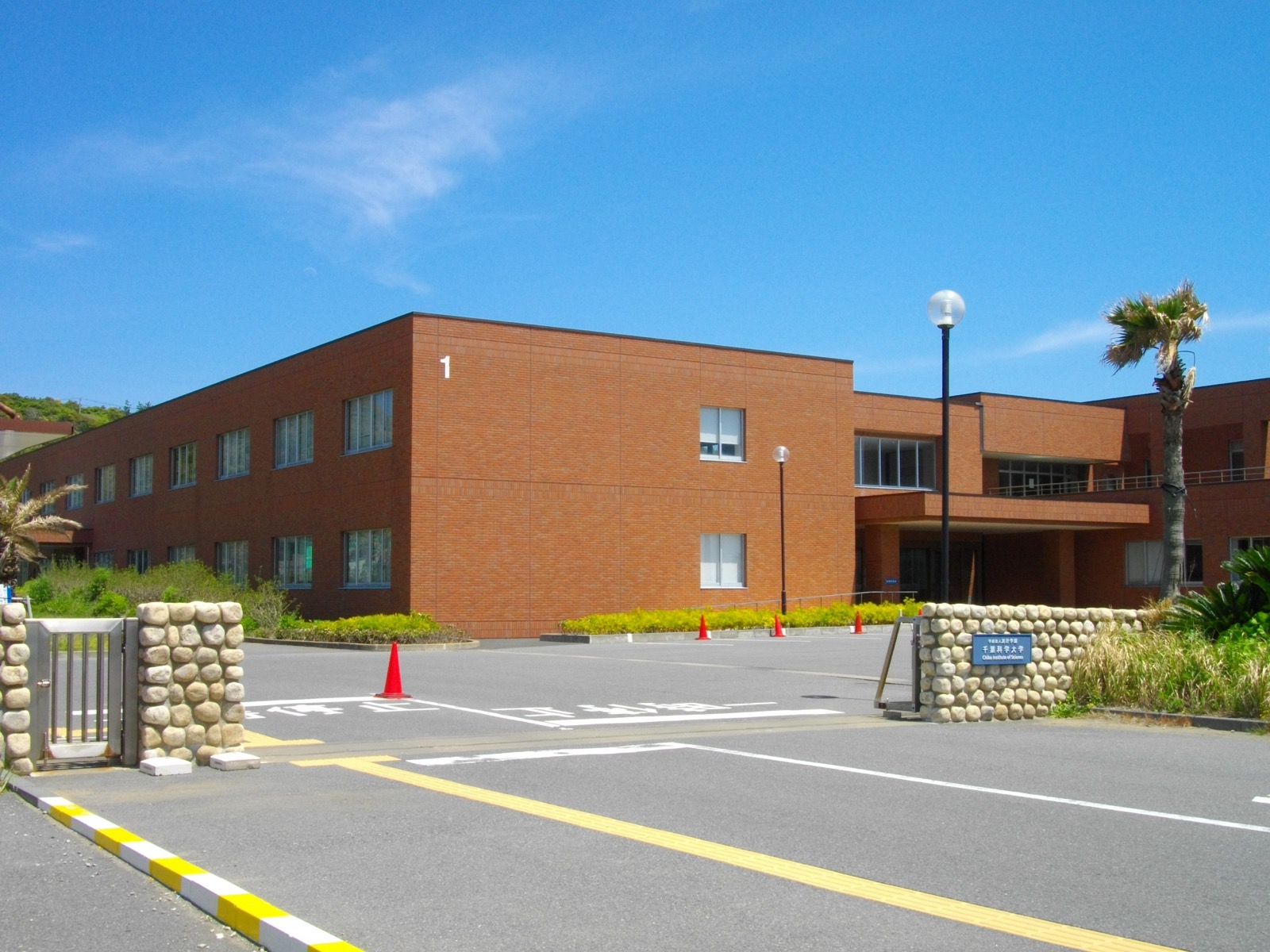
Photo: Abasaa · Public domain · Wikimedia Commons
This information is compiled from official sources and is not updated daily. Please confirm with the official contact before signing or applying.