Coach Academy Japanese Language School
Coach Academy Japanese Language School
- Progression
- University or similar 95% ›
- To station
- 1 min walk · Shin-Okubo Station
- Admission
- 4 times a year · choose your intake month ›
Compare side by side with other schools →
Tuition and conditions may change depending on the intake. If you contact us, we will check with the school and give you accurate details.
Nearby schools comparedBy distance · no ads or paid placement
- Coach Academy Japanese Language SchoolThis schoolTuition/yr¥836,000Progression95%IntakesJan · Apr · Jul · Oct
- Sam Education Academy0.1km›Tuition/yr¥739,000Progression—IntakesJan · Apr · Jul · Oct
- Kai Japanese School0.2km›Tuition/yr¥1,195,000Progression15%IntakesJan · Apr · Jul · Oct
- Shinjuku Heiwa Japanese Language School0.2km›Tuition/yr¥826,000Progression70%IntakesJan · Apr · Jul · Oct
— means SALLAE has not yet found the data.
About the school
A school that focuses on getting students into highly selective universities and graduate schools such as the University of Tokyo and Hitotsubashi University. It is a Japanese-language school attached to Coach Academy, a progression cram school for Chinese international students, and enrolling requires attending the cram school as well. Of the 276 eligible students who completed in March 2026, 263 progressed to universities and similar institutions. It is in Hyakunincho, Shinjuku-ku, a 1-minute walk from JR Shin-Okubo Station, and of the 339 students enrolled in 2025, 338 were Chinese. The admission guidelines' eligibility requirement is "aged 17 or over, from a kanji-using region (China)"; teaching at the cram school and living support are also in Chinese, and the website does not say whether students from outside China are accepted.
Published data and school website
Tuition
If you saw a lower amount elsewhere, it may not include the admission fee and application fee
Median 1-year tuition in other areas — Kyoto ¥911,000(7 schools) · Kanagawa ¥880,000(8 schools) · Okinawa ¥858,000(6 schools) · Tokyo ¥840,600(56 schools) · Fukuoka ¥835,000(12 schools) · Hyogo ¥825,500(7 schools) · Osaka ¥814,000(27 schools) · Shizuoka ¥790,000(9 schools) · Chiba ¥745,333(10 schools) · Aichi ¥740,667(5 schools)
Admission & dates
- Apr intake
- 2-year course
- Jul intake
- 1 year 9 months course
- Oct intake
- 1 year 6 months course
- Jan intake
- 1 year 3 months course
- Apr intake
- 1-year course
Deadline and capacity rules
Eligibility: completion of 12 or more years of school education, aged 17 or over, from a kanji-using region (China), and proof of how the financial supporter's assets were built up, with a passbook or the like. Enrollment requires attending the preparatory school as a double school
School website · Confirmed 2026-09-26
Classes
- Morning
- 09:00-12:20 5 days a week, Monday to Friday
- Afternoon
- 13:10-16:30 5 days a week, Monday to Friday
- AM/PM placement
- Students aiming for undergraduate and art-related progression are mainly in morning classes, and those aiming for graduate school mainly in afternoon classes; classes are divided by Japanese level (according to the Chinese course guide).
- Class assignment
- Level-based 8 stages
Materials · Subjects · Timetable · Details
- Subject
- Beginner Japanese · Integrated Japanese · Reading · Listening · Presentation · Writing · Comprehensive Japanese builds the skills for higher education through 5 language activities. Beginner Japanese is offered only in the 2-year progression course and the 1-year 9-month course.
Results are measured with a regular test every 3 months, and students with high rates of improvement can skip a grade. Interview rules, manners and expected Q&A are built into classes
What each level covers · 8 stages
- Early beginner
- 3 monthsCan understand basic expressions and understand and talk about very familiar topics.
- Late beginner
- 3 monthsCan exchange information based on personal details and understand simple texts needed for study.
- Early intermediate
- 3 monthsCan briefly state personal dreams and hopes and exchange information needed for daily life.
- Late intermediate
- 3 monthsCan express coherent opinions on personally interesting topics, especially drawing on experience in society.
- Early upper intermediate
- 3 monthsCan understand the main points of familiar topics spoken in society and at school, and can talk about things like study plans.
- Late upper intermediate
- 3 monthsCan talk about hopes and dreams for further study and explain their future prospects as an international student.
- Advanced, first half
- 3 monthsCan explain clearly on a fairly wide range of topics and build a social perspective.
- Advanced, second half
- 3 monthsWith later university lectures in view, can explain specialized content and express personal views fluently.
School website · Confirmed 2026-09-26
Documents
- 2 photos3×4 cm · a photo taken with a smartphone or camera is also accepted if the background is plain
- Copy of passport
Only if applicable
Only if applicable
- Copy of both sides of the residence card, and a copy of the passport pages with entry and exit stamps (if you have a residence card)
The website has no overall list of application documents. The document download page lists only the application form and copies of the photo and passport. SALLAE is confirming this with the school.
School website · Confirmed 2026-09-26
Admission process
- Request an admission consultation — From China, the Shanghai office guides enrollment procedures; for students already in Japan, Coach Academy's management headquarters (Chinese available) does
- Counseling — Decide on your desired department and enrolment period and check the application documents.
- Submit documents — Submit the application form and other documents.
- Tuition payment — The first payment is the first year's tuition
- Admission
- Placement test
- At enrollment, all students take a highly accurate placement test and are placed in classes by proficiency level.
School website · Confirmed 2026-09-26
Graduate outcomes
| FY2025 | Admitted |
|---|---|
| Employment | 1 student |
See 52 more schools
See 4 more schools
March 2026 completers: 276 meeting the criteria; 263 progressed to university or similar (1 year 121, 1.6 years 18, 1.9 years 71, 2 years 53); 1 change of status approved · Number approved for a change: among March 2026 completers, 1 in the 1.9-year course · School website · Confirmed 2026-09-26
Reviews
If you study here or used to, tell others what the classes, teachers and daily life were like. It helps anyone deciding on this school.
Write the first reviewUniversity prep
- Double school with the Coach Academy preparatory school — Enrollment requires attending both the Japanese-language school and the Coach Academy preparatory school (double school). Cram school teaching is in Chinese, and its tuition is set separately
- Undergraduate progression course — Humanities and science EJU preparation, essay and interview coaching, preparation for the University of Tokyo, Hitotsubashi and Waseda, N1–N3 preparation, TOEFL and TOEIC, VIP coaching
- Graduate school progression course — Coaching in the specialist knowledge of each graduate school and in writing research plans. Fields other than the humanities and science coaching areas may be VIP coaching at extra cost
- Art progression course — Practical work by major, including drawing, oil painting, Japanese-style painting, design and sculpture, and portfolio coaching by art university graduates. Students with no art experience are welcome
- Progression orientation and various information sessions — A progression orientation is held at enrollment. Briefings on precautions before the actual EJU and on how to write statements of purpose are also held as needed
- Progression interview — Progression interviews 4 times a year give individual guidance on choosing target schools and exam preparation. Progression advisers work in Japanese and Chinese
- Progression management chart — Information on applicants is updated monthly based on the progression management chart. Application materials are checked with a progression advisor before applying.
- Written corrections and mock interviews — Specialists in each field correct statements of purpose, essays and research plans and conduct mock interviews
- Progression materials — Past exam papers collected from graduates, EJU score and pass/fail benchmarks, and interview feedback are organized, along with university guides, admission guidelines and entrance exam questions. Information is shared in class group chats.
- Information-sharing sessions with university seniors — The school regularly holds information-sharing sessions with senior students now at university.
Schedule to admission
- EJU prep begins
- Mid-Apr · From mid-April, the Japanese language school and a cram school join forces to start EJU preparation. Preparation classes are offered in Japanese, integrated subjects, mathematics, physics and chemistry
- EJU (June) / Exam season starts!
- Jun · EJU (June) · Applications begin, starting with Waseda University faculties. Early universities accept applications in June and hold entrance exams in September
- JLPT
- Jul · The JLPT is taken mainly by those planning graduate school, but all students are encouraged to take it
- TOEFL, TOEIC, IELTS
- Aug · Take the TOEFL, TOEIC or IELTS (August) to prepare for applications before exam season begins in earnest
- Entrance exam applications begin in earnest
- Sep · In September, exam applications finally begin in earnest
- EJU (Nov)
- Nov · The last chance to take the EJU for students who want to enter university next April. Use the results to apply to national universities and others that accept applications in the new year
- JLPT
- Dec · Most students in the 1 year 6 months and 2-year courses take it
- National university entrance exams
- Feb · Many national university faculties hold entrance exams in February. The University of Tokyo also holds its exam in the second half of February
- Graduation
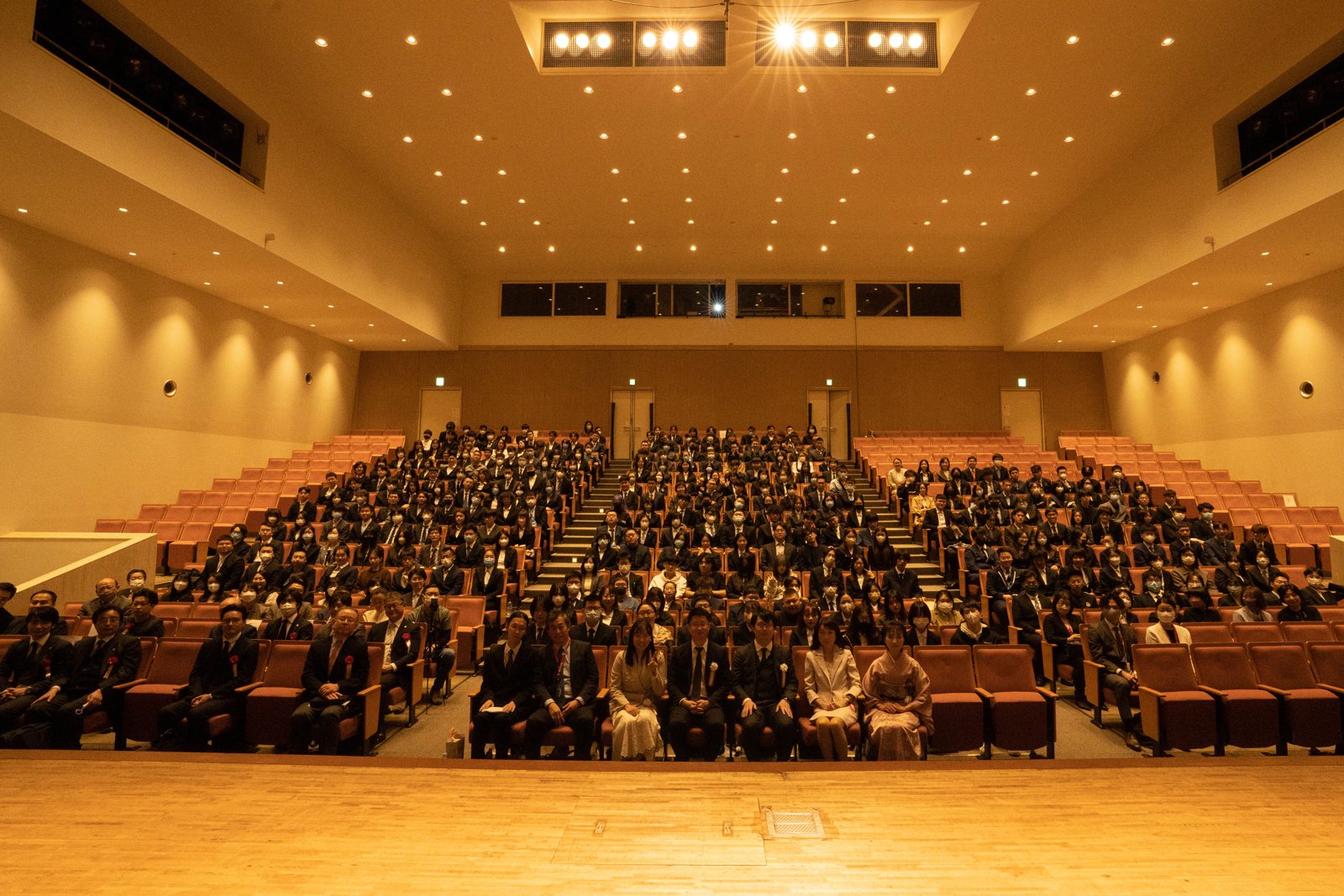
- Mar · Graduation ceremony
School website · Confirmed 2026-09-26
Daily-life support
- Homeroom teacher system — One-on-one guidance between homeroom teacher and student, with contact through a WeChat group. Daily homeroom, and a homeroom teacher meeting every 3 months (career matters go to the progression staff, health concerns to the counselor).
- Student record — Homeroom teachers create a student record. They manage entry procedures, visas, life orientation, attendance rate, health and contact with parents
- Attendance management — Staff contact students who are late or absent to check on their health, and hold an interview if attendance is 85% or below. Entry and exit system records with photos are emailed to guardians.
- Psychological counseling room — A counseling room set up in April 2018. In-person, online and email consultations, weekdays 9:30–17:00, free of charge. Chinese-speaking staff interpret and make referrals to medical institutions (including accompanying you to the first visit)
- Orientation — Rules and regulations orientation and student life guidance orientation are held in Chinese every term
- Full support from obtaining a visa to renewing and changing it — 100% of applicants receive the Certificate of Eligibility before enrolment. Enrolled students with an attendance rate of 85% or more get help preparing visa renewal documents.
- Bank account opening support — International students who have been in Japan for less than half a year can also open a bank account through the school.
- Mobile phone pocket — Before class starts, students are told to put their own mobile phones in the mobile pocket.
- Life information — We introduce Shinjuku Ward Office (about 1 km from the school), hospitals and post offices, and guide students to the foreign-language services Himawari and AMDA, and the emergency consultation line #7119
All staff who manage students have studied abroad themselves. Orientation is held in Chinese
School website · Confirmed 2026-09-26
Scholarship
- Mabuchi International Scholarship Foundation Scholarship
- Monthly ¥100,000 × 4 yearsFor students admitted to an undergraduate program at the University of Tokyo, 4 years. In principle ¥100,000 per month plus a ¥300,000 one-time admission payment, ¥5,100,000 in total. Eligibility conditions: please inquire.
- Program to Promote Acceptance of International Students (MEXT learning incentive for international students), while at a Japanese language school
- Monthly ¥30,000 × 1 yearWhile at the Japanese-language school: 12 months, ¥30,000 a month, ¥360,000 in total
- Program to Promote Acceptance of International Students (MEXT learning incentive for international students), after entering university
- Monthly ¥48,000 × 1 yearAfter progressing to university: 12 months, ¥48,000 per month, ¥576,000 in total
- Progression excellence award
- 1st prize: University of Tokyo undergraduate; 2nd prize: University of Tokyo graduate school and Tokyo University of the Arts; 3rd prize: Hitotsubashi University and Institute of Science Tokyo; 4th prize: Keio, Waseda, Musashino Art University and Tama Art University. Awards depend on conditions such as commendation and an attendance rate of 90% or more
- Perfect attendance award
- Commended for 100% attendance over the enrollment period. Common conditions: overall attendance of 90% or more and no record of misconduct
- Large first-year tuition reduction at the cram school
- Full waiver this year: high school graduate + JLPT N1 130 points or above + TOEFL 100 or above, etc. Half waiver: high school graduate + N1 + TOEFL 90 or above, etc. Reviewed by the Gyochi Gakuen headquarters
- Regular first-year tuition reduction at the cram school
- ¥100,000 Once¥100,000 off if you obtain JLPT N1 or TOEFL 90 or more before paying tuition. Submit results before entering the Japanese-language school
- Second-year tuition reduction
- With a first-year attendance rate of 98% or more, JLPT N1 and no violation records, second-year tuition is reduced by 50%; with attendance of 95% or more and N2, by 30%. Apply on the homeroom teacher's recommendation. This appears only on the Chinese page.
School website · Confirmed 2026-09-26
Students
Enrolled: 339 (2025) · Capacity 505 National median: 180 students
Based on the 339 students enrolled in 2025.
Public data from the Association for the Promotion of Japanese Language Education (Nisshinkyo) · verified 2026-09-20
School life
For 1 year
- Apr
- Entrance ceremony (spring intake). Many undergraduates graduate in March, so the April intake is larger every year.
- May
- Golden Week holidays
- Aug
- Summer vacation
- Sep
- Day-trip field trip · Completion ceremony from October for students accepted to their next school (mainly graduate students)
- Oct
- Entrance ceremony (October intake)
- Mar
- Graduates and current students go on a day-trip field trip together · Graduation ceremony
This reflects past results and may change
- Obirin University's "Discover! Inquiry Program" visiting lectures were held in March and July. In July, 19 students in the upper-intermediate class took part
- Bamboo branches were set up in the 1st and 2nd school buildings, and students wrote wishes on paper strips and tied them on (July 2021)
- An enrolled student won an encouragement prize in the international student category of the 24th National High School and International Student Essay Contest 2022, hosted by Takushoku University
On campus
- Building 1, 3rd floor
- Psychological counseling room — Weekdays (Mon–Fri) 9:30–17:00
- Self-study room — A self-study classroom is also always open
Academic calendar
- Golden Week holidays
- There is a break of about 10 days around Golden Week
- Summer vacation
- There is a summer break of about 2 weeks · Exam applications get fully under way once September starts, so this is the last break just before.
- Refresh break
- After the completion ceremony, most students continue studying from October, so there is a refresh break of about 2 weeks.
School website · Confirmed 2026-09-26
Access
- Transit
- JR Yamanote Line Shin-Okubo Station, 1 min walk
- Nearby
- A business district in Shinjuku-ku. Within walking distance of Shinjuku Station and Shin-Okubo Station. About 1 km to Shinjuku Ward Office; a post office, Japan Post Bank and a general hospital are within a 5-minute walk
- Dormitory
- Available · Partner real-estate properties: single room ¥72,000–¥110,000 a month, double room ¥52,000–¥62,000 a month. Within 30 minutes of the school building · Based on school website
School website · Confirmed 2026-09-26
Student dorm — For first-time move-in, a room entry fee of ¥50,000 and facility fee of ¥30,000 (tax included). Within a 5-minute walk of a Yamanote Line or Seibu Shinjuku Line station
School website · Confirmed 2026-09-26
SALLAE has organized the school website and published data in English.
The update date is the day that material was last revised.
Photos are materials published by the school.
This information is compiled from official sources and is not updated daily. Please confirm with the official contact before signing or applying.