Coach Academy Japanese Language School Takadanobaba Campus
Coach Academy Japanese Language School Takadanobaba Campus
- Course
- Further-study course only ›
- Admission
- 4 times a year · choose your intake month ›
- Tuition
- On the pricier side for Tokyo ›
Compare side by side with other schools →
Tuition and conditions may change depending on the intake. If you contact us, we will check with the school and give you accurate details.
Nearby schools comparedBy distance · no ads or paid placement
- Coach Academy Japanese Language School Takadanobaba CampusThis schoolTuition/yr¥979,000Progression—IntakesJan · Apr · Jul · Oct
- Shinjuku Japanese Language School0.1km›Tuition/yr¥990,000Progression—IntakesApr · Oct
- ISI Language School Takadanobaba0.2km›Tuition/yr¥1,015,000Progression—IntakesJan · Apr · Jul · Oct
- Waseda College of Foreign Languages0.2km›Tuition/yr¥730,000Progression—IntakesApr · Oct
— means SALLAE has not yet found the data.
About the school
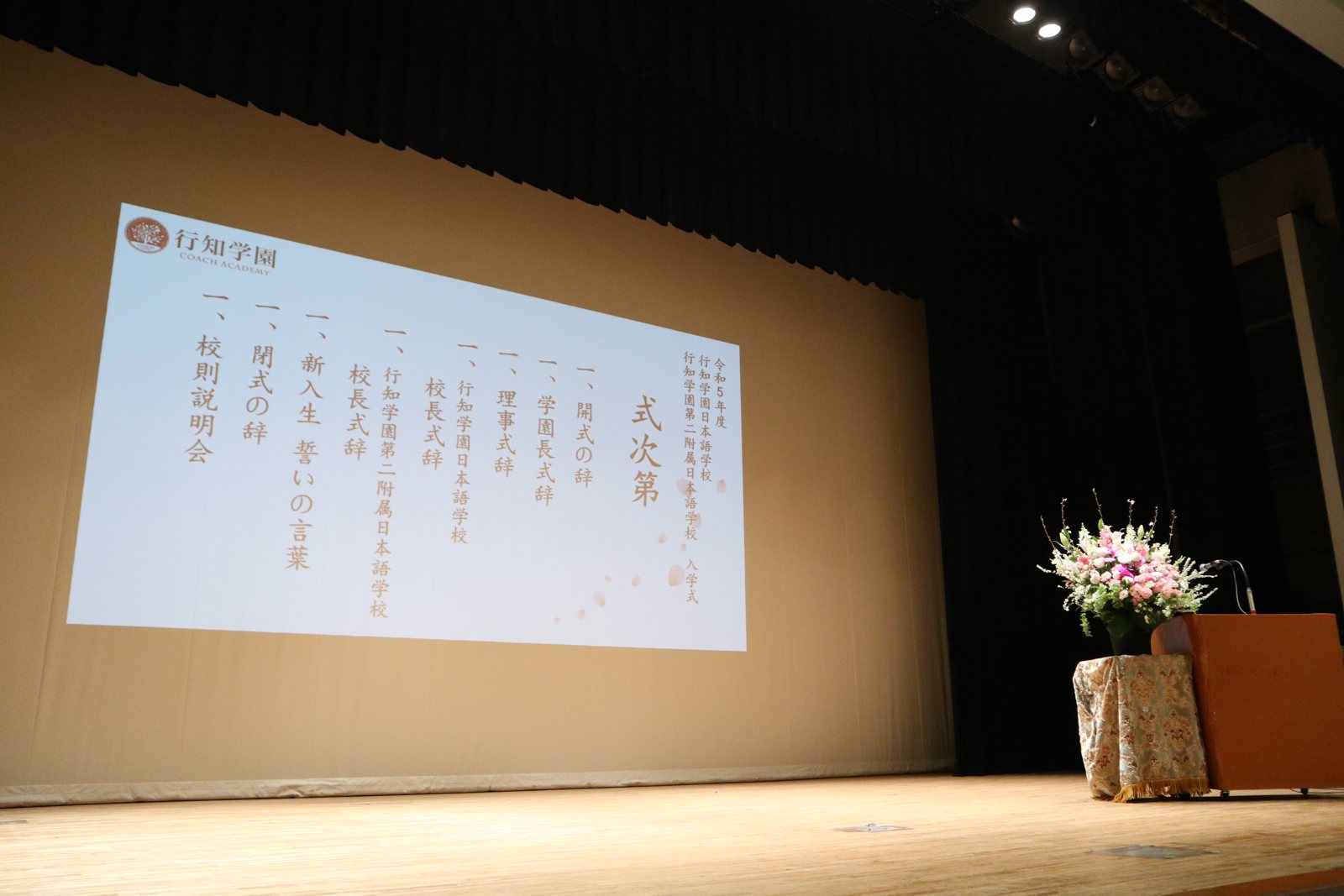
A school aimed at progression to Japanese universities and graduate schools. All 5 courses are progression courses, and studying at the same group's prep school (Coach Academy prep school) alongside is a condition of enrollment. Of the 108 students who met the criteria among those who completed in March 2026, 105 went on to universities and similar institutions. This is the Takadanobaba campus of Coach Academy Japanese Language School, which opened in April 2023, a 5-minute walk from Takadanobaba Station on the JR Yamanote Line, with enrollment in January, April, July and October. Eligibility is limited to those from kanji-using regions (China); all 105 students enrolled in 2025 were from China, and orientations and prep school classes are held in Chinese.
Published data and school website
Tuition
If you saw a lower amount elsewhere, it may not include the admission fee and application fee
Median 1-year tuition in other areas — Kyoto ¥911,000(7 schools) · Kanagawa ¥880,000(8 schools) · Okinawa ¥858,000(6 schools) · Tokyo ¥840,600(56 schools) · Fukuoka ¥835,000(12 schools) · Hyogo ¥825,500(7 schools) · Osaka ¥814,000(27 schools) · Shizuoka ¥790,000(9 schools) · Chiba ¥745,333(10 schools) · Aichi ¥740,667(5 schools)
Admission & dates
- Apr intake
- 2-year course · Apply Oct 1 to Nov 15 of the year before enrollment
- Jul intake
- 1 year 9 months course · Apply Jan 15 to Feb 28 of the year of enrollment
- Oct intake
- 1 year 6 months course · Apply Apr 15 to May 31 of the year of enrollment
- Jan intake
- 1 year 3 months course · Apply Aug 1 to Aug 30 of the year before enrollment
- Japanese level
- Must be able to prove at least 150 hours of Japanese study (2-year course, April intake).
The 1 year 9 months progression course requires A2 or above of the Japanese language education reference framework; the 1-year, 1 year 3 months and 1 year 6 months courses require B1 or above.
Deadline and capacity rules
Eligibility: completion (or expected completion) of at least 12 years of school education, age 17 or older, and from a kanji-using region (China). Selection consists of an entrance examination, document screening and a personal interview.
School website · 2025-08-24 updated
Classes
- Morning
- 09:00-12:20 The morning session has 4 periods: 09:00–09:45, 09:50–10:35, 10:45–11:30 and 11:35–12:20. The 1-year and 1 year 3 months progression courses have the morning session only.
- Afternoon
- 13:10-16:30 The afternoon session has 4 periods: 13:10–13:55, 14:00–14:45, 14:55–15:40 and 15:45–16:30. The 2-year progression course has the afternoon session only.
- AM/PM placement
- The morning session is for the 1-year and 1 year 3 months progression courses, the afternoon session for the 2-year course, and the 1 year 6 months and 1 year 9 months courses have both morning and afternoon classes. The school assigns the classes.
- Class assignment
- Level-based 8 stages
Materials · Subjects · Timetable · Details
- Subject
- Beginner Japanese · Integrated Japanese · Reading · Listening · Presentation · Writing · General Japanese builds the ability to handle study through 5 language activities. In reading, students read articles on specialized topics; in listening, they learn to grasp the main points of lectures.
Each level from Elementary 1 (A1) to Advanced 2 (B2) lasts 3 months. The 2-year progression course starts at Elementary 1, the 1 year 9 months course at Elementary 2, and the 1 year 6 months course at Intermediate 1.
What each level covers · 8 stages
- Early beginner
- 3 monthsCan understand basic expressions and understand and talk about very familiar topics.
- Late beginner
- 3 monthsCan exchange personal information and understand simple texts needed for study.
- Early intermediate
- 3 monthsCan briefly state personal dreams and hopes and exchange information needed in daily life.
- Late intermediate
- 3 monthsCan express coherent opinions on topics of personal interest, especially on experiences in society.
- Early upper intermediate
- 3 monthsCan grasp the main points of familiar topics discussed in society and at school, and can describe study plans.
- Late upper intermediate
- 3 monthsCan talk about hopes and dreams for further study and explain their future potential as an international student.
- Advanced, first half
- 3 monthsCan explain a fairly wide range of topics clearly and build a social perspective.
- Advanced, second half
- 3 monthsWith later university lectures in view, can explain specialized content and express personal views fluently.
School website · Confirmed 2026-09-26
Documents
- Admission application formFill in on the designated form
- Diploma from the highest level of education
- TranscriptOriginal
- Documents proving Japanese ability or hours of Japanese study
- Résumé
- Statement of reason for studyState your motivation and future goals
- Passport copy (all pages except blank pages)
- Photo7 ID photos. Taken within 3 months before applying, upper body, no hat, plain background, clear. 4 cm tall × 3 cm wide
- Bank deposit balance certificate
- Other documents the school deems necessary
Financial supporter's documents · only if applicable · 3 application requirements
Submitted by the person paying the tuition (financial sponsor)
- Financial sponsorship statementPrescribed form
- Sponsor's bank balance certificate
- Income certificate
- Certificate of employment
- Documents proving family relationshipCopy of family register, etc.
Only if applicable
- Certificate of enrolment and academic transcript (If you are currently enrolled in a school)
- Original of the certification result and transcript (If you have passed any JLPT level)
- Transcript of Japanese courses taken (If you have studied Japanese at a high school, university or similar)
- Certificate of completion (if you have attended a Japanese language school)
Application requirements
If a relative (father, mother, husband or wife) pays the expenses, submit a letter of expense payment and other documents in addition to the bank balance certificate. Submit originals of all certificates, not copies. Attach a Japanese translation to any non-Japanese certificate, write the translator's name, address and phone number below the translation, and add a seal or signature to the right of the name.
Eligibility: age 17 or older and from a kanji-using region (China). SALLAE is confirming this with the school.
School website · 2025-08-24 updated
Admission process
- Request an admission consultation — Consultation on your desired course and enrollment schedule, confirmation of enrollment documents, and so on.
- Submit documents — Submit the application and other enrollment documents at least 5 months before enrollment. The school applies for the Certificate of Eligibility, so submit the application fee along with your documents.
- Admissions review — Selection consists of an entrance examination, document screening and a personal interview. After document screening, the school applies to the Immigration Services Agency on your behalf. Immigration screening takes about 2 months.
- Results announced, fees paid — Within 1 week after the Certificate of Eligibility is issued, transfer the first-year tuition and application fee to the designated account. The admission permit and other documents are handed over in exchange for the proof of payment.
- Visa application — The applicant applies for a visa at the Japanese embassy or consulate in their place of residence. Note: the Certificate of Eligibility and the admission notice are required.
- Entry into Japan — Enter Japan and start student life
- Placement test
- All students take a placement test and are grouped into classes by proficiency. Students who progress quickly can also skip a level.
School website · 2025-08-24 updated
Reviews
If you study here or used to, tell others what the classes, teachers and daily life were like. It helps anyone deciding on this school.
Write the first reviewUniversity prep
- Double school — Studying at both the Japanese language school and the Coach Academy prep school is required. Applicants to undergraduate programs study each EJU subject and English; applicants to graduate school study specialist knowledge and research plans.
- Progression orientation — A progression orientation is held at enrollment (latest exam information, how to make a study plan, and more). Briefings on points to note before the EJU and on how to write a statement of purpose are also held from time to time.
- Progression interview — In progression interviews held 4 times a year, each student is guided on choosing target schools and preparing for entrance exams. Progression advisors can respond in Japanese and Chinese.
- Application document check — Applicant information is updated every month based on the progression management sheet, and application materials are checked together with a progression advisor before applying.
- Written corrections and mock interviews — Statements of purpose, short essays and research plans are corrected, and mock interviews are held. Guidance is also given on how to contact target schools and how to write a resume.
- Progression materials — Past exam papers, EJU scores versus pass/fail benchmarks, feedback from interviews, and guidebooks and admission guidelines for universities and graduate schools are provided. Briefing-session information is shared in the class group chat.
School website · Confirmed 2026-09-26
Daily-life support
- Homeroom teacher system — A homeroom teacher system, with one-on-one guidance between teacher and student. Contact is through a WeChat class group, and a homeroom teacher interview is held once every 3 months.
- Attendance management — Late and absent students are contacted, and students with an attendance rate of 85% or below are interviewed promptly. Entry and exit records with photos are emailed to parents.
- Psychological counseling room — Consultation is free. Available in person, online or by email, on weekdays (Mon–Fri) 9:30–17:00, at Building 1, 3rd floor. Chinese-speaking staff interpret.
- Orientation — Orientations on school rules and daily-life guidance are held in Chinese every term.
- Visa issuance procedures — The Certificate of Eligibility issuance rate before enrollment is 100%. Current students with an attendance rate of 85% or higher receive support preparing the documents needed to extend their period of stay.
- Bank account opening support — You can open a bank account through the school.
- Part-time work — With permission to engage in activity other than that permitted by status of residence from the Immigration Services Agency, you can work part-time up to 28 hours a week, as long as it does not interfere with your studies.
- Insurance and medical care — All enrolled international students join National Health Insurance, and the self-pay share of medical costs is 30%. A hospital referral service with foreign-language support is also provided.
Homeroom teachers, the consultation room and attendance management are shared guidance across Coach Academy's 3 schools (main school, Second Annex and Takadanobaba campus).
School website · Confirmed 2026-09-26
Scholarship
- Mabuchi International Scholarship Foundation Scholarship
- Monthly ¥100,000 × 4 yearsFor those admitted to the undergraduate programs of the University of Tokyo. Paid for 4 years, in principle ¥100,000 per month plus a ¥300,000 admission lump sum, ¥5,100,000 in total. Contact the school for application conditions.
- Program to Promote Acceptance of International Students (MEXT learning incentive for international students), while at a Japanese language school
- Monthly ¥30,000 × 1 yearWhile enrolled at the Japanese language school: 12 months at ¥30,000 per month, ¥360,000 in total. Contact the school for application conditions.
- Program to Promote Acceptance of International Students (MEXT learning incentive for international students), while at a Japanese language school
- Monthly ¥48,000 × 1 yearAfter entering university: 12 months at ¥48,000 per month, ¥576,000 in total.
- Prep school first-year tuition reduction (standard)
- ¥100,000 OnceIf you obtain JLPT N1 or a TOEFL score of 90 or higher before paying tuition, the first-year prep school tuition is reduced by ¥100,000 for each. Submit your results before enrolling in the Japanese language school.
- Prep school first-year tuition reduction (large)
- Full exemption with EJU 700 points, Japanese 350 points and TOEFL 100 or higher, or, for this year's high school graduates, N1 130 points and TOEFL 100 or higher. Half off for N1 and TOEFL 90 or higher.
- School awards
- Progression excellence award (first class for the University of Tokyo undergraduate programs, fourth class for Keio, Waseda and others) and perfect attendance award (100% attendance). Conditions apply, such as an overall attendance rate of 90% or higher. The amount column reads "Award".
School website · Confirmed 2026-09-26
Students
105 enrolled (2025) · Capacity 270 National median: 180 students
Based on 105 students enrolled in 2025.
Public data from the Association for the Promotion of Japanese Language Education (Nisshinkyo) · verified 2026-09-20
School life
For 1 year
- Apr
- Entrance ceremony (spring students)
- Jun
- EJU (June) · Applications (entries) begin, starting with undergraduate programs at Waseda University
- Jul
- JLPT
- Aug
- TOEFL, TOEIC, IELTS
- Sep
- Field trip · Completion ceremony
- Oct
- Entrance ceremony
- Nov
- EJU
- Dec
- JLPT
- Feb
- National university entrance exams
- Mar
- Graduates and current students go on a day-trip field trip together. · Graduation ceremony
School annual schedule (based on past results and subject to change). From mid-April, the Japanese language school and the cram school start EJU preparation together.
Academic calendar
- Golden Week
- There is a break of about 10 days around Golden Week.
- Summer vacation
- Summer break of about 2 weeks.
- Refresh break
- A refresh break of about 2 weeks.
School website · Confirmed 2026-09-26
Access
- Transit
- JR Yamanote Line Takadanobaba Station, 5 min walkWaseda exit
- Nearby
- A 5-minute walk along Waseda-dori from Takadanobaba Station (Waseda exit).
- Dormitory
- Available¥40,000–¥60,000 per month · Single room ¥72,000–¥110,000/month; double room ¥52,000–¥62,000/month. Within 30 minutes door to door from the school building. · Based on school website
School website · Confirmed 2026-09-26
Dorm — A room entry fee of ¥50,000 (tax included) and facility fee of ¥30,000 (tax included) apply. Within a 5-minute walk of the nearest station. Along the Yamanote Line and Seibu Shinjuku Line.
School website · Confirmed 2026-09-26
SALLAE has organized the school website and published data in English.
The update date is the day that material was last revised.
Photos are materials published by the school.
This information is compiled from official sources and is not updated daily. Please confirm with the official contact before signing or applying.