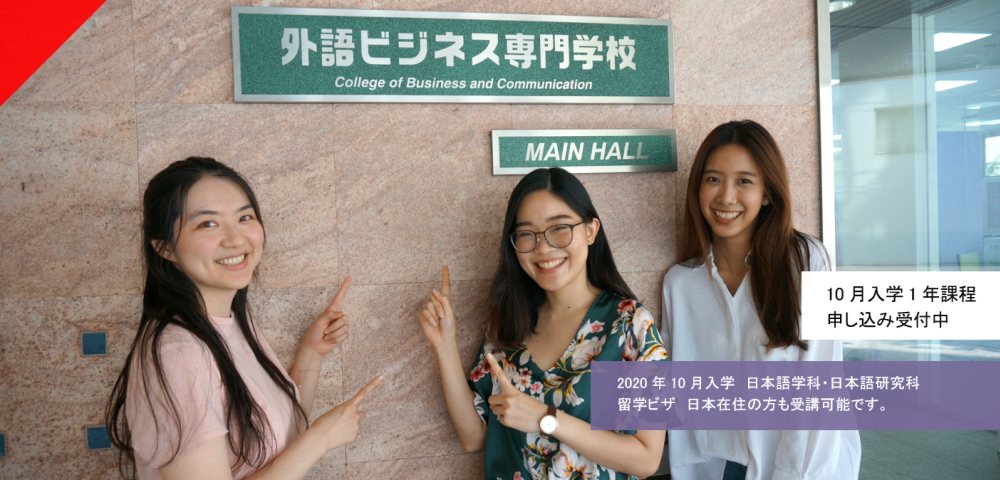
College of Foreign Languages and BusinessPopular
College of Foreign Languages and Business
Popular · Of 13 study-abroad agencies in Korea, 8 include this school on their recommendation lists · Checked September 2026 · This is a count of agencies' recommendation lists, not a SALLAE recommendation
- To station
- 1 min walk · Keikyu Kawasaki Station
- Distance to dormitory
- 1 min walk ›
- Admission
- Twice a year · April and October ›
Compare side by side with other schools →
Tuition and conditions may change depending on the intake. If you contact us, we will check with the school and give you accurate details.
Nearby schools comparedBy distance · no ads or paid placement
- College of Foreign Languages and BusinessThis schoolTuition/yr¥880,000Progression—IntakesApr · Oct
- Reiwa International Japanese Language Institute0.9km›Tuition/yr¥860,000Progression77%IntakesJan · Apr · Jul · Oct
- Tokyo Education College Tamagawa Campus4.4km›Tuition/yr¥670,000Progression—IntakesApr · Jul · Oct
- West Coast Language Institute5.4km›Tuition/yr¥995,000Progression74%IntakesApr · Jul · Oct
— means SALLAE has not yet found the data.
About the school
A Japanese language department inside a vocational college founded in 1948, 1 minute on foot from Keikyu Kawasaki Station and 4 minutes from JR Kawasaki Station. After completing the 1-year Japanese course, students can move on to the Japanese research course and study for up to 2 years in total. There are 22 hours of 50-minute lessons a week (about 900 hours a year). For students aiming at further study, it offers EJU preparation, general subjects, physics, chemistry, mathematics and graduate school guidance; for students aiming at employment, it offers job-hunting guidance and internal progression to specialized courses at the same school, such as the Business Japanese department. In the afternoon there is a separate conversation-focused class for beginners. A dormitory (twin room from ¥58,000 a month) is inside the school building, a 1-minute walk from the classrooms.
Published data and school website
Tuition
If you saw a lower amount elsewhere, it may not include the admission fee and application fee
Median 1-year tuition in other areas — Kyoto ¥911,000(7 schools) · Kanagawa ¥880,000(8 schools) · Okinawa ¥858,000(6 schools) · Tokyo ¥840,600(56 schools) · Fukuoka ¥835,000(12 schools) · Hyogo ¥825,500(7 schools) · Osaka ¥814,000(27 schools) · Shizuoka ¥790,000(9 schools) · Chiba ¥745,333(10 schools) · Aichi ¥740,667(5 schools)
Cost details, tables by course and notes · 6 items
- Per term
- ¥375,000 6 months
- One-time fees
- ¥130,000Application fee · Admission fee
| Duration | Total |
|---|---|
| 1 year | ¥880,000 |
| 1 year 3 months | ¥1,067,500 |
| 1 year 6 months | ¥1,255,000 |
| 1 year 9 months | ¥1,442,500 |
| 2 years | ¥1,630,000 |
★"Per term" and "One-time at start" were calculated by SALLAE from each course's total. The courses this school actually offers are 1 year onward — all amounts in the table are values calculated by SALLAE.
School website · 2026-07-23 updated
Whether it is refundable
- If you cancel after submitting application documents to the school
- The application fee is not refunded whether or not the Certificate of Eligibility is issued.
- If you cancel before enrollment after paying the admission fee and tuition
- The application fee and admission fee are not refunded; tuition is refunded in exchange for the CoE and admission permit if the procedure is completed by the end of the previous month.
- If you decline enrollment after obtaining a student visa but before coming to Japan
- The application fee and admission fee are not refunded; tuition is refunded after the procedure is completed by the last day of the previous month and the unused visa is confirmed.
- If the Japanese embassy refuses to issue a visa
- If a visa denial is confirmed, the admission fee and tuition are refunded, excluding the application fee. This does not apply to false applications.
See refund policy in detail · 3 more lines
- If you cancel after classes have started
- The application fee, admission fee and tuition are not refunded.
- If you defer enrolment
- The admission fee and tuition already paid can be transferred only to the applicant's own classes.
- If you cancel after payment but before the course starts
- For short-term courses, a ¥10,000 cancellation fee applies before the start, and tuition is not refunded after the start.
Admission & dates
- Apr intake
- 1-year course · Apply 1st round Aug 1 to Dec 17, 2025 / 2nd round Dec 18, 2025 to Jan 28, 2026 · Classes About 900 hours a year
- Oct intake
- 1-year course · Apply 1st round Feb 2 to Jun 24, 2026 / 2nd round Jun 25 to Jul 29, 2026 · Classes About 900 hours a year
- Japanese level
- JLPT N5 level or above
Submit proof of JLPT N5 or higher level or at least 150 hours of study; the research course requires Japanese ability of about N2.
Deadline and capacity rules
The Japanese language department and research course are 1 year each, up to 2 years in total. Completion of 12 years of schooling is required, and graduation within the past 5 years is preferable. For those living in Japan, the April intake closes in late March and the October intake in late September. Applications close once capacity is reached. With an overseas EJU Japanese score of 200 or higher, a pre-arrival admission system applies. 2026 start dates are April 10 and October 7.
School website · 2026-07-23 updated
Classes
- Elective classes
- EJU preparation · Comprehensive subjects, Physics, Chemistry and Math · Essay writing · English · JLPT preparation · Various business certification exams · Honorific language training · Business conversation · Word exercises · Contemporary Japanese society · Pronunciation training · Learning Japanese from video · Expression (writing and speaking) · Learning Japanese through song lyrics · Learning about Japanese culture · Elective subjects are divided into further study, employment and other; EJU preparation is held at a different time from regular classes and costs extra.
Materials · Subjects · Timetable · Details
- Materials
- Mornings use Minna no Nihongo (elementary and intermediate) and Nihon Bunka wo Yomu (upper-intermediate and advanced). Afternoons use Daichi I and II, a basic workbook and listening materials.
2026 short-term Japanese course class hours 1 period: 50 minutes × 22 per week
| Mon | Tue | Wed | Thu | Fri | |
|---|---|---|---|---|---|
| 09:40-10:30 | Period 1 | Period 1 | Period 1 | Period 1 | Period 1 |
| 10:40-11:30 | Period 2 | Period 2 | Period 2 | Period 2 | Period 2 |
| 11:40-12:30 | Period 3 | Period 3 | Period 3 | Period 3 | Period 3 |
| Mon, Wed 12:30–13:40 / Tue, Thu, Fri 12:35–13:25 | Lunch break | Period 4 | Lunch break | Period 4 | Period 4 |
| 13:40-14:30 | Period 4 | Period 4 | |||
| 14:40-15:30 | Period 5 | Period 5 |
50-minute classes, 22 periods a week, about 900 hours a year. The research course is for intermediate to advanced learners. Free kanji classes, quizzes and regular exams, a homeroom teacher system and iPad materials.
What each level covers · 8 stages
- Advanced I and II
- 6 monthsRead social commentary, literature and history, and build the ability to understand the news, explain it and exchange opinions. JLPT N1.
- Upper intermediate I and II
- 6 monthsRead novels, essays and critiques, discuss the news, and also study N1 grammar. JLPT N2 and N1.
- Intermediate II
- 3 months Expand N2 grammar and vocabulary and build speaking, listening, reading and writing skills. JLPT N3 and N2.
- Intermediate I
- 3 monthsDevelop elementary grammar and expand the grammar and vocabulary used in daily life. JLPT N3.
- Beginner II
- 3 monthsLearn basic sentence patterns and build Japanese for getting by in daily life, plus the ability to write about your own culture, hobbies and work. JLPT N4.
- Beginner I
- 3 monthsLearn to read and write hiragana, katakana and kanji, and basic sentence patterns. JLPT N5.
- Afternoon Elementary II
- 3 monthsUnderstand the situations and settings in which expressions are used and express yourself in Japanese as far as possible.
- Afternoon Elementary I
- 3 monthsStudy centered on basic Japanese conversation and develop the ability to apply expressions in daily life.
School website · 2025-01-31 updated
Documents to prepare — student visa course
- Résumé3 copies on the school's designated form
- 3 photos (3 cm × 4 cm) taken within the last 3 months, with nationality, name and date of birth written on the back.
- Certificate of graduationLast school attended
- TranscriptLast school attended
- Submit documents proving Japanese ability equivalent to N5 or higher, or at least 150 hours of Japanese study.
- Health certificateSchool's prescribed form
Financial supporter's documents · only if applicable · 6 application requirements
Submitted by the person paying the tuition (financial sponsor)
- Guarantor's pledge and consent form
- Financial sponsorship statementSchool's prescribed form
- Submit a certificate of employment; business owners submit a copy of the corporate registry or business license.
- Bank deposit balance certificate
- Withholding tax slip for employment income or income certificateIssued by the National Tax Agency
- Submit a family register extract, a notarized proof of family relationship or similar.
Only if applicable
- Students currently enrolled also submit a certificate of enrollment and a transcript from their current school. (If you are currently enrolled)
- Certificate of employment (only for those with work history) (Only those with work experience)
- Submit a copy of the passport page with name, number and photo, and, if you have been to Japan, the pages with entry and exit stamps. (If you have a passport)
- Company dispatch certificate (stating the purpose and conditions of the dispatch, if the company pays the expenses)
- Tax payment certificate or resident tax payment certificate · Residence certificate (all members of the same household) · Copy of residence card (A. if the financial supporter is in Japan)
- If you pay your own expenses, submit a certificate of employment, income certificate and bank balance certificate. (C. If the applicant pays the expenses)
Application requirements
All documents may be written in Korean, and some of the school's forms can be filled in on Excel. Except for certificates, submitted documents are valid only if issued within 3 months of the application date to the Immigration Services Agency. Write with a black ballpoint pen or fountain pen, and correct mistakes with a double line and a correction seal or signature, not correction fluid. The financial supporter should preferably be a parent or a relative within the second degree of kinship (grandparent or sibling). On the Korean page, the Korean-version document list is said to take precedence over the Japanese version. Depending on the contents of the documents you submit, we may ask you to submit documents other than those listed below.
It lists a "family register copy" as the document proving the relationship — it is not stated whether the family relationship certificate now issued in Korea can be used instead. SALLAE is confirming this with the school.
For short-term courses: application form (school's designated form) · Face photos (3 cm × 4 cm), 3 · Copy of passport (page with name, date of birth, passport number and photo) · Copy of both sides of residence card (submit only if you hold a status of residence other than Temporary Visitor) · Chest X-ray result (taken within 3 months). Submit only if applying from overseas.
School website · 2026-07-23 updated
Admission process
- Request an admission consultation — You can consult about admission preparation and procedures in Korean.
- Application — Submit the documents to the school. The Korean-language page says that the financial sponsor, a relative or a friend living in Japan should come to the school to handle the procedure (weekdays 9:00–18:00; Saturdays by prior inquiry).
- Interview and document screening — Notice of results (if accepted, proceed to the procedures below)
- Application fee — Application fee ¥30,000 paid
- Application for the Certificate of Eligibility — (About 1–3 months after application)
- Pay the admission fee and tuition — After the CoE is issued, pay the admission fee of ¥100,000 and half a year of tuition, ¥375,000; after confirmation, the certificate is sent to the applicant or the expense supporter.
- Visa application — 1. Certificate of Eligibility 2. Passport 3. Visa application form, 2 copies (obtained at the diplomatic mission abroad) 4. Photos (4.5 x 4.5), 2
- Enter Japan and enrol — Apr 10, 2026 / Oct 7, 2026
- Placement test
- A placement test is given before the course starts, and students study at a level that matches their Japanese ability.
- Application form
- Korean version is available
School website · 2026-07-23 updated
Short-term study
- Visa
- Temporary visitor or Working holiday(not a student visa)
- Open now?
- Rolling admissions, so availability varies from time to time — SALLAE will confirm with the school
Course without a student visa
- Short-term Japanese course (3 months) — The 3-month courses start in April, July, October and January; apply up to 1 week before the start. Available to those on short-term stay, working holiday and similar status; short-term stay cannot be extended. A level check is done before enrollment.
- 6-month and 1-year Japanese courses — People living in Japan with a status of residence can take the 6-month or 1-year course starting in April or October, and may extend.
- Corporate training — Group lessons for foreign employees, from beginner to business level; content, place and time are decided through consultation.
- Private lessons — Intensive one-on-one study covering intermediate to advanced technical terms and business manners; date, time and content are decided through consultation.
- Free trial lesson — Those considering long-term study can try classes free for up to 5 weekdays, and if rooms are vacant they can stay in the student dormitory for a fee. Not available during events or exam periods.
★Short-term courses are not listed in the published data — it counts only student-visa courses.
School website · 2025-01-31 updated
Reviews
If you study here or used to, tell others what the classes, teachers and daily life were like. It helps anyone deciding on this school.
Write the first reviewUniversity prep
- Progression guidance — Homeroom teachers and progression advisors guide students from filling in application forms to interview practice, and provide information sessions and school information.
- EJU preparation, comprehensive subjects, physics, chemistry, mathematics — Students hoping to enter university can choose EJU preparation and comprehensive subjects, physics, chemistry and mathematics. EJU preparation costs extra.
- Graduate school progression guidance — For students hoping to enter graduate school, elective subjects teach how to write research papers and how to make appointments with professors.
- JLPT prep — JLPT preparation is held at every level, and N1 and N2 pass preparation can also be taken as an elective.
- Job-hunting guidance — Guidance on job hunting, resumes, entry sheets and interviews, and job seminars are held regularly.
- Internal progression — After the Japanese course, students can progress to the 2-year daytime International Business, Hotel/Bridal/Tourism, Global ICT and Business Japanese departments. An information session is held in August.
- On-campus guidance — On-campus guidance on job and school preparation is held every May and November.
School website · 2025-01-31 updated
Daily-life support
- Procedures after entry — Staff help with registering your address at the ward office and enrolling in National Health Insurance.
- Bank account and SIM card — We also support opening an account at Japan Post Bank and buying a SIM card.
- Guidance to the nearest hospital or clinic — If you become ill or injured, we guide you to the nearest hospital or clinic.
- Multilingual staff — Staff who speak English, Chinese and Korean support your daily life.
- Professional counselor consultation — In 2018 the school was certified as a base school of the Kanagawa Prefecture international student support program; per the 2020 guide, a professional counselor holds consultations every month.
- Regular health check — Tuition includes the periodic health checkup fee and facility use fee.
- Commuter pass, student discount ticket, working student deduction — You can use commuter passes, the student discount ticket (20% off fares for trips of 101 km or more one way) and the working student deduction.
School website · 2025-01-31 updated
Scholarship
- Japan Student Services Organization scholarship for privately financed international students
- Monthly ¥48,000 × 1 yearFor students with excellent grades and attendance, paid from April to the following March. The EJU reservation system also covers the Japanese language department and research course. The 2020 edition listed vocational courses only.
- Kawasaki City scholarship for international students
- Monthly ¥10,000 × 1 yearPaid from April to the following March to students with a student visa, excellent grades and attendance, who live in Kawasaki.
- CBC scholarship (first half and second half)
- ¥100,000 OncePaid as a lump sum to students with excellent grades and attendance: 2 students in the first half and 2 in the second half.
School website · 2025-01-31 updated
School life
For 1 year
- 4
- Apr intake entrance ceremony
- 5
- Spring field trip
- 7
- International Festival
- 8
- Inage Shrine Sanno Festival portable shrine procession
- 9
- Oct intake graduation ceremony
- 10
- Oct intake entrance ceremony
- 11
- Autumn field trip
- 1
- New Year karuta tournament · National Vocational School Japanese Language Education Association Speech Contest · Kanagawa Prefecture Association of Vocational and Miscellaneous Schools Speech Contest
- 2
- Kawasaki International Association Speech Contest · Sports day
The short-term course's July events include the Kawasaki Daishi Wind Chime Market. The annual schedule in the 2020 guide lists August summer vacation, September autumn vacation, December winter vacation and March spring vacation.
- On the spring and autumn field trips, choose from companies, theme parks, museums, strawberry picking, mandarin orange picking, a stroll in Kamakura and more.
- At the Sanno Festival, Kawasaki's biggest festival held in early August every year, students carry a portable shrine weighing about 1 ton through the streets of Kawasaki.
- Exchange with Kawasaki residents, visits to local elementary schools, and exchange meetings with nearby high school and university students.
- Sumo viewing, kabuki appreciation, International Festival
- Interpreting and guiding at events for foreign residents, and volunteer cleaning at elementary schools in Kawasaki.
- Won the Grand Prize and the Minister of Education, Culture, Sports, Science and Technology Award at the National Vocational School Japanese Language Education Association Speech Contest in February 2025.
- Once a year, a team-based badminton and basketball sports tournament is held at Kalutz Kawasaki.
Clubs
CBC Sports Club
Once a week, students enjoy basketball, badminton and table tennis with Japanese students at a nearby elementary school or the city gymnasium. They also try martial arts such as karate in the multipurpose hall and tatami room on the 8th floor of the main building.
On campus
- International Hall, 6F
- Main school office
- 1st floor
- Student counseling room
- Each classroom
- Each classroom is equipped with an internet connection, a data projector and iPads. — Audio and video materials and teaching resources can be displayed instantly from the educational content server installed on campus.
- 2nd floor
- There is a student cafeteria and a terrace on the 2nd floor.
- 3rd floor
- 3F library and internet room — At the library you can borrow books and freely use the wireless LAN and the desktop computers provided.
- 8th floor
- There is a multipurpose hall and a rooftop garden on the 8th floor. — The multipurpose hall is used for ceremonies such as the entrance ceremony and for events such as yukata dressing.
- PAL Building
- Japanese-style room — A Japanese-style room is set up for learning traditional Japanese culture and manners.
- 1-minute walk from CBC
- ZAVAS Kawasaki — Equipped with a pool and training machines; studio programs are also available.
2026–2027 academic calendar
- Year-end and New Year closure
- 2025-12-27~2026-01-04 · We do not accept inquiries or certificate applications.
- Summer vacation
- 2026-08-08~2026-08-16 · Classes are cancelled for summer vacation from Aug 8 (Sat) to Aug 16 (Sun) during the summer term.
School website · 2025-01-31 updated
Access
- Transit
- Keikyu Main Line and Daishi Line Keikyu Kawasaki Station, 1 min walkWest exit
JR: Tokaido Line, Keihin-Tohoku Line, Nambu Line JR Kawasaki Station, 4 min walk From the east exit of JR Kawasaki Station, go through exit 34 of the Azalea underground mall. - Nearby
- From Haneda Airport International Terminal Station to Keikyu Kawasaki Station is 12 minutes direct, and JR Kawasaki Station and Keikyu Kawasaki Station are a 3-minute walk apart.
- Dormitory
- Available · CITY VIEW MAISON occupies floors 5–7 of the main building. Rent is ¥58,000–¥63,000 for a double room and ¥105,000 for a single room, with a 1-minute walk to school. · Per the school website
School website · 2020-09-17 updated
Dormitory — First payment: ¥294,000–¥309,000 for a twin room, ¥435,000 for a single room. Open to men and women; bathroom, appliances and internet included; staff on site.
School website · 2025-01-31 updated
SALLAE has organized the school website and published data in English.
The update date is the day that material was last revised.
Photos are materials published by the school.
This information is compiled from official sources and is not updated daily. Please confirm with the official contact before signing or applying.