Doho University
同朋大学
Opening soonApplications open 1/5 · General Selection Round 2
Compare with other universities →
Fees and conditions can change over time. Always check the school's guidelines before you apply.
Fees and conditions can change over time.
About the school
A private university founded in 1950. It has 1,065 students, including 4 international students (undergraduate 3 · graduate 1). There are 44 faculty members.
History · 7
- 1921
- Shinshu Vocational School, the predecessor of Doho University, was founded with Chiken Sumita as its founder.
- 1950
- Tokai Doho University opened with a Faculty and Department of Buddhist Studies.
- 1959
- The university was renamed Doho University.
- 1961
- The Faculty of Buddhist Studies was renamed Letters, and a Social Welfare department opened.
- 1985
- The Faculty of Social Welfare opened.
- 2009
- The Faculty of Letters was reorganized into Buddhist Studies and Humanities departments, and Social Welfare into Social Welfare and Child Studies majors.
- 2024
- A Psychology Major opened in the Department of Social Welfare.
大学
Admission requirements and dates
Doho University admits international students through 3 routes.Pick your situation below to see only the routes that fit · Based on the guidelines for April 2027 entry
EJUThe exam Japanese universities use for international student admission · June and November · also held outside Japan = Examination for Japanese University Admission · JLPTJapanese-Language Proficiency Test · N1 is the highest, then N2 = Japanese-Language Proficiency Test
General Selection Round 1 (applying from overseas)
Official name: 一般選抜 1期
For people living outside Japan who apply in October for Round 1. Mail documents and take the exam at the university in Nagoya in November.
Applications for this year have closed — below are the remaining dates for those who applied
Apply 10/5-10/16; exam 11/14.
- Apply 10/5~10/16
- →
- Exam 11/14
- →
- Results 12/14 days left
- →
- Admission fee ~12/15
- →
- Rest of fees ~12/22
Accepted students in Rounds 1 and 2 may pay all at once or in 2 parts: admission fee first, then tuition and other fees. Admission is not granted unless procedures are completed by the deadline.
EJU subjects · EJU Japanese, at least 200 points total, excluding writing.
General Selection (Domestic Round 1, Rounds 2 and 3)
Official name: 一般選抜
Round 1 in November is for applicants applying from Japan. The guide does not specify domestic or overseas eligibility for Round 2 in January or Round 3 in February. All use an essay and interview.
Applications open 1/5 · in 39 days
Round 1: apply 11/1-11/6; exam 11/14.
- Apply 11/1~11/6
- →
- Exam 11/14
- →
- Results 12/14 days left
- →
- Admission fee ~12/15
- →
- Rest of fees ~12/22
Accepted students in Rounds 1 and 2 may pay all at once or in 2 parts: admission fee first, then tuition and other fees. Admission is not granted unless procedures are completed by the deadline.
EJU subjects · EJU Japanese, at least 200 points total, excluding writing.
Round 2: apply 1/5-1/20; exam 1/30.
- Apply 1/5~1/20opens in 39 days
- →
- Exam 1/30
- →
- Results 2/4
- →
- Admission fee ~2/18
- →
- Rest of fees ~2/25
Accepted students in Rounds 1 and 2 may pay all at once or in 2 parts: admission fee first, then tuition and other fees. Admission is not granted unless procedures are completed by the deadline.
EJU subjects · EJU Japanese, at least 200 points total, excluding writing.
Round 3: apply 2/1-2/11; exam 2/20.
- Apply 2/1~2/11opens in 66 days
- →
- Exam 2/20
- →
- Results 2/26
- →
- Enroll ~3/12
Round 3 enrollment fees must be paid all at once. Admission is not granted unless procedures are completed by the deadline.
EJU subjects · EJU Japanese, at least 200 points total, excluding writing.
Recommendation Selection (Faculty of Letters only, Rounds 1-3)
Official name: 推薦選抜
For students at a Japanese language school with a principal recommendation. Selection is by interview. You must promise to enroll if accepted.
Applications open 1/5 · in 39 days
Round 1: apply 11/1-11/6; interview 11/14.
- Apply 11/1~11/6
- →
- Exam 11/14
- →
- Results 12/14 days left
- →
- Admission fee ~12/15
- →
- Rest of fees ~12/22
Accepted students in Rounds 1 and 2 may pay all at once or in 2 parts: admission fee first, then tuition and other fees. Admission is not granted unless procedures are completed by the deadline.
EJU subjects · EJU Japanese, at least 230 points total, excluding writing.
Other requirements · You must attend a Japanese language school, have strong character, strongly want to enter this university, and be recommended by its principal. By the exam, you must have lived in Japan for at least 6 months and expect to graduate or complete that school in March 2027. You must promise to enroll if accepted.
Round 2: apply 1/5-1/20; interview 1/30.
- Apply 1/5~1/20opens in 39 days
- →
- Exam 1/30
- →
- Results 2/4
- →
- Admission fee ~2/18
- →
- Rest of fees ~2/25
Accepted students in Rounds 1 and 2 may pay all at once or in 2 parts: admission fee first, then tuition and other fees. Admission is not granted unless procedures are completed by the deadline.
EJU subjects · EJU Japanese, at least 230 points total, excluding writing.
Other requirements · You must attend a Japanese language school, have strong character, strongly want to enter this university, and be recommended by its principal. By the exam, you must have lived in Japan for at least 6 months and expect to graduate or complete that school in March 2027. You must promise to enroll if accepted.
Round 3: apply 2/1-2/11; interview 2/20.
- Apply 2/1~2/11opens in 66 days
- →
- Exam 2/20
- →
- Results 2/26
- →
- Enroll ~3/12
Round 3 enrollment fees must be paid all at once. Admission is not granted unless procedures are completed by the deadline.
EJU subjects · EJU Japanese, at least 230 points total, excluding writing.
Other requirements · You must attend a Japanese language school, have strong character, strongly want to enter this university, and be recommended by its principal. By the exam, you must have lived in Japan for at least 6 months and expect to graduate or complete that school in March 2027. You must promise to enroll if accepted.
Good to know before applying
- All classes are in Japanese, so strong Japanese ability is required.
- Immigration strictly reviews financial support for living costs, Japanese ability, and background for Student status. You may be unable to enter Japan and enroll even if the university accepts you.
- The academic year runs from April through the following March. There is no September entry.
- Recommendation selection is only for Letters. It requires a Japanese language school principal recommendation and a promise to enroll if accepted. Its Japanese standard is higher than general selection: EJU Japanese at least 230 or JLPT N1.
- Transfer into year 2 or 3 is for people who completed 13 or 14 years of schooling abroad, among others. Ask at least 2 weeks before applying for an eligibility review.
- For applicants living overseas, a guarantor in Japan must pay the application fee on their behalf. Applicants pay the processing fee.
- Complete application documents in Japanese and attach signed Japanese translations to foreign-language certificates. Only Japan residents submit a residence card copy.
- Paid academic fees are generally not refundable. Only students who request withdrawal by 13:00 on Wednesday, March 31, 2027, receive a refund excluding the admission fee. Withdrawal after submitting application documents does not qualify for an application fee refund.
- Be seated 20 minutes before the exam. Entry is not allowed more than 30 minutes after it starts; contact Admissions for unavoidable public transport delays. Do not come by car unless you have a disability.
同朋大学 募集要項・各種様式 · 同朋大学 2027年度 外国人
Fees
- First-year fees
- ¥1,280,000
- Paid at enrollment
- from ¥735,000
- Application fee
- ¥35,000
- Planned first-year fees for 2027 total ¥1,280,000: ¥190,000 admission + ¥740,000 tuition + ¥350,000 education enhancement.
- Pay ¥735,000 at enrollment (¥190,000 admission + ¥370,000 first-semester tuition + ¥175,000 first-semester enhancement) and ¥545,000 in September.
- From year 2, annual fees are ¥1,090,000.
- Extra annual fees are ¥36,500 for Social Welfare or ¥31,500 for Letters: ¥21,500 for the education supporters association and Doho academic society, plus a first-year practical training fee of ¥15,000 or ¥10,000 respectively.
- Pay ¥25,000 alumni dues in the graduation year.
- Transfer students pay the ¥190,000 admission fee in their entry year.
- Doho University graduates are exempt from the admission fee.
Places and fees by department 5
| Department | Places | First-year fees (¥) | |
|---|---|---|---|
| Faculty of Social Welfare | |||
| Department of Social Welfare, Social Welfare Major | A small number of places (university-wide undergraduate intake capacity: 260). | ¥1,280,000 | |
| Department of Social Welfare, Psychology Major | A small number of places. | ¥1,280,000 | |
| Department of Social Welfare, Child Studies Major | A small number of places. | ¥1,280,000 | |
| Faculty of Letters | |||
| Department of Humanities | A small number of places. | ¥1,280,000 | |
| Department of Buddhist Studies | A small number of places. | ¥1,280,000 | |
Places are the total across all international student admissions. Fees are for 2027 entry.
For 2027 entry · from the school's guidelines
Documents to prepare
- Application form printed from the online system; original high school-equivalent graduation or expected graduation certificate with Japanese translation; original full transcript with Japanese translation (transfer applicants need at least 2 years of university transcripts); handwritten history form and study-abroad statement on university forms; Japanese proof, either original JLPT score certificate, EJU ticket copy, or separate Japanese Ability Certificate; optional recommendation for general selection or 1 principal recommendation for recommendation selection; color passport copy; and both sides of residence card in color for Japan residents.
- Complete forms in Japanese.
- After online registration and payment, mail documents by registered express mail in a standard large envelope, or submit at the specified counter time.
Graduate outcomes
How these are counted
Figures combine undergraduate graduates and graduate completers.
- Official sources do not show international-student-only employment results.
- University-wide, the employment rate was 98.5% (employed divided by job seekers) for academic year 2025, March 2026 graduates.
- Employers include medical and welfare organizations, social welfare councils, public service, education, and companies.
University Portraits · figures for all students (not international students only)
Reviews from students
No reviews yet. If you attend or attended this school, please write the first one.
Write a review
Scholarships
- Medical cost supportAll international students join National Health Insurance.
The guide says JASSO covers about 80% of treatment costs for injuries or illness at Japanese medical facilities. - Entrance merit scholarshipAll selection routes are eligible, based on admission results.
Type I (2 places) pays half of annual tuition, ¥370,000, for 4 years.
Type II (8 places) pays ¥190,000, equal to the admission fee, after enrollment.
The international student admissions guide does not mention this program. - University scholarships after enrollment include the Doho merit award for students in year 2 or above with excellent previous-year grades (half a semester's tuition or one-quarter), alumni scholarship (¥100,000 for undergraduates), education supporters scholarship (¥100,000), and Higashi Honganji scholarship. Places depend on budget; these are not only for international students.
Student life support
- The university has no international student dormitory.
- Students live in nearby apartments.
- For help finding one, contact Do Co., a company funded by Doho Gakuen, at 052-419-1252.
Getting there
- Doho University Campus (Inabaji)
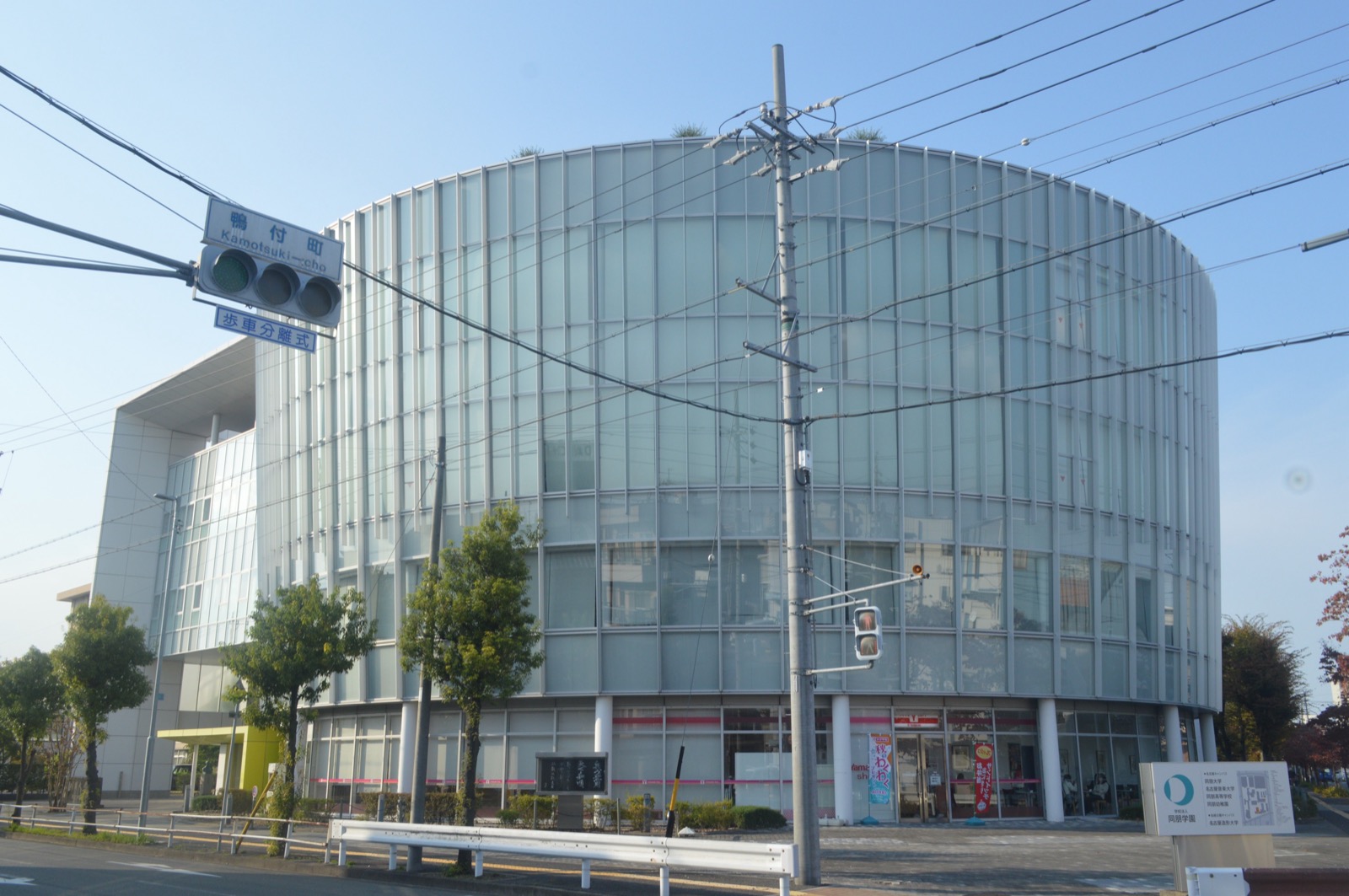
- About 20 minutes by City Bus Sakae 24 toward Inanishi Garage from Nagoya Station; get off at Kamotsuke-cho, next to campus. · Faculty of Social Welfare and Faculty of Letters.
愛知県名古屋市中村区稲葉地町7-1
SALLAE compiled this from the school's admission guidelines and official sources (such as University Portraits).
Photo: Asturio Cantabrio · CC BY-SA 4.0 · Wikimedia Commons
This information is compiled from official sources and is not updated daily. Please confirm with the official contact before signing or applying.