ECC Japanese Language Institute Nagoya CampusPopular
ECC Japanese Language Institute Nagoya Campus
Popular · Of 13 study-abroad agencies in Korea, 7 include this school on their recommendation lists · Checked September 2026 · This is a count of agencies' recommendation lists, not a SALLAE recommendation
- To station
- 2 min walk · Kanayama Station
- AM & PM classes
- Decided by the school ›
- Admission
- 3 times a year · Apr, Jul, Oct ›
Compare side by side with other schools →
Tuition and conditions may change depending on the intake. If you contact us, we will check with the school and give you accurate details.
Nearby schools comparedBy distance · no ads or paid placement
- ECC Japanese Language Institute Nagoya CampusThis schoolTuition/yr¥826,000Progression—IntakesApr · Jul · Oct
- ARMS Japanese Language School0.6km›Tuition/yr¥759,000Progression83%IntakesApr · Oct
- ASAHI Culture Institute1.1km›Tuition/yr¥796,000Progression—IntakesApr · Oct
- Nagoya International Japanese Language School2.5km›Tuition/yr¥774,000Progression73%IntakesApr · Jul
— means SALLAE has not yet found the data.
About the school
This school puts effort into progression: FY2025 results were 6 to graduate school, 25 to university and 32 to vocational school, with 20 finding jobs. It runs separate JLPT and EJU prep classes in the spring and autumn terms, and of its 3 campuses only this one has designated-school recommendations. It is the first campus of ECC Japanese Language Institute, opened in 1992, on the 5th and 6th floors of a building a 2-minute walk from the north exit of Kanayama Station, and its international student capacity grew from 240 to 320 in FY2025. Many students are from China (96 of the 157 enrolled in 2025), and the same building also houses a paid university-prep school taught in Chinese.
Published data and school website
Tuition
⚠ The 1-year course tuition differs by source. Please confirm with the school. School guide, first year ¥875,000 (admission fee ¥55,000 · tuition ¥792,000 · facility and academic activity fee ¥22,000 · accident insurance ¥6,000) · JAPAN Foundation for Japanese-language Education (JEES) published data, 1-year course ¥825,500 (application fee ¥22,000 · admission fee ¥55,000 · tuition ¥726,000 · other ¥22,500) The published figures appear to be earlier tuition — the amounts in the current admission guidelines received from the school are the correct ones.
If you saw a lower amount elsewhere, it may not include the admission fee and application fee
Median 1-year tuition in other areas — Kyoto ¥911,000(7 schools) · Kanagawa ¥880,000(8 schools) · Okinawa ¥858,000(6 schools) · Tokyo ¥840,600(56 schools) · Fukuoka ¥835,000(12 schools) · Hyogo ¥825,500(7 schools) · Osaka ¥814,000(27 schools) · Shizuoka ¥790,000(9 schools) · Chiba ¥745,333(10 schools) · Aichi ¥740,667(5 schools)
Total by intake
| Intake · length | Full course |
|---|---|
| October intake · 1 year 6 months | ¥1,288,000 |
| July intake · 1 year 9 months | ¥1,491,500 |
| April intake · 2 years | ¥1,695,000 |
Cost details · course tables · notes · 5 items
- One-time fees
- ¥875,000First-year tuition ¥792,000 · Admission fee ¥55,000 · Facility and academic activity enhancement fee ¥22,000 · Accident insurance (1 year) ¥6,000
According to the school guide, one year's fees are paid in one lump sum at enrollment. SALLAE will check with the school whether you can pay in installments.
| Intake · course | Extra 2nd-year costs | All |
|---|---|---|
| October · 1 year 6 months | ¥413,000 | ¥1,288,000 |
| Jul · 1 year 9 months | ¥616,500 | ¥1,491,500 |
| April · 2 years | ¥820,000 | ¥1,695,000 |
Extra cost paid in the 2nd year — the application fee and admission fee are not charged again. Next year: 2-year course ¥820,000 / 1-year 9-month course ¥616,500 / 1-year 6-month course ¥413,000
Only the application fee is paid when you apply for the student visa screening.
All amounts include tax.
Textbooks are not included in tuition and cost about ¥10,000 per term separately after your class is decided. This differs by level.
The 1-year 3-month course (January intake) is only at the Kobe campus. The next year's table has no row for a 1-year course.
5 weeks ¥115,500 / 3 months ¥220,000 / 6 months ¥429,000 / 9 months ¥638,000 / 1 year ¥847,000
Short-term 3 months is a separate ¥220,000 (admission fee ¥11,000 · 3-month tuition ¥198,000 · facilities and academic activities fee ¥11,000).
School guide · Updated 2026-07-01
Whether it is refundable
- If your student visa is denied and you cannot enroll
- If you cannot enroll because the student visa is not issued, tuition and the facilities and academic activities fee are refunded, excluding the application fee, admission fee and insurance premium. A copy of your passport is required.
- If you become unable to enroll before the entrance ceremony
- Notify the school in writing by the day before the entrance ceremony and return the COE, and tuition and the facilities and academic activities fee are refunded.
- First 6 months after enrollment
- For the first 6 months after enrollment, tuition and the facilities and academic activities fee are not refunded for any reason.
- After the first 6 months, when progression, employment, or voluntary withdrawal and return home is confirmed
- After 6 months from enrollment, when progression, employment or return home is confirmed, tuition and the facilities and academic activities fee for terms not attended are refunded.
See refund policy in detail · 2 more lines
- Cancellation by the day before the course start date (within business hours)
- Tuition and the facilities and academic activities fee are refunded.
- If you withdraw on or after the course start date
- No refund after the course starts. If you applied for multiple terms, terms not yet studied are refunded if canceled by the day before they start.
Admission & dates
- Apr intake
- 2-year course · Application The application period for April enrolment ends October 31
- Jul intake
- 1 year 9 months course · Application July intake: until Mar 15
- Oct intake
- 1 year 6 months course · Application October intake: until May 15
- Japanese level
- JLPT N5 level or above (or 150+ hours of Japanese study)
Japanese qualification certificate (original certificate for JLPT, admission ticket for J-TEST and NAT-TEST) or proof of 150 or more hours of study at a Japanese language school. Studying hiragana and katakana before enrollment is recommended.
Deadline and capacity rules
The Nagoya campus's course for international students scheduled to begin in April 2027 has been certified as a "certified Japanese language educational institution" (announced by MEXT on Nov 13, 2026; school notice on Nov 18, 2026). The certified course is scheduled to begin in April 2027.
School website · 2026-02-27 updated
Classes
- Morning
- 09:15-12:30 4 periods of 45 minutes
- Afternoon
- 13:30-16:45 4 periods of 45 minutes
- AM/PM placement
- Morning or afternoon class is decided by your level.
- Class size
- Max 20 students
Materials · Subjects · Timetable · Details
5 days a week, 4 periods a day, using the direct method, in which classes are taught only in Japanese. Class size is up to 20. Class hours differ by building and level.
What each level covers · 8 stages
- Beginner 1
- 3 monthsA class for people learning Japanese for the first time. Learn everyday expressions and how to share basic information about yourself. Aims for a high pass on JLPT N5.
- Beginner 2
- 3 months N5 or above class. Convey personal information and everyday matters in simple expressions. Aim for a high-scoring JLPT N4 pass.
- Intermediate 1
- 3 months N4 or above class. Organize and convey your own thoughts on familiar topics and topics of interest. Aim to pass JLPT N3.
- Intermediate 2
- 3 months N3 or above class. Discuss and negotiate on familiar topics, speaking and writing to suit the setting and the other person. High-scoring JLPT N3 pass.
- Upper intermediate 1
- 3 months N3 or above, aiming to pass N2. Explain social topics with supporting evidence and understand and discuss content at about university-lecture level.
- Upper-intermediate 2
- 3 months N3 or above, aiming for a high-scoring N2 pass. Explain social topics and present survey and interview results.
- Advanced 1
- 3 months N2 or above, aiming to pass N1. Explain and exchange views on a wide range of topics and give speeches and presentations.
- Advanced 2
- 3 months N2 or above, aiming for a high-scoring N1 pass. Explain and exchange views on a wide range of topics and write in an appropriate style.
School website · Confirmed 2026-09-26
Documents to prepare — student visa course
⚠ Photo deadline varies by source — please confirm with the school. School website: taken within the last 3 months · School guide (July 2026 Korean-language application guidelines): taken within the last 6 months — please check with the school before submitting.
- Admission application formFORM-1
- Original graduation certificate from your last school (diploma or graduation certificate)
- RésuméFORM-2
- Statement of reasons for study — written by the applicant; include specific reasons for studying and plans after completing the course; the signature at the end must be handwritten
- 5 photos (4 cm × 3 cm) and photo data, taken within the last 3 months, without a hat; check the size
- Copy of passport
- Written pledgeFORM-3
- Proof of Japanese study
Sponsor documents · Only if applicable · 7 application requirements
Submitted by the person paying the tuition (financial sponsor)
- Financial sponsorship statementFORM-4
- Certificate of employment
- Income and tax payment certificate
- Original balance certificate: the original balance certificate of the financial sponsor (local currency is acceptable)
- Copy of ID or similar showing address and date of birth
- Documents showing the relationship between the applicant and the expense payer (family register, birth certificate, etc.)
- Documents proving how the funds in item 4 were accumulated: a copy of the bankbook or transaction statements for the past year
Only if applicable
- Certificate of enrollment (if currently enrolled)
- Certificate of employment (work history) (Only if you have work experience)
- Tuberculosis screening certificate issued by a designated medical institution (required only for the Philippines, Indonesia, Nepal, Myanmar, Vietnam and China) (Required only for the Philippines, Indonesia, Nepal, Myanmar, Vietnam and China)
- Certificate of residence (issued by the ward or city office, listing co-residents) and income and tax payment certificates (If the sponsor lives in Japan)
Application requirements
Attach a Japanese translation to any document written in a foreign language (the translator's name and address are required). Submitted documents must have been prepared within 3 months before the Immigration application (6 months for foreign documents). Certificates should, where possible, be on forms stating the issuing body's name and address. The documents listed are the minimum; others proving that you meet the conditions for the status of residence may also be requested. Keep copies of your application documents. In principle, the expense sponsor must be a family member within the third degree of kinship. The steps to enrollment also list a transcript and documents proving family composition. See each campus's application guidelines for the required documents.
There are no separate document criteria just for Koreans — the list above is the same for all countries. SALLAE is confirming this with the school.
For short-term courses: application form · submit only a copy of the passport and a copy of the residence card.
School website · 2026-02-27 updated
Admission process
⚠ The application fee varies by source — please confirm with the school. Application fee ¥33,000 · Application fee ¥22,000. The admissions guide and the tuition page give the same amount, so the page on the application process looks like outdated information.
- Request an admission consultation — Check the admission guidelines, then applicants contact the school through the inquiry form.
- Document screening by entry sheet — Document screening by entry sheet. If there is no problem with the application conditions, pay the ¥33,000 application fee (application guidelines).
- Online interview — After document screening by entry sheet, an online interview is held. If the interview finds no problem with the application conditions, you pay a ¥22,000 application fee for applying for the Certificate of Eligibility (COE).
- Submit required documents and document screening — Submit the application form and the documents required for the student visa application.
- Apply for the Certificate of Eligibility (CoE) — ECC Japanese Language Institute applies to the Immigration Services Agency for the Certificate of Eligibility (CoE) on behalf of the applicant. It takes about 3 to 6 months to obtain a student visa.
- Review by the Immigration Services Agency — The Immigration Services Agency screens the application, and if there are no problems, a Certificate of Eligibility (CoE) is issued.
- CoE issuance and payment — ECC Japanese Language Institute sends notice that the Certificate of Eligibility (CoE) has been issued, along with the tuition invoice
- Tuition payment — Pay the tuition. Payment can be made in cash, by bank transfer or by card (VISA/Master).
- Receive the admission permit and Certificate of Eligibility — After tuition payment is confirmed, the admission permit and CoE are sent. Consult the school if you wish to have accommodation arranged.
- Visa issuance — Prepare the CoE, admission letter and other required documents, and obtain the visa yourself at the Japanese embassy or consulate general in your area of residence
- Notifying us of your arrival date — After obtaining your student visa, book a flight and tell ECC Japanese Language Institute your arrival flight and time
- Enrolment and start of classes — Enter Japan by the enrolment date and come to the school on the date the school specifies. Classes start after the entrance ceremony and orientation.
- Placement test
- Classes are assigned by a level check just before enrolment. In principle, changes of level or course are not possible.
School website · 2026-02-27 updated
Short-term study
- Visa
- Temporary visitor or Working holiday(not a student visa)
- Duration
- 5 weeks – 1 year
- Open now?
- Rolling admissions, so availability varies from time to time — SALLAE will confirm with the school
Course without a student visa
- Comprehensive Japanese course (for residents and short-term visitors) — Same content as the student visa course. From 5 weeks, starting in April, July, October and January. In fiscal 2026, Nagoya courses start on 4/8, 7/6, 10/7 and 1/6.
- Practical Japanese Conversation Course — A beginner to intermediate course centered on conversation useful in daily life. From 5 weeks. In fiscal 2026, Nagoya courses start on 4/9, 7/3, 10/6 and 1/12.
- Hiragana class — A class of 10 sessions of 90 minutes for beginners, covering hiragana, katakana and simple daily-life Japanese.
- Private lessons (on campus) — Start any time, from 10 lessons. In-person lessons from 90 minutes. Everyday conversation, JLPT preparation, business conversation and more.
- Private lessons (online) — Available online from anywhere in the world. At least 60 minutes, with lessons arranged to fit your study goals, level and schedule.
- Corporate training — Japanese language training for foreign employees, offered on campus, by teacher dispatch or online. Consultation and quotes are free.
★Short-term courses are not listed in the published data — it counts only student-visa courses.
School website · 2026-02-27 updated
Graduate outcomes
| FY2025 | Admitted |
|---|---|
| Graduate school | 6 students |
| University | 25 students |
| Vocational school | 32 students |
| Employment | 20 students |
| Graduates | 86 students |
FY2025 outcomes: graduate school 6, research student 6, university 25, vocational school 32, employment 20. 86 course completers. · 20 found employment in FY2025. The course completer table shows 18 changes of status of residence (32 in FY2024, 14 in FY2023). · School website · Updated 2026-08-05
Reviews
If you study here or used to, tell others what the classes, teachers and daily life were like. It helps anyone deciding on this school.
Write the first reviewUniversity prep
- Exam preparation — A curriculum aligned with JLPT and EJU, and past-exam practice before tests. Students who wish can also take special EJU general subjects and mathematics classes.
- Progression briefings in native languages — Right after enrollment, progression briefings are held in students' native languages, supporting them with the path to progression and goal setting.
- Progression guidance — Once a year, students who want to continue their studies are given exam schedules, school information and required documents. In fiscal 2025, guidance sessions by universities and vocational schools in the Nagoya area were also held.
- Individual counseling and progression consultation — The school has staff in charge of progression and employment, and the homeroom teacher holds individual interviews each term. Students can consult career guidance staff at any time.
- Statement of purpose guidance and interview practice — Guidance on writing statements of purpose, answering in interviews, and dress, grooming and manners.
- Support with application documents and enrolment procedures — Documents that differ by school are always checked together before submission
- ECC international student progression cram school — On the 6th floor of the same building there is a cram school for EJU and university entrance exams, with a 1-year humanities and sciences course and a 4-month last-minute course.
- Job-hunting guidance — Explains job hunting in Japan, work visas, the Japanese ability required and in-demand industries. You can also hear industry explanations and experiences from working graduates.
- Job-hunting preparation seminar — Detailed explanations of how to find job listings, job fair information, how to write a résumé and the documents to prepare
- Business manners course — Special courses on Japanese business manners, conduct and dress for advanced-level students
- Individual job-hunting counseling — Individual counseling with the job-hunting staff at any time, depending on desired employer, work experience and visa status.
- Résumé corrections and application document checks — Resumes and application documents are checked individually, and the employment contract after a job offer is checked together.
- Interview practice — Interview practice just like the real thing, with individual advice
- Cooperation with outside job-support organizations — In cooperation with outside job-support organizations and employment agencies, the school supports students from job offer to change of status of residence, and, for those who wish, switching to Designated Activities.
Schedule to admission
- In the first year, concentrate on studying Japanese!
- Example: April enrollment in the 2-year course / Year 1 · April Enrollment · July JLPT (1st) · December JLPT (2nd) / Goal: pass N4 to N3
- Exam preparation period
- Year 2, April to September · Individual counseling · Progression guidance · Choose target schools · Request application forms · Write statement of purpose · Interview practice · June EJU (1st) / Goal: 230 or above · July JLPT (1st) / Goal: pass N3 to N2
- Applications and entrance exams
- Year 2, October to March · November EJU (2nd) / Goal: 230 or above · December JLPT (2nd) / Goal: pass N2 to N1 · Around January Admission · March Graduation
- In the first year, concentrate on studying Japanese!
- Example: April enrollment in the 2-year course / Year 1 · April Enrollment · Self-analysis and company research · December JLPT / Goal: obtain N3 · Collect job listings and prepare self-promotion
- Job-hunting preparation period
- Year 2, April to September · Attend company information sessions and job fairs, prepare resume, practice interviews · July JLPT / Goal: obtain N2
- Full-scale job hunting
- Year 2, October to March · October to November Take employment exams and interviews · December Job offer; JLPT / Goal: obtain N1 · Visa application · March Graduation
School website · Confirmed 2026-09-26
Daily-life support
- Entry orientation and enrolment orientation — The arrival and enrollment orientation is held in the student's native language or another language they understand, and covers immigration knowledge, Japanese law, school rules and what to do in a disaster.
- Guidance on and accompaniment for address registration, health insurance enrollment and bank account opening — Timed to your arrival, the school guides you through address registration, health insurance enrollment and opening a bank account, and accompanies you when needed.
- Things to confirm for taking classes — At each term's orientation, "Things to confirm for taking classes" is read through together, and a 12-language version including simple Japanese is distributed.
- Homeroom teacher system and individual consultation — At the end of the first month of each term, the homeroom teacher asks every student about their study purpose, career path, home study, worries about life and requests for classes.
- Language support staff are on hand for peace of mind — A student life staff member supports Chinese students with daily life and visas, and together with support staff who speak English and Korean, handles consultations about admission, study and daily life.
- Health checkup — Health checkups are given within 1 month of enrollment and again after 1 year. The Nagoya City tuberculosis workshop is held 3 times a year.
- Daily-life workshop — Nagoya City staff were invited to give lectures on garbage disposal, disaster prevention, health, traffic safety and tuberculosis prevention.
- Part-time work — With permission for activity outside the status of residence, you can work part-time up to 28 hours a week. Under ECC rules, it is prohibited for the first 3 months after enrollment.
- National Health Insurance — International students enrol in National Health Insurance, with a 30% co-payment for medical fees. Short-term visitors cannot enrol, so prepare overseas travel insurance.
- Guidance on renewing your status of residence and procedures when progressing to further study — After the COE is issued, the school explains procedures after arrival, and explains procedures for renewing the period of stay and for graduation and progression.
- Disaster prevention — At enrollment, evacuation actions in a disaster are explained in a video, and a map of nearby shelters and a multilingual "Major Earthquake Response Manual" are distributed.
- Accommodation — Affiliated student dormitories, share houses, apartments and homestays are introduced
- Temporary return to home country — If you plan to return home temporarily, be sure to tell the school in advance
School website · 2026-08-05 updated
Scholarship
- Scholarships are available, and the school recommends students to outside organizations
- If a student meets conditions such as excellent grades, attendance and class attitude together with financial hardship, the school recommends them to an outside organization, and they receive the scholarship if selected. A few students receive it every year.
School website · Confirmed 2026-09-26
Students
Enrolled 157 (2025) · Capacity 240 National median: 180 students
Based on 157 students enrolled in 2025.
Public data from the Association for the Promotion of Japanese Language Education (Nisshinkyo) · verified 2026-09-20
School life
For 1 year
- 4
- Apr 8 Arrival and enrollment orientation · Apr 10 Spring term entrance ceremony · 13 Orientation and classes begin · 28 Counseling
- 6
- Jun 14 EJU (planned) · Jun 25 Completion exam · Jun 26 Spring term completion ceremony
- 7
- Jul 5 JLPT (planned) · Jul 6 Arrival and enrollment orientation · Jul 8 Summer term entrance ceremony · Jul 9 Orientation and classes begin · Jul 27 Counseling
- 8
- Aug 8–16 Summer break (planned)
- 9
- Sep 28 Completion exam · Sep 29 Summer term completion ceremony
- 10
- Oct 7 Arrival and enrollment orientation · Oct 9 Autumn term entrance ceremony · 13 Orientation and classes begin · 28 Counseling
- 11
- Nov 8 EJU (planned)
- 12
- Dec 6 JLPT (planned) · Dec 22 Completion exam · Dec 23 Autumn term completion ceremony · From Dec 24 Winter break (planned)
- 1
- Winter break until Jan 5 (planned) · Jan 6 Orientation and classes begin · Jan 25 to 29 Counseling
- 3
- Mar 17 Completion exam · Mar 18 Learning outcomes presentation · Mar 19 Graduation ceremony and winter term completion ceremony
ECC Japanese Language Institute Nagoya, General Japanese Course annual schedule, 2026.4–2027.3 / Terms: spring, summer, autumn, winter / School business hours 9:00–18:00
- Each term includes an off-campus study trip or cultural experience. Past activities include World Heritage site visits, Japanese confectionery making and a TV station visit.
- Since fiscal 2024, optional extracurricular activities have been held. Students visited Aichi Prefectural Police Headquarters, the Mitsukan Museum and the NHK studio.
- On Saturdays, students of the Japanese teacher training course and students from nearby universities are invited to hold a "conversation circle" 3–5 times each term.
- In the summer term, visitor sessions with university students and others are held in classes at all levels.
- Every year, students visit 2 nearby elementary schools in Nagoya and Kasugai and hold exchange events.
- In fiscal 2023, beginner classes went on a field trip, walking through a local shopping street to interview shopkeepers.
- Schools of the ECC Group are in the same building, so there are chances to interact with Japanese students.
- Learning outcomes presentation
On campus
- Self-study room — Many students study before and after class.
- Library room
- Infirmary
- Vending machines
- Copiers
- Air conditioning
- Air purifiers
- Bicycle parking
2026–2027 academic calendar
- Saturdays and Sundays
- Weekly
- Public holidays
- · Even though they are public holidays, Jul 20 and Nov 3 are class days. This follows the student holiday color coding in the annual schedule.
- Spring break
- Apr 1–12, 2026 · Mar 20–31, 2027 · Excludes the days of new-student orientation and the entrance ceremony.
- Break between terms
- Jun 27 – Jul 8, 2026 · Sep 30 – Oct 12, 2026 · Excludes the days of new-student orientation and the entrance ceremony.
- Summer vacation
- Aug 8–16
- Winter break
- Dec 24, 2026–Jan 5, 2027
School website · 2025-09-19 updated
Access
- Transit
- JR, Meitetsu and subway Kanayama Station, 2 min walkNorth exit
- Nearby
- Kanayama Building, 5th and 6th floors. A 2-minute walk from the north exit of Kanayama Station.
- Dormitory
- Available · Introduces partner student dormitories. Two meals a day are included (except Sundays). · Per the school website
School website · Confirmed 2026-09-26
Dorm — There is no school-owned dorm; the school introduces partner student dorms, share houses and apartments, and applications go through the school. For student dorm rent, it only says "please contact us for details." In Nagoya, share houses cost ¥43,000 to ¥73,000 per month, apartments start from ¥40,000 per month, and homestay is ¥4,400 plus tax per night with two meals or ¥4,000 plus tax per night with one meal (apply at least 2 months before move-in). Some properties are discounted through the school, and information arrives before you enter Japan so you can move in the day you arrive. Amounts are examples and vary with vacancies. Travel time to the school is not stated.
School website · Confirmed 2026-09-26
SALLAE has organized the school website and published data in English.
The update date is the day that material was last revised.
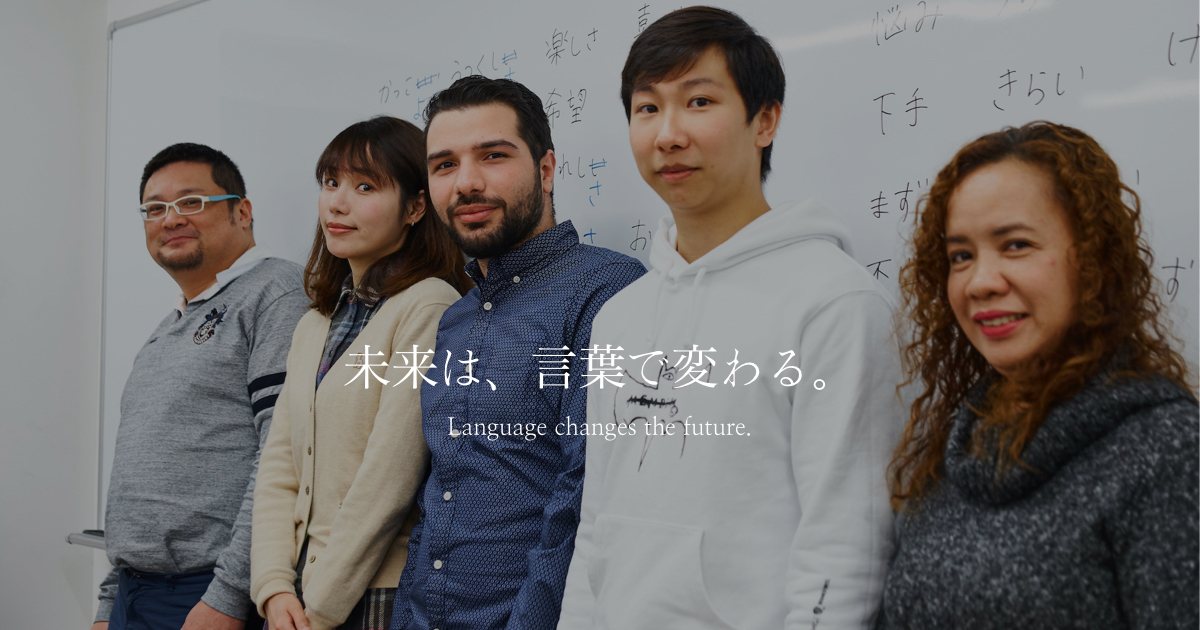
Photos are materials published by the school.
This information is compiled from official sources and is not updated daily. Please confirm with the official contact before signing or applying.