ECC Japanese Language Institute Shinjuku Campus
ECC Japanese Language Institute Shinjuku Campus
- AM & PM classes
- Decided by the school ›
- Admission
- Twice a year · April and October ›
- Japanese at entry
- From N5 ›
Compare side by side with other schools →
Tuition and conditions may change depending on the intake. If you contact us, we will check with the school and give you accurate details.
Nearby schools comparedBy distance · no ads or paid placement
- ECC Japanese Language Institute Shinjuku CampusThis schoolTuition/yr¥826,000Progression—IntakesApr · Oct
- Elite Vision Japanese Language School0.1km›Tuition/yr¥868,000Progression—IntakesApr · Jul · Oct
- Tokyo Foreign Language College0.2km›Tuition/yr¥1,076,000Progression65%IntakesApr · Oct
- Tokyo World Japanese Language School0.2km›Tuition/yr¥877,000Installments OKProgression—IntakesJan · Apr · Jul · Oct
— means SALLAE has not yet found the data.
About the school
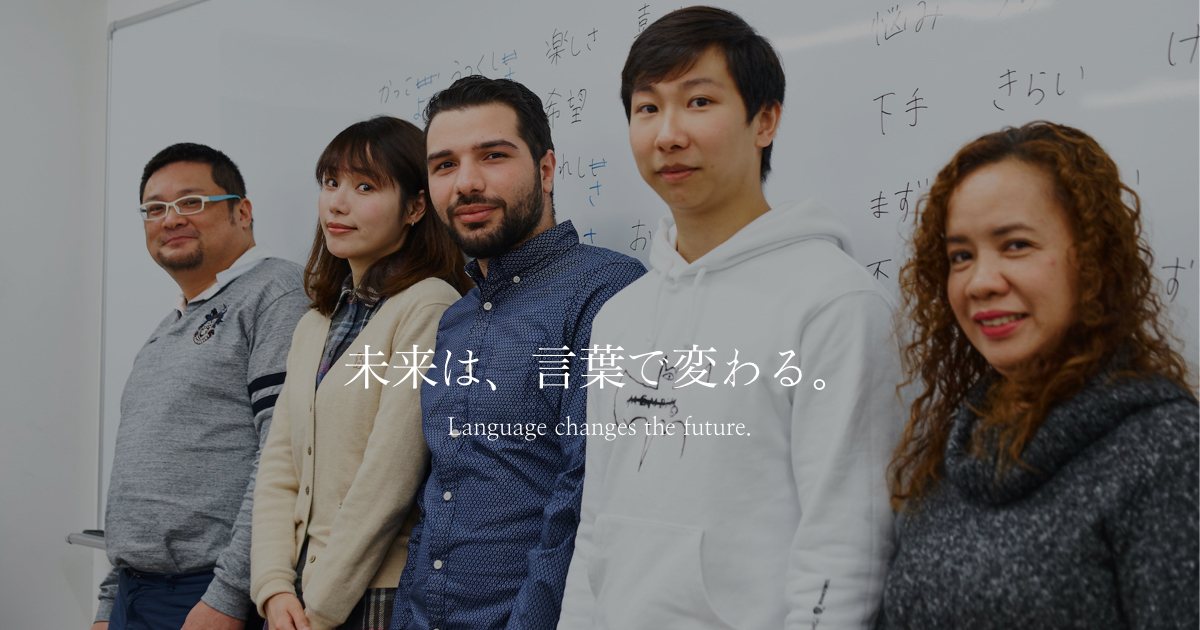
This school's self-evaluation report says many students come to it who "passed the JLPT but struggle to speak well," and it puts effort into speaking: every student gives a presentation each term, and it holds field trips and cultural experiences 8 times a year (fiscal 2025). It states that "many students want jobs." Of 31 graduates in fiscal 2025, 7 of the 10 who wanted jobs decided their path before graduation, and all 13 who wanted to continue studying did so (graduate school 1, university 2, vocational school 10). On the 1st floor of the ECC Tokyo headquarters building in Nishi-Shinjuku, 5 minutes on foot from JR Okubo Station and Seibu-Shinjuku Station, the school has a capacity of 100 and also runs courses and private lessons for residents of Japan and short-stay visitors.
Published data and school website
Tuition
If you saw a lower amount elsewhere, it may not include the admission fee and application fee
Median 1-year tuition in other areas — Kyoto ¥911,000(7 schools) · Kanagawa ¥880,000(8 schools) · Okinawa ¥858,000(6 schools) · Tokyo ¥840,600(56 schools) · Fukuoka ¥835,000(12 schools) · Hyogo ¥825,500(7 schools) · Osaka ¥814,000(27 schools) · Shizuoka ¥790,000(9 schools) · Chiba ¥745,333(10 schools) · Aichi ¥740,667(5 schools)
Admission & dates
⚠ The application period for October enrollment differs by source. Please confirm with the school. October enrollment: until May 15 · The application period for October enrollment ends May 31 (Steps to Enrollment page). Application periods vary slightly by campus
- Apr intake
- 2-year course · Application period for April enrollment ends Oct 31
- Oct intake
- 1 year 6 months course · Application for October intake: through May 15
- Japanese level
- JLPT N5 level or above (or 150+ hours of Japanese study)
Japanese qualification certificate (original certificate for JLPT, admission ticket for J-TEST and NAT-TEST) or proof of 150 or more hours of study at a Japanese language school. Studying hiragana and katakana before enrollment is recommended.
Deadline and capacity rules
Shinjuku admits students only in April (2-year and 1-year courses) and October (1-year 6-month and 1-year courses). Capacity 100; applications close when full, and the course cannot be changed after applying. As a rule, age 18 or over; 5 or more years after graduation requires proof of Japanese study history, reasons for studying and plans after study.
School website · 2026-02-27 updated
Classes
- Morning
- 09:15-12:30 4 periods of 45 minutes
- Afternoon
- 13:30-16:45 4 periods of 45 minutes
- AM/PM placement
- Morning or afternoon class is decided by your level.
- Class size
- Max 20 students
- Class assignment
- Level-based 8 stages
Materials · Subjects · Timetable · Details
5 days a week, 4 lessons (45 minutes) a day. There are 8 levels, and advancement is decided by quizzes, the final exam and attendance rate. Direct method; homework takes 2–3 hours a day.
What each level covers · 8 stages
- Beginner 1
- 3 monthsA class for people learning Japanese for the first time. Learn everyday expressions and how to share basic information about yourself. Aims for a high pass on JLPT N5.
- Beginner 2
- 3 months N5 or above class. Convey personal information and everyday matters in simple expressions. Aim for a high-scoring JLPT N4 pass.
- Intermediate 1
- 3 months N4 or above class. Organize and convey your own thoughts on familiar topics and topics of interest. Aim to pass JLPT N3.
- Intermediate 2
- 3 months N3 or above class. Discuss and negotiate on familiar topics, speaking and writing to suit the setting and the other person. High-scoring JLPT N3 pass.
- Upper intermediate 1
- 3 months N3 or above, aiming to pass N2. Explain social topics with supporting evidence and understand and discuss content at about university-lecture level.
- Upper-intermediate 2
- 3 months N3 or above, aiming for a high-scoring N2 pass. Explain social topics and present survey and interview results.
- Advanced 1
- 3 months N2 or above, aiming to pass N1. Explain and exchange views on a wide range of topics and give speeches and presentations.
- Advanced 2
- 3 months N2 or above, aiming for a high-scoring N1 pass. Explain and exchange views on a wide range of topics and write in an appropriate style.
School website · Confirmed 2026-09-26
Documents to prepare — student visa course
- Application form (FORM-1): prepared by the applicant. Fill in every applicable field.
- Original graduation certificate from your last school (diploma or graduation certificate)
- Résumé (FORM-2): prepared by the applicant. Every address field must go down to the last lot number, and education history starts from elementary school.
- Statement of reasons for study — written by the applicant; include specific reasons for studying and plans after completing the course; the signature at the end must be handwritten
- 5 photos (4 cm × 3 cm) and photo data, taken within the last 3 months, without a hat; check the size
- Copy of passport
- Pledge (FORM-3): signed by the applicant and the person who pays expenses
- Proof of Japanese study · Japanese qualification certificatefor the JLPT, the original certificate; for J-TEST or NAT-TEST, the exam admission ticket) or proof of study at a Japanese language school (at least 150 hours of study
Financial supporter's documents · only if applicable · 6 application requirements
Submitted by the person paying the tuition (financial sponsor)
- Financial sponsorship statement (Form 4), prepared by the sponsor; signature in own handwriting, with a seal
- Certificate of employment: for business owners, a business license, certified copy of the corporate registry or similar. A phone number for verification must be stated.
- Certificate of income and tax payment (showing annual income)
- Original balance certificate: the original balance certificate of the financial sponsor (local currency is acceptable)
- Copy of ID or similar showing address and date of birth
- Documents showing the relationship between the applicant and the expense payer (family register, birth certificate, etc.)
- Documents proving how the funds in item 4 were accumulated: a copy of the bankbook or transaction statements for the past year
Only if applicable
- Certificate of enrollment (if currently enrolled)
- Certificate of employment (work history) (Only if you have work experience)
- Tuberculosis screening certificate issued by a designated medical institution (required only for the Philippines, Indonesia, Nepal, Myanmar, Vietnam and China) (Required only for the Philippines, Indonesia, Nepal, Myanmar, Vietnam and China)
- Certificate of residence (issued by the ward or city office, listing co-residents) and income and tax payment certificates (If the sponsor lives in Japan)
Application requirements
Attach a Japanese translation to documents written in a foreign language (include the translator's name and address) Submitted documents must have been issued within 3 months of the application to Immigration (within 6 months for foreign documents). Certificates should, where possible, be prepared on paper that shows the issuing organization's name and address. The listed documents are the bare minimum; additional documents proving that you meet the conditions for the status of residence may be requested. Keep copies of your application documents Sponsors should in principle be family members within the 3rd degree of kinship. Please consult the school for anyone else.
There are no document standards set by nationality — the list above is the same for all countries. SALLAE is confirming this with the school.
For short-term courses: application form · submit only a copy of the passport / residence card (copies of both sides of the residence card for those living in Japan; a copy of the passport for those living abroad).
School website · 2026-02-27 updated
Admission process
⚠ The application fee varies by source — please confirm with the school. Application fee ¥33,000 (tuition page and application guidelines) · "An application fee of 22,000 yen for the Certificate of Eligibility (COE) application will be charged." Because the application guidelines and the tuition page give the same amount, the flow page seems to be out of date.
- Request an admission consultation — Check the admission guidelines, then applicants contact the school through the inquiry form.
- Document screening by entry sheet — Document screening by entry sheet. If there is no problem with the application conditions, pay the ¥33,000 application fee (application guidelines).
- Online interview — Online interview after paying the application fee. The school checks your Japanese study preparation and your level at enrollment, and also gives information about the school.
- Submit required documents and document screening — Submit the application form and the documents required for the student visa application.
- Apply for the Certificate of Eligibility (CoE) — ECC Japanese Language Institute applies to the Immigration Services Agency for the Certificate of Eligibility (CoE) on behalf of the applicant. It takes about 3 to 6 months to obtain a student visa.
- Review by the Immigration Services Agency — The Immigration Services Agency screens the application, and if there are no problems, a Certificate of Eligibility (CoE) is issued.
- CoE issuance and payment — ECC Japanese Language Institute sends notice that the Certificate of Eligibility (CoE) has been issued, along with the tuition invoice
- Tuition payment — Pay the tuition. Payment can be made in cash, by bank transfer or by card (VISA/Master).
- Receive the admission permit and Certificate of Eligibility — After tuition payment is confirmed, the admission permit and CoE are sent. Consult the school if you wish to have accommodation arranged.
- Visa issuance — Prepare the CoE, admission letter and other required documents, and obtain the visa yourself at the Japanese embassy or consulate general in your area of residence
- Notifying us of your arrival date — After obtaining your student visa, book a flight and tell ECC Japanese Language Institute your arrival flight and time
- Enrolment and start of classes — Enter Japan by the enrolment date and come to the school on the date the school specifies. Classes start after the entrance ceremony and orientation.
- Placement test
- Classes are assigned by a level check just before enrolment. In principle, changes of level or course are not possible.
School website · 2026-02-27 updated
Short-term study
- Visa
- Temporary visitor or Working holiday(not a student visa)
- Duration
- 5 weeks – 1 year
- Open now?
- Rolling admissions, so availability varies from time to time — SALLAE will confirm with the school
Course without a student visa
- Comprehensive Japanese course (for residents and short-term visitors) — Same curriculum as for the student visa. 5 weeks to 1 year; Shinjuku courses start on Apr 6, Jul 2 and Oct 7, 2026 and Jan 7, 2027. For people aged 18 and over who hold a status of residence or plan a short stay.
- [Shinjuku] 5-week August intensive course — A course for everyone who thinks, "I know only a little Japanese, and I want to start properly this summer!"
- Private lessons (on campus) — Start at any time, 10 or more lessons. In-person lessons are from 90 minutes. Everyday conversation, JLPT preparation, business conversation, interview preparation and more.
- Private lessons (online) — Take lessons from anywhere in the world. Fixed schedule with set days and times, from 60 minutes per lesson. From beginners to advanced learners.
- Corporate training — Japanese language training for foreign employees, offered on campus, by teacher dispatch or online. Consultation and quotes are free.
★Short-term courses are not listed in the published data — it counts only student-visa courses.
School website · 2026-02-27 updated
Graduate outcomes
| FY2025 | Admitted |
|---|---|
| Graduate school | 1 student |
| University | 2 students |
| Vocational school | 10 students |
| Employment | 7 students |
| Graduates | 31 students |
Passing an exam
| Exam | Pass |
|---|---|
| JLPT N1 2025 | 6 students |
| JLPT N2 2025 | 13 students |
| JLPT N3 2025 | 14 students |
| JLPT N4 2025 | 22 students |
| JLPT N1 2024 | 8 students |
| JLPT N2 2024 | 12 students |
| JLPT N3 2024 | 9 students |
JLPT fiscal 2025: N1 6 of 13 (46%), N2 13 of 16 (81%), N3 14 of 28 (50%), N4 22 of 35 (62%)
FY2025: 31 graduated; excluding 5 planning to return home, all 13 who wanted to continue their studies did so (graduate school 1, university 2, vocational school 10). FY2024: 13 graduated · 7 of the 10 who wanted employment settled their path by graduation. The other 3 switched to a Designated Activities status or similar and continue to receive job-hunting support. Another 3 who could not easily return home changed to a visa that permits work · School website · Updated 2026-06-29
Reviews
If you study here or used to, tell others what the classes, teachers and daily life were like. It helps anyone deciding on this school.
Write the first reviewUniversity prep
- Exam preparation — Classes are structured for the JLPT and EJU. Apr–Jun and Oct–Dec include last-minute preparation with past exam questions. Special paid EJU Japan and the World / Mathematics preparation classes are available on request.
- Progression guidance — A progression guidance session is held at school once a year for students who want to continue their studies. It explains the exam schedule, information gathering, fairs, required Japanese level and documents.
- Individual counseling and further-study consultation — Individual counseling with the homeroom teacher at the start of each term. The career guidance staff and homeroom teacher confirm the student's path and support progression suited to their aptitude.
- Guidance on the statement of motivation and interview practice — Guidance from writing the statement of motivation to interview practice based on it, including dress, grooming and manners
- Support with application documents and enrolment procedures — Documents that differ by school are always checked together before submission
- Briefings and fairs: announcements and accompaniment — The school announces progression and job briefings and accompanies students to briefings it recommends. It also announces and accompanies students to job fairs and provides information on outside employment agencies.
- Job-hunting guidance — Explains job hunting in Japan, work visas, the Japanese ability required and in-demand industries. You can also hear industry explanations and experiences from working graduates.
- Job-hunting preparation seminar — Detailed explanations of how to find job listings, job fair information, how to write a résumé and the documents to prepare
- Business manners course — Special courses on Japanese business manners, conduct and dress for advanced-level students
- Individual job-hunting counseling — Individual counseling with the career staff at any time. Industry and company analysis and mock interviews are also offered (fiscal 2026 plan).
- Résumé corrections and application document checks — Résumé corrections and application document checks are done individually, and the contents of the employment contract after a job offer are also reviewed together.
- Interview practice — Interview practice just like the real thing, with individual advice
- Recommended qualification exams — Other tests such as the J-TEST are also recommended. For N1 passers, the school encourages BJT and, with the ECC College of Foreign Languages, qualifications such as TOEIC (fiscal 2026 plan).
Schedule to admission
- In the first year, concentrate on studying Japanese!
- Example: 2-year course starting in April · Apr Enrollment · Jul JLPT (1st) · Dec JLPT (2nd), goal: pass N4–N3
- Exam preparation period
- Year 2, Apr–Sep: exam preparation period · (Individual counseling, further-study guidance, choose target schools, request application forms, write statement of purpose, practice interviews) · Jun EJU (1st), goal: 230 points or more · Jul JLPT (1st), goal: pass N3–N2
- Applications and entrance exams
- Year 2, Oct–Mar: applications and entrance exams · Nov EJU (2nd), goal: 230 points or more · Dec JLPT (2nd), goal: pass N2–N1 · Jan Acceptance · Mar Graduation
- In the first year, concentrate on studying Japanese!
- Example: 2-year course starting in April · Apr Enrollment · (Self-analysis, company research) · Dec JLPT, goal: obtain N3 · (Collect job listings, write self-promotion)
- Job-hunting preparation period
- Year 2, Apr–Sep: preparation period · (Attend company information sessions and job fairs, write résumé, practice interviews) · Jul JLPT, goal: obtain N2
- Full-scale job hunting
- Year 2, Oct–Mar: applications and entrance exams · (Take part in job exams and interviews) · Dec Job offer; JLPT goal: obtain N1 · (Visa application) · Mar Graduation
School website · Confirmed 2026-09-26
Daily-life support
- Web interview before entry — In a web interview before you enter Japan, the school explains precautions on entry, how to travel and the waiting period, and also explains activity outside the status of residence.
- Entry orientation and enrolment orientation — The arrival orientation teaches immigration knowledge and Japanese law, and the enrollment orientation teaches rules, how lateness and absence are handled, and what to do in a disaster.
- Crime prevention briefing — The police visit the school to hold a crime prevention briefing on how to avoid becoming involved in crime.
- Homeroom teacher system and individual consultation — Individual counseling about once every 3 months. Instructors are always in the teachers' room, so students can consult them at any time.
- Life consultation — The student life staff member handles problems until they are resolved, also using the school's communication tool. The school also introduces consultation centers for foreign residents such as the "Tokyo Multilingual Consultation Navi" and the "FRESC Help Desk."
- Language support staff are on hand for peace of mind — The school director has studied Chinese, Korean and English, and says students should speak to him in their own languages for things they cannot discuss in Japanese.
- Part-time work — Part-time job information is posted at school. Students report their workplace, duties and shifts each term and before long breaks. Activity outside the status of residence is limited to 28 hours a week and is not allowed for the first 3 months after enrollment.
- National Health Insurance — International students enrol in National Health Insurance, with a 30% co-payment for medical fees. Short-term visitors cannot enrol, so prepare overseas travel insurance.
- Guidance on renewing your status of residence and procedures when progressing to further study — Students who have entered Japan are taught procedures under immigration law. Procedures at visa renewal and at completion are also taught.
- Disaster prevention — A map to nearby evacuation shelters is distributed, a shelter map is posted in each classroom, and a hazard map is posted at the school building entrance.
- Accommodation — Affiliated student dormitories, share houses, apartments and homestays are introduced
- Temporary return to home country — If you plan to return home temporarily, be sure to tell the school in advance
School website · 2026-06-29 updated
Scholarship
- Scholarships are available, and the school recommends students to outside organizations
- If a student meets conditions such as excellent grades, attendance and class attitude together with financial hardship, the school recommends them to an outside organization, and they receive the scholarship if selected. A few students receive it every year.
School website · Confirmed 2026-09-26
Students
60 enrolled (2025) · Capacity 100 National median: 180 students
Based on 60 students enrolled in 2025.
Public data from the Association for the Promotion of Japanese Language Education (Nisshinkyo) · verified 2026-09-20
School life
For 1 year
- 4
- Apr 1 to 5 Spring break (planned) · Apr 6 Entrance ceremony and orientation · Apr 28 Extracurricular activity
- 6
- Jun 14 EJU (planned) · Jun 24 Spring term completion ceremony
- 7
- Jul 2 Entrance ceremony and orientation · Jul 5 JLPT · Jul 25 Extracurricular activity
- 8
- Aug 8–18 Summer break (planned)
- 9
- Sep 25 Summer term completion ceremony
- 10
- 7 Orientation · Oct 23 Extracurricular activity
- 12
- Dec 22 Autumn term completion ceremony · From Dec 23 Winter break (planned)
- 1
- Winter break until Jan 6, 2027 (planned) · 7 Orientation
- 3
- Mar 12 Extracurricular activity · Mar 25 Graduation ceremony and winter term completion ceremony · From Mar 26 Spring break (planned)
General Japanese Course annual schedule, 2026.4–2027.3. Spring, summer, autumn and winter terms. School business hours 9:30–17:30.
- Each term includes an off-campus study trip or cultural experience. Past activities include World Heritage site visits, Japanese confectionery making and a TV station visit.
- Field trips and cultural experiences were held 8 times in fiscal 2025 (about 2 per term), including joining festivals and factory tours.
- Students can interact with Japanese students in the same building, such as at the ECC College of Foreign Languages and the transfer preparatory school, and the library and lounge are open as places to meet.
- The school creates as many chances as possible for students to talk not only with instructors and staff but also with employees of group companies.
- The school provides information so students can join events that let them enjoy the local area and seasons outside school time.
On campus
- Self-study room — Many students study before and after class.
- Library room
- Lounge
- Infirmary
- Free Wi-Fi — Wi-Fi that students and staff can use freely is installed in every classroom and self-study room.
- Air purifier (with humidifier) — Each classroom and study room has an air purifier (with humidifier)
- Copiers, air conditioning
2026–2027 academic calendar
- Saturdays and Sundays
- Weekly
- Spring break
- Apr 1–5, 2026 and Mar 26–31, 2027
- Break between terms
- Jun 25 – Jul 1, 2026 and Sep 26 – Oct 6
- Summer vacation
- Aug 8–18, 2026
- Winter break
- Dec 23, 2026 – Jan 6, 2027
School website · 2025-10-15 updated
Access
- Transit
- JR Okubo Station, 5 min walk
Seibu Seibu-Shinjuku Station, 5 min walk
JR Shinjuku Station, 7 min walkWest exit - Nearby
- On the 1st floor of the ECC Tokyo headquarters building in Nishi-Shinjuku. Shinjuku, home to the Tokyo Metropolitan Government Building, has many art museums, museums, a Noh theater and shrines, and is one of Japan's leading areas where foreign residents live.
- Dormitory
- Available · Affiliated student dormitories are introduced. Two meals a day included (except Sundays). · Based on school website
School website · Confirmed 2026-09-26
Dormitory — Student dormitories, share houses and apartments are introduced. In Tokyo: share houses ¥50,000–¥85,000/month, apartments from ¥80,000/month, homestay ¥4,400 + tax per night with 2 meals.
School website · Confirmed 2026-09-26
SALLAE has organized the school website and published data in English.
The update date is the day that material was last revised.
Photos are materials published by the school.
This information is compiled from official sources and is not updated daily. Please confirm with the official contact before signing or applying.