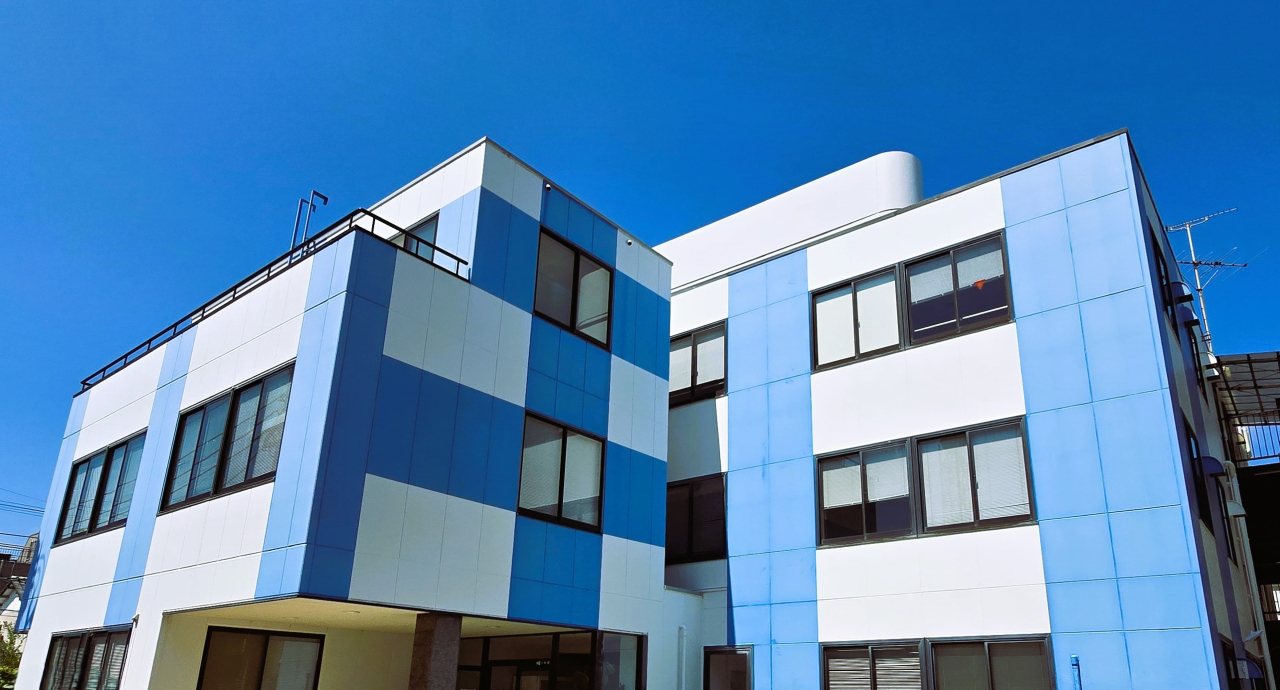
Grandeur Global Academy Numazu Campus
Grandeur Global Academy Numazu Campus
- Course
- Further-study course only
- Dormitory fee
- From ¥25,000 per month ›
- AM & PM classes
- Decided by the school ›
- Tuition
- On the high side in Shizuoka ›
Compare side by side with other schools →
Tuition and conditions may change depending on the intake. If you contact us, we will check with the school and give you accurate details.
Nearby schools comparedBy distance · no ads or paid placement
- Grandeur Global Academy Numazu CampusThis schoolTuition/yr¥911,000Progression86%IntakesApr · Oct
- Fujisan Japanese Language School19.2km›Tuition/yr¥790,000Progression—IntakesApr · Jul · Oct
- A.C.C. International Exchange Academy25.8km›Tuition/yr¥718,000Progression75%IntakesApr · Jul · Oct
- LIBERTY Odawara Japanese Language School31.1km›Tuition/yr¥825,000Progression84%IntakesApr · Oct
— means SALLAE has not yet found the data.
About the school
A school that focuses on progression. It has only two progression courses: 2 years for April admission and 1.5 years for October admission. In the school's published fiscal 2025 report to Immigration, 95 of the 110 students who completed went on to university, vocational school or similar. It opened in 2018 with a capacity of 240, in Numazu, Shizuoka, a 10-minute walk from JR Numazu Station, and each student uses their own tablet for lessons, preparation and review. As a rule, for the first year after arriving in Japan students live in the school's dormitory (separate for men and women, 4-person rooms at ¥25,000 a month).
Published data and school website
Tuition
If you saw a lower amount elsewhere, it may not include the admission fee and application fee
Median 1-year tuition in other areas — Kyoto ¥911,000(7 schools) · Kanagawa ¥880,000(8 schools) · Okinawa ¥858,000(6 schools) · Tokyo ¥840,600(56 schools) · Fukuoka ¥835,000(12 schools) · Hyogo ¥825,500(7 schools) · Osaka ¥814,000(27 schools) · Shizuoka ¥790,000(9 schools) · Chiba ¥745,333(10 schools) · Aichi ¥740,667(5 schools)
Total by intake
| Intake · length | Full course |
|---|---|
| 1 year 6 months | ¥1,284,000 |
| 2 years | ¥1,657,000 |
Cost details · Course tables · Notes
- Per term
- ¥186,500 3 months
- One-time fees
- ¥165,000Application fee · Admission fee
| Duration | Total |
|---|---|
| 1 year 6 months | ¥1,284,000 |
| 1 year 9 months | ¥1,470,500 |
| 2 years | ¥1,657,000 |
★"Per term" and "One-time at start" were calculated by SALLAE from each course's total. The courses this school actually offers are 1 year 6 months onward — all amounts in the table are values calculated by SALLAE.
Calculated by SALLAE · verified 2026-09-16
Admission & dates
- Apr intake
- 2-year course · Application 1st round: Jul 1–Jul 17, 2026 / 2nd round: Jul 21–Aug 7, 2026 · Classes 2 years (1,600 hours)
- Oct intake
- 1 year 6 months course · Application 1st round: Feb 1–Feb 5, 2027 (planned) / 2nd round: Feb 15–Feb 19, 2027 (planned) · Classes 1 year 6 months (1,200 hours)
- Japanese level
- Japanese ability of about JLPT N5 or higher
2-year course: a pass certificate at A1 or higher, or a certificate of at least 150 hours of study. 1.5-year course: a pass certificate at A2 or higher and a certificate of at least 400 hours.
Deadline and capacity rules
Capacity 240. Age 18 or over, 12 years of school education completed (or expected), the sponsor's wealth-building history for tuition and living costs proven with bankbooks and similar, and able to communicate in English.
School website · 2026-07-24 updated
Classes
- Morning
- 09:00-12:15
- Afternoon
- 13:00-16:15
- AM/PM placement
- Classes are decided by a placement test.
- Class assignment
- Level-based 8 stages
Materials · Subjects · Timetable · Details
- Materials
- Each student studies Japanese on their own tablet, which holds textbooks and class records.
- Subject
- Comprehensive Japanese · Expression · Characters · Exam preparation · Special activities · Independent study · 6 subjects: Comprehensive Japanese, Expression, Characters, Exam Preparation, Special Activities and Independent Study (Characters covers reading and writing about 1,200 basic kanji)
Monday to Friday (5 days a week). 2-year progression course: 1,600 hours; 1.5-year progression course: 1,200 hours (in 45-minute units).
What each level covers · 8 stages
- Beginner I
- Can hold simple conversations and read short texts using words and short sentences in familiar situations, and write a short composition about themselves and their family.
- Beginner II
- Can exchange information in Japanese about daily life and familiar social matters, and write sentences that include their own opinions.
- Lower intermediate
- Can understand standard Japanese about everyday life and cope in various situations. Can write simple explanations of cause and effect and opinion pieces.
- Intermediate I
- Can cope in almost all situations about daily life and familiar social matters. Can state opinions with reasons.
- Intermediate II
- Can understand a wide range of Japanese used in social life and respond smoothly. Can discuss in class and write logical texts.
- Advanced I
- Can understand Japanese on a broad range of social topics and respond fluently. Can understand logical and abstract texts, including specialist fields.
- Advanced II
- Can use language suited to the purpose, situation and listener. Can understand long texts such as news and novels and state opinions in logical writing.
- Advanced III
- Can gather information in Japanese in various forms of expression, organize it around clear points and grounds, and convey it fluently.
School website · Confirmed 2026-09-26
Documents
- Copy of passport (identity page)
- Admission application formSchool's prescribed form A-1
- RésuméSchool's prescribed form A-2
- Statement of reasons for study abroad (school form A-3): career history, Japanese study, purpose of study abroad and plans after arriving in Japan, with a handwritten signature
- 7 ID photosAll identical, taken within the last 3 months. 4 cm tall × 3 cm wide
- Original graduation certificate from your last school
- Academic transcript from the highest level of education
- Proof of Japanese ability: copy of a JLPT pass certificate or a pass certificate for a designated exam, and a Japanese study certificate
- Health certificate (school's prescribed form B-1): examined within the last 3 months, completed by a doctor in English or Japanese
- Pledge of admission (school form C-1): filled in and signed by the applicant and the sponsor
Sponsor documents · Only if applicable · 7 application requirements
Submitted by the person paying the tuition (financial sponsor)
- Financial sponsorship statementSchool's prescribed form D-1
- Official documents proving the family relationship, such as a notarized kinship certificate, family register or birth certificate.
- Original deposit balance certificateA balance of about ¥2,000,000 in Japanese yen equivalent
- Copy of bank transaction statements or passbook for the past 1 year, and for the past 3 years if required
- Certificate of employment stating position, status, years of service and so on. Company representatives and the self-employed: certified copy of the company registry or similar; individual business owners: business license or similar.
- Must list all members of the same household. Not required if item 2 can prove the family composition
- Income certificates for the past 3 years issued by a public authority.
- Pledge of enrollmentSchool's prescribed form C-1
- Copy of ID: valid and with a photo
Only if applicable
- Besides the certificate of enrollment, also submit the high school diploma or graduation certificate. (If the applicant is enrolled at (or on leave from) a university, junior college or vocational school, or has dropped out)
- If the applicant is currently enrolled, also submit the transcript from the school they attend. (If you are currently enrolled in a school)
- Certificate of employment (Only if you have work experience)
Application requirements
If the person paying expenses lives in Japan: residence certificate, and income and tax certificates (for the past 3 years, issued by the city office). Documents written in languages other than Japanese need a Japanese translation. Certificates must show the issuer's title and name (signature) and the issuing institution's address, phone and fax numbers and email address. Applicants and expense payers must sign in black ballpoint pen (erasable pens not allowed). Do not glue the photo to the application; submit it unglued, still on the sheet, in a clear bag (do not cut it), with "name, date of birth, Grandeur Global Academy" written on the back. Documents submitted to the Immigration Services Agency are not returned. If you want them returned, be sure to say so when you apply. Proof of Japanese ability: 12 types including JLPT, BJT, J.TEST, NAT-TEST, STBJ, TOPJ, J-cert, JLCT, PJC Bridge and JPT
Applicants from China do not need a graduation certificate if they have the original CHSI or CDGDC verification report. Applicants from Nepal need a kinship certificate. Applicants from 6 countries, including the Philippines, need tuberculosis screening.. SALLAE is confirming this with the school.
School website · 2026-07-24 updated
Admission process
- Request an admission consultation — E-mail info@grandeur.world or the inquiry form. Application guidelines are available in Japanese and English.
- Application — April admission: a pass certificate at A1 or higher, or a certificate of at least 150 hours of study. October admission: a pass certificate at A2 or higher and a certificate of at least 400 hours of study. Also an application for the interview, and graduation and grade certificates.
- First screening (documents) — Documents are screened based on what you submit.
- Second screening (interview and Japanese test) — Only applicants who pass the first screening are interviewed: document check, communication in Japanese and English, and tests of characters, reading aloud and reading comprehension. For the 1.5-year course, a pre-assigned essay and presentation. Online if you cannot come in person.
- Notification of selection results — The admission screening result is sent to the applicant.
- Training application documents — Applicants who pass submit the full set of application documents to the school. Depending on the documents submitted, a status of residence application for study may not be possible.
- The school applies for the Certificate of Eligibility — The school applies on the applicant's behalf to the Immigration Services Agency for the Certificate of Eligibility.
- Fee payment by bank transfer — Transfer the full initial payment, including the application fee, to the designated account. The applicant bears international remittance fees. After payment is confirmed, the Certificate of Eligibility and admission permit are sent.
- Visa application — The applicant takes the Certificate of Eligibility, admission permit, passport and other documents to a Japanese embassy (consulate) and applies for a visa.
- Entry into Japan — Fly to Japan on your booked ticket and receive your residence card at the airport landing inspection. If you wish, you also receive permission to engage in activity other than that permitted by the status of residence at this time.
- Enrolment procedures — Come to the school and complete the enrollment procedures.
- Placement test
- Classes are decided by a placement test (School rules, Article 12: the school decides the initial class from the application documents, screening results and so on).
- After entry
- Each student uses their own tablet. The LMS (learning management system) shows preparation, review and learning progress at a glance.
School website · 2026-07-24 updated
Short-term study
- Visa
- Working holiday or Temporary visitor(not a student visa)
- Open now?
- Rolling admissions, so availability varies from time to time — SALLAE will confirm with the school
Course without a student visa
- Everyday Japanese course — For people aged 18 or over with a valid visa, from 1 month. Enrollment in April or October. Same classes as the study-abroad course, 9:00–12:15 morning / 13:00–16:15 afternoon.
- Short-term program — Age 18 or over, short-stay or working-holiday visa, beginner to intermediate. Starts every Monday, for 2 or 4 weeks (1–12 weeks possible). Japanese lessons Mon–Thu mornings; a full-day cultural experience on Fridays.
- Private lessons — Age 18 or over with a valid visa. 60 or 90 minutes, from 4 lessons a month. A dedicated curriculum is made after a needs interview. Group lessons are Mon, Wed and Fri mornings and Saturday afternoons.
- Japanese for work course — Short- and long-term business Japanese training for companies (basic conversation, manners, workplace expressions, phone handling; on-site training possible). Also post-arrival Japanese courses for technical intern trainees.
★Short-term courses are not listed in the published data — it counts only student-visa courses.
School website · Confirmed 2026-09-26
Graduate outcomes
| FY2025 | Admitted |
|---|---|
| Employment | 8 students |
| Graduates | 110 students |
See 10 more schools
Fiscal 2025: 110 completed, 110 met the criteria (100.0%); progression 95 (78 + 17), change of status of residence 8, A2 or above 7 (4 + 3). · Main employers: Yataro Co., Ltd., Social Welfare Corporation Ikoi, Heart Corporation Co., Ltd., Tsukiji Sushikou Co., Ltd., and others · School website · Updated 2026-05-31
Reviews
If you study here or used to, tell others what the classes, teachers and daily life were like. It helps anyone deciding on this school.
Write the first reviewUniversity prep
- JLPT and EJU prep classes — Preparation classes for the JLPT and EJU aim for passing and high scores.
- Whole-group progression guidance and individual coaching for each student — Whole-group progression guidance and individual coaching. Career information, interview practice and other guidance until your path is decided.
- Recommendation system to partner schools — A recommendation system to partner schools is available!
- Is a system in place to teach the non-Japanese subjects needed for progression? — Special exam-preparation classes in English, math, science and general subjects (extra fee). In the March 2026 self-inspection, the implementation plan was dropped and support is now handled individually.
- Career consultation event for international students — Takes part in progression fairs and open campuses; information sessions by vocational schools and care facilities are held.
- Individual meetings with students — Individual meetings with students are held based on evaluation results.
School website · Confirmed 2026-09-26
Daily-life support
- Number of life guidance staff — Student-life staff support your life from right after arrival, with housing support and emergency support. Student-life staff: 3 full-time and 4 part-time (as of end of May 2026).
- Native-language consultation — Is a system in place to handle consultations in students' native languages?
- School contact number reachable 24 hours a day — Are students told the school's contact number that can be reached 24 hours a day in an emergency?
- Application for extension of period of stay — The school files this procedure on behalf of international students.
- Part-time work guidance — Permission for activity other than that permitted by the status of residence is needed in advance. Students must have no problems with grades or attendance, work no more than 28 hours a week (8 hours a day and 40 hours a week during long breaks), and may not work in the adult entertainment industry.
- Health checkup — Students receive a health checkup regularly once a year.
- National Health Insurance — Everyone registered at an address in Japan joins National Health Insurance. You pay 30% of medical costs.
- Whether a health consultation system for students (including mental health care) is in place — The homeroom teacher is the contact point, and the person who handles each consultation is decided according to its content.
- Crime prevention education — Crime-prevention education with the police, fire station and city hall at enrollment. Disaster drills, evacuation drills and traffic safety guidance are held regularly.
School website · 2026-03-26 updated
Students
183 enrolled (2025) · Capacity 240 National median: 180 students
Based on 183 students enrolled in 2025.
Public data from the Association for the Promotion of Japanese Language Education (Nisshinkyo) · verified 2026-09-20
School life
For 1 year
- Spring
- Entrance ceremony (April intake) · New student orientation (April intake) · New student field trip (April intake) · Progression briefing (April intake) · 1st EJU · Health checkup
- Summer
- 1st JLPT · Speech contest
- Autumn
- Entrance ceremony (October intake) · New student orientation (October intake) · Health checkup · New student field trip (October intake) · 2nd EJU · 2nd JLPT
- Winter
- Progression briefing · G Festival · Graduation ceremony
Fiscal 2026 progression course schedule
- As part of classes, students may take part in disaster drills, traffic safety guidance, various events and community events.
- Temporary visits home during enrollment are allowed only during long vacations.
- Students take part in community events such as an exchange with local high school students (making rice balls) and a Numazu disaster-prevention seminar (blog).
On campus
- On campus
- FREE Wi-Fi — Free Wi-Fi is available throughout the school, free of charge at any time!
- On campus
- Infirmary
2026–2027 academic calendar
- Saturdays and Sundays
- Weekly
- Days stipulated by the Act on National Holidays
- Holidays set by the Act on National Holidays
- Summer vacation
- Aug 1–16
- Autumn break
- Sep 19–Oct 4
- Winter break
- Dec 19 – Jan 4
- Spring break
- Mar 19–Apr 4
School website · Confirmed 2026-09-26
Access
- Transit
- 10 min walk from JR Numazu Station
- Nearby
- 12-22 Takashimahonmachi, Numazu, Shizuoka. About 1 hour from Haneda Airport and about 2 hours 30 minutes from Narita Airport to JR Numazu Station. Mt. Fuji lies to the north and Suruga Bay to the south
- Dormitory
- Available¥25,000 per month · Separate dorms for men and women, a 10–15 minute walk from school. ¥150,000 for a 4-person room and ¥180,000 for a 2-person room (6 months); dorm entry fee ¥100,000. · Based on school website
School website · Confirmed 2026-09-26
Student dormitory — Wakaba Dorm (men) and Takashima Dorm (women) have 4-person shared rooms. Dorm fees (6 months, tax included): from ¥150,000 for a 4-person room and from ¥180,000 for a 2-person room; dorm entry fee ¥100,000.
School website · Confirmed 2026-09-26
SALLAE has organized the school website and published data in English.
The update date is the day that material was last revised.
Photos are materials published by the school.
This information is compiled from official sources and is not updated daily. Please confirm with the official contact before signing or applying.