Hamamatsu Japanese Language Institute
Hamamatsu Japanese Language Institute
Compare side by side with other schools →
Tuition and conditions may change depending on the intake. If you contact us, we will check with the school and give you accurate details.
Nearby schools comparedBy distance · no ads or paid placement
- Hamamatsu Japanese Language InstituteThis schoolTuition/yr¥806,000Progression93%IntakesApr · Oct
- Shonan Japanese Language Academy Hamamatsu Campus4.5km›Tuition/yr¥710,000Progression68%IntakesApr · Oct
- Serendip International School10.5km›Tuition/yr¥773,000Progression—IntakesApr · Oct
- Shizuoka International Language Institute16.5km›Tuition/yr¥720,000Progression—IntakesApr · Oct
— means SALLAE has not yet found the data.
About the school
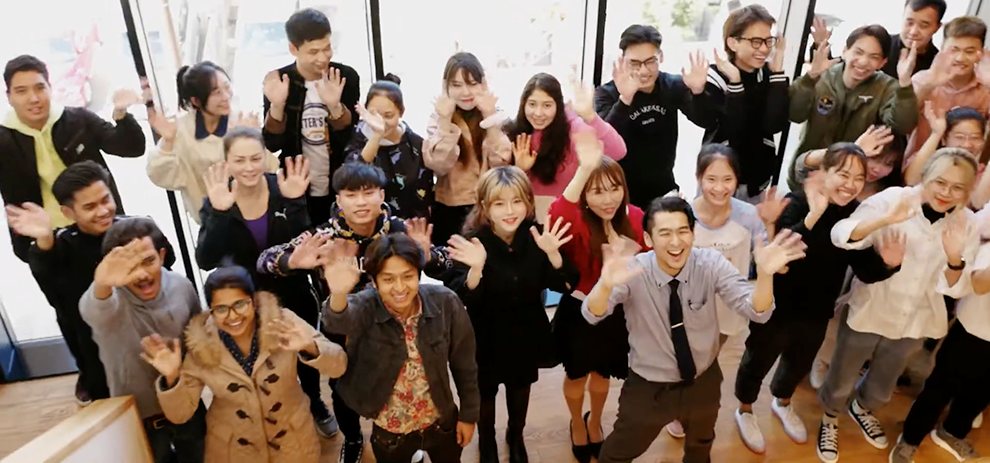
A progression-centered school: it reported (Report No. 44) that 257 of the 283 students who completed in fiscal 2025 went on to university, vocational school or similar. Students who go on to Shizuoka Institute of Science and Technology or one of 5 vocational schools in the same group have their application and admission fees waived and get tuition discounts and recommended admission. It is a new building (opened 2021) with 8 floors above ground and 1 below, about an 8-minute walk from Hamamatsu Station, and teaches 2-year and 1.5-year progression courses, with a capacity of 505. Together with Hamamatsu Mirai Comprehensive College, it runs an integrated education program for foreign care workers aiming to become certified care workers (Hamanichi), and also offers living support such as school-introduced apartments, airport pickup and commuting by bicycle.
Published data and school website
Tuition
If you saw a lower amount elsewhere, it may not include the admission fee and application fee
Median 1-year tuition in other areas — Kyoto ¥911,000(7 schools) · Kanagawa ¥880,000(8 schools) · Okinawa ¥858,000(6 schools) · Tokyo ¥840,600(56 schools) · Fukuoka ¥835,000(12 schools) · Hyogo ¥825,500(7 schools) · Osaka ¥814,000(27 schools) · Shizuoka ¥790,000(9 schools) · Chiba ¥745,333(10 schools) · Aichi ¥740,667(5 schools)
Total by intake
| Intake · length | Full course |
|---|---|
| 1 year 6 months | ¥1,106,000 |
| 2 years | ¥1,406,000 |
Cost details · Course tables · Notes
- Per term
- ¥150,000 3 months
- One-time fees
- ¥206,000Application fee · Admission fee
| Duration | Total |
|---|---|
| 1 year 6 months | ¥1,106,000 |
| 1 year 9 months | ¥1,256,000 |
| 2 years | ¥1,406,000 |
★"Per term" and "One-time at start" were calculated by SALLAE from each course's total. The courses this school actually offers are 1 year 6 months onward — all amounts in the table are values calculated by SALLAE.
Calculated by SALLAE · verified 2026-09-16
Whether it is refundable
- Those who were issued a Certificate of Eligibility but were refused a visa by the Japanese embassy or consulate in their home country
- All fees paid are refunded.
- Those who were issued a visa but did not enter Japan
- All fees paid, except the application fee and admission fee, are refunded. This applies only if the entry visa is unused and its expiry can be confirmed.
- Those who entered Japan but declined admission before the entrance ceremony and returned home
- All fees paid, except the application fee and admission fee, are refunded. This applies only if return to the home country can be confirmed.
- If arrested by the police or similar, deported to the home country, or withdrawn midway
- As a rule, no refund can be received.
Admission & dates
- Apr intake
- 2-year course · Application Aug 3 (Mon) – Aug 21 (Fri), 2026 · Classes 1,600 hours (400 days)
- Oct intake
- 1 year 6 months course · Application Mar 1 (Mon) – Mar 19 (Fri), 2027 · Classes 1,200 hours (300 days)
- Japanese level
- JLPT N5 level or above
2-year course (April): N5 equivalent or above, A1 or above, or 150+ hours. 1 year 6 months course (October): N4 equivalent or above, A2 or above, or 300+ hours.
Deadline and capacity rules
Within 5 years after completing 12 or more years of schooling (beyond that, the purpose and plan must be clear). Former technical intern trainees must meet 3 conditions, such as using their skills after returning home. Additional recruitment is possible. Capacity 505.
School website · 2026-07-13 updated
Classes
- Morning
- 09:10-12:30
- Afternoon
- 13:10-16:30
- Elective classes
- Japanese subjects (speech, pronunciation, Japanese society, kanji, reading, etc.) · EJU preparation (math, general subjects, Japanese, science, English) · Introductory specialist Japanese (Japanese used in your career field, such as nursing care) · The timetable puts elective subjects in periods 5 and 6 for morning classes and periods 3 and 4 for afternoon classes. This appears only on the earlier education-content page (May 2025), which is no longer in the menu; the timetable on the current education-content page has no elective column.
Materials · Subjects · Timetable · Details
- Materials
- Based on the textbook Dekiru Nihongo
- Subject
- Dekiru Nihongo · JLPT prep · EJU prep · Gain the ability to understand basic nursing-care Japanese at the language school (Integrated Education Program for Foreign Care Workers). · JLPT preparation covers every level from N1, studying grammar, vocabulary, reading and listening. EJU preparation covers Japanese, general subjects, math and science.
Class period times 4 periods a day (45 minutes each); the auditing student guide says 5 days a week (Mon–Fri).
| Morning course (periods 1–4) | Afternoon course (periods 1–4) | |
|---|---|---|
| Period 1 | 09:10-09:55 | 13:10-13:55 |
| Period 2 | 10:00-10:45 | 14:00-14:45 |
| Period 3 | 10:55-11:40 | 14:55-15:40 |
| Period 4 | 11:45-12:30 | 15:45-16:30 |
2-year progression course: Beginner 1–2 and Intermediate 1–2, then Advanced 1–3 and exam preparation. 1.5-year course: Pre-intermediate and Intermediate 1, then Advanced 1–3 and exam preparation.
School website · 2025-06-02 updated
Documents
- Application form (school-designated document), handwritten by the applicant. If prepared on a computer, the signature field must be signed by hand.
- Statement of study purpose (same sheet as page 3 of the application form). If written in your native language, attach a Japanese translation on a separate sheet.
- Copy of the graduation certificate for your highest educationOriginal after acceptance
- Copy of the transcript from a high school, university, junior college, vocational school or similar in Japan, in Japanese
- Copy of a pass certificate for JLPT N5 or higher (or equivalent), or a Japanese language school study certificate (150 hours or more)
- Financial sponsorship statement (school form). At application, documents showing the sponsor's annual income, the amount carried and the monthly remittance; after acceptance, the sponsor's handwritten original.
- 8 photos. Write your name on the back. Taken within 3 months of the application date4 cm tall × 3 cm wide
- Copy of the passport (pages with name, photo and Japan entry and exit stamps). If you do not have one, your home-country ID, original birth certificate and so on.
Sponsor documents · Only if applicable · 5 application requirements
Submitted by the person paying the tuition (financial sponsor)
- Original document proving the relationship between you and the person paying expensesOriginals of a birth certificate, notarized proof of kinship, residence certificate, etc.
- Original deposit balance certificateOriginal document proving a deposit balance sufficient for the planned period of study
- Copy of passbook for the past 1 year
- Income certificate; income and tax assessment certificate, original, for the past 3 years
Only if applicable
- Certificate of how funds were accumulated (If item 8 cannot be submitted, the original of a document explaining how the deposit amount was built up from that income)
- Original certificate of employment (If the financial sponsor works for a company or similar)
- Certified copy of corporate registration and original business license (If the financial sponsor is a business owner, company officer, etc.)
- Certificate of enrolment (academic transcript, etc.) (If enrolled at a university in your home country)
- Tuberculosis-free certificate (Only those designated by the Immigration Services Agency)
Application requirements
Submit documents issued in Japan within 3 months of the issue date, and documents issued abroad within 6 months. Each document needs a Japanese translation. Print copies of documents single-sided on A4. One set of original documents is needed per person. During screening, the school checks your native language and second language. If you have applied for a Japan stay visa in the past, you must declare it.
Required documents may differ by nationality. Sri Lanka: original O-level and A-level certificates. Nepal: kinship certificate issued by the local administrative district.. SALLAE is confirming this with the school.
School website · 2026-07-13 updated
Admission process
- Request an admission consultation — Inquiry form (enter your nationality and whether you live in Japan). Phone 053-450-6590.
- Submit application documents — Application documents must arrive by: 2-year course Aug 3–21, 2026; 1.5-year course Mar 1–19, 2027. Print application forms on A4.
- Selection method — After document screening, an online test: 30 minutes of written Japanese, 15 minutes of basic math and a 15-minute Japanese interview. 2-year course: Aug 24 – Sep 18, 2026; 1.5-year course: Mar 23 – Apr 23, 2027.
- Documents for the Certificate of Eligibility application — Applicants who pass the written test and interview must promptly submit the application documents (originals). Must arrive by October 20, 2026 for the 2-year course and May 20, 2027 for the 1-year 6-month course.
- Result of status of residence issuance announced — CoE results are announced in late February 2027 for the 2-year course and late August 2027 for the 1 year 6 months course.
- Fees (common to both schools) — The total for one year of tuition and other fees is paid by bank transfer when the Certificate of Eligibility is issued. Remittance fees are borne by the student.
- Placement test
- Classes are formed appropriately using placement tests, regular exams and so on. From upper-intermediate (N3 level or higher), students can move into classes matched to their proficiency.
School website · 2026-07-13 updated
Short-term study
- Open now?
- Rolling admissions, so availability varies from time to time — SALLAE will confirm with the school
Course without a student visa
- Auditing student course — For people with a visa valid for 6 months or more who can attend every day. April and October admission, up to 2 years. 4 hours a day, Monday to Friday. A certificate is issued for 90% attendance or higher.
- Japanese for the workplace — Courses in nursing-care Japanese, business conversation, highly skilled professionals, technical intern and Specified Skilled Worker training, the JLPT and manners training. Individual or group, online after work possible. Starts in 2–3 weeks.
- Registered Japanese language teacher training course and practical training — MEXT-registered training course of 376 class hours plus 46 hours of practical training, all in person. Completing it exempts you from the basic exam. A Japanese Language Teaching Competency Test preparation course runs in May–June.
★Short-term courses are not listed in the published data — it counts only student-visa courses.
School website · 2025-03-25 updated
Graduate outcomes
| FY2025 | Admitted |
|---|---|
| Employment | 8 students |
| Graduates | 283 students |
+58 more schools
Prepared May 26, 2026: 283 course completers, 276 students meeting the standard (97.1%). 2-year course 183/7/8, 1 year 6 months course 74/1/2. · Granted a change of status of residence: 7 from the 2-year Progression Course, 1 from the 1 year 6 months course. · School website · Updated 2026-05-26
Reviews
If you study here or used to, tell others what the classes, teachers and daily life were like. It helps anyone deciding on this school.
Write the first reviewUniversity prep
- Progression to the Shizuoka Institute of Science and Technology group — Students who go on to group schools receive benefits such as waived application and admission fees, tuition discounts and recommended admission.
- Individual guidance for students wishing to go on to further study — Individual guidance from choosing a target school to preparing application documents and interview practice. Regular individual meetings alongside EJU and JLPT preparation.
- Career consultation — Besides progression, career consultation and résumé and interview coaching are also given to those who want to find work.
- Integrated Education Program for Foreign Care Workers (Hamanichi) — An integrated program between Hamamatsu Japan Language College and the International Care Worker course at Hamamatsu Mirai Comprehensive College. Students learn basic nursing-care Japanese at the language school and also work part-time at care facilities.
School website · 2025-06-11 updated
Daily-life support
- International Student Support Section — If you have trouble with daily life, the International Student Support Section staff will mainly support you.
- Online orientation — Before you enter Japan, staff and senior students from your home country give an online orientation.
- Apartment introductions — So that you can move into an apartment right after arriving in Japan, the school introduces apartments that match your wishes.
- Airport pickup — Staff will meet you after you arrive at the airport, so you can reach your apartment with peace of mind.
- Orientation on study and daily life — Right after arrival, the rules, manners, laws and regulations for living in Japan are explained in concrete terms.
- Can I commute to school by bicycle? — International students commute from their apartments to school by bicycle. The police also hold briefings on traffic rules.
- Part-time job introductions — We support you from the procedure for permission to engage in activity other than that permitted by the status of residence to introducing part-time jobs, so please ask.
- Guidance to the nearest hospital or clinic — We guide you to a hospital near your apartment that suits your illness or injury.
- Help with various procedures — Staff help with various procedures, such as resident registration, National Health Insurance and National Pension enrolment.
- Insurance — All eligible students join National Health Insurance and also take out international student insurance.
- Residence status procedures — All immigration staff hold qualifications as authorized filing agents.
- Evacuation drill — Evacuation drills are held in preparation for disasters such as earthquakes and bad weather.
Monthly living costs · School information
| Item | 1 month |
|---|---|
| Food costs | ¥25,000 |
| Communication costs | ¥5,000 |
| Electricity | ¥3,000 |
| Gas | ¥3,000 |
| Water | ¥2,500 |
| Total | ¥38,500 |
Estimated monthly living costs: food ¥25,000, communication ¥5,000, utilities (electricity from ¥3,000, gas from ¥3,000, water from ¥2,500).
School website · 2025-03-25 updated
Scholarship
- Private scholarship from a care facility
- While enrolled at Hamamatsu Japan Language College: private care-facility scholarship (example: tuition ¥55,000/month, living costs ¥30,000/month)
- Loans for care worker (certified care worker) study funds
- Loan limits: tuition ¥50,000 a month, enrollment preparation fund ¥200,000 (first payment), job preparation fund ¥200,000 (final payment), national exam preparation ¥40,000 a year. Full repayment is waived after 5 years working in care.
School website · Confirmed 2026-09-26
Students
461 enrolled (2025) · Capacity 505 National median: 180 students
Based on 461 enrolled students in 2025.
Public data from the Association for the Promotion of Japanese Language Education (Nisshinkyo) · verified 2026-09-20
School life
For 1 year
- Apr
- Entrance ceremony
- May
- Spring outing
- Jun
- Midterm exam
- Jul
- Factory visit · Summer school
- Aug
- Summer vacation
- Sep
- Final exams
- Oct
- Halloween party
- Nov
- Autumn excursion
- Dec
- End-of-term party (everyone brings their own dishes)
- Jan
- New Year experience · Sports day
- Feb
- Setsubun · Speech contest · Culture festival
- Mar
- Graduation ceremony · Learning presentation
The annual schedule is based on the earlier education-content page (revised May 2025), which is no longer in the menu · The current education-content page shows photos of the entrance ceremony, spring excursion, culture festival, sports day, speech contest and graduation ceremony.
- Students actively take part in community events.
On campus
- School building
- 8 floors above ground and 1 below, an open space of all glass, with cedar used throughout. A virtual tour is available in VR.
- Classroom
- All classrooms have a projector and a PC, and Wi-Fi is available.
- Library
- Textbooks and specialist books are available, and can be used as self-study space together with the lounge.
- Gymnasium
- Multipurpose hall
- Other
- Lounge, bicycle parking, courtyard
2026–2027 academic calendar
- Summer vacation
- Aug 8–23, 2026
- Autumn break
- Sep 19, 2026 – Oct 6, 2026
- Winter break
- Dec 24, 2026–Jan 5, 2027
- Spring break
- Mar 13–Apr 11, 2027 (planned) · (for March 2027 graduates, until Mar 31, 2027)
School website · 2026-07-21 updated
Access
- Transit
- JR Tokaido Shinkansen Hamamatsu Station, 8 min walk
- Nearby
- Near Hamamatsu Station, right halfway between Tokyo and Osaka · From Hamamatsu Station, Nagoya is 30 minutes and Shizuoka 20 minutes by Hikari Shinkansen · Students cycle from their apartments to school.
- Dormitory
- Available · Apartment rent (2-person room) ¥306,000 (first year). Reference monthly rent for a single room is ¥47,000. · Based on school website
School website · Confirmed 2026-09-26
Dorm — Only for residents of school-introduced apartments. Rent ¥306,000, move-out cleaning ¥25,000, comprehensive housing insurance ¥4,000, bedding ¥12,000 (first year). Amounts over the set usage are charged separately.
School website · 2026-06-11 updated
SALLAE has organized the school website and published data in English.
The update date is the day that material was last revised.
Photos are materials published by the school.
This information is compiled from official sources and is not updated daily. Please confirm with the official contact before signing or applying.