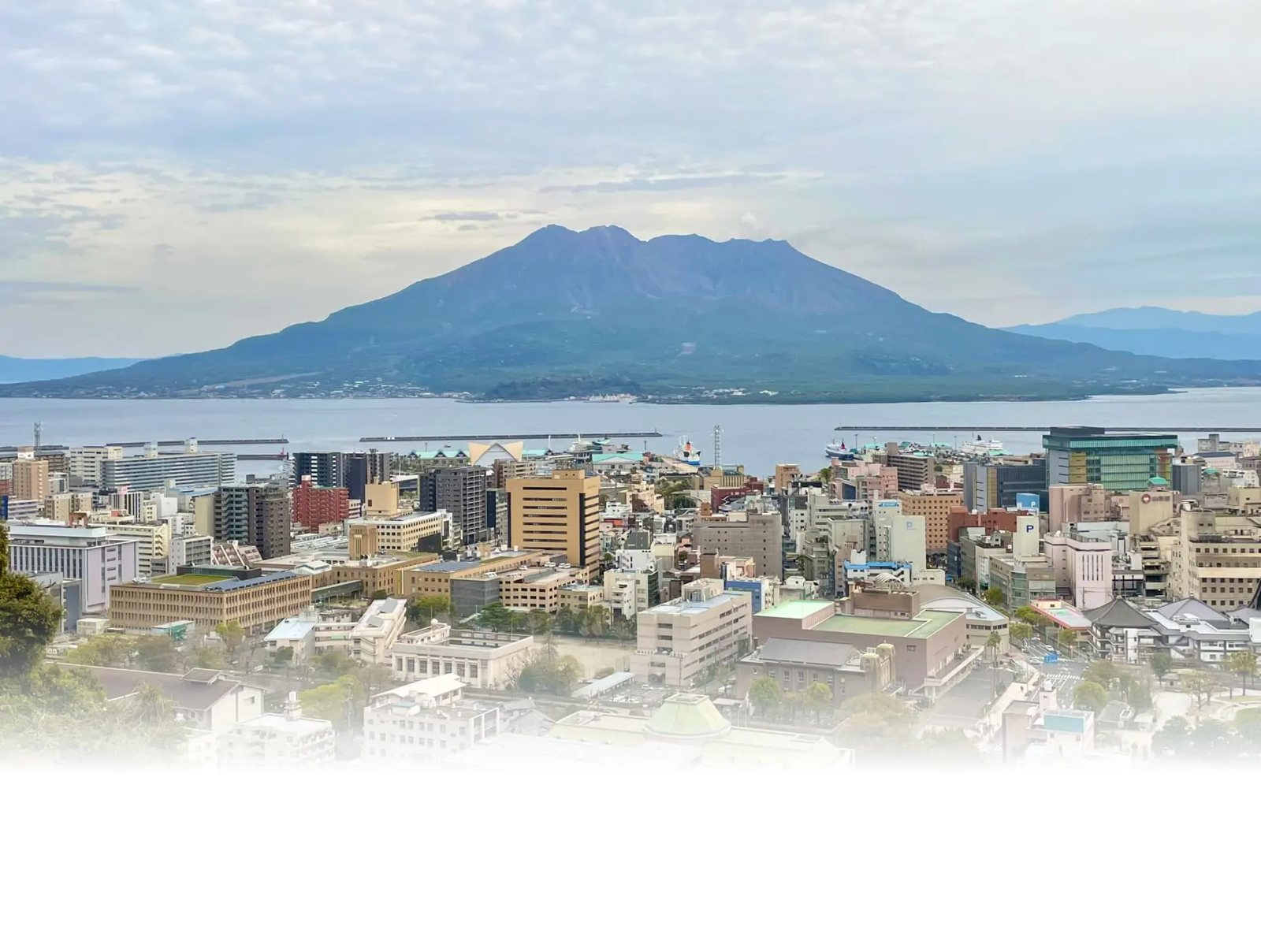
ICA International Conversation Institute Kirishima Campus
ICA International Conversation Institute Kirishima Campus
Compare side by side with other schools →
Tuition and conditions may change depending on the intake. If you contact us, we will check with the school and give you accurate details.
Nearby schools comparedBy distance · no ads or paid placement
- ICA International Conversation Institute Kirishima CampusThis schoolTuition/yr¥831,000Progression—IntakesApr
- Kumamoto International Japanese Language School117.6km›Tuition/yr¥820,000Progression—IntakesApr · Oct
- Kumamoto YMCA Gakuin119.2km›Tuition/yr¥760,000Progression92%IntakesApr · Oct
- ICA International Conversation Academy, Arao Campus143.5km›Tuition/yr¥831,000Progression—IntakesApr · Oct
— means SALLAE has not yet found the data.
About the school
This is a career-focused Japanese language school that offers only the "Career 2-year course" aimed at finding a job in Japan, for people who want to work in Japan after graduation with the Engineer/Specialist in Humanities/International Services status of residence. Through guidance by career staff, joint company information sessions held in partnership with the city, and internships at local companies, students can keep preparing for employment from the first year. Opened in April 2025 in Kokubu-chuo, Kirishima, Kagoshima Prefecture, with a capacity of 80, it admits students once a year in April, with morning and afternoon classes.
Published data and school website
Tuition
⚠ The 2-year course differs by source. Please confirm with the school. School rules: year 1 ¥831,000 (other fees ¥81,000), year 2 ¥739,000 (other fees ¥59,000), total ¥1,570,000. · Website fee list: Year 1 ¥836,000, Year 2 ¥755,000, total ¥1,591,000 (facilities and equipment ¥18,000, materials ¥33,000 (¥22,000 in Year 2), activity fee ¥15,000, insurance ¥10,000, health management ¥10,000). Tuition of ¥680,000 is the same, but the other fees differ. The school regulations say the principal sets them within the amounts in that table, but the website amounts are higher. The total of ¥1,570,000 published by the Ministry of Education matches the school regulations.
If you saw a lower amount elsewhere, it may not include the admission fee and application fee
Median 1-year tuition in other areas — Kyoto ¥911,000(7 schools) · Kanagawa ¥880,000(8 schools) · Okinawa ¥858,000(6 schools) · Tokyo ¥840,600(56 schools) · Fukuoka ¥835,000(12 schools) · Hyogo ¥825,500(7 schools) · Osaka ¥814,000(27 schools) · Shizuoka ¥790,000(9 schools) · Chiba ¥745,333(10 schools) · Aichi ¥740,667(5 schools)
Total by intake
| Intake · length | Full course |
|---|---|
| April intake · 2 years | ¥1,570,000 |
Cost details · course tables · notes · 3 items
- One-time fees
- ¥831,000Tuition ¥680,000 · Application fee ¥20,000 · Admission fee ¥50,000 · Other fees ¥81,000
According to the school guide, fees are paid in one lump sum at enrollment. SALLAE will check with the school whether you can pay in installments.
| Intake · course | Extra 2nd-year costs | All |
|---|---|---|
| April · 2 years | ¥739,000 | ¥1,570,000 |
These are extra costs paid in the second year. The application fee and admission fee are not charged again. Year 2: tuition ¥680,000 · other fees ¥59,000 (total ¥739,000)
Student fees under Article 23 of the school regulations (in force from April 1, 2025). Employment 2-year course only; enrollment starts every April
Pay one year of fees at a time (consult in advance if you want to pay for 6 months). After enrollment, pay every 6 months or every year
Remittance fees, both in your home country and in Japan, are borne by the applicant. If Japan's consumption tax rises, the difference is also collected during enrollment.
School website · 2025-04-01 updated
Whether it is refundable
- If you cancel after submitting application documents
- The entrance examination fee is not refunded for any reason.
- If the CoE is issued but the visa is not applied for and the student does not come to Japan
- The application fee and admission fee are non-refundable. Tuition and other fees are refunded in full, excluding the transfer fee, upon return of the CoE and admission permit.
- If the Japanese embassy or consulate refuses to issue a visa
- The application fee and admission fee are non-refundable. After the school confirms the visa was not issued, tuition and other fees are refunded in full, excluding the transfer fee, upon return of the CoE and admission permit.
- If you cancel enrollment after the visa is issued by a Japanese mission abroad
- The screening fee and admission fee are not refunded. After confirming that the visa has lapsed, tuition and other fees are refunded in full, excluding the transfer fee, in exchange for the admission permit.
See refund policy in detail · 3 more lines
- After entry (before enrolment)
- After you leave Japan and your residence card is confirmed invalid, tuition paid is refunded minus 20% of tuition (up to ¥50,000) and the bank transfer fee. Other fees are not refunded.
- After entry
- After you leave Japan, your residence card is invalid and your withdrawal request is accepted, tuition for terms that have not started is refunded minus 20% of tuition (up to ¥50,000) and the bank transfer fee. Other fees are not refunded.
- If classes are cancelled for unavoidable reasons such as natural disasters, accidents, infectious diseases or transport strikes
- Tuition for that period is not refunded
Admission & dates
⚠ Admission eligibility varies by source — please confirm with the school. (1) A person who has graduated (or is expected to graduate) from a junior college or university, or who has completed 12 or more years of school education in their home country and graduated (or is expected to graduate) from high school. · School rules, Article 19 (1): a person who has graduated (or is expected to graduate) from a junior college or university (high school graduation is not mentioned). You need to check with the school whether you can apply with only a high school diploma.
- Apr intake
- 2-year course · Application November of the previous year (the application deadline is roughly 5 months before the enrolment date) · Classes 1,600 hr
- Japanese level
- Able to prove at least 150 hours of study at a Japanese language educational institution
Proof of 150 or more hours of study at a Japanese language education institution, and being able to answer simple questions on familiar topics with words and the like in the oral test.
Deadline and capacity rules
Employment 2-year course: intake in April. Capacity is 40 each for the morning and afternoon classes, 80 in total. Selection is by document screening, oral exam, interview and confirmation of ability to cover expenses
School website · 2024-06-01 updated
Classes
- Morning
- 09:00-12:30 Morning 9:00–12:30 · capacity 40 · 2 classes
- Afternoon
- 13:10-16:40 Afternoon 13:10–16:40 · capacity 40 · 2 classes
- Class size
- Max 20 students
- Class assignment
- Level-based 6 stages
Materials · Subjects · Timetable · Details
- Subject
- Integrated Japanese · Characters and vocabulary · JLPT preparation · Japanese society and culture · JLPT preparation starts from Pre-intermediate 2, and Japanese society and culture start from Intermediate.
Classes are 20 hours a week over 5 days, in a 4-term system (April, July, October, January). Complete by attending 1,520 or more class hours and earning C or above in all evaluations.
Goals for each level · 6 levels
- Beginner: 10 weeks × 20 hours (5 days)
- Can read very basic kanji and vocabulary and understand their meaning. Can read and write an address and a school name, and communicate in basic Japanese in daily life.
- Pre-intermediate 1: 10 weeks × 20 hours (5 days)
- Can read kanji and vocabulary from daily life and understand their meaning. Can follow slow conversation and state simple opinions, understand signs and notes, and write short emails.
- Pre-intermediate 2: 10 weeks × 20 hours (5 days)
- Can read, understand and write kanji and vocabulary from daily life. Can describe experiences and state opinions. Practice toward passing JLPT N4.
- Intermediate: 10 weeks × 20 hours (5 days)
- Understands basic kanji and vocabulary useful for job hunting. Understands Japanese society and culture and can use practical Japanese. Practice toward passing JLPT N3.
- Upper-intermediate 1: 20 weeks × 20 hours (5 days)
- Can read and write kanji and vocabulary for topics and industries of interest, and convey and present opinions. Can hold conversations in business situations. Practice toward passing JLPT N3.
- Upper-intermediate 2: 20 weeks × 20 hours (5 days)
- Understands abstract kanji and vocabulary for the industry and occupation you want to enter. Can converse and discuss with politeness suited to the situation, and present opinions logically and in detail. Practice toward passing JLPT N2.
School website · Confirmed 2026-09-26
Documents
- 8 photos (3 cm wide × 4 cm tall). Write your name on the back. Taken within 3 months of the application date
- Application form [school-designated form]. Write your name as it appears in your passport.
- Résumé and statement of study purpose [school-designated forms]. Write your education and work history with no gaps.
- Diploma [original] or graduation certificate [original] of the last school attended
- Transcript [original] of the last school attended
- Documents proving Japanese ability [originals]: original JLPT pass certificate or score report (NAT-TEST, J.TEST and TOP-J are also accepted)
- Study certificate issued by a Japanese language education institutionMust state the name of the institution, study period, total study hours, study hours up to submission and textbooks used
- Emergency contact: free format. Write the names, relationships, addresses, phone numbers and email addresses of family members and others.
Sponsor documents · Only if applicable · 7 application requirements
Submitted by the person paying the tuition (financial sponsor)
- Statement of financial support [school-designated form]. The financial sponsor fills it in in their own handwriting. A Japanese translation is required.
- Bank balance certificate [original]. A balance of around ¥2,500,000 in Japanese yen is required. Valid for 3 months or less, counting the date of application.
- Copy of bank passbookPast 3 years
- Certificate of employment, etc.: employees → certificate of employment / self-employed → copy of business license and tax payment certificate / company officers → certified copy of the company registry, etc.
- Income certificate [original] for the past 3 years
- Tax certificate [original] for the past 3 yearsoverseas). For relatives or the applicant living in Japan, a tax certificate or tax assessment certificate (showing income
- Documents proving the relationship between the applicant and the financial sponsor: family relationship certificate, birth certificate, etc.
- Residence certificate (jūminhyō)For all household members
Only if applicable
- Copy of passport (if you have a record of entering Japan, also submit a copy of the pages showing entry and exit) (If you have a passport)
- Certificate of enrollment [original] (submit together with a transcript) (Applicants currently enrolled must submit it)
- Those currently enrolled at a university or similar submit their high school diploma and transcript (Applicants currently enrolled must submit it)
- Authentication of graduation certificate (If you have an authenticated graduation certificate)
Application requirements
All submitted documents, except certificates, must be originals dated within the last 3 months. Application documents must be filled in by hand by the applicant and the expense payer. Do not use correction fluid. Documents written in any language other than Japanese must come with a Japanese translation. Documents submitted to the Immigration Bureau are not returned, except certificates. Additional documents may be requested if needed. If any false statement or declaration is found in the submitted documents, the application will be rejected or the admission cancelled. The expense payer takes responsibility for managing and supervising the applicant's procedures after arrival, housing, part-time work and other daily matters, as well as life while enrolled
Documents are named only in Japanese form, such as the residence certificate (jūminhyō), and it is not shown which document from your own country to submit. The school-designated forms (application form, résumé, statement of financial support) cannot be downloaded from the website. SALLAE is confirming this with the school.
School website · 2024-06-01 updated
Admission process
- Request an admission consultation — You can first consult in Korean about the admission requirements and the documents to prepare.
- Submit documents — Deadline: November of the previous year. Send the application documents to the school's office. Application fee ¥20,000 (bank transfer). *Required even if the residence permit is not issued.
- Document screening and pass notice — A pass notice is issued after document screening, an oral test and an interview.
- Application for status of residence (the school applies on your behalf) — On the applicant's behalf, the school applies to the Immigration Services Agency of Japan for the student visa.
- Issuance of the Certificate of Eligibility — If there is no problem, the Certificate of Eligibility is issued, and the school sends the invoice at the same time as the notice.
- Tuition payment — After receiving the invoice, pay directly to the school's Japanese bank account.
- Receive the admission permit and Certificate of Eligibility — Once payment is confirmed, the school sends the admission permit and Certificate of Eligibility.
- Student visa application and flight arrangements — Apply for the student visa at the Japanese embassy or consulate in your country, and arrange flights and so on at the same time.
- Placement test
- Before classes start, students' Japanese ability is assessed by tests and the like, and classes are organized appropriately.
School website · 2024-06-01 updated
Reviews
If you study here or used to, tell others what the classes, teachers and daily life were like. It helps anyone deciding on this school.
Write the first reviewFurther-study and employment support
- Specialist staff with experience as job-hunting consultants — Specialist staff with experience as job-hunting consultants hold career guidance sessions and individual consultations.
- Orientation at entry (April) — Gain basic knowledge on the current state of employment in Japan, statuses of residence for work, and the Japanese ability companies require.
- Job-hunting guidance — Through workshops on self-analysis and industry research, make your desired employers concrete, and prepare for job hunting, including résumés and interviews.
- Joint company information sessions (Aug, Oct) — Companies that want to hire foreign nationals gather and explain their recruitment and work. Company information sessions are also held in partnership with the city.
- Meeting with seniors who work after studying abroad (Mar) — A chance to talk with seniors who work after studying abroad and with foreign nationals working in the area.
- Talks on industries and occupations (Jul) — Hear from people who actually work, and deepen your knowledge.
- Internship information session — Introduction of companies that accept interns. Internships I–VII: Kyushu Tabuchi, Kagoshima Toyopet, Kokubu Denki, Hotel Kyocera, Kirishima Seiko, Yamaguchi Co., Ltd., Ryokojin Sanso.
- Individual interview — Specialist staff listen to each student's wishes and concerns individually. Support is also available in your native language.
- Job listings (always posted in the student consultation room and corridors) — The school works with companies in the city and always posts job listings in the student consultation room and corridors. With the cooperation of the group's companies, it also supports job hunting in other regions.
- Job listings for people who work with the "Engineer/Specialist in Humanities/International Services" status of residence — Listings are mainly for people who want the "Engineer/Specialist in Humanities/International Services" status of residence: mechanical engineers, systems engineers, programmers, interpreters, translators, language instructors, hotel front desk staff, etc.
- Career education — Career education: talks by seniors, how to read job listings, company visits, classes on creating job listings, etc.
- Support from Kagoshima Prefecture (interviews) — Support from Kagoshima Prefecture: Instructor Ayato of R Advance holds interviews based on students' résumés.
Schedule to admission
- Apr
- Year 1: orientation · Year 2: career guidance
- May
- Year 2: career guidance
- Jun
- Year 2: career guidance
- Jul
- Year 1: talks on industries and occupations · Year 2: internship briefing · Year 2: career guidance
- Aug
- Year 2: joint company information session
- Sep
- Year 2: company information session (local-government partnership) · Year 2: career guidance
- Oct
- Year 2: joint company information session · Year 2: career guidance
- Mar
- Years 1 and 2: meeting with seniors · Year 1: internship briefing
School website · Confirmed 2026-09-26
Daily-life support
- Finding housing — The school works with several real-estate companies in the city, and office staff guide students as interpreters.
- Part-time work information — With permission for activities outside the status of residence: up to 28 hours a week. Job listings can be found on the school notice board. Adult-entertainment businesses (pachinko parlors, game centers, snack bars, etc.) are not allowed.
- Illness and accidents — There is a hospital near the school. In an emergency, school staff accompany the student.
- Health checkup — A health checkup is held regularly at a medical institution once a year.
- Insurance — All eligible students enroll in National Health Insurance and also in international student insurance.
- Orientation on study and daily life — Orientation on life as an international student is held right after enrollment, and is also held regularly for all enrolled students.
Insurance and orientation are from the fiscal 2025 self-inspection report, and the health checkup is as written in the school rules.
School website · 2024-05-10 updated
Students
15 enrolled (2025) · Capacity 80 National median: 180 students
Based on 15 students enrolled in 2025.
Published by MEXT · Confirmed 2026-09-20
School life
For 1 year
- 4
- Year 1 entrance ceremony · Evacuation drill
- 5
- Health checkup
- 6
- Tea ceremony experience · End-of-term evaluation
- 7
- Yukata dressing experience · Tanabata · JLPT · Recruitment briefing
- 8
- Kirishima Kokubu summer festival
- 9
- Disaster drill · End-of-term evaluation · Interviews and exams for next year's students
- 10
- Kirishima mountain hike · Interviews and exams for next year's students
- 11
- Applications for next year's students
- 12
- Christmas party · JLPT · End-of-term evaluation
- 1
- First calligraphy of the year
- 2
- Setsubun · Satsuma-age (fried fish cake) factory visit
- 3
- Year 2: graduation ceremony · End-of-term evaluation
Based on the annual events table on the top page. The job-hunting schedule in the same table is listed separately under Progression and career support. Days off are from the long-holiday table on the course guide page.
- Students registered as volunteers with the Kirishima City Council of Social Welfare and interacted with the local community.
- A student from Nepal took part in a multilingual picture-book reading at the Kirishima City Children's Center.
- First-aid and lifesaving course (calling 119, AED and chest compressions)
2025–2026 academic calendar · Older data
- Saturdays and Sundays
- Weekly
- National holidays
- Public holidays
- Spring break
- Apr 1–6, 2025
- Golden Week
- Apr 26–May 6, 2025
- Summer vacation
- Aug 9–24, 2025
- Autumn break
- Sep 20–Oct 5, 2025
- Winter break
- Dec 25, 2025–Jan 7
- Spring break
- Mar 25–31, 2025 · The table states the year as 2025
School website · Confirmed 2026-09-26
Access
- Nearby
- 5 minutes by bus from Kokubu Station on the JR Nippo Main Line. Kirishima mountain range, Kinko Bay and Kirishima Jingu shrine are nearby, and the area is also known for its hot springs.
School website · 2024-06-02 updated
Japanese language institution certified by MEXT Certification no. 20241460022 · Certified Oct 30, 2024 →
SALLAE has organized the school website and published data in English.
The update date is the day that material was last revised.
Photos are materials published by the school.
This information is compiled from official sources and is not updated daily. Please confirm with the official contact before signing or applying.