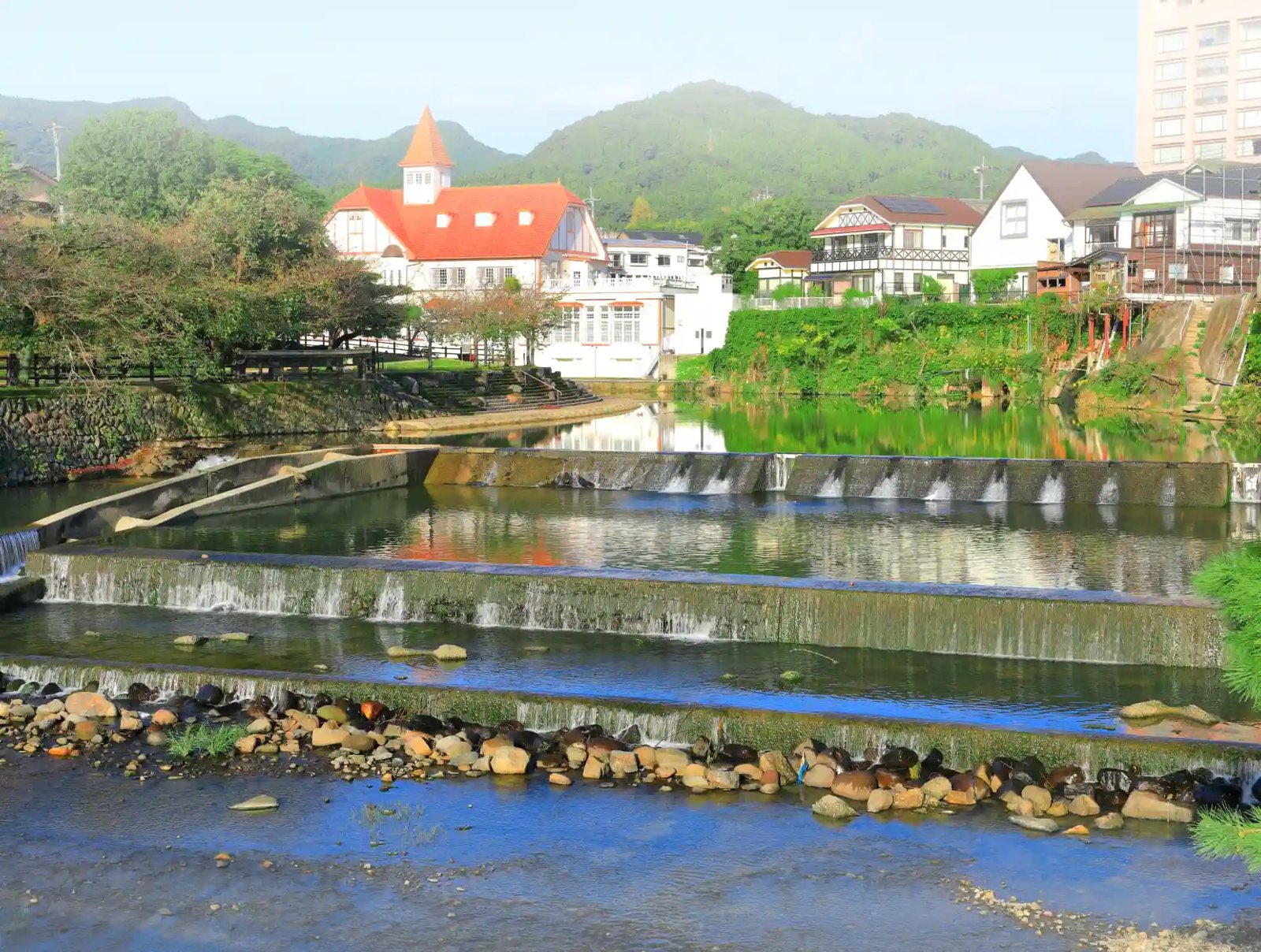
ICA International Conversation Institute Ureshino Campus
ICA International Conversation Institute Ureshino Campus
Compare side by side with other schools →
Tuition and conditions may change depending on the intake. If you contact us, we will check with the school and give you accurate details.
Nearby schools comparedBy distance · no ads or paid placement
- ICA International Conversation Institute Ureshino CampusThis schoolTuition/yr¥831,000Progression—IntakesApr
- ICA International Conversation Academy, Arao Campus44.6km›Tuition/yr¥831,000Progression—IntakesApr · Oct
- Kurume International Exchange Institute54.8km›Tuition/yr¥750,000Progression97%IntakesApr · Oct
- Kurume Seminar55km›Tuition/yr¥830,000Progression91%IntakesApr · Oct
— means SALLAE has not yet found the data.
About the school
A school that puts its effort into employment. The only course is the "Career 2-year course," and its admission conditions also name people who want to work in Japan after graduation on the Engineer/Specialist in Humanities/International Services visa. Specialist staff with experience as job-hunting consultants continue career guidance, joint company information sessions, company information sessions in partnership with the local government, and internship briefings throughout the second year. It is located inside the ryokan "Wataya Besso" in Ureshino Onsen, Saga Prefecture, 20 minutes on foot from JR Ureshino-Onsen Station. It was certified by the Minister of Education in October 2024 and welcomed its first students in April 2025, so it has no graduates yet; against a capacity of 100, 20 students were enrolled in 2025 (9 each from Nepal and Pakistan).
Published data and school website
Tuition
⚠ The tuition for the 2-year course differs by source. Please confirm with the school. School regulations (in force from April 2025): Year 1 ¥831,000 · Year 2 ¥739,000 · Website fee guide: Year 1 ¥836,000, Year 2 ¥755,000, total ¥1,591,000 (facilities and equipment ¥18,000 / materials ¥33,000, Year 2 ¥22,000 / activity fee ¥15,000, Year 2 ¥10,000 / insurance ¥10,000 / health management ¥10,000). Tuition of ¥680,000 is the same, but the other fees differ. The Year 2 items on the website add up to ¥750,000, but the total is stated as ¥755,000. The total of ¥1,570,000 published by the Ministry of Education matches the school regulations
If you saw a lower amount elsewhere, it may not include the admission fee and application fee
Median 1-year tuition in other areas — Kyoto ¥911,000(7 schools) · Kanagawa ¥880,000(8 schools) · Okinawa ¥858,000(6 schools) · Tokyo ¥840,600(56 schools) · Fukuoka ¥835,000(12 schools) · Hyogo ¥825,500(7 schools) · Osaka ¥814,000(27 schools) · Shizuoka ¥790,000(9 schools) · Chiba ¥745,333(10 schools) · Aichi ¥740,667(5 schools)
Total by intake
| Intake · length | Full course |
|---|---|
| April intake · 2 years | ¥1,570,000 |
Cost details · course tables · notes · 3 items
- One-time fees
- ¥831,000Tuition ¥680,000 · Application fee ¥20,000 · Admission fee ¥50,000 · Other fees ¥81,000
According to the school guide, fees are paid in one lump sum at enrollment. SALLAE will check with the school whether you can pay in installments.
| Intake · course | Extra 2nd-year costs | All |
|---|---|---|
| April · 2 years | ¥739,000 | ¥1,570,000 |
These are extra costs paid in the second year. The application fee and admission fee are not charged again. Year 2: tuition ¥680,000 · other fees ¥59,000
Student fee table under Article 23 of the school regulations (in force from April 1, 2025). Employment 2-year course only; enrollment starts every April
The application fee is paid when applying. For the rest, an invoice is issued after the Certificate of Eligibility is issued, and 1 year's amount is paid (consult in advance for 6 months). After enrollment, fees are paid in installments of 6 months or 1 year.
All remittance fees, both in your home country and in Japan, are borne by the applicant. If consumption tax rises, the difference is also collected during enrollment.
School website · 2025-04-01 updated
Whether it is refundable
- If you cancel after submitting application documents
- The entrance examination fee is not refunded for any reason.
- If the CoE is issued but the visa is not applied for and the student does not come to Japan
- The application fee and admission fee are non-refundable. Tuition and other fees are refunded in full, excluding the transfer fee, upon return of the CoE and admission permit.
- If the Japanese embassy or consulate refuses to issue a visa
- The application fee and admission fee are non-refundable. After the school confirms the visa was not issued, tuition and other fees are refunded in full, excluding the transfer fee, upon return of the CoE and admission permit.
- If you cancel enrollment after the visa is issued by a Japanese mission abroad
- The screening fee and admission fee are not refunded. Tuition and other fees are refunded in full, excluding the transfer fee, in exchange for the admission permit, once it is confirmed that the visa was unused and has lapsed.
See refund policy in detail · 3 more lines
- After entry (before enrolment)
- After you leave Japan and your residence card is confirmed invalid, tuition paid is refunded minus 20% of tuition (up to ¥50,000) and the bank transfer fee. Other fees are not refunded.
- After entry
- After you leave Japan, your residence card is invalid and your withdrawal request is accepted, tuition for terms that have not started is refunded minus 20% of tuition (up to ¥50,000) and the bank transfer fee. Other fees are not refunded.
- If classes are cancelled for unavoidable reasons such as natural disasters, accidents, infectious diseases or transport strikes
- Tuition for that period is not refunded
Admission & dates
⚠ Admission eligibility varies by source — please confirm with the school. A person who has graduated from a junior college or university and obtained a degree, or is expected to (school rules, Article 19) · Admission qualification (1) states: "has completed 12 or more years of school education in the home country, and has graduated from high school and obtained a high school qualification, or is expected to." You need to check with the school whether you can apply with only a high school diploma.
- Apr intake
- 2-year course · Application Deadline in November of the previous year (about 5 months before the entrance date) · Classes 200 + 200 + 200 + 200 + 400 + 400 (class) hours
- Japanese level
- 150+ hours of Japanese study
A person who can prove 150 or more hours of study. A person who can understand simple questions on familiar topics in an oral test and answer with words and the like. Submit a JLPT or similar pass certificate or score report and a study certificate.
Deadline and capacity rules
Employment 2-year course only [study visa required]. Capacity 100 (60 morning, 40 afternoon). For those who want to obtain a work-related status of residence after graduation and find a job in Japan. Depending on the desired occupation, a major or English ability may be required
School website · 2024-06-01 updated
Classes
- Morning
- 09:00-12:30 60 students · 3 classes
- Afternoon
- 13:10-16:40 40 students · 2 classes
- Class size
- Max 20 students
- Class assignment
- Level-based 6 stages
Materials · Subjects · Timetable · Details
- Subject
- Integrated Japanese · Characters and vocabulary · JLPT preparation · Japanese society and culture · Beginner and Pre-intermediate 1 cover integrated Japanese plus characters and vocabulary; JLPT preparation starts from Pre-intermediate 2; Japanese society and culture are added from Intermediate.
Class hours by subject
| Subject | 2 years |
|---|---|
| Beginner | 200 hours |
| Pre-intermediate 1 · 2 | 200 hours |
| Intermediate | 200 hours |
| Upper intermediate 1 | 400 hours |
| Upper-intermediate 2 | 400 hours |
Classes: 10 weeks × 20 hours (5 days). Complete the course by attending at least 1,520 class hours and earning C or higher in all assessments. Grades are on a 6-point scale: S, A, B, C, D, F
Goals for each level · 6 levels
- Beginner
- Can read very basic kanji and vocabulary and understand their meaning. Can read and write an address and a school name, and listen, read, speak and write about familiar topics.
- Pre-intermediate 1
- Can read kanji and vocabulary from daily life, and read and write basic kanji and compound words. Can understand slow, clear conversation and state simple opinions.
- Pre-intermediate 2
- Can read and write kanji and vocabulary from daily life, understand and ask questions when people speak clearly, describe experiences and state opinions. Practice toward passing JLPT N4.
- Intermediate
- Understands basic kanji and vocabulary useful for job hunting and the differences between Japanese culture and your own. Can use practical Japanese in various situations. JLPT N3 practice.
- Upper intermediate 1
- Can read and write kanji and vocabulary for topics and industries of interest, understand what others say, and convey and present opinions. Can converse in business situations. JLPT N3 practice.
- Upper-intermediate 2
- Understands abstract kanji and vocabulary for the industry and occupation you want to enter, converses and discusses with politeness suited to the situation, and presents logically and in detail. JLPT N2 practice.
School website · 2024-06-01 updated
Documents
- 8 photos (3 cm wide × 4 cm tall). Write your name on the back. The same photo as on your diploma or ID is not allowed. Taken within 3 months of the application date
- Application form [school-designated form]: write your name as it appears in your passport.
- Résumé and statement of study purpose [school-designated forms]. Write your education and work history with no gaps, and write the school's address in full. Write the statement of study purpose in specific detail, following your education and work history.
- Original diploma or original graduation certificate from your last school
- Original academic transcript from your last school
- Documents proving Japanese ability [originals]. JLPTNAT-TEST, J-TEST and TOP-J are also accepted) original pass certificate or score report, and a study certificate issued by a Japanese language education institution (stating the name of the institution, study period, total study hours, study hours up to submission and textbooks used
- Emergency contact (free format): state the name, relationship, address, phone number and email address of a family member or other contact
Sponsor documents · Only if applicable · 7 application requirements
Submitted by the person paying the tuition (financial sponsor)
- Statement of financial support [school-designated form]. A Japanese translation is required. The financial sponsor must write it in their own handwriting.
- Bank balance certificate [original]. A balance of around ¥2,500,000 in Japanese yen is required. Valid for 3 months or less, counting the date of application.
- Copy of bank passbookPast 3 years
- Certificate of employment, etc. Employees: certificate of employment; self-employed: copy of business license and tax payment certificate; company officers: certified copy of the company registry, etc.
- Income certificate [original]Past 3 years
- 1) Paid by parents or relatives living overseas: tax certificate [original] (for the past 3 years, showing income or earnings
- 1) Paid by parents or relatives living overseas: documents proving the relationship between the applicant and the expense payer (proof of kinship, birth certificate, etc.
- 2) Paid by relatives living in Japan: tax certificate or tax assessment certificate (showing income
- 2) Paid by relatives living in Japan: residence certificate (all household members
- 2) Paid by relatives living in Japan: documents proving the relationship between the applicant and the expense payer (proof of kinship, birth certificate, etc.
- 3) Paid by the applicant: tax certificate or tax assessment certificate (showing income
Only if applicable
- Copy of passport. If you have entered Japan before, also submit copies of the pages showing entry and exit. (If you have a passport)
- If enrolled in a university or similar, submit your high school diploma and transcript (Currently enrolled at a university or similar)
- Certificate of enrollment [original] (submit together with a transcript) (If you are currently enrolled)
- Authentication of graduation certificate (If you have an authenticated graduation certificate)
Application requirements
All submitted documents, except certificates, must be originals dated within the last 3 months. Application documents must be filled in by hand by the applicant and the expense payer. Do not use correction fluid. Documents written in any language other than Japanese must come with a Japanese translation. Documents submitted to the Immigration Bureau are not returned, except certificates. Additional documents may be requested if needed. If any false statement or declaration is found in the submitted documents, the application will be rejected or the admission cancelled. The expense payer takes responsibility for managing and supervising the applicant's procedures after arrival, housing, part-time work and other daily matters, as well as life while enrolled
School website · 2024-06-01 updated
Admission process
- Request an admission consultation — Contact the school through the inquiry form or by phone.
- Submit application documents — Application fee ¥20,000 (bank transfer). *Required even if the residence permit is not issued. The application deadline is November of the previous year. Send the application documents to the school's office.
- Selection method — Selection method: document screening, oral test, interview, and other (to confirm the ability to cover expenses, employment and income details are checked).
- Notice of result — After the documents are submitted, they are screened and a pass notice is issued.
- Immigration Services Agency review — On the applicant's behalf, the school applies to the Immigration Services Agency of Japan for the student visa.
- Result notice and invoice — The school tells applicants that the Certificate of Eligibility has been issued, and at the same time sends the invoice.
- Tuition payment — Pay directly to the school's Japanese bank account. All remittance fees, both in your home country and in Japan, are borne by the applicant.
- Admission permit and Certificate of Eligibility sent — Once payment is confirmed, the school sends the admission permit and the Certificate of Eligibility.
- Visa application and arrival preparation — Apply for the student visa at the Japanese embassy or consulate in your country, and arrange flights and so on at the same time.
- Apr intake
- Placement test
- Before classes start, students' Japanese ability is assessed by tests and the like, and classes are organized appropriately.
School website · 2024-06-01 updated
Reviews
If you study here or used to, tell others what the classes, teachers and daily life were like. It helps anyone deciding on this school.
Write the first reviewFurther-study and employment support
- Specialist staff with experience as job-hunting consultants — Specialist staff with experience as job-hunting consultants hold career guidance sessions and individual consultations.
- Orientation at entry (April) — Gain basic knowledge for finding a job in Japan: the current state of employment in Japan, statuses of residence for work, and the Japanese ability companies require.
- Job-hunting guidance — Through workshops on self-analysis and industry research, make your desired employers concrete, and prepare for actual job hunting, including résumés and interviews.
- Company briefing — Joint company information sessions (Aug, Oct): companies that want to hire foreign nationals gather and explain their recruitment and work. In September, a company information session (local-government partnership) is held.
- Talks on industries and occupations (Jul) — Hear from people who actually work, and deepen your knowledge.
- Internship information session — Explanation of companies that wish to accept interns. In fiscal 2025, company information sessions, company visits and internships were held.
- Meeting with seniors who work after studying abroad (Mar) — A chance to talk with foreign nationals working in the area.
- Individual interview — Specialist staff listen to your wishes and concerns individually. Support is also available in your native language, so it is easy to talk.
- Job listings — The school works with companies in the city that want to hire foreign nationals and always posts job listings. With the cooperation of group companies, it also supports job hunting outside the city. Listings are mainly for the Engineer/Specialist in Humanities/International Services status of residence.
Schedule to admission
- Year 1
- Apr · Orientation on enrollment
- Year 1
- Jul · Lectures on industries and occupations
- Year 1
- Mar · Meeting with seniors · Internship information session
- Year 2
- Apr, May, Jun, Jul · Job-hunting guidance
- Year 2
- Jul · Internship information session
- Year 2
- Aug · Joint company information session
- Year 2
- Sep · Company information session (local-government partnership) · Job-hunting guidance
- Year 2
- Oct · Joint company information session · Job-hunting guidance
- Year 2
- Mar · Meeting with seniors · Graduation ceremony
School website · 2024-06-01 updated
Daily-life support
- Finding housing — The school works with several reliable real-estate companies in the city, and office staff guide students as interpreters.
- Part-time work — With permission for activities outside the status of residence, students may work up to 28 hours a week. Adult-entertainment businesses are not allowed. Part-time job listings can be found on the school notice board.
- Illness and accidents — There is a hospital near the school, and staff accompany students in an emergency. A system for consultations on traffic accidents and the like is in place.
- Health checkup — A health checkup is held once a year at a medical institution (school rules). In the annual events table, it is in May.
- Insurance — All eligible students enrol in National Health Insurance and also in international student insurance.
- Orientation on study and daily life — Orientation on life as an international student is held right after enrollment, and is also held regularly for all enrolled students.
- Residence status procedures — The school has staff recognized by the regional immigration services bureau as authorized to submit applications on students' behalf.
School website · 2024-05-10 updated
Students
20 students enrolled (2025) · Capacity 100 National median: 180 students
Based on the 20 students enrolled in 2025.
Published by MEXT · Confirmed 2026-09-20
School life
For 1 year
- 4
- Entrance ceremony · Evacuation drill
- 5
- Health checkup
- 6
- End-of-term evaluation
- 7
- Japanese-Language Proficiency Test (JLPT)
- 8
- Ureshino Onsen summer festival
- 9
- Disaster drill · End-of-term evaluation
- 10
- Hizen Yoshida ware · Tatsu Festival
- 12
- Christmas party · JLPT (Japanese-Language Proficiency Test) · End-of-term evaluation
- 2
- Ureshino Attaka Festival
- 3
- Graduation ceremony · End-of-term evaluation
This is the annual events table on the school's top page. Job-hunting events are listed separately under "Schedule until acceptance."
- With the cooperation of people in Saga Prefecture and Ureshino City, the school held disaster-prevention learning and sports events with local residents.
- Students take part in cross-cultural exchange events hosted by the prefecture, giving them chances to meet local residents.
On campus
- Inside Wataya Besso
- School building — Wataya Besso is a long-established ryokan with sukiya-style buildings scattered across a vast site.
- On campus
- Self-study room
- On campus
- Books and media
- On campus
- Equipment that supports classes using audiovisual materials and IT
- On campus
- Student counseling room
2025–2026 academic calendar · Older data
- Saturdays and Sundays
- Weekly · Days off follow the school rules (in force April 2025).
- Spring break
- Late Mar to early Apr (2 weeks)
- Golden Week
- Late April to early May (1 week)
- Summer vacation
- Early August to late August (2 weeks)
- Autumn break
- Late Sep to early Oct (2 weeks)
- Winter break
- Late Dec to early Jan (2 weeks)
School website · 2024-07-18 updated
Access
- Transit
- 20 min walk from Ureshino-Onsen Station (JR Nishi-Kyushu Shinkansen)
- Nearby
- Inside Wataya Besso. 30 minutes by bus from Takeo-Onsen Station on the JR Sasebo Line. Ureshino is a hot-spring town known for tea ceremony and tea ware.
School website · 2024-06-02 updated
Japanese language institution certified by MEXT Certification no. 20241410021 · Certified Oct 30, 2024 →
SALLAE has organized the school website and published data in English.
The update date is the day that material was last revised.
Photos are materials published by the school.
This information is compiled from official sources and is not updated daily. Please confirm with the official contact before signing or applying.