International Culture School of Foreign Language
International Culture School of Foreign Language
- Course
- Further-study course only ›
- Admission
- 4 times a year · Jan, Apr, Jul, Oct ›
- Japanese at entry
- From N5 ›
Compare side by side with other schools →
Tuition and conditions may change depending on the intake. If you contact us, we will check with the school and give you accurate details.
Nearby schools comparedBy distance · no ads or paid placement
- International Culture School of Foreign LanguageThis schoolTuition/yr¥818,000Progression—IntakesJan · Apr · Jul · Oct
- Tokyo Nakano Japanese Language Institute1.4km›Tuition/yr¥749,000Progression—IntakesApr · Jul · Oct
- East West Japanese Language School2.2km›Tuition/yr¥770,000Progression—IntakesApr · Oct
- Bunka Foreign Language College2.6km›Tuition/yr¥1,113,000Progression—IntakesApr · Oct
— means SALLAE has not yet found the data.
About the school
A progression-only school that puts particular effort into guidance for graduate school. It has a graduate school special class and one-on-one guidance on research proposals and short essays, and the 7 graduates of March 2026 listed in seniors' reviews progressed to graduate schools of Osaka University, Kanazawa University and Meiji University, or to vocational schools. It is a small school with a capacity of 160, opened in 1988, in a 5-story building in Minamidai, Nakano-ku, bordering Shinjuku-ku and Shibuya-ku, with classes of four 45-minute periods split into morning and afternoon classes. Many students are from Myanmar and Nepal, and student-life advisers who speak Chinese, English, Nepali and Burmese handle consultations on daily life.
Published data and school website
Tuition
⚠ The total for the 1 year 3 months course differs by source. Please confirm with the school. School website: for the 1 year 3 months course, the total is ¥1,021,250. · The difference from the ¥1,001,250 published by the Ministry of Education, Culture, Sports, Science and Technology is ¥20,250. The published 2-year course figure of ¥1,521,000 equals the application fee and admission fee plus two years of annual tuition. The published total may not include exam fees and health checkup costs.
If you saw a lower amount elsewhere, it may not include the admission fee and application fee
Median 1-year tuition in other areas — Kyoto ¥911,000(7 schools) · Kanagawa ¥880,000(8 schools) · Okinawa ¥858,000(6 schools) · Tokyo ¥840,600(56 schools) · Fukuoka ¥835,000(12 schools) · Hyogo ¥825,500(7 schools) · Osaka ¥814,000(27 schools) · Shizuoka ¥790,000(9 schools) · Chiba ¥745,333(10 schools) · Aichi ¥740,667(5 schools)
Cost details · course tables · notes · 3 items
- One-time fees
- ¥818,000Application fee ¥25,000 · Admission fee ¥50,000 · Tuition (including facility and materials fees of ¥30,000) ¥723,000 · JLPT exam fee (2 sittings) ¥15,000 · Health checkup fee (once) ¥5,000
According to the school guide, fees are paid in one lump sum at enrollment. SALLAE will check with the school whether you can pay in installments.
For 1 year: application fee ¥25,000, admission fee ¥50,000, tuition ¥723,000, JLPT fee ¥15,000, health checkup ¥5,000, total ¥818,000.
The application fee of ¥25,000 is paid when applying. After tuition is paid, the Certificate of Eligibility and the admission permit are sent.
School rules: tuition ¥693,000 (per year), facility usage fee ¥10,000 (per year), materials ¥20,000 (per year). In force Aug 1, 2024.
School website · 2026-05-28 updated
Whether it is refundable
- After enrolment (Article 24 of the school regulations)
- As a rule, student fees already paid are not refunded at all after enrollment.
Admission & dates
- Apr intake
- 2-year course · Application Application period: Aug 1–Oct 15 · Classes 1,520 class hours (1 class hour = 45 minutes)
- Jul intake
- 1 year 9 months course · Application Application period: Nov 1–Feb 15 · Classes 1,330 class hours (1 class hour = 45 minutes)
- Oct intake
- 1 year 6 months course · Application Mar 1–May 15 · Classes 1,140 class hours (1 class hour = 45 minutes)
- Jan intake
- 1 year 3 months course · Application Application period: Jun 1–Aug 15 · Classes 980 class hours (1 class hour = 45 minutes)
- Japanese level
- JLPT N5 level or above
NAT, J-Cert, J.TEST Grade F and the like are also accepted. If you have no pass certificate at the interview, a second interview is held after the results are announced. January intake: JLPT N4 or above.
Deadline and capacity rules
Those in their 2nd year of high school or above who are expected to complete it (new graduates prioritized), with basic English, JLPT N5 or above, etc., the ability to cover expenses, and a strong wish to progress who will not change course. Capacity 160.
School website · 2026-06-21 updated
Classes
- Morning
- 09:00-12:50 4 periods of 45 minutes
- Afternoon
- 13:00-16:50 4 periods of 45 minutes
- Class size
- Max 20 students
- Class assignment
- Level-based 5 stages
- Elective classes
- Integrated subjects · English · Mathematics · These are elective classes chosen according to your career path. General subjects, English, mathematics and so on are offered as electives for students who want them.
Materials · Subjects · Timetable · Details
Class hours by subject
| Subject | 2 years | 1 year 9 months | 1 year 6 months | 1 year 3 months |
|---|---|---|---|---|
| Beginner | 400 hours | 200 hours | 200 hours | — |
| Lower intermediate | 240 hours | 200 hours | 260 hr | 300 hr |
| Intermediate | 280 hr | 280 hr | 320 hours | 320 hours |
| Upper intermediate | 300 hr | 320 hours | 360 hours | 360 hours |
| Advanced | 300 hr | 330 hr | — | — |
School rules: 2 years 1,520 hours, 1.9 years 1,330 hours, 1.5 years 1,140 hours, 1.3 years 980 hours (1 class hour is 45 minutes, 20 hours a week). Graduation requires an attendance rate of 80% or more.
What each level aims for · 3 levels
- Beginner
- About 360–480 hours. Pronunciation practice, daily conversation, basic sentence patterns, composition, beginner reading, Japanese society.
- Intermediate
- About 360–480 hours. Intermediate reading, expressions and sentence patterns, applied conversation, listening, writing, newspaper reading, speed reading, JLPT N2 preparation, EJU preparation.
- Advanced
- About 360–480 hours. Advanced Japanese ability, listening, thinking and paper-writing skills, EJU and JLPT N1 preparation, progression guidance (university preparatory course).
School website · 2026-09-02 updated
Documents
- Application form (school's prescribed form; write the address accurately down to the street number). A translation of the statement of study purpose is required.
- Original diploma of the last school attended and transcript
- Certificate of enrollment or certificate of employment
- Japanese study history certificate and JLPT pass certificate
- 4 photosTaken within 3 months, 40 × 30 mm
Sponsor documents · Only if applicable · 5 application requirements
Submitted by the person paying the tuition (financial sponsor)
- Statement of financial support (prescribed form, with English) and statement of asset formation
- Bank balance certificate (¥2,500,000 or more, or equivalent) and passbook statements for the past year
- Certificate of employment, income certificate and tax payment certificate for the past year or more
- Family register copy, household composition certificate
- If you have other assets, submit a certificate for those assets.
Only if applicable
- Documents explaining in detail your background, purpose for coming to Japan, and plans after graduation (If 3 or more years have passed since graduation)
- Statement of financial support (prescribed form), deposit-accumulation statement (If the cost is borne by someone living in Japan)
- Tax assessment certificate or tax payment certificate (stating total annual income for the past 1 year) (if the costs are paid by a person living in Japan)
- Bank balance certificate of the financial sponsor themselves (¥5,000,000 or more; proof of savings built up over time is required) (If the cost is borne by someone living in Japan)
- Residence certificate (all household members) or certificate of items recorded in the foreign resident registration original (If the cost is borne by someone living in Japan)
- Certificate of employment. For company owners, a certified copy of the company registry; for the self-employed, a copy of the final tax return. (If the cost is borne by someone living in Japan)
- Document proving the family relationship between the applicant and the sponsor (if the sponsor in Japan is a relative of the applicant) (If the cost is borne by someone living in Japan)
Application requirements
All documents must be dated within 3 months of issue, with a Japanese translation attached. Application fee ¥25,000 (paid when applying) Any nationality. For foreign nationals: a person with a regular job and stable income who is related to the applicant. * The school is currently Appropriate School I, so some documents can be omitted. Be sure to contact the school beforehand. (Aug 2025) Supporting documents for the bank balance certificate (3 years of passbook statements) (application documents list, Aug 2025). The application guidelines say 1 year of passbook statements.
A list of required documents for international students is not specifically published. SALLAE is confirming this with the school.
School website · 2026-06-21 updated
Admission process
- Request an admission consultation — Download the application form and statement of financial support from the school website, fill them in, and send them as attachments to the school's email address.
- Filling in the application form and statement of financial support, with correction guidance — Fill in and send the application form and statement of financial support; the school gives guidance on corrections and sends them back to the applicant; the applicant fills them in again and mails them to the school.
- Document screening and online interview — Selection is by document screening and a remote interview. A simple N5/N4-level assessment test may be given at the interview. Results are notified within 7 days.
- Application to the Tokyo Regional Immigration Services Bureau and Certificate of Eligibility — The school submits the application materials to the Tokyo Regional Immigration Services Bureau. The bureau screens them and issues the Certificate of Eligibility to the school. Copies are sent to the applicant, partner agencies and acquaintances.
- Student remits tuition to the school — After tuition is paid, the Certificate of Eligibility and the admission permit are sent.
- Visa application, issuance and arrival procedures — Apply for the visa at the Japanese embassy. Notify the school of your arrival date. At Narita Airport, receive your residence card and apply for permission for activities outside the status of residence (enrollment procedures: application form for permission for activities outside the status of residence).
School website · 2025-09-16 updated
Progression
The seniors' voices page lists where 7 graduates of March 2026 progressed. It gives no total for the whole school. · School website · 2026-06-20 updated
Reviews
If you study here or used to, tell others what the classes, teachers and daily life were like. It helps anyone deciding on this school.
Write the first reviewUniversity prep
- Career guidance system — Centered on the career adviser, the homeroom teacher, head of academic affairs and principal work together to guide progression to universities, graduate schools, vocational schools and so on. Progression briefings and individual counseling are held, and a progression and job-hunting briefing is held in April.
- Graduate school special class — A small class aiming at competitive national, public and private graduate schools. EJU preparation, past graduate entrance exam questions and interview preparation, campus conversation, report writing and how to listen to lectures.
- Guidance on research proposals and short essays — For students who want to enter graduate school, one-on-one guidance on research plans and paper writing is given by instructors with graduate school experience who hold master's or doctoral degrees.
- EJU and JLPT prep — Preparation courses for the EJU and the JLPT are offered. For universities that do not require the EJU, progression guidance staff support applicants.
Schedule to admission
- April intake
- April intake: enroll in April, graduate in March two years later. · Chances to take the EJU and JLPT: the 2nd session of the entry year, and the 1st and 2nd sessions of the following year (3 in all). · You get three opportunities to choose a university while enrolled.
- July intake
- July intake: enroll in July, graduate in March two years later. · Chances to take the EJU and JLPT: the 2nd session of the entry year, and the 1st and 2nd sessions of the following year (3 in all). · You get three opportunities to choose a university while enrolled.
- October intake
- October intake: enroll in October, graduate in March two years later. · October-intake students get two chances to take the exam in the year after enrollment.
- January intake
- January intake: January to March of the following year (1 year 3 months Progression Course). · January-intake students who pass the first exam after arriving in Japan can choose which universities to take entrance exams for between August and December. · Even if you fail the first EJU, you can pass the second one and then choose which universities to take entrance exams for between January and March of the following year.
School website · 2026-09-02 updated
Daily-life support
- Daily-life counseling in your native language — Counseling for concerns by advisers who support Chinese, English, Burmese and Nepali. Student-life advisers and staff (4) listen to students' concerns.
- Advice on insurance and health checkups — Advice on daily life, such as insurance enrollment and health checkups. Students with the "Student" status of residence enrol in National Health Insurance, and health checkups are held at least once a year (school rules).
- Reports to family — Twice a year, a periodic report on studies and daily life is sent to the student's family.
- Part-time job introductions — Part-time job introductions are supported within the scope of the law. Permission for activities outside the status of residence (up to 28 hours a week) is required, and everyday conversation and listening ability are needed. Please build beginner-level conversation skills before coming to Japan.
- Met at Shinjuku Station by school staff or an agent — Take the limousine bus to Shinjuku Station, where school staff or an agent will meet you. For groups, staff will go to the airport to meet you if you contact the school in advance.
- Introduction to partner real-estate agents — The school provides information on nearby real estate. Students who want an apartment introduced must contact the school in advance.
School website · 2026-09-25 updated
Scholarship
- The school has its own scholarships and tuition reductions as awards (for good character and excellent grades).
- The board of directors reviews students who meet conditions on attendance rate, character and grades, and those admitted to a top university. The application guidelines say it is given to students who excel in study and life attitude, grades and progression results. No amount is stated.
- Perfect-attendance award and academic-excellence award
- As scholarship and tuition support, there is "support corresponding to the perfect-attendance award and the academic-excellence award."
- Japan Student Services Organization (JASSO) incentive payment
- The school also recommends students for the JASSO scholarship.
School website · 2026-05-28 updated
Students
130 students enrolled (2026) · Capacity 160 National median: 180 students
Based on the 130 students enrolled in 2026.
Public data from the Association for the Promotion of Japanese Language Education (Nisshinkyo) · verified 2026-09-20
School life
For 1 year
- 4
- April intake entrance ceremony and enrollment guidance · Health checkup · Progression and job-hunting briefing · Disaster drill · Extracurricular training
- 5
- Disaster drill · Extracurricular training
- 6
- EJU, 1st sitting · Nakano community exchange meeting
- 7
- July intake entrance ceremony · Regular exams · JLPT, 1st sitting
- 8
- Reading-aloud presentations · Summer break
- 9
- Extracurricular training (company visits, etc.) · International exchange meeting · First-semester exams
- 10
- October intake entrance ceremony and enrollment guidance · Health checkup
- 11
- EJU, 2nd sitting · Japanese speech contest
- 12
- JLPT 2nd sitting · Regular exams · Year-end party
- 1
- January intake entrance ceremony and enrollment guidance · New Year holiday
- 2
- Staff training session
- 3
- Final exams · Graduation ceremony · Graduation speech contest · International exchange meeting
The school year has two terms: first term (Apr 1 to Sep 30) and second term (Oct 1 to Mar 31). Spring, summer and winter breaks may be changed as circumstances require.
2024–2025 academic calendar · earlier materials
- School founding anniversary
- Oct 31
- Spring break
- late Mar–early Apr
- Summer vacation
- late Jul–late Aug
- Winter break
- late Dec–early Jan
School website · 2026-06-21 updated
Access
- Nearby
- On the border of Shinjuku, Shibuya and Nakano wards. About 20 minutes by bus from Shinjuku Station (No. 18, bound for Eifukucho) or about 10 minutes by taxi; about 2 hours by limousine bus from Narita Airport to Shinjuku Station.
- Dormitory
- None · SALLAE helps you look for housing nearby · Per the school website
School website · 2025-09-16 updated
Dorm — As of Jun 1, 2026, the school does not operate a dormitory. It provides information on nearby real estate, and students who want an apartment introduced must contact the school in advance.
School website · 2026-05-28 updated
SALLAE has organized the school website and published data in English.
The update date is the day that material was last revised.
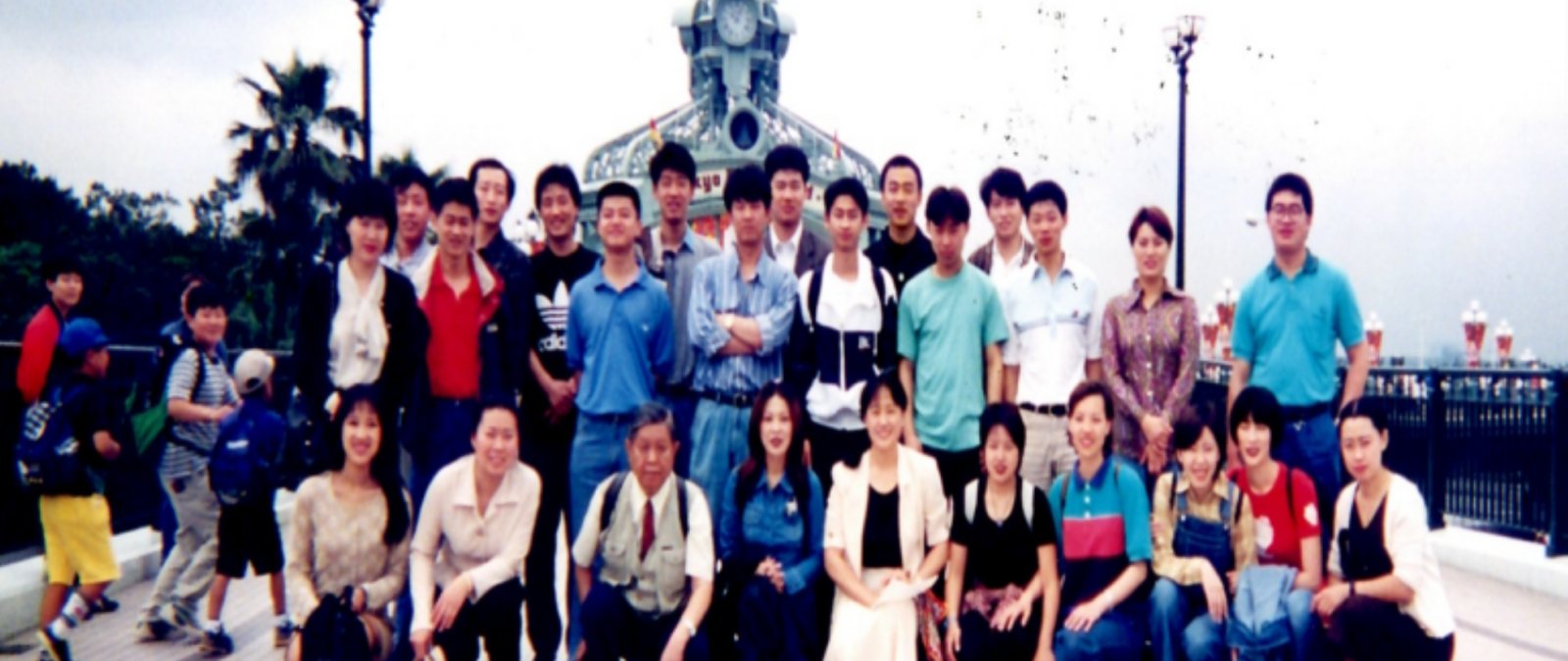
Photos are materials published by the school.
This information is compiled from official sources and is not updated daily. Please confirm with the official contact before signing or applying.