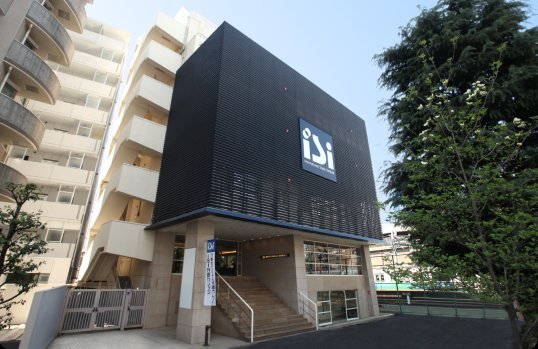
ISI College of Foreign Languages
ISI College of Foreign Languages
- Course
- Further-study course only ›
- Age requirement
- Under 55 ›
- AM & PM classes
- Decided by the school ›
- Tuition
- On the pricier side for Tokyo ›
Compare side by side with other schools →
Tuition and conditions may change depending on the intake. If you contact us, we will check with the school and give you accurate details.
Nearby schools comparedBy distance · no ads or paid placement
- ISI College of Foreign LanguagesThis schoolTuition/yr¥1,015,000Progression—IntakesJan · Apr · Jul · Oct
- Teikyo Heisei University Affiliated Japanese Language School0.7km›Tuition/yr—Progression96%IntakesApr · Oct
- Nippon College of Foreign Languages0.8km›Tuition/yr¥960,000Progression—IntakesApr · Oct
- Ann Language School0.8km›Tuition/yr¥903,000Progression—IntakesJan · Apr · Jul · Oct
— means SALLAE has not yet found the data.
About the school
A Japanese language school within walking distance of Ikebukuro Station, part of the ISI Group (9 campuses in Tokyo, Osaka, Kyoto and Nagano, about 10,000 students a year). It is a miscellaneous school approved by Tokyo Metropolis and certified by the Ministry of Education, Culture, Sports, Science and Technology, with a vocational school on the same site and group progression slots and designated-school recommendations. Each class has up to 20 students and is divided into morning and afternoon classes. It has an official agent in Korea and offers consultation in Korean.
Published data and school website
Tuition
If you saw a lower amount elsewhere, it may not include the admission fee and application fee
Median 1-year tuition in other areas — Kyoto ¥911,000(7 schools) · Kanagawa ¥880,000(8 schools) · Okinawa ¥858,000(6 schools) · Tokyo ¥840,600(56 schools) · Fukuoka ¥835,000(12 schools) · Hyogo ¥825,500(7 schools) · Osaka ¥814,000(27 schools) · Shizuoka ¥790,000(9 schools) · Chiba ¥745,333(10 schools) · Aichi ¥740,667(5 schools)
Total by intake
| Intake · length | Full course |
|---|---|
| January intake · 1 year 3 months | ¥1,233,750 |
| October intake · 1 year 6 months | ¥1,452,500 |
| July intake · 1 year 9 months | ¥1,671,250 |
| April intake · 2 years | ¥1,890,000 |
Cost details · course tables · notes · 5 items
- Per term
- ¥218,750 3 months · Based on tuition
- One-time fees
- ¥1,015,000Tuition ¥720,000 · Examination fee ¥40,000 · Admission fee ¥100,000 · Materials ¥55,000 · Facility management fee ¥100,000
According to the school guide, fees are paid in one lump sum at enrollment. SALLAE will check with the school whether you can pay in installments.
| Intake · course | Extra 2nd-year costs | All |
|---|---|---|
| January · 1 year 3 months | ¥218,750 | ¥1,233,750 |
| October · 1 year 6 months | ¥437,500 | ¥1,452,500 |
| Jul · 1 year 9 months | ¥656,250 | ¥1,671,250 |
| April · 2 years | ¥875,000 | ¥1,890,000 |
These are extra costs paid in the second year. The application fee and admission fee are not charged again. The second payment covers tuition, materials and the facility management fee: ¥875,000 in total for the 2-year Progression Course, ¥218,750 in total for the 1 year 3 months course.
Long-term course prices are for fiscal 2027/2028. The application fee is paid when applying, and next year's tuition may rise during your enrollment.
The facility operation and management fee includes student insurance.
For the short course (1 term, 10 weeks), the Ikebukuro campus costs ¥228,000 for fiscal 2026 and ¥248,750 for fiscal 2027.
Ikebukuro and Nagano campus prices are shown excluding tax. The amount you pay is the same with or without tax.
External exam fees, transport costs, and transport for some extracurricular activities are not included in tuition.
Short course 10 weeks is a separate ¥228,000 (admission fee ¥20,000 · tuition ¥177,000 · materials ¥11,000 · facility management fee ¥20,000).
School website · 2026-07-29 updated
Whether it is refundable
- If the Certificate of Eligibility is not issued
- If the Certificate of Eligibility is not issued: 100% of tuition and fees refunded, admission fee not refunded, refund/transfer fee ¥6,000.
- If the Japanese embassy refuses to issue a visa
- If the student visa is denied: tuition, materials fee, facility operation and management fee and airport pickup fee are fully refunded. Application fee and admission fee are not refunded.
- Until the day before CoE issuance
- Cancellation before issuance: 100% of tuition and fees refunded (if paid in advance); application fee and admission fee not refunded; fee ¥6,000.
- From CoE issuance until 15 days before the enrollment date
- Refunded minus 1 month's fees
See refund policy in detail · 5 more lines
- From 14 days before the enrolment date until the day before
- Refunded after deducting 3 months' worth
- Cancellation after enrolment (on or after the enrolment date): before entering Japan
- After the enrollment date but before entering Japan: refund minus 3 months' worth, or transfer to the next term. Handling fee: ¥6,000.
- Cancellation after enrolment: withdrawal midway
- Refunds are made in units of 2 terms. Terms already started are not eligible, and the Ikebukuro campus cancellation fee is ¥36,000–¥126,000. Fee ¥6,000.
- Deferring enrolment
- Enrollment can be postponed only once. Re-enrolling within 1 year waives the admission fee.
- When you receive a refund
- Refunds are made within 40 days of completing the procedure. Remittance fees are borne by the student. Applies to withdrawals on or after April 1, 2027.
Admission & dates
- Jan intake
- 1 year 3 months course · Apply by end of Aug · Classes 960 hr
- Apr intake
- 2-year course · Apply by end of Oct of the previous year · Classes 1,536 hr
- Jul intake
- 1 year 9 months course · Apply by end of Feb · Classes 1,344 hr
- Oct intake
- 1 year 6 months course · Apply by end of May · Classes 1,152 hr
- Japanese level
- About 150 hours of Japanese study, or Japanese ability equivalent to N5 (CEFR A1)
January intake generally starts study from the N4 level and requires Japanese ability equivalent to N5. Applicants must be under 55 as of April 1, 2026.
Deadline and capacity rules
Applications may close before the deadline once capacity is reached. For January intake, the guideline for applying is early August of the previous year, and the application deadline is end of August.
School website · 2026-06-04 updated
Classes
- Morning
- 8:50 ~ 12:00 Generally, Intermediate II to Advanced classes are held in the morning.
- Afternoon
- 13:00 ~ 16:10 Generally, Beginner to Intermediate I classes are held in the afternoon.
- AM/PM placement
- Class level determines the class time, and students cannot choose. Generally, Beginner to Intermediate I are in the afternoon and Intermediate II and above are in the morning.
- Class size
- Max 20 students
- Class assignment
- Level-based 8 stages
- Elective classes
- EJU preparation · JLPT N3 · N2 · N1 · Conversation · Career planning · Graduate school preparation · For Intermediate II and above, twice a week for 90 minutes each. Requests are collected every 3 months, and the class may not run depending on the number of applicants.
Materials · Subjects · Timetable · Details
- Materials
- The supplementary beginner materials for building conversation, presentation and writing skills, and the materials for cultural understanding, are all original ISI materials.
- Subject
- Reading · Listening · Writing · Presentation · Conversation · Basic Japanese · Characters and vocabulary · Study management · Beginner level uses "Basic Japanese" and intermediate and above use "Applied Japanese". In study management, students set goals at the start of each term and reflect after studying.
Morning and afternoon classes Monday–Friday, 2 periods a day (90 min each).
| Morning | Afternoon | |
|---|---|---|
| Period 1 | 8:50~10:20 | 13:00~14:30 |
| Period 2 | 10:30~12:00 | 14:40~16:10 |
1 level is 200 class hours (20 class hours × 10 weeks). Grades are based on achievement tests, quizzes, homework and a final exam.
What each level covers · 8 stages
- Beginner I
- 3 months N5. Students can understand very simple expressions used repeatedly in everyday situations and have simple exchanges if the other person speaks slowly.
- Beginner II
- 3 months N4. Students can understand simple expressions in everyday situations such as shopping, part-time work and leisure, and exchange information on everyday matters.
- Intermediate I
- 3 months N3. Students can understand short, simple sentences they see and hear at school, at work and in hobbies, and write simple personal texts.
- Intermediate II
- 3 months N3–N2. Students can grasp the gist of topics often seen and heard in everyday situations and write short, coherent texts on topics of interest.
- Intermediate III
- 3 months N2. Students can grasp the gist of a variety of topics they see and hear and write coherent texts on topics of interest.
- Advanced I
- 3 months N2. Students can understand the outline of their intended field of study and social topics and exchange opinions, and work together on tasks in a multicultural environment.
- Advanced II
- 3 months N2–N1. Students can understand the main content of highly specialized topics in their intended field of study and of social topics, and communicate logically.
- Advanced III
- 3 months N1. Students can understand the main content of highly specialized topics and exchange opinions, understand long and complex texts, and express themselves naturally.
School website · 2026-08-28 updated
Documents to prepare — student visa course
- Application form (school form · written in your passport name)
- Résumé, statement of study purpose and post-completion plans (school form · handwritten signature · full education history from elementary school)
- Health status declarationSchool-designated form
- 2 ID photos (4 cm tall × 3 cm wide), taken within the past 6 months. Digital data may also be submitted.
- Copy of passport. If you have entered or left Japan before, also prepare copies of all pages with entry and exit records.
- Diploma or certificate from your last school [copy]
Sponsor documents · Only if applicable · 5 application requirements
Submitted by the person paying the tuition (financial sponsor)
- Financial sponsorship statement (school form · signed in person — if the sponsor is not a parent, explain how they came to sponsor)
- Proof of income (annual income for the past year) or bank balance certificate (issued within 3 months, in the sponsor's name, balance matching the study period)
Only if applicable
- Certificate of enrollment or certificate of expected graduation, stating the enrollment period, major and expected graduation month. (If you are currently enrolled)
- Those enrolled in or who left a university, junior college or vocational school must submit that school's certificate in addition to their high school diploma. (If currently enrolled in, on leave from, or having dropped out of a university, junior college or vocational school)
- JLPT pass certificate [copy] (If you passed the Japanese-Language Proficiency Test)
- The Japanese study certificate must show 150 or more class hours. Submit attendance and grade records from your time at a Japanese language school. (If you have attended a Japanese language school)
- Statement of reasons (If there is a gap of 6 months or more in your education or work history)
- Residence card [copy of both sides] (If you hold a residence card)
- A payer living in Japan submits a residence certificate, bank balance and transaction statements, proof of employment, tax and tax payment certificates, and a residence card. (Sponsor residing in Japan)
Application requirements
Those who have completed 12 or more years of schooling at the time of enrollment. Those 18 or older with a high school qualification are accepted even with fewer than 12 years. Those with about 150 hours of Japanese study or Japanese ability equivalent to JLPT N5 (CEFR A1). Those under 55 as of April 1, 2026. Those able to cover expenses during their study period. Only original documents issued within 3 months of the application date to the Immigration Services Agency are valid. Documents in languages other than Japanese must come with a Japanese translation.
Apart from the mandatory documents, required documents and conditions differ by nationality or region and past immigration application history. SALLAE is confirming this with the school.
For short-term courses, submit Application form (for the short course, on the school's designated form) · Health declaration form (on the school's designated form) · Copy of passport · ID photo · Copy of both sides of the residence card only.
School website · 2026-06-04 updated
Admission process
- Request an admission consultation — Consult in Korean and prepare the documents together
- Submit the application documents (application form), take the document screening and interview, and pay the ¥40,000 application fee. — Please pay the application fee by bank transfer, Flywire or WeChat Pay.
- The school applies for the Certificate of Eligibility on your behalf. — For April intake, the application is filed with the Immigration Services Agency in late November of the previous year. Obtaining a student visa takes about 6 months.
- After the CoE is issued, the tuition invoice is provided via Campusmate-J. — For April intake, the Certificate of Eligibility is issued and tuition is paid in late February.
- Take the placement test; after tuition payment is confirmed, the Certificate of Eligibility and admission permit are issued.
- Apply for a visa at a Japanese embassy or consulate abroad and, once it is issued, come to school on the start date. An orientation is held right after enrollment. — For April intake, the visa application at the embassy or consulate is in early March.
- Placement test
- Classes are formed by placement test result. Morning or afternoon is also decided by the result, and there is a period during which you can change classes if it does not suit you.
- After entry
- After receiving an acceptance notice, students can use the student portal Campusmate-J to get information and send documents, check grades and view timetables.
School website · 2026-07-19 updated
Short-term study
- Visa
- Temporary visitor or Working holiday(not a student visa)
- Duration
- 2 weeks – 6 months
- Open now?
- Rolling admissions, so availability varies from time to time — SALLAE will confirm with the school
Course without a student visa
- Short-term comprehensive Japanese course — From a minimum of 2 weeks. The Ikebukuro campus's 1-term (10-week) total is ¥228,000 for fiscal 2026 and ¥248,750 for fiscal 2027.
- Private lessons — Duration from 1 lesson, with enrollment in any month. A fully customized program tailored to your purpose.
- Group programs — Program content and conditions are decided by consultation with each group.
★Short-term courses are not listed in the published data — it counts only student-visa courses.
School website · 2026-09-14 updated
Graduate outcomes
| FY2025 | Admitted |
|---|---|
| Employment | 28 students |
See 10 more schools
Acceptance results are for fiscal 2025 and include results of the JUQ Tokyo campus. Top national universities (University of Tokyo, Kyoto University, Osaka University): 18; Waseda: 9; Keio: 13; Sophia: 10; art universities: 183. · Of the 172 students who met the criteria among fiscal 2024 completers, 78 went on to universities and similar institutions. In fiscal 2023, 77 progressed to further study and 32 changed their status of residence. · School website · Updated 2026-07-28
Reviews
If you study here or used to, tell others what the classes, teachers and daily life were like. It helps anyone deciding on this school.
Write the first reviewUniversity prep
- Individual guidance for students wishing to go on to further study — Homeroom teachers and the head office career center work together to help each student gain admission to the best-fit school.
- Target school analysis tool — Objective comparison and analysis are possible based on data on past successful applicants.
- ISI Further Study Expo — At the Career EXPO, you can talk directly with faculty and staff from universities and vocational schools. You can also join campus tours and trial classes.
- Special progression course — Depending on the exam season, special courses are held on preparing application documents, writing a statement of motivation, graduate school applications and interview preparation. Some courses invite graduate school professors.
- Special advanced class — Students who pass a selection exam join the special advanced class and aim for highly competitive universities and graduate schools. The Shinjuku main campus has an in-house prep school.
- Progression to group schools — For progression to WEWORLD Group schools such as Beijing Language and Culture University Tokyo College and Tokyo Business Gaigo College, support is provided from preparing application documents to visa renewal.
- Vocational school trial classes — The Ikebukuro campus also offers its own support, such as trial classes by the vocational school.
- Job-hunting class — The elective job-hunting class offers résumé and interview coaching, job listings and career events. Referrals to administrative scriveners are also available.
Schedule to admission
- Career guidance and interviews
- From early after enrolment · Study plan tailored to your goal
- How to choose a destination school
- While enrolled · Further-study information sessions · School visits · Individual consultations
- Application preparation and exam preparation
- Application timing · Statement of purpose · Interview practice · Guidance on research plans
- Decide on a path and prepare for enrolment
- After acceptance · Confirm enrollment procedures · Prepare for your new life
School website · 2026-07-28 updated
Daily-life support
- Homeroom teacher system — The homeroom teacher is the contact for questions about class, city hall procedures and feeling unwell.
- A school nurse is always on site, so students can consult directly at any time. — Meetings with the school nurse are available in person and online. All new students receive a tuberculosis screening, and the school has AEDs on site.
- Native-language support staff — Staff who speak the 4 main languages are always on site. The website is published in 13 languages, and the student portal has automatic translation into each language.
- Orientation — At the orientation right after enrollment, a student life start book in each language is used to explain the rules of life in Japan.
- Finding housing — The school runs 3 directly managed dormitories and has many partner dormitories within commuting distance. Nearby partner real-estate agencies are also introduced as needed.
- Part-time work — Part-time job information is provided to those who want it, with support for résumés, phone calls and interview practice. Workplaces are surveyed 4 times a year.
- Insurance — From fiscal 2025, all international students are enrolled in student insurance. Student visa holders enroll in National Health Insurance, and expiry dates are managed in the school system.
- Emergency response — An evacuation drill is held once a year with the cooperation of the police and fire departments. Safety is confirmed through a safety-check call app. When classes are canceled due to weather warnings, this is posted on the school portal by 6:00 that day.
- AI chat service — An AI chat service that responds immediately to student questions is provided.
- Airport pickup — From ¥23,000 one way from Narita or Haneda to the student dormitory. For dormitory pickup, send your flight information at least 2 weeks before arrival.
School website · 2026-03-31 updated
Scholarship
- ISI Japanese Language School Principal's Award
- ¥50,000 Once Students enrolled in the ISI Japanese language school group for 1 year or more with excellent grades and attendance. Awards are given 4 times a year (April, July, October and January).
- Perfect attendance award
- ¥30,000 OnceFor students enrolled on a student visa with no lateness or absences for 1 year. Awarded 4 times a year.
- Study incentive allowance
- ¥30,000 OnceStudents who entered on a student visa, with attendance of 90% or more over 1 year, excellent grades and a wish to continue to further study. ¥30,000 per month.
- Kyoritsu Maintenance Scholarship Fund
- ¥60,000 OnceStudents from Asian countries who entered on a student visa, with 100% attendance and excellent grades, who have studied for 1 year and have the school's recommendation. ¥60,000 per month.
- LSH Asia Scholarship
- ¥20,000 OnceStudents from Asia who have been enrolled on a student visa for 3 months or more and plan to stay at least 6 more months, with attendance of 90% or more, excellent grades and the school's recommendation. ¥20,000 per month.
- Nitori International Scholarship Foundation
- ¥50,000 OnceStudents enrolled (or planning to enroll) in a university or graduate school in Japan and living in Japan. Submit a report every month, attend an exchange meeting twice a year and do part-time work. ¥50,000 per month.
- IHNO Scholarship
- ¥10,000 OnceStudents on a student visa who work diligently at part-time jobs. ¥10,000–¥30,000 per month depending on monthly part-time hours.
School website · 2026-08-18 updated
School life
For 1 year
- Spring
- Cherry blossom viewing · Opportunities for cultural experiences such as pottery and ninja experiences · Outing and walks
- Summer
- Outing and walks · Tanabata and Bon dance · ISI Further Study Expo
- Autumn
- Halloween event · Workshops on traditional culture such as tea ceremony, calligraphy and kimono dressing · Sports day, school festival and street-stall fair
- Winter
- Speech contest · Tea ceremony and calligraphy · Company seminar
Event content varies by campus and year. The Ikebukuro campus has students from 49 countries and regions, with an average age of 27 (as of April 2026).
- Students can take part in events and activities with students of the vocational school that shares the same building, including trial classes at the vocational school, a school festival and Halloween.
- Classes and extracurricular activities on SDGs and subculture are also extensive.
- Original seminars for job hunting and career building, with companies that actively hire international staff invited.
- With permission to engage in activities outside the status of residence, students may work part-time up to 28 hours a week during term and up to 8 hours a day during long breaks.
On campus
- On campus
- Main hall — A spacious hall used for school events and ceremonies
- On campus
- Book area
- On campus
- Self-study room and PC area
- On campus
- Lounge
- On campus
- Counseling booth — A private consultation space for advice on progression and school life
2026–2027 academic calendar
- Spring break
- Fri, Mar 20, 2026 – Tue, Apr 7, 2026
- Summer vacation
- Aug 8–16, 2026
- Autumn break
- Sep 19–Oct 6, 2026
- Winter break
- Dec 19, 2026–Jan 6, 2027
School website · 2026-08-19 updated
Access
- Transit
- 6 min walk from Ikebukuro Station (JR, Metro, Seibu, Tobu)East exit
- Nearby
- Ikebukuro is a major terminal for 8 lines, a 6-minute walk from the station's east exit. A vocational school shares the building, and cafés, a library and shopping facilities are nearby.
- Dormitory
- AvailableTokyo: 4 school dormitories + partner dormitories (from ¥55,000 per month) · Choose from guesthouses, weekly apartments and homestays · Tokyo (5 options): the Toda, Musashi-seki, Shakujii-koen and Shimo International Houses, plus partner dormitories · Based on school website
School website · 2026-08-28 updated
Dormitory — If the student dormitories reach capacity, places are allocated by lottery. Utilities and internet are included in the accommodation fee (except the long-term dormitory in Osaka). Homestays are 50 minutes to 1.5 hours one way.
School website · 2026-08-07 updated
Japanese language institution certified by MEXT Certification no. 20251130046 · certified Oct 31, 2025 →
SALLAE has organized the school website and published data in English.
The update date is the day that material was last revised.
Photos are materials published by the school.
This information is compiled from official sources and is not updated daily. Please confirm with the official contact before signing or applying.