ISI Language School Osaka
ISI Language School Osaka
- Course
- Further-study course only ›
- To station
- 2 min walk · Shinsaibashi Station
- Age requirement
- Under 55 ›
- AM & PM classes
- Decided by the school ›
Compare side by side with other schools →
Tuition and conditions may change depending on the intake. If you contact us, we will check with the school and give you accurate details.
Nearby schools comparedBy distance · no ads or paid placement
- ISI Language School OsakaThis schoolTuition/yr¥895,000Progression—IntakesApr · Jul · Oct
- Osaka Foreign Language Institute0.5km›Tuition/yr¥720,000Progression—IntakesJan · Apr · Jul · Oct
- Clover Gakuin0.5km›Tuition/yr¥950,000Progression75%IntakesJan · Apr · Jul · Oct
- Human Academy Japanese Language School Osaka0.5km›Tuition/yr¥924,000Progression69%IntakesJan · Apr · Jul · Oct
— means SALLAE has not yet found the data.
About the school
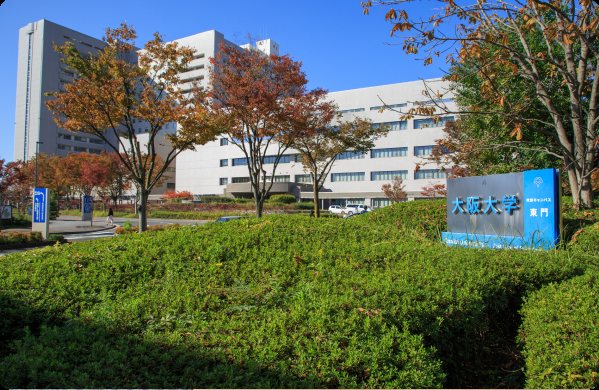
A school that focuses on progression to further study. All 3 courses are university-prep courses, and 404 of the students who completed or left a course in fiscal 2025 went on to universities and similar institutions (reported to Immigration; 524 students met the criteria). It is an ISI Group campus in the center of Osaka, a 2-minute walk from Osaka Metro Shinsaibashi Station. The website says it opened in 2024, and the report to Immigration also lists its former name, Tokyo Language Education Institute. It has a special advanced class for competitive universities and graduate schools, and electives in graduate school preparation, EJU, JLPT, job hunting and conversation. Students come from 58 countries and regions, with an average age of 28 (April 2026).
Published data and school website
Tuition
If you saw a lower amount elsewhere, it may not include the admission fee and application fee
Median 1-year tuition in other areas — Kyoto ¥911,000(7 schools) · Kanagawa ¥880,000(8 schools) · Okinawa ¥858,000(6 schools) · Tokyo ¥840,600(56 schools) · Fukuoka ¥835,000(12 schools) · Hyogo ¥825,500(7 schools) · Osaka ¥814,000(27 schools) · Shizuoka ¥790,000(9 schools) · Chiba ¥745,333(10 schools) · Aichi ¥740,667(5 schools)
Total by intake
| Intake · length | Full course |
|---|---|
| 1 year 6 months | ¥1,293,000 |
| 1 year 9 months | ¥1,492,000 |
| 2 years | ¥1,691,000 |
Cost details · Course tables · Notes
- Per term
- ¥199,000 3 months
- One-time fees
- ¥99,000Application fee · Admission fee
| Duration | Total |
|---|---|
| 1 year 6 months | ¥1,293,000 |
| 1 year 9 months | ¥1,492,000 |
| 2 years | ¥1,691,000 |
★"Per term" and "One-time at start" were calculated by SALLAE from each course's total. The courses this school actually offers are 1 year 6 months onward — all amounts in the table are values calculated by SALLAE.
Calculated by SALLAE · verified 2026-09-16
Admission & dates
- Apr intake
- 2-year course · Application For April intake, the application deadline is the end of October of the previous year (end of October 2025 for FY2026).
- Jul intake
- 1 year 9 months course · Application For July intake, the application deadline is the end of February (end of February 2026 for FY2026).
- Oct intake
- 1 year 6 months course · Application For October intake, the application deadline is the end of May (end of May 2026 for FY2026).
- Japanese level
- About 150 hours of Japanese study, or Japanese ability equivalent to N5 (CEFR A1)
For the university-prep course starting in July or October, applicants must be at the level of completing beginner (first half). 12 or more years of school education (if 18 or older with a high school qualification, fewer than 12 years is acceptable); under 55 as of April 1, 2026.
Deadline and capacity rules
January intake: the Osaka campus has no long-term course. Applications close once capacity is reached. Short courses close 30 days before the start date; mid-term entry is possible depending on the level test and availability.
School website · 2026-06-04 updated
Classes
- Morning
- Morning classes: period 1 8:50–10:20, period 2 10:30–12:00 (the Osaka campus has several timetables per school).Usually morning classes from Intermediate II to advanced
- Afternoon
- Afternoon classes: period 1 13:00–14:30, period 2 14:40–16:10 (the Osaka campus's individual time slots are unconfirmed).Usually afternoon classes from beginner to Intermediate I
- AM/PM placement
- You cannot choose — it is decided by the placement test result. Usually beginner to intermediate I is in the afternoon and intermediate II onward in the morning, but it varies by term and class assignment.
- Class size
- Max 20 students
- Class assignment
- Level-based 8 stages
- Elective classes
- Graduate school preparation · EJU preparation (EJU Japanese) · JLPT preparation · Employment · Conversation · Elective classes are for Intermediate II and above. Twice a week for 90 minutes each. Requests are collected every 3 months, so choices can change each period.
Materials · Subjects · Timetable · Details
- Materials
- ISI's original kanji textbook is used along with Minna no Nihongo, Chukyu e Ikou, Japanese Learned by Theme (intermediate and advanced), Shin Kanzen Master Grammar and Kanji Master.
Morning classes · Afternoon classes (4 timetables at the Osaka campus) Monday–Friday, 2 periods a day (90 min each).
| Morning | Afternoon | |
|---|---|---|
| ① | 8:50~12:00 | 13:15~16:25 |
| ② | 9:20~12:30 | 13:45~16:55 |
1 level is 10 weeks, 200 class hours (20 class hours × 10 weeks).
What each level covers · 8 stages
- Beginner I
- 3 months JLPT N5 · 150–200 kanji. Can follow simple instructions spoken slowly and can greet people and introduce themselves.
- Beginner II
- 3 months JLPT N4 · 300 kanji. Can read 3–4 paragraphs using basic kanji and convey everyday intentions and requests.
- Intermediate I
- 3 monthsJLPT N3 · EJU 220 points · 500 kanji. Can follow explanations of familiar topics and give a prepared speech.
- Intermediate II
- 3 monthsJLPT N2 · EJU 250 points · 800 kanji. Can pick out the main points of editorials and speeches and exchange opinions on social topics.
- Intermediate III
- 3 monthsJLPT N2 · EJU 280 points · 1,100 kanji. Can grasp the gist of news and editorials and give presentations on specialized topics of interest.
- Advanced I
- 3 monthsAdvanced I: JLPT N2/N1, CEFR B2
- Advanced II
- 3 monthsJLPT N1 · EJU 320 points · 1,700 kanji. Can follow specialized and abstract lectures and state logical opinions on social topics.
- Advanced III
- 3 monthsJLPT N1 · EJU 340 points · 2,000+ kanji. Can follow lectures and news at natural speed and give presentations and discuss social and specialized topics.
School website · 2026-08-18 updated
Documents to prepare — student visa course
- On the school's application form, write your name exactly as in your passport and the financial sponsor's occupation and workplace.
- Résumé, statement of study purpose and post-completion plans (on the school's designated forms). Date and handwritten signature (seal acceptable); everything from elementary school entry to graduation from the last school must be written.
- Health status declarationSchool-designated form
- 2 ID photos (4 cm tall × 3 cm wide), taken within the past 6 months. Digital data may also be submitted.
- Passport [copy]. If you have entered or left Japan before, also copies of all pages with entry and exit records
- Diploma or certificate of graduation from the last school attended [copy]
Financial supporter's documents · only if applicable · 6 application requirements
Submitted by the person paying the tuition (financial sponsor)
- Financial sponsorship form (on the school's designated form). The sponsor must write it by hand or sign personally. If the sponsor is neither the applicant nor a parent, explain how they came to accept and why the parents cannot provide support.
- Proof of income (annual income for the past year) or bank balance certificate (issued within 3 months, in the sponsor's name, balance matching the study period)
Only if applicable
- Certificate of enrolment or certificate of expected graduation [copy] ((Only if you are enrolled in your last school at the time of application))
- Those enrolled in or who left a university, junior college or vocational school must submit that school's certificate in addition to their high school diploma. (If currently enrolled in (or on leave from) a university, junior college or vocational school, or if you dropped out)
- Copy of a pass certificate for a Japanese proficiency test such as JLPT, BJT, J.TEST, NAT-TEST, TOPJ, J-cert, JLCT or JPT (if applicable)
- Japanese study certificate (If you have attended a Japanese language school)
- Statement of reasons (If a gap in education or work history exceeds 6 months)
- Residence card [copy of both sides] (Copy of both sides of the residence card)
- A payer living in Japan submits a residence certificate, bank balance and transaction statements, proof of employment, tax and tax payment certificates, and a residence card. (Sponsor residing in Japan)
Application requirements
Except certificates, only originals issued within 3 months of the Immigration application date are valid. If a document is written in a language other than Japanese, be sure to attach a Japanese translation. Sign by hand with a ballpoint pen yourself. If you have ever applied for a certificate of eligibility for study or work, including withdrawn applications, tell the school when applying. Send originals by international courier such as FedEx, DHL, OCS or EMS, and let the school know the tracking number. Those who wish to find work in Japan must separately submit the documents required for job-hunting support.
Apart from the mandatory documents, required documents and conditions differ by nationality or region and past immigration application history.. SALLAE is confirming this with the school.
Short-term course: submit only the application form (for the short course / school's designated form) · Health status declaration form (school-designated form) · Passport [copy] · ID photo · If you have a residence card, also submit a copy of it (both sides). · Submit the homestay application form (only if you want a homestay).
School website · 2026-06-04 updated
Admission process
- Request an admission consultation — Consult in Korean and prepare the documents together
- Submit application documents; document screening, interview and payment of the entrance examination fee — Document screening, an interview and payment of the application fee. The application fee can be paid by bank transfer, Flywire or WeChat Pay.
- After you are accepted, the school applies on your behalf to the Immigration Services Agency for the Certificate of Eligibility (CoE) — For April intake, the immigration application is filed in late November of the previous year, and obtaining the visa takes about 6 months. Campusmate-J becomes available after the acceptance notice.
- After the CoE is issued, the tuition invoice is provided via Campusmate-J. — For April intake, CoE issuance and tuition payment are in late February.
- Take an online level test — Classes are formed based on placement test results
- The school sends the CoE and admission permit
- Obtaining a visa and booking a flight — For April intake, the visa application is in early March. Register the e-ticket of your booked flight in Campusmate-J.
- Arrival · orientation · start of classes — If the school arranges your accommodation, please arrange your entry to Japan so that you can move in on the designated move-in date and time.
- Placement test
- Before enrollment, classes are formed by an online test (PC or smartphone). A questionnaire on study history and future plans is also given. There is a period during which you can change classes if it does not suit you.
- After entry
- Guidance and documents via Campusmate-J (after the acceptance notice). Communication via MS365; study via LMS and Monoxer (iOS 18 or later, Android 15 or later, 8 GB RAM or more).
School website · 2026-07-18 updated
Short-term study
- Visa
- Temporary visitor or Working holiday(not a student visa)
- Duration
- 2 weeks – 6 months
- Open now?
- Rolling admissions, so availability varies from time to time — SALLAE will confirm with the school
Course without a student visa
- Short-term comprehensive Japanese course — From a minimum of 2 weeks, 8 levels from beginner to advanced. Intakes in April, July, October and January (mid-term entry possible). Deadline is 30 days before the start date; age 16 or older. If the school prepares an invitation letter, the stay must be 8 weeks or more.
- Private lessons — From a single 45-minute lesson; start any month. Lessons can be set up for everyday conversation, JLPT prep, business Japanese, entrance-exam prep and more, and can also be taken online.
- Group programs — As a guideline, consultation is available from about 10 people, for programs from a few days to several months. Tea ceremony, kimono dressing, ninja experience, university visits and more can be added to level-based classes.
★Short-term courses are not listed in the published data — it counts only student-visa courses.
School website · 2026-09-14 updated
Graduate outcomes
| FY2025 | Admitted |
|---|---|
| Employment | 47 students |
Total number of students meeting the criteria (actual headcount): 524. Progression to universities and similar institutions: 404; change of status of residence: 47; CEFR A2 or above: 389 (fiscal 2025). · Number of students approved for a change to a status of residence in Appended Table 1 of the Immigration Control Act: 10 in fiscal 2024, 2 in fiscal 2023. · School website · 2026-06-16 updated
Reviews
If you study here or used to, tell others what the classes, teachers and daily life were like. It helps anyone deciding on this school.
Write the first reviewUniversity prep
- Individual guidance for students wishing to go on to further study — Homeroom teachers and the head office career center work together and also give individual support with preparing application documents and interview preparation.
- Kansai career information — Progression support draws on Kansai career information that only a local school can offer.
- Career interview — Before graduation, the homeroom teacher holds at least 4 individual progression meetings and saves the records in the system.
- Career booth — A career booth on the 4th floor is always open for students to browse.
- Target school analysis tool — An original target-school analysis tool allows objective comparison and analysis based on data on past successful applicants.
- Progression events are held — At a Career EXPO held only for ISI students, you can talk directly with faculty and staff from universities and vocational schools.
- Special progression course — Special courses matched to the exam schedule: preparing application documents, writing a statement of motivation, graduate school applications and interview preparation.
- Special advanced class — A high-level special advancement class, above the regular curriculum, is offered for students aiming at Japan's top universities and graduate schools. The in-school prep school is at the Shinjuku main campus.
- Job-hunting preparation — In the "Job hunting" elective, students learn résumé writing, interview practice and presentation skills. There are job-hunting and grooming lectures and company seminars. Administrative scriveners can be introduced for status of residence procedures.
- Specified Skilled Worker and job-hunting support program — Study content for the Specified Skilled Worker exam, exam registration support, special courses, part-time job introductions, job-hunting support and visa support (paid).
- Progression to group schools — Support from preparing application documents to visa renewal for WEWORLD Group schools (Beijing Language and Culture University Tokyo Campus, Tokyo Business College of Foreign Languages, Nagano Business College of Foreign Languages).
- Support after progression — Support is provided after progression as needed.
Schedule to admission
- Career guidance and interviews
- From early after enrolment · Study plan tailored to your goal
- How to choose a destination school
- While enrolled · Further-study information sessions · School visits · Individual consultations
- Application preparation and exam preparation
- Application timing · Statement of purpose · Interview practice · Guidance on research plans
- Decide on a path and prepare for enrolment
- After acceptance · Confirm enrollment procedures · Prepare for your new life
School website · 2026-07-28 updated
Daily-life support
- Deputy homeroom teacher system — A homeroom teacher system for academics and a deputy homeroom teacher system in the administrative office provide support for studies, progression consultation and daily life.
- Public health nurse — In cooperation with the school nurse stationed at the group schools, online consultation is available at any time. A face-to-face consultation opportunity is also provided once each term.
- Native-language support — English-language support has been strengthened by adding staff. Support for languages not yet covered (Mongolian, Russian, Burmese and Nepali) still needs to be developed.
- Orientation — Students are instructed to attend the orientation at enrollment, and it is provided later to those who could not attend. Life guidance is also given regularly to all students.
- Finding housing — Accommodation options are student dormitories, guesthouses, weekly apartments and homestays. Real-estate agents are also introduced.
- Part-time work — A part-time job information session is held for those who want to work. At visa renewal, students submit materials about their part-time work and receive detailed guidance.
- Health checkup — Each term, the school gives new students a tuberculosis screening and gives graduating students a health checkup.
- Insurance — Along with checking the address on the residence card, enrollment in National Health Insurance is also checked.
- Traffic accidents — The "ISI Group Schools Crisis Management Manual" covers traffic accidents, serious illness, disasters and more. Evacuation methods, routes and locations are defined, and the school takes part in the building's evacuation drills.
- Airport pickup — Airport pickup fee (one way): shared pickup vehicle, for student dormitory residents (at the designated move-in date and time), from ¥23,000.
School website · 2026-03-31 updated
Scholarship
- ISI Japanese Language School Principal's Award
- ¥50,000 Once For students who have been enrolled in the ISI Group for at least 1 year and have excellent grades and attendance. Awarded 4 times a year (Apr, Jul, Oct, Jan).
- Perfect attendance award
- ¥30,000 OnceFor students enrolled on a student visa with no lateness or absences for 1 year. Awarded 4 times a year.
- Learning incentive for international students
- ¥30,000 per month. For students who entered on a student visa, have 90% or higher attendance over 1 year, excellent grades and want to go on to further study.
- Study incentive allowance
- ¥48,000 per month. For students who achieved excellent EJU results and are enrolled at a Japanese university or graduate school.
- Kyoritsu Maintenance Scholarship Fund
- ¥60,000 per month · student visa · from Asia incl. Korea · 100% attendance and excellent grades · school recommendation after 1 year of study
- LSH Asia Scholarship
- ¥20,000 per month · Asian student on a student visa enrolled 3+ months and staying 6+ more months · 90%+ attendance, excellent grades, school recommendation
- Nitori International Scholarship Foundation
- ¥50,000 per month. Conditions: planning to enroll at a Japanese university or graduate school, living in Japan, monthly reports, 2 exchange meetings a year, and part-time work.
- IHNO Scholarship
- ¥10,000–¥30,000 per month depending on part-time hours. For students who work part-time diligently on a student visa.
School website · 2026-08-18 updated
Students
714 students enrolled (2025) · Capacity 480 National median: 180 students
Based on 714 students enrolled in 2025.
Public data from the Association for the Promotion of Japanese Language Education (Nisshinkyo) · verified 2026-09-20
School life
For 1 year
- Spring
- Cherry blossom viewing · Pottery and ninja experiences · Excursions and walks
- Summer
- Excursion · Tanabata and Bon dance · ISI Further-Study Expo
- Autumn
- Halloween event · Tea ceremony, calligraphy and kimono dressing · Sports day, school festival and street-stall fair
- Winter
- Speech contest · Tea ceremony and calligraphy · Company seminar
* Event details may vary by campus and year.
- Orientation, field trips, university visits, making food samples, career guidance, kabuki viewing, Halloween, job-hunting and grooming lectures, cultural experiences and social gatherings
- The school contributes to local beautification through cleanup events and works with the community by taking part in an international student consortium.
- Up to 28 hours per week during school terms, and up to 8 hours per day during long school breaks.
On campus
- 5th floor
- Application reception — Reception desk for consultations about school life
- On campus
- Classroom — Bright classrooms with the latest equipment
- 4th, 5th and 6th floors
- Study room
- On campus
- Student lounge — A lounge where students can socialize. A shared space for breaks and self-study.
- 4th floor
- Career booth — Students can browse the latest materials on further study, the latest job listings and company information.
- On campus
- Books — Books can also be borrowed. Because few books are available for lending, the collection will be expanded.
- On campus
- Wi-Fi and student PCs
2026–2027 academic calendar
- Weekends
- Saturdays and Sundays
- Public holidays
- National holidays
- Spring break
- Mar 20–Apr 7, 2026
- Summer vacation
- Aug 8–16, 2026
- Autumn break
- Sep 19–Oct 6, 2026
- Winter break
- Dec 19, 2026–Jan 6, 2027
School website · 2026-07-24 updated
Access
- Transit
- Osaka Metro Midosuji Line / Nagahori Tsurumi-ryokuchi Line2 min walk from Shinsaibashi Station
Osaka Metro Nagahori Tsurumi-ryokuchi Line / Sakaisuji Line4 min walk from Nagahoribashi Station - Nearby
- There are many restaurants and shopping facilities nearby, which is convenient for commuting and shopping. Prices and rents are lower than in Tokyo.
- Dormitory
- Available · Single rooms in Benten-cho and Taisho. Rent from ¥100,000/month, from ¥690,000 (2-term total). Furniture, appliances and Wi-Fi included, separate bath and toilet; 25 minutes by bicycle or a walk plus about 30 minutes by train. · Based on school website
School website · 2026-07-24 updated
Dormitory — Dormitory entry fee ¥40,000, facility fee ¥30,000, cleaning fee ¥20,000 and rent ¥100,000/month: ¥690,000 for 2 terms. Utilities and internet are extra; billed in units of 2 terms.
School website · 2026-08-06 updated
SALLAE has organized the school website and published data in English.
The update date is the day that material was last revised.
Photos are materials published by the school.
This information is compiled from official sources and is not updated daily. Please confirm with the official contact before signing or applying.