ISI Language School TakadanobabaPopular
ISI Language School Takadanobaba
Popular · Of 13 study-abroad agencies in Korea, 8 include this school on their recommendation lists · Checked September 2026 · This is a count of agencies' recommendation lists, not a SALLAE recommendation
- Course
- Further-study course only ›
- To station
- 2 min walk · Takadanobaba Station
- Age requirement
- Under 55 ›
- AM & PM classes
- Decided by the school ›
Compare side by side with other schools →
Tuition and conditions may change depending on the intake. If you contact us, we will check with the school and give you accurate details.
Nearby schools comparedBy distance · no ads or paid placement
- ISI Language School TakadanobabaThis schoolTuition/yr¥1,015,000Progression—IntakesJan · Apr · Jul · Oct
- Shinjuku Japanese Language School0.1km›Tuition/yr¥990,000Progression—IntakesApr · Oct
- Coach Academy Japanese Language School Takadanobaba Campus0.2km›Tuition/yr¥979,000Progression—IntakesJan · Apr · Jul · Oct
- Kakuchi Education Japanese Language School0.2km›Tuition/yr¥940,000Progression—IntakesJan · Apr · Jul · Oct
— means SALLAE has not yet found the data.
About the school
A school that puts effort into university progression — all 4 courses are university-prep courses, and of the students who completed or withdrew from a course in fiscal 2025, 75 went on to university or similar (as reported to the Immigration Services Agency; 93 students met the criteria). It is an ISI Group campus that opened in January 2026, a 3-minute walk from the Waseda exit of JR Takadanobaba Station, in a student district full of universities including Waseda University and cram schools. It has a special advanced class for competitive universities and graduate schools, plus electives in graduate-school preparation, EJU, JLPT and conversation; students come from 31 countries and are 23 years old on average (April 2026).
Published data and school website
Tuition
⚠ Admission fee if the Certificate of Eligibility is not issued varies by source — please confirm with the school. Article 25 of the school regulations states that if the Certificate of Eligibility is not issued, all payments except the application fee and bank refund charges are refunded. · The application fee and admission fee are non-refundable for any reason. The refund rules for the admission fee differ between the school regulations and the admissions guidelines
If you saw a lower amount elsewhere, it may not include the admission fee and application fee
Median 1-year tuition in other areas — Kyoto ¥911,000(7 schools) · Kanagawa ¥880,000(8 schools) · Okinawa ¥858,000(6 schools) · Tokyo ¥840,600(56 schools) · Fukuoka ¥835,000(12 schools) · Hyogo ¥825,500(7 schools) · Osaka ¥814,000(27 schools) · Shizuoka ¥790,000(9 schools) · Chiba ¥745,333(10 schools) · Aichi ¥740,667(5 schools)
Cost details, tables by course and notes · 6 items
- One-time fees
- ¥1,015,000 1 year of tuition ¥720,000 · Admission examination fee ¥40,000 · Admission fee ¥100,000 · Materials ¥55,000 · Facility management fee ¥100,000
According to the school guide, one year's fees are paid in one lump sum at enrollment. SALLAE will check with the school whether you can pay in installments.
FY2027 prices (for enrollment from April 2027) as listed in the 2026 application guidelines. Prices include tax; the examination fee is paid when you apply.
6 months for FY2027 total ¥577,500: examination fee ¥40,000, admission fee ¥100,000, tuition ¥360,000, etc.
1 year for FY2026 total ¥942,000: examination fee ¥33,000, admission fee ¥77,000, tuition ¥708,000, etc.
The facility operation and management fee includes student insurance.
Short-term prices are for 10 weeks (1 term) per the 2026 short-term application guidelines; from FY2027 it is ¥248,750.
External exam fees, transport costs, and transport for some extracurricular activities are not included in tuition.
Short-term 3 months is a separate ¥228,000 (admission fee ¥20,000 · tuition ¥177,000 · materials ¥11,000 · facility management fee ¥20,000).
School website · 2026-06-04 updated
Whether it is refundable
- If the Certificate of Eligibility is not issued
- If the Certificate of Eligibility is not issued, 100% of fees are refunded. The admission fee is not refunded, and a ¥6,000 refund handling fee applies.
- If the Japanese embassy refuses to issue a visa
- Tuition, materials and facility management fees are refunded in full — a document showing the refusal is required; the examination fee and admission fee are not refunded.
- Until the day before CoE issuance
- Cancellation before the Certificate of Eligibility is issued: 100% of fees refunded. The application fee and admission fee are not refunded, and a ¥6,000 handling fee applies.
- From CoE issuance until 15 days before the enrollment date
- From CoE issuance until 15 days before enrollment, fees are refunded minus 1 month's worth. Handling fee: ¥6,000.
See refund policy in detail · 5 more lines
- From 14 days before the enrolment date until the day before
- Refunded after deducting 3 months' worth. Refund and transfer fee ¥6,000.
- Cancellation after enrolment (on or after the enrolment date): before entering Japan
- If the entrance date passes before you enter Japan, the remainder after deducting 3 months' worth is refunded or transferred. Fee ¥6,000.
- Cancellation after enrolment: withdrawal midway
- Withdrawal midway is refunded in units of 2 terms; no refund for a term that has already started. Cancellation fee for a term that has not started: ¥0 if 6 or more months before the start, ¥36,000 if 3 to 6 months before, ¥90,000 if 1 to 3 months before, ¥126,000 in the month before. Fee ¥6,000.
- Deferring enrolment
- The entrance date can be changed once. If you cancel after paying tuition and re-enroll within 1 year, the admission fee is waived.
- When you receive a refund
- Refunds are made within 40 days after the procedure is completed. The remittance fee is paid by the student. These rules apply to withdrawal procedures from April 1, 2027.
Admission & dates
- Apr intake
- 2-year course · Application Application deadline: end of October
- Jul intake
- 1 year 9 months course · Application Around the end of February
- Oct intake
- 1 year 6 months course · Application around the end of May
- Jan intake
- 1 year 3 months course · Application Around the end of August
- Japanese level
- About 150 hours of Japanese study, or Japanese ability equivalent to N5 (CEFR A1)
January intake starts from N4, so N5-equivalent ability is required. 12 or more years of schooling (exception for high school graduates aged 18 or older), under 55 as of April 1, 2026.
Deadline and capacity rules
Applications close before the deadline once capacity is reached. Course length is set by enrollment month, and courses end in March. Except for study-visa holders, mid-term enrollment is possible depending on vacancies and level. Apply at least 30 days before the start.
School website · 2026-06-04 updated
Classes
- Morning
- 8:50 ~ 12:00 Usually morning classes from Intermediate II to advanced
- Afternoon
- 13:00 ~ 16:10 Usually afternoon classes from beginner to Intermediate I
- AM/PM placement
- You cannot choose — it is decided by the placement test result. Usually beginner to intermediate I is in the afternoon and intermediate II onward in the morning, but it varies by term and class assignment.
- Class size
- Max 20 students
- Class assignment
- Level-based 8 stages
- Elective classes
- Exam preparation for graduate school, including writing a research plan and essay writing. · EJU prep (Japanese) · Exam preparation aimed at passing JLPT N1 and N2. · Conversation · Elective classes for Intermediate II and above are held twice a week, 90 minutes each. Requests are collected every 3 months, and a class may not run depending on the number of applicants.
Materials · Subjects · Timetable · Details
- Materials
- Beginner uses Minna no Nihongo Beginner and ISI's original kanji textbook; intermediate and advanced also use commercial materials.
- Subject
- Reading · Listening comprehension · Writing · Presentation · Conversation · Basic subjects · Applied Japanese · Characters and vocabulary · Study management · Elective subjects · The school regulations state 1 class hour = 45 minutes and 192 class hours per level (10 weeks). The curriculum page states 200 class hours (20 class hours × 10 weeks).
Morning and afternoon classes Classes are held Monday to Friday, two 90-minute classes a day.
| Morning | Afternoon | |
|---|---|---|
| Period 1 | 8:50~10:20 | 13:00~14:30 |
| Period 2 | 10:30~12:00 | 14:40~16:10 |
Class hours by subject
| Level | 10 weeks |
|---|---|
| Reading · Beginner Ⅰ·Ⅱ | 4 hours |
| Reading · Intermediate Ⅰ·Ⅱ·Ⅲ | 20 hours |
| Reading · Advanced Ⅰ·Ⅱ·Ⅲ | 20 hours |
| Listening · Beginner Ⅰ·Ⅱ | 4 hours |
| Listening · Intermediate Ⅰ | 23 hours |
| Listening · Intermediate Ⅱ·Ⅲ | 20 hours |
| Listening · Advanced Ⅰ·Ⅱ·Ⅲ | 20 hours |
| Writing · Beginner Ⅰ | 2 hours |
| Writing · Beginner Ⅱ | 4 hours |
| Writing · Intermediate Ⅰ·Ⅱ·Ⅲ | 10 hours |
| Writing · Advanced Ⅰ·Ⅱ·Ⅲ | 10 hours |
| Presentation · Beginner Ⅰ·Ⅱ | 4 hours |
| Presentation · Intermediate Ⅰ | 22 hours |
| Presentation · Intermediate Ⅱ·Ⅲ | 19 hours |
| Presentation · Advanced Ⅰ | 18 hours |
| Presentation · Advanced Ⅱ·Ⅲ | 17 hours |
| Conversation · Beginner Ⅰ·Ⅱ | 2 hours |
| Conversation · Intermediate Ⅰ | 18 hours |
| Conversation · Intermediate Ⅱ·Ⅲ | 15 hours |
| Conversation · Advanced Ⅰ·Ⅱ·Ⅲ | 15 hours |
| Basic subjects · Beginner Ⅰ | 125 hours |
| Basic subjects · Beginner Ⅱ | 123 hours |
| Applied Japanese · Intermediate Ⅰ | 96 hours |
| Applied Japanese · Intermediate Ⅱ·Ⅲ | 78 hours |
| Applied Japanese · Advanced Ⅰ | 79 hours |
| Applied Japanese · Advanced Ⅱ·Ⅲ | 80 hours |
| Characters and vocabulary · Beginner Ⅰ·Ⅱ | 48 hours |
| Study management · Beginner Ⅰ·Ⅱ | 3 hours |
| Study management · Intermediate Ⅰ | 3 hours |
| Study management · Intermediate Ⅱ·Ⅲ | 6 hours |
| Study management · Advanced Ⅰ·Ⅱ·Ⅲ | 6 hours |
| Elective subjects · Intermediate Ⅱ·Ⅲ | 24 hours |
| Elective subjects · Advanced Ⅰ·Ⅱ·Ⅲ | 24 hours |
Beginner 6 months, Intermediate 9 months, Advanced 9 months. End-of-term grades cover listening, reading, conversation, composition, grammar, vocabulary, pronunciation and assignments, with an overall rating on a 5-point scale.
What each level covers · 8 stages
- Beginner I
- 3 months JLPT N5 · 150–200 kanji. Can follow simple instructions spoken slowly and can greet people and introduce themselves.
- Beginner II
- 3 months JLPT N4 · 300 kanji. Can read 3–4 paragraphs using basic kanji and convey everyday intentions and requests.
- Intermediate I
- 3 months JLPT N3 · EJU 220 points · 500 kanji. Can follow explanations of familiar topics and give a prepared speech.
- Intermediate II
- 3 months JLPT N2 · EJU 250 points · 800 kanji. Can pick out the main points of editorials and speeches and exchange opinions on social topics.
- Intermediate III
- 3 months JLPT N2 · EJU 280 points · 1,100 kanji. Can grasp the gist of news and editorials and give presentations on specialized topics of interest.
- Advanced I
- 3 months JLPT N2/N1 · EJU 300 points · 1,400 kanji. Can follow somewhat specialized explanations and adjust how they speak to the situation.
- Advanced II
- 3 months JLPT N1 · EJU 320 points · 1,700 kanji. Can follow specialized and abstract lectures and state logical opinions on social topics.
- Advanced III
- 3 months JLPT N1 · EJU 340 points · 2,000+ kanji. Can follow lectures and news at natural speed and give presentations and discuss social and specialized topics.
School website · 2026-08-18 updated
Documents to prepare — student visa course
- Admission application formSchool-designated form
- Résumé, statement of study purpose and post-completion plans (school form · handwritten signature · full education history from elementary school)
- Health status declarationSchool-designated form
- 2 ID photos4 cm tall × 3 cm wide
- Copy of passport (all pages with Japan entry/exit records)
- Diploma or certificate from your last school [copy]
Sponsor documents · Only if applicable · 5 application requirements
Submitted by the person paying the tuition (financial sponsor)
- Financial sponsorship statement (school form · signed in person — if the sponsor is not a parent, explain how they came to sponsor)
- Submit an income certificate for the most recent year, or a bank balance certificate in the expense payer's name issued within 3 months.
Only if applicable
- Certificate of enrolment or certificate of expected graduation [copy] ((Only if you are enrolled in your last school at the time of application))
- Those enrolled in or who left a university, junior college or vocational school must submit that school's certificate in addition to their high school diploma. (If currently enrolled in (or on leave from) a university, junior college or vocational school, or if you dropped out)
- Copy of a Japanese proficiency test pass certificate (if applicable)
- If you studied at a Japanese language school, submit a certificate of 150 or more study hours and an attendance and grade certificate. (If you have attended a Japanese language school)
- Statement of reasons (If a gap in education or work history exceeds 6 months)
- Residence card [copy of both sides] (If you hold a residence card)
- For expense payers living in Japan: residence certificate for all household members, balance certificate and 1 year of transaction statements, certificate of employment, residence tax certificate, etc. (documents required if the expense payer lives in Japan)
Application requirements
Except for diplomas and similar, documents are valid only as originals issued within 3 months of the Immigration application date. Attach a Japanese translation to documents in any language other than Japanese, and submit both the translation and the original. Sign by hand in ballpoint pen; correction fluid cannot be used. Tell the school about any past COE applications, including withdrawn ones, at the time of application. Those who want to find a job in Japan must also submit separate documents needed for job-hunting support.
Apart from the mandatory documents, required documents and conditions differ by nationality or region and past immigration application history. SALLAE is confirming this with the school.
For short-term courses, submit Application form (short-term course) · Health status declaration form · Copy of passport · ID photo · Copy of both sides of the residence card only.
School website · 2026-06-04 updated
Admission process
- Request an admission consultation — Consult in Korean and prepare the documents together
- Submit application documents; document screening, interview and payment of the entrance examination fee — Document screening, an interview and payment of the application fee are required. The application fee is paid by bank transfer, Flywire or WeChat Pay.
- After you are accepted, the school applies on your behalf to the Immigration Services Agency for the Certificate of Eligibility (CoE) — For April intake, the Immigration application is around late November of the previous year. It takes about 6 months to obtain a study visa. After the acceptance notice, you can use Campusmate-J.
- After the CoE is issued, the tuition invoice is provided via Campusmate-J. — For April intake, the Certificate of Eligibility is issued and tuition is paid around late February. The invoice payment deadline is about 10 days from the issue date.
- Take an online level test — Classes are formed based on placement test results
- The school sends the CoE and admission permit
- Obtaining a visa and booking a flight — For April intake, the visa application is around early March. After booking your flight, register the e-ticket showing your arrival flight and time on Campusmate-J.
- Arrival · orientation · start of classes
- Placement test
- An online placement test is given before enrollment, along with a questionnaire on Japanese study history and plans after graduation. If you feel you have been placed in a class that does not match your Japanese level, there is a period during which you can change classes.
- After entry
- Guidance and documents via Campusmate-J (after the acceptance notice). Communication via MS365; study via LMS and Monoxer (iOS 18 or later, Android 15 or later, 8 GB RAM or more).
School website · 2026-07-18 updated
Short-term study
- Visa
- Temporary visitor or Working holiday(not a student visa)
- Duration
- 2 weeks – 6 months
- Open now?
- Rolling admissions, so availability varies from time to time — SALLAE will confirm with the school
Course without a student visa
- Short-term comprehensive Japanese course — From 2 weeks, in classes of about 20 students at 8 levels. Enroll in January, April, July or October, with mid-term enrollment also possible. Age 16 or older; application deadline 30 days before the start. A study visa is needed for stays over 6 months.
- Private lessons — Take lessons any time from 45 minutes per lesson, choosing from everyday conversation, JLPT, business and progression preparation. Online lessons are also available.
- Group programs — For groups from educational institutions and companies. Consultation is available from about 10 people, combining training of several days to several months with cultural experiences and university visits.
★Short-term courses are not listed in the published data — it counts only student-visa courses.
School website · 2026-09-14 updated
Graduate outcomes
| FY2025 | Admitted |
|---|---|
| Employment | 5 students |
See 10 more schools
Fiscal 2025: eligible 93, progression 75, status change 5, A2 or above 61. Fiscal 2024: eligible 133, progression 119, status change 7, A2 or above 84. Acceptances cover all of ISI, including JUQ. · In the Takadanobaba campus report for FY2025 (April 2025–March 2026), 5 of 93 eligible students changed status of residence. In FY2024 it was 7. · School website · Updated 2026-06-26
Reviews 26
External reviewAuto-translatedPersonal review · Google review · Mar 2025
The first semester was really fun. I started knowing no Japanese at all, so learning a new language was exciting, and everyone was full of motivation. The second semester was similar, but from the third semester it became obvious that many students didn't want to be here. They had no motivation, talked during class, slept, and even when the teacher told them to practice speaking with each other, they wouldn't do it. If your partner won't do it, you just have to sit there in silence for 5 to 10 minutes.
Some of the teachers were great, but others were disappointing. They couldn't answer questions properly or explain grammar clearly, and in those cases I ended up relying on outside materials.
The school's management was serious problem, especially with visa issues. When I was looking for a visa sponsor position, they gave me completely wrong information and I missed a good opportunity.
This school is far too focused on money. I know students have to pay, but the quality doesn't justify it. If you're coming to enjoy student life and a relaxed atmosphere is fine with you, it might be okay, but if you want to really improve your Japanese and settle in Japan long-term, I don't recommend it.첫 학기는 정말 즐거웠어요. 일본어를 아예 모르는 상태로 시작해서 새 언어 배우는 게 신났고, 다들 의욕이 넘쳤거든요. 두 번째 학기도 비슷했는데, 세 번째 학기부터는 여기 있고 싶지 않은 학생이 많다는 게 확 보였어요. 의욕 없고, 수업 중에 떠들고, 자고, 선생님이 서로 말해 보라고 해도 안 해요. 짝이 안 하면 5~10 min을 그냥 말없이 앉아 있어야 해요.
선생님은 훌륭한 분도 있었지만 아쉬운 분도 있었어요. 질문에 제대로 못 답하거나 문법을 명확하게 설명 못 해서, 그럴 땐 결국 외부 자료에 기댔어요.
학교 운영은 특히 비자 문제에서 심각했어요. 비자 스폰서 자리를 알아볼 때 완전히 틀린 정보를 줘서 좋은 기회를 놓쳤어요.
이 학교는 너무 돈 중심이에요. 학생이 돈을 내야 하는 건 알지만 그만한 품질이 아니에요. 학생 생활 즐기러 오는 거고 느슨한 분위기도 괜찮으면 다닐 만할 수도 있지만, 일본어를 제대로 늘리고 일본에서 오래 자리 잡으려는 거면 추천 안 해요.External reviewAuto-translatedPersonal review · Google review · Jan 2025
My experience at this school has been the best so far! All the teachers are passionate and highly skilled, and they really do their absolute best to prepare students for whatever path they choose.
지금까지 이 학교 경험은 최고예요! 선생님들 다 열정 있고 실력 좋고, 학생이 어떤 진로를 고르든 준비시켜 주려고 진짜 최선을 다해요.
External reviewAuto-translatedPersonal review · Google review · Dec 2024
First year was really good and I had no complaints. The teachers were great and the classes were fun. But second year was not.
- Every class was torture. I had to do forced pair practice with students who obviously didn't want to be there.
- I could clearly feel a difference between Western students and Asian students. I fell behind and didn't get any help catching up. I can't recommend it if you're coming from the West.
- I had to suddenly return to my home country because of an urgent matter, and they refused to refund the remaining tuition. Even setting that aside, in a hard situation my homeroom teacher never even asked if I needed help, and all I got was an email telling me to go home quickly. No empathy, they only care about money.
- Attendance is extremely strict. There were days I missed because I was struggling and depressed, but they don't care how you feel, only about attendance. If you don't show up to class, you get emails that are almost threats telling you to go back to your country.
- The JLPT elective was just a joke to me. The teacher laughs at you when you get things wrong. One teacher, in a Japanese class, asked about my country's politics and then said who they would vote for.
I was really grateful to the first-year teachers, but the second-year homeroom teacher was not good.1학년 때는 정말 좋았고 불만도 없었어요. 선생님들 훌륭했고 수업도 즐거웠어요. 근데 2학년은 아니었어요.
- 수업이 매 순간 고역이었어요. 딱 봐도 오기 싫은 학생들이랑 억지로 짝 연습을 해야 했어요.
- 서양 학생이랑 아시아 학생 사이에 차이가 확실히 느껴졌어요. 저는 뒤처졌는데 다시 따라잡을 도움을 못 받았어요. 서양 쪽에서 오는 분이면 추천 못 해요.
- 급한 일로 갑자기 귀국해야 했는데 남은 학비 환불을 거절당했어요. 그건 그렇다 쳐도, 힘든 상황인데 담임은 도움이 필요하냐고 묻지도 않았고 받은 건 빨리 귀국하라는 이메일뿐이었어요. 공감은 없고 돈만 신경 써요.
- 출석이 엄청 엄격해요. 힘들고 우울해서 빠진 날들이 있었는데, 기분은 신경 안 쓰고 출석만 챙겨요. 수업 안 나오면 귀국하라고 거의 협박하는 이메일이 와요.
- JLPT 선택 수업은 저한텐 그냥 장난이었어요. 틀리면 선생님이 비웃어요. 일본어 수업인데 우리나라 정치 얘기를 묻더니 자기는 누구 찍겠다고 하는 선생님도 있었어요.
1학년 선생님들은 정말 고마웠지만 2학년 담임은 아니었어요.External reviewAuto-translatedPersonal review · PTT · Oct 2024
Have you considered ISI Takadanobaba? The location is great, there are few Taiwanese people, and lots of Chinese and Western students. Classes are half-day, so it works whether you want a part-time job or are job hunting for a full-time position. I attended, and the Chinese students at this school are pretty easygoing, so you can make friends too.
ISI 다카다노바바는 고려해 봤어요? 위치 좋고 대만 사람 적고, 중국·서양 학생이 많아요. 반나절 수업이라 알바든 정직원 구직이든 다 괜찮아요. 제가 다녀 봤는데 이 학교 중국 학생들은 꽤 무난해서 친구도 사귈 수 있어요.
External reviewAuto-translatedPersonal review · Google review · Sep 2024
The most famous Japanese language school in Tokyo is ISI. The teachers are kind and the study method is easy.
도쿄에서 제일 유명한 일본어학교는 ISI예요. 선생님도 친절하고 공부 방법도 쉬워요.
External reviewAuto-translatedPersonal review · Google review · Sep 2024
It's a good place to study, but I wish the reception desk would respond faster. I waited 30 minutes for someone to help me.
공부하기엔 좋은 곳인데, 접수처는 좀 더 빨리 대응해 줬으면 해요. 도와줄 사람을 30 min이나 기다렸거든요.
External reviewAuto-translatedPersonal review · Google review · Sep 2024
All the teachers at ISI are very sincere and look after every classmate's progress in class and how they feel about it. Thanks to them, I was able to experience both the charm of the Japanese language and the kindness of Japanese people.
ISI 선생님들은 모두 진지하게, 반 친구들 모두의 수업 진도랑 느낀 점까지 챙겨 주세요. 덕분에 일본어의 매력도, 일본 사람들의 친절함도 느낄 수 있었어요.
External reviewAuto-translatedPersonal review · Google review · Jul 2024
The teachers are the best! But the first year is much better than the second year. If you're going to study for 2 years, another school might be better (I heard ISI doesn't let you transfer schools unless you go back to your home country).
Also, during visa renewal they keep your passport and residence card for a long time (over 12 weeks). They don't even need to. During that time, you run into a lot of problems with things like banking, health insurance procedures, and travel.선생님들은 최고예요! 근데 1년차가 2년차보다 훨씬 나아요. 2년 다닐 거면 다른 학교가 나을 수도 있어요(ISI는 본국에 돌아가지 않으면 학교를 못 옮기게 한다고 들었어요).
그리고 비자 updated 때 여권이랑 재류카드를 오래(12주 넘게) 가지고 있어요. 꼭 그럴 필요도 없는데요. 그동안 은행, 건강보험 절차, 여행 같은 거 할 때 문제가 많이 생겨요.
External reviews are public posts that SALLAE collected and rewrote in the writer’s own voice. SALLAE keeps the original links.
University prep
- Individual guidance for students wishing to go on to further study — Homeroom teachers and the head office career center work together and also give individual support with preparing application documents and interview preparation.
- Career guidance and interviews — Progression guidance and individual meetings start early after enrollment, and progression consultation continues.
- Target school analysis tool — An original target-school analysis tool lets you compare and analyze data on past successful applicants.
- ISI Further Study Expo — A Career EXPO for ISI students, university visits, trial classes and external education fairs are held.
- Special progression course — Special courses are held on application documents, the statement of motivation, graduate school applications and interviews. Some courses invite graduate school professors.
- Special advanced class — A high-level special advancement class, above the regular curriculum, is offered for students aiming at Japan's top universities and graduate schools. The in-school prep school is at the Shinjuku main campus.
- Poster session — Before graduation, senior students share their experiences of exams and job hunting at booths by career path.
- Progression to group schools — Support from preparing application documents to visa renewal for WEWORLD Group schools (Beijing Language and Culture University Tokyo Campus, Tokyo Business College of Foreign Languages, Nagano Business College of Foreign Languages).
- Specified Skilled Worker and job-hunting support program — For the hospitality and food service fields of Specified Skilled Worker (i), the school supports exam preparation, applications, special courses, part-time job introductions and employment.
- Support after progression — Support is provided after progression as needed.
Schedule to admission
- Career guidance and interviews
- From early after enrolment · Study plan tailored to your goal
- How to choose a destination school
- While enrolled · Further-study information sessions · School visits · Individual consultations
- Application preparation and exam preparation
- Application timing · Statement of purpose · Interview practice · Guidance on research plans
- Decide on a path and prepare for enrolment
- After acceptance · Confirm enrollment procedures · Prepare for your new life
School website · 2026-07-28 updated
Daily-life support
- Homeroom teacher system — The homeroom teacher is the contact for questions about class, city hall procedures and feeling unwell.
- Public health nurse — A public health nurse from the group schools is on site and makes a monthly visit to answer questions about physical and mental health.
- Native-language support — Multinational staff who speak 10 or more languages offer consultation in your native language; for other languages, AI and translation tools are used.
- Orientation — An orientation on living rules is held at enrollment, and life guidance is also given before long holidays.
- Life information — Provides information on part-time work, progression, opening a bank account, medical institutions and events.
- Finding housing — The school introduces directly managed and partner dormitories, and if none are available, also offers an outside housing referral service.
- Part-time work — Part-time job information is provided, and at status of residence renewal, work conditions are checked and students are guided on legal compliance.
- Insurance — Students on a student visa enroll in National Health Insurance and also in the school's international student insurance.
- Traffic accidents — Consultation on accidents is available, and the school prepares for disasters with a safety-check app and evacuation drills.
- Airport pickup — Pick-up from Narita and Haneda airports to Tokyo student dormitories from ¥23,000. Tell the school your flight at least 2 weeks before arrival.
School website · 2026-03-31 updated
Scholarship
- ISI Japanese Language School Principal's Award
- ¥50,000 Once For students who have been enrolled in the ISI Group for 1 year or more with excellent academic results and attendance. Awarded 4 times a year.
- Perfect attendance award
- ¥30,000 OnceFor study-visa students with no lateness or absence for 1 year. Awarded 4 times a year.
- Learning incentive for international students
- ¥30,000 per month. For students who entered on a study visa, have an attendance rate of 90% or higher for 1 year, have excellent grades and want to continue to further study.
- Scholarship for international students (EJU high scorers)
- ¥48,000 per month. For students who achieved excellent EJU results and are enrolled at a Japanese university or graduate school.
- Kyoritsu Maintenance Scholarship Fund
- ¥60,000 per month. For study-visa students from Asia with 100% attendance and excellent grades, with a school recommendation after 1 year of enrollment.
- LSH Asia Scholarship
- ¥20,000 per month. For study-visa students from Asia who have been enrolled for 3 months or more, plan to stay enrolled for 6 months or more, and have an attendance rate of 90% or higher.
- Nitori International Scholarship Foundation
- ¥50,000 per month. Conditions: planning to enroll at a Japanese university or graduate school, living in Japan, monthly reports, 2 exchange meetings a year, and part-time work.
- IHNO Scholarship
- ¥10,000–¥30,000 per month depending on part-time hours. For students who work part-time diligently on a student visa.
School website · 2026-08-18 updated
School life
For 1 year
- Spring
- Cherry blossom viewing · Pottery and ninja experiences · Excursions and walks
- Summer
- Excursion · Tanabata and Bon dance · ISI Further-Study Expo
- Autumn
- Halloween event · Tea ceremony, calligraphy and kimono dressing · Sports day, school festival and street-stall fair
- Winter
- Speech contest · Tea ceremony and calligraphy · Company seminar
* Event details may vary by campus and year.
- The Takadanobaba university-prep campus holds yukata experiences, university visits, taiko drumming experiences, cooking events, social gatherings and a graduation ceremony.
- Part-time work is allowed up to 28 hours a week during the school term and up to 8 hours a day during long vacation periods set by the school.
On campus
- On campus
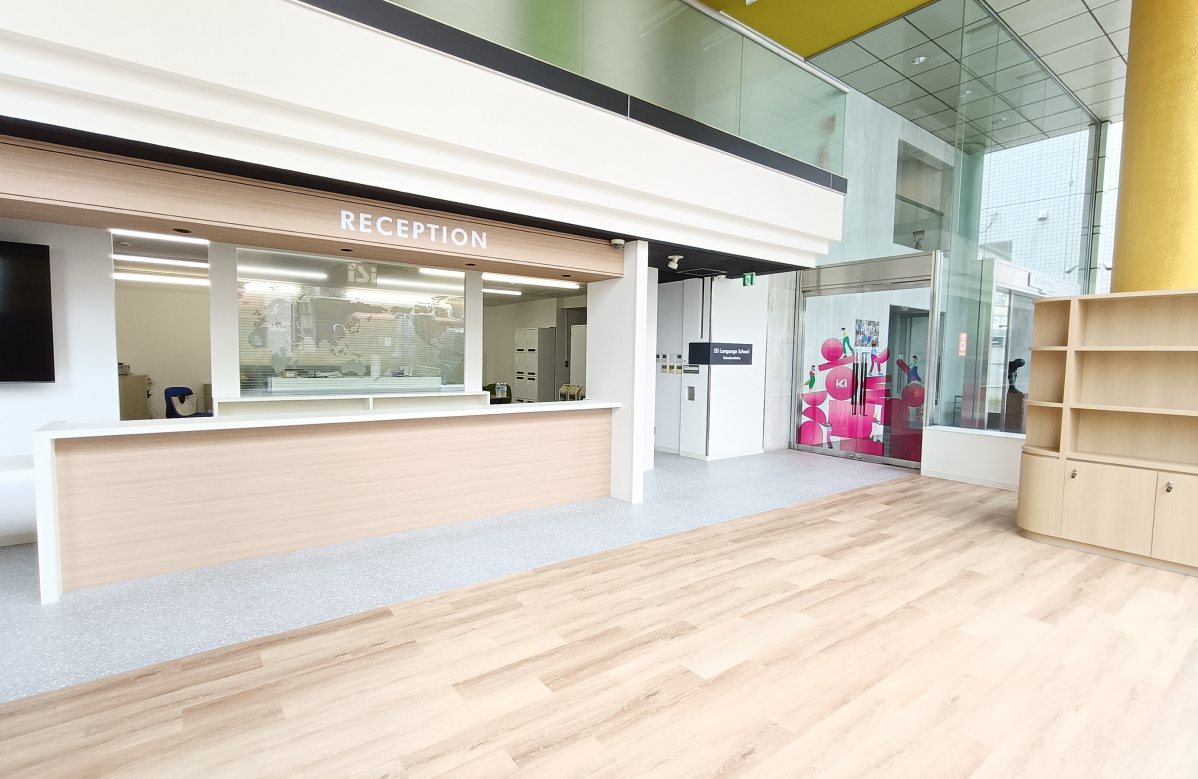
- Application reception — A welcoming, open reception area that is easy to drop into
- On campus
- Classroom — Electronic whiteboard
- On campus
- Self-study room
- On campus
- Library area — 1,013 books
- On campus
- Student lounge
- On campus
- Refresh room
- On campus
- Wi-Fi and student PCs
2026–2027 academic calendar
- Saturdays and Sundays
- Saturdays and Sundays
- Public holidays
- Public holidays
- Spring break
- Mar 20–Apr 7, 2026
- Summer vacation
- Aug 8–16, 2026
- Autumn break
- Sep 19–Oct 6, 2026
- Winter break
- Dec 19, 2026–Jan 6, 2027
School website · 2026-08-19 updated
Access
- Transit
- JR Yamanote Line / Seibu Shinjuku Line Takadanobaba Station, 3 min walkWaseda exit
Tokyo Metro Tozai Line2 min walk from Takadanobaba Station Exit 4 - Nearby
- The school map says a 5 min walk from the Waseda exit, and the campus page says a 3 min walk. A student town with Waseda University and others nearby.
- Dormitory
- Available · Tokyo dormitories have single and double rooms from ¥55,000 per month, with furniture and Wi-Fi. · Based on school website
School website · 2026-08-18 updated
Dormitory — Tokyo student dormitories are in Toda, Musashi-Seki, Shakujii-Koen, Shimo and other areas. Apply in units of 1 term; a lottery is held if rooms are full.
School website · 2026-08-06 updated
SALLAE has organized the school website and published data in English.
The update date is the day that material was last revised.
Photos are materials published by the school.
This information is compiled from official sources and is not updated daily. Please confirm with the official contact before signing or applying.