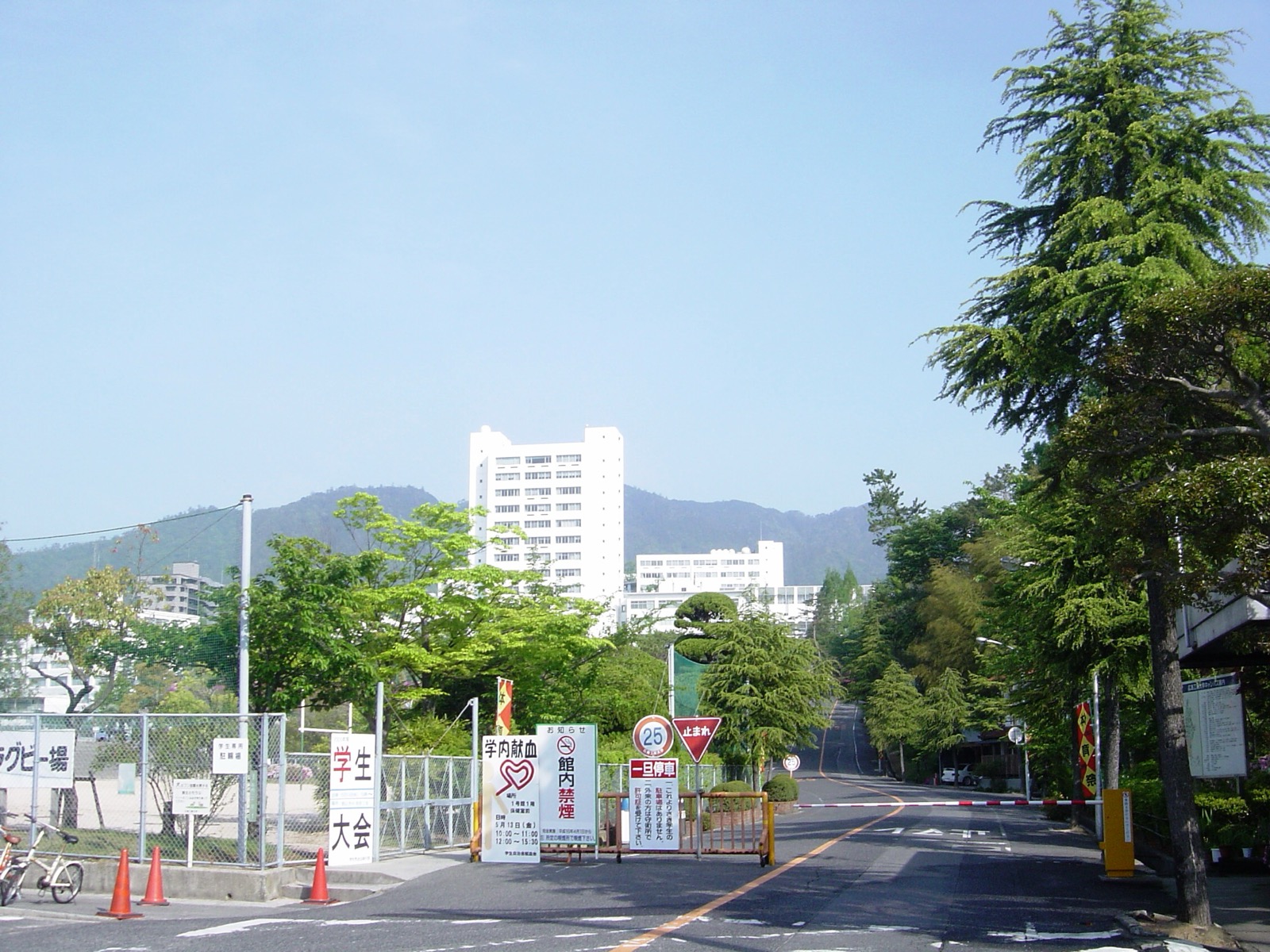
Hiroshima Institute of Technology
広島工業大学
6 days leftApply by 12/3 → exam on 12/12 · Entrance Exam for International Students [General Admission] – First Session
Compare with other universities →
Fees and conditions can change over time. Always check the school's guidelines before you apply.
Fees and conditions can change over time.
About the school
A private university founded in 1963. It has 4,336 students, including 3 international students (undergraduate 1 · graduate 2). There are 175 faculty members, 9 of them from outside Japan.
History · 7
- 1961
- Hiroshima College of Technology (Department of Electronic Engineering) Opens
- 1963
- The Faculty of Engineering at Hiroshima Institute of Technology (Department of Electronic Engineering and Department of Electrical Engineering) was established.
- 1989
- Hiroshima Institute of Technology Establishes a Graduate School (Graduate School of Engineering)
- 1993
- Hiroshima Institute of Technology to Establish a New School of Environmental Studies (Department of Environmental Design)
- 2006
- Reorganization from 2 faculties (Faculty of Engineering and Faculty of Environmental Studies) with 8 departments to 3 faculties (Faculty of Engineering, Faculty of Information Science, and Faculty of Environmental Studies) with 12 departments
- 2012
- The Department of Health Information in the School of Information Sciences was reorganized, and the School of Life Sciences (Department of Biomedical Engineering, Department of Food and Life Sciences) was established.
- 2025
- Restructuring from 4 faculties and 12 departments to 3 faculties (Faculty of Engineering, Faculty of Information Science, and Faculty of Environmental Studies) and 11 departments
大学ポートレート(私学版) 広島工業大学 学生情報 · 大学ポートレート(私学版) 広島工業大学 教員情報 · 広島工業大学 沿革
Admission requirements and dates
Hiroshima Institute of Technology admits international students through 2 routes.Pick your situation below to see only the routes that fit · Based on the guidelines for April 2027 entry
EJUThe exam Japanese universities use for international student admission · June and November · also held outside Japan = Examination for Japanese University Admission · JLPTJapanese-Language Proficiency Test · N1 is the highest, then N2 = Japanese-Language Proficiency Test
General Admissions, Round 1 — December Exam
Official name: 一般入学 第1回
This program is open to foreign nationals (excluding those with permanent residency in Japan) who have completed at least 12 years of schooling in a foreign country (including those expected to complete the program by March 2027). Applications may be submitted from within Japan or from abroad.
Accepting applications now · until 12/3
Application Period: Nov. 24–Dec. 3 · Exam: Dec. 12 · Application Deadline: Jan. 29
- Apply 11/24~12/36 days left
- →
- Exam 12/12
- →
- Enroll ~1/29
The fees payable upon enrollment are ¥957,500 for the Faculty of Engineering (excluding the Clinical Engineering Course), the Faculty of Information Science, and the Faculty of Environmental Science (comprising a ¥250,000 admission fee, ¥572,500 in tuition for the first semester of the first year, ¥110,000 in facility and equipment fees, and various membership fees), and ¥1,007,500 for the Clinical Engineering Course. The fees for the second semester of the first year are ¥682,500 (¥732,500 for the Clinical Engineering Course). The enrollment process is completed by paying the fees, entering enrollment information into “UCARO,” and submitting the required enrollment documents.
EJU subjects · Japanese (Reading Comprehension, Listening Comprehension, and Listening and Reading Comprehension): A total score of 200 points or higher (excluding essay questions). Mathematics: For the School of Engineering (excluding the Clinical Engineering Course in the Department of Electronic and Information Engineering), Course 2; for all other programs (Clinical Engineering Course, School of Information Science, and School of Environmental Studies), Course 1 or Course 2. Science: For the School of Engineering (excluding the Clinical Engineering Course), the subject with the higher score from Physics and Chemistry; for all other programs, the subject with the higher score from Physics, Chemistry, and Biology.
Valid sittings · Applicants who took the EJU in fiscal year 2025 or 2026
Other requirements · Applicants must score at least 100 points on the mathematics subjects designated by each college at this university and at least 50 points on the designated science subjects. Since classes after admission are conducted in Japanese, sufficient Japanese language proficiency is required.
General Admissions, Round 2 — February Exam
Official name: 一般入学 第2回
This program is open to foreign nationals (excluding those with permanent residency in Japan) who have completed at least 12 years of schooling in a foreign country (including those expected to complete the program by March 2027). Applications may be submitted from within Japan or from abroad.
Applications open 2/1 · in 66 days
Application Period: February 1–16 · Exam: February 27 · Results Announced: March 6 · Application Deadline: March 12
- Apply 2/1~2/16opens in 66 days
- →
- Exam 2/27
- →
- Results 3/6
- →
- Enroll ~3/12
The fees payable upon enrollment are ¥957,500 for the Faculty of Engineering (excluding the Clinical Engineering Course), the Faculty of Information Science, and the Faculty of Environmental Science (comprising a ¥250,000 admission fee, ¥572,500 in tuition for the first semester of the first year, ¥110,000 in facility and equipment fees, and various membership fees), and ¥1,007,500 for the Clinical Engineering Course. The fees for the second semester of the first year are ¥682,500 (¥732,500 for the Clinical Engineering Course). The enrollment process is completed by paying the fees, entering enrollment information into “UCARO,” and submitting the required enrollment documents.
EJU subjects · Japanese (Reading Comprehension, Listening Comprehension, and Listening and Reading Comprehension): A total score of 200 points or higher (excluding the essay section). Mathematics: For the Faculty of Engineering (excluding the Clinical Engineering Course in the Department of Electronic and Information Engineering), Course 2; for all other programs (Clinical Engineering Course, Faculty of Information Science, and Faculty of Environmental Studies), Course 1 or Course 2. Science: For the Faculty of Engineering (excluding the Clinical Engineering Course), the subject with the higher score from Physics and Chemistry; for all other programs, the subject with the higher score from Physics, Chemistry, and Biology.
Valid sittings · Applicants who took the EJU in fiscal year 2025 or 2026
Other requirements · Applicants must score at least 100 points on the mathematics subjects designated by each college at this university and at least 50 points on the designated science subjects. Since classes after admission are conducted in Japanese, sufficient Japanese language proficiency is required.
Good to know before applying
- Applicants must submit the documents specified during the eligibility verification period for each admission term (Application for Eligibility Verification, Certificate of Graduation or Expected Graduation, Certificate of Residence or a copy of a passport, and a copy of the EJU admission ticket or a transcript) and apply only after their eligibility and the documents have been verified. Applications will not be accepted if the submitted documents are incomplete.
- In the guidelines, the date listed for the first round of admission results is “Saturday, December 19, 2027,” which does not align with the exam date and enrollment deadline (this page does not list the date for the announcement of admission results; please contact the Academic Support Department for confirmation).
- This applies to candidates who took the EJU in the 2025 or 2026 academic year. Candidates must meet all of the following requirements: a score of 100 or higher in Mathematics (subjects specified by the department), a score of 50 or higher in Science (subjects specified by the department), and a score of 200 or higher in Japanese (reading comprehension—excluding essay writing—plus listening comprehension and listening-reading comprehension).
- A guarantor is required for admission to this university. The guarantor must reside in Japan, be financially independent, and be able to assume responsibility for the student’s daily life and financial matters while the student is enrolled.
- Since classes are conducted in Japanese after enrollment, a sufficient level of Japanese proficiency is required.
- Applications for the “Student” status of residence and the corresponding certificate of eligibility must be submitted after completing the enrollment procedures. While the University provides advice based on the applicant’s documents, supplies the necessary paperwork, and submits applications on the applicant’s behalf, the Ministry of Justice conducts the review, and the University assumes no responsibility for the outcome. If you are residing outside Japan at the time of application and plan to come to Japan to take the entrance examination, you may need to apply for a “Short-Term Stay” visa.
- Submitted documents and the application fee are non-refundable. If it is determined that any of the submitted documents contain false information, admission may be revoked even after enrollment. If you have not completed the coursework specified in the eligibility requirements by the time of enrollment, you will lose your eligibility for admission.
- Starting in the second year, tuition and facility and equipment fees will each increase by ¥40,000 per year from the amount charged at the time of admission. In the second semester of the fourth year, an alumni association fee of ¥18,000 is required. Additional costs for textbooks and other materials are required; students are required to bring a laptop and are asked to purchase the recommended model.
- The application fee is ¥30,000. If you live overseas and do not use a credit card, please remit ¥30,000 plus a ¥2,500 exchange fee via wire transfer (Hiroshima Bank, Itsukaichi Branch) and include a copy of the international money transfer request form with your application materials. You are responsible for paying any fees charged by your local financial institution separately.
- When accepting students, we conduct security export control reviews in accordance with the Foreign Exchange and Foreign Trade Act. If there is a risk that the student may be subject to regulations, restrictions may be imposed on their desired educational and research activities.
広島工業大学 2027年度外国人
Fees
- First-year fees
- ¥1,640,000 ~ ¥1,740,000
- Paid at enrollment
- from ¥957,500
- Application fee
- ¥30,000
- The first-year tuition and fees for students entering in the 2027 academic year are ¥1,640,000 for the School of Engineering (excluding the Clinical Engineering Course in the Department of Electronic and Information Engineering), the School of Information Science, and the School of Environmental Science (comprising an admission fee of ¥250,000, tuition of ¥1,145,000, a facility and equipment fee of ¥220,000, and various membership fees), and ¥1,740,000 for the Clinical Engineering Course in the Department of Electronic and Information Engineering (facility and equipment fee: ¥320,000).
- The amount due at the time of enrollment is ¥957,500 (¥1,007,500 for the Clinical Engineering Course), and ¥682,500 (¥732,500 for the Clinical Engineering Course) is due in the second semester of the first year.
- Starting in the second year, both tuition and facility and equipment fees increase by ¥40,000 annually (tuition: ¥1,185,000; facility and equipment fees: ¥260,000 / ¥360,000 for the Clinical Engineering Course).
- For the Clinical Engineering Course, an additional fee for off-campus clinical training (approximately ¥70,000) is required in the second semester of the third year.
- The admission examination fee is ¥30,000 (plus any payment processing fees).
- The amounts listed on the university’s tuition page are the same.
Places and fees by department 12
| Department | Places | First-year fees (¥) | |
|---|---|---|---|
| Faculty of Engineering | |||
| Department of Electronic and Information Engineering, Electronic and Information Engineering Track | A limited number of students (enrolling in the first year in April 2027) | ¥1,640,000 | |
| Department of Electronic and Information Engineering, Clinical Engineering Track | A limited number of students (enrolling in the first year in April 2027) | ¥1,740,000 | |
| Department of Electrical Systems Engineering | A limited number of students (enrolling in the first year in April 2027) | ¥1,640,000 | |
| Department of Mechanical Information Science | A limited number of students (enrolling in the first year in April 2027) | ¥1,640,000 | |
| Department of Environmental and Civil Engineering | A limited number of students (enrolling in the first year in April 2027) | ¥1,640,000 | |
| Department of Architectural Engineering | A limited number of students (enrolling in the first year in April 2027) | ¥1,640,000 | |
| Faculty of Information | |||
| Department of Information Engineering | A limited number of students (enrolling in the first year in April 2027) | ¥1,640,000 | |
| Department of Information Systems | A limited number of students (enrolling in the first year in April 2027) | ¥1,640,000 | |
| Department of Information Management | A limited number of students (enrolling in the first year in April 2027) | ¥1,640,000 | |
| Faculty of Environment | |||
| Department of Architectural Design | A limited number of students (enrolling in the first year in April 2027) | ¥1,640,000 | |
| Department of Earth Environmental Sciences | A limited number of students (enrolling in the first year in April 2027) | ¥1,640,000 | |
| Food and Health Science Course | A limited number of students (enrolling in the first year in April 2027) | ¥1,640,000 | |
Places are the total across all international student admissions. Fees are for 2027 entry.
For 2027 entry · from the school's guidelines
Documents to prepare
- To be submitted during the eligibility verification period: (1) Application for Eligibility Verification (university-designated form, in Japanese), (4) Certificate of Graduation (or Completion) or Certificate of Expected Graduation from your most recent school or current school, (6) Certificate of Residence Details issued by your municipality or a copy of your passport, (7) A copy of your EJU admission ticket or a certificate of test results.
- Submit during the application period: (2) Statement of Purpose (university-specified form, in Japanese), (3) Letter of Recommendation (university-specified form, prepared by the principal of your most recent school or current school), (5) Transcript from your most recent school or current school, (8) Digital photo file (to be uploaded at the time of application), (9) Other documents deemed necessary by the university.
- Documents in languages other than Japanese or English must be accompanied by a translation into Japanese or English.
- Register via the online application system (UCARO), pay the application fee, and mail the application documents by registered express mail (EMS or similar for international shipments).
Graduate outcomes
How these are counted
Total number including undergraduate graduates and graduate school graduates
- Official data does not provide employment statistics specifically for international students.
- For the faculty as a whole, the employment rate for students graduating in March 2026 was 99.2 percent, the rate of students entering professional careers was 94.6 percent, and the rate of students securing positions at major companies was 54.6 percent.
- Employment locations were as follows: Hiroshima Prefecture 39.5 percent, the Chugoku and Shikoku regions (excluding Hiroshima Prefecture) 6.1 percent, the Kanto region 33.2 percent, the Kinki region 12.8 percent, and other areas 8.4 percent.
University Portraits · figures for all students (not international students only)
Reviews from students
No reviews yet. If you attend or attended this school, please write the first one.
Write a review
Scholarships
- Hiroshima Institute of Technology Tuition and Other Fee Waivers for Self-Supporting International Students — Eligible applicants must hold a “Student” status of residence, be enrolled in their second year or higher of an undergraduate program, be recognized as in need of financial assistance, demonstrate a commitment to continuing their studies, and have ranked in the top half of their department and year group based on their GPA at the end of the previous academic year. Students ranked in the top one-third of their class are eligible for an annual reduction of ¥500,000, and those ranked in the top half or higher are eligible for an annual reduction of ¥300,000 (valid for one academic year; renewal applications are accepted). This program cannot be combined with the Tsurutora Taro Scholarship or the Alumni Association Scholarship.
- Students who have been granted a tuition waiver must participate in the planning and operation of international exchange volunteer activities organized by the university and report on their activities over the course of the year at a study report session.
- Students may enroll even if they hold a status of residence other than “Student” (such as “Dependent”), provided they have a valid status of residence; however, they may be subject to restrictions regarding eligibility for scholarships intended for international students.
- The page on scholarships and special scholarships lists items such as the Japan Student Services Organization (JASSO) Loan-Based Scholarships, the Tsurutora Taro Scholarship Foundation Scholarships, the Hiroshima Institute of Technology Alumni Association Scholarships, the Higher Education Study Support System, Special Scholarships (the university’s own scholarship program), the Entrance Examination Special Scholarship Program, and the Grant-Based Scholarships for Students from Remote Areas (please check each page for amounts and eligibility requirements).
Student life support
- The guidelines do not mention student dormitories.
- The “Housing Information” section of the university website provides information on housing options for students living alone (boarded housing, apartments for self-catering, condominiums for self-catering, real estate listings, rent, and walking distance lists).
- For inquiries, please contact the Academic Support Division (Student Affairs) (Updated August 21, 2026).
Getting there
- Itsukaichi Campus (Headquarters and Miyake Campus)
- Hiroshima Electric Railway Miyajima Line, Rakurakuen Station (15-minute walk) / From JR Sanyo Main Line Itsukaichi Station, take the bus to the “Hiroshima Institute of Technology Entrance” stop, then walk 3 minutes (a school bus is available from Itsukaichi Station) · Faculty of Engineering, Faculty of Information Science, and Faculty of Environmental Studies (the university’s main campus, which also houses the Graduate School of Engineering’s laboratories, lecture halls, affiliated library, gymnasium, and other facilities)
広島県広島市佐伯区三宅2-1-1
SALLAE compiled this from the school's admission guidelines and official sources (such as University Portraits).
Photo: Taisyo · CC BY 3.0 · Wikimedia Commons
This information is compiled from official sources and is not updated daily. Please confirm with the official contact before signing or applying.