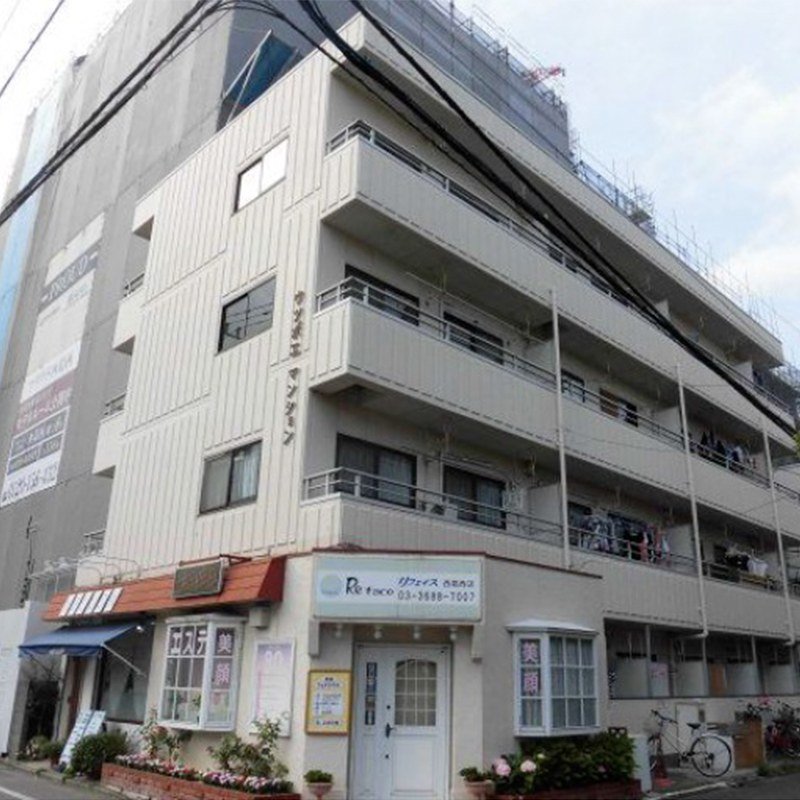
Teikyo Heisei University Affiliated Japanese Language School
Teikyo Heisei University Affiliated Japanese Language School
- Progression
- Universities etc. 96% ›
- Admission
- Twice a year · April and October ›
- Japanese at entry
- From N5 ›
Compare side by side with other schools →
Tuition and conditions may change depending on the intake. If you contact us, we will check with the school and give you accurate details.
Nearby schools comparedBy distance · no ads or paid placement
- Teikyo Heisei University Affiliated Japanese Language SchoolThis schoolTuition/yr—Progression96%IntakesApr · Oct
- Ann Language School0.4km›Tuition/yr¥903,000Progression—IntakesJan · Apr · Jul · Oct
- Melos Language Academy0.4km›Tuition/yr¥904,000Progression—IntakesJan · Apr · Jul · Oct
- ISI College of Foreign Languages0.7km›Tuition/yr¥1,015,000Progression—IntakesJan · Apr · Jul · Oct
— means SALLAE has not yet found the data.
About the school
The Japanese Language School Affiliated with Teikyo Heisei University is across from Ikebukuro Sunshine City, a 5-minute walk from Higashi-Ikebukuro Station. Capacity is 100 students; the 32 enrolled students (2025) are all from China, and enrollment is in April and October. Homeroom teachers provide progression guidance, and the school holds progression briefings and mock exams. In the May 2024 report, 46 students went on to further study. An admission fee waiver system is available.
Published data and school website
Tuition
If you saw a lower amount elsewhere, it may not include the admission fee and application fee
Cost details · Course tables · Notes
- One-time fees
- ¥790,000
According to the school guide, fees are paid in one lump sum at enrollment. SALLAE will check with the school whether you can pay in installments.
Published by MEXT · confirmed 2026-09-21
Whether it is refundable
- Cancellation requested before entering Japan
- After the Certificate of Eligibility and admission permit are returned to the school, payments other than the admission fee and the entrance screening fee are refunded.
- Student visa denied at a Japanese diplomatic mission abroad
- After the Certificate of Eligibility and admission permit are returned to the school, payments other than the admission fee and the entrance screening fee are refunded.
- Leaving school for unavoidable reasons after entering Japan, with the school's formal approval of withdrawal, and returning home
- No refund for the first 6 months after enrollment or the final 3 months before expected completion. Otherwise, tuition (excluding miscellaneous expenses) is refunded monthly from the month after withdrawal is approved through the last paid month.
- Students who are deported, removed from the register under school rules or subject to disciplinary action
- Not refunded
See refund policy in detail · 1 more line
- Classes cannot be held for a long period due to natural disasters or other reasons not attributable to the school
- No refund is given even if classes cannot be held for a long period due to natural disasters or other reasons not attributable to the school.
Admission & dates
- Apr intake
- 2-year course · Application for April intake: end of September of the previous year · Classes 1,536 hr
- Oct intake
- 1 year 6 months course · Application for October intake: end of April · Classes 1,152 hr
- Japanese level
- Must be certified at JLPT N5 or higher.
Either (1) proof of 150 hours of Japanese study, or (2) Japanese ability at CEFR A1 or above (per the Japanese language education reference framework). Even if neither applies, graduates of a foreign higher education institution are accepted if the school judges them equivalent.
Deadline and capacity rules
Applications and documents must be submitted at the latest about 6 months before the intake.
School website · 2022-07-06 updated
Classes
- Morning
- 09:00-12:30
- Afternoon
- 13:00-16:30
- AM/PM placement
- * The school decides whether you are in the morning or afternoon class
- Class size
- Max 20 students
Materials · Subjects · Timetable · Details
- Subject
- Integrated Japanese · Script and notation · Reading · Listening · Writing · Exam preparation · Speaking
Example: 2-year progression course, Upper-intermediate 1 class Morning
| Mon | Tue | Wed | Thu | Fri | |
|---|---|---|---|---|---|
| 09:00-09:45 | Comprehensive Japanese | Comprehensive Japanese | Comprehensive Japanese | Listening comprehension | Comprehensive Japanese |
| 09:55-10:40 | Comprehensive Japanese | Comprehensive Japanese | Comprehensive Japanese | Listening comprehension | Comprehensive Japanese |
| 10:50-11:35 | Reading comprehension | Exam preparation | Exam preparation | Composition | Orthography |
| 11:45-12:30 | Reading comprehension | Exam preparation | Exam preparation | Composition | Speaking |
Example: 1 year 6 months progression course, Beginner 1 class Afternoon
| Mon | Tue | Wed | Thu | Fri | |
|---|---|---|---|---|---|
| 13:00-13:45 | Comprehensive Japanese | Comprehensive Japanese | Comprehensive Japanese | Comprehensive Japanese | Comprehensive Japanese |
| 13:45-14:30 | Comprehensive Japanese | Comprehensive Japanese | Comprehensive Japanese | Comprehensive Japanese | Comprehensive Japanese |
| 14:40-15:35 | Comprehensive Japanese | Comprehensive Japanese | Reading comprehension | Listening comprehension | Comprehensive Japanese |
| 15:45-16:30 | Comprehensive Japanese | Orthography | Reading comprehension | Orthography | Comprehensive Japanese |
Class hours by subject
| Subject | 2 years | 1 year 6 months |
|---|---|---|
| Beginner 1: Integrated Japanese | 142 hr | 142 hr |
| Beginner 1: Characters and writing | 20 hours | 20 hours |
| Beginner 1: Reading | 20 hours | 20 hours |
| Beginner 1: Listening | 10 hours | 10 hours |
| Beginner 2: Integrated Japanese | 132 hr | 132 hr |
| Beginner 2: Characters and writing | 20 hours | 20 hours |
| Beginner 2: Reading | 20 hours | 20 hours |
| Beginner 2: Listening | 10 hours | 10 hours |
| Beginner 2: Composition | 10 hours | 10 hours |
| Pre-intermediate: Integrated Japanese | 72 hr | 72 hr |
| Pre-intermediate: Characters and writing | 20 hours | 20 hours |
| Pre-intermediate: Listening | 20 hours | 20 hours |
| Pre-intermediate: Reading | 20 hours | 20 hours |
| Pre-intermediate: Composition | 10 hours | 10 hours |
| Pre-intermediate: Exam preparation | 40 hr | 40 hr |
| Pre-intermediate: Speaking | 10 hours | 10 hours |
| Intermediate 1: Integrated Japanese | 72 hr | — |
| Intermediate 1: Characters and writing | 10 hours | — |
| Intermediate 1: Listening | 20 hours | — |
| Intermediate 1: Reading | 20 hours | — |
| Intermediate 1: Composition | 20 hours | — |
| Intermediate 1: Exam preparation | 40 hr | — |
| Intermediate 1: Speaking | 10 hours | — |
| Intermediate 2: Integrated Japanese | 72 hr | — |
| Intermediate 2: Characters and writing | 10 hours | — |
| Intermediate 2: Listening | 20 hours | — |
| Intermediate 2: Reading | 20 hours | — |
| Intermediate 2: Composition | 20 hours | — |
| Intermediate 2: Exam preparation | 40 hr | — |
| Intermediate 2: Speaking | 10 hours | — |
| Intermediate 1–2: Integrated Japanese | — | 144 hr |
| Intermediate 1–2: Characters and writing | — | 20 hours |
| Intermediate 1–2: Listening | — | 40 hr |
| Intermediate 1–2: Reading | — | 40 hr |
| Intermediate 1–2: Composition | — | 40 hr |
| Intermediate 1–2: Exam preparation | — | 80 hours |
| Intermediate 1–2: Speaking | — | 20 hours |
| Upper-intermediate 1–2: Integrated Japanese | 144 hr | — |
| Upper-intermediate 1–2: Characters and writing | 20 hours | — |
| Upper-intermediate 1–2: Listening | 40 hr | — |
| Upper-intermediate 1–2: Reading | 40 hr | — |
| Upper-intermediate 1–2: Composition | 40 hr | — |
| Upper-intermediate 1–2: Exam preparation | 80 hours | — |
| Upper-intermediate 1–2: Speaking | 20 hours | — |
| Upper-intermediate 1: Integrated Japanese | — | 72 hr |
| Upper-intermediate 1: Characters and writing | — | 10 hours |
| Upper-intermediate 1: Listening | — | 20 hours |
| Upper-intermediate 1: Reading | — | 20 hours |
| Upper-intermediate 1: Composition | — | 20 hours |
| Upper-intermediate 1: Exam preparation | — | 40 hr |
| Upper-intermediate 1: Speaking | — | 10 hours |
| Advanced: Integrated Japanese | 52 hr | — |
| Advanced: Characters and writing | 20 hours | — |
| Advanced: Listening | 20 hours | — |
| Advanced: Reading | 20 hours | — |
| Advanced: Composition | 20 hours | — |
| Advanced: Exam preparation | 20 hours | — |
| Advanced: Speaking | 40 hr | — |
* Subject to change
School website · Confirmed 2026-09-21
Documents
- Admission application form
- Résumé
- 4 ID photos
- Original graduation certificate from your last school
- Original academic transcript from your last school
- Proof of Japanese ability: certificate showing a pass at Level A1 or higher of the Japanese Language Education Reference Framework, or proof of Japanese studyState the course name, total study hours, textbooks used, attendance rate, content studied and target level
- Copy of passport
Financial supporter's documents · only if applicable · 2 application requirements
Submitted by the person paying the tuition (financial sponsor)
- Financial sponsorship statement
- Document proving the financial sponsor's family composition
- Document proving the relationship with the applicant
- Original bank balance certificate
- Financial sponsor's occupation certificate
- Income certificate and tax payment (tax assessment) certificate, etc. for the past 3 years
Only if applicable
- Copy of pages with entry and exit stamps (If you have entered Japan before)
- Residence certificate or residence card (If the financial sponsor or a relative lives in Japan)
Application requirements
The applicant and the financial sponsor must sign the signature fields by hand, leaving nothing blank. All documents prepared in a language other than Japanese must come with a Japanese translation.
No separate criteria by nationality are published. SALLAE is confirming this with the school.
School website · Confirmed 2026-09-21
Admission process
- Request an admission consultation — You can consult in Korean about application timing and document preparation
- Submit application documents to the school — Submit the application documents to the school and pay the ¥20,000 screening fee
- Application for the Certificate of Eligibility — The school submits the Certificate of Eligibility application to the Immigration Services Agency on the applicant's behalf
- Tuition payment — The Certificate of Eligibility is issued and a tuition invoice is sent; tuition is paid after that
- Visa application (March). After the visa is issued, you arrive in Japan (enter the country) on the date the school specifies. — After tuition payment is confirmed, the Certificate of Eligibility and admission permit are sent. Apply for a visa at the Japanese embassy or consulate in your home country
- Placement test
- A test is given at enrollment. The decision is made comprehensively from a written exam and an interview.
School website · 2022-07-06 updated
Graduate outcomes
| FY2024 | Admitted |
|---|---|
| Employment | 2 students |
Prepared May 13, 2024: completers 48, persons meeting the standard 48 (100.0%), progression 46 (2-year 38, 1 year 6 months 8), status change 2, A2 or higher 26 · Number of persons permitted to change to a status of residence in the upper column of Table 1-1 or 1-2 of the Immigration Control Act (excluding Diplomat, Official and Technical Intern Training) · School website · Confirmed Sep 21, 2026
Reviews
If you study here or used to, tell others what the classes, teachers and daily life were like. It helps anyone deciding on this school.
Write the first reviewUniversity prep
- Progression guidance — Experienced staff, led by the homeroom teacher, help with writing the statement of purpose and with interview coaching.
- Progression information session — A progression briefing is held for all students. Homeroom teachers hold individual meetings with students who plan to continue their studies and give career guidance based on their wishes.
- EJU mock exam and JLPT mock exam — The annual schedule includes an EJU mock exam (May) and JLPT mock exams (June and November).
- 2 designated schools for recommendation — Teikyo University · Teikyo Heisei University (school corporation) · After internal selection, students can enter Teikyo University Group universities by recommendation.
School website · 2022-07-06 updated
Daily-life support
- Housing — The school asks newly admitted students about their housing preferences, passes the requests to a partner real-estate company and arranges properties.
- Life consultation — Depending on the situation, office staff who can speak the student's language accompany them to hospitals, government offices, banks, real-estate companies and so on.
- Health support — Every year from June to August, all students have a health checkup at Teikyo University School of Medicine Shinjuku Clinic. The school also introduces medical institutions that can offer support in the student's native language.
- Orientation — Orientations are held at enrollment, before long breaks, when starting part-time work, at visa renewal and at other times, explaining the knowledge and procedures needed for life as an international student.
- Life guidance lectures — Life guidance lectures by Metropolitan Police Department and Tokyo Metropolitan Government staff warn about illegal part-time work, traffic rules, drinking, smoking, drugs, fraud and more.
Monthly living costs · School information
| Item | 1 month |
|---|---|
| Monthly living costs | ¥80,000 |
| Total | ¥80,000 |
Including rent, food and utilities, about ¥80,000–¥150,000.
School website · Confirmed 2026-09-21
Scholarship
- Admission fee waiver
- ¥50,000 OnceStudents who hold JLPT, STBJ, NAT-TEST, J-TEST or similar results at N3 level (CEFR B1 under the Japanese language education reference framework) or above at enrollment have the admission fee waived in full. This differs by country, so please inquire.
School website · 2022-07-06 updated
Students
32 enrolled (2025) · Capacity 100 National median: 180 students
Based on 32 students enrolled in 2025.
Published by MEXT · Confirmed 2026-09-20
School life
For 1 year
- Apr
- Entrance ceremony · Orientation · Placement test
- May
- EJU mock exam · Individual meetings · Ikebukuro Disaster Prevention Center
- Jun
- EJU · JLPT mock exam · Kawagoe yukata experience
- Jul
- JLPT · Progression briefing · Teikyo Heisei University open campus
- Aug
- Individual meetings · Progression survey · Local summer festival
- Sep
- Regular exams · Sports day
- Oct
- Autumn term entrance ceremony · Orientation · Placement test · Halloween costumes
- Nov
- EJU · Individual meetings · JLPT mock exam · Agency application for extension of period of stay · Mt. Takao excursion · Auditing university classes
- Dec
- JLPT · Regular exams · Disaster drill · Disney Resort
- Jan
- Career survey · Pre-completion guidance · New Year games
- Feb
- Agency application for change of status of residence · Proficiency test · Asakusa: matcha and wagashi making
- Mar
- Completion ceremony · Presentation of completion certificates
2026–2027 academic calendar
- Spring break
- 2026-03-19~2026-04-08
- Between-term break
- 2026-06-20~2026-06-30
- Summer vacation
- 2026-07-28~2026-08-14
- Between-term break
- 2026-10-01~2026-10-07
- Winter break
- 2026-12-18~2027-01-06
- Spring break
- Mar 20 (Sat), 2027–early Apr 2027 (planned)
Fiscal 2026 break periods
School website · 2022-07-06 updated
Access
- Transit
- Tokyo Metro Yurakucho Line Higashi-Ikebukuro Station, 5 min walk
JR, subway, Seibu Line, Tobu Line, Ikebukuro Station, 10 min walk - Nearby
- The school is across from Sunshine City
- Dormitory
- None · SALLAE can also help you find housing nearby
School website · 2022-07-06 updated
Japanese language institution certified by MEXT Certification no. 20241130008 · Certified Oct 30, 2024 →
SALLAE has organized the school website and published data in English.
The update date is the day that material was last revised.
Photos are materials published by the school.
This information is compiled from official sources and is not updated daily. Please confirm with the official contact before signing or applying.