JET Japanese Language School
JET Japanese Language School
- To station
- 1 min on foot · Itabashi Station
- Japanese at entry
- N2 or above ›
- Admission
- Twice a year · April and October ›
Compare side by side with other schools →
Tuition and conditions may change depending on the intake. If you contact us, we will check with the school and give you accurate details.
Nearby schools comparedBy distance · no ads or paid placement
- JET Japanese Language SchoolThis schoolTuition/yr¥850,000Progression—IntakesApr · Oct
- Sunshine Language School1.3km›Tuition/yr¥949,000Progression—IntakesJan · Apr · Jul · Oct
- Melos Language Academy1.4km›Tuition/yr¥904,000Progression—IntakesJan · Apr · Jul · Oct
- International School of Business1.7km›Tuition/yr¥750,000Progression—IntakesApr · Oct
— means SALLAE has not yet found the data.
About the school
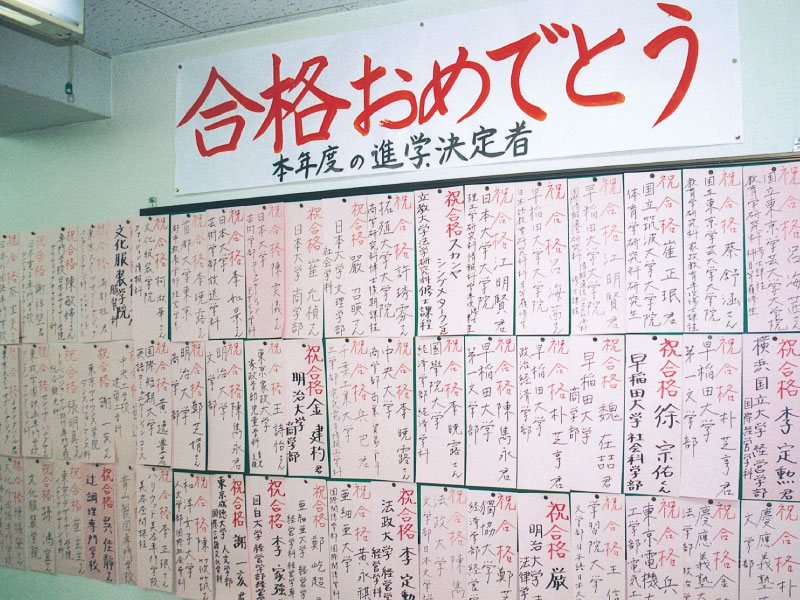
A school that focuses on progression to university and graduate school. The 1-year university-preparatory course (April entry) and the 1 year 6 months university-preparatory course (October entry) are preparatory education courses designated by the Minister of Education, Culture, Sports, Science and Technology. Of 88 graduates in FY2025, 44 went on to graduate school (10), university (18) or vocational school (16), and in the June 2026 EJU Japanese exam a current student scored the highest in the world (374 points). A small school with a capacity of 150, founded in 1988, it stands right in front of the east exit of JR Itabashi Station (3 minutes from Ikebukuro), and about half of its students are from Taiwan. All courses are full-time with morning and afternoon classes, and there are job-hunting seminars for students who want to work in Japan and a 3-month business Japanese course.
Published data and school website
Tuition
If you saw a lower amount elsewhere, it may not include the admission fee and application fee
Median 1-year tuition in other areas — Kyoto ¥911,000(7 schools) · Kanagawa ¥880,000(8 schools) · Okinawa ¥858,000(6 schools) · Tokyo ¥840,600(56 schools) · Fukuoka ¥835,000(12 schools) · Hyogo ¥825,500(7 schools) · Osaka ¥814,000(27 schools) · Shizuoka ¥790,000(9 schools) · Chiba ¥745,333(10 schools) · Aichi ¥740,667(5 schools)
Admission & dates
- Apr intake
- 1-year course · Application Aug 24 (Mon) – Nov 6 (Fri), 2026 · Classes The 1-year university-preparatory course is 1,000 hours; the Japanese Basic Course is 880 hours.
- Oct intake
- 1 year 6 months course · Application for October 2027 intake: Mar 1 (Mon) – May 14 (Fri), 2027 · Classes The required total for the 1.5-year university-preparatory course (Japanese University Preparatory B) is 1,440 hours.
- Japanese level
- For the 1-year university and graduate school preparatory course, applicants generally need Japanese Language Proficiency Test (JLPT) N2 level or higher at the time of application
For the 1-year university-preparatory course, N2 level or higher is generally required at the time of application. From 2027, proof of Japanese ability is included in the application documents.
Deadline and capacity rules
Capacity 150 (56 university-preparatory, 94 Japanese). Applicants must have completed 12 years of schooling or equivalent. Applicants from some countries and regions need prior confirmation. Applications may close early once capacity is reached.
School website · 2026-09-11 updated
Classes
- Morning
- 09:00-12:40 Periods 1–4 run 9:00–12:40 (50-minute lessons) for all classes.
- Afternoon
- 14:00-16:40 University-preparatory classes continue to period 7 (16:40), followed by individual tutoring. Japanese-course classes have afternoon lessons (14:00–15:45) on several days a week.
- AM/PM placement
- All classes are full-time. Afternoon lessons (from 14:00) are added to the 9:00–12:40 morning classes.
- Elective classes
- Mathematics (humanities) · Mathematics (sciences) · Physics · Chemistry · Biology · Humanities mathematics covers EJU Mathematics Course 1 content and sciences mathematics covers Course 2. For science, students take 2 subjects from physics, chemistry and biology. Taught by full-time teachers.
Materials · Subjects · Timetable · Details
- Materials
- Beginner classes use Minna no Nihongo I and II (2nd edition); from intermediate on, Chukyu o Manabo and similar books, plus newspaper articles and literary works. University-preparatory classes use Academic Japanese and similar books plus authentic materials.
- Subject
- Integrated · Listening · Reading · Speaking · Writing · Grammar · Vocabulary · Exam preparation · Kanji · Japanese society · English · Contemporary society · Subjects for 2027. The first term of the Japanese course covers integrated Japanese, listening, reading, speaking and composition. The university-preparatory course also includes vocabulary, test preparation, English and contemporary society.
Weekly timetable, university-preparatory class 1,000 hours (Japanese, contemporary society, English)
| Mon | Tue | Wed | Thu | Fri | |
|---|---|---|---|---|---|
| Periods 1 and 2 are 9:00–9:50 and 9:55–10:45. | Japanese | Japanese | Japanese | Japanese | Japanese |
| Periods 3 and 4 are 10:55–11:45 and 11:50–12:40. | Japanese | Japanese | Japanese | Japanese | Japanese |
| Period 5 is 14:00–14:50. | Japan studies Apr–Sep | Kanji | Mathematics, sciences (elective) Apr–Nov | Mathematics, humanities (elective) Apr–Nov | English Apr–Dec |
| Period 6 is 14:55–15:45. | Japan studies Apr–Sep | Contemporary society Apr–Sep | Mathematics, sciences (elective) Apr–Nov | Mathematics, humanities (elective) Apr–Nov | English Apr–Dec |
| Period 7 is 15:50–16:40. | Biology (elective) Apr–Nov | Contemporary society Apr–Sep | Individual guidance | Chemistry (elective) Apr–Nov | Physics (elective) Apr–Nov |
| 16:40~ | Individual guidance | Individual guidance | Individual guidance | Individual guidance | Individual guidance |
[Upper-intermediate level] At least 880 class hours per year
| Mon | Tue | Wed | Thu | Fri | |
|---|---|---|---|---|---|
| Periods 1 and 2 are 9:00–9:50 and 9:55–10:45. | Japanese | Japanese | Japanese | Japanese | Japanese |
| Periods 3 and 4 are 10:55–11:45 and 11:50–12:40. | Japanese | Japanese | Japanese | Japanese | Japanese |
| Period 5 is 14:00–14:50. | Japanese society and culture | Kanji | (Extensive reading) | Japanese | Japanese society and culture |
| Period 6 is 14:55–15:45. | Japanese society and culture | — | (Extensive reading) | Japanese | Japanese society and culture |
[Beginner level] At least 880 class hours per year
| Mon | Tue | Wed | Thu | Fri | |
|---|---|---|---|---|---|
| Periods 1 and 2 are 9:00–9:50 and 9:55–10:45. | Japanese | Japanese | Japanese | Japanese | Japanese |
| Periods 3 and 4 are 10:55–11:45 and 11:50–12:40. | Japanese | Japanese | Japanese | Japanese | Japanese |
| Periods 5 and 6 are 14:00–14:50 and 14:55–15:45. | — | Japanese | (Extensive reading) | Japanese | — |
Class hours by subject
| Subject | 1 year 6 months | 1 year |
|---|---|---|
| Japanese conversation | 320 hours | 160 hours |
| Japanese grammar | 560 hr | 400 hours |
| Japanese reading comprehension | 200 hours | 160 hours |
| Japanese composition | 120 hours | 80 hours |
| Japanese society and culture | 120 hours | 80 hours |
| English | 60 hours | 60 hours |
| Contemporary society | 60 hours | 60 hours |
| Required total | 1,440 hr | 1,000 hr |
| Mathematics (elective) | 60 hours | 60 hours |
| Science (elective) | 60 hours | 60 hours |
Annual class hours: 1,000 hours for University Preparatory A, 880 hours for the Japanese Basic Course. From 2027 the curriculum follows the CEFR-based reference framework. Spring supplementary courses and the like are paid separately.
What each level aims for · 3 levels
- Beginner level
- Practice using basic vocabulary and grammar. Listening to instructions and announcements in town, and writing 200–300 character compositions about yourself, your family and your country.
- Pre-intermediate to intermediate level
- Listening to news and lectures, 3–5 minute presentations, compositions of about 400 characters, and article summaries. Also supports taking JLPT N1 and N2.
- Late intermediate (university-preparatory class)
- Aiming for JLPT N1-level Japanese and high EJU scores. Preparing statements of purpose and research plans (for graduate school applicants) and interview coaching.
School website · 2026-08-23 updated
Documents to prepare — student visa course
- Admission application formSchool's prescribed form
- Certificate of graduation or diploma from the last school attendedOriginal
- Academic transcript for the entire enrollment period at the last school attended
- Proof of Japanese ability
- Copy of passport
- 7 photos (4 cm × 3 cm, taken within the last 3 months)
Financial supporter's documents · only if applicable · 2 application requirements
- From the April 2027 intake Proof of Japanese ability
Submitted by the person paying the tuition (financial sponsor)
- Bank deposit balance certificate in the remitter's nameOriginal
- Financial sponsorship statementSchool's prescribed form
- Documents proving the relationship between the applicant and the remitter (family register, birth certificate, etc.; originals or copies certified as true to the original).
- Documents proving the remitter's occupation and annual income
Only if applicable
- If self-funded (when the applicant has sufficient work experience): a bank balance certificate in the applicant's name (original) and documents proving occupation and annual income. (If paying with your own funds (if you have sufficient work history))
- Statement of financial support, tax certificate showing total income (issued by the city or ward office), bank balance certificate in the sponsor's name, and documents proving relationship, occupation and status. (When a relative living in Japan will pay)
- Other documents besides the above are also required (Applicants from some countries (such as Indonesia))
Application requirements
When the applicant's parents or other relatives send money from the home country Taken within the last 3 months
No bank balance amount requirement has been published. SALLAE is confirming this with the school.
For short-term courses, only the following are submitted: application form for admission · copy of passport · photo · copy of residence card.
School website · 2026-09-11 updated
Admission process
- Request an admission consultation — Office hours are 9:00–17:00 Japan time (closed Sat, Sun, holidays and year-end/New Year). Phone 03-3916-2101 or email. The application form is sent after you make an inquiry.
- Submit application documents — Submit it at the office together with the ¥20,000 application fee, or pay the fee by bank transfer and send the documents by registered mail. Submission to an overseas office is also possible.
- Screening of the applicant — University-preparatory applicants go through document screening and an interview with the principal; Japanese-course applicants go through document screening (an interview with the principal if the applicant is a minor with no agency). Successful applicants are issued a letter of admission and pay the admission fee.
- Review by the Immigration Services Agency — The school collects the documents and submits them to Immigration. Results come around the end of February for April entrants and around the end of August for October entrants.
- Tuition payment — After receiving notice that the Certificate of Eligibility has been issued, pay tuition, insurance and materials fees, then receive the certificate.
- Apply for a student visa — Apply for the student visa at the Japanese embassy (consulate) in your country, and complete departure procedures.
- Admission — After the class placement test (Apr and Oct 1), the entrance ceremony and orientation are held. In 2027: Apr 2 and Oct 4.
- Placement test
- A class placement test is held on the first day in April and October.
School website · 2026-09-11 updated
Short-term study
- Visa
- Temporary visitor or Working holiday(not a student visa)
- Duration
- 2 weeks – 3 months
- Open now?
- Rolling admissions, so availability varies from time to time — SALLAE will confirm with the school
Course without a student visa
- 3-month Japanese course — Join level-based classes of the 1-year Japanese course for 3 months (or 2 months), full-time. Elementary I can start in April, July or October.
- Summer course — July is 5 weeks of integrated Japanese (speech contest, kabuki, fireworks festival); August is 2 weeks centered on conversation. You can continue for another 4 weeks afterward.
- Short business Japanese course — 3 months starting in April or October (extension possible). For people at N3 or above who want to work in Japan. At least 270 class periods in 3 months, aiming for N2 or N1.
- Private lessons and semi-private lessons — One-on-one or 2–5 students, 50-minute lessons, tailored to your goals. Online and on-site lessons also available. Also for EPA care worker candidates.
- Students studying on a status of residence other than a student visa — Applicants with a Dependent or Spouse of Japanese National status of residence, or Japanese nationals, are exempt from the application fee, and tuition can be paid in 3-month installments. Working holiday visa holders can also enroll.
★Short-term courses are not listed in the published data — it counts only student-visa courses.
School website · 2026-09-11 updated
Graduate outcomes
| FY2025 | Admitted |
|---|---|
| Graduate school | 10 students |
| University | 18 students |
| Vocational school | 16 students |
| Employment | 14 students |
| Graduates | 88 students |
Passing an exam
| Exam | Pass |
|---|---|
| JLPT N1 2025 | 41 students |
| JLPT N2 2025 | 56 students |
| JLPT N1 results (out of 180 points) 2026 | 8 students |
| JLPT N2 results (out of 180 points) 2026 | 27 students |
In July 2026, 8 of 19 passed N1 and 27 of 34 passed N2. The university-preparatory class average for EJU Japanese in June 2026 was 271.7 points, and the top score of 374 was the highest in the world.
See 20 more schools
+8 more schools
All schools accepted to so far
See 17 more schools
+55 more schools
FY2025 progression: 44 students (graduate school 10, university 18, vocational school 16). Cumulative acceptances for FY2001–2025: graduate school 229, university 834, vocational school 445 (as of Jun 5, 2026). · Of 88 FY2025 graduates, 14 have received job offers in Japan and 5 plan to obtain a Designated Activities visa (as of Mar 31). FY2024 graduates: 15. · School website · Updated Apr 15, 2026
Reviews
If you study here or used to, tell others what the classes, teachers and daily life were like. It helps anyone deciding on this school.
Write the first reviewUniversity prep
- Preparatory education course. — The 1-year university-preparatory course (April entry) and the 1 year 6 months university-preparatory course (October entry) are designated preparatory education courses (designated April 2000). Completing one qualifies you to take university entrance exams.
- Coaching extends to research plans, interviews and application documents. — Homeroom teachers coach students individually on interviews and on research plans for graduate school applicants, and guide them through preparing application and enrollment documents.
- Classes are run with a team made up only of students aiming for graduate school — Classes are run with a team made up only of students aiming for graduate school, and a research plan presentation is held twice a year at school.
- EJU and JLPT preparation — Japan studies and contemporary society classes prepare students for the EJU general subjects. English is taught in level-based classes, including TOEFL preparation. University-preparatory classes have individual tutoring every afternoon.
- Progression panel talk — Panel talks with alumni who entered well-known universities and graduate schools, exchanges with Japanese university students, and university visits.
- Interview coaching — Interview coaching is provided for students who want to go on to a vocational school
- Job-hunting seminar — 5 sessions each in April–May and October–November: guidance, self- and company analysis, self-promotion and resume writing, mock interviews, and a discussion with company executives.
- Career guidance staff — JET's career guidance staff provide information and counseling throughout the year. Company visits and internship opportunities are also available.
School website · 2026-09-11 updated
Daily-life support
- Airport pickup — Students moving into the dormitory take a limousine bus from Narita or Haneda to Ikebukuro. They are met in front of the Metropolitan Hotel and guided to the dormitory.
- Guarantor — While you are enrolled, the school acts as guarantor and holds one month's rent as a deposit.
- Accommodation — Besides the school dormitory, the school introduces share houses, women's student residences, student apartments, weekly apartments and homestays.
- Can I work part-time? — Allowed from 3 months after entering Japan. Up to 28 hours a week (up to 8 hours a day and 40 hours a week during long vacations); work in the adult entertainment industry is prohibited. Hourly pay is around ¥1,300.
- Insurance — National Health Insurance covers 70% of costs (you pay 30%); short-term students cannot join. Everyone joins the Japanese language school student accident compensation plan: ¥4,000 per year (¥400 per month for short-term students).
- Health checkup — Health checkups are held twice a year
- Student discounts — Regular students can buy commuter passes at a 30–50% discount, and JR fares for domestic travel are discounted by 20%.
- Guidance on student life in Japan — Guidance on student life in Japan is held regularly. Support in students' native languages and similar can be arranged when needed (self-evaluation: A).
- Monthly living costs (per the school) — ¥120,000–140,000 per month excluding tuition. Food ¥40,000–60,000 (cooking yourself), transport ¥5,000–10,000, utilities ¥5,000–15,000, other ¥30,000–40,000.
School website · 2026-08-23 updated
Scholarship
- MEXT Honors Scholarship for Privately Financed International Students (pre-arrival reservation)
- Monthly ¥48,000 × 1 yearPaid for 1 year or half a year (after entering university). Recommended based on JET grades and similar, or reserved based on EJU scores. 1–6 students per year; in FY2026, 6 were selected and 3 received it.
- Takayama International Education Foundation Scholarship
- Monthly ¥130,000 × 1 year Recommended to the Takayama International Education Foundation based on study attitude and grades at JET. 1–3 recipients per year. 2 scholarship students in FY2026.
- Kyoritsu Maintenance Scholarship Fund scholarship
- Monthly ¥60,000 × 1 yearRecommended to the Kyoritsu International Foundation. 1 recipient per year. Past results: 2 students from Malaysia in 2019 and 1 from Malaysia in 2020.
- Senbon Foundation Scholarship
- ¥50,000–80,000 per month for 4 years 6 months (during the first year while at JET, then at the school you go on to). Eligible countries include Indonesia, Malaysia and Thailand, among others. 1–2 recipients per year.
- JET Japanese Language School Support Association scholarship
- A one-time payment of ¥10,000–150,000 for students with especially excellent academic results and exemplary conduct.
- JET Japanese Language School Support Association special scholarship (Taiwanese students only)
- Tuition-equivalent amount paid during enrollment at JET. For Taiwanese students with especially excellent academic results who are particularly committed to education.
School website · 2024-08-06 updated
Students
120 enrolled (2026) · Capacity 150 National median: 180 students
Based on 120 students enrolled in 2026.
Public data from the Association for the Promotion of Japanese Language Education (Nisshinkyo) · verified 2026-09-20
School life
For 1 year
- Apr
- Class placement test · Entrance ceremony and orientation · Classes begin
- May
- Excursion · Disaster drill
- Jul
- Speech contest
- Aug
- Summer vacation · Homestay
- Sep
- Graduation ceremony (Japanese language classes)
- Oct
- Class placement test · Admission · Basic course classes begin
- Nov
- Excursion · Disaster drill
- Dec
- Elementary school visit · Year-end party · Winter break
- Mar
- Graduation ceremony
Schedule for 2026. For 2027: placement test Apr 1, entrance ceremony Apr 2, classes begin Apr 5.
- In spring and autumn, with ideas from students included, you can enjoy activities such as hiking and barbecues
- Visit to an elementary school, with an exchange event where students introduce life in their home countries
- Experience a magnitude 6 (intensity) earthquake at a disaster prevention center, and train in evacuating through smoke, firefighting and CPR. Evacuation drills are also held regularly at school.
- Representatives chosen from each class give passionate speeches in front of the whole school
- Homestays during summer vacation in Yugawara, Yaizu, Kyushu, Okinawa, Hokkaido and elsewhere. Short weekend homestays within Tokyo are also available.
- Students plan the event, cook dishes from their countries, and enjoy quizzes and games to close out the year.
- Opportunities to see kabuki, noh and bunraku, and to watch sumo. Some classes include a tea ceremony experience at school.
- Students are invited to orchestra and chamber music concerts
- 2–3 times a year, classes visit museums and art galleries or tour factories
- About 20 times a year there are opportunities to meet groups of Japanese university students
- Take part in the autumn festival in Takinogawa, Kita-ku (helping with the portable shrine and food stalls) and the rice-cake pounding event.
- Everyone goes to watch baseball games at Tokyo Dome and Belluna Dome
- Take part in volunteer activities such as litter picking, in cooperation with local volunteer groups
On campus
- 3,4F
- 10 classrooms — 3rd and 4th floors, 7-8-9 Takinogawa, Kita-ku, Tokyo
- Building
- Earthquake-resistant structure — The school building is an earthquake-resistant reinforced steel-frame concrete structure and came through the Great Earthquake of March 11, 2011 undamaged.
- On campus
- Self-study space — Space and resources for self-study outside class hours are provided
- Building
- Barrier-free — In the self-evaluation form, the item 'barrier-free measures are in place' is rated C.
2026–2027 academic calendar
- Saturdays and Sundays
- Weekly
- National holidays
- Japanese national holidays
- Summer vacation
- Summer vacation for 2026: Aug 8–Aug 23 for the university-preparatory classes, Aug 1–Aug 23 for the Japanese language classes.
- Autumn break
- About 10 days in late September · Japanese Basic Course only
- Winter break
- Dec 19 – Jan 4, 2027
- Spring break
- About 3 weeks from mid-March to the end of March
School website · 2026-08-23 updated
Access
- Transit
- JR Saikyo Line Itabashi Station, 1 min walkDirectly in front of Itabashi Station east exit
Toei Mita Line Shin-Itabashi Station, 5 min walk
Tobu Tojo Line, Shimo-Itabashi Station, 7 min walk - Nearby
- JR Itabashi Station is 3 minutes from Ikebukuro Station and 8 minutes from Shinjuku Station. The school is on the 3rd and 4th floors of a building in Takinogawa, Kita-ku.
- Dormitory
- Available¥65,000–70,000 per month · Takinogawa Dormitory (single rooms): rent ¥65,000–70,000 plus common-area fee ¥12,000 plus actual gas, electricity and water costs. 10–13 min on foot from Itabashi Station on the JR Saikyo Line. · Based on school website
School website · 2022-07-04 updated
Dorm — As of August 2026. Takinogawa Dormitory: entrance fee ¥50,000, deposit ¥65,000–70,000. Tokiwadai Dormitory: rent ¥69,000 plus common-area fee ¥9,000. Fees already paid are not refunded.
School website · 2026-08-23 updated
SALLAE has organized the school website and published data in English.
The update date is the day that material was last revised.
Photos are materials published by the school.
This information is compiled from official sources and is not updated daily. Please confirm with the official contact before signing or applying.