Kai Japanese School
Kai Japanese School
- Employment results
- Employment, etc. 85% ›
- Admission
- 4 times a year · choose your intake month ›
- AM & PM classes
- Decided by the school ›
- Progression
- University, etc. 15% · national median 86% ›
Compare side by side with other schools →
Tuition and conditions may change depending on the intake. If you contact us, we will check with the school and give you accurate details.
Nearby schools comparedBy distance · no ads or paid placement
- Kai Japanese SchoolThis schoolTuition/yr¥1,195,000Progression15%IntakesJan · Apr · Jul · Oct
- Sam Education Academy0.2km›Tuition/yr¥739,000Progression—IntakesJan · Apr · Jul · Oct
- Gyochi Gakuen Japanese Language School0.2km›Tuition/yr¥836,000Progression95%IntakesJan · Apr · Jul · Oct
- Yu Language Academy0.4km›Tuition/yr¥870,000Progression—IntakesJan · Apr · Jul · Oct
— means SALLAE has not yet found the data.
About the school
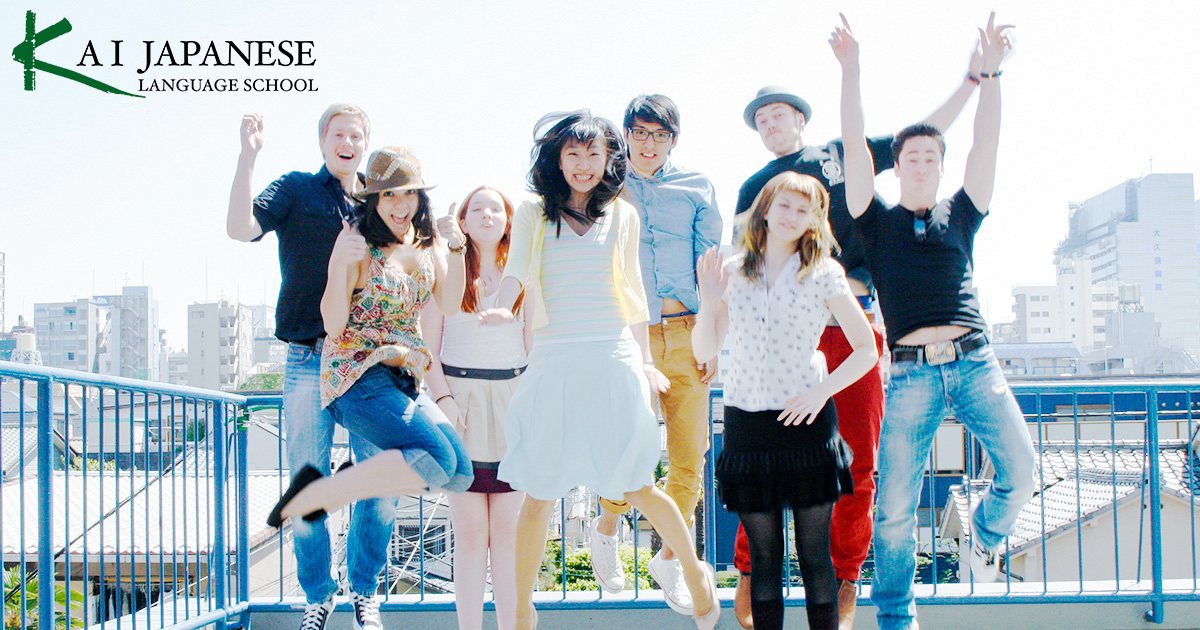
A school with no university-preparatory course, offering only a general course (the General Japanese Course) that balances speaking, listening, reading and writing. The school itself states that most of its students study for their own interests and purposes rather than to go on to further study (of the 121 who completed in FY2022, 5 went on to further study in Japan). Founded in 1987 in Okubo, Shinjuku-ku, 5 minutes on foot from JR Shin-Okubo Station, it has classes (up to 16 students) mixing students from more than 40 countries, mainly Europe and North America, who learn with iPads and the school's own digital materials. At the advanced level (Levels 7 and 8) there is the NBJ Business Japanese Program for finding work in Japan; of the 136 participants from 2017 to March 2026 who went job hunting, 116 received job offers.
Published data and school website
Tuition
⚠ The 2-year course fee differs depending on the source. Please confirm with the school. Published (Association for the Promotion of Japanese Language Education, updated July 2025): application fee 20,000 + admission fee 20,000 + tuition 1,580,000 + other 20,000 = ¥1,640,000 (2 years) · School fee table (2027): application fee ¥50,000, admission fee ¥50,000, 1-year tuition ¥1,040,000, KAI⋮DLS materials ¥40,000, health management fee ¥15,000 per year. The application fee and admission fee already differ — the published figures may be old prices, so please confirm with the school
If you saw a lower amount elsewhere, it may not include the admission fee and application fee
Median 1-year tuition in other areas — Kyoto ¥911,000(7 schools) · Kanagawa ¥880,000(8 schools) · Okinawa ¥858,000(6 schools) · Tokyo ¥840,600(56 schools) · Fukuoka ¥835,000(12 schools) · Hyogo ¥825,500(7 schools) · Osaka ¥814,000(27 schools) · Shizuoka ¥790,000(9 schools) · Chiba ¥745,333(10 schools) · Aichi ¥740,667(5 schools)
Cost details · course tables · notes · 7 items
- One-time fees
- ¥1,195,000Application fee ¥50,000 · Admission fee ¥50,000 · 4 terms (1 year) ¥1,040,000 · Materials KAI⋮DLS ¥40,000 · Health management fee (insurance for international students, health checkup) ¥15,000
According to the school guide, one year's fees are paid in one lump sum at enrollment. SALLAE will check with the school whether you can pay in installments.
The 2027 fee table does not mention tax; the 2026 PDF fee table says 'Fees are in Japanese yen, tax included.' 2026: 1-year tuition ¥960,000, application fee ¥30,000.
The fee table is based on lump-sum payment per period (6 months, 9 months, 1 year). Only student visa holders pay the application fee and health management fee separately.
The period you can be enrolled on a student visa is in principle a minimum of 1 year and a maximum of 2 years.
2027 totals: 9 months (3 terms) ¥875,000, 6 months (2 terms) ¥610,000, 3 months (1 term) ¥340,000.
The health management fee (student insurance and health checkup), required only for student visa holders, is ¥15,000 per year.
Students in the General Course need an iPad for lessons. It must be a model released in 2021 or later with at least 64 GB; rentals (¥48,000 per year) are limited in number.
Transportation and admission fees needed for extracurricular classes are paid by the student each time.
Short-term 3 months is ¥340,000 separately (admission fee ¥50,000 · tuition ¥280,000 · KAI⋮DLS materials ¥10,000).
School website · 2026-07-28 updated
Whether it is refundable
- If you cancel after submitting the visa application documents
- The visa application fee is not refunded, whether or not the Certificate of Eligibility is issued.
- If you cancel after the Immigration Services Agency issues the Certificate of Eligibility but before paying tuition
- The visa application fee is not refunded.
- If you cancel after the Immigration Services Agency issues the Certificate of Eligibility and after paying tuition, but before classes start
- The visa application fee and admission fee are not refunded. Tuition is refunded in exchange for the Certificate of Eligibility and the letter of admission.
- If you decline enrollment after obtaining an entry visa at an embassy or similar, before coming to Japan
- The visa application fee and admission fee are not refunded. Tuition is refunded in exchange for the letter of admission once school staff confirm that the entry visa has not been used.
See refund policy in detail · 3 more lines
- If the Japanese embassy or consulate refuses to issue the visa
- The visa application fee and admission fee are not refunded. Tuition is refunded in full if school staff confirm that the visa was refused.
- If you cancel after classes have started
- The visa application fee and admission fee are not refunded, and one term's tuition is charged as a cancellation fee. Tuition for terms that have not started at the time written notice is received is refunded.
- If you defer enrolment
- Tuition already paid can be transferred only to that student's own classes.
Admission & dates
- Jan intake
- · Application Late July of the previous year · Classes 200 periods per term
- Apr intake
- · Application Late September of the previous year · Classes 200 periods per term
- Jul intake
- · Application late January · Classes 200 periods per term
- Oct intake
- · Application late April · Classes 200 periods per term
- Japanese level
- To apply for a student visa, you must show that you have studied Japanese and prove ability equivalent to A1 of the Japanese Language Education Reference Framework.
'Prepare for study in Japan! 150 hours of Japanese' (8 months, ¥80,000 including tax) teaches A1-equivalent content. There is a class for first-time learners. If no visa is needed and you have not studied Japanese, no level check is required
Deadline and capacity rules
Applications to the school for a student visa are due in late July of the previous year for the winter term, late September of the previous year for the spring term, late January for the summer term and late April for the autumn term. Deadlines for applicants who do not need a student visa are early November of the previous year for the winter term, early February for the spring term, early May for the summer term and early August for the autumn term. Applications close as soon as capacity is reached. Applicants must be 18 or older and have graduated from high school or have equivalent education. Those who plan to continue their studies in Japan should choose a period that ends in March (or October).
School website · 2026-07-30 updated
Classes
- Morning
- 09:15-12:45
- Afternoon
- 13:30-17:00
- AM/PM placement
- You cannot choose between morning and afternoon classes.
- Class size
- Max 16 students
- Class assignment
- Level-based 8 stages
- Elective classes
- Job-hunting preparation A · Functional business Japanese (phone and email) · BJT preparation · Problem finding and solving · Job-hunting preparation B · Functional business Japanese (conversation) · Honorific language training · Explaining and persuading · Business vocabulary and expressions · NBJ is taken at Levels 7 and 8 and requires advanced-level Japanese or N2-equivalent ability. General Japanese classes must also be taken to complete it.
Materials · Subjects · Timetable · Details
- Materials
- KAI's original materials are provided in iBooks, and commercial textbooks and handouts are also used. The iPad must be a model released in 2021 or later with at least 64 GB; rental is available.
One term is 10 weeks (50 days), 5 days a week, 45 minutes per period, 200 periods in total. About 15 students per class, and the only common language is Japanese.
What each level aims for · 3 levels
- Beginner Levels 1–2
- At the beginner level, students firmly master basic grammar and sentence patterns and thoroughly understand how Japanese is put together.
- Intermediate Levels 3–5
- From 6 months on, the focus is on acquiring communication skills, learning variety of expression and building application ability. 1,000 kanji.
- Advanced Levels 6–8
- From 1 year on, students aim for logical Japanese ability and advanced communication skills, and electives are introduced. Preparation for specialized study, 2,000 kanji.
School website · Updated 2026-07-27
Documents to prepare — student visa course
- Submit the original diploma from your last school, or a newly issued certificate of graduation.
- Proof of Japanese study history includes a certificate from a language school or university (stating the study period and number of hours) or a Japanese Language Proficiency Test pass certificate.
Financial supporter's documents · only if applicable · 8 application requirements
Submitted by the person paying the tuition (financial sponsor)
- The statement of financial support is written by the person who pays the study costs. Applicants who pay for themselves do not need to fill it in.
- A bank balance of about ¥2.5 million is required if you plan to study for 1 year, or about ¥5 million for 2 years.
- Proof of occupation and incomeIf you have no documents from your employer, a tax payment certificate showing annual income is also acceptable
Only if applicable
- A high school diploma (certificate) and a university certificate of enrollment are required. (If currently enrolled at a university)
Application requirements
Issued within 5 months of the school's deadline. If a document is in a language other than English, attach a Japanese or English translation. Do not leave any blanks (write 'none' if not applicable); make corrections with a double line, and do not use correction fluid. Mistakes, omissions and corrections may be judged to be forgery. If there is an error in a name, date of birth or amount, a new certificate must be sent. If your entry history is not filled in correctly, the visa application will be refused. Originals are returned after being shown to Immigration, but newly issued certificates of graduation are not returned. If the sponsor lives in Japan, an after-tax annual income (take-home) of around ¥8 million is a guideline. The examination looks at whether the household can bear the extra study costs (about ¥2 million per year). If a foreign resident of Japan is to be the sponsor, they must have a close relationship with the applicant and be recognized as having lived a stable life in Japan for a long time.
The website lists only the documents shown in the FAQ — the full list of student visa documents and the criteria for Korean applicants have not been published. SALLAE is confirming this with the school.
For short-term courses, only the following are submitted: application form · photo data · copy of passport (ID page).
School website · 2021-07-21 updated
Admission process
- Request an admission consultation — Replies are in Japanese or English. We usually reply within 1–2 business days.
- Admission consultation and screening — Applications may be declined depending on the applicant's financial situation, educational background and so on. To help decide, we may ask for an online interview attended by the sponsor.
- From the end of the school's screening to receipt of the application documents and submission to Immigration — The school receives the application documents and submits them to Immigration. The application fee is paid when the documents are submitted to the school
- Results notice (CoE issued) — After the result is announced, the school notifies you of the result and sends the full set of documents. The admission fee and tuition are paid when the Certificate of Eligibility is issued
- Level check test — An online test and an interview test over Zoom.
- Visa application — Apply for the visa at the Japanese embassy or consulate
- Entry into Japan — Please arrive in Japan about 1 week before classes start.
- Orientation — Held the day before classes start.
- Classes start
- Placement test
- The level check is an online test and a Zoom interview. Not needed if you have never studied Japanese (when no visa is required). Class observation is free (for those enrolling from within Japan)
- After entry
- Hatake, an LMS developed by KAI, is used to manage teaching materials, homework submission and posts from instructors. All students in the General Japanese Course use an iPad (their own or a rental).
School website · 2026-07-30 updated
Short-term study
- Visa
- Temporary visitor or Working holiday(not a student visa)
- Duration
- 3 months – 6 months
- Open now?
- Rolling admissions, so availability varies from time to time — SALLAE will confirm with the school
Course without a student visa
- Private lessons — Weekdays 9:00–20:30, 1–2 students. Tuition is charged per 45 minutes. Content, pace, textbook, time of day and location can be arranged on request, and key points can be explained in English
- Summer course — 2 weeks (Aug 3–Aug 14) or 3 weeks (Aug 3–Aug 21). Morning classes, with activities in the afternoon. Beginner to intermediate, ages 15 and over (under 18s must be accompanied by a parent or guardian to and from school)
- Online JLPT preparation — The practical classes (N1 and N2) meet twice a week for 15 sessions in total, covering grammar and reading. The N2 foundation class starts 6 months before the exam. Non-students can also enroll
- Online kanji class — Join the kanji classes of Levels 1–3 of the General Course online. The schedule is currently being arranged.
- Prepare for study in Japan! 150 hours of Japanese — Learn the A1-equivalent Japanese needed for a student visa application through videos. The course period is 8 months, and a certificate of attendance is issued on completion.
- Business Japanese training for companies — Programs are designed to a company's needs, and lessons at the company's office are also possible on request.
- Practical conversation course — The Practical Conversation Course has been temporarily suspended since March 17, 2023.
★Short-term courses are not listed in the published data — it counts only student-visa courses.
School website · Updated 2026-07-27
Graduate outcomes
| FY2022 | Admitted |
|---|---|
| Employment | 28 students |
| Graduates | 121 students |
FY2022 completers 121, persons meeting the standard 33 (progression 5, status change 28). Item 44 report prepared Sep 29, 2023. · Persons permitted to change status of residence: 28 (Item 44 report, FY2022 completers). · School website · Updated Sep 29, 2023
Reviews 10
External reviewAuto-translatedPersonal review · Google review · Oct 2025
I attended for one semester starting from beginner level in 2022, and couldn't continue because of work. I've since attended other schools too, so now I can compare. This school is really good because it's so well structured. Kanji, grammar, speaking, reading, and listening are evenly spread across the week, and the classes balance strictness with communication practice. Student communication, schedules, and materials are also friendly and well organized. All the teachers I met were very professional.
The slightly hard part was that the textbooks were on iPad. I like taking notes by hand. Still, they gave us practice sheets and booklets on paper. They checked the homework they assigned carefully and returned it, so my skills improved faster. This school didn't grade homework during class time. I later found out some language schools do grade in class, and I disliked that because it takes away time students could be learning.
Overall, I recommend this school for beginner learners. I haven't attended other levels, so I'm not sure about them.2022년에 초급부터 한 학기 다녔고, 일 때문에 더 이어 가지는 못했어요. 그 뒤로 다른 학교도 다녀 봐서 이제 비교할 수 있어요. 이 학교는 체계가 잡혀 있어서 정말 좋아요. 한자·문법·말하기·읽기·듣기가 한 주 안에 고루 나뉘어 있고, 엄격함과 소통 연습이 균형 잡힌 수업이에요. 학생 연락, 시간표, 자료도 친절하고 잘 정리돼 있어요. 제가 만난 선생님들은 모두 아주 전문적이었어요.
조금 힘들었던 건 교재가 아이패드로 돼 있었던 점이에요. 저는 손으로 필기하는 게 좋거든요. 그래도 연습지와 소책자는 종이로 줬어요. 내 준 과제는 꼼꼼히 verified해서 돌려줘서 실력이 더 빨리 늘었어요. 이 학교는 과제 채점을 수업 시간에 하지 않았어요. 나중에 알고 보니 수업 시간에 채점하는 어학교도 있던데, 학생이 배울 시간을 빼앗아서 저는 그게 싫었어요.
전체적으로 초급 학습자에게 이 학교를 추천해요. 다른 레벨은 다녀 보지 않아서 잘 모르겠어요.External reviewAuto-translatedPersonal review · Google review · Aug 2025
It's a very good school. The teachers are very expressive and kind. I took a 2-week summer course and learned a lot. I really recommend it!
아주 좋은 학교예요. 선생님들이 표현력이 풍부하고 다정해요. 2주짜리 여름 과정을 들었는데 많이 배웠어요. 진심으로 추천해요!
External reviewAuto-translatedPersonal review · Google review · Aug 2025
I took the summer 2025 Japanese course (grammar and conversation). The learning program was excellent, practical and well structured. The teachers explained grammar and various topics with wit and drew students into conversation, which later proved useful in everyday life. Above all, the school atmosphere was friendly, supportive and fun. I had a wonderful adventure in Tokyo.
2025년 여름 일본어 과정(문법·회화)을 들었어요. 학습 프로그램이 아주 훌륭했고, 실용적이고 구성도 잘 돼 있었어요. 선생님들이 문법과 여러 주제를 재치 있게 설명하고 학생들을 대화에 끌어들였는데, 그게 나중에 일상생활에서 쓸모가 있었어요. 무엇보다 학교 분위기가 다정하고 서로 돕고 재미있었어요. 도쿄에서 멋진 모험을 했어요.
External reviewAuto-translatedPersonal review · Google review · Jan 2025
The classes were good. Whenever I needed help, the teachers and staff always helped quickly. The reception desk always solved the problems I had pretty quickly. Overall, I had a great time at this language school.
수업이 좋았어요. 도움이 필요할 때마다 선생님과 직원들이 늘 빨리 도와줘요. 접수 창구는 제가 겪은 문제를 늘 꽤 빨리 해결해 줬어요. 전체적으로 이 어학교에서 즐거운 시간을 보냈어요.
External reviewAuto-translatedPersonal review · Google review · Jul 2024
I graduated in July 2000 and went back after a whole 25 years! The principal and the teachers welcomed me warmly, and we talked about those days and got lost in memories. They even prepared a 20th anniversary photo book for me. I wonder if the friends I studied with are all doing well.
The teachers are passionate and the curriculum is well designed. Above all, it's a prestigious school in Shin-Okubo with a 38-year tradition.2000년 7월에 졸업하고 무려 25년 만에 다시 가 봤어요! 교장 선생님과 선생님이 반갑게 맞아 주셔서 그때 이야기를 나누며 추억에 빠졌어요. 20주년 기념 포토북도 챙겨 주셨어요. 같이 공부했던 친구들도 다들 잘 지내는지 궁금하네요.
선생님들이 열정적이고 커리큘럼이 잘 짜여 있어요. 무엇보다 38년 전통의 신오쿠보 명문 학교예요.External reviewAuto-translatedPersonal review · Google review · Dec 2023
I really highly recommend this school.
Most of the teachers are great, and the teaching materials are very well made, both on iPad and on paper. I think most of the students who attend are good people too.
There was a time during my studies when I had a bit of a difficult experience with the administrative office, but overall I got along very well.
If you want to learn Japanese, don't hesitate to enroll, and I recommend filling in what you've learned by talking with native speakers outside of class.이 학교를 정말 강력히 추천해요.
선생님들은 대부분 훌륭하고, 교재도 아이패드와 종이로 아주 잘 만들어져 있어요. 다니는 학생들도 대부분 좋은 사람들이라고 생각해요.
다니는 동안 한때 사무 쪽과 조금 힘든 일이 있었지만, 전체적으로는 아주 잘 지냈어요.
일본어를 배우고 싶다면 망설이지 말고 등록하고, 수업 밖에서 원어민과 대화하면서 배운 걸 채우길 추천해요.External reviewAuto-translatedPersonal review · Google review · Nov 2022
I took a conversation course at this school. There were very few students in the class, so I got lots of chances to practice, and I also had time to talk with my classmates, which made it a great experience.
Even though it was a conversation class, the teacher very carefully assigned review homework every day. There was also a small quiz every week to check whether I was keeping up with the material. At the end of the course, there was a short presentation to see whether my level was good enough.
If I get the chance, I'd like to come back and study Japanese again! The staff are also kind.이 학교에서 회화 과정을 들었어요. 반에 학생이 아주 적어서 연습할 기회가 많았고, 반 친구들과 이야기할 여유도 있어서 좋은 경험이었어요.
회화 수업인데도 선생님이 아주 세심하게 매일 복습 숙제를 내 줬어요. 내용을 잘 따라가고 있는지 매주 작은 시험도 있었어요. 과정이 끝날 때는 수준이 괜찮은지 보는 짧은 발표가 있었어요.
기회가 되면 다시 와서 일본어를 공부하고 싶어요! 직원분들도 다정해요.External reviewAuto-translatedPersonal review · Google review · Aug 2019
It was a very fulfilling three weeks. I learned a lot, and the atmosphere was really stimulating. The lessons are rich and varied every day. I took the summer conversation course, and even in a short period of 3 weeks, my speaking became much smoother.
아주 알찬 3주였어요. 정말 많이 배웠고 분위기도 자극이 많이 됐어요. 매일 수업 내용이 풍부하고 다양해요. 여름 회화 과정을 들었는데, 3주라는 짧은 기간에도 말하는 게 한결 매끄러워졌어요.
External reviews are public posts that SALLAE collected and rewrote in the writer’s own voice. SALLAE keeps the original links.
University prep
- NBJ Business Japanese Program — NBJ covers job-hunting prep, phone and email, keigo, BJT preparation and more. 116 of 136 job seekers (85.3%) received job offers.
- Job-hunting support in Japan — Students who want to work in Japan can receive job-hunting support free of charge.
- BJT Business Japanese Proficiency Test — In the BJT preparation class within NBJ (2.5 months, about 30 hours), students can expect to improve by about 60–80 points (not guaranteed).
School website · 2026-06-02 updated
Daily-life support
- Insurance — Students on a study visa must enroll in both National Health Insurance (covers 70% of medical costs, about ¥1,500 per month) and Japanese-language student insurance (¥10,000 per year).
- Health checkup — Whether a health checkup is given as early as possible after enrollment and once every year thereafter.
- Housing — The school arranges homestays, share houses, economy hotels and weekly apartments. The arrangement fee is ¥20,000.
- Airport pickup — A pickup service on arrival at Narita Airport can also be arranged.
- Student volunteer program — Paid volunteer work includes pickup service, accompanying activities and translation support; unpaid volunteer work includes planning activities (with a budget).
- Counseling — If you have a complaint, first talk to your homeroom teacher or the reception staff. Staff who speak Japanese and English are always available.
- About visas — If you want a student visa, the school submits the required documents (proof of educational background and finances, etc.) to Immigration.
- How much are living costs per month? — Transport costs average ¥500–1,000 per day within one hour of the school, and lunch at a casual restaurant averages about ¥500–1,000 per meal.
School website · 2026-04-21 updated
Scholarship
- Learning incentive grant
- ¥50,000 Once3–4 students each term. Must hold a student visa for the past 3 months and meet 5 conditions, including an attendance rate of 90% or more since enrollment. Selected by interview and essay; ¥50,000 per term.
- Program to Promote Acceptance of International Students (MEXT learning incentive for international students)
- Monthly ¥48,000 × 1 yearApplications: April–May. Attendance rate of 90% or more (since enrollment), planning to go on to a university, graduate school or vocational school. Student visa holders with excellent grades. Selection: after screening within the school, applications are submitted with the school's recommendation. ¥30,000 per month for 12 months
- Non-profit organization LSH Asia Scholarship Foundation (Lee Su-hyun Scholarship)
- ¥100,000 OnceApplications are accepted April–July. For student visa holders from Asia who plan to be enrolled from April through December of the same year, with an attendance rate of 90% or more. Applications are submitted with the school's recommendation after screening within the school. ¥100,000.
- Honors Scholarship for Privately Financed International Students (reservation system)
- You can apply with the school's recommendation. See the Japan Student Services Organization (JASSO) website for details.
- Scholarship student program
- ¥200,000 Once Tuition is waived in full (¥200,000) down to one fifth (¥40,000) in exchange for work such as website creation or design, or for planning projects that contribute to the school. Minimum 1 term. Requires enrollment on a student visa and professional experience
School website · 2024-05-09 updated
Students
138 enrolled (2025) · Capacity 280 National median: 180 students
Based on the 138 students enrolled in 2025.
Public data from the Association for the Promotion of Japanese Language Education (Nisshinkyo) · verified 2026-09-20
School life
For 1 year
- 1
- Orientation (8th) · Thu 21: evacuation drill · Native-language exchange meeting: Jan 23 (Fri)
- 2
- Midterm exam: Feb 16 (Mon) · Kanji contest (25th)
- 3
- Speech contest: Mar 6 (Fri) · Final exam: Mar 23 (Mon) · Interview (25th)
- 4
- Orientation (6th) · Evacuation drill: Apr 16 (Thu) · Native-language exchange meeting: Apr 22 (Wed)
- 5
- Midterm exam: May 18 (Mon) · Kanji contest (25th)
- 6
- Final exam: Jun 17 (Wed) · Open class: Jun 18 (Thu) · Interview: Jun 19 (Fri) · Orientation: Jun 30 (Tue)
- 7
- Evacuation drill: Jul 13 (Mon) · Native-language exchange meeting: Jul 17 (Fri) · Party: Jul 31 (Fri)
- 8
- Summer vacation (Aug 1–16) · Midterm exam: Wednesday, August 19 · Kanji contest: Aug 26 (Wed)
- 9
- Final exams: Sep 18 · Interview (25th)
- 10
- Orientation (6th) · The evacuation drill and the native-language exchange meeting are both on Oct 21 (Wed).
- 11
- Midterm exam: Nov 13 (Fri) · Kanji contest: Nov 20 (Fri)
- 12
- Final exams: Dec 16 · The interview for the next level and the party are both on Dec 18 (Fri).
Based on the 2026 General Japanese Course calendar · Dates may change · Transportation and admission fees for extracurricular classes are paid by the student each time
- Every week there is a session to experience traditional Japanese culture (tea ceremony, calligraphy, etc.).
- Visitor sessions with ordinary Japanese people are held, such as free talk, leaders' talk, writing supporters and discussions.
- School-organized activities (izakaya party, bowling, outings, etc.)
- Each term the schedule includes native-language exchange meetings and a kanji contest (2026 calendar).
On campus
- All classrooms
- Digital board — Introduced in April 2021
- On campus
- Wi-Fi and student PCs
- Online
- Online library
2026–2027 academic calendar
- Saturdays, Sundays and national holidays
- Every week and public holidays · Jul 20 is a national holiday, but classes are held.
- New Year break
- Jan 1–7 · Orientation is on Jan 8 (Thu); the winter term starts on Jan 9 (Fri).
- Spring break
- Mar 26–Apr 5 · Orientation is on Apr 6 (Mon); the spring term starts on Apr 7 (Tue).
- Break before the summer term
- Jun 20–29 · Orientation is on Jun 30 (Tue); the summer term starts on Jul 1 (Wed).
- Summer vacation
- Aug 1–16 · Mid summer term
- Autumn break
- Sep 26–Oct 5 · Orientation is on Oct 6 (Tue); the autumn term starts on Oct 7 (Wed).
- Winter break
- From Dec 19 · The winter term of 2027 starts on Jan 13 (Wed), 2027.
School website · Confirmed 2026-09-26
Access
- Transit
- JR Yamanote Line Shin-Okubo Station, 5 min walk
- Nearby
- The address is Miyuki Building 3F, 1-15-18 Okubo, Shinjuku-ku, Tokyo 169-0072. Directions from JR Shin-Okubo Station are provided.
- Dormitory
- Available · Share houses from ¥36,000 per month; homestays ¥5,390 per night with 2 meals. About 30 minutes or so to the school. · Based on school website
School website · 2023-07-13 updated
Dorm — Arrangement fee ¥20,000. Apply at least 2 weeks before arriving in Japan; the deposit and arrangement fee must be transferred at least 1 week before. No refund after confirmation
School website · 2022-06-09 updated
SALLAE has organized the school website and published data in English.
The update date is the day that material was last revised.
Photos are materials published by the school.
This information is compiled from official sources and is not updated daily. Please confirm with the official contact before signing or applying.