Kaichi Kokusai Daigaku
開智国際大学
11 days leftApply by 12/8 → exam on 12/12 · Designated School Recommendation Exam, Round II
- Exam location
- Campus in Japan ›
- Japanese requirement
- EJU Japanese 250+ (out of 450) ›
- First-year fees
- from ¥1,285,000 ›
Compare with other universities →
Fees and conditions can change over time. Always check the school's guidelines before you apply.
Fees and conditions can change over time.
About the school
A private university founded in 2000. It has 891 students, including 265 international students. There are 38 faculty members.
History · 6
- 1905
- Nihonbashi Jogakkan was founded (now Kaichi Nihonbashi Gakuen Junior and Senior High School).
- 1987
- Nihonbashi Jogakkan Junior College was founded.
- 2000
- Reorganized the junior college as Nihonbashi Gakkan University.
- 2009
- Reorganized the Faculty of Humanities and Management into a Faculty of Liberal Arts.
- 2015
- Renamed Nihonbashi Gakkan University as Kaichi Kokusai Daigaku.
- 2017
- Opened the Faculty and Department of Education and developed the Faculty of Liberal Arts into the Faculty and Department of International Liberal Arts.
大学ポートレート(私学版) 開智国際大学 学生情報 · 開智国際大学 教育情報の公表 在学者数・外国人留学生数・卒業者数・就職者数・進学者数(令和8年5月1日現在) · 大学
Admission requirements and dates
Kaichi Kokusai Daigaku admits international students through 2 routes.Pick your situation below to see only the routes that fit · Based on the guidelines for April 2027 entry
EJUThe exam Japanese universities use for international student admission · June and November · also held outside Japan = Examination for Japanese University Admission · JLPTJapanese-Language Proficiency Test · N1 is the highest, then N2 = Japanese-Language Proficiency Test
Designated School Recommendation Admission
Official name: 指定校推薦入試
For students at a designated Japanese-language school. Selection uses a Japanese interview and documents; submit an 800-1,000-character essay in advance.
Accepting applications now · until 12/8
Round II: apply November 16-December 8; interview December 12.
- Apply 11/16~12/811 days left
- →
- Exam 12/12
- →
- Results 12/16
- →
- Admission fee ~12/22
- →
- Rest of fees ~10/1
Enrollment deadline: December 22, 2026. Pay first-semester fees at enrollment and second-semester fees by October 1 of year 1. Fees depend on the round and scholarship result; see the fee table. If payment is not confirmed by the deadline, you lose your place.
EJU subjects · EJU Japanese only, with at least 250 points including writing. No other EJU subjects are specified.
Other requirements · The guide says applicants must meet all listed conditions: (1) be able to obtain Student residence status after acceptance, or acceptance will be canceled; (2) make this university their first choice and enroll if accepted; (3) complete schooling abroad equal in length to Japanese elementary through high school and handle classes in Japanese (shorter than 12 years may count with official proof of equivalence); (4) pass the university review for high-school-level ability; (5) graduate or expect to graduate by March 31, 2027 from a Japanese vocational school, Japanese-language program, junior college, or 4-year university and handle classes in Japanese (research-student programs alone do not count); and (6) have the stated Japanese-language proof when applying. The guide does not explain how conditions (3) and (4) relate.
Round I: apply September 1-25; interview October 3.
- Apply 9/1~9/25
- →
- Exam 10/3
- →
- Results 11/2
- →
- Admission fee ~11/11
- →
- Rest of fees ~10/1308 days left
Enrollment deadline: November 11, 2026. Pay first-semester fees at enrollment and second-semester fees by October 1 of year 1. Fees depend on the round and scholarship result; see the fee table. If payment is not confirmed by the deadline, you lose your place.
EJU subjects · EJU Japanese only, with at least 250 points including writing. No other EJU subjects are specified.
Other requirements · The guide says applicants must meet all listed conditions: (1) be able to obtain Student residence status after acceptance, or acceptance will be canceled; (2) make this university their first choice and enroll if accepted; (3) complete schooling abroad equal in length to Japanese elementary through high school and handle classes in Japanese (shorter than 12 years may count with official proof of equivalence); (4) pass the university review for high-school-level ability; (5) graduate or expect to graduate by March 31, 2027 from a Japanese vocational school, Japanese-language program, junior college, or 4-year university and handle classes in Japanese (research-student programs alone do not count); and (6) have the stated Japanese-language proof when applying. The guide does not explain how conditions (3) and (4) relate.
International student exam
Official name: 外国人
For applicants from Japanese-language schools and similar programs. Selection uses a Japanese essay and interview. You may also take an English Essay. Email the university if you want to test from overseas.
Accepting applications now · until 12/8
Round II: apply November 16-December 8; test December 12.
- Apply 11/16~12/811 days left
- →
- Exam 12/12
- →
- Results 12/16
- →
- Admission fee ~12/22
- →
- Rest of fees ~10/1
Enrollment deadline: December 22, 2026. Pay first-semester fees at enrollment and second-semester fees by October 1 of year 1. Fees depend on the round and scholarship result; see the fee table. If payment is not confirmed by the deadline, you lose your place.
EJU subjects · EJU Japanese only, with at least 250 points including writing. No other EJU subjects are specified.
Other requirements · The guide says applicants must meet all listed conditions: (1) be able to obtain Student residence status after acceptance, or acceptance will be canceled; (2) make this university their first choice and enroll if accepted; (3) complete schooling abroad equal in length to Japanese elementary through high school and handle classes in Japanese (shorter than 12 years may count with official proof of equivalence); (4) pass the university review for high-school-level ability; (5) graduate or expect to graduate by March 31, 2027 from a Japanese vocational school, Japanese-language program, junior college, or 4-year university and handle classes in Japanese (research-student programs alone do not count); and (6) have the stated Japanese-language proof when applying. The guide does not explain how conditions (3) and (4) relate.
Round III: apply January 4-15; test January 23.
- Apply 1/4~1/15opens in 38 days
- →
- Exam 1/23
- →
- Results 1/26
- →
- Admission fee ~2/3
- →
- Rest of fees ~10/1
Enrollment deadline: February 3, 2027. Pay first-semester fees at enrollment and second-semester fees by October 1 of year 1. Fees depend on the round and scholarship result; see the fee table. If payment is not confirmed by the deadline, you lose your place.
EJU subjects · EJU Japanese only, with at least 250 points including writing. No other EJU subjects are specified.
Other requirements · The guide says applicants must meet all listed conditions: (1) be able to obtain Student residence status after acceptance, or acceptance will be canceled; (2) make this university their first choice and enroll if accepted; (3) complete schooling abroad equal in length to Japanese elementary through high school and handle classes in Japanese (shorter than 12 years may count with official proof of equivalence); (4) pass the university review for high-school-level ability; (5) graduate or expect to graduate by March 31, 2027 from a Japanese vocational school, Japanese-language program, junior college, or 4-year university and handle classes in Japanese (research-student programs alone do not count); and (6) have the stated Japanese-language proof when applying. The guide does not explain how conditions (3) and (4) relate.
Round I: apply September 1-October 9; test October 17.
- Apply 9/1~10/9
- →
- Exam 10/17
- →
- Results 11/2
- →
- Admission fee ~11/11
- →
- Rest of fees ~10/1308 days left
Enrollment deadline: November 11, 2026. Pay first-semester fees at enrollment and second-semester fees by October 1 of year 1. Fees depend on the round and scholarship result; see the fee table. If payment is not confirmed by the deadline, you lose your place.
EJU subjects · EJU Japanese only, with at least 250 points including writing. No other EJU subjects are specified.
Other requirements · The guide says applicants must meet all listed conditions: (1) be able to obtain Student residence status after acceptance, or acceptance will be canceled; (2) make this university their first choice and enroll if accepted; (3) complete schooling abroad equal in length to Japanese elementary through high school and handle classes in Japanese (shorter than 12 years may count with official proof of equivalence); (4) pass the university review for high-school-level ability; (5) graduate or expect to graduate by March 31, 2027 from a Japanese vocational school, Japanese-language program, junior college, or 4-year university and handle classes in Japanese (research-student programs alone do not count); and (6) have the stated Japanese-language proof when applying. The guide does not explain how conditions (3) and (4) relate.
Good to know before applying
- Both designated-school recommendation and international student admission require this university as your first choice. You cannot withdraw after acceptance. If payment is not confirmed by the enrollment deadline, you lose your place.
- The 2027 guide says the university is seeking approval to integrate following a change in the operator of Tokyo University of Social Welfare. If approved, it plans to change its name to Kaichi University in April 2027. The plan may change; check the latest information before applying.
- The guide lists all eligibility conditions: Student residence status after acceptance; this university as first choice; schooling abroad equivalent to Japanese elementary through high school and ability to study in Japanese; a university review finding high-school-level ability; graduation or expected graduation by March 31, 2027 from a Japanese vocational school, language school, junior college, or 4-year university and ability to study in Japanese; and specified Japanese proof such as JLPT N2 or an N2-equivalent recommendation. Ask the Admissions Center if the relationship between these conditions is unclear.
- The international admissions page asks applicants who want to test from overseas to email admission@kaichi.ac.jp. Documents also include a residence record, residence card copy, and tax certificate.
- Capacities combine Japanese and international students: 90 in International Liberal Arts, 70 in Elementary Education, and 60 in Secondary Education (English). No separate international quota is stated. If Round I fills places, Round II or later international rounds may not be held.
- Apply through the international student site, pay ¥3,000 plus a payment charge per attempt, and mail documents by simplified registered mail to arrive by the last day. Incomplete or false documents prevent testing. Accepted documents and fees are not returned. You cannot leave campus until the test ends, and arrival more than 20 minutes after the start disqualifies you.
- As of May 1, 2026, 265 of 891 undergraduates were international students (107 men, 158 women), including 115 from Vietnam, 39 Sri Lanka, 35 Nepal, 28 Myanmar, 17 Mongolia, and 16 China.
開智国際大学 2027年度 募集要項 外国人
Fees
- First-year fees
- ¥1,285,000 ~ ¥1,390,000
- Paid at enrollment
- from ¥772,500
- Application fee
- ¥3,000
- Full fees include a ¥260,000 enrollment fee, ¥490,000 tuition per semester, and facilities fees of ¥75,000 per semester for International Liberal Arts or ¥22,500 for Education.
- Full first-year totals are ¥1,390,000 and ¥1,285,000, respectively; 4-year totals are ¥4,780,000 and ¥4,360,000, excluding books.
- Actual fees depend on round and scholarship.
- Category I (like S4, for designated-school Round I and II and international admission Round I): first year ¥780,000 for International Liberal Arts (¥450,000 at enrollment and ¥330,000 by October 1) or ¥800,000 for Education; 4 years ¥3,450,000 or ¥3,200,000.
- Category II (like S5, for scholarship winners in international admission Round II): first year ¥1,160,000 for International Liberal Arts (¥595,000 at enrollment and ¥565,000 by October 1) or ¥1,000,000 for Education; 4 years ¥4,160,000 or ¥3,700,000.
- Round II without a scholarship and Round III pay full fees.
- JLPT N1 holders may receive S3: ¥700,000 in year 1 for International Liberal Arts and ¥350,000 per semester in years 2-4.
- Extra fees include accident insurance ¥3,300, supporters association ¥20,000, student association ¥7,000 (¥20,000 in year 4), alumni fee, career support fee, Japanese study support ¥100, and a laptop.
Places and fees by department 3
| Department | Places | First-year fees (¥) | |
|---|---|---|---|
| Faculty of International Liberal Arts | |||
| Department of International Liberal Arts | 90 | ¥1,390,000after reduction 780,000 | |
| Faculty of Education | |||
| Department of Education, Elementary Education major | 70 | ¥1,285,000after reduction 800,000 | |
| Department of Education, Secondary Education (English) major | 60 | ¥1,285,000after reduction 800,000 | |
Places are the total across all international student admissions. Fees are for 2027 entry.
For 2027 entry · from the school's guidelines
Documents to prepare
Printed online application; education history form from elementary school; sealed applicant evaluation by your current school; original attendance and transcript from Japanese-language school issued within 1 month and calculated by class hours; copies of final graduation certificate and transcript from your home country with Japanese translations; residence record issued within 3 months; tax certificate; financial ability form completed in Japanese; both sides of residence card; passport copy; and qualifying Japanese score certificate or university N2-equivalent recommendation form. Designated-school applicants also submit a principal recommendation and advance essay of 800-1,000 characters.
Graduate outcomes
- Official data does not separate international student employment.
- University figures as of May 1, 2026 show 110 graduates, 96 seeking work, 92 employed (95.8%), and 1 continuing study.
- University Portrait reports 77 in regular employment or self-employment and 1 continuing study among 110 graduates from April 2025-March 2026.
University Portraits · figures for all students (not international students only)
Reviews from students
No reviews yet. If you attend or attended this school, please write the first one.
Write a review
Scholarships
- Scholarships for privately funded international students: Category I (like S4) and Category II (like S5). You must generally have at least 90% attendance by class hours at your current or former Japanese vocational or language school, and either average monthly support from home of ¥90,000 or less excluding tuition, or a supporter in Japan earning under ¥5,000,000 a year. Support may be canceled for very poor conduct, grades, or attendance, or false application documents.
- JLPT N1 holders receive the S3 scholarship. If you gain N1 after enrollment, submit a copy of your pass notice by March 12, 2027. In International Liberal Arts, the scholarship is ¥690,000 in year 1 (¥400,000 at enrollment and ¥300,000 by October 1), and fees are ¥350,000 per semester in years 2-4.
Student life support
No dorm information was found in the admissions guide or fee page. The International Student Center page lists real estate for international students.
Getting there
- Kashiwa Campus
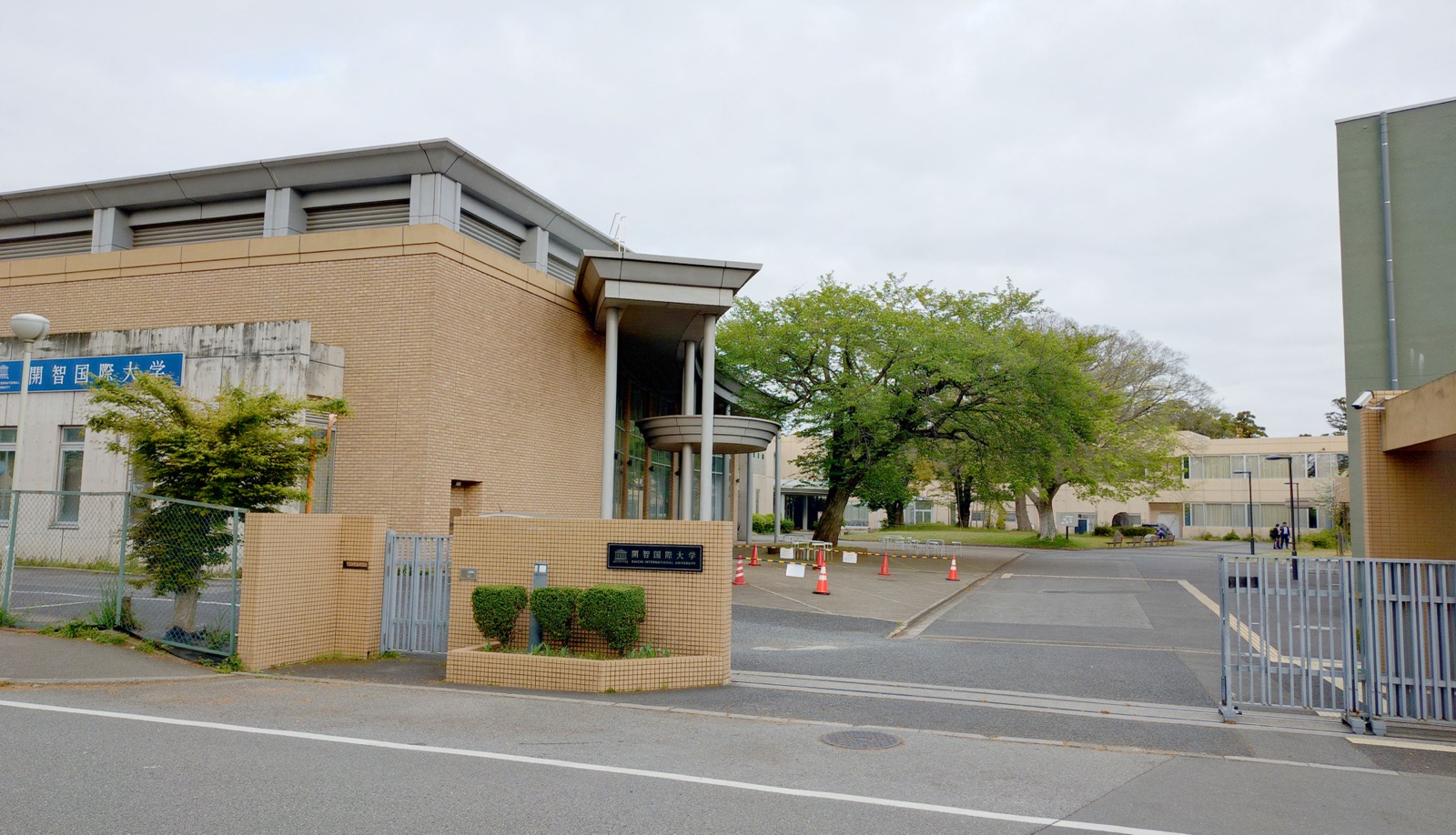
- About 20 minutes on foot from the east exit of Kashiwa Station on the JR Joban and Tobu Urban Park lines, or about 10 minutes by Bando bus toward Tobari to Kashiwa Gakuen-mae, then 3 minutes on foot. · Faculty of International Liberal Arts and Faculty of Education.
千葉県柏市柏1225-6
SALLAE compiled this from the school's admission guidelines and official sources (such as University Portraits).
Photo: Nyao148 · CC BY-SA 4.0 · Wikimedia Commons
This information is compiled from official sources and is not updated daily. Please confirm with the official contact before signing or applying.