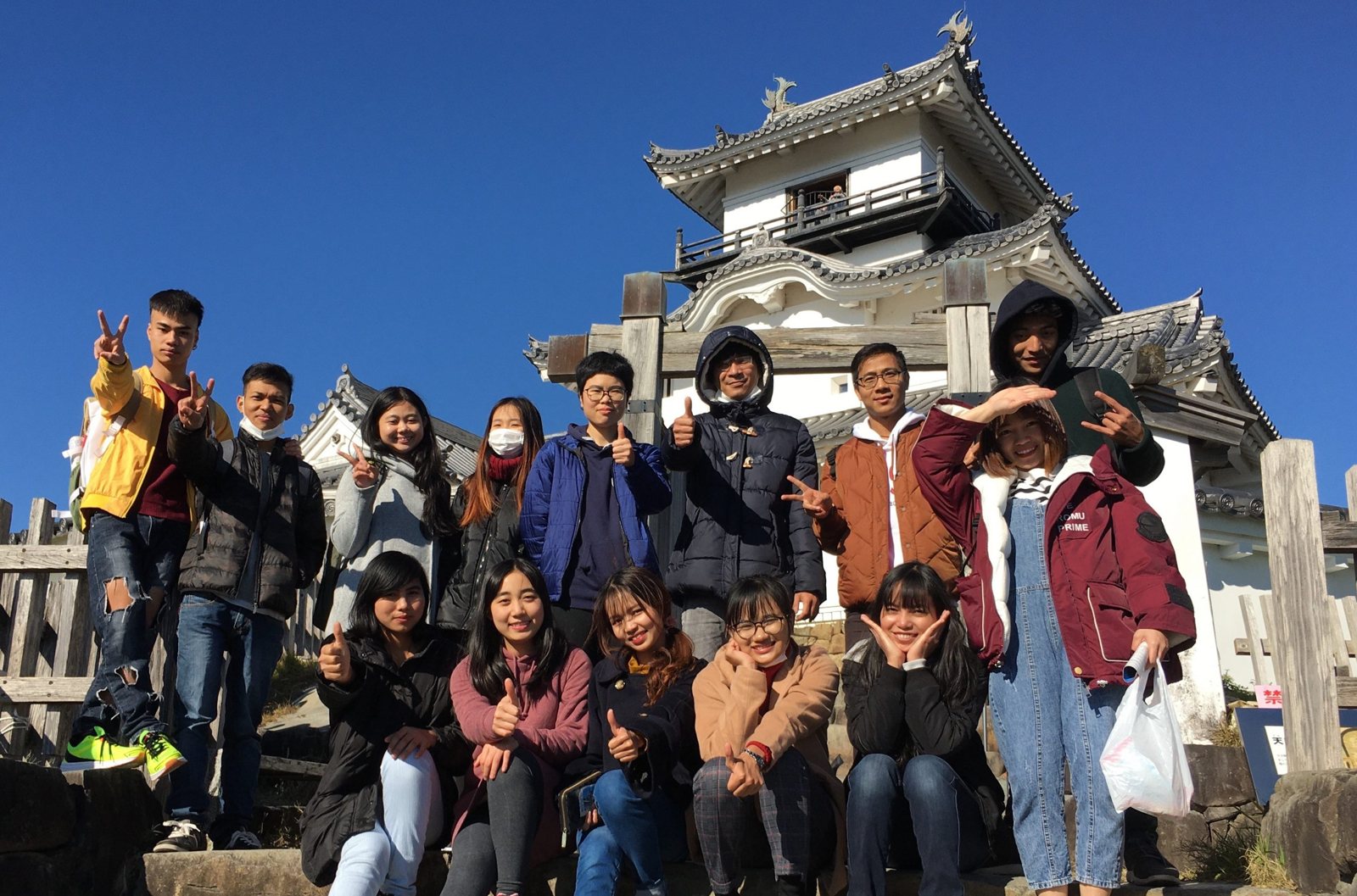
Kakegawa Japanese Language School
Kakegawa Japanese Language School
- Dormitory fee
- From ¥15,000 per month ›
- Tuition
- On the high side in Shizuoka ›
- Admission
- Twice a year · April and October ›
Compare side by side with other schools →
Tuition and conditions may change depending on the intake. If you contact us, we will check with the school and give you accurate details.
Nearby schools comparedBy distance · no ads or paid placement
- Kakegawa Japanese Language SchoolThis schoolTuition/yr¥894,000Progression—IntakesApr · Oct
- Shizuoka International Language Institute9.6km›Tuition/yr¥720,000Progression—IntakesApr · Oct
- TLS Fukuroi10.7km›Tuition/yr¥785,000Progression98%IntakesApr · Jul · Oct
- Serendip International School20.6km›Tuition/yr¥773,000Progression—IntakesApr · Oct
— means SALLAE has not yet found the data.
About the school
The April intake is the 2-year university-preparatory course, which aims at progression to Japanese universities, junior colleges and vocational schools; in the second year it continues with EJU and JLPT N2 preparation and progression preparation classes, making this a progression-oriented school. Its career page lists 7 universities and junior colleges and 44 vocational schools, with vocational schools making up most. A school with a capacity of 120, opened in 2018 and 6 minutes on foot from Kakegawa Station in Shizuoka, it reported in 2025 that its 94 enrolled students come from Nepal, Sri Lanka, Myanmar and the Philippines. Dormitories are apartments near the school: ¥22,000 per month for a single room and ¥15,000 per person for a 2-person room. The school cooperates with local companies to introduce part-time jobs and employment.
Published data and school website
Tuition
⚠ Total costs by course vary by source — please check with the school. Published by MEXT: 2-year university-preparatory course ¥1,340,000, 2-year general course ¥1,340,000 (application fee ¥20,000, admission fee ¥120,000, tuition ¥1,200,000) · School website, applies from October 1, 2023: admission fee ¥120,000, social activity fee ¥40,000, tuition ¥1,200,000 = total ¥1,360,000 (2-year university-preparatory and 2-year general) · School website: 2-year university-preparatory course total ¥1,494,000, 1 year 6 months university-preparatory course total ¥1,194,000 (including application fee, health checkup, comprehensive insurance and facility and equipment fee). The admissions guide is the most recent material. In the website table and the published materials, the October intake is the 2-year general course.
If you saw a lower amount elsewhere, it may not include the admission fee and application fee
Median 1-year tuition in other areas — Kyoto ¥911,000(7 schools) · Kanagawa ¥880,000(8 schools) · Okinawa ¥858,000(6 schools) · Tokyo ¥840,600(56 schools) · Fukuoka ¥835,000(12 schools) · Hyogo ¥825,500(7 schools) · Osaka ¥814,000(27 schools) · Shizuoka ¥790,000(9 schools) · Chiba ¥745,333(10 schools) · Aichi ¥740,667(5 schools)
Total by intake
| Intake · length | Full course |
|---|---|
| 1 year 6 months | ¥1,194,000 |
| 2 years | ¥1,494,000 |
Cost details · course tables · notes · 5 items
- Per term
- ¥300,000 6 months
- One-time fees
- ¥294,000Application fee · Admission fee
| Duration | Total |
|---|---|
| 1 year 6 months | ¥1,194,000 |
| 1 year 9 months | ¥1,344,000 |
| 2 years | ¥1,494,000 |
★"Per term" and "One-time at start" were calculated by SALLAE from each course's total. The courses this school actually offers are 1 year 6 months onward — all amounts in the table are values calculated by SALLAE.
School website · 2026-06-23 updated
Whether it is refundable
- If the visa is not issued at the overseas diplomatic mission after the fees have been paid
- If the visa is not issued at the overseas diplomatic mission, fees paid are refunded on submission of documents proving that fact. However, the admission fee and application fee are not refunded
- If you do not come to Japan for personal reasons
- Fees already paid are in principle not refunded, except when the overseas consulate refuses to issue the visa or the student does not come to Japan for personal reasons
- Other cases
- Student fees already paid are not refunded in principle (per Article 24, Chapter 5 Student Fees of the school regulations)
Admission & dates
⚠ The October-intake course differs by source. Please confirm with the school.2-year general course (October entrants only), recruitment capacity 40. A course for studying Japanese as an international student. · 1 year 6 months university-preparatory course (October, 40 students): applicants with proof of 300 or more hours of Japanese study in their home country and Japanese ability of A2 or above. The course names and periods differ — the admissions guide is the newer material, but please confirm with the school
- Apr intake
- 2-year course · Application Application form in August · interview in September · document submission September–November · Immigration application in December · COE issued in late February · enrollment procedures due March 31
- Oct intake
- 1 year 6 months course · Application Application form in February · interview in March · document submission March–May · Immigration application in June · COE issued in late August · enrollment procedures due September 30
- Japanese level
- JLPT N5 level or above
2-year progression: proof of at least 150 hours of Japanese study and A1 or higher; 1 year 6 months progression: at least 300 hours and A2 or higher (admission guidelines). The school guide says about N5 or higher and at least 150 hours
Deadline and capacity rules
April: 2-year progression course, 80 students; October: 1 year 6 months progression course, 40 students (school capacity 120). The application period is announced in the website's "News" at the start. Applicants residing in Japan are accepted at any time
School website · 2026-06-23 updated
Classes
- Morning
- 08:50-12:10 4 periods of 45 minutes
- Afternoon
- 12:40-16:00 4 periods of 45 minutes
Materials · Subjects · Timetable · Details
- Materials
- Practice of the 4 skills with an integrated beginner textbook. Conversation-centered lessons using IT devices and visual materials such as photos and illustrations. New materials were selected from this academic year
Daily schedule2 sessions: morning (8:50–12:10) and afternoon (12:40–16:00), each with 4 periods (period 1: 8:50–9:35)
| Morning | Afternoon | |
|---|---|---|
| Period 1 | 08:50-09:35 | 12:40-13:25 |
| Period 2 | 09:40-10:25 | 13:30-14:15 |
| Period 3 | 10:35-11:20 | 14:25-15:10 |
| Period 4 | 11:25-12:10 | 15:15-16:00 |
The 2-year study schedule is an example. The entry class and content are decided by the entrance test and regular tests. Classes are in 3 stages: Beginner I and II, Intermediate and Advanced
What each level covers · 9 levels
- Introduction to Japanese
- Introduction (basic conversation and pronunciation practice), about 1 week
- Integrated beginner practice 1
- 3 monthsImproves the 4 skills of reading, writing, listening and speaking with an integrated beginner textbook. Also includes beginner grammar and vocabulary practice
- Integrated beginner practice 2
- 3 months
- Integrated intermediate practice 1
- 3 months In Year 1 the order is Introduction to Japanese, Integrated Beginner Practice 1 and 2, then Integrated Intermediate Practice 1 (Intermediate Practice 1 is last, about 3 months)
- Integrated intermediate practice 2
- 3 months Year 2 begins with Integrated Intermediate Practice 2 (about 3 months)
- EJU and JLPT N2 preparation
- 2 monthsClass content consists of preparation subjects for the Examination for Japanese University Admission for International Students (June) and the JLPT N2 (July).
- Integrated advanced practice
- 3 monthsIntegrated advanced practice (about 3 months)
- EJU and JLPT N2 preparation
- 2 monthsBefore the EJU (November) and JLPT N2 (December), classes switch to preparation subjects for each exam.
- Study preparation
- 1 monthPreparation for further study, practical Japanese practice and activities
School website · 2026-07-03 updated
Documents
- Admission application form
- Résumé
- Copy of passport
- Copy of ID
- Certificate of graduation from last school
- Certificate of enrollment
- Japanese ability
- Birth certificate
- Notarized certificate of family relationship
- Original bank balance certificate, 1 year
- Proof of deposits and withdrawals
- Reason for studying abroad
- Reason for non-issuance
- 3 photos, 4 cm × 3 cm
- Tuberculosis screening test
Sponsor documents · 2 application requirements
Submitted by the person paying the tuition (financial sponsor)
- Financial sponsorship statement
- Copy of the sponsor's ID
Application requirements
No. 11 (original bank balance certificate, 1 year) must be an original. For documents in the local-language column (copy of ID, certificate of graduation from last school, certificate of enrollment, etc.), attach a Japanese translation
No documents or educational background criteria that apply only to specific nationalities are shown — this is a list common to all countries. SALLAE is confirming this with the school.
School website · 2026-06-23 updated
Admission process
- Request an admission consultation — If you wish to enrol, please first contact us by phone or email.
- Application: submit the application form and documents — Application form (download). The application period is announced on the website's news page when the period begins
- In-school screening — Document screening (educational background, hours of Japanese study, test pass certificate), applicant interview and Japanese ability check test, confirmation of the guarantor in Japan, and confirmation of the sponsor's ability to pay (bank balance and consent to support). Results are notified by email, phone and other means; reasons for rejection are not disclosed
- Application to the Immigration Services Agency for the Certificate of Eligibility — For successful applicants, the school prepares and submits the application for a Certificate of Eligibility to the Immigration Services Agency.
- Screening results — The Certificate is issued around the end of February for April entrants and the end of August for October entrants. The school immediately informs the handling agencies of the result. Immigration does not disclose its screening details
- Enrolment procedures — Please complete the enrollment procedures promptly after being notified that the Certificate of Eligibility has been issued. Apply for the dormitory at the time of enrollment procedures
- Receive the Certificate of Eligibility — The issued Certificate of Eligibility is sent after the first-semester fees for year 1 are paid.
- Placement test
- The entry class, and each class's content and schedule, are decided by the entrance test and regular tests. There are level-based classes in both the morning and afternoon
School website · 2026-06-23 updated
Progression
| FY2025 | Admitted |
|---|---|
| Graduates | 59 students |
+36 more schools
All schools accepted to so far
MOJ notification standard Item 44: course completers 59, total persons meeting the standard (actual persons) 50, rate 84.7%, withdrawals 0. Breakdown: a. progression to universities, etc.: 2-year progression course 38, 2-year general course 15; b. blank; c. A2 or higher: 2-year progression 36, 2-year general 14 · Employment record (job offers, in no particular order) 13: Ishizue (nursing care facility), Shinrinen, assistant language teacher, Yamadaya (inn business), Richemont Japan, MACRO and others · School website · Updated Apr 1, 2026
Reviews
If you study here or used to, tell others what the classes, teachers and daily life were like. It helps anyone deciding on this school.
Write the first reviewUniversity prep
- Career guidance and counseling — Full-time teachers mainly confirm each student's desired path and arrange paths suited to their field of interest and ability. They also handle requests for brochures and procedures for attending open campuses
- Individual meetings with homeroom teacher — Repeated one-on-one meetings with homeroom teachers are used for advice on the JLPT and on further study
- Compiling and analyzing test results — Results of the JLPT and the Practical Japanese Test are compiled and analyzed class by class and used as reference material for study and career guidance
- Job placement — Cooperates with local companies and provides support such as part-time job and employment placement
School website · 2026-06-30 updated
Daily-life support
- Applying for, renewing and changing status of residence, and procedures at the city hall and post office — Staff help with applying for, renewing and changing status of residence, and with procedures at the city hall and post office
- Accompaniment to the hospital — Staff accompany students to the hospital
- Part-time job introductions — Arranges healthy workplaces without excessive burden and reliably follows up with part-time employers. Cooperates with local companies
- Can I work part-time? — Up to 28 hours a week (up to 40 hours a week during long vacations). Exceeding this means the visa cannot be renewed. You must report your workplace's contact details and submit pay slips
- Dormitory checks and patrols — Student life guidance staff regularly check and patrol the student dormitories and confirm living rules and manners
- Health checkup — A health checkup for staff and students once a year. Blood tests are also included
- Traffic safety class, disaster prevention center and local disaster drills (annual events) — The traffic division of Kakegawa Police Station gives talks on safe cycling, traffic rules and disaster response (2024 and 2025). Evacuation drills assume a major earthquake during class
- Commuting costs — There are student dormitories on the school grounds and contracted housing near the school, so no commuting costs are needed
- Airport pickup — From a collection of essays by a graduate who came to Japan in October 2018: the teachers came to pick them up at the airport and also took them to the supermarket
School website · 2026-06-30 updated
Scholarship
- Progression grant
- Students who stay enrolled for 2 years, make an effort to keep an attendance rate of 90% or more, and go on to further study receive a progression grant.
School website · 2024-04-01 updated
Students
94 students enrolled (2025) · Capacity 120 National median: 180 students
Based on the 94 students enrolled in 2025.
Public data from the Association for the Promotion of Japanese Language Education (Nisshinkyo) · verified 2026-09-20
School life
For 1 year
- 2
- Took part in an exchange meeting with international students with 6th graders of Shimada Daini Elementary School in Shimada, and gave presentations about elementary school life in their home countries
- 3
- Graduation ceremony
- 4
- Entrance ceremony · Bicycle traffic talk
- 8
- Health checkup · 12 students from Shizuoka Prefectural Kakegawa Nishi High School visited the school for their integrated inquiry-based study period
- 10
- Entrance ceremony
- 11
- Evacuation drill
Graduation ceremonies are held twice a year, in March and September (events page). Blog: health checkup Sep 12, evacuation drill Dec 10, traffic safety talk Oct 22 (2024)
- After enrollment, students walk around Kakegawa on extracurricular outings
- Once a year everyone gets together to work up a sweat with sports
- There are outings — in December 2021 everyone went to the nearby Kakegawa Kachoen
- Students of Kakegawa Japanese Language School took part in the flood-prevention drill held in Kakegawa and Kikugawa on June 5.
- For the in-school presentation, students talked about their elementary school life in their home countries.
On campus
- Classroom — A bright and open space
- Library room — Anyone can use it at any time. The classrooms and the library are on different floors
- Lounge — The classrooms, library and rest room are on different floors
- Infirmary — Adjacent to the classrooms
- A descending lifeline (escape device) is installed on the 4th floor of the school
- Descending lifeline (escape device) — A device for evacuating in case of fire (article on installation in October 2023)
School website · 2021-07-21 updated
Access
- Transit
- JR Kakegawa Station, 6 min walk
- Nearby
- 7 minutes on foot from Kakegawa Station (School Guide 2024). 90 minutes from Tokyo and 60 minutes from Nagoya by Shinkansen. 5 minutes from Kakegawa IC
- Dormitory
- Available¥20,000 per month · Single room ¥22,000/month · Double room (per person) ¥15,000/month · Within 10 min by bicycle to school · Based on school website
School website · 2024-05-31 updated
Dorm — Nearby apartments: 1DK, 2DK and 3DK. A dormitory entrance fee of ¥10,000, maintenance fee of ¥50,000, cleaning fee of ¥20,000 and half a year of dormitory rent are paid together with the school fees (total ¥170,000 for a 2-person room, ¥212,000 for a single room)
School website · 2025-09-18 updated
SALLAE has organized the school website and published data in English.
The update date is the day that material was last revised.
Photos are materials published by the school.
This information is compiled from official sources and is not updated daily. Please confirm with the official contact before signing or applying.