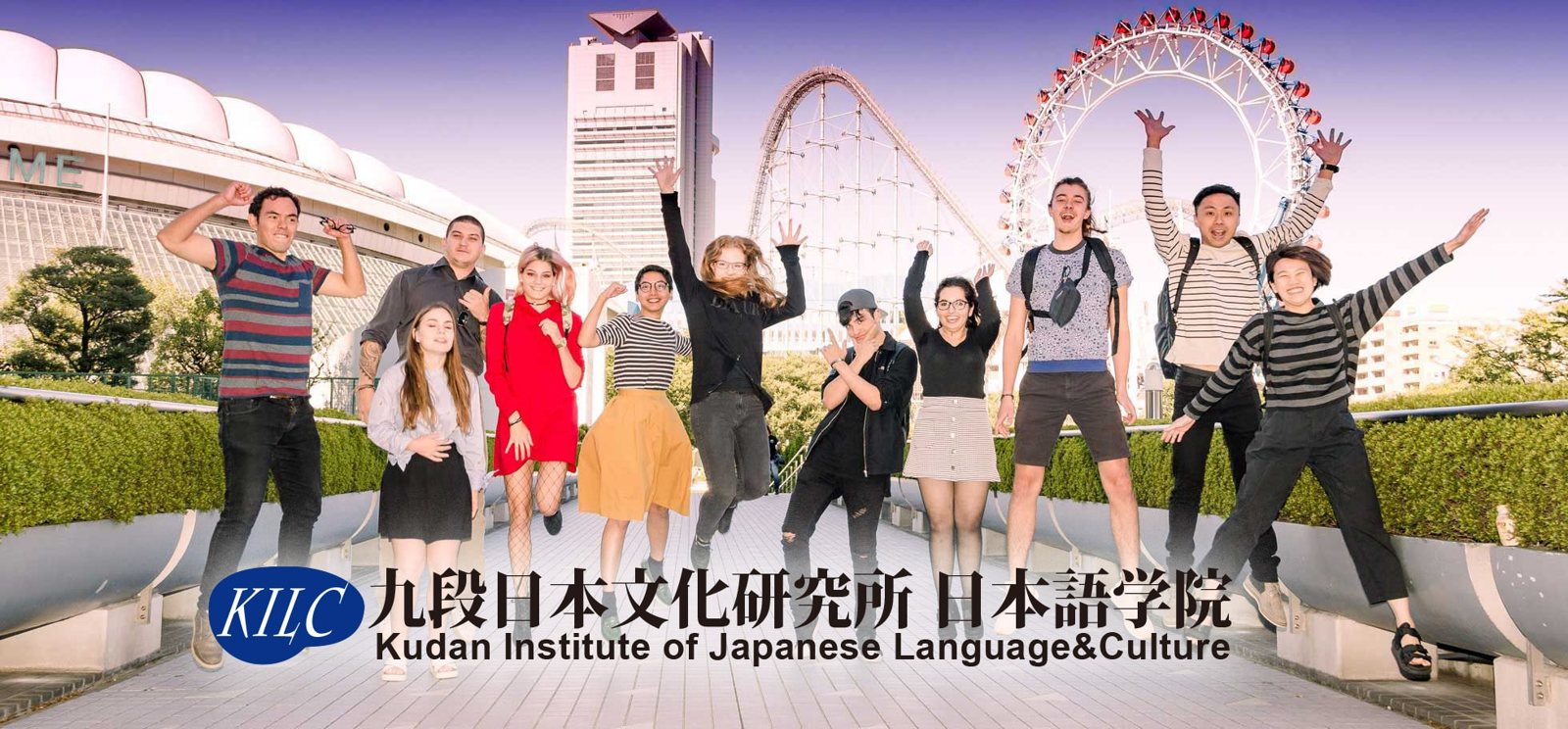
Kudan Japanese Culture Institute Japanese Language School
Kudan Japanese Culture Institute Japanese Language School
- Admission
- 4 times a year · choose your intake month ›
- Progression
- Universities, etc. 2% · National median 86% ›
- Japanese at entry
- From N5 ›
Compare side by side with other schools →
Tuition and conditions may change depending on the intake. If you contact us, we will check with the school and give you accurate details.
Nearby schools comparedBy distance · no ads or paid placement
- Kudan Japanese Culture Institute Japanese Language SchoolThis schoolTuition/yr—Progression2%IntakesJan · Apr · Jul · Oct
- Nitchu Gakuin0.7km›Tuition/yr¥850,000Progression—IntakesApr · Oct
- Kyoritsu Japanese Language School1.1km›Tuition/yr¥880,000Progression—IntakesApr · Oct
- Academy of Language Arts1.1km›Tuition/yr—Progression42%IntakesJan · Apr · Jul · Oct
— means SALLAE has not yet found the data.
About the school
The school teaches in two tracks, a morning Conversation course (5 levels) and an afternoon General Japanese course (8 levels). In the April 2026 report, of 126 graduates 2 progressed to university or the like and 2 changed their status of residence for employment or other reasons; it puts more weight on conversation and cultural experiences than on progression. A school with a capacity of 200, 4 minutes on foot from the east exit of JR Suidobashi Station in Chiyoda-ku, Tokyo, it adjusts so that no single country exceeds 25% of students, and students from 30 to 40 countries always study together. It offers short-term courses starting from 2 weeks, Japanese + culture courses such as manga, sushi and tea ceremony, and introductions to homestays and share houses.
Published data and school website
Admission & dates
- Apr intake
- · Application Send the required documents and screening fee Aug–Oct; the school submits to the Immigration Services Agency at the end of November.
- Jul intake
- · Application Send the required documents and screening fee Jan–Feb; the school submits to the Immigration Services Agency in mid-March.
- Oct intake
- · Application Send the required documents and screening fee Mar–Apr; the school submits to the Immigration Services Agency at the end of May.
- Jan intake
- · Application Send the required documents and screening fee Jul–Aug; the school submits to the Immigration Services Agency in mid-September.
- Japanese level
- JLPT N5 level or above
The school is not currently accepting student visa applications from beginners below N5 level.
Deadline and capacity rules
Student visa entry is 4 times a year (January, April, July and October), with a study period of 1 to 2 years. Applicants must be 18 or older and a high school graduate or above. Recruiting for the April 2027 intake. Schedules are a guide and close when capacity is reached.
School website · 2026-08-14 updated
Classes
- Morning
- 09:10-12:40 20 lessons per week, Monday–Friday (except public holidays)
- Afternoon
- 13:30-17:00 The General Japanese course runs 13:30–17:00, and the kanji class is Tuesday and Thursday 13:30–15:00.
- AM/PM placement
- The Japanese Conversation course runs 9:10–12:40, and the General Japanese course runs 13:30–17:00.
Materials · Subjects · Timetable · Details
- Subject
- Vocabulary · Grammar · Reading · Listening · Conversation · Writing · Kanji · Discussion · Presentations · Pronunciation correction · Colloquial expressions · The General Japanese course covers vocabulary, grammar, reading, listening, conversation and writing, plus a kanji class (twice a week, 90 minutes). The Conversation course covers vocabulary, grammar, listening, conversation, discussion, presentations, pronunciation correction and colloquial expressions (based on the 2016 brochure).
Classes average 12 to 20 students. The Conversation course has 5 levels, Conversation I to V; the General Japanese course runs from Beginner I to Advanced II. There are end-of-term tests.
Goal by level · 13 levels
- Advanced II
- Can communicate fluently and naturally and assert opinions in discussion. Can read about 2,000 kanji and understand texts of about 2,000 characters.
- Advanced I
- Can communicate by choosing language suited to various levels of politeness and situations. Can read and write about 1,500 kanji and pick up needed information from the news.
- Upper intermediate
- Can handle communication functions in situations such as making requests and negotiating. Can read and write about 1,000 kanji and understand texts of about 1,000 characters.
- Intermediate II
- Can convey invitations, refusals, advice and complaints with suitable reasons and introductory phrases. Can read and write about 500 kanji and understand texts of about 800 characters.
- Intermediate I
- Can speak in a reasonably organized way on familiar topics. Can read and write about 300 kanji and understand texts of about 600 characters.
- Lower intermediate
- Can hold basic conversations using polite forms correctly. Can understand about 200 kanji and read and understand texts of about 450 characters.
- Beginner II
- Can hold basic conversations with more suitable expressions. Can understand about 120 kanji and write diaries and short impressions in complex sentences.
- Beginner I
- Can answer questions about yourself and hold basic conversations in limited situations. Can write hiragana and katakana accurately and read texts of about 250 characters.
- Conversation V
- Can speak in a wide range of situations choosing language that suits the context, present your own research in Japanese, and assert opinions in discussion.
- Conversation IV
- Can solve problems by accurately explaining complex situations even when something unexpected happens, and discuss social trends and fashions.
- Conversation III
- Can use most conversational functions in everyday situations, such as describing symptoms at a hospital or negotiating more complex matters while shopping.
- Conversation II
- Can hold basic conversations with more suitable expressions and describe things in detail using complex sentences. Can pick up and respond appropriately to standard customer-service phrases.
- Conversation I
- Can answer questions about yourself and hold basic conversations in limited situations. Can read and write hiragana and katakana accurately.
School website · 2026-07-23 updated
Documents to prepare — student visa course
- The school's designated application form
- RésuméSchool form
- Health check sheetSchool form
- Diploma from the highest level of education
- Copy of passportPhoto page and Japan immigration stamp pages
- 6 face photos4cm × 3cm
Financial supporter's documents · 4 application requirements
Submitted by the person paying the tuition (financial sponsor)
- Financial sponsorship statementSchool form
- Sponsor's bank deposit balance certificate¥1.6 million or more
- Sponsor's certificate of employment
- Sponsor's tax payment certificateAnnual income must be stated
- Documents proving the relationship between the applicant and the sponsor
Application requirements
Required documents differ depending on nationality and individual circumstances, and additional documents may be required. All documents need a Japanese or English translation. A family member or close relative. For visa-exempt nationalities, submit the documents by email at least 1 month before the course starts. For nationalities that need a visa, consult the school about 2 months before the course starts.
It says only that required documents change by nationality, and no criteria for Korean applicants have been published. SALLAE is confirming this with the school.
For short-term courses, submit The school's designated application form · Accommodation arrangement questionnaire (for homestay applicants) · 3 ID photos (4 cm × 3 cm) · 3 snapshot photos · Additional documents specified according to visa category only.
School website · 2026-08-14 updated
Admission process
- Request an admission consultation — School forms 1–4 cannot be downloaded from this page. Please contact the school first.
- Send the required documents and application fee to Kudan Japanese Language Institute. — Send the required documents and the screening fee to Kudan Institute of Japanese Language and Culture. Timing: Aug–Oct for April entry, Jan–Feb for July entry, Mar–Apr for October entry, Jul–Aug for January entry.
- The school translates and checks the documents. — The school translates and checks the documents. Timing: Oct–Nov for April entry, Feb–Mar for July entry, Apr–May for October entry, Aug–Sep for January entry.
- The school submits the documents to the Immigration Services Agency. — The school submits the documents to the Immigration Services Agency: end of November for April entry, mid-March for July entry, end of May for October entry, mid-September for January entry.
- The Immigration Services Agency reviews the documents, and the Certificate of Eligibility is issued after approval. — Screening: Dec–Feb for April entry, Mar–May for July entry, May–Aug for October entry, Sep–Nov for January entry. The certificate is issued at the end of February for April entry, end of May for July entry, end of August for October entry, and end of November for January entry.
- Remit the billed amount to the school's bank account. — The school bills the remaining registration fee, tuition, facility maintenance fee and extracurricular activity fee. Remit in early March for April entry, early June for July entry, early September for October entry, and early December for January entry.
- Receive the admission permit and Certificate of Eligibility — After the payment is confirmed, the admission permit and Certificate of Eligibility are sent: mid-March for April entry, mid-June for July entry, mid-September for October entry, mid-December for January entry.
- Visa application — Visa application
- Leave for Japan and start studying. — Leave for Japan and start studying: early April for April entry, early July for July entry, early October for October entry, early January for January entry.
School website · 2026-08-14 updated
Short-term study
- Visa
- Temporary visitor or Working holiday(not a student visa)
- Admission
- RollingNo fixed intake months
- Open now?
- Rolling admissions, so availability varies from time to time — SALLAE will confirm with the school
Course without a student visa
- Short-term courses (tourist visa, working holiday visa) — With visa-exempt (tourist) entry, 2 weeks to 3 months is a guide. The Japanese Conversation course can start any Monday (except for complete beginners), from a minimum of 2 weeks, generally for ages 15 and over.
- Practical Beginner course — For people studying Japanese for the first time · You learn hiragana, katakana and words used in daily life in Japan · Starts in March, June, September and December; classes are on weekdays 9:10–12:40.
- Japanese + culture courses — Manga is taken at the Nihon Manga Juku for 1, 2 or 3 months (starting in January, April, July and October); sushi is 1 month (offered for 3 or more people); kintsugi is 3 weeks. Manga and sushi cannot be taken without Japanese classes; tea ceremony is 8 sessions in total and can be taken on its own.
- There are Summer Holiday, Winter Holiday and Spring Holiday courses. — The Summer Holiday course is 3–7 weeks and offered only in July and August; the Winter Holiday course is 2 weeks. Participants must be 15 or older (high school students and above). Accommodation such as a homestay can be introduced.
- Private lessons — One-on-one. Semi-private lessons are for 2 or more people. 60 minutes per lesson, starting from 8 lessons the first time, to be taken within 2 months in principle. Cancellations made by 6 p.m. the day before can be rescheduled once. If we hear nothing for 3 months after your last lesson, unused lessons expire with no refund.
- Online courses — Live Zoom classes. JLPT preparation (N1, N2, N3), BJT preparation (N3 or higher, 6 weeks), job-hunting preparation (N3 or higher, 8 weeks), and business Japanese brush-up (10 weeks).
- Courses for companies and local governments — Japanese training for foreign employees, plain Japanese courses, and Japanese training by industry and job type are available.
★Short-term courses are not listed in the published data — it counts only student-visa courses.
School website · 2026-08-28 updated
Graduate outcomes
| FY2025 | Admitted |
|---|---|
| Employment | 2 students |
| Graduates | 126 students |
Item 44 report prepared Apr 17, 2026: course completers 126, persons meeting the standard 116 (including 8 withdrawals), share meeting the standard 86.6%. · Persons who changed status of residence: general Japanese course 2 (Item 44 report). · School website · Updated Apr 17, 2026
Reviews 8
External reviewAuto-translatedPersonal review · Google review · Feb 2026
I had a great experience with the short-term course! The teachers are kind and very helpful, the location is convenient, and the facilities are kept clean and tidy. They assessed my Japanese level accurately, so the classes were a perfect fit.
단기 코스 경험이 아주 좋았어요! 선생님들은 상냥하고 잘 도와주고, 위치도 편하고, 시설도 깔끔하게 관리돼요. 제 일본어 수준을 정확하게 평가해 줘서 수업이 딱 맞았어요.
External reviewAuto-translatedPersonal review · Google review · Oct 2025
I've only been here a few days, but I already really like it. The atmosphere is very friendly and the teaching style is very good. The teachers are kind and helpful. I'm truly grateful to be able to come here.
여기 온 지 며칠 안 됐는데 벌써 정말 좋아요. 분위기가 아주 친근하고 가르치는 방식도 아주 좋아요. 선생님들이 친절하고 잘 도와줘요. 여기 올 수 있어서 정말 고마워요.
External reviewAuto-translatedPersonal review · Google review · Oct 2025
It's the best school for learning Japanese. The people and the teachers are all great.
일본어 배우기에 최고의 학교예요. 사람들과 선생님들이 아주 좋아요.
External reviewAuto-translatedPersonal review · Google review · Aug 2025
I'm very satisfied with my experience studying at this school. Both the conversation course and the staff are of a high standard, and I feel I achieved all of my goals thanks to studying here. Thank you so much!
이 학교에서 공부한 경험에 아주 만족해요. 회화 코스와 직원 모두 수준이 높고, 여기 와서 공부한 덕분에 목표를 전부 이룬 것 같아요. 정말 고마워요!
External reviewAuto-translatedPersonal review · Google review · Aug 2025
I've held back for a long time, but now I have to say it. I want to share both the good and the bad about this school.
Bad:
The Level 5 (top level) conversation class was the most disappointing. The teacher seemed unable to control the class, the topics often felt outdated, and sometimes they caused pointless conflict. Even when students were rude, the teacher just tried to keep everyone happy instead of leading the class.
At the final presentation, a student from a lower class openly said they hated people from my country, and the teacher who was there just laughed and said, "Oh, I see." I was an international student so I didn't say how I felt at the time, but looking back, I think it should have been addressed.
Another teacher once made a careless joke telling students to do something illegal related to visas, and also said that when traveling in Europe they dress like people from my country so they won't get robbed. I didn't think much of it at the time, but thinking about it later, it was quite rude. Still, that teacher was fine toward me personally.
Good:
The teachers in the afternoon intensive course were excellent. They were professional, patient, fair, kind, and had a sense of humor. Many of them left an impression on me, and even now I feel grateful and happy when I think about those classes. The kanji class was especially fun.
The teachers in charge of student life were also very responsible and attentive. When I was struggling, they helped me with real kindness and care, and I'm grateful.
The location is very convenient. If you like Akihabara, you can walk there, and there are three subway lines nearby.
The facilities inside the school are a bit old, but they don't greatly affect the overall study environment.
I'm giving 4 stars with gratitude to the teachers and friends who kindly helped me!오래 참아 왔는데 이제는 말해야겠어요. 이 학교의 좋은 점과 나쁜 점을 다 나누고 싶어요.
나쁜 점:
5단계(최상급) 회화반이 가장 실망스러웠어요. 선생님이 수업을 잡지 못하는 것 같았고, 주제가 낡은 느낌일 때가 많았고 쓸데없는 갈등을 부르기도 했어요. 학생들이 무례하게 굴어도 선생님은 반을 이끌기보다 모두의 비위를 맞추려고만 했어요.
마지막 발표 때 아래 반 학생 한 명이 우리나라 사람이 싫다고 대놓고 말했는데, 그 자리에 있던 선생님은 웃으면서 “아, 그렇군요”라고만 했어요. 유학생이라 그때는 제 기분을 말하지 않았지만, 돌아보니 짚고 넘어가야 했다고 생각해요.
또 한 선생님은 학생들에게 비자와 관련된 불법적인 일을 하라는 경솔한 농담을 한 적이 있고, 유럽 여행 때는 강도를 안 당하려고 우리나라 사람처럼 입고 다닌다는 말도 했어요. 그때는 별로 신경 쓰지 않았는데, 나중에 생각해 보니 꽤 무례한 말이었어요. 그래도 그 선생님이 저한테 개인적으로는 괜찮았어요.
좋은 점:
오후 집중 코스 선생님들은 훌륭했어요. 전문적이고, 참을성 있고, 공정하고, 다정하고, 유머 감각도 있었어요. 인상 깊은 선생님이 많았고, 지금도 그 수업을 생각하면 고맙고 행복해요. 한자 수업이 특히 재미있었어요.
학생 생활을 맡은 선생님들도 아주 책임감 있고 세심했어요. 힘들 때 정말 친절하게 마음 써서 도와줘서 고마웠어요.
위치가 아주 편해요. 아키하바라를 좋아한다면 걸어갈 수 있고, 근처에 지하철 노선이 세 개 있어요.
학교 안 시설은 좀 낡았지만, 전체 공부 환경에 큰 영향은 없어요.
친절하게 도와준 선생님들과 친구들에게 고마운 마음으로 별 4개를 줘요!External reviewAuto-translatedPersonal review · Google review · Jul 2025
I was lucky to spend two special years at this school. I can say without hesitation: this school holds a special place in my journey and in my heart.
It's not just a language school; it's a place of exchange, warmth, and growth as a person. The office staff and the teachers are all very professional, but above all, attentive. Whether it was administrative procedures, advice about life in Japan, or just needing help, there was always someone to listen and a hand held out.
I took the afternoon intensive course. The pace is tight but well balanced, and the atmosphere was always warm and welcoming. The classes are structured and fun, so I was able to improve for sure. No student was left behind. The teachers always took the time to check that everyone understood, and changed their explanations when needed.
Students usually have two teachers, sometimes three, and on Tuesdays and Thursdays there is a separate kanji-dedicated teacher, so you can learn in different ways.
I leave with unforgettable memories, lasting friendships, and deep gratitude for everything this school gave me. It gave me far more than language classes: it gave me the key to understanding Japanese culture and feeling at ease in it.이 학교에서 특별한 2년을 보낼 수 있었던 건 행운이었어요. 망설임 없이 말할 수 있어요 — 이 학교는 제 여정과 마음속에 특별한 자리를 차지하고 있어요.
그냥 어학교가 아니라 교류와 따뜻함, 사람으로서 성장이 있는 곳이에요. 사무 쪽 직원들과 선생님들 모두 아주 전문적이지만, 무엇보다 세심해요. 행정 절차든, 일본 생활에 관한 조언이든, 그냥 도움이 필요할 때든 언제나 들어 주는 사람과 내밀어 주는 손이 있었어요.
수업은 오후 집중 코스를 들었어요. 진도는 빡빡하지만 균형이 잘 잡혀 있었고, 늘 따뜻하고 반기는 분위기였어요. 수업은 체계적이고 재미있어서 확실하게 늘 수 있었어요. 뒤처지는 학생이 없었어요. 선생님들은 늘 시간을 들여 모두가 이해했는지 verified하고, 필요하면 설명을 바꿔 줬어요.
학생들은 보통 선생님 두 분, 때로는 세 분이 맡고, 화요일과 목요일엔 한자 전담 선생님이 따로 있어서 서로 다른 방식으로 배울 수 있어요.
잊지 못할 추억과 오래갈 우정, 이 학교가 준 모든 것에 대한 깊은 고마움을 안고 가요. 이 학교는 언어 수업보다 훨씬 많은 것을 줬어요 — 일본 문화를 이해하고 그 안에서 편안히 지낼 수 있는 열쇠를 줬어요.External reviewAuto-translatedPersonal review · Google review · Jul 2025
I took a conversation course here from April to June 2025.
The school's location is great. The nearest station is Suidobashi Station on the JR Sobu Line, about a 5-minute walk. The downside is that the Sobu Line is always extremely crowded during rush hour. So during rush hour I took the Hanzomon Line, got off at Jimbocho Station, and walked about 10 minutes. It's a bit farther, but you don't have to ride the packed train.
There are a lot of university students nearby, so it's easy to pick a place to eat, and there's a FamilyMart on a lower floor of the building, so you never have to worry about not being able to buy something.
The teachers I met were all quite kind. Some speak several languages and some aren't good with foreign languages, but even those teachers usually explain things in very simple terms.
There's homework every day, and irregularly (every 2-3 weeks) there are quizzes and presentations. It's a half-day class, but it's quite substantial.
The school also often does extracurricular activities like field trips, sushi-making experiences, and kendo.
Overall, I highly recommend it.2025년 4~6월에 여기서 회화 코스를 들었어요.
학교 위치가 아주 좋아요. 가장 가까운 역이 JR 소부선 스이도바시역이고 걸어서 5 min쯤이에요. 단점은 출퇴근 시간 소부선이 늘 엄청 붐빈다는 거예요. 그래서 저는 출퇴근 시간엔 한조몬선을 타고 진보초역에서 내려 10 min쯤 걸어갔어요. 좀 멀어도 미어터지는 전철은 안 타도 돼요.
근처에 대학생이 많아서 식당 고르기도 좋고, 건물 아래층에 패밀리마트가 있어서 살 게 없을 걱정은 없어요.
제가 만난 선생님들은 다 꽤 친절했어요. 여러 언어를 하는 선생님도 있고 외국어가 서툰 선생님도 있지만, 그런 선생님도 대개 아주 쉽게 풀어서 설명해 줘요.
매일 숙제가 있고, 비정기적으로(2~3주마다) 쪽지 시험과 발표가 있어요. 반나절 수업이지만 꽤 알차요.
학교에서 견학, 초밥 만들기 체험, 검도 같은 과외 활동도 자주 해요.
전체적으로 아주 추천해요.External reviewAuto-translatedPersonal review · Google review · Jun 2023
The conversation teachers are great. The environment is good, there's a mix of nationalities, and there are various extracurricular activities. However, since it's right in the middle of the city, the trains toward Akihabara on the Yamanote Line are packed with people during the morning commute to school.
회화 선생님이 좋아요. 환경도 좋고, 국적이 다양하고, 과외 활동도 여러 가지예요. 다만 시내 한복판이라 아침 등교 시간엔 야마노테선 아키하바라 쪽 전철이 사람으로 미어터져요.
External reviews are public posts that SALLAE collected and rewrote in the writer’s own voice. SALLAE keeps the original links.
University prep
- Individual progression counseling — Progression staff take consultations on going to graduate school, university and vocational school, and hold a progression-plan survey and individual counseling every term.
- Information on destination schools and in-school information sessions — The school provides information on destination schools, holds progression information sessions at the school, and introduces outside information sessions (staff go with you if needed).
- Application document check — After a destination is decided, the school checks application documents and coaches students on interviews and enrollment procedures.
- Exam preparation — EJU preparation (written section) for EJU applicants is held in April, May, September and October. Mock JLPT exams are held in late June and mid-November, and how to fill in application forms is explained in school.
- Employment support — For students studying Japanese long term, the school offers various support for finding a job in Japan after graduation. License number for fee-charging employment placement: 13-Yu-308515.
- Company partnership seminars — Together with a staffing company, the school holds job-hunting seminars, visa-change seminars and joint company information sessions.
- Designated-school recommendations: 8 — Jikei Gakuen Educational Corporation · Nippon Keizai University · Japan Electronics College · Tokyo University of Technology · Nippon Engineering College (Kamata Campus) · Nippon Engineering College Hachioji (Hachioji Campus) · Nippon Engineering College Hokkaido (Hokkaido Campus) · ICS College of Arts · The "List of schools with designated-school recommendations" introduces Jikei Gakuen, Nippon Keizai University, Japan Electronics College, Nippon Engineering College and others.
Schedule to admission
- Progression wish survey and in-school information session
- April · Progression preference survey 1 · In-school progression briefing · Open campus attendance
- Open campus events and off-campus information sessions
- May–Jun · Attend open campus events · Attend off-campus progression information sessions
- Narrow down your choice of school
- Jul–Aug · Progression wish survey 2 · Individual interviews begin · Decide your target schools
- Interview practice and application
- Sep–Dec · Interview practice begins · Progression wish survey 3 · Prepare and submit application forms · Individual interviews
- Enrollment preparation
- Jan–Mar · Pay tuition, prepare for enrollment, etc.
School website · 2026-03-24 updated
Daily-life support
- Airport pickup service (paid) — A paid service in which the school arranges a pick-up from Haneda or Narita Airport to your accommodation. From the January 2027 term: Haneda ¥30,000 / Narita ¥40,000.
- Student visa support for long-term study in Tokyo — The school translates and checks the documents.
- Part-time job referrals — Handles applications for permission for activities outside the status of residence, résumé checks, introductions to job sites and job postings that come to the school. It cannot place every applicant who wants a job.
- Support when you are sick — The school prepares and shares a list of hospitals with foreign-language support, and can also accompany students. If you study for 1 year or more, you are covered by National Health Insurance and pay 30% of medical costs.
- Multilingual staff — Multilingual staff take consultations so that you can study with peace of mind even in your first life in Japan.
- Orientation — Orientations are held before enrollment, at enrollment and in the first month, along with orientations by nationality, and the school checks how you are doing through a questionnaire and individual interview 1 week after enrollment.
- Disaster drill — Students take part in the disaster drill held in Akihabara once a year.
- Certificates after graduation — You can apply for certificates through Kudan's website.
Monthly living costs · School information
| Item | 1 month |
|---|---|
| Food costs (¥20,000–¥30,000) | ¥20,000 |
| Transportation | ¥20,000 |
| Miscellaneous expenses | ¥10,000 |
| Total | ¥50,000 |
Average monthly living costs: ¥110,000–¥120,000 for homestay students and ¥130,000–¥140,000 for guesthouse students (for reference).
School website · 2026-03-12 updated
Students
135 enrolled (2026) · Capacity 200 National median: 180 students
Based on the 135 students enrolled in 2026.
Public data from the Association for the Promotion of Japanese Language Education (Nisshinkyo) · verified 2026-09-20
School life
For 1 year
- 1
- The winter term starts on January 12, 2027. The General Japanese course runs until March 19, and the Japanese Conversation course until April 2.
- 4
- The spring term starts on April 5, 2027. The General Japanese course runs until June 18, and the Japanese Conversation course until July 2.
- 7
- The summer term starts on July 6, 2026. The General Japanese course runs until September 11, and the Japanese Conversation course until October 2.
- 10
- The autumn term starts on October 5, 2026. The General Japanese course runs until December 11, and the Japanese Conversation course until December 25.
This is the 2026–2027 annual schedule. · End dates for each term differ by course. · There are no classes on bus day-trip days.
- Twice a year, day trips to places around Tokyo such as Nikko and Nagatoro.
- Cultural experiences such as tea ceremony, kimono dressing, calligraphy, sushi making, Japanese sweets making and climbing Mt. Takao.
- Japanese exchange meetings and multilingual exchange meetings are held in cooperation with universities and Japanese volunteers.
- Introduces judo at the Kodokan (13-minute walk from the school). From 3 months for beginners, and from 1 day for advanced students (black belt holders).
On campus
- 1st floor
- Classroom — Wi-Fi in all classrooms
- 1st floor
- Lobby — Lobby
- 1st floor
- Japanese-style room — There is a Japanese-style room for experiencing culture.
2026–2027 academic calendar
- Saturdays, Sundays and public holidays
- · Monday–Friday (except public holidays)
- Summer break
- No classes for the Integrated Japanese course on Sep 14 – Oct 2, and for the Japanese Conversation course on Sep 21 – Sep 25.
- Winter break
- No classes: Dec 14–Dec 31 and Jan 1–Jan 11 for General, and Dec 28–Dec 31 and Jan 1–Jan 12 for Conversation. The winter term starts on Jan 12.
- Spring break
- The period corresponding to spring break for the Integrated Japanese course is Mar 22 – Apr 2 (no classes).
- Golden Week
- 5/3 - 5/7 · No classes for either the Integrated Japanese course or the Japanese Conversation course on May 3 – May 7.
- Early summer break
- No classes for the General Japanese course on Jun 21–Jul 2.
School website · 2026-03-12 updated
Access
- Transit
- JR Chuo-Sobu Line (local) JR Suidobashi Station on foot 4 minEast exit
Toei Mita Line JR Suidobashi Station on foot 5 min Exit A2
Hanzomon Line, Toei Shinjuku Line, Toei Mita Line, Jimbocho Station, 8 min walk Exit A4
Tozai Line, Hanzomon Line, Toei Shinjuku Line, Kudanshita Station, 9 min walk Exit 5 - Nearby
- JR Suidobashi Station and Toei Suidobashi Station have different exits. The school is on the 1st floor of the Teito Misakicho Building, about 20 minutes to Shinjuku and about 15 minutes to Akihabara.
- Dormitory
- Available · Share houses start at ¥75,000 rent and many are within 40 minutes of the school; homestays cost ¥3,300 per night and are 40–60 minutes from the school. · Based on school website
School website · 2026-03-24 updated
Housing — Homestay: from 2 weeks, arrangement fee ¥10,000, move-in on Saturdays (in principle arriving 8:00–17:00). Share house: from 1 month, arrangement fee ¥5,000, bedding fee ¥10,000, no meals.
School website · 2026-05-12 updated
SALLAE has organized the school website and published data in English.
The update date is the day that material was last revised.
Photos are materials published by the school.
This information is compiled from official sources and is not updated daily. Please confirm with the official contact before signing or applying.