Kurume Seminar (vocational school)
Kurume Seminar (vocational school)
- To station
- 3 min on foot · Nishitetsu Kurume Station
- Maximum age
- Up to age 26, depending on education level ›
- AM & PM classes
- Decided by the school ›
Compare side by side with other schools →
Tuition and conditions may change depending on the intake. If you contact us, we will check with the school and give you accurate details.
Nearby schools comparedBy distance · no ads or paid placement
- Kurume Seminar (vocational school)This schoolTuition/yr¥830,000Progression91%IntakesApr · Oct
- Kurume International Exchange Institute0.3km›Tuition/yr¥750,000Progression97%IntakesApr · Oct
- Fukuoka College of Civil Engineering and Construction26.9km›Tuition/yr¥850,000Progression—IntakesApr · Oct
- Asia Japanese Language Institute28.4km›Tuition/yr¥770,000Progression90%IntakesApr · Oct
— means SALLAE has not yet found the data.
About the school
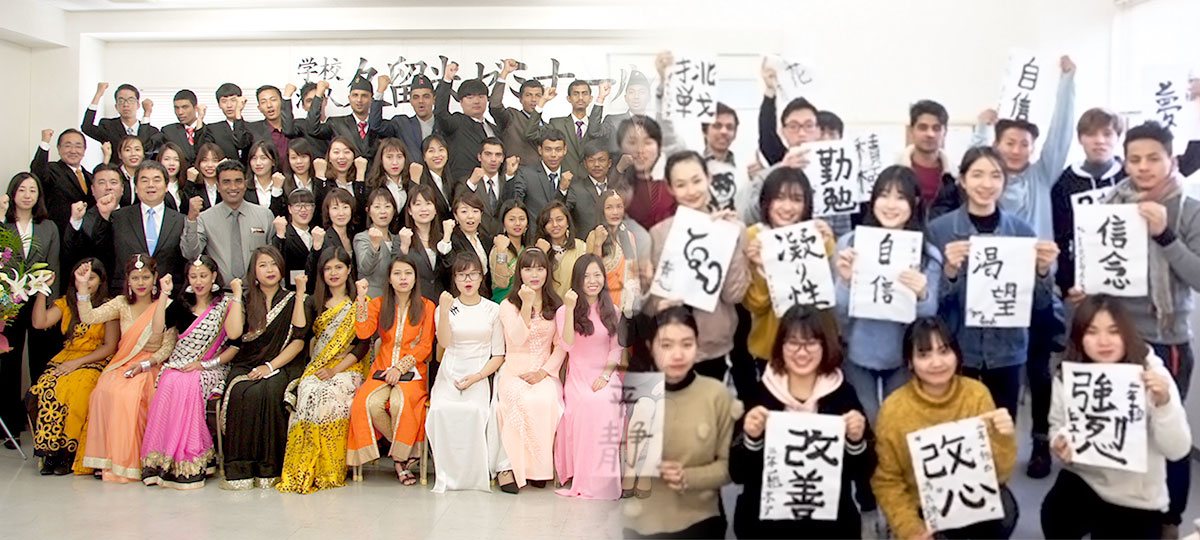
This school puts effort into progression. In the FY2025 report, 112 students went on to universities, vocational schools and similar institutions (119 completed the course), and July and August are "progression month", with information sessions, open campuses and classes on reading admission guidelines. Its Japanese department is a specialized training college opened in 2002 by Kurume Seminar, which began in 1967 as a university entrance exam prep school, and it is a 3-minute walk from Nishitetsu Kurume Station. New students in principle live in the school dormitory (single rooms), and most current students are from Nepal and Vietnam.
Published data and school website
Tuition
If you saw a lower amount elsewhere, it may not include the admission fee and application fee
Median 1-year tuition in other areas — Kyoto ¥911,000(7 schools) · Kanagawa ¥880,000(8 schools) · Okinawa ¥858,000(6 schools) · Tokyo ¥840,600(56 schools) · Fukuoka ¥835,000(12 schools) · Hyogo ¥825,500(7 schools) · Osaka ¥814,000(27 schools) · Shizuoka ¥790,000(9 schools) · Chiba ¥745,333(10 schools) · Aichi ¥740,667(5 schools)
Admission & dates
- Apr intake
- 2-year course · Application April intake: Oct 1 – Nov 15 (must arrive by) · Classes 1,600 hr
- Apr intake
- 1-year course · Application April intake: Oct 1 – Nov 15 (must arrive by) · Classes 800 hr
- Oct intake
- 1 year 6 months course · Application October intake: Apr 1 – May 15 (must arrive by) · Classes 1,200 hr
- Japanese level
- JLPT N5 level or above
Applicants with JLPT N5 level ability or higher, or at least 150 hours of Japanese study.
Deadline and capacity rules
Application requirements include completing 12 or more years of schooling and the ability to cover expenses. In principle, applicants must be 18 or older at entry and no older than 22 for high school graduates, 24 for junior college graduates and 26 for university graduates. All courses graduate in March.
School website · Confirmed 2026-09-26
Classes
- Morning
- 09:10-12:40
- Afternoon
- 13:30-17:00
- AM/PM placement
- A placement test at entry decides whether you are in a morning or afternoon class.
- Class assignment
- Level-based 4 stages
Materials · Subjects · Timetable · Details
Classes are Monday to Friday. JLPT preparation runs from beginner to advanced level, and EJU preparation starts once the beginner level is completed.
What each level covers · 4 stages
- Beginner
- 6 monthsLearn 317 kanji, about 2,000 basic words and about 150 grammar points. Improve the 4 skills so you can hold everyday conversations and state your own opinions. Learn Japanese life and customs and compare them with your home country.
- Lower intermediate
- 6 monthsLearn 350 kanji, about 2,000 vocabulary words and about 100 grammar points. Understand and ask questions in connected conversation, use language appropriately for the situation, and get information from short texts.
- Intermediate
- 6 monthsLearn 504 kanji, about 2,500 vocabulary words and about 100 grammar points. Understand and use somewhat advanced grammar, understand connected texts and conversation, and take part in simple discussions.
- Advanced
- 6 monthsLearn 943 kanji, about 2,800 vocabulary words and about 120 grammar points. Build overall Japanese ability for university entrance, understand, summarize and discuss authentic materials, and gain a deep understanding of modern society.
School website · Confirmed 2026-09-26
Documents to prepare — student visa course
- Application form and statement of reasons for studySchool's prescribed form
- Certificate of Japanese proficiencyPass certificate for JLPT N5 level or higher, or a certificate of at least 150 hours of Japanese study
- Graduation certificate from your last school
- Transcript from last school attended
- 8 photos (4 cm × 3 cm, taken within 3 months). Write name and date of birth on the back.
- Copy of passport
Financial supporter's documents · only if applicable · 2 application requirements
Submitted by the person paying the tuition (financial sponsor)
- Financial sponsorship statementSchool's prescribed form
- Deposit balance certificate
- Documents proving the relationship between the applicant and the sponsorFamily register, resident record, etc.
- Sponsor's certificate of employment
- Sponsor's income certificate
Only if applicable
- Certificate of enrollment (if currently enrolled)
- Certificate of employment (if currently employed)
- Copy of ID (If you have no passport)
Application requirements
Other documents differ by nationality; ask the office for details. If you have applied for a study-abroad or other visa in the past, you must declare it.
It only says that required documents differ by country; documents and balance amounts required by nationality are not published. SALLAE is confirming this with the school.
For short-term courses, submit Application form (school's prescribed form) · Copy of passport and residence card only.
School website · Confirmed 2026-09-26
Admission process
- Request an admission consultation — For enrollment procedures, please consult us first.
- Admission application and document submission — Students submit the admission application and application documents themselves. In principle there is an interview and document screening in the student's country (ask about place and timing).
- Application for the Certificate of Eligibility — The school submits the application form for the Certificate of Eligibility to the Immigration Services Agency
- Issuance of the Certificate of Eligibility — Certificate of Eligibility issued (by the Immigration Services Agency)
- Tuition payment — Payment of fees (student)
- Receive the admission permit and Certificate of Eligibility — Certificate of Eligibility and admission permit sent
- Visa application — Visa application (student)
- Visa issuance — Visa issuance (Japanese embassy or consulate)
- Placement test
- A placement test at entry decides whether you are in a morning or afternoon class.
School website · Confirmed 2026-09-26
Short-term study
- Visa
- Temporary visitor or Working holiday(not a student visa)
- Open now?
- Rolling admissions, so availability varies from time to time — SALLAE will confirm with the school
Course without a student visa
- Short course (auditors) — Foreign nationals on a short-term stay visa (90 days) and similar can audit regular classes. Entry is in April and October in principle. Fee covers 3 months (50 class days). No student ID is issued. Dormitory: ¥147,000 for 3 months (utilities included).
★Short-term courses are not listed in the published data — it counts only student-visa courses.
School website · Confirmed 2026-09-26
Graduate outcomes
| FY2025 | Admitted |
|---|---|
| Employment | 9 students |
| Graduates | 119 students |
Passing an exam
| Exam | Pass |
|---|---|
| JLPT N1 2024 | 1 student |
| JLPT N2 2024 | 15 students |
| JLPT N3 2024 | 52 students |
| JLPT N4 2024 | 19 students |
| EJU Japanese score of 219 or above 2024 | 2 students |
FY2024 JLPT: 210 took the test and 87 passed (N1 3, N2 47, N3 105, N4 55). EJU Japanese score of 219 or higher: June 0 of 14, November 2 of 6.
All schools accepted to so far
See 7 more schools
+68 schools, see more
FY2025: course completers 119, persons meeting the standard 123 (5 withdrawals), share meeting the standard 99.2%. Broken down by 1-year, 1.5-year and 2-year courses · The number of employed is the number of persons permitted to change status of residence (7 = 1-year course, 2 = 1.5-year course, 0 = 2-year course) · School website · Updated Jul 2, 2026
Reviews
If you study here or used to, tell others what the classes, teachers and daily life were like. It helps anyone deciding on this school.
Write the first reviewUniversity prep
- Progression guidance starts from arrival in Japan as preparation for deciding a path. — Progression guidance starts from arrival in Japan, with individual guidance by destination and path.
- Progression month (July and August) — For two months, students focus on thinking about further study, attending information sessions, open campuses and trial classes inside and outside the school.
- Classes on reading admission guidelines — In each class, students look at the admission guidelines together and go over the documents to prepare and the meaning of the terms.
- Joint progression seminar — Students attend guidance sessions held in Kurume and Fukuoka and talk directly with the teachers in charge at the schools they hope to enter.
- On-campus briefing — Teachers from universities and vocational schools are invited to hold an information session for Kurume Seminar students only. In FY2017, 12 schools took part.
- Attending an open campus — Open campuses are held at universities and vocational schools in the summer break. Students are guided to attend as many as possible.
- Japan Electronics College trial classes and career talk — Trial classes from Japan Electronics College can be taken in Kurume, with teachers from 6 departments invited so students can try the classes they want.
Schedule to admission
- Year 1
- From arrival in Japan · Career paths in Japan (arrival orientation) · Basic knowledge of progression in Japan · Attending external guidance sessions · Course and department briefings with employment in mind
- Next year
- Mainly June–September · How to read admission guidelines (June) · Progression month (July and August) · Attend external guidance sessions (July and September) · Attend open campuses of universities and vocational schools (July and August) · Individual guidance by destination and path
School website · Confirmed 2026-09-26
Daily-life support
- Orientation about life in Japan is held before you travel — From orientation before and upon arrival in Japan, the school gives students chances to think about their own path.
- Airport pickup — School staff greet new students with a smile when they arrive.
- Address registration (city office) — Address registration is required within 14 days of arrival. The school goes with students to the city office right after arrival and supports address registration.
- National Health Insurance — Foreign nationals staying more than 3 months must join National Health Insurance, and all students do. The procedure is done at the city office right after arrival. Students pay 30% of medical costs.
- Accident insurance — In case of accidents, all students of the school are covered by accident insurance.
- Open a bank account — The school goes with students to open a bank account, which is needed for rent and utility withdrawals and for receiving part-time wages, and supports them.
- Buying a bicycle — Most students commute by bicycle. The school helps them buy one right after arriving and registers it for theft prevention at the same time. Students who cannot ride are advised to practice before coming to Japan.
- Buying a mobile phone — The school supports the procedure so students can sign contracts with peace of mind.
- External orientation — For new students, the Kurume city office, police station, public health center and others are invited to explain about Kurume, Japanese rules and health management.
- Health management — A health checkup once a year for all students. Each month the homeroom teacher checks each class's health. When students are ill or injured, a full-time staff member goes with them to the medical institution.
- Part-time job introductions — The school holds a "free employment placement" license, and full-time staff help from the résumé through the interview. With permission to engage in activity other than that permitted, up to 28 hours a week (up to 8 hours a day during long breaks).
- Student discount — As a specialized course of a specialized training college, students can buy commuter passes at a discount of about 25–75% off the regular fare. There are discounts other than for transport as well.
- Foreign support staff — Support staff made up of the school's graduates. They respond in detail, putting themselves in the students' shoes.
School website · Confirmed 2026-09-26
Scholarship
- MEXT Honors Scholarship for Privately-Financed International Students (Japanese government)
- The Japanese government's Ministry of Education, Culture, Sports, Science and Technology gives an incentive grant to international students who excel in studies and character but have difficulty studying for financial reasons (amount not stated).
- Kurume Seminar Scholarship
- While enrolled, the school pays a reward to students who pass JLPT N1 and N2.
- Kurume Tourism and Convention International Exchange Association Scholarship for International Students
- A grant is paid once a year to international students studying in Kurume (amount not stated).
School website · Confirmed 2026-09-26
Students
190 enrolled (2025) · Capacity 280 National median: 180 students
Based on 190 students enrolled in 2025.
Public data from the Association for the Promotion of Japanese Language Education (Nisshinkyo) · verified 2026-09-20
School life
For 1 year
- 4
- Arrival in Japan · Entrance ceremony
- 5
- Sports day
- 6
- Fieldwork · EJU
- 7
- JLPT · Tanabata · Debate contest
- 8
- Progression month
- 9
- End-of-term exams · Speech contest
- 10
- Excursion · October entrance ceremony
- 11
- EJU
- 12
- JLPT · Christmas
- 1
- End-of-term exams · First calligraphy of the year
- 2
- Setsubun · Tea ceremony experience
- 3
- Drama presentation · Graduation bus hike · Graduation ceremony
- Newly arrived students take part in the Kurume city walking event.
- Students take part in "Mizu no Saiten", Kurume's biggest summer festival, and interact with local residents.
- The excursion is either a hike up nearby Mt. Kora or a bus outing that 1st- and 2nd-year students take together.
- 1st-year students do fieldwork at a disaster prevention center to learn about disasters and how to respond when they happen.
- 2nd-year students also experience Japanese culture by trying on a yukata.
- Seasonal events such as the first calligraphy of the year and tea ceremony are taught in class as "Japanese Affairs".
Academic calendar
School website · Confirmed 2026-09-26
Access
- Transit
- Nishitetsu train Nishitetsu Kurume Station on foot 3 min
10 minutes by bus from JR Kurume Station Nishitetsu Kurume Station on foot 3 min - Nearby
- 43 minutes by express bus from Fukuoka Airport international terminal, 18 minutes by Shinkansen from Hakata Station, and 30 minutes by train from Nishitetsu Fukuoka (Tenjin) Station. Department stores around the station.
- Dormitory
- Available · Kokubu Dormitory (6 floors). Single rooms cost ¥66,000–¥84,000 for 6 months. Actual water and utility costs are separate. 10 minutes to school by bicycle. · Based on school website
School website · Confirmed 2026-09-26
Dormitory — Entrance fee ¥90,000 and deposit ¥30,000. Dormitory fee for 6 months: ¥84,000 for rooms A and B, ¥66,000 for room C. Dormitory fees are not refunded after move-in. Full-time staff are available 24 hours.
School website · Confirmed 2026-09-26
SALLAE has organized the school website and published data in English.
The update date is the day that material was last revised.
Photos are materials published by the school.
This information is compiled from official sources and is not updated daily. Please confirm with the official contact before signing or applying.