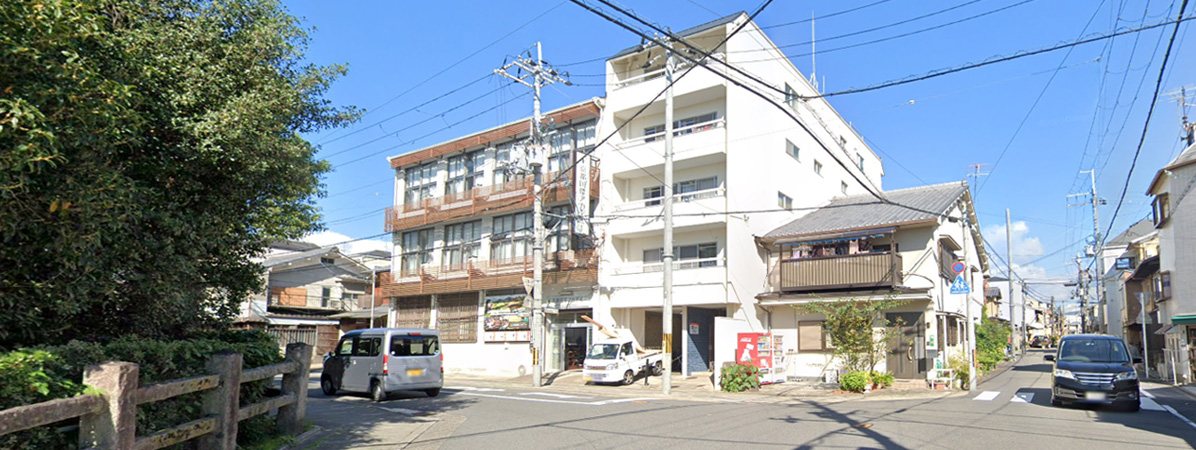
Kyoto International Academy
Kyoto International Academy
- Progression
- University or similar 99% ›
- Maximum age
- Up to age 27, depending on education ›
- Admission
- 3 times a year · Apr, Jul, Oct ›
Compare side by side with other schools →
Tuition and conditions may change depending on the intake. If you contact us, we will check with the school and give you accurate details.
Nearby schools comparedBy distance · no ads or paid placement
- Kyoto International AcademyThis schoolTuition/yr¥911,000Progression99%IntakesApr · Jul · Oct
- Kyoto Language Academy1.6km›Tuition/yr¥861,000Progression—IntakesApr · Oct
- ISI Language School Kyoto1.6km›Tuition/yr¥1,015,000Progression—IntakesJan · Apr · Jul · Oct
- Kyoto Japanese Language School (Kyoto Japanese Language Education Center)2.1km›Tuition/yr¥879,000Progression—IntakesApr · Oct
— means SALLAE has not yet found the data.
About the school
A school that focuses on progression: the Integrated Japanese Course, a student-visa course, aims at progression to Japanese universities, graduate schools and vocational schools, and the Item 44 report states that 285 of the 292 FY2025 completers progressed to universities and other institutions. In the morning you take level-based Japanese classes; in the afternoon you can take elective classes such as EJU integrated subjects, mathematics and English, or a separate art course for those aiming at art universities. Founded in 1987, it now stands in front of the north gate of Kitano Tenmangu Shrine in Kyoto, and introduces dormitories 2–6 minutes away on foot.
Published data and school website
Tuition
If you saw a lower amount elsewhere, it may not include the admission fee and application fee
Median one-year fees in other regions — Kyoto ¥911,000(7 schools) · Kanagawa ¥880,000(8 schools) · Okinawa ¥858,000(6 schools) · Tokyo ¥840,600(56 schools) · Fukuoka ¥835,000(12 schools) · Hyogo ¥825,500(7 schools) · Osaka ¥814,000(27 schools) · Shizuoka ¥790,000(9 schools) · Chiba ¥745,333(10 schools) · Aichi ¥740,667(5 schools)
Total by intake
| Intake · length | Full course |
|---|---|
| April intake · 2 years | ¥1,593,000 |
Cost details · course tables · notes · 3 items
- One-time fees
- ¥911,000Tuition ¥660,000 · Application fee ¥33,000 · Admission fee ¥77,000 · Materials ¥20,000 · Health checkup fee ¥12,000 · Extracurricular activity fee ¥30,000 · Facility fee ¥30,000 · Equipment fee ¥47,000 · Bicycle insurance ¥2,000
According to the school guide, fees are paid in one lump sum at enrollment. SALLAE will check with the school whether you can pay in installments.
| Intake · course | Extra 2nd-year costs | All |
|---|---|---|
| April · 2 years | ¥682,000 | ¥1,593,000 |
Extra costs paid in the second year. The application fee and admission fee are not charged again. Year 2: tuition ¥660,000, materials ¥20,000, bicycle insurance ¥2,000 (total ¥682,000)
This is the table from the 2026 admission guidelines (General Japanese course). The table does not say whether prices include tax.
If issuance of the Certificate of Eligibility is decided, please pay tuition.
Dormitory fees (example: Takada Dormitory) first-year total ¥415,000 (entrance fee, rent, common service fee, fire insurance, cleaning fee)
School website · 2026-08-18 updated
Whether it is refundable
- If the visa is refused
- If the visa is refused, the money is refunded except for the application processing fee and admission fee.
- After entry
- Under no circumstances can any money paid be refunded after enrollment.
Admission & dates
- Apr intake
- 2-year course · Application Sep–Nov of the previous year
- Jul intake
- 1 year 9 months course · Application January – Mar 31
- Oct intake
- 1 year 6 months course · Application April – May 31
- Japanese level
- JLPT N5 level or above
People who passed J-TEST grade F or higher or NAT-TEST level 5 or higher are also accepted. For January entry, JLPT N3 or higher is required.
Deadline and capacity rules
April 120–150 students, July 60–100, October a few. Completion of 12 or more years of schooling, and one of: within 3 years of high school graduation / within 3 years of junior college graduation and age 24 or under / within 3 years of university graduation and age 27 or under / currently enrolled at a junior college or university.
School website · 2026-08-19 updated
Classes
- Morning
- 09:15-12:45
- Afternoon
- 13:45-17:15
- Class size
- Max 20 students
- Class assignment
- Level-based 9 levels
- Elective classes
- Integrated subjects · Mathematics · English · Science · Art course · EJU preparation courses are from 8 periods per week for each subject (1 period = 45 minutes). All afternoon subjects are electives.
Materials · Subjects · Timetable · Details
Sample progression class timetable
| Mon | Tue | Wed | Thu | Fri | |
|---|---|---|---|---|---|
| 09:15-10:00 | Advanced grammar | Advanced kanji / vocabulary | Advanced grammar | Advanced kanji / vocabulary | Newspaper reading |
| 10:10-10:55 | Advanced grammar | Reading comprehension (JLPT preparation) | Advanced grammar | Reading comprehension (JLPT preparation) | Newspaper reading |
| 11:05-11:50 | Listening comprehension (JLPT preparation) | Reading (EJU preparation) | Composition | Listening comprehension (JLPT preparation) | Presentation |
| 12:00-12:45 | Listening (EJU preparation) | Reading (EJU preparation) | Composition | Listening (EJU preparation) | Presentation |
Afternoon classes (electives)
| Mon | Tue | Wed | Thu | Fri | |
|---|---|---|---|---|---|
| 13:45-14:30 | Comprehensive subjects | Mathematics | Art course | English | Art course |
| 14:40-15:25 | Comprehensive subjects | Mathematics | Art course | English | Art course |
| 15:35-16:20 | Comprehensive subjects | Mathematics | Art course | English | Art course |
Monday to Friday, two sessions (morning and afternoon), 4 periods a day and 20 periods a week. At least 760 hours of Japanese per year. Goal: pass JLPT N2. 4 periods a week of dedicated kanji classes.
What each level aims for · 5 levels
- Beginner I and II
- 6 monthsReading and writing hiragana, katakana and basic kanji. Simple everyday conversation and writing. About JLPT N4 pass level.
- Bridge
- 3 monthsA level-adjustment class for moving from Beginner II to Intermediate. For students from non-kanji regions who wish to take it.
- Intermediate I and II
- 6 monthsRead and write using kanji fairly well. Understand TV programs. Roughly JLPT N3–N2 pass level
- Advanced I and Advanced II
- 6 monthsUnderstand lectures and research presentations, read newspapers and general books. Roughly JLPT N2–N1 pass level
- Research I and II
- 6 monthsSummarize fieldwork and interviews in reports. Discuss specialized topics. JLPT N1 pass
School website · Confirmed 2026-09-26
Documents
- Application form
- Statement of study purpose (school-designated form)
- Résumé (form designated by the Immigration Services Bureau)
- Academic record certificate
- Documents proving Japanese ability equivalent to JLPT N5 or higher / certificate of Japanese study (150 hours or more) / copy of the admit card for a planned exam
- Health checkup certificate
- Photo8 photos, 3 cm × 4 cm (headshots taken within 3 months
- Copy of passport
Financial supporter's documents · only if applicable · 4 application requirements
Submitted by the person paying the tuition (financial sponsor)
- Financial sponsorship statementSchool-designated form
- Bank balance certificate
- Certificate of employment and income certificate
- Notarized certificate of family relationship
- Copy of the family register
- Written pledgeSchool-designated form
Only if applicable
- Certificate of graduation from the highest level of education (High school or university graduates)
- High school diploma, certificate of enrollment in university (university students)
- Certificate of expected high school graduation (high school students)
- Copy of the applicant's ID (If you do not yet have a passport)
Application requirements
If a sponsor in your home country pays tuition, dormitory fees, living costs, etc., please contact the academy office for details. Although it varies somewhat by country of origin, at least ¥2 million is required. If you have worked at the same employer for the past 3 years or more and have a bank balance of ¥2 million or more, you can be your own sponsor. Deposit and withdrawal records for the past 3 years may be required. Type the school's forms where possible so the spelling is easy to check. If you do, a signature is required.
No standard documents specifically for Korean students are published. The school says documents may change depending on nationality or individual circumstances. SALLAE is confirming this with the school.
School website · 2026-08-19 updated
Admission process
- Request an admission consultation — Contact by email, phone, fax or the inquiry form. Admission guidelines are available in Japanese, English and Chinese.
- Submit the admission application form — Fill in the required items and send the form by email, fax or post.
- Interview / phone interview — The interview checks the purpose of study, desired path, life as an international student and eligibility for a student status of residence. Prepare the graduation certificate, family register, proof of Japanese ability, certified results of unified exams and similar. The self-evaluation report also mentions an interview with the financial sponsor and a simple written test (Japanese).
- Submit documents — Sign the application documents by hand and send them by post.
- Application for the Certificate of Eligibility — After the school reviews the required documents, it applies to the Immigration Services Bureau for the Certificate of Eligibility and waits for screening.
- Results notice (CoE issued) — The screening result is notified. If issuance of the Certificate of Eligibility is decided, pay tuition.
- Visa application — Apply for a visa at the Japanese embassy or consulate in your country of residence. Having a Certificate of Eligibility does not guarantee getting a visa.
- Enter Japan and enrol — Arrive in Japan by the entrance date the academy specifies. Airport pickup and dormitory move-in plans are arranged by consultation.
- Placement test
- The class you take is decided by the placement test at entry and the regular tests at the end of each term.
- After entry
- Grades are published through "RINGUAL". Information on students' paths after graduation is also collected and tracked in RINGUAL.
School website · Confirmed 2026-09-26
Short-term study
- Visa
- Temporary visitor or Working holiday(not a student visa)
- Admission
- RollingNo fixed intake months
- Open now?
- Rolling admissions, so availability varies from time to time — SALLAE will confirm with the school
Course without a student visa
- General Japanese course (from 3 months) — For those on family stay, tourist or working holiday visas. No entry qualifications; enrollment at any time. 3 months: admission fee ¥30,000 (¥15,000 for applications within Japan) + tuition ¥195,000 + facility maintenance fee ¥15,000 = ¥240,000.
- Study & tour course — One month in June–July (minimum 20 participants), age 15 or older, participation fee ¥250,000. Japanese study in the morning, sightseeing and cultural experiences in the afternoon. Apply by 1 month before the start.
- Art course: for those coming on a short-term visa, applications are accepted at any time (capacity: 15) — Art, craft / design / manga and anime progression course: ¥110,000 per 3 months (opens with 3 or more students); workshops from 2 weeks, from ¥10,000 per week
- Private lessons and group lessons — Group lessons, or lessons at your home or office. Business conversation, papers, exam preparation and more.
★Short-term courses are not listed in the published data — it counts only student-visa courses.
School website · Confirmed 2026-09-26
Graduate outcomes
| FY2025 | Admitted |
|---|---|
| Employment | 2 students |
| Graduates | 292 students |
All schools accepted to so far
See 13 more schools
+8 more schools
Item 44: completers 292, persons meeting the standard 287 (98.2%), progression 285, status change 2, A2 or higher 80 · Number of persons permitted to change to a status of residence in the upper column of Table 1-1 or 1-2 of the Immigration Control Act · School website · Updated Jun 23, 2026
Reviews
If you study here or used to, tell others what the classes, teachers and daily life were like. It helps anyone deciding on this school.
Write the first reviewUniversity prep
- Career counseling and guidance — Study support such as JLPT and EJU preparation, help choosing a school, checking your statement of purpose, and interview practice
- On-campus further-study briefing — Admissions staff from graduate schools and universities are invited to the academy to hold on-campus information sessions.
- Progression materials — The academy's lounge keeps materials from major universities and vocational schools on hand. If it does not have something, it can be ordered.
- Homeroom teachers hold regular meetings and keep proper records of them. — Based on a survey in March of the first year, homeroom teachers hold individual career interviews and interview coaching from the second year. Attending open campuses is encouraged.
- Essay and interview practice — In autumn and winter, practice for the essays and interviews needed for further study is stepped up.
- Progression (graduate school) — Going on to graduate school starts with finding the laboratory you want to join and the professor you want to study under.
Schedule to admission
- Decide where to go (vocational school, university or graduate school)
- Spring to summer · Career briefing · Open campus · Looking at materials and the internet · Meeting with homeroom teacher
- Get admission materials
- You can request materials yourself using the internet or postcards. The school can also request them for you.
- Submit required documents such as the application form, statement of purpose and research plan
- After filling them in yourself, always have a teacher check them.
- Written test, essay and interview
- Once the interview date is decided, ask a teacher to practice with you.
- Announcement of results
- Once you pass, pay tuition and complete the necessary procedures.
School website · Confirmed 2026-09-26
Daily-life support
- Airport pickup — Pickup only for dormitory residents arriving at Kansai International Airport (excluding weekends, holidays and night arrivals). Transport costs are paid by the student.
- Life consultation — Consult the office staff about anything, with support in many languages where possible. Staff are fluent in English and Chinese. Urgent cases are also handled.
- Orientation — Teaches basic manners and rules for life in Japan.
- Part-time job introductions — The school contacts part-time job placement companies and helps. Applied at entry: up to 28 hours per week during term, and up to 40 hours per week during long breaks.
- Bank account and SIM card — An account can be opened if the passport has a student visa stamp; not possible on a short-term stay. A mobile phone requires a student ID, insurance card, bank account and residence card.
- Health checkup — Health checkups for each April, July, October and January entry group
- Life guidance — Guidance at entry and as needed. Points to note under the Immigration Control Act are taught regularly. Cooperation with public bodies such as the ward office and fire department is planned to be strengthened.
School website · Confirmed 2026-09-26
Scholarship
- MEXT learning incentive for international students
- Monthly ¥30,000 × 1 yearFor students enrolled in the General Japanese course for 1 year 6 months or more (no repayment). Grades, study attitude and attendance are evaluated; 1 year, ¥30,000 per month, a few students. FAQ: attendance rate of 98% or more, and must go on to further study.
- Academy Michizane Scholarship A
- ¥20,000 OnceEvaluates grades, study attitude, attendance and eagerness to take part in school activities. A: 3 to 6 months, ¥20,000 per month, a few students.
- Academy Michizane Scholarship B
- ¥15,000 Once 3 months to 1 year 6 months
- Academy Michizane Scholarship C
- ¥10,000 Once 3 months to 1 year 6 months
- Graduation scholarship (MEXT Honors Scholarship for Privately-Financed International Students, advance reservation system)
- Monthly ¥48,000 × 1 yearEvaluates grades, study attitude, attendance and more. For 1 year after entering a university or vocational school, ¥48,000 per month.
- Study incentive
- ¥1,000 OnceFor students with 100% attendance and no late arrivals in each term. 4 times a year, ¥1,000 each, to all who qualify.
- Graduate awards
- Awarded at the graduation ceremony: Perfect Attendance Award, Academic Excellence Award (excellent JLPT and EJU results), Academic Effort Award (school grades and research presentations).
- Scholarships from private organizations
- Introduces various scholarships paid by private organizations.
School website · Confirmed 2026-09-26
School life
For 1 year
- 4
- April students enroll · Spring excursion
- 5
- Health checkup for April entrants (current and new students)
- 6
- EJU group mock exam · EJU · Regular exams
- 7
- July students enroll · Health checkup · JLPT · In-school progression briefing · JASSO progression briefing · Speech contest
- 8
- Summer vacation
- 9
- Regular exams
- 10
- October students enroll · Health checkup for October students
- 11
- Autumn excursion
- 12
- JLPT · Christmas party · Regular exams
- 1
- January students enroll · Health checkup for January students
- 2
- Setsubun · Field study · Research presentation
- 3
- Completion exam (graduating students) · Regular exams (current students)
Events may be changed or cancelled due to circumstances.
- Experience Japanese culture such as tea ceremony in a tatami-floored Japanese-style room, and "sushi making" and "gyoza parties" in the cooking room.
- Active exchange activities with local high school and university students.
- July 2024: kimono experience, calligraphy experience, tea ceremony experience, Tanabata
On campus
- Regular classroom — Every classroom has a smart TV and PC, and soundproofing sheets are installed on the walls.
- Library and study room — A library and study room fully stocked with books on Japanese language.
- Courtyard garden and Japanese-style room — A courtyard garden (tsuboniwa), essential to traditional Kyoto houses. A tatami-floored Japanese-style room is used for Japanese culture classes such as tea ceremony.
- Cooking room — Used for food culture events such as "sushi making" and "gyoza parties".
- Lounge — The academy's lounge keeps materials from major universities and vocational schools on hand.
- Academic office and administration office — If you are thinking of enrolling, please first consult the administration office.
- Kita-ku, Kyoto
- (Branch school) — A branch was established in Kita-ku, Kyoto in July 2018.
2026–2027 academic calendar
- Saturdays, Sundays and public holidays
- · No classes · The breaks below were read from the 2026 calendar on the school blog (which shows class days).
- Winter break
- Jan 1–12 · Dec 21–31
- Spring break
- Mar 20–Apr 12 · The graduation ceremony is on March 13.
- Golden Week
- Apr 29–May 6
- Summer vacation
- Jul 20–Aug 16
- No-class days
- Nov 2
School website · Confirmed 2026-09-26
Access
⚠ Takada Dormitory entrance fee varies by source — please confirm with the school. Entrance fee JPY 80,000 · Entrance fee JPY 50,000. These differ within the same admission guidelines · The English version is split in the same way.
- Nearby
- In front of the north gate of Kitano Tenmangu. Kinkaku-ji is 10 minutes on foot.
- Dormitory
- Available · There are 8 student dormitories, convenient for cycling to school. Rent is ¥24,000–¥50,000 per month (shared room for 2 from ¥24,000), and the dormitories introduced are 2–6 minutes on foot from the school. · Based on school website
School website · Confirmed 2026-09-26
Dormitory — Takada Dormitory: single room ¥38,000, shared room for 2 ¥24,000 (common service fee ¥2,000). Nishijin and Murasakino dormitories: ¥50,000 (common service fee ¥2,500). Kinugasa Hills: single room ¥30,000 (common service fee included), shared room for 2 ¥24,000 (common service fee ¥2,000).
School website · 2026-08-19 updated
SALLAE has organized the school website and published data in English.
The update date is the day that material was last revised.
Photos are materials published by the school.
This information is compiled from official sources and is not updated daily. Please confirm with the official contact before signing or applying.