Labo Japanese Language Education Training Center
Labo Japanese Language Education Training Center
- Tuition
- On the cheaper side for Tokyo ›
- To station
- 1 min walk · Sendagi Station
- Admission
- 4 times a year · Jan, Apr, Jul, Oct ›
Compare side by side with other schools →
Tuition and conditions may change depending on the intake. If you contact us, we will check with the school and give you accurate details.
Nearby schools comparedBy distance · no ads or paid placement
- Labo Japanese Language Education Training CenterThis schoolTuition/yr¥732,000Progression—IntakesJan · Apr · Jul · Oct
- KIJ Language Institute Tokyo Campus0.6km›Tuition/yr¥863,000Progression90%IntakesJan · Apr · Jul · Oct
- Sekimonkai Japanese Language School Nippori Campus (Arai Gakuen)0.7km›Tuition/yr¥915,000Progression76%IntakesJan · Apr · Jul · Oct
- Mitsufuku Japanese Language Institute0.8km›Tuition/yr¥910,000Progression—IntakesApr · Oct
— means SALLAE has not yet found the data.
About the school
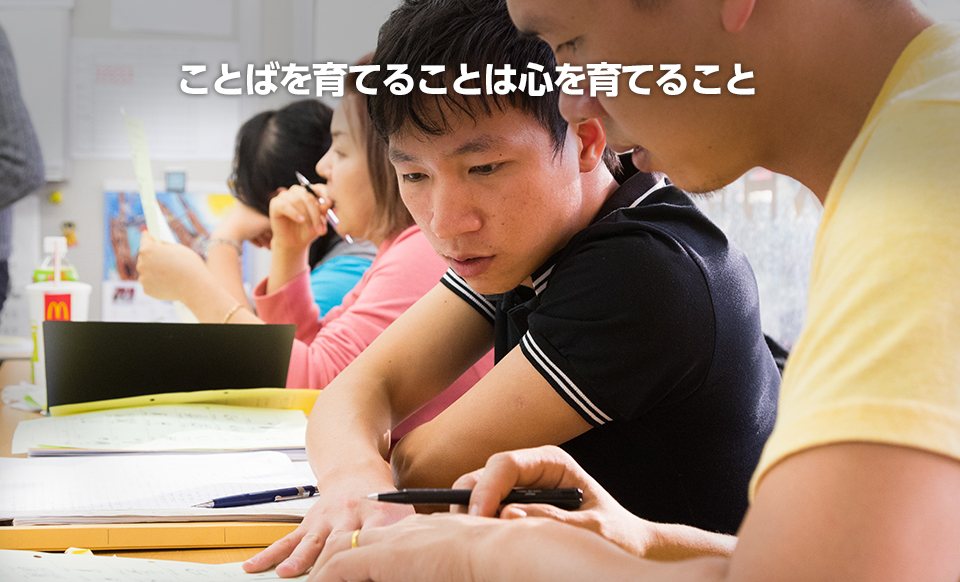
4 of its 5 courses are further-study courses (2 years, 1 year 9 months, 1 year 6 months, 1 year 3 months), and 35 of the 47 students who completed in FY2025 progressed to universities and vocational schools (32 to vocational schools). It is a school with a capacity of 100 in Sendagi, Bunkyo-ku, Tokyo, a 1-minute walk from Exit 2 of Sendagi Station on the Chiyoda Line, established in 1987, and it uses the school's original teaching materials in all classes. Morning and afternoon classes are divided by level, with 4 periods of 45 minutes a day, and there are 8 levels from beginner to advanced with homeroom teachers.
Published data and school website
Tuition
If you saw a lower amount elsewhere, it may not include the admission fee and application fee
Median 1-year tuition in other areas — Kyoto ¥911,000(7 schools) · Kanagawa ¥880,000(8 schools) · Okinawa ¥858,000(6 schools) · Tokyo ¥840,600(56 schools) · Fukuoka ¥835,000(12 schools) · Hyogo ¥825,500(7 schools) · Osaka ¥814,000(27 schools) · Shizuoka ¥790,000(9 schools) · Chiba ¥745,333(10 schools) · Aichi ¥740,667(5 schools)
Total by intake
| Intake · length | Full course |
|---|---|
| 1 year 3 months | ¥895,000 |
| 1 year 6 months | ¥1,058,000 |
| 1 year 9 months | ¥1,221,000 |
| 2 years | ¥1,384,000 |
Cost details · Course tables · Notes
- Per term
- ¥163,000 3 months
- One-time fees
- ¥80,000Application fee · Admission fee
| Duration | Total |
|---|---|
| 1 year 3 months | ¥895,000 |
| 1 year 6 months | ¥1,058,000 |
| 1 year 9 months | ¥1,221,000 |
| 2 years | ¥1,384,000 |
★"Per term" and "One-time at start" were calculated by SALLAE from each course's total. The courses this school actually offers are 1 year 3 months onward — all amounts in the table are values calculated by SALLAE.
Calculated by SALLAE · verified 2026-09-16
Admission & dates
- Jan intake
- 2-year course · Application About 6 months before arrival: send the required documents and the application fee to the school
- Apr intake
- 2-year course · Application About 6 months before arrival: send the required documents and the application fee to the school
- Jul intake
- 2-year course · Application About 6 months before arrival: send the required documents and the application fee to the school
- Oct intake
- 2-year course · Application About 6 months before arrival: send the required documents and the application fee to the school
- Japanese level
- Further-study 2-year and 1.9-year courses: JLPT N5; 1.6-year: N4; 1.3-year: N3 passed or equivalent Japanese ability
Further-study 2-year and 1.9-year courses: JLPT N5 / 1.6-year: N4 / 1.3-year: N3 passed or equivalent Japanese ability required
Deadline and capacity rules
The long courses admit students 4 times a year (January, April, July, October) / Consultation begins about 6 months before enrollment / General course (2 years) and further-study course (1 year 3 months to 2 years)
School website · 2024-05-02 updated
Classes
- Morning
- 09:15-12:40 4 periods per day (45 min each) / Morning classes (mid-intermediate, late intermediate, advanced)
- Afternoon
- 13:30-16:55 4 periods per day (45 min each) / Afternoon classes (early beginner, late beginner, early intermediate)
- AM/PM placement
- The levels differ between the morning and afternoon classes.
- Class assignment
- Level-based 8 stages
Materials · Subjects · Timetable · Details
- Materials
- In class, the school uses original textbooks and supplementary materials it has developed.
Sample weekly lessons: beginner Mon–Fri, 4 periods of 45 minutes
| Mon | Tue | Wed | Thu | Fri | |
|---|---|---|---|---|---|
| 1 | Letters (hiragana) | Letters (hiragana) | Letters (hiragana) | Letters (katakana) | Letters (katakana) |
| 2 | Textbook 1, 1-1 | Textbook 1, 1-2 | Textbook 1, 1-3 | Textbook 1, 2-1 | Textbook 1, 2-2 |
| 3 | Introducing yourself | Introducing your family | Likes and hobbies | Japanese name | Dates, days of the week, months and days |
| 4 | Introducing yourself | Introducing your family | Assignment: self-introduction | Assignment: map of the school area | Dates, days of the week, months and days |
Sample weekly lessons: intermediate Mon–Fri, 4 periods of 45 minutes
| Mon | Tue | Wed | Thu | Fri | |
|---|---|---|---|---|---|
| 1 | Reading comprehension | Composition | Memos / note-taking | Listening comprehension | Big test |
| 2 | Reading comprehension | Composition | Memos / note-taking | Listening comprehension | Big test |
| 3 | Reading comprehension | Grammar | Vocabulary (adverbs) | Video | Conversation |
| 4 | Kanji | Grammar | Vocabulary (adverbs) | Kanji | Conversation |
Sample weekly lessons: advanced Mon–Fri, 4 periods of 45 minutes
| Mon | Tue | Wed | Thu | Fri | |
|---|---|---|---|---|---|
| 1 | Reading (kanji) | Japanese email etiquette | Listening comprehension and speaking | Reading aloud | Vocabulary (adjectives) |
| 2 | Reading (kanji) | Japanese email etiquette | Listening comprehension and speaking | Reading aloud | Vocabulary (adjectives) |
| 3 | Interviews and explanation skills | Japanese email etiquette | Big test | Reading comprehension with magazines | Composition (short essay) |
| 4 | Kanji | Learning about Japan through editorials | Big test | Kanji | Composition (short essay) |
4 terms per year, 10 weeks each / 8 levels from beginner to advanced, with homeroom teachers / 152 students (146 on student visas, 6 on other visas) (as of Nov 1, 2025)
What each level aims for · 3 levels
- Beginner
- Students acquire basic Japanese ability and become able to manage daily life in Japan.
- Intermediate
- General: can understand Japanese newspapers and news / Further study: acquire Japanese ability at JLPT N3–N2 level, with JLPT mock exams in class
- Advanced
- General: can freely express your thoughts and ideas in Japanese / Further study: acquire Japanese ability at JLPT N2–N1 level, with JLPT and EJU mock exams
School website · 2024-05-02 updated
Documents to prepare — student visa course
- Application form (school's prescribed form)
- 5 photos3cm×4cm
- Résumé (school form)
- Diploma or graduation certificate of the last school attended
- Academic transcript from your last school
- Certificate of Japanese studyJapanese Language Center)/Certificate of a Japanese Language Test (JLPT, NAT-TEST, J. TEST, TOPJ, BJT, or JLCT
- Copy of passport
Financial supporter's documents · only if applicable · 2 application requirements
Submitted by the person paying the tuition (financial sponsor)
- Financial sponsorship statement (school form)
- Certificate of relationship between sponsor and applicant
- Certificate of bank deposit balanceover US$ 30,000
- Copy of bank passbookA Record of Deposit and Withdrawal) (last 1 years
- Documents explaining how the funds were accumulated (Documents Explaining the Expense Formation Process)
- Sponsor's employment certificate
- Sponsor's income certificatelast 3 years
Only if applicable
- Business license (if the sponsor is self-employed)
- Tax payment certificate (last 3 years; if the sponsor is self-employed)
- Copy of the sponsor's residence card (A Copy of the Sponsor's Residence Card) (Sponsor residing in Japan)
Application requirements
* Please attach a Japanese translation to every document written in a language other than Japanese. April 2024 version: 5 photos / December 2015 PDF version: 4 photos
For short-term courses, submit Application form (short course): fields for education, work history, history in Japan, Japanese study history and family only.
School website · 2024-04-10 updated
Admission process
- Request Korean-language consultation — Contact the school (an agent can also do this for you). The school will get back to you for a consultation
- Send the required documents and application fee to Kudan Japanese Language Institute. — About 6 months before arrival: send the required documents and the application fee to the school / Application form, resume and financial sponsorship statement: use our form.
- Apply to the Tokyo Regional Immigration Services Bureau and wait for the screening — About 4 months before arrival: apply to the Tokyo Regional Immigration Services Bureau and wait for the screening
- Announcement of whether the Certificate of Eligibility is issued — About 1.5 months before arrival: Certificate of Eligibility issued / not issued → cancellation
- Pay tuition and admission fee — Certificate of Eligibility issued → pay tuition and admission fee
- Certificate of Eligibility and admission permit sent — Certificate of Eligibility and admission permit sent
- Apply for a student visa / receive the student visa — Go to the Japanese embassy to apply for and receive the visa
- Arrival in Japan — Arrival in Japan
- Placement test and orientation — Placement test and orientation
- Classes start — Classes start
- Placement test
- Arrive in Japan → placement test and orientation → classes begin
School website · 2024-10-24 updated
Short-term study
- Visa
- Temporary visitor(not a student visa)
- Duration
- Up to 3 months
- Open now?
- Rolling admissions, so availability varies from time to time — SALLAE will confirm with the school
Course without a student visa
- Short course of up to 3 months — 3-month short course (students join long-course classes) / About 3 months before arrival: send the required documents and the application fee to the school / About 1 month before arrival: a short-stay visa is required or not required / There are also short-term students from the US and Canada
★Short-term courses are not listed in the published data — it counts only student-visa courses.
School website · 2024-10-24 updated
Graduate outcomes
| FY2025 | Admitted |
|---|---|
| University | 3 students |
| Vocational school | 32 students |
| Employment | 4 students |
| Graduates | 47 students |
See 9 more schools
All schools accepted to so far
See 9 more schools
Prepared May 1, 2026 · Report No. 44: 47 completed the course · 61 met the standard (17 withdrew) · standard-compliance rate 95.3% · Number permitted to change to a status of residence under Appended Table 1 of the Immigration Control Act (excluding Diplomat, Official and Technical Intern Training): General 2-year 2, Progression 2-year 1, Progression 1.6-year 1 · School website · Updated May 1, 2026
Reviews
If you study here or used to, tell others what the classes, teachers and daily life were like. It helps anyone deciding on this school.
Write the first reviewUniversity prep
- Regular career interviews — Interviews are held regularly from enrollment to completion, and the teacher in charge makes an effort to always know each student's desired career path.
- University prep — Staff are ready to be someone students can always talk to, so students do not have to worry alone and can think about their career path with peace of mind.
- Progression and job-hunting materials — Are the latest materials on career paths such as further study and employment kept on hand and available for students to view?
School website · 2018-01-08 updated
Daily-life support
- Orientation — Is an orientation on life as an international student held right after enrollment?
- Life consultation — Staff give guidance on daily life support, career guidance and more, from the perspective of each student, and students can easily consult teachers and office staff at any time
- Introduction to partner real-estate agents — Does the school support students in finding housing? (A) / Useful information: housing information
- Part-time work guidance — Guidance and support for part-time work are provided.
- Health and insurance — A system for health and hygiene guidance is in place, and all eligible students are enrolled in National Health Insurance (A)
- Residence management — An immigration affairs officer is designated, an application agent is assigned, and points to note under the Immigration Control Act are regularly communicated to and taught to students (A)
- Consultation system for traffic accidents and the like, and evacuation drills for disasters — Consultation system for traffic accidents and the like, regular evacuation drills for fire, earthquakes and typhoons, and notification of measures during weather warnings (A)
Self-inspection and evaluation (Apr 1, 2026). Rating A: the item is "achieved" or "compliant"
School website · 2026-04-01 updated
Scholarship
- MEXT learning incentive for international students (JASSO)
- Only 1 student per year can receive this scholarship at Labo.
School website · 2024-10-24 updated
Students
135 enrolled (2025) · Capacity 100 National median: 180 students
Based on 135 students enrolled in 2025.
Public data from the Association for the Promotion of Japanese Language Education (Nisshinkyo) · verified 2026-09-20
School life
For 1 year
- 1
- Winter term 2026: Tue, Jan 13–Thu, Mar 19, 2026
- 4
- Spring term 2026: Mon, Apr 6–Fri, Jun 19, 2026
- 7
- Summer term 2026: Mon, Jul 6–Fri, Oct 2, 2026
- 8
- [Summer break: Aug 1–Aug 23]
- 10
- Autumn term 2026: Tue, Oct 13–Fri, Dec 18, 2026
2027: winter term Jan 12–Mar 19, spring term Apr 5–Jun 18, summer term Jul 5–Oct 1, autumn term Oct 12–Dec 17 / Summer break Jul 31–Aug 22
- In cooperation with Labo Education Center Co., Ltd. and the Labo International Exchange Center (general incorporated foundation), the school plans and runs exchange programs with young people in Japan
- At Labo, many classes take you out of the classroom to use Japanese.
On campus
- Self-study room — Does the school provide a room where students can study on their own outside class hours?
- Books, media, audiovisual materials, and facilities and educational equipment that allow IT-based classes — Books and media suited to the educational content and number of students are provided, along with facilities and educational equipment that allow classes using audiovisual materials and IT (A)
2026–2027 academic calendar
- Summer vacation
- Summer break: Aug 1–Aug 23
- Summer vacation
- Summer break: Jul 31–Aug 22
School website · 2026-04-21 updated
Access
- Transit
- Tokyo Metro Chiyoda Line Sendagi Station, 1 min on foot Exit 2
JR Nippori Station, 12 min on footWest exit - Nearby
- Sendagi is a downtown Tokyo neighborhood known by the nickname "Yanesen." Labo Japanese Language Institute is next to Sendagi Sudo Park.
- Dormitory
- Available¥50,000–60,000/mo
School website · 2023-05-14 updated
SALLAE has organized the school website and published data in English.
The update date is the day that material was last revised.
Photos are materials published by the school.
This information is compiled from official sources and is not updated daily. Please confirm with the official contact before signing or applying.