Mt. Fuji Japanese Language School
Mt. Fuji Japanese Language School
Compare side by side with other schools →
Tuition and conditions may change depending on the intake. If you contact us, we will check with the school and give you accurate details.
Nearby schools comparedBy distance · no ads or paid placement
- Mt. Fuji Japanese Language SchoolThis schoolTuition/yr¥790,000Progression—IntakesApr · Jul · Oct
- A.C.C. International Exchange Academy9.2km›Tuition/yr¥718,000Progression75%IntakesApr · Jul · Oct
- Grandeur Global Academy Numazu Campus19.1km›Tuition/yr¥911,000Progression86%IntakesApr · Oct
- Shizuoka International School25.5km›Tuition/yr¥762,000Progression97%IntakesApr · Oct
— means SALLAE has not yet found the data.
About the school
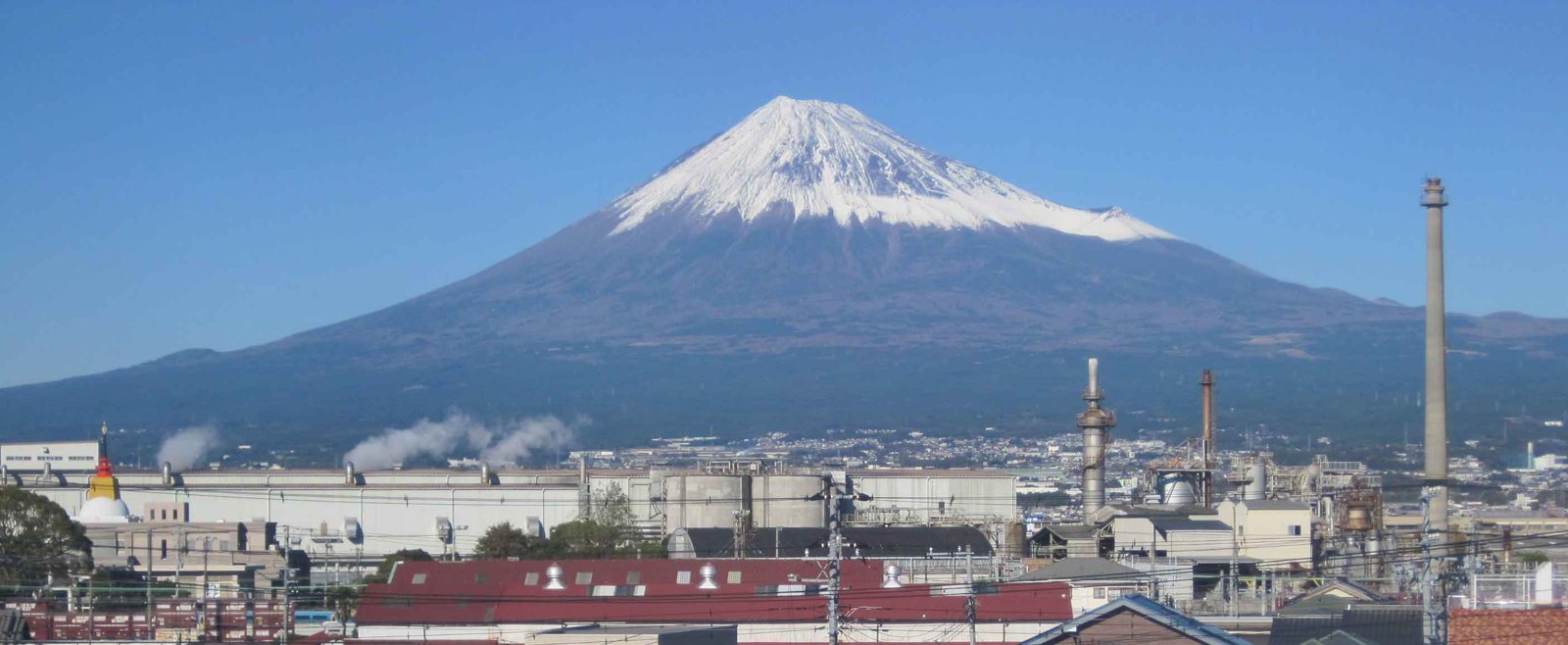
A school aimed at progression to universities and vocational schools. The advanced class aims to build the ability to follow university and vocational school classes and prepares for JLPT N1 and N2 and the EJU. Of the 49 graduates and completers in fiscal 2025, 47 went on to a university or vocational school in Japan or found employment. It is an 8-minute walk from JR Fuji Station in Fuji, Shizuoka, and Mt. Fuji can be seen from the classroom windows. Capacity is 160, and as of the 2026 announcement many students are from Myanmar, Nepal and Sri Lanka. Classes use Ezoe Method materials, which analyze sentence structure, and apartments near the school (3LDK and 3DK, up to 3 people) are used as dormitories.
Published data and school website
Tuition
If you saw a lower amount elsewhere, it may not include the admission fee and application fee
Median 1-year tuition in other areas — Kyoto ¥911,000(7 schools) · Kanagawa ¥880,000(8 schools) · Okinawa ¥858,000(6 schools) · Tokyo ¥840,600(56 schools) · Fukuoka ¥835,000(12 schools) · Hyogo ¥825,500(7 schools) · Osaka ¥814,000(27 schools) · Shizuoka ¥790,000(9 schools) · Chiba ¥745,333(10 schools) · Aichi ¥740,667(5 schools)
Total by intake
| Intake · length | Full course |
|---|---|
| 1 year 6 months | ¥1,135,000 |
| 1 year 9 months | ¥1,308,000 |
| 2 years | ¥1,480,000 |
Cost details · Course tables · Notes
- Per term
- ¥172,500 3 months
- One-time fees
- ¥100,000Application fee · Admission fee
| Duration | Total |
|---|---|
| 1 year 6 months | ¥1,135,000 |
| 1 year 9 months | ¥1,307,500 |
| 2 years | ¥1,480,000 |
★"Per term" and "One-time at start" were calculated by SALLAE from each course's total. The courses this school actually offers are 1 year 6 months onward — all amounts in the table are values calculated by SALLAE.
Calculated by SALLAE · verified 2026-09-16
Admission & dates
- Apr intake
- 2-year course · Application Mid-Jun – Aug 7 (Fri), 2026 · Classes 20 hours a week, 760 hours a year
- Jul intake
- 1 year 9 months course · Application December 20 of the year before enrollment to February 20 of the year of enrollment · Classes 20 hours a week, 760 hours a year
- Oct intake
- 1 year 6 months course · Application Note: for October intake, please contact the office directly. · Classes 20 hours a week, 760 hours a year
- Japanese level
- JLPT N5 level or above
A pass certificate (or the exam admission ticket if results are pending) or a certificate of at least 150 hours of Japanese study. J.TEST level F or above (FG 250 points or more) and NAT-TEST Level 5 or above are preferred. TOP J, JLCT, J-Cert, JPT and JPT Elementary are also accepted. A2 or above is an advantage.
Deadline and capacity rules
About 55 students. There is a limit on the number of applicants from one school or organization; only 1 from a school or organization applying for the first time. Completion of 12 years of schooling (11 years in some countries) or more, and age 18 or older. The applicant or family must be able to pay tuition and living expenses.
School website · 2026-06-24 updated
Classes
- Morning
- 08:30-11:50
- Afternoon
- 13:00-16:20
- Class assignment
- Level-based 6 stages
Materials · Subjects · Timetable · Details
- Materials
- Original teaching method: the Ezoe Method
- Subject
- Listening · Conversation · Composition · Reading · Kanji · An area incorporated into intermediate classes · In the advanced classes, classes that use computers include essay writing, handout creation, speeches, radio drama and project work.
Monday to Friday, 20 hours a week, 760 hours a year. The new curriculum will start in earnest in fiscal 2028.
What each level aims for · 3 levels
- Beginner levels 1 and 2
- Using picture textbooks and rhythmic oral practice, students acquire the communication skills needed for daily life and learn about 350 kanji.
- Intermediate levels 1 and 2
- Dealing with a variety of themes in Japanese society, students build reading, writing, listening and speaking skills in balance, and learn about 1,000 kanji by the end of Intermediate 2.
- Advanced 1 and 2
- Aiming for the ability to follow university and vocational school classes, students state opinions in discussions and debates and prepare for JLPT N1 and N2 and the EJU.
School website · Confirmed 2026-09-26
Documents
⚠ The study hours required for the Japanese study certificate and the validity period of the health certificate differ between sources. Please confirm with the school. Japanese language school study certificate (150 hours or more), health certificate: taken within the last 3 months (including a chest X-ray) · English-language application guidelines (April 2027 intake): study certificate of 300 hours or more; health certificate within 6 months. Applicants who can submit a pass certificate for a test at about CEFR A1 level or higher, or a certificate of 150 or more hours of Japanese study
- Admission form (application). What you enter in the admission form when applying is reflected in the application.
- 4 photos, 4 cm × 3 cm, with your name on the back
- Graduation certificate of your last school; submit the original. Note: translation required.
- Transcript of your last school; submit the original. Note: translation required. University graduates also submit the high school certificate.
- Proof of Japanese ability: JLPT, J-TEST, NAT-TEST, TOP-JThose planning to take a test submit a copy of the admission ticket
- Certificate of study at a Japanese language school (150 hours or more) and certificate of enrollment: stating the total course hours, the student's actual attendance hours and the name of the course taken
- Health certificate taken within the last 3 monthsIncluding a chest X-ray
- Family consent form, pledge and questionnaire: the forms are given to applicants who pass the second screening.
- Copy of passport. If you do not have a passport, submit a copy of your national ID card.
Financial supporter's documents · only if applicable · 8 application requirements
Submitted by the person paying the tuition (financial sponsor)
- Statement of financial support: the form is given to applicants who pass the second screening.
- Documents proving the relationship to the applicantCertified copy of family register or a document proving kinship. Sponsors in Japan: certificate of residence listing the same family. Translation required
- Income certificate and tax payment certificate for 1 year; submit originals. Note: translation required.
- Document proving occupation. Employees: certificate of employment from the employer; self-employed: business license; business owners: certified copy of the company registry. Note: translation required.
- Bank balance certificate; submit the original. Note: translation not required.
- Bank transaction statement or a copy of the passbook, for 1 year
- Statement on how the funds were accumulated. Not needed if the passbook (transaction history) covers 1 year or more and has no transactions that need explanation. Note: translation required.
Only if applicable
- High school certificate (for university graduates)
- Certificate of enrollment and transcript from the school you are attending (translation required) (If you are currently enrolled in a school)
- Certificate of employment (stating position, period of employment and duties). Note: translation required. (Only if you have work experience)
- Certificate of non-infection with tuberculosis (applicable countries: the Philippines, Vietnam, Indonesia, Nepal, Myanmar, China) (Those who live in the following countries)
Application requirements
Attach a Japanese translation to documents written in a language other than Japanese. All official certificates must have been issued within the last 3 months (documents from overseas: within 6 months of the issue date). If the applicant is the sponsor, submit items 3, 4, 5 and 6 of the sponsor's documents. If your age at elementary school entry differs from the norm, if you have a gap of 6 months or more other than study or employment, or if the actual graduation date differs from the one on the diploma, write an explanatory statement on a separate sheet. Write names and addresses in the alphabet, not in katakana. Submit the documents in person by an agent or the sponsor, or by post if you live overseas. Submitted documents cannot be returned regardless of the screening result (pass or fail). However, documents issued only once, such as graduation diplomas, are returned. Even after passing the second-stage selection or being granted admission, if any falsehood or deficiency is found in the documents, the pass or admission may be canceled
No separate documents for Korean applicants are specified. SALLAE is confirming this with the school.
School website · 2026-06-24 updated
Admission process
- Request an admission consultation
- Submission of application data and documents — Send the admission form, Japanese test pass certificate (or exam admission ticket) and transcript of your last school by email. Deadline: Friday, August 7, 2026.
- First screening: document review — Document screening, in order, from mid-July 2026. Screening items: eligibility, Japanese ability and study history, learning ability, educational background, grades and continuity of study, work history and eligibility for residence, study purpose and career plan, financial capacity.
- Second screening: interview by Zoom or in person — All applicants who pass the first screening have an interview by Zoom or in person (10–20 minutes each). An A1-level interview test (characters, vocabulary, conversation) checks your understanding of the school and of studying abroad, and your motivation to learn. An aptitude test may be given. Results are notified by email as they are decided.
- Submit all documents / pay the application fee — Scanned data by Friday, September 4; originals must arrive at the school by Friday, October 9. If payment of the ¥30,000 application fee cannot be confirmed by 15:00 Japan time on October 9, the application is cancelled.
- Application for status of residence (the school applies on your behalf) — Processed at the Nagoya Regional Immigration Services Bureau. Application date: planned for around Tuesday, November 17 – Tuesday, November 24, 2026.
- Results announced / tuition payment — Issue date: Thursday, February 18, 2027. An invoice for tuition and other fees is sent, and after payment is confirmed the Certificate of Eligibility is sent.
- Obtaining a visa — Apply for a visa at the Japanese embassy or consulate in your home country.
- Arrival and enrolment — Arrive in Japan 1 to 2 weeks before classes begin. Orientation and class placement test. Classes begin in early April 2027
- Placement test
- Orientation and class placement test
School website · Confirmed 2026-09-26
Progression
| FY2025 | Admitted |
|---|---|
| Graduates | 49 students |
Passing an exam
| Exam | Pass |
|---|---|
| JLPT N4–N2, NAT Level 4, etc. 2025 | 37 students |
The number of fiscal 2025 graduates and completers who passed (announced by the school).
Graduate schools: University of Shizuoka, Nihon University, Graduate School of Project Design, Josai University. Universities: Shizuoka Eiwa Gakuin University, Yokkaichi University, Meikai University, Seigakuin University. · Fujitsu Systems East, Kusanagi Auto Service, Increase, Toplessen Tokai, FLAMA, Plenty, Tom Tsushin Kogyo, Prime Delica, Colowide · School website · Confirmed 2026-09-26
Reviews
If you study here or used to, tell others what the classes, teachers and daily life were like. It helps anyone deciding on this school.
Write the first reviewUniversity prep
- Progression guidance — Students are interviewed in the career guidance room. Career guidance is a heavy burden on homeroom teachers, and a more systematic structure needs to be built.
- Exam preparation — From the intermediate level, workbooks for JLPT and EJU preparation are used, and in the advanced level students prepare for JLPT N1 and N2 and the EJU.
School website · 2026-06-24 updated
Daily-life support
- Airport pickup — If you use the pickup service from the airport, about ¥22,000–25,000.
- Entry orientation — At the entry orientation and the traffic safety class, life in Japan and traffic rules are explained through an interpreter.
- Life guidance — Problems faced in daily life, such as the pension system, how to dispose of garbage and traffic rules, are handled through individual guidance as needed and also explained to all students at the opening ceremony at the start of each term. A student handbook is being prepared.
- Part-time work guidance — Part-time job survey and guidance 2 months after arrival and after long breaks. Up to 28 hours a week during the term and up to 8 hours a day during long breaks
- Application for extension of period of stay — A briefing is held at the time of extension of the period of stay to explain residence rules. Fee for renewing status of residence (2nd year) about ¥30,000–40,000 (an increase from the current ¥6,000 is planned)
- Insurance — National Health Insurance and international student insurance: about ¥45,000 per year. Brochure: National Health Insurance about ¥20,000 for the first year; international student insurance about ¥18,000 for 12 months.
- Health checkup — Health checkup and vaccination costs: about ¥10,000 per year.
- Friendship Family — Local Japanese residents interested in international exchange become members, take part in school events and eat meals together with students.
- Disaster prevention and safety education — Disaster drill
The school's FAQ gives rent of about ¥30,000 for an apartment and living costs of about ¥60,000–80,000 per month including rent, food and utilities · Some apartments are shared by 2–3 people, and costs such as a deposit are charged separately on move-in.
School website · 2026-06-24 updated
Scholarship
- Kotoba Scholarship Foundation
- A scholarship society funded by the school's supporters; it grants or lends scholarships based on the student's financial situation and everyday study attitude · The amount is not stated on the website.
School website · Confirmed 2026-09-26
Students
105 enrolled (2026) · Capacity 160 National median: 180 students
Based on 105 students enrolled in 2026.
Public data from the Association for the Promotion of Japanese Language Education (Nisshinkyo) · verified 2026-09-20
School life
For 1 year
- Spring term
- Entrance ceremony · Hiking · Sports day · EJU 1 session
- Summer term
- JLPT 1 session · Speech contest (joint) · Mt. Fuji climb · School festival (joint)
- Autumn and winter terms
- Entrance ceremony (October intake) · EJU 2 sessions · JLPT 2 sessions · Graduation ceremony
Only the main events are listed, and timing varies by year.
- Thanks Fair
- Picnic, Tanabata, first calligraphy of the year, disaster drill, learning about Japanese culture
- Shizuoka Festival, Gion Festival, Ogi no Sato Festival, Welfare Festival
- Volunteer work, exchange with elementary schools and others, participation in international exchange fairs, accepting interns
On campus
- On campus
- Career guidance room — An air conditioner was installed in the career guidance room so that it can be used for many purposes, such as interviews with students.
- On campus
- Library room — To make the library easier to use, the school plans to prepare self-study materials and consider and implement measures that promote learning.
- Classroom
- Improved Wi-Fi, laptops switched to Chromebooks — In fiscal 2025, the school improved the Wi-Fi environment and switched laptops to Chromebooks.
2026–2027 academic calendar
- Spring break (fiscal 2025)
- Mar 20, 2026 – Apr 6, 2026
- Golden Week break
- Apr 25, 2026 – May 6, 2026
- Summer vacation
- Aug 1, 2026 – Aug 17, 2026
- Winter break
- Dec 24, 2026 – Jan 5, 2027
- Spring break
- Mar 20, 2027 – Mar 31, 2027 · Planned
School website · Confirmed 2026-09-26
Access
⚠ Rent varies by source — please confirm with the school. Association for the Promotion of Japanese Language Education public materials: ¥22,000–26,000 (per month) · School website brochure: rent ¥28,000–30,000 (planned to change from April 2027) · School website: rent ¥26,000–30,000 per month. The published materials and the English-language admission guide appear to show the amounts before the increase; the school has stated that the increase applies to students entering from April 2027.
- Transit
- JR Tokaido Line, Fuji Station, 8 min on foot
- Nearby
- From Shin-Fuji Station on the JR Shinkansen, there is a local bus (Fujikyu Shizuoka Bus) to the south exit of JR Fuji Station, and the nearest bus stop to the school is Jubei · From Tokyo Station to Shin-Fuji Station is about 1 hour by Shinkansen, and from Narita Airport to Shin-Fuji Station is about 4 hours and ¥5,000 by express bus (Keisei Bus) · Mt. Fuji can be seen from the classroom windows.
- Dormitory
- Available ¥22,000–26,000 (per month) · 3LDK / 3DK, up to 3 people can share. Rent ¥28,000–¥30,000. All rooms are near the school · Based on the school website
School website · Confirmed 2026-09-26
Dormitory — Brochure: rent ¥28,000–30,000 (planned to change from April 2027). Initial cost ¥25,000 (dormitory insurance, cleaning, etc.). Utilities are shared among residents. Wi-Fi, refrigerator, washing machine, microwave, etc. provided.
School website · Confirmed 2026-09-26
SALLAE has organized the school website and published data in English.
The update date is the day that material was last revised.
Photos are materials published by the school.
This information is compiled from official sources and is not updated daily. Please confirm with the official contact before signing or applying.