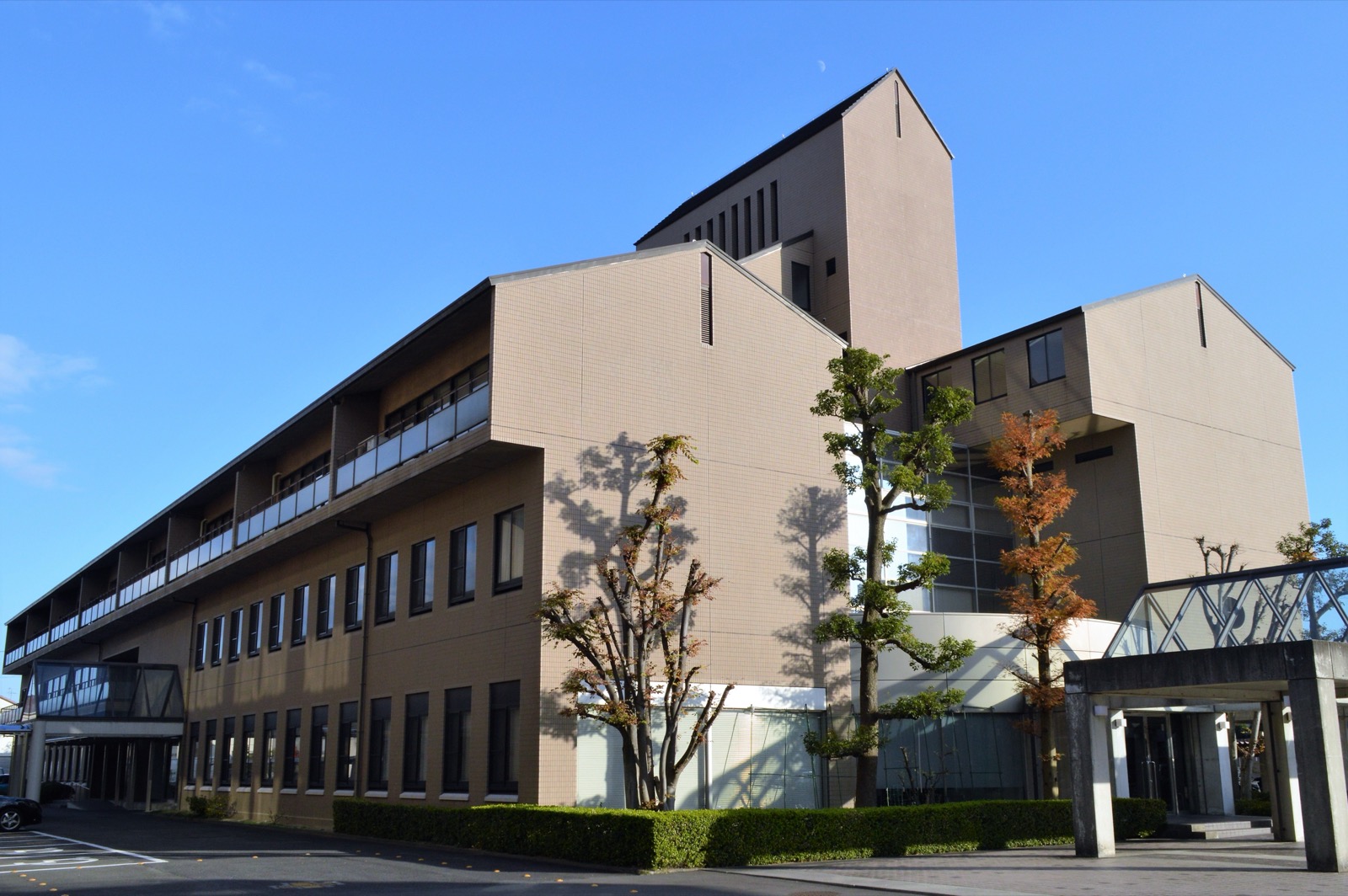
Nagoya Bunri University
名古屋文理大学
Opening soonApplications open 2/25 · Comprehensive Selection Special Exam (Late Round) for International Students
Compare with other universities →
Fees and conditions can change over time. Always check the school's guidelines before you apply.
Fees and conditions can change over time.
About the school
A private university founded in 1999. It has 963 students, including 0 international students (undergraduate 0 · graduate 0). There are 64 faculty members.
History · 9
- 1941
- The Ministry of Agriculture and Forestry foundation Food Science Research Institute, a predecessor of the school corporation, was founded.
- 1956
- Nagoya Nutrition College opened.
- 1966
- Nagoya Nutrition Junior College opened with a Food and Nutrition Department.
- 1988
- Renamed Nagoya Bunri Junior College.
- 1999
- Nagoya Bunri University opened with a Faculty of Information Culture, including Information Culture and Social Information departments.
- 2003
- Opened the Faculty of Health and Human Life (Health and Nutrition).
- 2005
- Merged and expanded the 2 Information Culture departments into Information Media, and opened Food Business in the Faculty of Health and Human Life.
- 2012
- Opened the Faculty of Information Media and Department of Information Media.
- 2025
- Opened the Graduate School of Health Information.
大学ポートレート(私学版) 名古屋文理大学 学生情報 · 大学ポートレート(私学版) 名古屋文理大学 教員情報 · 名古屋文理大学 大学の沿革
Admission requirements and dates
Nagoya Bunri University admits international students through 2 routes.Pick your situation below to see only the routes that fit · Based on the guidelines for April 2027 entry
EJUThe exam Japanese universities use for international student admission · June and November · also held outside Japan = Examination for Japanese University Admission · JLPTJapanese-Language Proficiency Test · N1 is the highest, then N2 = Japanese-Language Proficiency Test
Special Exam for International Students (Early Round)
Official name: 特別入試
This is the international student eligibility route within the same exam category as working adults and returnees. Selection uses an interview from 13:00 and oral questions about your chosen department.
Applications for this year have closed — below are the remaining dates for those who applied
Apply 9/14–10/1; interview 10/10; results 11/1.
- Apply 9/14~10/1
- →
- Exam 10/10
- →
- Results 11/1
- →
- Enroll ~11/9
Other requirements · Applicants must be foreign nationals aged at least 18 on April 1, 2027, who completed or expect to complete 12 years of schooling abroad. They must be permitted to enter Japan with a passport or equivalent certificate from a foreign mission and be able to obtain Student residence status after acceptance. Applicants who do not meet Japanese university entry requirements cannot enroll.
Special Exam for International Students (Late Round)
Official name: 特別入試
Same process as the early round, but interviews start at 10:00. Only 1 place per department is shared across working adults, returnees, and international students.
Applications open 2/25 · in 90 days
Apply 2/25–3/8; interview 3/10; results 3/13.
- Apply 2/25~3/8opens in 90 days
- →
- Exam 3/10
- →
- Results 3/13
- →
- Enroll ~3/18
Other requirements · Applicants must be foreign nationals aged at least 18 on April 1, 2027, who completed or expect to complete 12 years of schooling abroad. They must be permitted to enter Japan with a passport or equivalent certificate from a foreign mission and be able to obtain Student residence status after acceptance. Applicants who do not meet Japanese university entry requirements cannot enroll.
Good to know before applying
- The special exam is exclusive: accepted applicants must enroll here. The procedure for withdrawing after admission and requesting a refund of fees other than admission excludes exclusive selection routes (guide p. 31).
- Applicants must be foreign nationals aged at least 18 on April 1, 2027, with 12 years of schooling abroad completed or expected, JLPT N1, permission to enter with a passport or similar document, and the ability to obtain Student residence status after acceptance. Before applying, Admissions checks the 12-year schooling and Japanese university entry requirements. Call 0587-23-2400, 9:00–17:00; closed weekends and holidays.
- Special exam places shared by working adults, returnees, and international students are few: early round Health and Nutrition 2, Food Business 2, Information Media 4; late round 1 in each department. No number of accepted international students for the same year was found.
- University Portrait student data shows 0 international undergraduates in every year from 1 to 4 in 2026. This university has few international students.
- Application documents include a copy of your JLPT score certificate; a guarantor form signed by a person living in Japan who supports themselves and can guarantee all matters during your studies, with their residence record or residence card copy; and graduation certificates and transcripts from your last school and high school, with Japanese translations for non-Japanese documents.
- A separate scholarship entrance exam for students with foreign roots living in Japan on a residence status other than Student is available to high school students and similar applicants: apply 9/14–10/1, exam 10/10, scholarship ¥200,000, grade rating at least 3.0, and other requirements. Its eligibility differs from this privately funded international student exam.
名古屋文理大学 学生募集要項 抜粋
Fees
- First-year fees
- ¥1,430,000 ~ ¥1,480,000
- Paid at enrollment
- from ¥410,000
- Application fee
- ¥35,000
- For 2027 entry, year-1 payments include an admission fee of ¥200,000 in the first admission payment and education and facilities fees in the second, followed by tuition and lab/practical training fees in April and October.
- Health and Nutrition and Information Media: ¥420,000 during admission, ¥1,480,000 in year 1, and ¥5,320,000 over 4 years.
- Food Business: ¥410,000 during admission, ¥1,430,000 in year 1, and ¥5,120,000 over 4 years.
- From year 2, annual fees are ¥1,280,000, or ¥1,230,000 for Food Business.
- Additional student association, accident insurance, and alumni fees are paid only in the first semester of year 1 (2026 reference: ¥49,660).
- Transfer the admission, education, and facilities fees by the special exam admission deadline: early round 11/9; late round 3/18.
Places and fees by department 3
| Department | Places | First-year fees (¥) | |
|---|---|---|---|
| Faculty of Health and Human Life | |||
| Department of Health and Nutrition | For the special exam, shared places for working adults, returnees, and international students: 2 in the early round and 1 in the late round. | ¥1,480,000 | |
| Department of Food Business | For the special exam, shared places for working adults, returnees, and international students: 2 in the early round and 1 in the late round. | ¥1,430,000 | |
| Faculty of Information Media | |||
| Department of Information Media | For the special exam, shared places for working adults, returnees, and international students: 4 in the early round and 1 in the late round. | ¥1,480,000 | |
Places are the total across all international student admissions. Fees are for 2027 entry.
For 2027 entry · from the school's guidelines
Documents to prepare
Application form completed online and printed after paying the exam fee; residence card or similar proof, copied on both sides, only if living in Japan; graduation or expected graduation certificates and transcripts from your last school and high school, with Japanese translations if needed and authentication by the issuing school or public authority; copy of JLPT score certificate; guarantor form downloaded from the university website, handwritten, signed, and stamped by the guarantor; admission information form; and handwritten statement of purpose on the university form.
Graduate outcomes
No official employment results were found for international students alone. University-wide, among 225 graduates from April 2025 to March 2026, 200 found regular jobs or became self-employed and 2 continued studying.
University Portraits · figures for all students (not international students only)
Reviews from students
No reviews yet. If you attend or attended this school, please write the first one.
Write a review
Scholarships
- The university lists the national Higher Education Study Support System for fee reductions and JASSO grants and loans. Eligibility follows the JASSO grant rules; the guide does not say whether international students qualify.
- The 2027 entrance scholarship list does not include the special exam for working adults, returnees, and international students. A ¥100,000 grant for applicants who are university alumni, current students, or relatives within 2 degrees of either is available in every admission category, but cannot be combined with other university scholarships.
Student life support
- Bunri Student Heights, next to the campus, offers private one-room units for female students who cannot commute from home.
- Rent is ¥32,200 monthly including water and neighborhood fee.
- On entry, pay a ¥100,000 deposit and ¥60,000 maintenance fee; electricity is extra.
- No dorm information was found for male or international students.
Getting there
- Nagoya Bunri University (Inazawa Campus)
- About 15 minutes on foot from Konomiya Station on the Meitetsu Nagoya Main Line, or take a Meitetsu bus to Nagoya Bunri University and walk 1 minute. · Faculty of Health and Human Life: Health and Nutrition, Food Business; Faculty of Information Media: Information Media.
愛知県稲沢市稲沢町前田365
SALLAE compiled this from the school's admission guidelines and official sources (such as University Portraits).
Photo: Asturio Cantabrio · CC BY-SA 4.0 · Wikimedia Commons
This information is compiled from official sources and is not updated daily. Please confirm with the official contact before signing or applying.