Nippon Engineering College
日本工学院専門学校
Closes todayApply by 11/4 → exam on 11/14 · Apply from within Japan (for those with the 'Student' status of residence)
- Exam location
- Campus in Japan · some online ›
- Japanese requirement
- JLPT N2 · EJU 200 · BJT 400 ›
- Fees
- from ¥1,276,010 ›
Fees and conditions can change over time. Always check the school's guidelines before you apply.
Fees and conditions can change over time.
Homes near campus within 3 km · SALLAE building data
| Campus | Station | Homes | Lowest / month | Median |
|---|---|---|---|---|
| Kamata Campus (Nippon Engineering College) | Kamata Station (West Exit) on the JR Keihin-Tohoku Line, Tokyu Ikegami Line and Tokyu Tamagawa Line, 2 min walk | 12 | ¥56,500 | ¥66,500 |
| Hachioji Campus (Nippon Engineering College Hachioji) | Hachiojiminamino Station on the JR Yokohama Line (free school bus, about 5 minutes) / Hachioji Station on the JR Chuo Line (about 10 minutes by bus) | 0 | — | — |
About the school
A private vocational school founded in 1947. It has 4,916 students, including 809 international students. It has 2 campuses (Kamata Campus (Nippon Engineering College), Hachioji Campus (Nippon Engineering College Hachioji)); which one you attend depends on your department.
History · 5
- 1947
- 'Sobi Gakuen' was founded in Ota City, Tokyo (now Nishi-Kamata).
- 1953
- Established 'Nippon Television Technical School' and moved into engineering fields.
- 1976
- Under the Specialized Training College system, the school was renamed 'Nippon Engineering College'.
- 1987
- Nippon Engineering College Hachioji opened on the Hachioji campus.
- 2010
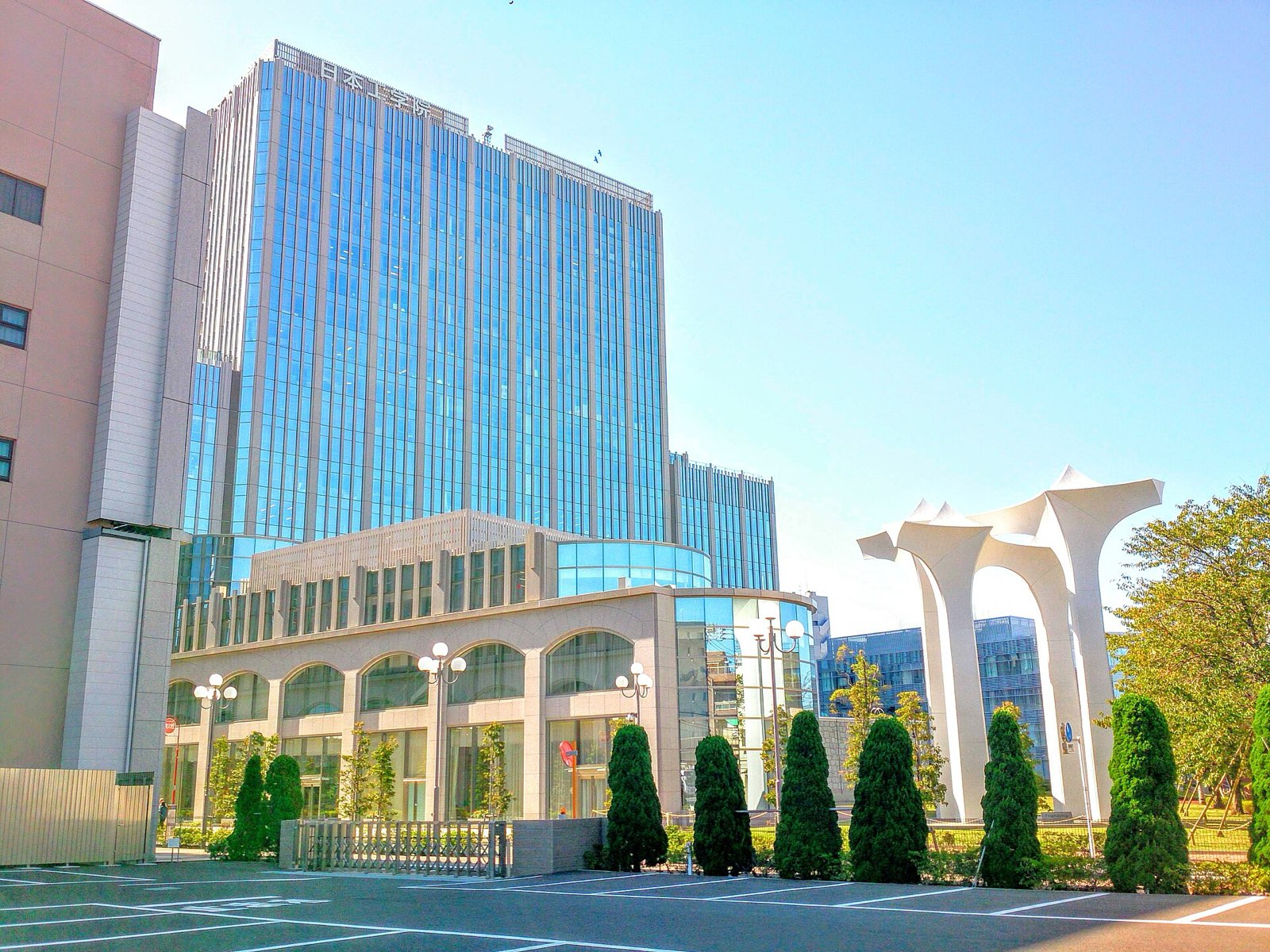
- A new building (Building 3) with 20 floors above ground and 1 basement floor was completed in Kamata.
University Portraits · school history · Wikidata
Admission requirements and dates
Nippon Engineering College admits international students through 2 routes.Pick your situation below to see only the routes that fit · Based on the guidelines for April 2027 entry
EJUThe exam Japanese universities use for international student admission · June and November · also held outside Japan = Examination for Japanese University Admission · JLPTJapanese-Language Proficiency Test · N1 is the highest, then N2 = Japanese-Language Proficiency Test
Apply in Japan · exam at the school
Official name: 国内出願(在留資格「留学」をお持ちの方)
If you are in Japan with the 'Student' status of residence, you are screened by documents, an interview and a written Japanese test. If you have Japanese test scores, you can choose an exemption from the written test or a try for the Special Scholarship for International Students. There are 8 rounds from September to March.
Accepting applications now · until 11/4
More rounds continue until 3/4
Apply with a local exam overseas
Official name: 国外出願(海外現地選考)
If you live outside Japan, you are screened by documents and an interview. Local selection exams are held in some countries and regions; for other countries, contact the school's International Student Center first. The school applies for your status of residence on your behalf.
Accepting applications now · closes when full
- Apply 9/1~closes when full
Good to know before applying
- If you are (or were) enrolled at a Japanese language school or vocational school, an attendance rate of 80% or more (per class period) is required to apply.
- You cannot take the exam unless all three of these are completed within the application period: online application, payment of the screening fee, and submission of application documents. Documents must arrive by the deadline (a postmark is not enough).
- If you are changing to the 'Student' status of residence from another status, you can take the exam up to Round 4. For Round 8, your period of stay (Student) must run to April 14, 2027 or later.
- Even if you withdraw by March 31, the screening fee and admission fee are not refunded. If your change or renewal of status of residence is not approved, your admission is canceled.
- After applying, you cannot change your preferred school or department.
日本工学院 留学生募集要項2027(国外出願用) · 日本工学院 留学生入学募集要項2027(令和9年度・国内出願用) · checked 2026-11-03
Fees
- Until graduation
- ¥2,346,010 ~ ¥5,289,770
- Admission fee
- ¥200,000
- Application fee
- ¥20,000
The screening fee is ¥20,000 for two-year courses and ¥25,000 for three- and four-year courses. For the Departments of Acupuncture and Moxibustion and Judo Therapy, the admission fee is ¥300,000. Textbooks and teaching materials (about ¥21,000 to ¥112,000) and a laptop or tablet are extra.
Fees by department 57
| Department | Years | Quota | Until graduation (¥) |
|---|---|---|---|
| Department of Broadcasting and Video | 2 years | 120 | 2,746,010 |
| Department of Broadcasting and Video | 2 years | 120 | 2,746,010 |
| Department of Video Creators | 4 years | 40 | 5,289,770 |
| Department of Voice Acting and Theater | 2 years | 120 | 2,746,010 |
| Department of Voice Acting and Theater | 2 years | 80 | 2,746,010 |
| Department of Theater Staff | 2 years | 80 | 2,746,010 |
| Department of Manga and Animation (four-year) ● | 4 years | 80 | 5,289,770 |
| Department of Manga and Animation (four-year) ● | 4 years | 80 | 5,289,770 |
| Department of Manga and Animation ● | 2 years | 160 | 2,746,010 |
| Department of Manga and Animation ● | 2 years | 120 | 2,746,010 |
| Department of Global Animation Creators | 4 years | 40 | 5,289,770 |
| Department of Game Creators (four-year) ● | 4 years | 120 | 5,289,770 |
| Department of Game Creators (four-year) ● | 4 years | 80 | 5,289,770 |
| Department of Game Creators (three-year) | 3 years | 40 | 4,017,940 |
| Department of Game Creators (three-year) | 3 years | 40 | 4,017,940 |
| Department of Game Programming | 2 years | 40 | 2,746,010 |
| Department of Game Programming | 2 years | 40 | 2,746,010 |
| Department of CG and Video ● | 3 years | 120 | 4,017,940 |
| Department of CG and Video ● | 3 years | 80 | 4,017,940 |
| Department of Design | 3 years | 80 | 4,017,940 |
| Department of Design ● | 3 years | 80 | 4,017,940 |
| Department of Music Artists | 2 years | 80 | 2,836,010 |
| Department of Music Artists | 2 years | 40 | 2,836,010 |
| Department of Concerts and Events | 2 years | 360 | 2,836,010 |
| Department of Concerts and Events | 2 years | 160 | 2,836,010 |
| Department of Sound Arts ● | 2 years | 120 | 2,836,010 |
| Department of Sound Arts ● | 2 years | 40 | 2,836,010 |
| Department of Dance Performance | 2 years | 80 | 2,836,010 |
| Department of Dance Performance | 2 years | 40 | 2,836,010 |
| Department of IT Specialists ● | 4 years | 80 | 4,729,770 |
| Department of IT Specialists ● | 4 years | 80 | 4,729,770 |
| Department of AI Systems ● | 2 years | 80 | 2,476,010 |
| Department of AI Systems ● | 2 years | 80 | 2,476,010 |
| Department of Information Processing ● | 2 years | 160 | 2,476,010 |
| Department of Information Processing ● | 2 years | 160 | 2,476,010 |
| Department of Cybersecurity | 4 years | 40 | 4,729,770 |
| Department of Cybersecurity | 4 years | 40 | 4,729,770 |
| Department of Hotel and Tourism | 2 years | 40 | 2,626,010 |
| Department of Airport Staff | 2 years | 40 | 2,726,010 |
| Department of Electronics and Electrical Engineering ● | 2 years | 120 | 2,426,010 |
| Department of Electronics and Electrical Engineering ● | 2 years | 120 | 2,426,010 |
| Department of Automobile Maintenance ● | 2 years | 75 | 2,496,010 |
| Department of Applied Biology ● | 2 years | 40 | 2,496,010 |
| Department of Architecture ● | 4 years | 40 | 4,749,770 |
| Department of Architecture ● | 4 years | 80 | 4,749,770 |
| Department of Architectural Design ● | 2 years | 80 | 2,466,010 |
| Department of Architectural Design ● | 2 years | 80 | 2,466,010 |
| Department of Civil Engineering and Landscaping ● | 2 years | 40 | 2,346,010 |
| Department of Mechanical Design ● | 2 years | 40 | 2,426,010 |
| Department of Mechanical Design ● | 2 years | 40 | 2,426,010 |
| Department of Figure Modeling | 4 years | 40 | 5,029,770 |
| Department of Sports Trainers (three-year) ● | 3 years | 40 | 3,767,940 |
| Department of Sports Trainers ● | 2 years | 40 | 2,586,010 |
| Department of Sports and Health (three-year) | 3 years | 40 | 3,767,940 |
| Department of Sports and Health ● | 2 years | 40 | 2,586,010 |
| Department of Acupuncture and Moxibustion | 3 years | 30 | 4,928,940 |
| Department of Judo Therapy ● | 3 years | 30 | 4,928,940 |
● Course certified by MEXT under the "Career Development Program for International Students" (leads to work in Japan after graduation) · quotas include Japanese students.
For 2027 entry · from the school's guidelines
Documents to prepare
Document checklist, résumé, graduation certificate and academic transcript from your last school, proof of Japanese ability (JLPT, EJU, BJT, JPT, or grades and attendance records from a Japanese language school), statement of funding, questionnaire on study expenses, proof of ability to pay (bank balance certificate, employment certificate), consent form for studying abroad, copies of passport and residence card, etc.
Graduate outcomes
- Graduates (2025 academic year)
- 1,955 · Total for all departments of the Kamata school (Nippon Engineering College), summing the department-level figures on Form 2. The Hachioji school is a separate school and is not included. Employed people include the self-employed.
- Full-time employment
- 1,610 · 82%
- Went on to graduate school etc.
- 92 · 5%
Announced by the school: it publishes international students' employment results (company names) and transfer-to-university results (university names). We could not find the number of international students or the employment rate in official materials.
University Portraits · figures for all students (not international students only)
Reviews from students
No reviews yet. If you attend or attended this school, please write the first one.
Write a review
Scholarships
- Special Scholarship for International Students (Kamata and Hachioji campuses): based on the result of the written test, ¥100,000, ¥200,000 or ¥300,000 is waived from the admission fee and tuition. Everyone who takes the written test is considered.
- Hamaben Scholarship (Kamata campus): selected after enrollment; a few students receive ¥300,000 per year.
- Student Dormitory Scholarship System (Hachioji campus): room fees for residents of Student Hall 1 are reduced or waived until graduation (only for exam category Round 1).
- MEXT Honors Scholarship for Privately Financed International Students: the school recommends students with good grades and attendance in their first year after enrollment (a few students, ¥48,000 per month).
Student life support
The school runs 4 dormitories at the Kamata campus and 3 at the Hachioji campus (dorm fees are paid every 6 months and include breakfast and dinner).
Getting there
- Kamata Campus (Nippon Engineering College)
- Kamata Station (West Exit) on the JR Keihin-Tohoku Line, Tokyu Ikegami Line and Tokyu Tamagawa Line, 2 min walk
東京都大田区西蒲田5-23-22 - Hachioji Campus (Nippon Engineering College Hachioji)
- Hachiojiminamino Station on the JR Yokohama Line (free school bus, about 5 minutes) / Hachioji Station on the JR Chuo Line (about 10 minutes by bus)
東京都八王子市片倉町1404-1
SALLAE compiled this from the school's admission guidelines and official sources (such as University Portraits). Dates and amounts can change, so always check the school's guidelines before you apply.
Photo: Rebirth10 · CC BY-SA 4.0 · Wikimedia Commons