Osaki City Osaki Japanese Language School
Osaki City Osaki Japanese Language School
- Admission
- Twice a year · April and October ›
- Japanese at entry
- From N5 ›
- Dormitory fee
- From ¥120,000/month ›
Compare side by side with other schools →
Tuition and conditions may change depending on the intake. If you contact us, we will check with the school and give you accurate details.
Nearby schools comparedBy distance · no ads or paid placement
- Osaki City Osaki Japanese Language SchoolThis schoolTuition/yr¥880,000Progression—IntakesApr · Oct
- Richinomori Japanese Language School Sendai Campus35.3km›Tuition/yr¥740,000Progression86%IntakesApr
- Kokusai Academy Language School36.2km›Tuition/yr¥837,000Progression97%IntakesApr
- Tohoku Foreign Language and Business College36.8km›Tuition/yr¥819,000Progression92%IntakesApr · Oct
— means SALLAE has not yet found the data.
About the school
A public school run directly by Osaki City. Its progression course aims at both further study (graduate school, university, vocational school) and employment in Japan; of its first 16 graduates (March 2026), 7 found jobs in Japan and 3 progressed to further study (1 graduate school, 2 vocational schools). Classes are held in a renovated former elementary school, 4 periods a day, and the 2-year course includes 128 hours of "O-Time" classes in which students interact with local residents and students. All students must live in the dormitory (private room ¥120,000/month), but the city supports half of tuition and dorm fees plus ¥30,000 a month for living expenses, and applications are accepted at local centers that Miyagi Prefecture has set up in Taiwan, Indonesia and Vietnam.
Published data and school website
Tuition
If you saw a lower amount elsewhere, it may not include the admission fee and application fee
Median 1-year tuition in other areas — Kyoto ¥911,000(7 schools) · Kanagawa ¥880,000(8 schools) · Okinawa ¥858,000(6 schools) · Tokyo ¥840,600(56 schools) · Fukuoka ¥835,000(12 schools) · Hyogo ¥825,500(7 schools) · Osaka ¥814,000(27 schools) · Shizuoka ¥790,000(9 schools) · Chiba ¥745,333(10 schools) · Aichi ¥740,667(5 schools)
Admission & dates
- Apr intake
- 2-year course · Classes 1,568 hr
- Apr intake
- 1-year course · Classes 784 hr
- Oct intake
- 1 year 6 months course · Classes 1,176 hr
- Japanese level
- JLPT N5 or above (varies by course)
2-year course: A1 (N5 equivalent) or above; 1 year 6 months course: A2 (N4 equivalent) or above; 1-year course: B1 (N3 equivalent) or above. Goal at completion for all courses: B2 (N2 equivalent) or above
Deadline and capacity rules
Conditions: motivation; completion of 12 or more years of schooling abroad; age 18 or over at enrollment; Student status of residence; agreement to the all-dormitory system. Capacity is 20 per course (60 for the whole school)
School website · 2026-07-08 updated
Classes
- Morning
- 10:00-14:20 1 period = 45 min, 4 periods a day (10:00–14:20). 60-min lunch break after period 2
- AM/PM placement
- The sample timetables for all three courses use the same periods 1–4 (10:00–14:20), with no morning/afternoon division noted
Materials · Subjects · Timetable · Details
- Subject
- General Japanese · Grammar · Reading · Comprehensive reading · Listening · Extensive reading · Kanji · Vocabulary · Writing · Career guidance · Career prep · Exam prep · Comprehensive practice · O-time · Special activities · O-Time is the school's own subject that builds Japanese ability through exchange and collaboration with people and organizations outside the school and through hands-on activities
2-year course (example, term 1) 1,568 hours
| Mon | Tue | Wed | Thu | Fri | |
|---|---|---|---|---|---|
| Period 1 10:00–10:45 | Integrated Japanese (introductory–beginner 1) | Integrated Japanese (introductory–beginner 1) | Integrated Japanese (introductory–beginner 1) | Integrated Japanese (introductory–beginner 1) | Integrated Japanese (introductory–beginner 1) |
| Period 2 10:55–11:40 | Integrated Japanese (introductory–beginner 1) | Integrated Japanese (introductory–beginner 1) | Integrated Japanese (introductory–beginner 1) | Integrated Japanese (introductory–beginner 1) | Integrated Japanese (introductory–beginner 1) |
| Period 3 12:40–13:25 | Integrated Japanese (introductory–beginner 1) | Kanji (beginner) | O-Time / Integrated Japanese (beginner 1) | Kanji (beginner) | Composition (beginner) / Special activities |
| Period 4 13:35–14:20 | Extensive reading (introductory) | Integrated Japanese (introductory–beginner 1) | O-Time / Integrated Japanese (beginner 1) | Kanji (beginner) | Composition (beginner) / Special activities |
1 year 6 months course (example, term 1) 1,176 hours
| Mon | Tue | Wed | Thu | Fri | |
|---|---|---|---|---|---|
| Period 1 10:00–10:45 | Integrated Japanese (pre-intermediate) / Grammar (pre-intermediate) | Integrated Japanese (pre-intermediate) / Grammar (pre-intermediate) | Integrated Japanese (pre-intermediate) / Grammar (pre-intermediate) | Integrated Japanese (pre-intermediate) / Grammar (pre-intermediate) | Integrated Japanese (pre-intermediate) / Grammar (pre-intermediate) |
| Period 2 10:55–11:40 | Integrated Japanese (pre-intermediate) / Grammar (pre-intermediate) | Integrated Japanese (pre-intermediate) / Grammar (pre-intermediate) | Integrated Japanese (pre-intermediate) / Grammar (pre-intermediate) | Integrated Japanese (pre-intermediate) / Grammar (pre-intermediate) | Integrated Japanese (pre-intermediate) / Grammar (pre-intermediate) |
| Period 3 12:40–13:25 | Extensive reading (pre-intermediate) | Kanji (intermediate) | O-Time (intermediate) / Special activities | Reading (pre-intermediate) | Composition (pre-intermediate) / Career guidance (intermediate) |
| Period 4 13:35–14:20 | Reading (beginner) | Kanji (intermediate) | O-Time (intermediate) / Special activities | Reading (pre-intermediate) | Composition (pre-intermediate) / Career guidance (intermediate) |
1-year course (example, term 1) 784 hours
| Mon | Tue | Wed | Thu | Fri | |
|---|---|---|---|---|---|
| Period 1 10:00–10:45 | Integrated Japanese (intermediate 2) | Kanji (intermediate) | Integrated Japanese (intermediate 2) | Kanji (intermediate) / Integrated Japanese (intermediate 2) | Integrated Japanese (intermediate 2) |
| Period 2 10:55–11:40 | Integrated Japanese (intermediate 2) | Kanji (intermediate) | Integrated Japanese (intermediate 2) | Kanji (intermediate) / Integrated Japanese (intermediate 2) | Integrated Japanese (intermediate 2) / Vocabulary (intermediate) |
| Period 3 12:40–13:25 | Vocabulary (intermediate) | Career preparation (progression and employment) / Special activities | O-Time (intermediate) / Special activities | Vocabulary (intermediate) | Composition (intermediate) |
| Period 4 13:35–14:20 | Exam preparation (N3) | Career preparation (progression and employment) / Special activities | O-Time (intermediate) / Special activities | Extensive reading (intermediate) | Composition (intermediate) |
Class hours by subject
| Subject | 2 years | 1 year 6 months | 1 year |
|---|---|---|---|
| Comprehensive Japanese | 450 hr | 226 hr | 86 hr |
| Grammar | 124 hr | 124 hr | 88 hr |
| Reading comprehension | 102 hr | 100 hours | 42 hr |
| Integrated reading | 64 hr | 64 hr | 64 hr |
| Listening comprehension | 40 hr | 40 hr | 40 hr |
| Extensive reading | 80 hours | 60 hours | 40 hr |
| Kanji | 210 hr | 144 hr | 94 hr |
| Vocabulary | 88 hr | 88 hr | 88 hr |
| Composition | 102 hr | 72 hr | 52 hr |
| Career guidance | 32 hr | 28 hr | 10 hours |
| Career preparation | 32 hr | 32 hr | 32 hr |
| Exam preparation | 32 hr | 32 hr | 32 hr |
| Comprehensive practice | 20 hours | 20 hours | 20 hours |
| O-Time | 128 hr | 96 hours | 64 hr |
| Special activities | 64 hr | 50 hr | 32 hr |
1 period = 45 min; 4 terms a year; grading in 5 levels. Completion requires 760/1,140/1,520 or more class hours, enrollment of 1 year or more, attendance of 80% or more, B2 equivalent and no unpaid fees
School website · 2026-07-08 updated
Documents
A list of required documents is not posted on the school website. Because it differs by country/region, please contact the local Miyagi Prefecture Career Support Center (Taiwan, Indonesia, Vietnam) directly. Standards for Korean applicants are not stated. SALLAE is confirming this with the school.
School website · 2026-07-08 updated
Admission process
- Request an admission consultation — Submit the application form and required documents to the Miyagi Prefecture Career Support Center (located in Taiwan, Indonesia and Vietnam)
- Submit application form and documents — Submit the application form and required documents to the Miyagi Prefecture Career Support Center. Required documents differ slightly by country/region, so please ask the local center
- Payment of the admission screening fee — At application
- First screening (document screening)
- Second screening (Japanese written test and interview) — Interviews are held with both academic and administrative staff present
- Apply for the Certificate of Eligibility (CoE)
- Certificate of Eligibility (CoE) issued → payment of school fees
- Receive the admission permit
- Visa application — Japanese diplomatic mission abroad
- Arrival in Japan → enrollment
- Placement test
- The written test and interview in the admission screening measure applicants' Japanese ability so they can be placed in a suitable course.
School website · 2026-07-08 updated
Short-term study
- Open now?
- Rolling admissions, so availability varies from time to time — SALLAE will confirm with the school
Course without a student visa
- Short-term courses (3-month, 2-month and 1-month courses) — For those with a status of residence other than student. Starts at the beginning of each month, 1–3 months, Monday–Friday, 4 periods a day, about 50 students a year; apply through the inquiry form
- Special courses (class lessons and private lessons) — Both class lessons and private lessons are available at any time. Hours and duration are decided in advance consultation. 1 period = 45 min; about 20 students a year
★Short-term courses are not listed in the published data — it counts only student-visa courses.
School website · 2025-02-26 updated
Graduate outcomes
| FY2025 | Admitted |
|---|---|
| Graduate school | 1 student |
| Vocational school | 2 students |
| Employment | 7 students |
| Graduates | 16 students |
Graduation ceremony on March 18, 2026 (Reiwa 7 school year). The graduates were 16 students from the 1-year progression course that entered in April of Reiwa 7; 6 returned to their home countries · 7 found jobs in Japan (5 of them in Miyagi Prefecture: 1 in Sendai, 4 in Osaki) · School website · Updated 2026-03-23
Reviews
If you study here or used to, tell others what the classes, teachers and daily life were like. It helps anyone deciding on this school.
Write the first reviewUniversity prep
- Career guidance and career preparation are set up as class subjects — Career guidance consists of information and individual meetings; career preparation is a subject where students learn individual interview and exam preparation after deciding their path, and how to prepare documents
- Special classes outside lessons — Special classes outside regular lessons are set up for guidance
- Miyagi University special lecture — In the career preparation class, a special lecture by Miyagi University (May 20); 18 students in the progression class visited the Taihaku and Yamato campuses (Jun 9)
- Joint company information session — Joint company information session hosted by the Diversity Promotion Office, Community Development Promotion Division, Osaki City. In August 2026, 9 companies in the prefecture will take part, and some plan factory tours
- Job listings for students — Working with the Osaki Industry Promotion Organization (general incorporated association) and local organizations and companies in the city, the school provides job listings to students.
School website · 2026-05-27 updated
Daily-life support
- Miyagi Prefecture Career Support Center — The school works with the Miyagi Prefecture Career Support Center, set up by Miyagi Prefecture, on student recruitment and support after enrollment.
- City hall services — Students can also receive administrative services from public bodies such as the Osaki City Hall.
- Orientation — At the post-arrival orientation, students tour the school and its surroundings and receive explanations of the school regulations, the student handbook and the crime-prevention handbook
- National Health Insurance — Students are enrolled in National Health Insurance at the city hall promptly after arriving in Japan
- Health checkup — A required health checkup is given at enrollment or once a year
- Status of residence renewal guidance — Procedures for renewing the status of residence are communicated to everyone and individually, with guidance and advice
- Part-time work hour reminders — Students are regularly reminded of the upper limit on activity outside the permitted status (part-time work)
- Individual meetings with homeroom teacher — Once every half year, the homeroom teacher holds individual meetings, working in coordination with the student dormitory
- Traffic safety / crime prevention class — With the Furukawa Police Station and the Osaki City Disaster Prevention and Safety Division: training in how to ride a bicycle, cross railroad crossings and crosswalks, protect against SNS scams, and call 110
- Disaster prevention and evacuation drill — With guidance from the Furukawa Fire Department: learn how to call 119 (three-way call), CPR and how to use a fire extinguisher
- Return-home preparation — For graduates and others, the school asks about their return schedule, confirms their return home and guides them in closing bank accounts
School website · 2026-05-27 updated
Scholarship
- International student support money (school fees)
- 50% of school fees (tuition, educational activity fee, materials fee, facility fee) is provided. 2-year course ¥810,000; 1 year 6 months course ¥607,500; 1-year course ¥405,000. Transferred to the designated bank in the month after payment
- International student support money (dorm fees)
- Monthly ¥60,000 × 2 years50% of student dormitory rent. 2-year course ¥1,440,000; 1 year 6 months course ¥1,080,000; 1-year course ¥720,000 (dorm fee is ¥120,000 per month)
- International student support money (living expenses)
- Monthly ¥30,000 × 2 yearsThe living support money is ¥30,000 per month. 1 year 6 months course ¥540,000; 1-year course ¥360,000 (2-year course ¥720,000)
- Tuition reduction
- For students with excellent grades who have difficulty paying, 50% of tuition and similar fees, excluding the application fee, admission fee and insurance fee, is waived. Apply at least 20 days before the payment deadline (Enforcement Rules, Article 8)
School guide · 2025-01-31 updated
Students
28 students enrolled (2025) · Capacity 60 National median: 180 students
Based on 28 students enrolled in 2025.
Published by MEXT · Confirmed 2026-09-20
School life
For 1 year
- 4
- Entrance ceremony · Start-of-term ceremony · Welcome get-together for new students
- 5
- Health checkup · Traffic safety and crime prevention class
- 6
- Term 1 closing ceremony
- 7
- Start-of-term ceremony · Summer field training
- 8
- Disaster prevention and evacuation drill
- 9
- Term 2 closing ceremony
- 10
- Entrance ceremony · Start-of-term ceremony · Welcome get-together for new students
- 11
- Health checkup · Traffic safety and crime prevention class
- 12
- Term 3 closing ceremony
- 1
- Start-of-term ceremony · Winter field training
- 2
- Disaster prevention and evacuation drill
- 3
- Graduation ceremony · Term 4 closing ceremony
Students also take part in community exchange activities, festivals and events from time to time
- In O-Time, students go cherry-blossom viewing, plant and harvest rice, tour a sake brewery, cook zunda dishes, try flower arrangement, visit the Osaki City Council and the library.
- Exchange with local elementary, junior high and high school students, university students, the senior college and city and town officials
- Take part in local festivals such as the Furukawa Odori and the Date warrior parade at the Masamune-ko Festival
- After-school yukata dressing classes and a bridal costume (uchikake) experience
- Summer field trip to Matsushima and Ishinomaki; winter field study to the earthquake ruins, Arahama Elementary School and a strawberry farm
- Presentation of results from the "Integrated Seminar" of the 1-year progression course. Presentations include tourism card games, videos, picture books and essays
On campus
- School building
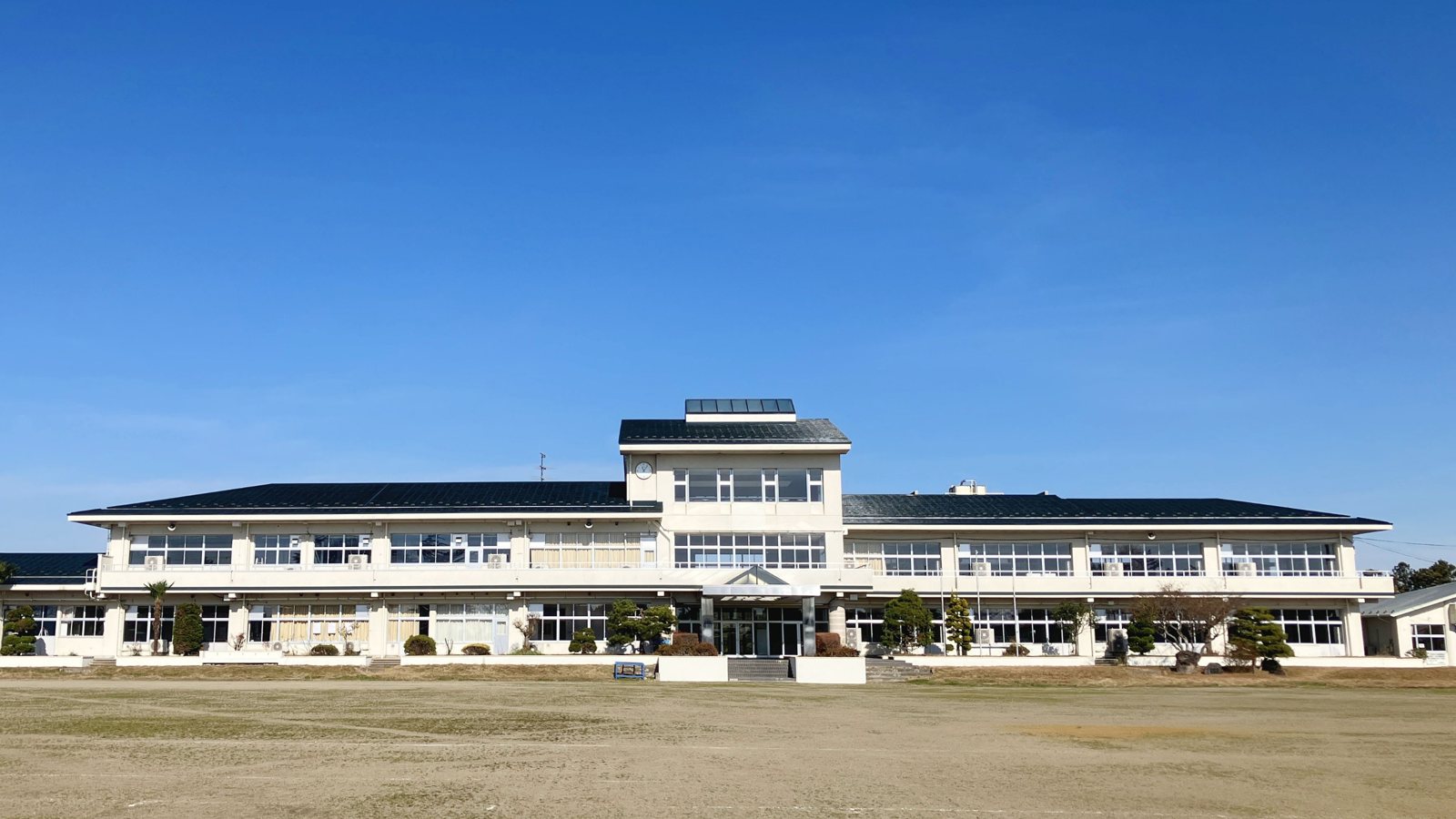
- Former Nishi-Furukawa Elementary School — The former Nishi-Furukawa Elementary School, closed in March 2023 due to school consolidation, has been renovated for use as the school building.
- Classroom
- Interactive whiteboards and projectors — Teachers use ICT devices such as tablets and give careful lessons that also accommodate individual instruction
- School building
- Library, health room, hall, observation room — Relaxation spaces such as the "Everyone's Room"
- Throughout the building
- Free Wi-Fi
2025–2026 academic calendar · Older data
- Weekends
- Saturdays and Sundays
- Public holidays
- Holidays set out in the Act on National Holidays (Act No. 178 of 1948)
- Spring break
- Mar 21 – Apr 7
- Summer vacation
- Jun 21 – Jul 7
- Obon holiday
- Aug 11–16
- Autumn break
- Sep 23 – Oct 7
- Winter break
- Dec 21 – Jan 7 (following year)
School website · 2026-07-08 updated
Access
- Transit
- JR Rikuu East Line, about 8 min, then Nishi-Furukawa Station, 10 min walk
Miyako Bus, about 18 min, then Nishi-Furukawa Station-mae, 12 min walk - Nearby
- A quiet place surrounded by greenery. To Furukawa Station: about 2 hr 40 min from Haneda Airport, about 3 hr 10 min from Narita Airport, about 1 hr 10 min from Sendai Airport
- Dormitory
- Available · Single room (private) ¥120,000/month; double room (for couples) ¥200,000/month. Meals are not provided · Based on the school website
School website · 2025-02-25 updated
Dorm — All students live in the dormitory. 100 rooms (60 rooms due for completion around March 2025, 40 rooms around March 2027), resident manager on site 24 hours, each room has a desk, chair, bed, refrigerator and free Wi-Fi
School website · 2025-05-13 updated
Japanese language institution certified by MEXT Certification no. 20241040001 · certified Oct 30, 2024 →
SALLAE has organized the school website and published data in English.
The update date is the day that material was last revised.
Photos are materials published by the school.
This information is compiled from official sources and is not updated daily. Please confirm with the official contact before signing or applying.