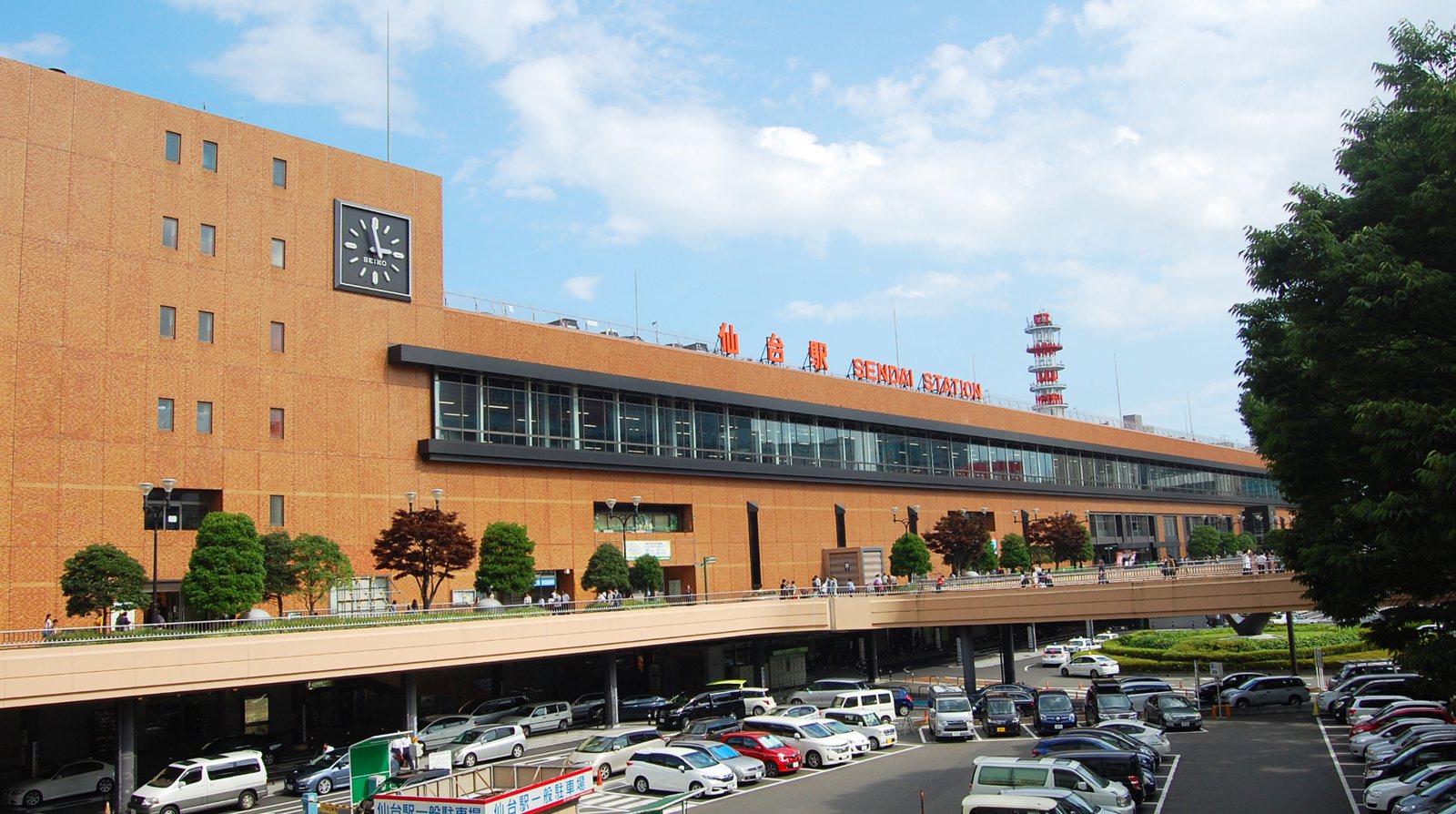
Richinomori Japanese Language School Sendai Campus
Richinomori Japanese Language School Sendai Campus
- Course
- Further-study course only ›
- Tuition
- On the cheaper side nationwide ›
- Dormitory fee
- From ¥25,000 per month ›
- Admission
- Once a year · April only ›
Compare side by side with other schools →
Tuition and conditions may change depending on the intake. If you contact us, we will check with the school and give you accurate details.
Nearby schools comparedBy distance · no ads or paid placement
- Richinomori Japanese Language School Sendai CampusThis schoolTuition/yr¥740,000Progression86%IntakesApr
- Kokusai Academy Language School3.6km›Tuition/yr¥837,000Progression97%IntakesApr
- Tohoku Foreign Language and Business College3.6km›Tuition/yr¥819,000Progression92%IntakesApr · Oct
- Osaki City Osaki Japanese Language School35.3km›Tuition/yr¥880,000Progression—IntakesApr · Oct
— means SALLAE has not yet found the data.
About the school
This school focuses on progression to vocational schools. The FY2027 application guidelines state the purpose of the course as "mainly for international students from non-kanji-using countries who aim to progress to higher education institutions such as vocational schools," and 91 of the 97 graduates of the 1st and 2nd classes went on to vocational schools (in FY2025, 61 of 72 completers progressed). Near the Hirose River in Aoba-ku, Sendai, it has accepted students since 2022, and in June 2026 it had 121 students (capacity 150); for FY2027 it recruits only for the 2-year course starting in April. For the first 6 months, students must live in the school dormitory, about 10 minutes on foot (separate for men and women, shared rooms, ¥25,000/month plus ¥5,000 for water and utilities), and staff also help in English, Nepali and Hindi.
Published data and school website
Tuition
⚠ Tuition refund if you withdraw after enrollment varies by source — please confirm with the school. Withdrawal within 6 months of enrollment: tuition is refunded minus 6 months' worth. Withdrawal after 6 months of enrollment: tuition is refunded for the months starting from the month after the date the principal dismissed the student. · For tuition already paid, if you withdraw for any reason after enrollment, tuition is not refunded. However, depending on the reason, the principal may decide to refund it. Two documents from the same school say different things. Please confirm with the school before enrolling
If you saw a lower amount elsewhere, it may not include the admission fee and application fee
Median 1-year tuition in other areas — Kyoto ¥911,000(7 schools) · Kanagawa ¥880,000(8 schools) · Okinawa ¥858,000(6 schools) · Tokyo ¥840,600(56 schools) · Fukuoka ¥835,000(12 schools) · Hyogo ¥825,500(7 schools) · Osaka ¥814,000(27 schools) · Shizuoka ¥790,000(9 schools) · Chiba ¥745,333(10 schools) · Aichi ¥740,667(5 schools)
Total by intake
| Intake · length | Full course |
|---|---|
| 1 year 6 months | ¥1,050,000 |
| 2 years | ¥1,360,000 |
Cost details · course tables · notes · 3 items
- Per term
- ¥155,000 3 months
- One-time fees
- ¥120,000Application fee · Admission fee
| Duration | Total |
|---|---|
| 1 year 6 months | ¥1,050,000 |
| 1 year 9 months | ¥1,205,000 |
| 2 years | ¥1,360,000 |
★"Per term" and "One-time at start" were calculated by SALLAE from each course's total. The courses this school actually offers are 1 year 6 months onward — all amounts in the table are values calculated by SALLAE.
Calculated by SALLAE · verified 2026-09-16
Whether it is refundable
- If the Certificate of Eligibility was issued but you did not apply for a visa and did not come to Japan
- Refunded after the admission permit and Certificate of Eligibility are returned to the school. Application fee: not refunded · Admission fee: not refunded · Tuition: refunded · Other costs: refunded
- If you applied for an entry visa at a Japanese mission abroad but were refused and could not come to Japan
- Refunded after the admission permit is returned to the school and it is confirmed that the visa was not issued. Application fee: not refunded · Admission fee: not refunded · Tuition: refunded · Other costs: refunded
- If you got a visa but declined enrollment before arriving in Japan
- Refunded after the admission permit is returned to the school and it is confirmed that the entry visa was unused and has expired. Application fee: not refunded · Admission fee: not refunded · Tuition: refunded · Other costs: refunded
- Not enrolling after arriving in Japan
- Application fee: not refunded · Admission fee: not refunded · Tuition: not refunded · Other costs: not refunded
See refund policy in full · 7 more lines
- If you withdraw for any reason within 6 months of enrolment
- Tuition is refunded minus 6 months' worth.
- If you withdraw for any reason after 6 months from enrolment
- Tuition is refunded for the months starting from the month after the date the principal dismissed the student.
- If your enrolment is delayed
- Application fee: not refunded · Admission fee: not refunded · Tuition: not refunded · Other costs: not refunded Classes missed because of a late arrival are made up with supplementary lessons.
- Dormitory fee
- If you did not come to Japan, a refund is made. For dormitory fees already paid, if you leave the dormitory for any reason after moving in, the dorm fee is refunded minus the month after the date the principal approved your leaving.
- Students whom the principal has ordered to withdraw for acts violating the Constitution of Japan (laws), rules set by the school, or the instructions of teachers and staff
- Not refunded
- If school is closed or classes are cancelled because of natural disasters, accidents, infectious diseases, transport strikes, weather conditions or suspension of transport
- As an exemption, tuition and other fees paid are not refunded.
- Bank transfer fee
- The bank transfer fee for a refund is paid entirely by the recipient.
Admission & dates
⚠ The application period for April 2027 entry differs depending on the source. Please confirm with the school. September to the end of October (April enrollment) · 2-year progression course. Enrollment: April. Application period: June–September. (1) Submit application documents and screening (Jun–Sep). The table in the website's admission guide seems to show an earlier schedule. The application guidelines say up to September, so please confirm with the school
- Apr intake
- 2-year course · Application Jun–Sep · Classes Number of classes: 400 days (1,600 periods)
- Japanese level
- Must be certified at JLPT N5 or higher.
BJT 300 points or above / J.TEST Grade F or above, or FG-level test 250 points or above / NAT-TEST Level 5 or above / STBJ 350 points or above / TOPJ Beginner A or above / J-cert Beginner or above / JLCT JCT5 or above / PJC Bridge C- or above / JPT 315 points or above, or Elementary 68 points or above / Japanese Online Test JT5 or above / S-JEP 300 points or above
Deadline and capacity rules
Recruitment is for the 2-year progression course only. April enrollment; application period June–September; capacity 150. Applications close as soon as capacity is reached.
School website · 2026-09-03 updated
Classes
- Morning
- 08:30-12:00 Morning (4 classes)
- Afternoon
- 13:00-16:30 Afternoon (4 classes)
- Class assignment
- Level-based 4 stages
Materials · Subjects · Timetable · Details
- Materials
- Minna no Nihongo Beginner I & II / Chukyu e Ikou / Chukyu wo Manabou (early and mid intermediate) / Nihongo wo Manabu: Advanced by Theme
- Subject
- General Japanese · Kanji and vocabulary · Reading · Reading and listening · Richi-no-Mori time · Independent study · Exam prep · Before completion, students work in groups on a graduation project, building the ability to collaborate through researching, summarizing and presenting.
Class hours [Monday–Friday] One class period is 45 minutes.
| Morning | Afternoon | |
|---|---|---|
| Period 1 | 08:30-09:15 | 13:00-13:45 |
| Period 2 | 09:25-10:10 | 13:55-14:40 |
| Period 3 | 10:20-11:05 | 14:50-15:35 |
| Period 4 | 11:15-12:00 | 15:45-16:30 |
Class hours by subject
| Subject | 2 years | 1 year 6 months |
|---|---|---|
| Minna no Nihongo, Elementary I and II | 200 hours | 200 hours |
| Conversation / Listening | 80 hours | 80 hours |
| Kanji and vocabulary | 230 hr | 180 hours |
| Composition / Reading | 40 hr | 40 hr |
| Chukyu e Ikou, Chukyu wo Manabou (early intermediate) | 150 hr | 150 hr |
| Conversation | 120 hours | 80 hours |
| JLPT prep | 120 hours | 80 hours |
| Composition | 120 hours | 80 hours |
| EJU prep | 120 hours | 80 hours |
| Entrance exam preparation / Career guidance | 120 hours | 80 hours |
| Chukyu wo Manabou (mid intermediate), Nihongo wo Manabu: Advanced by Theme | 150 hr | 150 hr |
| Nihongo wo Manabu: Advanced by Theme | 150 hr | — |
Beginner 20 hours (20 weeks) 400 hours / Intermediate 20 hours (20 weeks) 400 hours / Advanced I 20 hours (20 weeks) 400 hours / Advanced II 20 hours (20 weeks) 400 hours
What each level covers · 4 stages
- Beginner
- 6 monthsBeginner. Target: CEFR A2 / JLPT N4. Can communicate in everyday situations. Can understand short texts written with basic vocabulary and sentence patterns.
- Intermediate
- 6 monthsIntermediate. Target: CEFR B1 / JLPT N3. Can express own needs and ideas. Can understand everyday conversation in standard speech and the main points of coherent texts.
- Advanced / Advanced I
- 6 monthsAdvanced / Advanced I. Target: CEFR B2 / JLPT N2. Can report and explain varied experiences and topics. Can understand natural-speed conversation, news and the like.
- Advanced II
- 6 monthsAdvanced II. Target: CEFR B2–C1 / JLPT N2–N1. Speaks appropriately for the time, place and occasion. Can understand the points of specialized texts such as newspapers and papers, and write opinions logically.
School website · 2026-05-14 updated
Documents
- 5 ID photos (4 cm tall × 3 cm wide) taken within the last 3 months. Clear, without a hat or background, facing the front. Write the applicant's name on the back.
- Application form (school form 1). Fill in the prescribed documents accurately. If there is a gap in your education or work history, state the reason on a separate sheet.
- Certificate of graduationHighest level of education
- Transcript (last school attended) showing grades for each year. Graduates of high school should submit transcripts for all 3 years of high school.
- Documents proving Japanese ability or study history. Study certificate issued by a Japanese-language institution in your countryMust state the total study hours and the actual hours attended
- Copy of passport: the page with the passport number and photo. Please submit a copy made directly from the original.If you have left Japan before, the pages with entry and exit records are also needed.
- Letter of personal guarantee (school form 3). The guarantor must fill in the prescribed documents accurately.
- Study abroad pledgeSchool form 4
Sponsor documents · Only if applicable · 7 application requirements
Submitted by the person paying the tuition (financial sponsor)
- Financial sponsorship statementSchool form 2
- Documents proving the relationship between the sponsor and the applicant, such as a birth certificate or notarized kinship certificate. Not required if the applicant pays their own expenses.
- Bank balance certificate. As a guide, ¥2 million or more is required.
- Documents showing how funds were accumulated over the past year (deposit and withdrawal statement, copy of bankbook, etc.) that show the account number and currency.
- Employment certificate. If the sponsor is a company officer, submit a certified copy of the corporate register; if self-employed, a business license or other proof of occupation.
- Documents proving the sponsor's family composition: copies of the household register or family register for all of the sponsor's family members, etc.
- Income certificate for the past 1 year
- Residence record (if the financial sponsor lives in Japan). All family members must be listed.
Only if applicable
- Certificate of enrollment (if currently enrolled)
- Certificate of employment (for those currently employed or with work experience)
- Certificate of no active tuberculosis. Have an examination at a designated medical institution and submit a copy of the original. (The Philippines and Nepal: from June 23, 2025. Vietnam: from September 1, 2025. Indonesia, Myanmar and China: as soon as ready.)
Application requirements
All certificates must have been issued within 3 months, and show the issuer's title and name and the issuing organization's address, phone and fax numbers and e-mail address. Be sure to attach a Japanese translation to documents issued outside Japan. Copies must be direct copies of the originals, clear, and standardized to A4 size, one-sided. In principle, submitted documents are not returned. If you need any documents back, please say so when you apply. If any submitted document contains false statements, admission will be cancelled. During document screening, additional documents may be requested as necessary. If the applicant has previously applied for a Certificate of Eligibility, or has withdrawn such an application, additional information is needed. Please be sure to contact us.
No standards by nationality (such as grades) are published. SALLAE is confirming this with the school.
School website · 2026-09-03 updated
Admission process
- Request an admission consultation — Yes, we have staff who speak English, Nepali and Hindi.
- Submit application documents and screening (Jun–Sep) — First screening (interview): held in person or online. We check your ability to use Japanese.
- Notice of result (Sep–Oct)
- Submit documents for the Certificate of Eligibility application (Oct–Nov)
- School applies on your behalf for the Certificate of Eligibility (Nov–Dec)
- Notice of whether the certificate is issued (Feb–Mar)
- Payment of student fees (Feb–Mar) — Pay the first-year student fees to the school account designated after the Certificate of Eligibility is issued, by March 10.
- Certificate of Eligibility and admission permit sent (Feb–Mar)
- Japanese diplomatic mission abroad (embassy/consulate): (9) apply for visa (Feb–Mar), (10) visa issued (Feb–Mar)
- (11) Departure, (12) enrollment (Mar–Apr) — * Please consult the school about your arrival date and time. After buying your air ticket, please e-mail us the e-ticket.
- Placement test
- Before classes begin, we assess each student's Japanese ability by testing and similar means and assign appropriate classes.
School website · 2026-09-03 updated
Progression
| FY2025 | Admitted |
|---|---|
| Graduates | 72 students |
Course completers 72, qualifying students total 71, qualifying rate 98.6%. Progression course (2 years): to universities, etc. 61 · change of status of residence 0 · proof of A2 or above 42 · dropouts 0 · March 2024, 1st class: 82 graduates: 1 to university, 77 to vocational schools, 1 other; 3 employed · School website · Updated 2026-04-22
Reviews
If you study here or used to, tell others what the classes, teachers and daily life were like. It helps anyone deciding on this school.
Write the first reviewUniversity prep
- Guidance for progression to vocational schools — The school gives detailed progression guidance so that students can get into vocational schools in Japan. For those who wish, individual support for university admission is also available.
- Progression briefing — The school holds progression briefings to help students find schools they want to apply to, and individual interviews.
- Homeroom interviews and career classes — Homeroom teachers learn each student's career wishes through individual interviews and career classes · Entrance-exam preparation and career guidance are among the class subjects (school regulations, appended table).
- Exam preparation — In the second year, preparation classes are held aiming at passing JLPT N3 and N2.
- Progression materials — Materials on progression are kept in the library, where they can be viewed
School website · Confirmed 2026-09-26
Daily-life support
- Staff who speak foreign languages? — Yes, we have staff who speak English, Nepali and Hindi.
- International student compensation program — Students enrolled in National Health Insurance can join the international student compensation program of the National Japanese Language Institutions Mutual Aid Cooperative through the school.
- Student Payment Special Program — Students of the school can use the "Student Payment Special Program," which defers payment of premiums while studying, on application.
- Guidance on part-time work rules — In principle up to 28 hours a week; during long breaks set in the school regulations, up to 8 hours a day and 40 hours a week. Work related to the adult entertainment business is prohibited by law.
- Orientation — Orientations and training are given to students on each topic, such as student life, dormitory life, part-time work and disaster prevention.
- Health checkup — Health checkups are held once a year, as separately specified.
- Disaster-prevention learning / drills — Disaster-prevention learning is held in June and a disaster-prevention drill in September, including evacuation drills that assume an earthquake during class.
- Bicycle traffic guidance — For traffic safety, staff stood near the crosswalks and bridge close to the school and gave guidance on how to ride a bicycle.
- Health and traffic accident consultation — We carefully handled consultations and responses on health management, hygiene management and traffic accidents.
Monthly living costs · School information
| Item | 1 month |
|---|---|
| The dormitory fee is ¥30,000 per month. | ¥30,000 |
| Mobile phone fees | ¥5,000 |
| Food costs | ¥30,000 |
| Miscellaneous expenses | ¥10,000 |
| Total | ¥75,000 |
Dormitory ¥30,000; communication ¥5,000–10,000; food ¥30,000; sundries ¥10,000; total ¥75,000–80,000
School website · Confirmed 2026-09-26
Students
90 enrolled (2025) · Capacity 100 National median: 180 students
Based on 90 students enrolled in 2025.
Public data from the Association for the Promotion of Japanese Language Education (Nisshinkyo) · verified 2026-09-20
School life
For 1 year
- 4
- Entrance ceremony · New student orientation
- 5
- Big sports day
- 6
- Health checkup · Disaster prevention study
- 7
- JLPT · Tanabata festival
- 8
- Summer vacation
- 9
- Disaster drill · Autumn break
- 10
- Autumn break · Autumn field trip (in October or November)
- 11
- Autumn field trip (October or November)
- 12
- JLPT · Party · Winter vacation
- 1
- Winter vacation · Japanese culture experience
- 2
- Bowling event
- 3
- Graduation ceremony · Spring break
* This annual schedule may change depending on circumstances.
- Based on Japan's seasonal calendar and annual events, the curriculum includes various events so that students gain a broad understanding of Japan.
- We held a big sports day at a park near the school!
- Community ties are currently centered on exchange with the neighborhood association, and they are gradually widening through things like putting up Tanabata decorations.
On campus
- School
- Library room — Materials on progression are kept in the library, where they can be viewed
2025–2026 academic calendar · Older data
- Summer vacation
- Jul 30–Aug 21 · Early August to mid-August
- Autumn break
- Sep 29–Oct 5
- Winter break
- Dec 23–Jan 10
- Spring break
- Mar 20–Apr 6
- Long breaks set in the school regulations and days the principal specially designates
- · * Saturdays, Sundays, Japanese public holidays, summer and winter breaks and the end of each term are non-school days.
School website · Confirmed 2026-09-26
Access
- Transit
- About 20 min by Sendai City bus from JR Sendai Station, Ushigoebashi bus stop on foot 1 min
Sendai Municipal Subway Tozai Line, Kawauchi Station, 14 min walk - Nearby
- 2-5-4 Tsunogoro, Aoba-ku, Sendai, Miyagi. There are two supermarkets near the school!
- Dormitory
- Available¥25,000 per month · Shared room ¥25,000/month; water and utilities ¥5,000/month; separate for men and women; about 10 min on foot from school · Based on school website
School website · Confirmed 2026-09-26
Dormitory — In principle, you live for the first 6 months after enrollment in the dormitory designated by the school. After the 6 months, those who wish to may continue to live there until graduation.
School website · 2026-09-03 updated
SALLAE has organized the school website and published data in English.
The update date is the day that material was last revised.
Photos are materials published by the school.
This information is compiled from official sources and is not updated daily. Please confirm with the official contact before signing or applying.