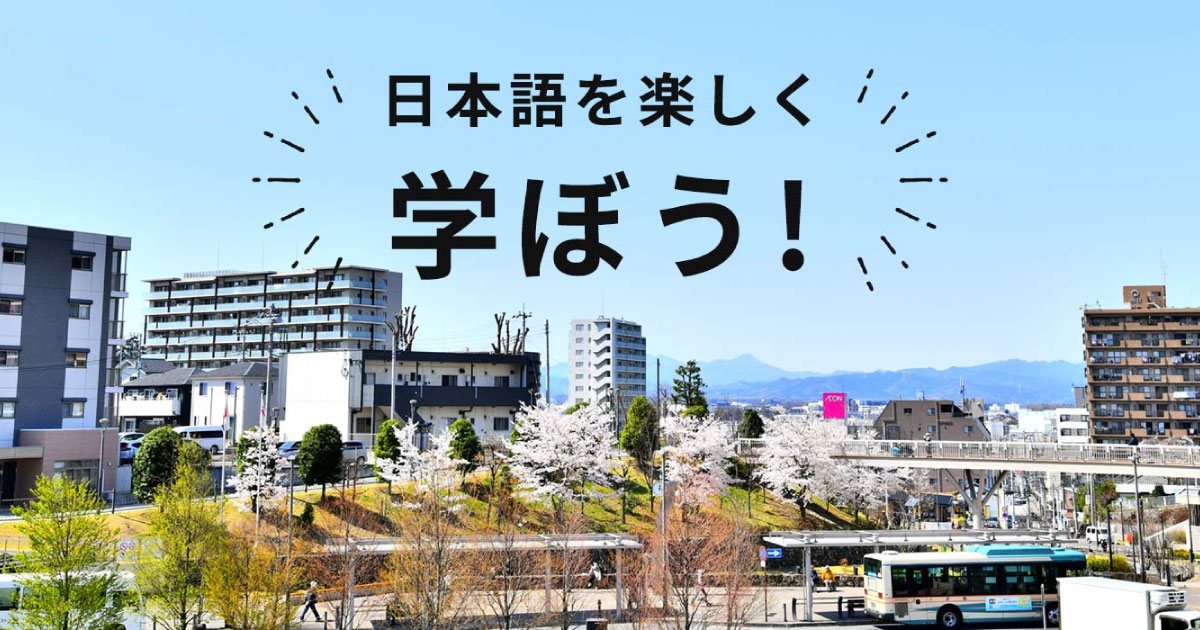
Saitama Brillet Japanese Language School
Saitama Brillet Japanese Language School
- Course
- Further-study course only ›
- Dormitory fee
- From ¥20,000 per month ›
- Admission
- Twice a year · April and October ›
Compare side by side with other schools →
Tuition and conditions may change depending on the intake. If you contact us, we will check with the school and give you accurate details.
Nearby schools comparedBy distance · no ads or paid placement
- Saitama Brillet Japanese Language SchoolThis schoolTuition/yr¥807,000Progression—IntakesApr · Oct
- Keiwa Terrace Japanese Language School6km›Tuition/yr¥1,012,000Progression—IntakesApr · Oct
- Yamate Japanese Language School8.2km›Tuition/yr¥730,000Progression—IntakesApr · Oct
- Chuo College of Information Technology14.6km›Tuition/yr¥736,000Installments OKProgression77%IntakesApr · Oct
— means SALLAE has not yet found the data.
About the school
A school that focuses on progression. Its only student-visa courses are the 2-year and the 1 year 6 months progression courses, and in its report to Immigration submitted in April 2026, 60 of the 85 students who completed the course went on to universities, vocational schools and other institutions. It is in Sayama, Saitama Prefecture, 9 minutes on foot from Sayamashi Station on the Seibu Shinjuku Line, and moved to a new school building in October 2025. It is run by a local real estate group, has a school dormitory (shared rooms for 2–4 and single rooms), and recruits by country quotas so that students are not concentrated in one country.
Published data and school website
Tuition
If you saw a lower amount elsewhere, it may not include the admission fee and application fee
Median 1-year tuition in other areas — Kyoto ¥911,000(7 schools) · Kanagawa ¥880,000(8 schools) · Okinawa ¥858,000(6 schools) · Tokyo ¥840,600(56 schools) · Fukuoka ¥835,000(12 schools) · Hyogo ¥825,500(7 schools) · Osaka ¥814,000(27 schools) · Shizuoka ¥790,000(9 schools) · Chiba ¥745,333(10 schools) · Aichi ¥740,667(5 schools)
Total by intake
| Intake · length | Full course |
|---|---|
| 1 year 6 months | ¥1,172,000 |
| 2 years | ¥1,537,000 |
Cost details · Course tables · Notes
- Per term
- ¥182,500 3 months
- One-time fees
- ¥77,000Application fee · Admission fee
| Duration | Total |
|---|---|
| 1 year 6 months | ¥1,172,000 |
| 1 year 9 months | ¥1,354,500 |
| 2 years | ¥1,537,000 |
★"Per term" and "One-time at start" were calculated by SALLAE from each course's total. The courses this school actually offers are 1 year 6 months onward — all amounts in the table are values calculated by SALLAE.
Calculated by SALLAE · verified 2026-09-16
Admission & dates
⚠ Document submission schedule varies by source — please confirm with the school. Application period: April entrants, October to early December of the previous year; October entrants, April to early June. · April entry: application form August–September, interview and screening September–October, application to the Tokyo Regional Immigration Services Bureau in November. October entry: February–March, March–April, May. · For April 2027 entrants, applications open July 21 and documents are due by October 6, 2026. For October 2026 entrants, applications opened March 6, closed once on March 13, and documents are due by May 25. Recruitment closes as soon as the quota is filled.
- Apr intake
- 2-year course · Application Applications for April 2027 entrants open July 21. Prepare the complete set of documents, including Japanese translations, by October 6, 2026. · Classes 1,600 hours or more
- Oct intake
- 1 year 6 months course · Application For October 2026 entrants, applications opened March 6 and closed once on March 13. Prepare the complete application documents by May 25. · Classes 1,200 hours or more
- Japanese level
- JLPT N5 level or above
Passing an N5-equivalent exam and being close to N4 level, or conversational ability of N5 or above. The enrollment procedure page asks for proof of 200 or more hours of Japanese study or an N5-or-above pass certificate.
Deadline and capacity rules
Applicants must have completed 12 or more years of school education. About 15 students per country or region and about 60 in total (April 2027 intake). Applications close as soon as capacity is reached. The referrer's document staff communicate in Japanese.
School website · 2026-09-04 updated
Classes
- Morning
- 09:10-12:40
- Afternoon
- 13:10-16:40
- Class assignment
- Level-based 8 stages
Materials · Subjects · Timetable · Details
- Materials
- Classes and activities are based on the lessons of 'Dekiru Nihongo Shochukyu' and 'Dekiru Nihongo Chukyu'.
- Subject
- Grammar · Reading · Conversation (presentations and interaction) · Listening · Kanji · Writing · Vocabulary · Japanese society · EJU and JLPT prep · Career guidance · Japanese culture experience
Class hours by subject
| Subject | 2 years | 1 year 6 months |
|---|---|---|
| Beginner | 400 hours | — |
| Lower intermediate | 200 hours | 200 hours |
| Intermediate | 400 hours | 400 hours |
| Upper intermediate | 200 hours | 200 hours |
| Advanced | 400 hours | 400 hours |
Monday to Friday, 20 hours per week. The 2-year course (April intake) starts at Beginner I and the 1 year 6 months course (October intake) starts at Intermediate I, advancing every 3 months up to Advanced III. Target: N2.
What each level aims for · 3 levels
- Beginner I and II
- 6 monthsFor those who have just started learning Japanese. Build basic Japanese skills and become able to hold conversations needed for daily life and read and write simple texts. N5–N4 level.
- Intermediate I, II and III
- 9 monthsFor those who have completed beginner-level Japanese study. Build the general conversation skills and the foundation needed to understand texts, and develop reading, writing and speaking ability. N3–N2 level.
- Advanced I, II and III
- 9 monthsAims at acquiring the Japanese ability needed for job hunting, for progression to Japanese universities, graduate schools and vocational schools, and for studying after enrollment. N2–N1 level.
School website · 2024-03-25 updated
Documents
⚠ The period covered for the sponsor's bankbook, income and tax certificates differs by source. Please confirm with the school. Sponsor's bank balance certificate; copy of the bankbook or deposit and withdrawal statements for 3 years; income certificates for 3 years; tax payment certificates for 3 years. · Copy of the bankbook or deposit and withdrawal statements for 1 year; tax payment certificate (tax assessment certificate) for 1 year; income certificate for 1 year. The PDF linked from the recruitment guide is the newer document (as of July 21, 2026).
- Admission application formSchool-designated form
- 2 ID photos, 4 cm tall × 3 cm wide
- RésuméSchool-designated form
- Diploma of the last school attended (both original and copy) or certificate of graduation
- Statement of reason for studySchool-designated form
- Certificate of Japanese study
- Japanese exam pass certificate
- Family relationship certificate
- Applicant's birth certificate
- Sponsor's ID and translation
Sponsor documents · Only if applicable · Application requirements: 11
Submitted by the person paying the tuition (financial sponsor)
- Financial sponsorship statementWSDB form · School-designated form
- Sponsor's ID and translation
- Financial sponsor's bank balance certificate: issued within 3 months of the application date, as recent as possible.
- Copy of the passbook from which the financial sponsor's bank balance certificate was obtained, 1 year's worth, or a deposit and withdrawal statement for 1 year
- Financial sponsor's statement of how the funds were accumulated: prepare this if the passbook does not cover 1 year or if the way of saving needs explanation.
- Original or copy of the business license of the company the sponsor runs
- Sponsor's certificate of employment: workplace name and contact information, period of employment, duties, position and any other notable details.
- Submit either a tax payment certificate (tax assessment certificate) for 1 year or an income certificate for 1 year. The income certificate must show both total income and actual income.
- Farm scale statement (school's designated form): submit if the sponsor works in agriculture, forestry, fisheries or livestock farming (including as a side business).
Only if applicable
- Copy of passport (If you have a passport)
- Application form (WSDB form; applicants instructed to enter it into the school's designated web system submit this document)
- Certificate of enrollment (to be submitted by applicants who are asked to do so)
- Certificate of expected graduation: submitted by applicants who are enrolled at the time of application and will graduate before the date they enter Japan. (Current students)
- Certification of the highest educational qualification (China only)
- Official certificate proving the family relationship (If the financial sponsor is a relative other than a parent)
- Re-application request (in the applicant's name), explanation of the reason for non-issuance and improvements (in the party's name), and materials showing the reason for non-issuance has been resolved. (If you are reapplying)
- Certificate of non-onset of tuberculosis (Target countries: the Philippines, Nepal and Vietnam)
- Other explanatory documents: explanations of large deposits, address changes, surname and signature verification, etc. (Prepare and submit if there are matters that need explanation)
- Copy of the residence card of a relative in Japan (relative in Japan)
Application requirements
Required items for the Japanese study certificate: study period, expected attendance and expected attendance rate, content studied, course name, target level, textbooks used, and issuing institution. Copies, if within 2 years of passing: NAT-TEST Level 5 100 points, JCT 5 50 points, BJT 310 points, J.TEST F-G 270 points, STBJ 350 points, TOPJ A-5 290 points or above. Original submission (not returned): JLPT N5 or above, J-Cert 160 points, JPT 325 points, JPT Elementary 73 points, PJC Bridge C+ or above. Never send the original transcript. Only the diploma of your last school is needed; do not send diplomas from earlier schools. The bank balance certificate and the deposit and withdrawal statement must be obtained on the same date. Translate all transactions on the deposit and withdrawal statement into Japanese. Documents submitted to the Immigration Services Agency are not returned. Only for the diploma, submit a copy; the original is shown and can be returned. Documents in languages other than Japanese must have a Japanese translation attached. Arrange them so that each "original" is followed by its "translation". Certificates must state the issuer's name, the issuing institution's address and contact details (phone and fax numbers), and carry the issuer's signature (a seal is also acceptable). All documents must be A4, single-sided. For official documents that are not A4 or are double-sided, make a copy and attach the original and then the copy. In the margin of each copy, write "the copier's affiliation and name" and "the date the copy was made". Submit the PDF files for pre-checking before sending the originals, with the specified file names and in the specified order.
The balance amount required of the sponsor is not published · There is no separate list for Korean nationals; the only country-specific requirements are for China (educational credential verification) and the Philippines, Nepal and Vietnam (tuberculosis test). SALLAE is confirming this with the school.
School website · 2026-07-14 updated
Admission process
- Request an admission consultation — Those who wish to enter in April 2027 create the application form in Excel and apply through the entry form.
- Document screening and interview — Candidates for interviews are chosen by a document screening based on the application form information and the referrer's past record.
- Submit documents — Gather all the required documents and submit them to the school. All documents need a Japanese translation.
- Preparing the status of residence application — The submitted documents are reviewed, and if there are no problems, preparation of the documents to be submitted to the Immigration Services Agency begins.
- Immigration Services Agency review — By the specified date, the school submits the applicant's documents to the Immigration Services Agency.
- Status of residence result announced — After the Immigration Services Agency finishes its review, successful applicants' Certificates of Eligibility are issued to the school. The school then contacts the applicant.
- Tuition payment — By the specified date, transfer the tuition to the school's designated account. Dormitory fees are transferred at the same time.
- Certificate of Eligibility and admission permit sent — The school sends the originals.
- Apply for a student visa — Take the required documents to a Japanese embassy or consulate and apply for a student visa.
- Preparing to depart — Check the school regulations and class schedule and prepare. Decide your departure date according to your dormitory move-in time and the school's guidance.
- Placement test
- A level check test was held, and classes in the new classes started.
School website · 2026-07-14 updated
Short-term study
- Duration
- Up to 3 months
- Admission
- RollingNo fixed intake months
- Open now?
- Rolling admissions, so availability varies from time to time — SALLAE will confirm with the school
Course without a student visa
- Courses from 2 weeks to 90 days are available. — Applications accepted at any time; closes when capacity is reached. 30 days of tuition from ¥50,000; admission fee ¥40,000 (¥0 during the campaign). Dormitory: from ¥45,000 for a single, ¥35,000 for a double, ¥25,000 for a room for four.
- Group lessons — Join existing classes. Monday to Friday (closed on public holidays), 9:10–12:40. ¥30,000 per month; textbooks at actual cost. During the school's opening campaign, the admission fee, facility fee and first lesson are ¥0.
- Small-group lessons — Schedule and time slots are arranged with the teacher. 1 to 7 participants. 1 person ¥10,000, 2 people ¥8,000, 3–4 people ¥6,000, 5–7 people ¥4,000.
- Japanese classes for companies and organizations — For foreign nationals working on technical intern training, Specified Skilled Worker, family or work visas, held online or in person. Online: from ¥7,000 per 1-hour class, 1 to 10 people per class.
★Short-term courses are not listed in the published data — it counts only student-visa courses.
School website · 2024-03-25 updated
Graduate outcomes
| FY2025 | Admitted |
|---|---|
| Employment | 9 students |
| Graduates | 85 students |
Prepared April 23, 2026. Course completers 85, qualifying students total 74, of whom dropouts 0, qualifying rate 87.0%. · Number permitted to change to a status of residence in the upper column of Appended Table I-1 or I-2 of the Immigration Control Act: 2-year progression course 3, 1-year 6-month progression course 6. · School website · Updated 2026-06-25
Reviews
If you study here or used to, tell others what the classes, teachers and daily life were like. It helps anyone deciding on this school.
Write the first reviewUniversity prep
- University entrance exam preparation — Teachers experienced in progression guidance give individual preparation classes and support international students thoroughly.
- Career guidance — From enrollment until the next school is decided, personalized career guidance is offered, including career consultation, interview practice, how to write applications and exam question preparation. JLPT and EJU preparation is also provided.
- Interview coaching — Guidance helps students express in Japanese what they will study in their chosen university and department and how they want to use it in the future. An interview contest is held for 2nd-year and intermediate-class students.
- Short essay coaching — Students gain the structuring and writing skills to convey their opinions and arguments logically.
- Graduate school progression guidance — SBJ also offers guidance for going on to graduate school.
- School briefings and education fairs — Students sometimes visit university and vocational school briefings in person, or have teachers give special classes at SBJ. Students attend education fairs.
- JLPT application support — Teachers help with JLPT applications. Those who want help with their application must make a reservation before coming.
- Earning JLPT N1 or N2 gives you an advantage in university entrance exams! — N1, interview, short essay, etc.: Waseda, Chuo, Daito Bunka, Teikyo, Tokyo Fuji. N1 and interview: J. F. Oberlin, Musashino, Asia, Jobu, Ryutsu Keizai and others.
- Designated-school recommendations: 1 — Seibu Bunri University · The school received a designated-school recommendation for fiscal 2025 from the Faculty of Service Management at Seibu Bunri University. There are conditions; interested students should consult their homeroom teacher.
Schedule to admission
- Spring term
- Apr · May · Jun · Graduate school entrance exam briefing · In-school briefing on further education · SBJ further-education briefing · EJU and JLPT prep classes · Class career interviews (considering where to go next) · EJU (1st session)
- Summer term
- Jul · Aug · Sep · JLPT (2nd session) · Class career interviews (considering where to go next) · In-school selection meeting for designated-school recommendations
- Autumn term
- Oct · Nov · Dec · Private university and vocational school entrance exams · EJU and JLPT prep classes · JLPT intensive classes · Interview coaching for university and vocational school entrance exams · Vocational school briefings (held as needed) · EJU (2nd session) · JLPT (2nd session) · Public university entrance exams
- Winter term
- Jan · Feb · Mar · In-school briefing on further education (for students enrolled next year)
- Year-round
- May–Mar · Courses for EJU and university entrance exam prep. Subjects: Japanese (listening, listening-reading, reading, characters and vocabulary, writing) · Individual support for the graduate school course
School website · 2024-03-25 updated
Daily-life support
- Orientation on study and daily life — Guidance on life in Japan is given before arrival. After arrival, each class has an orientation (waste sorting, noise, attendance rate, traffic rules, etc.).
- Guided tour of the school neighborhood for new students — At the start of the term, senior students show new students around the city hall, a nearby temple, the supermarket, the library and the entrance ceremony venue, and introduce the PASMO transit card at the station.
- Part-time work information — SBJ provides information on various part-time jobs and offers support.
- Health checkup — A health checkup is held as early as possible after enrollment and then every year (Notification Standard Article 30).
- Crime prevention education — Police officers visit for a crime-prevention lecture for all classes. Practice calls to 110 are done with police officers and interpreters, including in students' own languages. Classes A and B visit a disaster prevention center.
- Number of life guidance staff and career guidance staff — Staff in charge of student life guidance: 2 full-time, 3 concurrent; staff in charge of career guidance: 1 full-time, 1 concurrent (as of June 25, 2026).
- Attendance and residence management — Students whose monthly attendance rate falls below 80% receive guidance until it reaches 80% or more. The school checks each student's period of stay and whether they have permission for activities outside the status of residence, and its terms, and gives advice and guidance.
Monthly living costs · School information
| Item | 1 month |
|---|---|
| Housing costs | ¥30,000 |
| Food costs | ¥30,000 |
| Electricity | ¥8,000 |
| Insurance | ¥2,000 |
| Other | ¥10,000 |
| Total | ¥80,000 |
Part-time hourly wages are around ¥900–¥1,100 in food service. Up to 28 hours a week; during long breaks such as summer vacation, up to 8 hours a day (up to 40 hours a week).
School website · 2020-02-04 updated
Scholarship
- JASSO Privately Financed International Student Scholarship
- ¥48,000 Once¥48,000 per month
- Rotary Yoneyama Memorial Scholarship
- ¥100,000–140,000 per month
- Heiwa Nakajima Foundation Scholarship
- ¥150,000 Once¥150,000 per month
- Ikuei Kai Scholarship
- ¥35,000 Once¥35,000 per month
- Perfect attendance award
- Perfect attendance award (100% attendance each half-year): ¥5,000–20,000
- Good attendance award
- Good attendance award (98% attendance each half-year): ¥3,000–12,000
- Principal's award
- ¥10,000 OncePrincipal's award (100% total attendance over the whole enrollment period): ¥10,000
- Passing JLPT N1
- Up to ¥120,000
School website · 2024-03-25 updated
Students
Enrolled: 68 (2024) · Capacity 120 National median: 180 students
Based on the 68 students enrolled in 2024.
Public data from the Association for the Promotion of Japanese Language Education (Nisshinkyo) · verified 2026-09-20
School life
- Class-by-class field trips: Class A visits the Sayama City Museum, Class B walks around Aviation Park, and Classes D and E do a photo rally in Kawagoe.
- Bus excursion to Oishi Park and Fuji-Q Highland. The graduation trip goes to Yokohama Hakkeijima Sea Paradise.
- A class party held every year before summer vacation; in each class, students led by a class leader shop and decorate. There is also a class year-end party.
- Japanese cultural events including a Tanabata event, yukata experience, shaved-ice making, a Setsubun event and Hina Matsuri preparation.
- Exchange event with high school students
- JLPT mock exam and administrative briefing
- Briller's graduation ceremony was held at the Citizens' Exchange Center.
School website · 2026-09-04 updated
Access
- Transit
- Seibu Shinjuku Line, Sayamashi Station, 9 min walk
- Nearby
- Seibu Shinjuku Line, Sayamashi Station, 9 min on foot (the top page says 8 min). By express: Hon-Kawagoe 9 min, Tokorozawa 11 min, Seibu-Shinjuku 45 min.
- Dormitory
- Available¥20,000–50,000 per month · Shared rooms for 2–4 people from ¥20,000–¥30,000/month (12 min walk from school, 17 min walk from station). Single rooms from ¥40,000/month (9 min walk, 4 min walk from station). · Based on the school website
School website · 2026-03-24 updated
Dorm — Rooms for 2–4 people have bunk beds; single rooms have a bed. Air conditioner, refrigerator, microwave, rice cooker, induction cooktop, washing machine and Wi-Fi. Six months of dormitory fees are paid at enrollment (from ¥190,000 for a 4-person room).
School website · 2024-10-04 updated
SALLAE has organized the school website and published data in English.
The update date is the day that material was last revised.
Photos are materials published by the school.
This information is compiled from official sources and is not updated daily. Please confirm with the official contact before signing or applying.