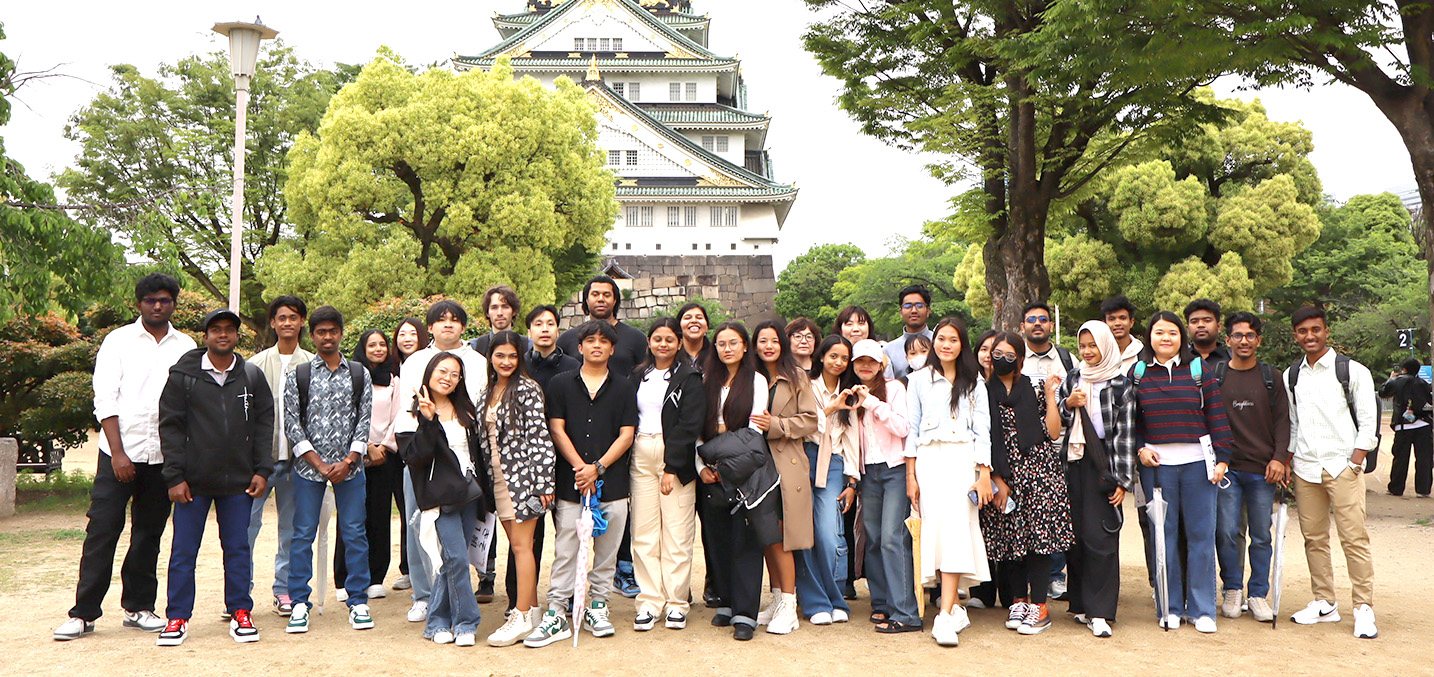
Seigan Japanese Language School
Seigan Japanese Language School
- To station
- 1-minute walk · Nagai Station
- AM & PM classes
- Decided by the school ›
- Admission
- Twice a year · April and October ›
Compare side by side with other schools →
Tuition and conditions may change depending on the intake. If you contact us, we will check with the school and give you accurate details.
Nearby schools comparedBy distance · no ads or paid placement
- Seigan Japanese Language SchoolThis schoolTuition/yr¥770,000Progression—IntakesApr · Oct
- Seven Stars Japanese Language School0.8km›Tuition/yr¥890,000Progression—IntakesApr
- Abeno Japanese Language Institute1.6km›Tuition/yr¥789,000Progression—IntakesApr · Oct
- Bunrin Gakuin2.7km›Tuition/yr¥690,000Progression—IntakesApr · Jul · Oct
— means SALLAE has not yet found the data.
About the school
A school that focuses on small-group Japanese language and culture classes for students from non-kanji backgrounds. Classes have fewer than 20 students, students study non-Japanese exam subjects on their own, and the school says it supports application writing and interview practice for progression and jobs. Even so, in the school's published fiscal 2025 completer paths, vocational school was the most common destination: progression 58 (vocational school 42, university 11), employment 14, returned home 11. Opened in 2012 with a capacity of 150, it is right in front of Nagai Station (JR and Midosuji Line) in Sumiyoshi-ku, Osaka, and has only two courses: 2 years (April admission) and 1 year 6 months (October admission).
Published data and school website
Tuition
If you saw a lower amount elsewhere, it may not include the admission fee and application fee
Median 1-year tuition in other areas — Kyoto ¥911,000(7 schools) · Kanagawa ¥880,000(8 schools) · Okinawa ¥858,000(6 schools) · Tokyo ¥840,600(56 schools) · Fukuoka ¥835,000(12 schools) · Hyogo ¥825,500(7 schools) · Osaka ¥814,000(27 schools) · Shizuoka ¥790,000(9 schools) · Chiba ¥745,333(10 schools) · Aichi ¥740,667(5 schools)
Total by intake
| Intake · length | Full course |
|---|---|
| 1 year 6 months | ¥1,115,000 |
| 2 years | ¥1,460,000 |
Cost details · Course tables · Notes
- Per term
- ¥172,500 3 months
- One-time fees
- ¥80,000Application fee · Admission fee
| Duration | Total |
|---|---|
| 1 year 6 months | ¥1,115,000 |
| 1 year 9 months | ¥1,287,500 |
| 2 years | ¥1,460,000 |
★"Per term" and "One-time at start" were calculated by SALLAE from each course's total. The courses this school actually offers are 1 year 6 months onward — all amounts in the table are values calculated by SALLAE.
Calculated by SALLAE · verified 2026-09-16
Admission & dates
- Apr intake
- 2-year course · Application July 1 to October 31 of the previous year
- Oct intake
- 1 year 6 months course · Application January 30 of the previous year to April 30 of that year
Deadline and capacity rules
People who have completed (or are expected to complete) 12 or more years of school education abroad. Aged 18 or over. Capacity 100
School website · 2026-02-09 updated
Classes
- Morning
- 09:00-12:30
- Afternoon
- 13:30-17:00
- AM/PM placement
- You cannot choose morning or afternoon. It is split into morning and afternoon sessions depending on your class.
- Class assignment
- Level-based 4 stages
Materials · Subjects · Timetable · Details
Classes run Monday to Friday, four 45-minute periods per day. Class hours are split into a morning session and an afternoon session depending on your class
What each level covers · 4 stages
- Beginner
- JLPT N5–N4 level · Students steadily learn hiragana, katakana and beginner kanji.
- Lower intermediate
- JLPT N4–N3 level · Students learn listening, reading, writing and speaking in balance with basic grammar and frequently used expressions, and start N4 and N3 preparation.
- Intermediate
- JLPT N3–N2 level · Students build communication skills with more advanced grammar and expressions, aiming for N2.
- Advanced
- JLPT N2–N1 level · While preparing for N1 and the EJU, students expand difficult vocabulary and written expression and study free and logical composition.
School website · 2026-07-10 updated
Documents
- Application form for admissionSchool-designated
- Photos (4 cm tall × 3 cm wide) (6 photos), taken within 3 months
- Copy of passportPage with identity details, entry and exit history for Japan, and visa pages
- Graduation certificate from your last school
- Bank balance certificate (*transaction statements and balance certificate for the past 1 year) (*savings of at least ¥1,500,000 required)
- Family relationship certificate
Sponsor documents · Only if applicable · 5 application requirements
Submitted by the person paying the tuition (financial sponsor)
- Financial sponsorship statementSchool-designated
- Certificate of employment, business license or corporate registry; a tax payment certificate is also acceptable.
- Annual income / tax payment certificate (*annual income of at least ¥1,500,000 required)
Only if applicable
- Certificate of enrollment or certificate of leave of absence (If currently enrolled at a university)
- Certificate of Japanese study (stating the study period and total study hours): any one of a transcript, a certificate issued by a Japanese language school, or a JLPT/NAT certificate (if you have studied Japanese)
- Employment certificate (stating company name, position, period of employment, etc.; if currently in regular employment)
- Copy of residence card (front and back) (If living in Japan)
- Statement of reasons (if 5 or more years have passed since graduation)
Application requirements
Depending on requests from Immigration or each individual application, additional documents may be requested separately. Documents differ by nationality, region and background. A Japanese translation must always be attached to the statement of reasons for study and to all certificates. The documents page says 4 photos, while the FAQ says 6. Birth certificates and family relationship certificates appear only in the FAQ list.
It says only that documents differ by nationality; no list by nationality is given. SALLAE is confirming this with the school.
School website · 2025-12-23 updated
Admission process
- Request an admission consultation — First contact the school by email, download the application form, fill it in completely and send it by email.
- Document screening — Admission is decided by document screening and an interview.
- Online interview — If you pass document screening, you will have an interview by Skype or Zoom.
- Pay the application fee and submit documents — After passing the interview, pay the application fee
- The school applies for the Certificate of Eligibility — This period takes 2–3 months.
- Tuition payment — The school informs you of the Certificate of Eligibility result. Pay the admission fee and tuition. Tell the school your planned arrival in Japan.
- CoE sent — After you transfer the tuition to the designated account, the school mails the Certificate of Eligibility to you.
- Visa application — Apply for the visa at the Japanese embassy or consulate in your area of residence.
- Arrival in Japan — Please visit between 9:00 and 17:00 on a weekday, 1–2 weeks before the enrollment date. Please avoid arriving in Japan on a weekend
- Placement test
- A level check test is given after you arrive in Japan. Class times are split into morning and afternoon sessions depending on your class (you cannot choose).
School website · 2025-12-23 updated
Short-term study
- Visa
- Working holiday(not a student visa)
- Open now?
- Rolling admissions, so availability varies from time to time — SALLAE will confirm with the school
Course without a student visa
- Working holiday visa holders, spouse visa holders, etc. — For those who do not need to apply for a student visa: request materials → submit application → document screening and results → pay admission fee and tuition → * level check test before classes start / for April entry, submit by February 28 of the same year
- 3-month intensive course (2019 guide) — A class of up to 15 students at beginner level (around N4) · Starts at the beginning of April, July, October and January, Monday to Friday 13:30–17:00, 200 hours in each case · Materials cost extra · The school also introduces studio apartments (kitchen, bath, free Wi-Fi) about a 15-minute walk from the school · The current English course page lists only the 2-year and 1 year 6 months courses.
★Short-term courses are not listed in the published data — it counts only student-visa courses.
School website · 2026-02-09 updated
Graduate outcomes
| FY2025 | Admitted |
|---|---|
| University | 11 students |
| Vocational school | 42 students |
| Employment | 14 students |
Passing an exam
| Exam | Pass |
|---|---|
| JLPT N1 2025 | 1 student |
| JLPT N2 2025 | 5 students |
| JLPT N3 2025 | 16 students |
| JLPT N4 2025 | 15 students |
Fiscal 2025 completers who passed: NAT-TEST Level 2: 3; Level 3: 8; Level 4: 29 (total 40). Note: includes JLPT passers.
FY2025 completers' destinations: progression 58 (11 university, 2 junior college, 42 vocational school), employment 14, returned home 11, other 2, total 0 · Food service, accommodation, sales, construction, manufacturing, etc. · School website · Updated 2026-05-20
Reviews
If you study here or used to, tell others what the classes, teachers and daily life were like. It helps anyone deciding on this school.
Write the first reviewUniversity prep
- Interview practice for progression and jobs — Practice for university and vocational school entrance exams and job interviews is done in the culture class.
- Help with writing applications — The school helps with writing progression applications · Classes focus on Japanese language and culture, and students study other exam subjects on their own.
- Consultation and support system for study and career, and up-to-date career materials — The school keeps up-to-date materials on progression, employment and other paths that students can browse. A student-life guidance staff member (career guidance staff member) is designated.
School website · 2025-12-23 updated
Daily-life support
- Part-time work guidance — With permission to engage in activity other than that permitted, you can work up to 28 hours per week. The school gives guidance and support on part-time work.
- National Health Insurance — All students are enrolled in National Health Insurance. You must apply for your resident record within 14 days of arriving in Japan and enroll in health insurance
- Health checkup — Health checkups are given to new students and to students who have been enrolled for 1 year.
- Status of residence renewal — The school has staff authorized by the Immigration Services Agency to submit applications on students' behalf, and gives guidance and support on renewing the period of stay and on temporary returns home.
- Consultation system for illness or injury — A system for consultation in case of illness or injury has been set up.
- Evacuation procedures during disasters — Students are informed of evacuation methods, places and routes in case of disasters such as fire, earthquake and typhoon.
- Airport pickup — If you need to be met on arrival, tell the staff your flight number and date and time.
Monthly living costs · School information
| Item | 1 month |
|---|---|
| Rent (utilities included, ¥40,000–¥70,000) | ¥40,000 |
| Food costs (¥20,000–¥30,000) | ¥20,000 |
| Mobile phone | ¥5,000 |
| Transportation | ¥10,000 |
| Other (¥20,000–¥30,000) | ¥20,000 |
| Total | ¥95,000 |
These are examples from the school's FAQ. For items with a range, the lower value is shown below, and the school's monthly total is ¥100,000–¥150,000. The items on insurance, health checkups, visas, disasters and consultation are what the school wrote in its 2025 self-inspection sheet.
School website · 2025-12-23 updated
Students
120 enrolled (2025) · Capacity 150 National median: 180 students
Based on 120 enrolled students in 2025.
Public data from the Association for the Promotion of Japanese Language Education (Nisshinkyo) · verified 2026-09-20
School life
- As cultural experience classes, the school holds field trips and a yukata dressing experience.
- The earlier guide (2019) also had tea ceremony, calligraphy and etiquette classes.
On campus
- Self-study room — Rooms are available for self-study outside class hours.
School website · 2026-01-07 updated
Access
- Transit
- JR lines Nagai, 1 min walk
Osaka Metro Midosuji Line Nagai, 3 min walk - Nearby
- The website says only that the nearest station is Nagai Station; the travel time appears in the 2019 3-month course guide (30 seconds from JR Nagai Station, 3 minutes from Midosuji Line Nagai Station) · About 10 minutes to Tennoji and about 15 minutes to Namba.
- Dormitory
- Available¥30,000–¥50,000 per month · 2 studio buildings next to the school and a 7–10 minute walk away · Private room ¥34,000–¥37,000 per month · 3-month contracts · Based on the school website
School website · 2019-05-23 updated
Dorm — The school introduces apartments contracted with a real-estate company: Nagai Heights (7–10 minutes on foot from the school, ¥35,000 per month, gas, water and internet included, entry fee ¥35,000, coin laundry) and Nanshin Building (right next to the school, ¥34,000 without a balcony or ¥37,000 with one, water included, entry fee ¥30,000, washing machine on the roof) · The building introduction says internet is included at Nanshin Building, while the comparison table says residents contract it themselves · Electricity (Nagai Heights) or electricity and gas (Nanshin) are paid separately, and a futon fee of ¥12,000 is paid once · Contracts are every 3 months, and if you move out midway you still pay the remaining rent · If you move in or out in the middle of a month: days 1–7 ¥10,000 (Nanshin ¥12,000), days 8–14 ¥20,000 (Nanshin ¥24,000), from day 15 a full month · Each room has a bath, toilet and kitchen, but they are small, and there is no elevator · The tuition guide says you first pay the entry fee, 6 months' rent and the futon fee together (¥252,000 for the cheapest room, calculated at ¥35,000 per month), and from 6 months after enrollment you pay monthly · The school lends furniture and appliances, but in small numbers, so most students prepare their own · Rooms may be full, so a separate inquiry to the office is needed · The 2020 table in the FAQ also lists a dormitory for male students only (right in front of the school) and Sunflower (15–20 minutes on foot).
School website · 2025-12-24 updated
SALLAE has organized the school website and published data in English.
The update date is the day that material was last revised.
Photos are materials published by the school.
This information is compiled from official sources and is not updated daily. Please confirm with the official contact before signing or applying.