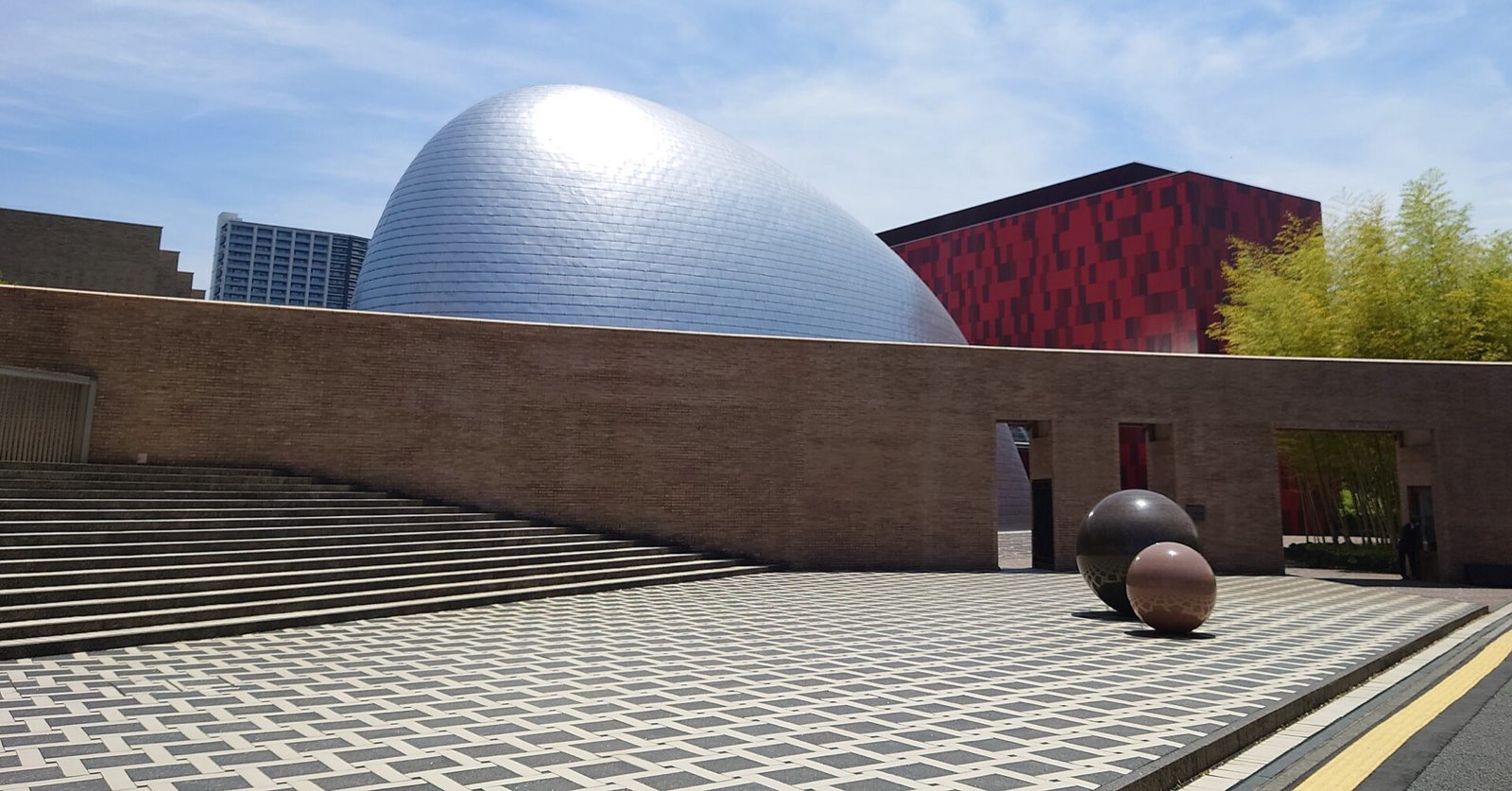
Senzoku Gakuen College of Music
洗足学園音楽大学
Closes todayApply by 11/4 → exam on 11/21 · Comprehensive Selection (Rounds 1-5, in-person exam)
Fees and conditions can change over time. Always check the school's guidelines before you apply.
Fees and conditions can change over time.
Homes near campus within 3 km · SALLAE building data
| Campus | Station | Homes | Lowest / month | Median |
|---|---|---|---|---|
| Senzoku Gakuen College of Music (Mizonokuchi) | Musashi-Mizonokuchi Station on the JR Nambu Line / Mizonokuchi Station on the Tokyu Den-en-toshi Line, 8 min walk | 7 | ¥64,000 | ¥73,000 |
About the school
A private university founded in 1924. It has 2,835 students, including 532 international students (undergraduate 365 · graduate 167). There are 71 faculty members.
History · 5
- 1923
- The founder, Waka Maeda, opened the second floor of her home as a private school.
- 1962
- Established the Music Department of Senzoku Gakuen Junior College.
- 1967
- Established the Department of Music in the Faculty of Music of Senzoku Gakuen University.
- 2000
- Established the Graduate School of Music.
- 2003
- Renamed Senzoku Gakuen College of Music.
University Portraits · school history · Wikidata
Admission requirements and dates
Senzoku Gakuen College of Music admits international students through 3 routes.Pick your situation below to see only the routes that fit · Based on the guidelines for April 2027 entry
EJUThe exam Japanese universities use for international student admission · June and November · also held outside Japan = Examination for Japanese University Admission · JLPTJapanese-Language Proficiency Test · N1 is the highest, then N2 = Japanese-Language Proficiency Test
Apply online · performance video
Official name: 総合型選抜 オンライン受験
If you live outside Japan, for Rounds 1 and 2 (September and October) you submit your performance as a video and take the interview, music theory and ear training online. Only people who choose this college as their first choice can apply.
Applications for this year have closed — below are the remaining dates for those who applied
Applications for this year have closed
Apply with a performance exam · at the college
Official name: 総合型選抜(対面受験)
There are five rounds from September to February. You come to the college and take the course-specific performance exam, interview, music theory and ear training. This is an exclusive application: if you pass, you must enroll.
Accepting applications now · until 11/4
Apply with General Selection
Official name: 一般選抜(A・B日程)
These are exams in February and March that allow you to apply to other universities at the same time. Only people who already hold a status of residence in Japan, such as Student, can apply.
Accepting applications now · until 1/21
February · Schedule A
- Apply 1/1~1/21opens in 58 days
- →
- Exam 1 2/6
- →
- Exam 2 2/7
- →
- Results 2/13
- →
- Enroll ~2/24
March · Schedule B (a few places)
- Apply 2/11~2/23opens in 99 days
- →
- Exam 1 3/4
- →
- Exam 2 3/5
- →
- Results 3/9
- →
- Enroll ~3/16
Good to know before applying
- You cannot apply to more than one course. The Comprehensive Selection is an exclusive application (admission is expected if you pass). If you miss even one exam subject, you fail.
- Non-Japanese applicants applying for Comprehensive Selection Round 5 and General Selection Schedules A and B must hold a status of residence (such as Student) that allows them to enter university at the time of application.
- Certificates must be originals in Japanese or English. Documents in other languages need a notarized translation (certification by translation companies or Japanese language schools is not accepted). Graduates of Chinese schools must have the CHSI English education verification report sent directly to the college.
- Fees once paid are not refunded (refunds on withdrawing admission are only for General Selection successful applicants, excluding the admission fee). Payments after the enrollment procedure period are not accepted.
洗足学園音楽大学 2027年度 総合型選抜・一般選抜 入学試験要項 · checked 2026-11-03
Fees
- First-year fees
- ¥2,190,000
- Paid at enrollment
- from ¥1,195,000
- Application fee
- ¥20,000
Actual amounts for the 2026 academic year. Admission fee ¥200,000, tuition ¥1,490,000, facilities fee ¥500,000. In addition, ¥72,650 for insurance and alumni association fees is paid at the time of enrollment procedures. The same amount applies to all courses.
Places and fees by department 21
| Department | Places | First-year fees (¥) | |
|---|---|---|---|
| Faculty of Music, Department of Music | |||
| Composition Course | 2,190,000 | ||
| Music and Sound Design Course | 2,190,000 | ||
| Music and Sound Creative Expression Course | 2,190,000 | ||
| Piano Course | 2,190,000 | ||
| Wind Instruments (Woodwind) Course | 2,190,000 | ||
| Wind Instruments (Brass) Course | 2,190,000 | ||
| String Instruments Course | 2,190,000 | ||
| Percussion Course | 2,190,000 | ||
| Electone (Electronic Organ) Course | 2,190,000 | ||
| Jazz & American Music Course | 2,190,000 | ||
| Contemporary Japanese Music Course | 2,190,000 | ||
| Rock & Pop Course | 2,190,000 | ||
| Vocal Music Course | 2,190,000 | ||
| Musical Course | 2,190,000 | ||
| Ballet Course | 2,190,000 | ||
| Dance Course | 2,190,000 | ||
| World Music Course | 2,190,000 | ||
| Voice Acting and Anime Songs Course | 2,190,000 | ||
| Music Education Course | 2,190,000 | ||
| Music Environment Creation Course | 2,190,000 | ||
| Media Arts Course | 2,190,000 | ||
Places are the total across all international student admissions. Fees are for 2026 entry.
For 2026 entry · from the school's guidelines
Documents to prepare
Transcript (certificate of graduation and grades), application confirmation form, statement of reasons for wishing to enter, passport, residence card (for those living in Japan), proof of JLPT N2 or higher (if applicable), sheet music (for the relevant course), etc.
Graduate outcomes
- Graduates (2025 academic year)
- 544 · Graduates of the Faculty of Music. Employed people are regular employees and self-employed people, etc.
- Full-time employment
- 366 · 67%
- Went on to graduate school etc.
- 27 · 5%
We could not find career outcomes for international students only in the school's official materials.
University Portraits · figures for all students (not international students only)
Reviews from students
No reviews yet. If you attend or attended this school, please write the first one.
Write a review
Getting there
- Senzoku Gakuen College of Music (Mizonokuchi)
- Musashi-Mizonokuchi Station on the JR Nambu Line / Mizonokuchi Station on the Tokyu Den-en-toshi Line, 8 min walk · Faculty of Music, all courses
神奈川県川崎市高津区久本2-3-1
SALLAE compiled this from the school's admission guidelines and official sources (such as University Portraits). Dates and amounts can change, so always check the school's guidelines before you apply.
Photo: Nyao148 · CC BY-SA 4.0 · Wikimedia Commons