Shizuoka Japanese Language Education Center
Shizuoka Japanese Language Education Center
Compare side by side with other schools →
Tuition and conditions may change depending on the intake. If you contact us, we will check with the school and give you accurate details.
Nearby schools comparedBy distance · no ads or paid placement
- Shizuoka Japanese Language Education CenterThis schoolTuition/yr¥615,000Progression95%IntakesApr · Oct
- Shizuoka Japanese Language Institute0.9km›Tuition/yr¥782,000Progression96%IntakesApr · Oct
- International Kotoba Gakuin Japanese Language School1.1km›Tuition/yr¥650,000Installments OKProgression91%IntakesApr
- Shizuoka International School5.1km›Tuition/yr¥762,000Progression97%IntakesApr · Oct
— means SALLAE has not yet found the data.
About the school
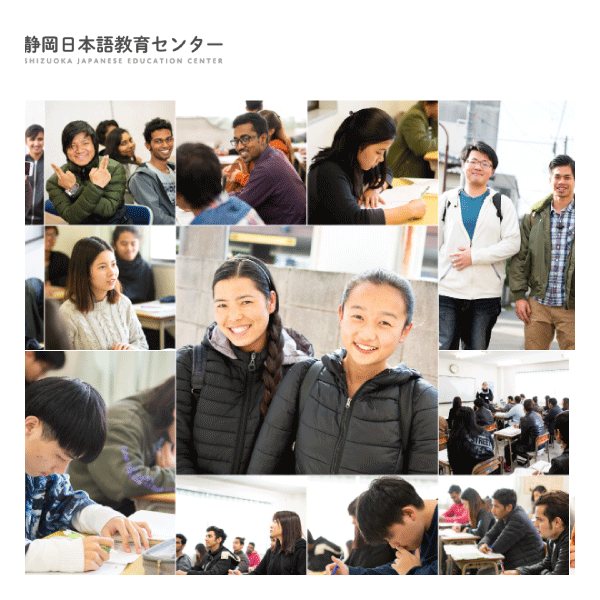
This school offers only academic-progression courses (2 years, 1 year 6 months, 1 year) and focuses on preparation for further study. According to its report to the Immigration Services Agency, 107 of the 114 students who completed the course in FY2023 went on to Japanese universities or vocational schools, and of the 29 completers in FY2022, 25 went to vocational schools and 4 to universities. It opened in 1990. It is in Aoi-ku, Shizuoka, a 15-minute walk from JR Shizuoka Station and 5 minutes on foot from Otowacho Station on the Shizuoka Railway. Capacity is 200 (two sessions, morning and afternoon). Most of the 134 students in 2025 come from Nepal, Sri Lanka, Bangladesh and Myanmar; there are no Korean students.
Published data and school website
Tuition
If you saw a lower amount elsewhere, it may not include the admission fee and application fee
Median 1-year tuition in other areas — Kyoto ¥911,000(7 schools) · Kanagawa ¥880,000(8 schools) · Okinawa ¥858,000(6 schools) · Tokyo ¥840,600(56 schools) · Fukuoka ¥835,000(12 schools) · Hyogo ¥825,500(7 schools) · Osaka ¥814,000(27 schools) · Shizuoka ¥790,000(9 schools) · Chiba ¥745,333(10 schools) · Aichi ¥740,667(5 schools)
Admission & dates
- Apr intake
- 2-year course · Application Application deadline (entry sheet submission) / end of August · Classes 2 years (1,520 hours)
- Apr intake
- 1-year course · Application Application deadline (entry sheet submission) / end of August · Classes 1 year (760 hours)
- Oct intake
- 1 year 6 months course · Application Application deadline (entry sheet submission) / end of March · Classes 1 year 6 months (1,140 hours)
- Japanese level
- JLPT N5 or higher (N3-equivalent for the 1-year April course)
For the 2-year and 1 year 6 month courses, N5 or higher or equivalent at the time of application (150+ hours of study, NAT-TEST Level 5 or J-TEST Grade F or higher, etc.). For the 1-year April course, N3-equivalent (about 800 hours of study)
Deadline and capacity rules
Admission capacity: 60 for April intake and 40 for October intake. Completion of 12 years of school education; healthy in mind and body with no smoking habit. Within 5 years of graduating from the last school, generally under 30. A guarantor is required. Short courses of under 1 year are also available; please consult the school
School website · Confirmed 2026-09-26
Classes
- Morning
- 08:45-12:30
- Afternoon
- 13:35-17:20
- AM/PM placement
- In principle you cannot choose between morning and afternoon classes. Classes are decided by a test (from the school's admission guide in Nepali and Sinhala).
- Class size
- Max 20 students
- Class assignment
- Level-based 3 stages
Materials · Subjects · Timetable · Details
- Materials
- Elementary: Minna no Nihongo Elementary 1 and 2, Yasashii Sakubun; intermediate: TRY! JLPT N3, etc.; advanced: TRY! JLPT N2
Monday to Friday, 4 hours a day, 20 hours a week. First term April–September, second term October–March. Tuition corresponds to 760 hours of study
What each level aims for · 3 levels
- Beginner
- Starting from hiragana and katakana, students learn basic grammar and expressions and use them in conversation and writing. Classes are taught in Japanese using picture cards and real objects. Goal: pass JLPT N4
- Intermediate
- Covers written language and expressions, reviews beginner content, and practices reading sentence patterns and books and magazines. Improves listening comprehension, with preparation for the EJU and the JLPT. Goal: pass N3
- Advanced
- Students learn to understand newspapers and news and to exchange opinions and discuss, and practice writing reports. Overall skills for going on to further study or employment. Goal: pass N2 and N1
School website · Confirmed 2026-09-26
Documents
- Application form (prescribed form, with photo), 1 original. Do not use correction fluid; write the statement of purpose concretely and in detail
- Diploma from your last school: submit the original diploma
- Original transcript from last school attended
- Certificate of Japanese study history, issued by a Japanese language institution. It must state the period of study and hours attended, and carry the school's address, phone number, etc. and its seal
- Pass certificate or score report for JLPT, J-TEST, etc. (if results are not out yet, submit a copy of the exam admission ticket).
- 5 photos (4 cm tall × 3 cm wide). Upper body, front view, no hat. Write name and date of birth on the back
- Copy of ID (write the date copied, the name of the person who made it and the relationship to the applicant in the margin of the copy)
- Application fee ¥20,000 (collected through the guarantor when the documents are submitted)
- Health certificate (prescribed form; get it at a medical institution according to the listed items, with the hospital and doctor's seals)
Sponsor documents · Applicable applicants only · 11 application requirements
Submitted by the person paying the tuition (financial sponsor)
- Statement of financial support (prescribed form): A, B, C and D all. In the occupation field, write the employer's name and job title; write annual income based on the income certificate
- Guarantee statement(prescribed form) A (financial sponsor lives in Japan) · C (organization such as a company pays)
- Certificate of residence (including all household members) or identity document: A and B
- Certificate of employment: A, B and D. Company owners (or where a company is the supporter): copy of the corporate registry; sole proprietors: copy of the tax return; others: certificate from the employer. B business owners: business license, etc.
- Income certificate (total annual income and number of dependents): all. A: municipal/prefectural resident tax income certificate or withholding tax slip (past 3 years); B: employer certificate, tax payment certificate, etc. (past 3 years); C: financial statements
- Bank balance certificate (foreign currency also accepted): A, B and D. Examples: copy of a bankbook showing salary deposits and withdrawals over the past year; documents for temporary income such as sale of land or stocks
- Documents that concretely prove the relationship with the applicant: A, B and C. (a) Blood relationship: family register certificate, resident registration, notarized proof of kinship, etc.
- Applicants who graduated from their last school 5 or more years ago: a document proving the reason and purpose for studying Japanese (a company recommendation for study abroad, a document promising reinstatement, etc.) — all
- Board resolution on accepting the applicant, COrganization such as a company pays
- · Documents for the guarantor in Japan in case B or D: letter of guarantee(prescribed form), employment certificate, income certificate (1 year)
Only if applicable
- Submit a certificate of expected graduation first, then the original diploma once it is issued (If the diploma will not be issued in time for the application)
- Official employment certificate for those with work experience (stating the issuer's address and phone number, job title and period of employment) (Only if you have work experience)
- Copy of passport (only if you already have one). If you have entered or left Japan before, attach copies of the relevant visas and entry/exit stamps too. Write the date, the name of the person who made the copy and the relationship to the applicant in the margin (If you have a passport)
- If you have taken the following exams in your home country or in Japan, a copy of the results (bachelor's degree certificate, EJU, TOEFL, etc.) (If you have proof of the results)
Application requirements
Documents written in a language other than Japanese must in principle come with a Japanese translation. Every translated document needs the date of translation and the translator's name and seal Fill in the application form and the statement of financial support accurately and consistently with the supporting documents you submit Newly issued documents must be dated within 3 months of submission (within 6 months for those issued overseas) Once accepted, submitted documents and the application fee are in principle not returned (except documents that cannot be reissued, such as the original graduation certificate) The statement of financial support and the guarantee form must be handwritten by the expense supporter. The text portions need a Japanese translation * Submit 1 original of every document. Keep a copy of every document you submit (you may be asked to provide them when applying for a visa at the Japanese embassy or consulate in your home country) Depending on individual circumstances, documents not on the list may be requested The guarantor in Japan (expense supporter) must be a relative (up to 3rd degree of kinship), in principle living in Shizuoka Prefecture and having a job (any nationality). Foreign residents must have lived in Japan for a long time and understand Japanese well (submit a copy of the residence card) If the expense supporter lives outside Japan, a separate guarantor in Japan is needed in addition to the supporter. If you have no guarantor in Japan, you can apply through the Center's overseas partner schools and organizations.
School website · Confirmed 2026-09-26
Admission process
- Request an admission consultation — Contact by phone or the inquiry form (09:00–17:00). There are separate phone lines for the school's main number and for admissions inquiries
- Application — Fill in the entry sheet and submit it with copies of the graduation certificate and academic transcript from the last school attended. Submission in person, by post, by fax or by e-mail is accepted (in every case through the guarantor in Japan)
- Interview with guarantor in Japan
- Applicant interview and test — Interview and selection tests (English and Japanese) for the applicant. Center staff travel to the applicant's location. Depending on the number of applicants, the interview may be held online
- Notice of result — Notice of result to guarantor in Japan; admission permit issued.
- Submit documents — Preparing the documents needed for the Certificate of Eligibility screening. Document review / notice of any deficiencies / preparation of the application documents
- Issuance of the Certificate of Eligibility — After the Immigration Services Agency screens the documents, the Certificate of Eligibility is issued
- Tuition payment — Remit the admission fee, tuition and miscellaneous expenses. *Pay in the name of the expense supporter living in Japan
- Guarantor briefing — (Handover of the Certificate of Eligibility)
- Visa application — * Each applicant does this individually.
- Entry into Japan
- Placement test
- Entrance ceremony and orientation
- Placement test
- Classes (beginner, intermediate, advanced) are decided based on test results and the student's wishes and goals.
School website · Confirmed 2026-09-26
Short-term study
- Visa
- Temporary visitor(not a student visa)
- Admission
- RollingNo fixed intake months
- Open now?
- Rolling admissions, so availability varies from time to time — SALLAE will confirm with the school
Course without a student visa
- General course — A course for people who come to Japan on a tourist visa or hold any visa that allows stay other than a student visa. Study only for the period you want, in the same classes as other students. Take a level check test beforehand and start right away if there is a vacancy
- Corporate training — For people working or in training at a company or factory. Monday to Saturday 8:30–20:30, with classes at the school or instructors sent to the workplace; qualification-preparation classes are also available. Training plan proposals and quotations are free of charge
★Short-term courses are not listed in the published data — it counts only student-visa courses.
School website · Confirmed 2026-09-26
Graduate outcomes
| FY2023 | Admitted |
|---|---|
| Employment | 3 students |
| Graduates | 114 students |
Passing an exam
| Exam | Pass |
|---|---|
| JLPT N1 2023 | 1 student |
| JLPT N2 2023 | 17 students |
| JLPT N3 2023 | 70 students |
| JLPT N4 2023 | 60 students |
| JLPT N5 2023 | 1 student |
Of the 114 who completed the course in FY2023: N1: 1 · N2: 18 · N3: 47 · N4: 33; total with N4 or higher: 99
All schools accepted to so far
114 completed the course, 113 met the standard (99.1%), 0 withdrew (prepared June 26, 2024) · Number permitted to change status of residence (Appended Table I-1 and I-2, upper column): academic-progression course 2 years: 3; 1 year 6 months: 0 · School website · Confirmed 2026-09-26
Reviews
If you study here or used to, tell others what the classes, teachers and daily life were like. It helps anyone deciding on this school.
Write the first reviewUniversity prep
- University prep — Aims to improve communication skills, with classes for the JLPT and the EJU.
- Academic-progression preparation course — The academic-progression preparation course started in 2003.
School website · Confirmed 2026-09-26
Daily-life support
- Apartment arrangement — The school has no dormitory, but if you wish, housing is arranged through a partner company. Rent examples are ¥40,000 for a single room and ¥25,000 per person for a 2-person share (utilities extra), and it may be higher depending on move-in timing · If you pay a ¥300,000 arrangement fee together with tuition, the single-room procedure fee, equipment fee and cleaning fee (¥40,000 each) plus 4 months' rent are paid from it, or for a share ¥25,000 each plus 6 months' rent, and the remainder is refunded · Rooms have a refrigerator and washing machine but no bed (futon available for a fee) · There is no Wi-Fi, so you contract it separately · For a share, you find your own roommate, and you move out together · If you move out for personal reasons after moving in, the arrangement fee is not refunded, and if you leave within 1 year, 1 month's rent is charged as a penalty.
- National Health Insurance — All eligible students are enrolled in National Health Insurance.
- Part-time work information — Students are told that they may work up to 28 hours a week with permission for activities outside the status of residence, and that work in adult-entertainment businesses is not allowed · Violations may lead to serious penalties such as deportation, and the school says it will also deal strictly with them, for example by expulsion.
- Native-language guides — Download materials in Nepali and Sinhala [Zip]. For English and Chinese, use "Select language" at the top right of the screen
- Adapting to life in Japan / guidance on immigration rules — The school makes efforts to help students understand and adapt to Japanese society. Points to note under immigration law are regularly communicated to students and guidance is given
- Accident and disaster response — Procedures are set out for serious illness or injury and traffic accidents, measures when an infectious disease breaks out, measures when a weather warning is issued, evacuation methods in a disaster, and so on
Monthly living costs · School information
| Item | 1 month |
|---|---|
| Rent (2-person share) | ¥25,000 |
| Water, electricity, gas | ¥10,000 |
| Mobile phone (¥7,000–¥10,000) | ¥10,000 |
| Food costs | ¥25,000 |
| Other | ¥20,000 |
| Total | ¥90,000 |
These are monthly averages in Shizuoka given in the school's admission guide (Nepali and Sinhala versions). For a single room, rent is ¥40,000, and the school's total is ¥90,000–¥110,000 · The part-time job example is Shizuoka Prefecture's minimum wage of ¥944 (October 2022) × 28 hours a week × 4 weeks = ¥105,728.
School website · 2024-11-01 updated
Scholarship
- JASSO Study Incentive Grant
- Students who achieve excellent results on the EJU receive a study incentive grant (scholarship) from the Japan Student Services Organization.
- Okina Hashi Scholarship Foundation
- A scholarship foundation established in memory of Yasuhiko Ishihara, the Center's founder and former chairman who contributed to international peace. It supports students while they are enrolled and awards scholarships to academically outstanding students at graduation
School website · Confirmed 2026-09-26
Students
Enrolled 134 (2025) · Capacity 200 National median: 180 students
Based on 134 students enrolled in 2025.
Public data from the Association for the Promotion of Japanese Language Education (Nisshinkyo) · verified 2026-09-20
School life
For 1 year
- 4
- Entrance ceremony · Orientation · Welcome hike for new students · Traffic safety class · Health checkup
- 6
- EJU
- 7
- JLPT · Entrance ceremony · Tanabata festival · Big cleaning · Summer bus trip
- 8
- Summer vacation (about 2 weeks) · Summer festival
- 9
- Autumn break (about 1 week)
- 10
- Entrance ceremony · Orientation · Welcome hike for new students · Traffic safety class · Health checkup · Japanese speech contest
- 11
- EJU
- 12
- JLPT · Big cleaning · Winter vacation (about 2 weeks)
- 1
- Entrance ceremony · New Year celebration party
- 2
- Graduation approval and promotion exams
- 3
- Graduation ceremony · Bus trip
Entrance ceremonies in July and January are also listed, but the intakes currently recruiting are April and October.
- Chat Club: an exchange event with international students running since 2009. About 90 minutes of free-topic conversation in Japanese. 8 sessions in total in FY2026
- On the 4th Thursday of every month, students appear on the FM radio program Airport769 (Plat du jour) on S-Wave 76.9
- Sasaeai Net: provides support for the Shizuoka Japanese Education Center's activities and various events such as climbing Mt. Fuji
- Learn about Shizuoka's geography, society and economy through site visits and more.
On campus
- Reception
- Staff room
- Lounge
- Bicycle parking
- Classroom — Small, medium and large classrooms.
2026–2027 academic calendar
- Summer vacation
- 2026-07-23~2026-08-14
- Autumn break
- 2026-10-01~2026-10-09
- Winter break
- 2026-12-28~2027-01-05 · The long-break schedule for FY2026 follows the school news from July 2026.
School website · Confirmed 2026-09-26
Access
- Transit
- JR Shizuoka Station, 15 min walk
Shizuoka Railway Otowacho Station, 5 min walk - Nearby
- 5-minute walk from Otowacho Station on the Shizuoka Railway / take the Shizutetsu Bus to Asahi TV-mae or Shimoyokota and walk 5 minutes
- Dormitory
- None · SALLAE can also help you find housing nearby
School website · Confirmed 2026-09-26
SALLAE has organized the school website and published data in English.
The update date is the day that material was last revised.
Photos are materials published by the school.
This information is compiled from official sources and is not updated daily. Please confirm with the official contact before signing or applying.