St. Mary Japanese Language Institute
St. Mary Japanese Language Institute
- Progression
- Universities etc. 96% ›
- To station
- 2 min walk · JR Utsunomiya Station
- Tuition
- High nationwide ›
Compare side by side with other schools →
Tuition and conditions may change depending on the intake. If you contact us, we will check with the school and give you accurate details.
Nearby schools comparedBy distance · no ads or paid placement
- St. Mary Japanese Language InstituteThis schoolTuition/yr¥888,000Progression96%IntakesApr · Jul · Oct
- International College of Information Business0.5km›Tuition/yr¥715,000Progression100%IntakesApr · Oct
- Tochigi International Education Institute1.6km›Tuition/yr¥868,000Progression—IntakesApr · Oct
- International Technical Design ☆ Automotive Vocational School29.6km›Tuition/yr¥740,000Progression100%IntakesApr · Oct
— means SALLAE has not yet found the data.
About the school
A school that focuses on university and graduate school admission. Of the 77 students who completed the course in FY2025, 71 went on to Japanese universities and similar institutions (Form 44 report). It has a MEXT-designated preparatory education course and art-track admission support in cooperation with Bunsei University of Art. Classrooms and the student dormitory are in a 10-story building 2 minutes on foot from the west exit of JR Utsunomiya Station, and for the first 3 months after enrollment students generally live in the school's dormitory. There is also a separate job-preparation course for those preparing to work in Japan.
Published data and school website
Tuition
⚠ Total costs by course vary by source — please check with the school. School website: university prep 2 years ¥1,654,000, 1 year 9 months ¥1,466,500, 1 year 6 months ¥1,279,000; preparatory education 2 years ¥1,694,000, 1 year 6 months ¥1,309,000 · JAPAN Foundation for Japanese-language Education (JEES) published data (August 2022): university prep 2 years ¥1,350,000 · 1 year 9 months ¥1,200,000 · 1 year 6 months ¥1,050,000 · 1 year 3 months ¥900,000 · preparatory education 2 years ¥1,452,500 · 1 year 6 months ¥1,152,500. The published data is from August 2022, while the school's materials are from 2026. The 1-year-3-month course (January entry) is not in the school's current materials.
If you saw a lower amount elsewhere, it may not include the admission fee and application fee
Median 1-year tuition in other areas — Kyoto ¥911,000(7 schools) · Kanagawa ¥880,000(8 schools) · Okinawa ¥858,000(6 schools) · Tokyo ¥840,600(56 schools) · Fukuoka ¥835,000(12 schools) · Hyogo ¥825,500(7 schools) · Osaka ¥814,000(27 schools) · Shizuoka ¥790,000(9 schools) · Chiba ¥745,333(10 schools) · Aichi ¥740,667(5 schools)
Total by intake
| Intake · length | Full course |
|---|---|
| October intake · 1 year 6 months | ¥1,279,000 |
| July intake · 1 year 9 months | ¥1,466,500 |
| April intake · 2 years | ¥1,654,000 |
Cost details · course tables · notes · 3 items
- One-time fees
- ¥888,000Tuition (1 year) ¥720,000 · Application fee ¥22,000 · Admission fee ¥60,000 · Facility fee ¥40,000 · Field-trip fee ¥10,000 · Health management fee ¥6,000 · Materials ¥30,000
According to the school guide, one year's fees are paid in one lump sum at enrollment. SALLAE will check with the school whether you can pay in installments.
| Intake · course | Extra 2nd-year costs | All |
|---|---|---|
| October · 1 year 6 months | ¥391,000 | ¥1,279,000 |
| Jul · 1 year 9 months | ¥578,500 | ¥1,466,500 |
| April · 2 years | ¥766,000 | ¥1,654,000 |
Additional costs paid in the 2nd year — the application fee and admission fee are not charged again. In the 2nd year only tuition, materials, extracurricular activity and checkup fees are charged (no application fee, admission fee or facility fee). Pay by the end of the 1st year
Tuition for the job-preparation course is the same as for the Japanese-language progression course (¥888,000 in the first year)
The preparatory education course has tuition of ¥740,000 and ¥908,000 in the first year. Totals: 2 years ¥1,694,000; 1 year 6 months ¥1,309,000
Dormitory fee (3 months): single room ¥270,000, double room ¥225,000, quad room ¥180,000. Utilities are extra at actual cost. Paid together with tuition
School website · Updated 2026-05-25
Whether it is refundable
- If you cancel before the Certificate of Eligibility application is issued, or if it is not issued
- The application fee is not refunded. The admission fee, facility fee and tuition are those not yet paid
- After the Certificate of Eligibility is issued (before enrollment): cancellation without applying for a visa, not coming to Japan after applying for a visa, or canceling after arrival before enrollment procedures
- The application fee and admission fee are not refunded. The facility fee and tuition are refunded (visa not applied for, did not come to Japan, or canceled after arrival before enrollment procedures)
- If a student who obtained an entry visa, came to Japan and enrolled withdraws midway
- For returning home, progression to further study or a change of status of residence, half of the tuition for the remaining terms, excluding the term that includes the withdrawal date, is refunded. A notice of withdrawal and supporting documents are required
- Payments not refunded
- Not refundable: lessons missed due to school closures from natural disasters, infectious disease or war, forced removal, forced withdrawal or removal from the register, or late arrival in Japan
See refund policy in detail · 1 more line
- When you receive a refund
- Refunds are paid by transfer to the bank account the student designates. (The transfer fee is borne by the recipient)
Admission & dates
⚠ Japanese level at entry, job-preparation course (job-preparation 1 year 6 month course) varies by source — please confirm with the school. Application guidelines: for the job-preparation 1 year 6 month course, applicants must have passed a Japanese test equivalent to B1 of the "Reference Framework for Japanese Language Education" · School rules, Article 12: for the job-preparation 1 year 6 month course, applicants must have passed a Japanese test equivalent to A2 Japanese ability at entry is stated by the CEFR-based "Reference Framework for Japanese Language Education" level (A1, A2, B1 equivalent)
- Apr intake
- 2-year course · Application late August to late November · Classes Elementary 200 · Pre-intermediate 200 · Intermediate I 380 · Intermediate II 380 · Advanced 400 (school rules Article 9, total 1,560)
- Jul intake
- 1 year 9 months course · Application mid-December to late March · Classes Pre-intermediate 200 · Intermediate I 380 · Intermediate II 380 · Advanced 400 (school rules Article 9, total 1,360)
- Oct intake
- 1 year 6 months course · Application late Feb–mid-May · Classes Intermediate I 380 · Intermediate II 380 · Advanced 400 (school rules Article 9, total 1,160)
- Japanese level
- Applicants who have passed a Japanese test equivalent to A1, or who have at least 150 hours of Japanese study by the time of application (2-year course)
For the 1 year 9 month course, applicants must have passed a Japanese test equivalent to A1; for the 1 year 6 month course, A2 (the same for the preparatory education course)
Deadline and capacity rules
Applications are accepted until mid-November of the previous year for April entry, mid-February for July entry, and mid-May for October entry. Obtaining a student visa takes about 6 months
School website · Updated 2026-05-25
Classes
- Morning
- 09:00-12:50 4 periods of 50 minutes, 5 days a week (Mon–Fri)
- Afternoon
- 13:30-17:20 4 periods of 50 minutes, 5 days a week (Mon–Fri)
- Class assignment
- Level-based 5 stages
- Elective classes
- JLPT exam prep · EJU exam prep · Mathematics · Geography and history · Basic drawing · Electives start at intermediate. Universities and vocational schools: EJU mock exams, mock interviews, statements of purpose and short essays; graduate schools: research plans, school selection, contacting professors and mock interviews
Materials · Subjects · Timetable · Details
- Materials
- Beginner to intermediate use the Dekiru Nihongo series and Kanji Tamago; advanced uses J-PEAK Advanced. In-house handouts and authentic materials are also used
- Subject
- General Japanese · Characters, vocabulary and pronunciation · By language activity · Electives · Academic Japanese · Project work · The morning "Japanese Basics" subject is common to all levels. Electives start at intermediate. In the last 3 months: "Academic Japanese" and "Project Work"
Sample timetable, Japanese-language progression course (morning class) Monday to Friday, 4 periods a day (1 class hour is 50 minutes).
| Mon | Tue | Wed | Thu | Fri | |
|---|---|---|---|---|---|
| 09:00-09:50 | Integrated Japanese (vocabulary comprehension) | Integrated Japanese (vocabulary comprehension) | Integrated Japanese (vocabulary comprehension) | Integrated Japanese (vocabulary comprehension) | Integrated Japanese (vocabulary comprehension) |
| 10:00-10:50 | Comprehensive Japanese | Comprehensive Japanese | Comprehensive Japanese | Comprehensive Japanese | Comprehensive Japanese |
| 11:00-11:50 | Entrance exam preparation | Entrance exam preparation | Entrance exam preparation | Entrance exam preparation | Entrance exam preparation |
| 12:00-12:50 | Entrance exam preparation | Entrance exam preparation | Entrance exam preparation | Entrance exam preparation | Entrance exam preparation |
Sample timetable, preparatory education course Mon–Fri. Morning: Japanese (periods 1–4); afternoon: basic subjects (periods 5–6)
| Mon | Tue | Wed | Thu | Fri | |
|---|---|---|---|---|---|
| 09:00-09:50 | Comprehensive Japanese | Comprehensive Japanese | Comprehensive Japanese | Comprehensive Japanese | Comprehensive Japanese |
| 10:00-10:50 | Comprehensive Japanese | Comprehensive Japanese | Comprehensive Japanese | Comprehensive Japanese | Comprehensive Japanese |
| 11:00-11:50 | Entrance exam preparation | Entrance exam preparation | Entrance exam preparation | Entrance exam preparation | Entrance exam preparation |
| 12:00-12:50 | Entrance exam preparation | Entrance exam preparation | Entrance exam preparation | Entrance exam preparation | Entrance exam preparation |
| 13:30-14:20 | Basic subject: Physics (elective) | Basic subject: Chemistry | Basic subject: Japan studies | Basic subject: English | Basic subject: Mathematics |
| 14:30-15:20 | Basic subject: Physics (elective) | Basic subject: Chemistry | Basic subject: Japan studies | Basic subject: English | Basic subject: Mathematics |
Sample timetable, job-preparation course (morning class) Monday to Friday, 4 periods a day (1 class hour is 50 minutes).
| Mon | Tue | Wed | Thu | Fri | |
|---|---|---|---|---|---|
| 09:00-09:50 | Comprehensive Japanese | Comprehensive Japanese | Comprehensive Japanese | Comprehensive Japanese | Comprehensive Japanese |
| 10:00-10:50 | Comprehensive Japanese | Comprehensive Japanese | Comprehensive Japanese | Comprehensive Japanese | Comprehensive Japanese |
| 11:00-11:50 | Job-hunting preparation course | Job-hunting preparation course | Job-hunting preparation course | Job-hunting preparation course | Job-hunting preparation course |
| 12:00-12:50 | Job-hunting preparation course | Job-hunting preparation course | Job-hunting preparation course | Job-hunting preparation course | Job-hunting preparation course |
Class hours by subject
| Subject | 2 years | 1 year 9 months | 1 year 6 months |
|---|---|---|---|
| Beginner | 200 hours | — | — |
| Lower intermediate | 200 hours | 200 hours | — |
| Intermediate I·II | 380 hours | 380 hours | 380 hours |
| Advanced | 400 hours | 400 hours | 400 hours |
The school year has 4 terms (April–June, July–September, October–December, January–March). One class period is 50 minutes
What each level aims for · 5 levels
- Beginner
- 3 monthsCan introduce oneself and ask and answer questions on personal matters such as home, acquaintances and belongings. Can interact simply if the other person helps
- Lower intermediate
- 3 monthsUnderstands expressions on familiar topics such as family, shopping, neighborhood and work, and can exchange everyday information and briefly explain one's background
- Intermediate I
- 6 monthsUnderstands the main points on familiar topics, can briefly describe experiences, dreams and plans and the reasons for them, and can write coherent text
- Intermediate II
- 6 monthsUnderstands the main points of complex texts, including discussion in one's field of specialization, interacts naturally with fluent speakers, and can explain one's own view by setting out advantages and disadvantages
- Advanced
- 6 monthsUnderstands the main points of complex texts, including discussion in the field one hopes to study, and interacts fluently and naturally with fluent Japanese speakers
School website · Updated 2026-06-05
Documents
- Admission application formSchool's prescribed form, handwritten by the applicant
- RésuméSchool's prescribed form, handwritten by the applicant
- Statement of reasons for studying JapaneseSchool's prescribed form, handwritten by the applicant, with a concrete post-graduation plan including the names of schools you wish to enter
- 4 photos (4 cm tall × 3 cm wide), taken within 3 months, front-facing, no hat, color; write name and date of birth on the back
- Original graduation certificate
- Original academic transcript from the last school attended
- Certificate of Japanese studyState the attendance rate and total study hours; 150 hours or more; issued by a Japanese school within 3 months
- Certificate of Japanese proficiencyCopy of a pass certificate for JLPT, J-Test, NAT-TEST, etc. N5 equivalent or above is preferable
- Certificate of residence (or family register copy) *Must list all family members.
- Copy of ID, both sides
- Written pledge
Financial supporter's documents · only if applicable · 6 application requirements
Submitted by the person paying the tuition (financial sponsor)
- Financial sponsorship statementSchool's prescribed form, handwritten by the financial sponsor, with a seal or signature
- Document proving the relationship with the applicant
- Certificate of employmentState company name, address, phone and fax numbers, with the representative's seal or signature
- Income certificate * past 3 years
- Certificate of residence (or family register copy) *Must list all family members.
- Bank balance certificate and bankbook copy
- Tax payment certificate * most recent 3 years
Only if applicable
- Certificate of enrolment or certificate of expected graduation [copy] (If you are currently enrolled)
- Certificate of employment (issued by the employer within 3 months) (If the applicant is currently employed)
- Copy of the pages with name, photo, passport number, etc. If you have traveled before, copies of all pages with entry/exit stamps. (If you have a passport)
- Business license (copy). If submitted, a certificate of employment is not needed (If the sponsor is self-employed)
- Statement of financial support, proof of relationship, certificate of residence, ID, certificate of employment, bank balance certificate and tax payment certificate (most recent 3 years). The certificate of employment differs for company employees, the self-employed and business owners (If the financial sponsor lives in Japan)
Application requirements
Documents must be issued within 3 months (even if issued abroad). The financial sponsor is in principle a relative of the applicant. As a guide, living costs are about ¥70,000 or more per month. Where the "Japanese translation attached" column says "required": statement of study reasons, diploma, transcript, study certificate, employment certificate, income certificate, tax payment certificate, etc. Write the address as it appears on the resident record or family register, in detail with no blanks. Download the health certificate (PDF) from the admission guidelines page of the admission guide
Application documents differ depending on the applicant's place of origin, expense supporter and so on; please consult the school for details. SALLAE is confirming this with the school.
School website · Updated 2026-05-25
Admission process
- Request an admission consultation — Applications and interviews within Japan must be booked in advance. From overseas, inquire through the school website and the person in charge for each country will guide you
- Apply — The application fee is paid together with the document submission. Download the Japanese-language Excel application form from the website
- Entrance exam and interview — (on site, or by phone or online)
- Document screening — The result of the document screening is notified by e-mail to the applicant or to the overseas partner organization.
- Application for the Certificate of Eligibility — The school applies to the Tokyo Regional Immigration Services Bureau for the Certificate of Eligibility. Results: late February for April entry, late May for July entry, late August for October entry
- Tuition payment — Pay the tuition and fees by the invoice due date. After the remittance is confirmed, the Certificate of Eligibility and admission permit are sent. Remittance fees are borne by the applicant
- Obtaining a visa — Obtain a student visa (applicant → Japanese embassy or consulate overseas)
- Enter Japan and enrol — The applicant arrives in Japan, then enrolls; the entrance ceremony is held and classes start. A placement test and orientation briefing are held at enrollment
- Placement test
- A placement test is given at the start of each term and after obtaining JLPT N2 or higher, and students are divided into university and graduate-school progression classes based on the results and other factors
- After entry
- Preparing to launch an in-school LMS. Instructors share lesson content and student progress via a messaging tool (LINE)
School website · Updated 2026-05-25
Graduate outcomes
| FY2025 | Admitted |
|---|---|
| Employment | 3 students |
| Graduates | 77 students |
Passing an exam
| Exam | Pass |
|---|---|
| Highest national score on the Japanese section of the EJU 2019 | 1 student |
| Perfect score of 200 in mathematics 2019 | 1 student |
In the June 2019 EJU, a student in the preparatory education course had the top national score in Japanese; in November the same student scored a perfect 200 in mathematics
See 19 more schools
All schools accepted to so far
See 31 more schools
See 51 more schools
FY2025: 77 completers, 74 students meeting the criteria (96.0%), 71 progressed to universities and similar institutions (2-year 10, 1 year 9 months 32, 1 year 6 months 29), 3 changed status of residence · Status-of-residence changes permitted: 2-year course 1, 1 year 9 months course 1, 1 year 6 months course 1 (prepared May 15, 2026) · School website · Updated 2026-05-15
Reviews
If you study here or used to, tell others what the classes, teachers and daily life were like. It helps anyone deciding on this school.
Write the first reviewUniversity prep
- Progression guidance — Support with self-analysis, consultation on target schools, guidance on preparing application documents, and mock interviews. The homeroom teacher meets students based on a monthly progression survey
- Graduate school progression guidance — A dedicated staff member guides students from how to gather lab information, and opportunities to hear advice from graduates are provided. There are also classes and individual guidance on writing a research plan
- Progression briefings and interview practice — Progression briefings are held at the school. Homeroom teachers and interview instructors run interview practice. The library holds data on universities and vocational schools
- The school offers free individual tutoring for the EJU. — For the EJU in June and November, short intensive individual tutoring outside class hours (Comprehensive Subject and Science Comprehensive Subject). Mock exams before the test
- JLPT mock exam — Mock exams are held in May, July and September.
- Support for art-related progression — Students receive coaching from professors at Bunsei University of Art on practical skills, portfolios, short essays, interviews and research plans, and can use the university's facilities
- Job support office — The career guidance teacher and homeroom teacher work together to support résumés, company research, self-analysis, interviews, business manners and career-aptitude assessment. Free even after graduation
- Recommendation letter — Cumulative attendance rate of 95% or higher, enrolled 6 months or more, test results at N3-equivalent or higher, a pledge letter if applying to one school only, and no problems with study or daily-life attitude
- Designated-school recommendations: 1 — Bunsei University of Art · Bunsei University of Art is a "preferential partner designated school". Recommended admission and a tuition reduction system (recommended students only) are available
Schedule to admission
- University/vocational school progression support: progression guidance
- May–June · Further-education guidance
- University/vocational school progression support: self-analysis support
- May–September · Self-analysis support
- University/vocational school progression support: consultation on choosing target schools
- July–November · Consultation on choosing schools
- University/vocational school progression support: interview guidance and mock interviews
- Oct · Interview guidance · Mock interviews
- University/vocational school progression support: application document check
- October–February · Application document check
- Graduate school progression support: finding a lab to research in
- March–April · Decide what to study · Find a laboratory where you can do that research
- Graduate school progression support: meeting the professor
- May–June · Meet professors · Choose this laboratory
- Graduate school progression support: applying for the 1st-round exam
- July–August · Check exam content · Write a research plan · Apply for the Term I exam
- Graduate school progression support: taking the 1st-round exam
- September–October · Take the exam · Pass or fail
- Graduate school progression support: applying for the 2nd-round exam
- November–December · Apply for the Term II exam
- Graduate school progression support: taking the 2nd-round exam
- January–March · Take the exam · Pass
School website · Updated 2026-06-05
Daily-life support
- Airport pickup — Pickup at Narita and Haneda airports (within the period specified by the school). Transport from the airport to the dormitory is paid by the student
- Help with enrollment procedures — School staff help with address registration, National Health Insurance enrollment, making a name seal, opening a bank account, a mobile phone and buying a bicycle
- Bank account opening support — International students who have been in Japan less than 6 months normally cannot open an account, but St. Mary students can open one through the school
- Part-time job referrals — Support from correcting résumés to providing part-time job information. The school is licensed as an employment agency by the Ministry of Health, Labour and Welfare
- Illness and accidents — Students join National Health Insurance plus a mutual-aid scheme for international students, so medical costs are effectively free. The school works with a school doctor and staff accompany students
- Status of residence renewal — The school also takes responsibility for guidance on visa renewal.
- Multilingual consultation — There are country-specific staff fluent in English, Chinese and other languages. The FAQ (around 2017) states that there are staff who speak Chinese, English and Korean
- Attendance checks · contact with family — Staff phone to check on students who are absent 2 days in a row. Parents can check attendance from overseas, and grades and teacher comments are sent on request
- Orientation — At orientation on enrollment, school rules and basic Japanese rules and manners are explained and the year's schedule is confirmed
- Full-time resident manager — A full-time resident manager looks in on students every day in the dormitory and teaches manners for life in Japan
- Commute — Students on a student visa can buy a student-discount commuter pass. In Utsunomiya, commuting by bicycle is convenient, and a crime-prevention registration (¥500) is required
Monthly living costs · School information
| Item | 1 month |
|---|---|
| Housing costs | ¥35,000 |
| Food costs | ¥25,000 |
| Daily expenses | ¥7,000 |
| Electricity, gas, water | ¥6,000 |
| Hobbies and entertainment | ¥6,000 |
| Total | ¥79,000 |
Average monthly living costs in the JASSO FY2016 (Heisei 28) survey (Kanto) are ¥79,000 (excluding tuition). Prepare at least ¥80,000 when entering Japan. The FAQ says ¥60,000–¥100,000
School website · Updated 2026-05-22
Scholarship
- Learning incentive payment system for privately financed international students (MEXT)
- Monthly ¥48,000 × 1 yearMonthly amount. For students with good attendance, conduct and grades who go on to further study in Japan (common conditions: enrolled as a regular student 6 months or more, average attendance 95% or higher, must go on to further study)
- Advance-booking system for learning incentive for privately financed international students
- Monthly ¥48,000 × 1 year¥48,000 a month (for 1 year)
- Kyoritsu International Exchange Scholarship Foundation (Kyoritsu Maintenance Scholarship Fund scholarship)
- Monthly ¥60,000 × 1 year¥60,000 a month (for 1 year). Evaluation conditions: good attendance, conduct and grades, enrolled 6 months or more, and going on to further study in Japan
- LSH Asia Scholarship (specified nonprofit organization)
- ¥100,000 Once¥100,000 lump sum. For students with good attendance, conduct and grades, enrolled 6 months or more, and an average in-school exam score of 3.5 or higher
- St. Mary Japanese Language School Study Abroad Exam Scholarship
- ¥48,000 Once¥48,000 a month. Evaluation conditions: EJU Japanese score of 350 or higher, etc.
- St. Mary Japanese Language School Speech Contest Winner Scholarship
- ¥30,000 OnceGrand prize ¥30,000 (lump sum). For students going on to further study in Japan with strong writing and composition skills
- St. Mary Japanese Language School Perfect Attendance Scholarship
- ¥10,000 Once ¥10,000 every 3 months. For students with good conduct and grades, enrolled 6 months or more, and 100% attendance
School website · Updated 2018-12-26
Students
Enrolled 11 (2022) · Capacity 350 National median: 180 students
Based on 11 students enrolled in 2022 — Old materials.
Public data from the Association for the Promotion of Japanese Language Education (Nisshinkyo) · verified 2026-09-20
School life
For 1 year
- 4
- Entrance ceremony · Orientation briefing · Traffic safety lecture · Placement test · Spring term classes begin
- 5
- Golden Week · In-school sports day · Career consultation · Study trip
- 6
- EJU (Examination for Japanese University Admission for International Students)
- 7
- Entrance ceremony · Orientation briefing · Summer term classes begin · Traffic safety lecture · JLPT · Tanabata festival
- 8
- Summer vacation · Utsunomiya Festival
- 9
- Career counseling · Student life guidance · Extracurricular activities (such as Disneyland)
- 10
- Entrance ceremony · Orientation briefing · Autumn term classes begin · Traffic safety lecture · Health checkup · Halloween · Disaster prevention · Evacuation drill
- 11
- EJU (Examination for Japanese University Admission for International Students)
- 12
- JLPT · Christmas party · Winter break
- 1
- Entrance ceremony · Orientation briefing · New Year blessing · Coming-of-age ceremony · Winter term classes begin · Career consultation · Life guidance
- 2
- Japanese culture experiences · Graduation exam
- 3
- Graduation ceremony · Speech contest · Spring break
The above is the FY2023 plan. The schedule may change without notice.
- Japanese speech contest: a representative from each level speaks in their own words
- Christmas party: dances and songs by each class, and a prize raffle
- Study trip to Edo Wonderland in Tochigi Prefecture
- Clean-up activity around the school building
- Tokyo National Museum and Asakusa sightseeing
- Sumo viewing
- Disneyland and barbecue trip
- Ski class
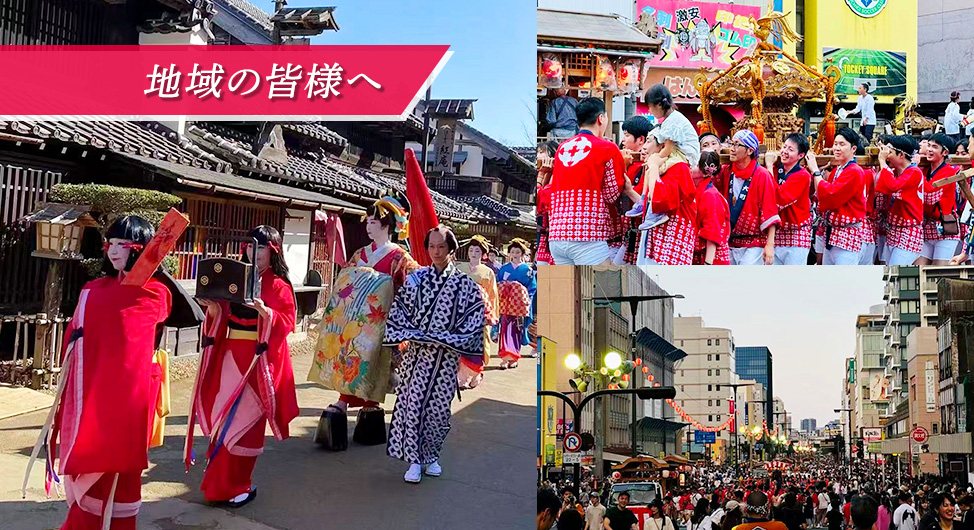
- Utsunomiya local festival and fireworks
- Mashiko pottery experience
- Students actively take part in nearby Bon dance events
- In partnership with high schools and universities in the prefecture, the school holds international exchange events between Japanese students and international students
Clubs
Ski club · Basketball club
In 2011, the school founded a ski club and a basketball club as club activities
On campus
- Main building, 10 floors
- 12 classrooms in total — TV sets and monitors and Internet access can be used in lessons. All classrooms are equipped with TV sets and monitors
- Main building
- Library room — The library also has data on universities and vocational schools across Japan and in the Tokyo area
- Main building
- Multipurpose hall
- 1st to 3rd floors
- Lobby
- Main building
- Reception room
- Floors 5–8
- Dormitory — There is a women-only floor.
- School
- Bicycle parking — There is a public bicycle parking lot at the school.
2026–2027 academic calendar
- Summer vacation
- 2026-07-25~2026-08-16 · Summer break (late July to mid-August)
- Winter break
- 2025-12-20~2026-01-04 · Winter break (mid-December to early January)
- Spring break
- 2026-03-18~2026-04-05 · Spring break (late March to early April)
School website · Updated 2026-05-25
Access
- Transit
- JR Utsunomiya Line and Tohoku Shinkansen JR Utsunomiya Station on foot 2 minWest exit
Tobu Utsunomiya Line Tobu-Utsunomiya Station on foot 15 min - Nearby
- Quiet, along the Tagawa River. 2-minute walk from JR Utsunomiya Station, 47 minutes by Shinkansen from Tokyo Station, about 80 minutes from Haneda Airport
- Dormitory
- Available¥25,000–54,000 a month · Housing and classrooms are in one building. Rent is ¥60,000 for a single room, ¥45,000 for a double room and ¥30,000 for a four-person room. In principle, everyone lives there for the first 3 months · Per the school website
School website · Updated 2019-05-09
Student dormitory — The first 3 months of dormitory fees (rent plus move-in fee ¥30,000, equipment fee ¥40,000 and deposit ¥20,000) are paid together with tuition. Electricity and water at actual cost
School website · Updated 2026-05-25
SALLAE has organized the school website and published data in English.
The update date is the day that material was last revised.
Photos are materials published by the school.
This information is compiled from official sources and is not updated daily. Please confirm with the official contact before signing or applying.