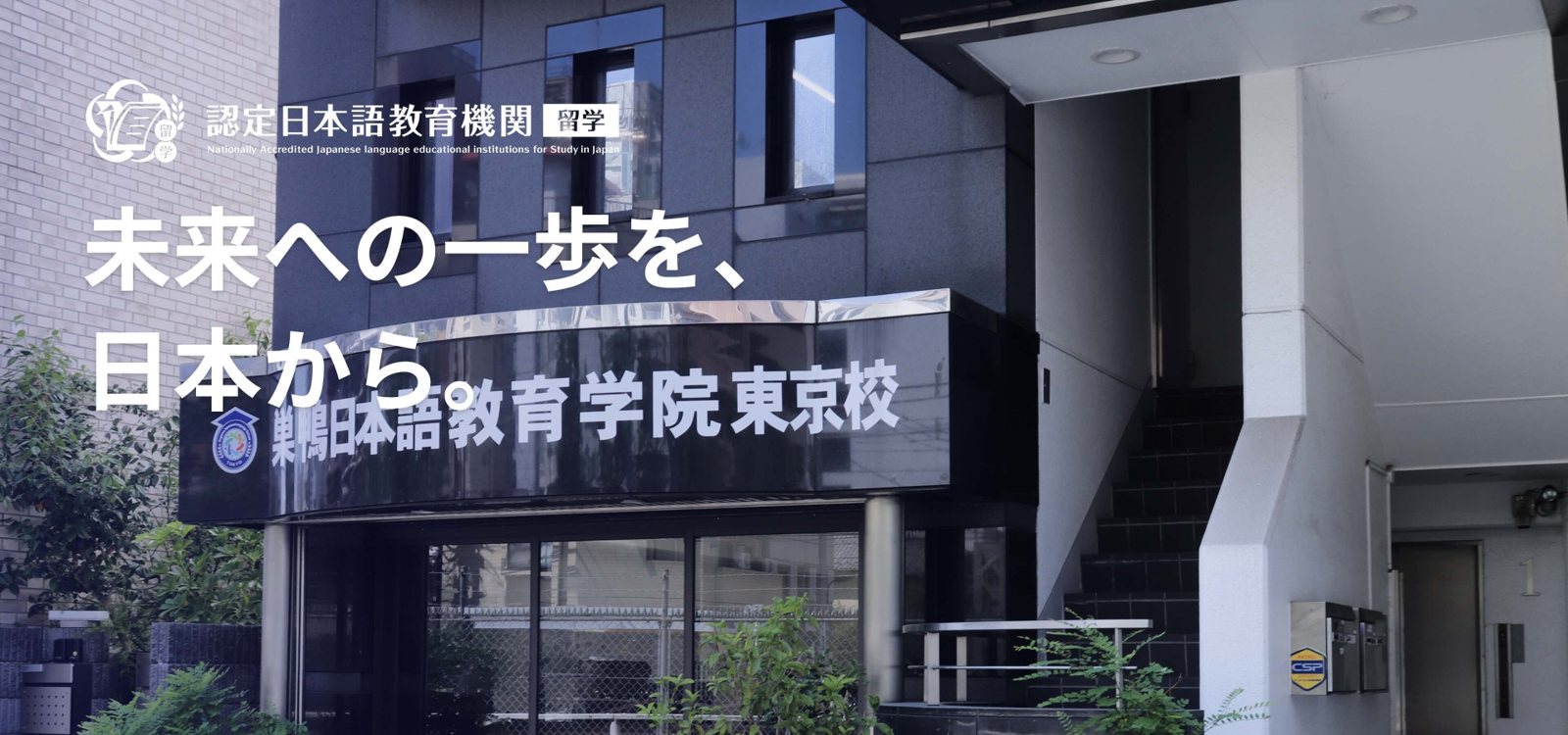
Sugamo Japanese Language Education Institute Tokyo Campus
Sugamo Japanese Language Education Institute Tokyo Campus
- To station
- 3-minute walk · Sugamo Station
- Admission
- Twice a year · April and October ›
- Japanese at entry
- From N5 ›
Compare side by side with other schools →
Tuition and conditions may change depending on the intake. If you contact us, we will check with the school and give you accurate details.
Nearby schools comparedBy distance · no ads or paid placement
- Sugamo Japanese Language Education Institute Tokyo CampusThis schoolTuition/yr¥913,000Progression—IntakesApr · Oct
- International School of Business0.4km›Tuition/yr¥750,000Progression—IntakesApr · Oct
- Tokyo International Exchange Institute Ikebukuro Campus1km›Tuition/yr¥928,000Progression85%IntakesApr · Oct
- Sendagaya Foreign Language Academy1.1km›Tuition/yr¥846,000Progression—IntakesApr · Jul · Oct
— means SALLAE has not yet found the data.
About the school
This is a progression-only school that accepts only people who aim to go on to Japanese vocational schools. Both the 2-year and 1 year 6 month courses are progression courses, aiming for JLPT N2 level at completion, and the school even gives vocational-school interview practice and coaching on statements of purpose. It is a small school with a capacity of 80 in 4 classes, a 3-minute walk from Sugamo Station in Toshima-ku, Tokyo, with 9 teachers. There is no student dormitory; partner real-estate companies are introduced. The school says its progression record and self-evaluation report will be published next year.
Published data and school website
Tuition
If you saw a lower amount elsewhere, it may not include the admission fee and application fee
Median 1-year tuition in other areas — Kyoto ¥911,000(7 schools) · Kanagawa ¥880,000(8 schools) · Okinawa ¥858,000(6 schools) · Tokyo ¥840,600(56 schools) · Fukuoka ¥835,000(12 schools) · Hyogo ¥825,500(7 schools) · Osaka ¥814,000(27 schools) · Shizuoka ¥790,000(9 schools) · Chiba ¥745,333(10 schools) · Aichi ¥740,667(5 schools)
Total by intake
| Intake · length | Full course |
|---|---|
| 1 year 6 months | ¥1,309,000 |
| 2 years | ¥1,705,000 |
Cost details · course tables · notes · 3 items
- Per term
- ¥198,000 3 months
- One-time fees
- ¥121,000Application fee · Admission fee
| Duration | Total |
|---|---|
| 1 year 6 months | ¥1,309,000 |
| 1 year 9 months | ¥1,507,000 |
| 2 years | ¥1,705,000 |
★"Per term" and "One-time at start" were calculated by SALLAE from each course's total. The courses this school actually offers are 1 year 6 months onward — all amounts in the table are values calculated by SALLAE.
Calculated by SALLAE · confirmed 2026-09-20
Admission & dates
- Apr intake
- 2-year course · Application July to mid-September of the previous year · Classes 80 weeks, 1,600 class hours (45 minutes per class hour)
- Oct intake
- 1 year 6 months course · Application February to mid-April of the year of entry · Classes 60 weeks, 1,200 class hours
- Japanese level
- JLPT N5 or above (N4 or above for the 1-year-6-month course)
For the 2-year course: completion of 150 or more hours of study at a Japanese language institution, or recognized as JLPT N5 equivalent. For the 1 year 6 month course: 450 or more hours, or N4 equivalent. Those the school recognizes as equivalent or higher are also accepted.
Deadline and capacity rules
Admission twice a year (April and October); both courses finish in March of the second year after entry. Completed 12 or more years of secondary education, aged 18 or older, and aiming to go on to a vocational school. Must have a reliable guarantor who can surely bear tuition and living costs.
School website · 2026-07-23 updated
Classes
- Morning
- 09:00-12:30 4 periods of 45 minutes
- Afternoon
- 13:10-16:40 4 periods of 45 minutes
- Class assignment
- Level-based 4 stages
Materials · Subjects · Timetable · Details
- Subject
- General · Kanji · Exam prep · Field study · Integrated: combines the 5 language activities. Kanji: kanji and vocabulary for reading news articles, etc. Test preparation: high score on JLPT N2. Field study: off-campus learning and community activities
Sample timetable, morning class (Beginner I) Monday to Friday, 4 periods a day
| Mon | Tue | Wed | Thu | Fri | |
|---|---|---|---|---|---|
| 09:00-09:45 | Kanji | Kanji | Kanji | Kanji | Kanji |
| 09:55-10:40 | Comprehensive | Comprehensive | Comprehensive | Comprehensive | Comprehensive |
| 10:50-11:35 | Comprehensive | Comprehensive | Comprehensive | Comprehensive | Comprehensive |
| 11:45-12:30 | Comprehensive | Comprehensive | Comprehensive | Comprehensive | Comprehensive |
Sample timetable, afternoon class (Pre-intermediate) Monday to Friday, 4 periods a day
| Mon | Tue | Wed | Thu | Fri | |
|---|---|---|---|---|---|
| 13:10-13:55 | Kanji | Kanji | Kanji | Comprehensive | Exam preparation |
| 14:05-14:50 | Comprehensive | Comprehensive | Exam preparation | Comprehensive | Exam preparation |
| 15:00-15:45 | Comprehensive | Comprehensive | Comprehensive | Comprehensive | Comprehensive |
| 15:55-16:40 | Comprehensive | Comprehensive | Comprehensive | Comprehensive | Comprehensive |
Class hours by subject
| Subject | 2 years |
|---|---|
| Comprehensive | 1,100 hr |
| Kanji | 200 hours |
| Exam preparation | 200 hours |
| Field study | 100 hours |
One class period is 45 minutes, 20 periods a week. 2 years: 80 weeks, 1,600 class hours; 1 year 6 months: 60 weeks, 1,200 class hours. To complete: attendance of 95% or higher, at least 190 class hours each term, and all grades D or higher
What each level covers · 4 stages
- Beginner I
- 3 monthsUnderstands frequently used everyday expressions and can handle simple exchanges with help (10 weeks / 200 hours)
- Beginner II
- 3 monthsCan exchange necessary information about familiar matters (10 weeks / 200 hours)
- Lower intermediate
- 9 monthsUnderstands the main points on familiar topics and can put together a coherent talk (30 weeks / 600 hours)
- Intermediate
- 9 monthsUnderstands discussion in one's field of specialization and can state one's opinion while setting out advantages and disadvantages (30 weeks / 600 hours). At completion: B2 (JLPT N2 equivalent)
School website · 2026-09-10 updated
Documents
- Admission application formFill in every field of the prescribed form
- 3 ID photos (write date of birth and name on the back). Taken within 3 months of applying, upper body, no hat, plain background, clear. 4 cm tall × 3 cm wide.
- Diploma from the highest level of educationOriginal
- TranscriptOriginal
- Proof of Japanese study: pass certificate of an exam or original transcript; Japanese course transcript from high school or university(state study hours); completion certificate from a Japanese language school (state study period and study hours)
Financial supporter's documents · only if applicable · 4 application requirements
Submitted by the person paying the tuition (financial sponsor)
- Financial sponsorship statementPrescribed form
- Documents proving the relationship between the financial sponsor and the applicantOriginal
- Deposit balance certificate
- Certificate of how funds were accumulated over the past yearCopy of the bank deposit and withdrawal statement, etc.
- Certificate of employmentCopy of business license if self-employed
- Tax payment certificatePast 1 year
- Other documents the school deems necessary
Only if applicable
- Certificate of expected graduation and academic transcript (prepare from your current school if you are currently enrolled)
- Applicant's own certificate of employment (If the applicant is currently employed)
- Copy of passport (all pages except blank ones; only if you have one)
Application requirements
For submitted documents, unless otherwise instructed, submit originals, not copies, of all certificates. Application documents must be prepared within 3 months before the date the school applies to the Immigration Services Agency for the Certificate of Eligibility. Certificates written in a language other than Japanese must each have a Japanese translation attached. Please apply with the ¥22,000 application fee enclosed with the documents above.
School website · 2026-07-23 updated
Admission process
- Request an admission consultation — Contact the school by phone at 03-6912-2006, by e-mail at info@sugamo-jli.com, or through the inquiry form on the website.
- Application — Apply with the required documents and the ¥22,000 application fee. Application period: for April entry, July to mid-September of the previous year; for October entry, February to mid-April of the same year.
- Document screening — Grades from high school (or an equivalent school) are reviewed.
- Japanese test — Applicants who pass the document screening take a written exam (multiple choice and written answers; also an essay for the 1 year 6 months course) and an interview (role play and Q&A). A score of 60% or more is the standard.
- Interview — Conducted in the native language for the applicant and the expense supporter. The applicant's everyday English conversation ability is also checked.
- Pass/fail decision — Pass or fail is decided by an overall judgment of the Japanese test and interview results. For successful applicants, the school handles the Certificate of Eligibility application.
- Please transfer the fees due at enrollment to the school's designated bank account. — Once the Certificate of Eligibility is issued, you are contacted directly or through an overseas referral agency. Within 1 week, transfer the admission payments, excluding the application fee (¥22,000), to the school's designated account.
- Visa application — After the school confirms payment, it hands over the admission permit and the Certificate of Eligibility. Apply for a visa at the Japanese diplomatic mission with jurisdiction over your place of residence.
School website · 2026-07-23 updated
Reviews
If you study here or used to, tell others what the classes, teachers and daily life were like. It helps anyone deciding on this school.
Write the first reviewUniversity prep
- Career guidance — Experienced teachers guide you kindly and carefully until you decide where to go on to study.
- Interview practice — Students practice interview answers and manners in a realistic way.
- Writing a statement of purpose — The school also teaches how to write a statement of purpose.
- Progression materials — The school keeps materials on vocational schools, so you can look up the information you need at any time according to where you want to go.
- Excused absence — If you miss class for entrance exams at higher education institutions, you can apply for an excused absence; if you submit your exam admission ticket and obtain the principal's permission, it counts as attendance.
- Destination schools close at hand — There are many vocational schools nearby, so you can visit them right away when deciding your path.
Schedule to admission
- Term 1
- April–June · Further-education guidance · Individual further-education consultation · Sundai Japanese Proficiency Test (S-JEP)
- Term 2
- July–September · JLPT · Vocational school visits · Further-education guidance
- Oct–Dec
- October–December · Sundai Japanese Proficiency Test (S-JEP) · JLPT
- Jan–Mar
- January–March · Final exams
School website · 2026-07-23 updated
Daily-life support
- Introduction to partner real-estate agents — We will help you find a place to live. If you run into any trouble, please always consult the school staff.
- Permission to engage in activities outside the status of residence — Apply for permission for activities outside status of residence at the airport of arrival. After enrollment, the school also helps you fill in and submit the application. Up to 28 hours a week, and up to 8 hours a day during long breaks
- Insurance — Those staying 3 months or longer join National Health Insurance, with a 30% share of medical costs. Students also join the Japanese language school student accident compensation system.
- Health checkup — A health checkup at a designated medical institution is required once a year: medical interview, height and weight, vision and hearing, chest X-ray, blood pressure and urine test.
- Life guidance staff — 2 or more student life guidance staff
School website · 2026-07-23 updated
Scholarship
- Incentive system
- The school's own award money is given to students who pass an official external Japanese test while enrolled (an in-house system for high-achieving students). The amount is not stated.
School website · 2026-07-23 updated
School life
For 1 year
- Term 1
- Entrance ceremony and orientation (April entrants) · Health checkup (April entrants) · Field trip
- Term 2
- Bon dance festival · Summer vacation · Evacuation drill
- Oct–Dec
- Entrance ceremony and orientation (October entrants) · Health checkup (October entrants) · Field trip
- Jan–Mar
- Presentations · Graduation ceremony · Spring break
* The above is a plan and may change from year to year
- Field study (100 class hours in the 2-year progression course): deepens understanding of Japanese culture and society through off-campus learning and community activities.
2026–2027 academic calendar
- Saturdays and Sundays
- Weekly
- From the day after Term 1 ends to the day before Term 2 starts
- Late June to early July (1 week)
- Summer vacation
- Summer break: early August to mid-August (2 weeks)
- From the day after Term 2 ends to the day before Term 3 starts
- Late Sep to early Oct (2 weeks)
- From the day after Term 3 ends to the day before Term 4 starts
- Late Dec to early Jan (2 weeks)
- From the day after Term 4 ends to the day before Term 1 starts
- Late Mar to early Apr (2 weeks)
School website · 2026-09-10 updated
Access
- Transit
- JR Yamanote Line, Toei Mita Line Sugamo Station, 3 min walk
- Nearby
- A quiet educational district. It has a traditional shopping street, a hot spring and a large garden. From Narita Airport: 38 minutes to Nippori, then 8 minutes to Sugamo; from Haneda Airport: 15 minutes to Shinagawa, then 32 minutes to Sugamo
- Dormitory
- None · SALLAE helps you look for housing nearby · Per the school website
School website · 2026-07-23 updated
Dorm — The school has no student dormitory, but it introduces partner real-estate companies and helps with rental housing contracts.
School website · 2026-07-23 updated
Japanese language institution certified by MEXT Certification No. 20252130068 · Certified Apr 30, 2026 →
SALLAE has organized the school website and published data in English.
The update date is the day that material was last revised.
Photos are materials published by the school.
This information is compiled from official sources and is not updated daily. Please confirm with the official contact before signing or applying.