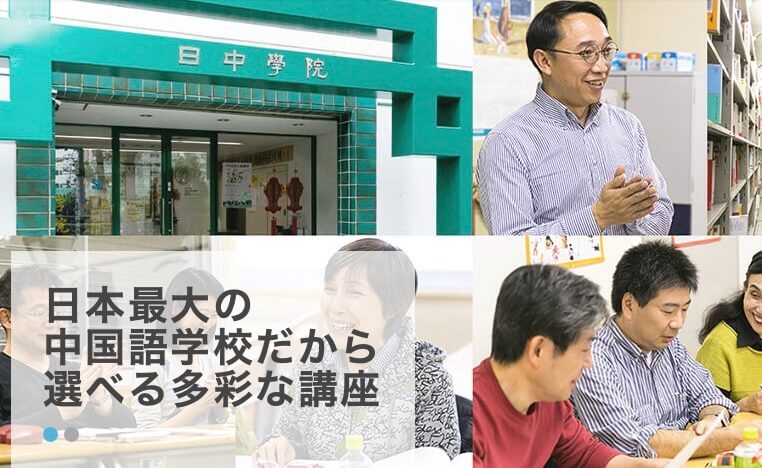
Nitchu Gakuin
Nitchu Gakuin
- Course
- Further-study course only
- To station
- 1-minute walk · Iidabashi Station
- Admission
- Twice a year · April and October ›
Compare side by side with other schools →
Tuition and conditions may change depending on the intake. If you contact us, we will check with the school and give you accurate details.
Nearby schools comparedBy distance · no ads or paid placement
- Nitchu GakuinThis schoolTuition/yr¥850,000Progression—IntakesApr · Oct
- Academy of Language Arts0.5km›Tuition/yr—Progression42%IntakesJan · Apr · Jul · Oct
- Kudan Institute of Japanese Culture Japanese Language Institute0.7km›Tuition/yr—Progression2%IntakesJan · Apr · Jul · Oct
- Tokyo Language Academy1.1km›Tuition/yr¥795,000Progression78%IntakesApr · Jul · Oct
— means SALLAE has not yet found the data.
About the school
The Japanese Department has only 2 courses, a 2-year progression course and a 1 year 6 months progression course. The school's self-evaluation report says that every student in the department hopes to progress each year and that progression guidance is given during class time, so it is strongly focused on progression to university and graduate school (in the 2023 report, 8 of 9 completers progressed). It started in 1951 as Chinese language courses; students study in the same building as Japanese students learning Chinese, 1 minute on foot from Iidabashi Station in Bunkyo-ku, Tokyo. However, the application requirements in the admission guidelines are limited to holders of Chinese nationality, and the courses are designed for students whose native language is Chinese.
Published data and school website
Tuition
⚠ The total for the 2-year course differs depending on the source. Please confirm with the school. Published materials: ¥1,501,000 (including application fee and admission fee) · School rules (in effect April 2026) and FY2027 admission guidelines, Japanese Department: application fee ¥10,000, admission fee ¥100,000, tuition ¥650,000, miscellaneous expenses ¥100,000. The published total equals the sum of 2 years under the old school rules (application fee ¥21,000, tuition ¥610,000, miscellaneous expenses ¥80,000). The difference seems to be due to the tuition revision in April 2026.
⚠ Installment payment varies by source — please confirm with the school. FY2027 admission guidelines: You can pay in one lump sum or in 2 half-year installments — first half ¥525,000 (admission fee, half a year of tuition and miscellaneous expenses), second half ¥325,000 (half a year of tuition) · School website tuition page: Tuition is paid in full in advance. The admission guidelines (July 2026) are the newer source. Please confirm with the school whether installment payment is possible.
If you saw a lower amount elsewhere, it may not include the admission fee and application fee
Median 1-year tuition in other areas — Kyoto ¥911,000(7 schools) · Kanagawa ¥880,000(8 schools) · Okinawa ¥858,000(6 schools) · Tokyo ¥840,600(56 schools) · Fukuoka ¥835,000(12 schools) · Hyogo ¥825,500(7 schools) · Osaka ¥814,000(27 schools) · Shizuoka ¥790,000(9 schools) · Chiba ¥745,333(10 schools) · Aichi ¥740,667(5 schools)
Cost details · course tables · notes · 5 items
- One-time fees
- ¥850,000 Year 1 tuition ¥650,000 · Admission fee ¥100,000 · Year 1 misc. fees (heating/cooling, printing, etc.) ¥100,000
According to the school guide, one year's fees are paid in one lump sum at enrollment. SALLAE will check with the school whether you can pay in installments.
Amounts from the FY2027 admission guidelines (April and October 2027 enrollment). Whether they include tax is not stated.
1st-stage screening fee: free / 2nd-stage screening fee: ¥10,000 (only for those who pass the 1st-stage document screening)
April students (2-year course), October students (1.5-year course).
Textbooks are provided free of charge to all international students in the Japanese Department through the scholarship system.
Japanese course under the former school regulations: application fee ¥21,000, tuition ¥610,000, miscellaneous fees ¥80,000.
School website · Updated 2026-07-07
Whether it is refundable
- Only if the student cancels their studies before coming to Japan
- Only if you cancel your studies before coming to Japan, the admission fee, tuition and miscellaneous expenses are refunded, excluding the application fee. The Certificate of Eligibility is returned to the Immigration Services Agency through the school.
- If you cannot enroll because, for example, your visa is not issued
- Refunded under school rules (excluding the application feeⓘThis is the document-screening fee you pay when submitting your application. Some schools call it an "examination fee." It is usually not refunded even if you are not accepted.) · Documents specified by the school are required, and the remittance fee is paid by the applicant
- If you withdraw after enrollment or move on to further study partway through
- Tuition that has been paid is not refunded.
Admission & dates
- Apr intake
- 2-year course · Application April entrants: July 1 – end of November 2026, 9:00–15:00 (excluding Sundays and holidays) · Classes total 1,520 class hours
- Oct intake
- 1 year 6 months course · Application October entrants: February 1 – end of June 2027, 9:00–15:00 (excluding Sundays and holidays) · Classes total 1,140 class hours
- Japanese level
- People who have passed JLPT N5 or above
People who have studied Japanese for 150 or more hours at a Japanese language institution in China, up to about the intermediate level (having finished an elementary textbook such as Standard Japanese)
Deadline and capacity rules
Holders of People's Republic of China nationality (students from the Hong Kong and Macao Special Administrative Regions may also apply). People who have completed 12 years of school education.
School website · Confirmed 2026-09-26
Classes
- Afternoon
- 13:30-17:30 Every week, Monday–Friday 13:30–17:30. Japanese: 18 hours per week; Society and current affairs: 2 hours per week; total: 20 hours per week (the timetable shows 13:00–15:20 and 15:40–17:30)
- AM/PM placement
- The Japanese specialist course runs from 1:30 p.m. to 5:30 p.m.
- Class assignment
- Level-based 4 stages
Materials · Subjects · Timetable · Details
- Materials
- Textbooks: Minna no Nihongo Elementary I and II, TRY! N3, N2 and N1, Yomu Chikara, AJ Listening Comprehension, Listening Tasks, and others.
- Subject
- General · Reading · Listening · Grammar and vocabulary · Conversation · Expression · The subjects in the attached table are "seminars", and Expression is 0 hours in term 1 of year 1. The website says Japanese 18 hours per week and Society and current affairs 2 hours per week.
First half of year 1 (first term) Mon–Fri · 20 hours per week (50 minutes per class hour)
| Mon | Tue | Wed | Thu | Fri | |
|---|---|---|---|---|---|
| 13:30-15:20 | Comprehensive | Comprehensive | Comprehensive | Comprehensive | Comprehensive |
| 15:40-17:30 | Grammar | Conversation | Listening comprehension | Grammar | Reading comprehension |
Second half of year 1 and year 2Mon–Fri · 20 hours per week (50 minutes per class hour)
| Mon | Tue | Wed | Thu | Fri | |
|---|---|---|---|---|---|
| 13:30-15:20 | Comprehensive | Grammar | Comprehensive | Comprehensive | Grammar |
| 15:40-17:30 | Reading comprehension | Conversation | Listening comprehension | Reading comprehension | Expression |
Class hours by subject
| Subject | 2 years | 1 year 6 months |
|---|---|---|
| Comprehensive | 342 hr | 190 hr |
| Reading comprehension | 114 hr | 38 hr |
| Listening comprehension | 76 hours | 38 hr |
| Grammar | 114 hr | 76 hours |
| Conversation | 76 hours | 38 hr |
| Expression | 38 hr | — |
| Comprehensive | 304 hr | 304 hr |
| Reading comprehension | 152 hours | 152 hours |
| Listening comprehension | 76 hours | 76 hours |
| Grammar | 76 hours | 76 hours |
| Conversation | 76 hours | 76 hours |
| Expression | 76 hours | 76 hours |
Completion is certified with an attendance rate of 85% or more and a grade of C or higher in all subjects. Below 85%, only certificates of enrollment and similar documents are issued.
What each level covers · 4 stages
- Beginner
- 6 monthsCan understand frequently used sentences and expressions related to areas of direct relevance
- Intermediate
- 6 monthsCan understand the main points when standard language is used on familiar topics
- Upper intermediate
- 6 monthsCan understand the main content of complex texts on both concrete and abstract topics
- Advanced
- 6 monthsCan understand fairly long texts with advanced content and grasp implied meanings
School website · Updated 2026-07-07
Documents
- Nitchu Gakuin Japanese Department application formPhoto box: taken within the last 3 months, upper body, facing front, no hat, 4 cm × 3 cm
- High school or university graduation certificateCopy
- Transcripts for all years of high school or university
- Be sure to submit proof of Japanese ability (a certificate of the JLPT, NAT-TEST or J-TEST).
- Health certificate
- Financial sponsorship statement
- Copy of passport
Financial supporter's documents · only if applicable · 3 application requirements
Submitted by the person paying the tuition (financial sponsor)
- Financial sponsorship statement
- Certificate of employment or a document proving occupationBusiness license, etc.
- Bank balance certificate (in the financial sponsor's name)Either Chinese yuan or foreign currency is accepted
- Income certificateSomething that shows annual income, such as payslips or a tax payment certificate · For residents of Japan, a tax certificate or tax payment certificate
- Materials showing how the savings were built up, such as a copy of the passbook
- Notarized proof of kinship between the financial sponsor and the applicant
- Copy of the household register (hukou)If parents or relatives in the home country or overseas pay
- Certificate of residence or seal registration certificateIf someone living in Japan pays
Only if applicable
- Explanatory statement (if the address on the household register differs from the one on the résumé)
Application requirements
A financial sponsor can sponsor only one applicant. Be sure to transfer living expenses, tuition and so on regularly to the student's own bank account. Therefore, please describe specifically how you came to take on the sponsorship.
The education verification certificate (issued by CHSI in China) and the household register mentioned in the admission guidelines are intended for applicants from China — how other countries are handled is not stated. SALLAE is confirming this with the school.
School website · Updated 2026-07-07
Admission process
- Request an admission consultation — Contact the school by phone or fax · The admission guidelines and application form can be downloaded from the website · The application form (2018 version) is in Japanese, with "People's Republic of China" printed in the nationality field.
- Application — Application period: April students Jul 1–end of Nov 2026; October students Feb 1–end of Jun 2027 (9:00–15:00, excluding Sundays and public holidays).
- First-round screening — The result of the 1st-stage document screening comes in early November for April entrants and early May for October entrants. The 1st-stage screening fee is free.
- Applicant interview — Applicant interview is in late November for April entrants and late May for October entrants. 2nd-stage screening fee ¥10,000 (only for those who pass the 1st-stage document screening).
- Final selection notice — Final selection notice: December for April students, June for October students.
- Application for status of residence (the school applies on your behalf) — The Japanese language school handles the Certificate of Eligibility application, and the Immigration Services Agency reviews it.
- Enrollment procedures and tuition payment — Enrollment procedures and tuition payment: around February for April students, around August for October students.
- Visa application — After the admission permit is issued and the Certificate of Eligibility is sent, apply for and receive the visa at the Japanese embassy.
- Arrival in Japan · entrance ceremony — Once the visa is issued, tell the school your arrival date · If you need a dormitory, apply beforehand · April students arrive in Japan from the end of March to early April, October students at the end of September.
School website · Confirmed 2026-09-26
Short-term study
- Open now?
- Rolling admissions, so availability varies from time to time — SALLAE will confirm with the school
Course without a student visa
- Starting a Japanese class for Chinese people living in Japan — Classes start Tue, Oct 20, 2026, 10:00–12:00! Tuesdays and Thursdays, twice a week, 80 sessions a year
★Short-term courses are not listed in the published data — it counts only student-visa courses.
School website · Confirmed 2026-09-26
Progression
| FY2022 | Admitted |
|---|---|
| Graduates | 9 students |
All schools accepted to so far
See 14 more schools
See 38 more schools
Course completers: 9; students meeting the standard: 9 (100.0%). Progression 1.5-year course: 8 progressed to university or similar, and 1 provided proof of CEFR A2 equivalent or higher. · School website · 2023-06-15 updated
Reviews
If you study here or used to, tell others what the classes, teachers and daily life were like. It helps anyone deciding on this school.
Write the first reviewUniversity prep
- Progression guidance — The institute provides guidance for the EJU and JLPT, guidance on progression to universities, graduate schools and vocational schools, and progression counseling.
- Courses aligned with the exams — Courses are designed around the level of the EJU and JLPT N1.
- Progression information session — In June, graduates hold an information session on universities and graduate schools.
- Mock interview — Graduate school applicants get mock interviews for about a month in August, and again during the exam seasons (October and February).
- Employment and progression staff — The main department, the Japanese department and the office each have staff in charge of employment and further education
Schedule to admission
- Preference survey
- Apr · A list of deadlines for applications, exams, results and enrollment procedures is distributed · Each student is asked about their preferences and the schools they will apply to
- Prepare documents
- May · Briefing on writing application documents · Help researching university faculty members' research fields
- Career briefing
- Jun · Progression information session by graduates · EJU
- Individual interview
- Jul · JLPT · Individual interviews on preferences
- Graduate school interview practice
- Aug · Mock interviews for graduate school applicants (about 1 month)
- Application (counter reception)
- Sep · University and graduate school applications open · Individual guidance on writing application forms
- Entrance exam
- Oct · Entrance exams begin · Mock interviews
- Individual guidance
- Nov · EJU · Individual guidance on preferences
- Exam
- Dec · JLPT
- National university applications
- Jan · National university applications open · Guidance on application forms and research plans
- National university entrance exams
- Feb · National university entrance exams · Mock interviews
- Presentation
- Mar · National university results announced
School website · Updated 2026-07-07
Daily-life support
- Medical — A "Japan-China Institute Chinese International Student Illness Fund" has been set up, with a system that subsidizes part of medical expenses.
- Commuting and other costs — Student discounts apply to commuting and other transportation you use.
- Health checkup — A health checkup is held once a year for both the regular and the Japanese departments.
- Housing support — The institute does not operate its own student dormitory, but introduces dormitories that are convenient for getting to school.
- Counseling — There is no counseling room, but individual interviews are scheduled and conducted by homeroom teachers. Homeroom teachers and office staff also give advice as needed.
- Number of life guidance staff — Student life guidance staff: 3 or more for the Japanese department (including at least 1 full-time)
- Advice on rules for living in Japan — International students are guided not only on laws and regulations but also on everyday customs. Chinese teachers explain carefully in Chinese.
- Disaster prevention — Evacuation drills are held twice a year. Emergency supplies of drinking water and food are kept.
- In an emergency — For international students, the school contacts their contact persons and relatives in Japan. If necessary, it contacts parents in their home country.
School website · Confirmed 2026-09-26
Scholarship
- Todo Scholarship
- ¥30,000 OnceA ¥30,000 "Todo Scholarship" is given to students with an attendance rate of 85% or more who take all exams, attend the graduation ceremony and present the student ID of their next school.
- Todo Scholarship (textbooks)
- Textbooks are provided free of charge to all international students in the Japanese Department.
School website · Updated 2026-07-07
Students
59 enrolled (2025) · Capacity 120 National median: 180 students
Based on 59 students enrolled in 2025.
Public data from the Association for the Promotion of Japanese Language Education (Nisshinkyo) · verified 2026-09-20
School life
For 1 year
- 4
- Entrance ceremony · Tokyo sightseeing · Individual interviews
- 5
- Health checkup · Training camp
- 6
- Lunch party (exchange with Japanese students of the main department) · Further-education briefing · EJU
- 7
- Midterm exams · Individual interviews · Living-with-a-Japanese-family experience · JLPT
- 8
- Evacuation drill · Summer vacation Aug 1 – Aug 24
- 9
- Extracurricular activities
- 10
- October entrance ceremony · Cultural festival
- 11
- Midterm exams (April entrants) · Individual interviews · EJU
- 12
- Winter break Dec 21–Jan 9 · Hakone & Kamakura trip · Midterm exams(Oct intake) · JLPT
- 1
- National Diet visit
- 2
- Speech contest · Spring Festival party · Graduation and promotion exams
- 3
- Graduation ceremony · Spring break · Disneyland trip
Based on the 2027 admission guidelines · On the website's event photo page, the Hakone and Kamakura trip is posted under November.
- Exchange between Japanese learners of Chinese and Chinese international students is steadily growing
- At the cultural festival, every class performed a Chinese or Japanese play (2022). Student food stalls were also held (2023, for the first time in 4 years).
- Hakone & Kamakura trip
- There are extracurricular activities such as a visit to a noh theater (Yarai Noh Theatre)
- There is no schoolyard, so there are no club activities. Instead, sports exchange takes place once a year during the training camp.
On campus
- 1st floor
- Lounge / chat space / study space — The lounge and the large classroom have 52-inch TVs. The lounge plays Chinese satellite broadcasts all day.
- Computers and printers for students — You can look up part-time job and progression information, and print homework and materials.
- Library room — More than 20,000 Chinese and Japanese books, plus videos and DVDs.
- Classrooms / language lab
2026–2027 academic calendar
- Sunday
- Weekly
- National holidays
- National holidays
- Summer break
- Aug 1–Aug 24
- Winter break
- Dec 21–Jan 9
- Spring break
- Japanese department: Mar 14 – Apr 9
School website · Updated 2026-07-07
Access
- Transit
- Toei Oedo Line Iidabashi Station, 1 min walk
6 min from Iidabashi Station on the Sobu Line and Tokyo Metro Yurakucho, Tozai and Namboku lines. Iidabashi Station, 6 min walk
7 min from Korakuen Station on the Tokyo Metro Marunouchi and Namboku lines. Korakuen Station, 7 min walk
8 min from Suidobashi Station on the Sobu Line and Toei Mita Line. Suidobashi Station, 8 min walk - Dormitory
- Available · The institute does not operate its own student dormitory, but introduces dormitories that are convenient for getting to school. · Based on school website
School website · Confirmed 2026-09-26
Dorm — There are 2 company dormitories owned by Sumitomo Forestry — COCOPAL Nishi-Kasai (31 studio rooms · about ¥86,000–¥94,000 per month, utilities included · 7 minutes to the station, 23 minutes by Tozai Line subway, 8 minutes from the station to school) and COCOPAL Fujimidai (43 studio rooms · about ¥75,000 per month, electricity separate · 5 minutes to the station, 26 minutes by Yurakucho Line subway, 7 minutes from the station to school) · No resident manager; support is available by phone and email in Japanese, English and Chinese · Rooms have a desk, chair, bath, bed, refrigerator, air conditioner, storage, internet and smart lock; the kitchen, lounge, dining room and laundry are shared.
School website · Updated 2026-07-07
SALLAE has organized the school website and published data in English.
The update date is the day that material was last revised.
Photos are materials published by the school.
This information is compiled from official sources and is not updated daily. Please confirm with the official contact before signing or applying.