Tokyo YMCA Japanese Language Institute
Tokyo YMCA Japanese Language Institute
- Tuition
- On the cheaper side for Tokyo ›
- Admission
- Twice a year · April and October ›
- Japanese at entry
- From N5 ›
Compare side by side with other schools →
Tuition and conditions may change depending on the intake. If you contact us, we will check with the school and give you accurate details.
Nearby schools comparedBy distance · no ads or paid placement
- Tokyo YMCA Japanese Language InstituteThis schoolTuition/yr¥730,000Progression—IntakesApr · Oct
- Gakuto Academy2.8km›Tuition/yr¥922,000Progression—IntakesApr · Oct
- Tokyo Galaxy Japanese Language School3.2km›Tuition/yr¥920,000Progression—IntakesJan · Apr · Jul · Oct
- Tokyo Meisei Japanese Language Institute3.3km›Tuition/yr¥899,000Progression—IntakesApr · Jul · Oct
— means SALLAE has not yet found the data.
About the school
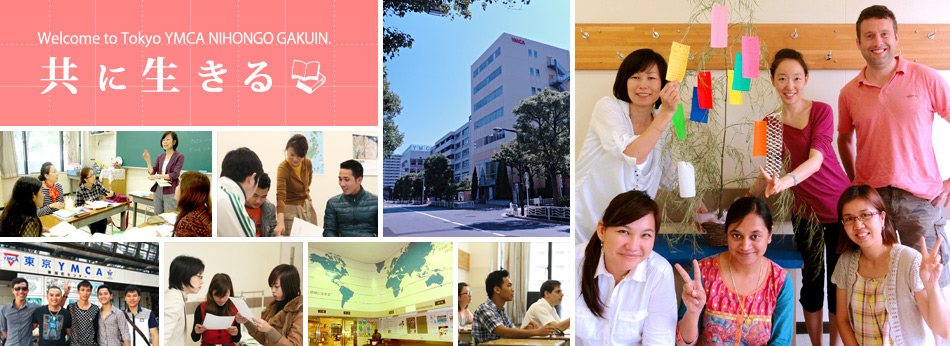
The school positions its 2-year course as a course aimed at progression to university or vocational school, with progression seminars, individual interviews and interview practice held in stages. In the table of completers published by the school (June 2026), 39 of 51 completers went on to universities, vocational schools and the like in Japan. It has a preferential admission system for the hotel, medical and welfare, and social sports and childcare vocational schools run by the Tokyo YMCA, and offers interactive classes in which Japanese volunteers and alumni join lessons and work on tasks together in Japanese. It is a school with a capacity of 156, on floors 6 and 7 of the Tokyo YMCA vocational school building, a 5-minute walk from Toyocho Station on the Tokyo Metro Tozai Line.
Published data and school website
Tuition
If you saw a lower amount elsewhere, it may not include the admission fee and application fee
Median 1-year tuition in other areas — Kyoto ¥911,000(7 schools) · Kanagawa ¥880,000(8 schools) · Okinawa ¥858,000(6 schools) · Tokyo ¥840,600(56 schools) · Fukuoka ¥835,000(12 schools) · Hyogo ¥825,500(7 schools) · Osaka ¥814,000(27 schools) · Shizuoka ¥790,000(9 schools) · Chiba ¥745,333(10 schools) · Aichi ¥740,667(5 schools)
Total by intake
| Intake · length | Full course |
|---|---|
| 1 year 6 months | ¥1,045,000 |
| 2 years | ¥1,360,000 |
Cost details · Course tables · Notes
- Per term
- ¥157,500 3 months
- One-time fees
- ¥100,000Application fee · Admission fee
| Duration | Total |
|---|---|
| 1 year 6 months | ¥1,045,000 |
| 1 year 9 months | ¥1,202,500 |
| 2 years | ¥1,360,000 |
★"Per term" and "One-time at start" were calculated by SALLAE from each course's total. The courses this school actually offers are 1 year 6 months onward — all amounts in the table are values calculated by SALLAE.
Calculated by SALLAE · verified 2026-09-16
Admission & dates
- Apr intake
- 2-year course · Application Jul 7, 2025 – mid-Nov 2025 (April 2026 admission, 2-year course) · Classes Hours by level: Beginner 200, Pre-intermediate 200, Intermediate 400, Upper intermediate 400, Advanced 400; total 1,600 (1 class hour = 45 min)
- Oct intake
- 1 year 6 months course · Application Feb 2, 2026 – mid-Jun 2026 (October 2026 admission, 1 year 6 months course) · Classes: 1,200 hours in total for both 1.5-year Courses A and B (45 minutes per class period)
- Japanese level
- Any one of: A) university graduate in your home country; B) passed JLPT N5 or higher, etc.; C) completed about 150 hours of Japanese study
B: Have passed the Japanese-Language Proficiency Test (JLPT) N5 or higher, J.TEST Level F or higher, NAT-TEST Level 5 or higher, or similar. * For the October intake, Japanese ability equivalent to N4 is desirable. (Admission guide page) Having passed JLPT N5 or higher is desirable.
Deadline and capacity rules
The 2-year course starts in April and the 1 year 6 months course in October, both ending in March. Capacity 156. 12 or more years of school education completed. Results expected: late February for April admission, late August for October admission
School website · 2025-06-03 updated
Classes
- Morning
- 09:15-12:35 4 periods of 45 minutes
- Afternoon
- 13:20-16:40 4 periods of 45 minutes
- Class assignment
- Level-based 8 stages
Materials · Subjects · Timetable · Details
- Subject
- Kanji and vocabulary · Comprehensive Japanese · Combines "listening," "reading," "speaking" and "writing" in task-based work. In homeroom (HR), students reflect on their learning, set their next goal and make a study plan
Class
| Morning | Afternoon | |
|---|---|---|
| 1 | 09:15-10:00 | 13:20-14:05 |
| 2 | 10:05-10:50 | 14:10-14:55 |
| 3 | 11:00-11:45 | 15:05-15:50 |
| 4 | 11:50-12:35 | 15:55-16:40 |
Weekly schedule example (intermediate)
| Mon | Tue | Wed | Thu | Fri | |
|---|---|---|---|---|---|
| 1 | Kanji and vocabulary | Kanji and vocabulary | Kanji and vocabulary | Kanji and vocabulary | Kanji and vocabulary |
| Periods 2–4 | Integrated Japanese: listening, reading, speaking (interaction, presentation) | Integrated Japanese: listening, reading, speaking (interaction, presentation) | Integrated Japanese: listening, reading, speaking (interaction, presentation) | Integrated Japanese: listening, reading, speaking (interaction, presentation) | Integrated Japanese: listening, reading, speaking (interaction, presentation) |
5 days a week, 4 periods of 45 minutes. Task-based lessons. Completion targets: N1 for the 2-year course; for the 1 year 6 months course, N2 for A and N3 for B. Grading is on a 4-level scale
What each level covers · 8 stages
- Beginner 1
- 3 monthsCan handle basic communication such as everyday greetings and self-introductions, and hold simple conversations.
- Beginner 2
- 3 monthsCan talk in a somewhat organized way about familiar topics, say what is needed at shops and banks, and handle simple procedures.
- Intermediate 1
- 3 monthsCan communicate without difficulty in daily life, and give simple instructions and explanations.
- Intermediate 2
- 3 monthsCan talk about personal experiences including feelings, and exchange opinions with friends on familiar topics.
- Upper intermediate 1
- 3 monthsCan understand the gist of social topics in newspapers and the news, and express simple opinions.
- Upper intermediate 2
- 3 monthsCan understand social topics and state their own opinions. Can speak without difficulty except in formal settings.
- Advanced 1
- 3 monthsCan state opinions and reasons on a variety of topics, and carry on a conversation while considering the other person's feelings and position.
- Advanced 2
- 3 monthsCan understand almost everything Japanese people read and hear in daily life, and respond in Japanese appropriate to their position and the situation.
School website · Confirmed 2026-09-26
Documents
- Admission application form, school's designated form, completed by the applicant
- Statement of purpose, school's designated form, completed by the applicant in their native language, English or Japanese. Signature and date
- Proof of graduation from the last school attended: original diploma or graduation certificate
- Score report from an official Japanese-language test (JLPT, J.TEST, NAT-TEST, etc.), or a certificate proving at least 150 hours of Japanese study in your home country
- Copy of passportPages with personal details, photo and entry/exit records
- 2 photos, 4 cm tall × 3 cm wide, taken within the last 3 months
Sponsor documents · Only if applicable · 5 application requirements
Submitted by the person paying the tuition (financial sponsor)
- Financial sponsorship statement, school's designated form, completed by the sponsor in person, with signature and date
- Documents proving the relationship with the applicant (original or copy of birth certificate, family register extract, residence certificate, household register, etc.). Not required if the applicant is the sponsor
- Bank balance certificate in the financial sponsor's nameOriginal
- Documents proving the financial sponsor's occupationOriginal or copy of certificate of employment, occupation certificate, business license, corporate registry extract, etc.
- Deposit and withdrawal statements for the past year, or a copy of the bankbook. If the funds cannot be explained, a "statement on how the funds were accumulated"
- Copies of income certificate, tax payment certificate, etc. for the past year
Only if applicable
- Also state your plans after graduating from this school in your statement of purpose (If 5 or more years have passed since graduating from your last school)
Application requirements
All documents must have been issued within 3 months of the date of the immigration application A Japanese translation is required for all documents If copies of documents B2, B4 and B6 are submitted, state the date the copy was made, the name of the person who made it, and their relationship to the applicant Originals of diplomas from high school, university, etc. and of Japanese-language test certificates are returned after the application. Other documents are generally not returned Required documents vary by country. Documents other than those listed above may be required
Required documents vary by country. Documents other than those listed above may be required. SALLAE is confirming this with the school.
School website · 2025-06-03 updated
Admission process
- Request an admission consultation — Phone 03-3615-5548 (Mon–Fri 9:30–17:30, Sat 9:30–12:30), email nihongo@tokyoymca.org
- Application — The applicant or a representative sends the admission application. Submission and contact: email nihongo@tokyoymca.org, Facebook Messenger @tokyoymca.nihongo, WeChat ID tokyoymca. Pay the ¥20,000 application fee when applying.
- School screening (documents) / School screening (entrance exam) — After document screening, an entrance exam (about 45–60 min) is held online or in person. Results are sent to the applicant or representative. The ¥20,000 application fee is payable regardless of the outcome of the status of residence application
- Application to the Immigration Services Agency — The school applies to the Immigration Services Agency of Japan for the "Certificate of Eligibility."
- Enrollment procedures (CoE issued) — After the Certificate of Eligibility (CoE) is issued, pay tuition and other fees by the date the school specifies. Once payment is confirmed, the CoE is handed over via the applicant, a representative or an overseas partner organization
- Obtaining a visa — The applicant prepares the necessary documents, including the Certificate of Eligibility (CoE), admission permit and passport, and applies for a visa at the Japanese embassy or consulate general with jurisdiction over their country or region of residence. Visa processing time varies by place of application and screening status. The CoE is generally valid for 3 months.
- Admission orientation — Admission orientation after arriving in Japan. It covers the educational policy, school rules and school life, plus a level check test for class placement. If you cannot arrive or attend, contact the school beforehand
- Placement test
- A level check test is given for class placement. Students move up to the next level roughly every 3 months
School website · Confirmed 2026-09-26
Short-term study
- Visa
- Working holiday(not a student visa)
- Admission
- RollingNo fixed intake months
- Open now?
- Rolling admissions, so availability varies from time to time — SALLAE will confirm with the school
Course without a student visa
- For those enrolling with their current status of residence — Admission is possible at any time if places are available. Inquire by email or phone. An interview and level check decide the course and start date
- Private lessons — Individual lessons arranged through consultation to fit your purpose and level. Available for 1–3 people, with a lower per-person cost for groups. For people on a status of residence other than a student visa, or on a short-term stay
- Corporate and group training — We also accept requests from companies and organizations for training and Japanese-language education.
★Short-term courses are not listed in the published data — it counts only student-visa courses.
School website · Confirmed 2026-09-26
Graduate outcomes
| FY2025 | Admitted |
|---|---|
| Employment | 2 students |
| Graduates | 51 students |
Passing an exam
| Exam | Pass |
|---|---|
| JLPT N1 2024 | 6 students |
| JLPT N2 2024 | 29 students |
| JLPT N3 2024 | 29 students |
JLPT FY2024 (1st and 2nd sittings combined), passed/examinees: N1 6/18, N2 29/55, N3 29/52
See 23 more
Prepared June 16, 2026: 51 completers, 48 meeting the criteria (94.1%). Progression to university, etc. 24/9/6; change of status of residence 1/0/1; A2-equivalent or higher 27/7/7 · Employers of 2023 and FY2024 graduates: Fujita Kanko, Kanaya Hotel, The Kitano Hotel Tokyo, LYTech, Marvel, PTW Japan, etc. · School website · Updated 2026-06-16
Reviews
If you study here or used to, tell others what the classes, teachers and daily life were like. It helps anyone deciding on this school.
Write the first reviewUniversity prep
- Progression support — Progression seminars, individual interviews and interview practice are held in stages, with support tailored to each student's path from gathering information through school selection, application and entrance exams
- Preferential admission to Tokyo YMCA vocational schools — Preferential admission is available for the vocational schools run by the Tokyo YMCA (international hotel, medical and welfare, social sports and childcare)
- Individual interviews — Individual interviews and information tailored to each student's wishes and background. Career-guidance staff: 0 full-time, 4 concurrent
School website · Confirmed 2026-09-26
Daily-life support
- Student insurance — International students enroll in student insurance, and the school pays the premium. Guidance is also given on National Health Insurance and the medical system
- Volunteer supporters — Japanese volunteer supporters are introduced to students who want one. Volunteers registered with Tokyo YMCA offer Japanese conversation practice and exchange, and help students get used to life in Japan
- Admission orientation — At admission orientation and regular interviews, guidance is given on rules of life in Japan, health management, disaster and crime prevention, and precautions about part-time work
- Regular interviews — Regular interviews check each student's goals and challenges, with cooperation from outside organizations as needed. Student-guidance staff: 2 full-time, 5 concurrent
- Health checkup — Health checkups are held as early as possible after enrollment and once a year thereafter (Periodic inspection report on accreditation standards: compliant)
- Part-time work — Part-time work of up to 28 hours a week is permitted only for students with permission to engage in activity other than that permitted by their status of residence. Students who break the rules are dismissed immediately and sent home
School website · Confirmed 2026-09-26
Scholarship
⚠ International cooperation scholarship varies by source — please confirm with the school. ¥100,000, about 5 students per year (FY2026 application guidelines, updated Jun 3, 2025) · About 3 recipients, ¥10,000 per month (Student Support page). From the pages alone, it is unclear whether these describe the same scholarship in different ways or whether the payment method has changed.
- Tokyo YMCA Japanese Language Institute scholarship
- Monthly ¥20,000 × 5 monthsFor students enrolled on a student visa for more than 6 months who excel in academics and character. About 3 students. First term Jun–Oct, second term Nov–Mar (5 months each). ¥20,000 per month
- Tokyo YMCA International Cooperation Fundraising Scholarship
- For students enrolled in the Integrated Japanese course for more than 6 months who excel in academics and character. Application conditions differ for each scholarship and are explained after admission
- MEXT Honors Scholarship for Privately Financed International Students
- ¥360,000; 1 student recommended per year
- Kyoritsu International Exchange Scholarship
- Monthly ¥60,000 × 1 year ¥60,000 × 12 months; 1 student recommended per year
- LSH Asia Scholarship Foundation scholarship
- Monthly ¥20,000 × 5 months ¥60,000 × 12 months; 1 student recommended per year
- Fee reduction
- Holding JLPT N1 at the time of application gives a full waiver of the admission fee; holding N2–N5 gives a half waiver. The same applies to NAT-TEST, J.TEST, TOPJ and J-cert
School website · 2025-06-03 updated
Students
Enrolled: 98 students (2025) · Capacity: 156 students National median: 180 students
Based on 98 students enrolled in 2025.
Public data from the Association for the Promotion of Japanese Language Education (Nisshinkyo) · verified 2026-09-20
School life
For 1 year
- 4
- Entrance ceremony
- 5
- Welcome party for new students
- 6
- Regular exams · EJU (Examination for Japanese University Admission for International Students) · International Day
- 7
- Sports day · JLPT · Tanabata · Fireworks festival
- 8
- Summer festival
- 9
- Regular exams · Health checkup · International cooperation fundraising · Charity run
- 10
- Entrance ceremony · YMCA members' softball tournament
- 11
- Autumn leaf viewing · EJU
- 12
- JLPT · Regular exams · Christmas and year-end party
- 1
- First calligraphy of the new year (kakizome)
- 2
- Speech contest
- 3
- Regular exams · School trip · Graduation ceremony
The annual schedule is tentative.
- We value opportunities to engage with people and society outside the classroom, such as community exchange, field trips and volunteer activities.
- Drawing on the Tokyo YMCA group network, the school offers opportunities to take part in community and volunteer activities
2026–2027 academic calendar
- Summer break
- Early to mid-August · About 10 days
- Autumn break
- Late September to early October · About 10 days
- Winter break
- Late December to early January · About 10 days
- Spring break
- Late March to early April · About 14 days
School website · Confirmed 2026-09-26
Access
- Transit
- Tokyo Metro Tozai Line Toyocho Station, 5 min walkWest Exit 2
- Nearby
- Above Tokyo YMCA College of Social Welfare and Physical Education (floors 1–5); the Japanese Language Institute occupies floors 6 and 7. 5 min walk from the Toei Bus Toyocho Station stop
- Dormitory
- None · SALLAE can help you find housing nearby · Based on the school website
School website · Confirmed 2026-09-26
Dormitory — No student dormitory. The school introduces real-estate agencies; many properties require no key money, deposit or Japan-based guarantor. Student dormitory ¥40,000–60,000, share house ¥45,000–100,000
School website · 2025-06-03 updated
SALLAE has organized the school website and published data in English.
The update date is the day that material was last revised.
Photos are materials published by the school.
This information is compiled from official sources and is not updated daily. Please confirm with the official contact before signing or applying.