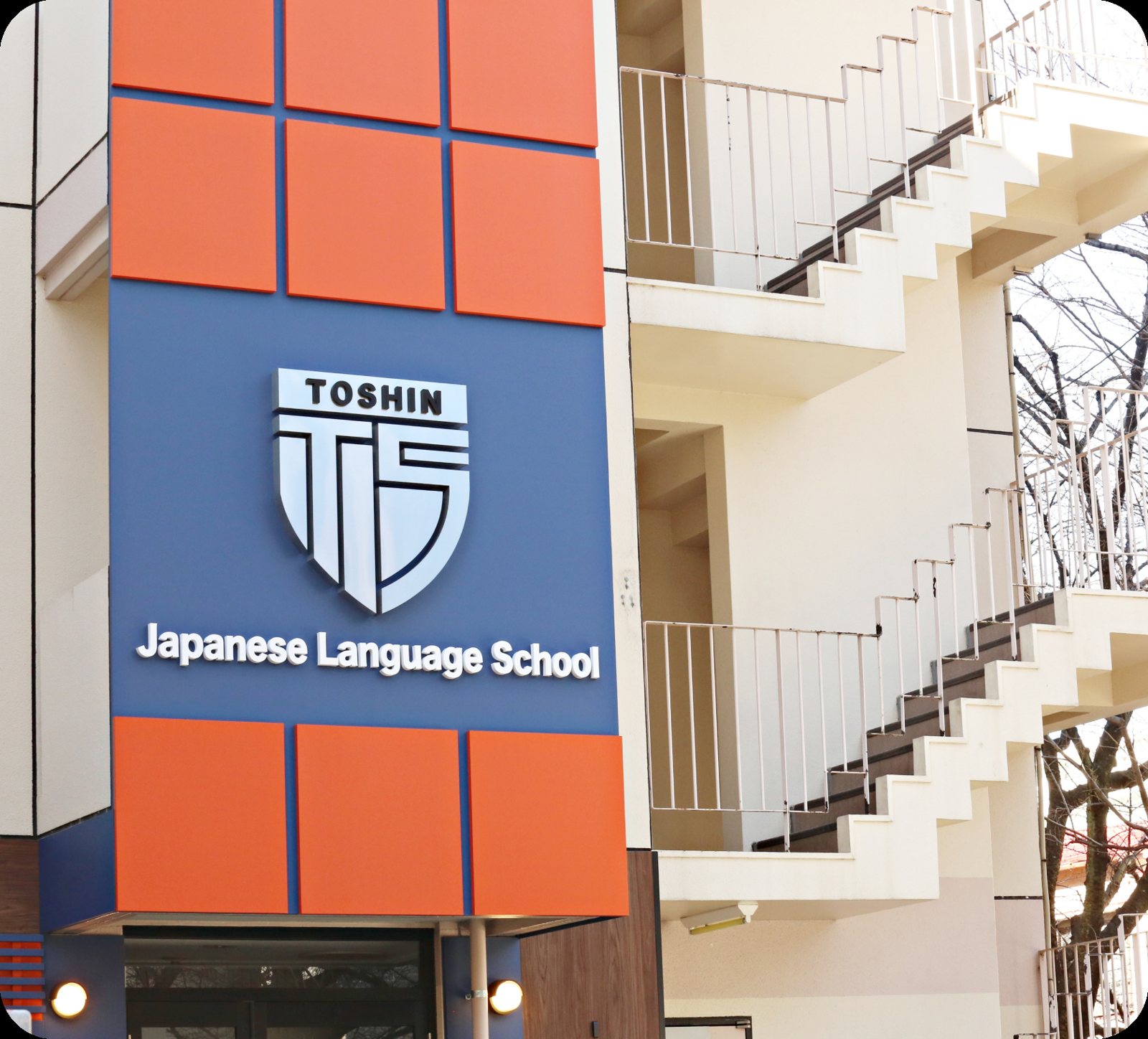
Toshin Language School
Toshin Language School
- Course
- Further-study course only ›
- Tuition
- On the cheaper side for Tokyo ›
- Admission
- 4 times a year · choose your intake month ›
- AM & PM classes
- Decided by the school ›
Compare side by side with other schools →
Tuition and conditions may change depending on the intake. If you contact us, we will check with the school and give you accurate details.
Nearby schools comparedBy distance · no ads or paid placement
- Toshin Language SchoolThis schoolTuition/yr¥728,000Progression—IntakesJan · Apr · Jul · Oct
- Human Academy Japanese Language School Tokyo0.5km›Tuition/yr¥712,000Progression—IntakesJan · Apr · Jul · Oct
- Sendagaya Japanese Language School0.6km›Tuition/yr¥896,000Progression—IntakesApr · Oct
- Tokyo International University Affiliated Japanese Language School0.7km›Tuition/yr¥880,000Installments OKProgression35%IntakesApr · Oct
— means SALLAE has not yet found the data.
About the school
A school that focuses on progression to graduate schools, universities and vocational schools. All four student-visa courses are progression courses, and from right after enrollment the homeroom teacher and the full-time teachers at each level guide each student one by one, from surveying target schools through applications, short essays and interviews. Its list of accepted students includes graduate schools at the University of Tokyo and Kyoto University, as well as Waseda University and Keio University. Opened in 1988, it is a 10-minute walk from JR Takadanobaba Station and a 4-minute walk from Shimo-Ochiai Station on the Seibu Shinjuku Line, along the Kanda River. It has a two-session system, morning and afternoon, with up to 20 students per class. Most of the 654 students enrolled in 2025 are from China, Vietnam and Nepal, and there are 2 Korean students. The school has staff who speak English, Korean and Vietnamese.
Published data and school website
Tuition
If you saw a lower amount elsewhere, it may not include the admission fee and application fee
Median 1-year tuition in other areas — Kyoto ¥911,000(7 schools) · Kanagawa ¥880,000(8 schools) · Okinawa ¥858,000(6 schools) · Tokyo ¥840,600(56 schools) · Fukuoka ¥835,000(12 schools) · Hyogo ¥825,500(7 schools) · Osaka ¥814,000(27 schools) · Shizuoka ¥790,000(9 schools) · Chiba ¥745,333(10 schools) · Aichi ¥740,667(5 schools)
Total by intake
| Intake · length | Full course |
|---|---|
| 1 year 3 months | ¥890,000 |
| 1 year 6 months | ¥1,052,000 |
| 1 year 9 months | ¥1,214,000 |
| 2 years | ¥1,376,000 |
Cost details · Course tables · Notes
- Per term
- ¥162,000 3 months
- One-time fees
- ¥80,000Application fee · Admission fee
| Duration | Total |
|---|---|
| 1 year 3 months | ¥890,000 |
| 1 year 6 months | ¥1,052,000 |
| 1 year 9 months | ¥1,214,000 |
| 2 years | ¥1,376,000 |
★"Per term" and "One-time at start" were calculated by SALLAE from each course's total. The courses this school actually offers are 1 year 3 months onward — all amounts in the table are values calculated by SALLAE.
Calculated by SALLAE · verified 2026-09-16
Admission & dates
- Apr intake
- 2-year course · Application September to mid-November of the previous year · Classes 1 term is 3 months (200 class periods), up to 8 terms over a maximum of 2 years
- Jul intake
- 1 year 9 months course · Application Jan – mid-Mar · Classes: 200 class hours × 7 terms
- Oct intake
- 1 year 6 months course · Application Mar–mid-May · Classes: 200 class hours × 6 terms
- Jan intake
- 1 year 3 months course · Application July to mid-September of the previous year · Classes: 200 class hours × 5 terms
- Japanese level
- About JLPT N5 level or above
People who have received 150 or more hours of Japanese language education before applying / Japanese study certificate (150 hours or more)
Deadline and capacity rules
Completion of 12 or more years of education in the home country, age 18 or older, 150 or more hours of Japanese language education before applying / written and interview exam and document screening
School website · 2024-08-12 updated
Classes
- Morning
- 09:00-12:30 Morning class 9:00–12:30 (1st period 09:00–09:45 to 4th period 11:45–12:30) / depending on study level, students are assigned to a morning or afternoon class
- Afternoon
- 13:00-16:30 Afternoon class 13:00–16:30 (1st period 13:00–13:45 to 4th period 15:45–16:30) / up to 20 students per class
- AM/PM placement
- Depending on study level, students are assigned to a morning or afternoon class.
- Class size
- Max 20 students
- Class assignment
- Level-based 8 stages
- Elective classes
- EJU Japanese preparation · EJU written-section preparation · N1 preparation · N2 preparation · N3 preparation · Composition and conversation course · Japanese culture / Business Japanese course · Japan studies / newspapers / current events · Special guest classes by field · At the upper-intermediate level, elective classes of 4 class hours are held each week.
Materials · Subjects · Timetable · Details
- Subject
- Character instruction · Main textbook · Grammar and listening · Written-exam preparation · Purpose-based electives · Beginner: periods 1–4, character instruction and main textbook / upper-intermediate: character instruction, main textbook, grammar and listening, writing preparation, purpose-based electives
Beginner timetable Every Monday to Friday, 4 periods in both morning and afternoon
| Mon | Tue | Wed | Thu | Fri | |
|---|---|---|---|---|---|
| 1st period 09:00–09:45 13:00–13:45 | Character instruction | Character instruction | Character instruction | Character instruction | Character instruction |
| 2nd period 09:55–10:40 13:55–14:40 | Main textbook | Main textbook | Main textbook | Main textbook | Main textbook |
| 3rd period 10:50–11:35 14:50–15:35 | Main textbook | Main textbook | Main textbook | Main textbook | Main textbook |
| 4th period 11:45–12:30 15:45–16:30 | Main textbook | Main textbook | Main textbook | Main textbook | Main textbook |
Upper intermediate Classes are held Monday to Friday every week. Upper-intermediate classes have one elective class a week (purpose-based electives).
| Mon | Tue | Wed | Thu | Fri | |
|---|---|---|---|---|---|
| 1st period 09:00–09:45 13:00–13:45 | Character instruction | Character instruction | Character instruction | Purpose-based electives | Main textbook |
| 2nd period 09:55–10:40 13:55–14:40 | Grammar and listening | Grammar and listening | Grammar and listening | Purpose-based electives | Main textbook |
| 3rd period 10:50–11:35 14:50–15:35 | Main textbook | Main textbook | Main textbook | Purpose-based electives | Writing exam preparation |
| 4th period 11:45–12:30 15:45–16:30 | Main textbook | Main textbook | Main textbook | Purpose-based electives | Writing exam preparation |
One term is 3 months (200 class hours), up to 8 terms over a maximum of 2 years / basically 8 levels from Beginner I to Advanced II / the special advancement class aims at top universities and moves faster than regular classes
What each level covers · 8 stages
- Beginner I
- 3 months N5
- Beginner II
- 3 months N5–N4
- Lower intermediate
- 3 months N4–N3
- Intermediate I
- 3 months N3
- Intermediate II
- 3 months N3–N2
- Upper intermediate
- 3 months N2
- Advanced I
- 3 months N2–N1
- Advanced II
- 3 months N1
School website · 2024-07-25 updated
Documents to prepare — student visa course
- Admission application formSchool-designated form
- RésuméSchool-designated form
- Certificate of graduation from the last school attendedFor students, add a certificate of enrollment
- 4 photos4×3 cm, taken within 3 months
- Copy of passportAll pages of past entry and exit records too
- Certificate of Japanese studyProof of having received 150 hours or more of Japanese-language education
Sponsor documents · Only if applicable
Submitted by the person paying the tuition (financial sponsor)
- Financial sponsorship statementSchool-designated form. The financial sponsor must handwrite it in their native language and attach a Japanese translation
- Documents proving the relationship between the financial sponsor and the applicantCertified copy of family register or birth certificate, etc.
- Bank balance certificate of the financial sponsor in their home countryA balance of ¥3,000,000 or more in Japanese yen
Only if applicable
- Certificate of enrollment (for students)
For short-term courses, submit Application form (school's prescribed form) · Copy of passport (photo page and status of residence page) only.
School website · 2024-08-13 updated
Admission process
- Request an admission consultation — The school has staff who speak English, Korean and Vietnamese. Please consult them at any time.
- Submit documents for screening — Application periods: April intake, Sep–mid-Nov of the previous year / July, Jan–mid-Mar / October, Mar–mid-May / January, Jul–mid-Sep of the previous year
- Written and interview exam and document screening — Written and interview exam / document screening: April intake, late Sep–Oct of the previous year; July intake, mid-Jan–Feb; October intake, mid-Apr–May; January intake, Aug–Sep of the previous year
- Immigration application — Application to Immigration: April intake, late November of the previous year / July, mid-March / October, early June / January, mid-September of the previous year (the school submits the application documents to the Immigration Services Agency)
- The Tokyo Regional Immigration Services Bureau issues the Certificate of Eligibility to the academy, and tuition is paid. — Certificate of Eligibility (CoE) issued and tuition paid: April intake, late February / July, late May / October, late August / January, early November of the previous year
- Visa application — Visa application at the embassy or consulate: April intake, late March / July, late June / October, early September / January, early December of the previous year
- Enter Japan and enrol — Entry to Japan: April intake, Mar–Apr / July, Jun–Jul / October, Sep–Oct / January, Dec–Jan of the previous year
- Placement test
- Written and interview exam (selection before enrollment)
- After entry
- The school uses a cloud system that manages students from enrollment to graduation. Students can use the smartphone app free of charge and manage their own attendance and grade records.
School website · 2024-08-12 updated
Short-term study
- Visa
- Temporary visitor or Working holiday(not a student visa)
- Open now?
- Rolling admissions, so availability varies from time to time — SALLAE will confirm with the school
Course without a student visa
- Short-term course — A course for people on a tourist visa or dependent visa rather than a student visa. Enrollment can be renewed every 3 months.
- Working holiday course — A course for people not studying with the aim of continuing their education. The introductory Japanese level also includes extracurricular activities such as cultural experiences.
★Short-term courses are not listed in the published data — it counts only student-visa courses.
School website · 2024-07-25 updated
Progression
All schools accepted to so far
+8 more schools
See 49 more schools
Progression results (list of graduate schools, universities and vocational schools; the list ends with "etc.") / the school website gives no year or number of students · School website · 2024-08-13 updated
Reviews
If you study here or used to, tell others what the classes, teachers and daily life were like. It helps anyone deciding on this school.
Write the first reviewUniversity prep
- Progression guidance starts right after enrollment. — At enrollment, office staff (staff in charge for each nationality) conduct a survey interview that doubles as orientation, to learn the student's desired career path.
- Individual interview — Once a term, the homeroom teacher holds an individual interview. It covers consultation on daily life, a survey on study at home and in class, the student's self-evaluation and part-time work status.
- After that, full-time teachers give individual guidance. — Full-time teachers assigned to each level give consultation on progression and support in daily life, and provide entrance exam information, application guidance, exam preparation, short-essay and interview coaching.
- Advisors for graduate schools, universities and vocational schools — The career guidance staff share the latest progression information as it comes. Advisors for graduate schools, universities and vocational schools share information with the teachers in charge.
- On-campus further-study briefing — At progression briefings held regularly at the school, many universities and vocational schools cooperate, giving students the chance to consult them directly.
- EJU and JLPT preparation — At the upper-intermediate level, there are elective classes of 4 class hours a week. Students can choose from EJU preparation, JLPT preparation, Japan studies and more.
Schedule to admission
- Office staff at enrollment
- Staff in charge for each nationality conduct a survey interview that doubles as orientation · Learn the student's desired career path
- Homeroom teacher
- The homeroom teacher surveys target schools in individual interviews · Share information with full-time teachers
- Full-time teachers
- Ongoing career guidance based on study items and level of achievement · Guidance on entrance exam information and applications for target schools · Exam preparation, short essays and interview coaching
School website · 2024-08-12 updated
Daily-life support
- Office staff who can respond in various languages — Office staff who can respond in various languages are assigned for consultations about daily life, and students can be assisted in their native language even in emergencies such as accidents or injuries.
- Available 24 hours — Emergency contacts are made known to students, and full-time staff respond 24 hours a day. Emergency and important notices from the school are also sent in various languages via social media.
- Enrolled in National Health Insurance / health checkup held at the school every year — All students are enrolled in National Health Insurance, and a health checkup for all students is held at the school every year.
- Orientation — Using the "Manual for Foreign Residents" issued by the Tokyo Metropolitan Government's Citizens' Safety Promotion Headquarters, the school teaches Japanese laws, rules and manners in each native language, including the Immigration Control and Refugee Recognition Act, the Penal Code and the Road Traffic Act.
- Disaster drill — Every year, the school holds an evacuation drill for all students in cooperation with the fire department. It also stocks water and food in the school in preparation for disasters.
- Attendance and grade management — For students with low attendance or poor grades, the school provides step-by-step individual guidance and contacts the study-abroad agency or parents before problems become serious.
- Request issuance of certificates — Preparing a certificate takes 3 days to 1 week, excluding holidays / apply through the online form or directly at the office
School website · 2024-06-24 updated
Scholarship
- TOSHIN Scholarship
- ¥30,000 OnceTwice a year (first half / second half) / student-visa students with an attendance rate of 95% or 98% or higher (depends on days enrolled) / amount ¥30,000
- Principal-recommended study incentive
- ¥50,000 OnceOnce a year (spring term) / students who entered on a student visa, have been enrolled for 1 year or more, and have excellent attendance and grades and serve as a model for international students / amount ¥50,000
- MEXT learning incentive for international students
- Amount ¥30,000/month / students who entered on a student visa with an overall attendance rate of 95% or higher, excellent grades and a wish to continue to further study
- Top performers on the EJU
- Amount ¥48,000/month / students who achieved excellent results on the Examination for Japanese University Admission (EJU) and are enrolled at a Japanese university or graduate school
- LSH Asia Scholarship (specified nonprofit organization)
- ¥100,000 OnceStudents from Asian countries who have been enrolled on a student visa for 3 months or more and plan to stay enrolled for at least 6 more months from the application date / excellent grades with an attendance rate of 95% or higher, and a recommendation from the school is required / amount ¥100,000
School website · 2024-08-13 updated
Students
654 students enrolled (2025) · Capacity 900 students National median: 180 students
Based on the 654 students enrolled in 2025.
Public data from the Association for the Promotion of Japanese Language Education (Nisshinkyo) · verified 2026-09-20
School life
For 1 year
- 4
- New student orientation
- 5
- Midterm exam · Tango no Sekku · In-school progression information session · Individual meetings
- 6
- Health checkup · Final exams · 1st EJU · Sports day · In-school progression information session
- 7
- New-student orientation · 1st JLPT · Tanabata event
- 8
- Summer break (Obon holiday) · Midterm exams · Visit to a disaster-prevention facility · In-school progression information session · Individual meetings
- 9
- Health checkup · Final exams · Disaster drill
- 10
- New-student orientation · Halloween festival · Autumn excursion
- 11
- Midterm exams · 2nd EJU · In-school progression information session · Individual meetings
- 12
- Year-end and New Year holiday · Final exams · 2nd JLPT · Christmas event
- 1
- New-student orientation · New Year games
- 2
- Midterm exams · Setsubun event · Class day · Individual meetings
- 3
- Graduation ceremony · Final exams · Hinamatsuri
Annual schedule: spring, summer, autumn and winter terms
- To help students learn about Japanese culture, the school introduces seasonal Japanese events and provides chances to experience them. Events held together with extracurricular activities are shared on social media.
- On September 22, all students and teachers took part in TOSHIN WORLD CLEANUP DAY and were commended by the NPO WORLD CLEAN UP DAY JAPAN
- Activities have included volunteering at facilities for the elderly and exchanges with university students interested in Japanese language education
2026–2027 academic calendar
- Saturdays, Sundays and public holidays
- · There are no classes on weekends, national holidays, term breaks or school closure days set by the school.
- Summer vacation
- Tue, Aug 11 – Sun, Aug 16, 2026 · During this period, all operations are suspended, including the office counter, phone and email support.
- Term break
- Thu, Sep 24 – Tue, Oct 6, 2026 · Regular classes start on Wed, October 7, 2026. During the break, the office counter is open as usual (except weekends and national holidays).
- Winter break
- Mon, Dec 22, 2025 – Thu, Jan 8, 2026 · Winter term start date: Fri, January 9, 2026 / office closure: Sat, December 27, 2025 – Sun, January 4, 2026
- Spring break
- Thu, Mar 27 – Tue, Apr 8, 2025 · Regular classes started on Wed, April 9, 2025. During the break, office counter services were open as usual (except weekends and national holidays).
School website · 2024-07-25 updated
Access
- Transit
- Yamanote Line, Takadanobaba Station, 10 min walkWaseda exit
Tokyo Metro Tozai Line, Takadanobaba Station, 10 min walk
Seibu Shinjuku Line, Takadanobaba Station, 10 min walk
Seibu Shinjuku Line Shimo-Ochiai Station, 4 min walk - Nearby
- The school building stands along the Kanda River, and you can see beautiful cherry trees in spring / from April 1, 2025, commuting by bicycle or electric kick scooter is prohibited (parking them in the school or nearby is also prohibited)
- Dormitory
- None · SALLAE helps you look for housing nearby · Per the school website
School website · 2024-08-12 updated
Dormitory — The school currently has no school-run dormitory, but makes introductions as needed. It works with the dormitory managers and shares student information as appropriate.
School website · 2024-06-24 updated
SALLAE has organized the school website and published data in English.
The update date is the day that material was last revised.
Photos are materials published by the school.
This information is compiled from official sources and is not updated daily. Please confirm with the official contact before signing or applying.