Tsubasa International Academy
Tsubasa International Academy
- Employment results
- Employment etc. 33% ›
- Dormitory fee
- From ¥20,000 per month ›
- Progression
- Universities etc. 53% · national median 86% ›
Compare side by side with other schools →
Tuition and conditions may change depending on the intake. If you contact us, we will check with the school and give you accurate details.
Nearby schools comparedBy distance · no ads or paid placement
- Tsubasa International AcademyThis schoolTuition/yr¥879,000Progression53%IntakesApr · Oct
- Asia International Language Center26.5km›Tuition/yr¥990,000Progression—IntakesJan · Apr · Jul · Oct
- Aishin International Academy27.8km›Tuition/yr¥890,000Progression68%IntakesApr · Jul · Oct
- Asuka Gakuin27.9km›Tuition/yr¥878,000Progression88%IntakesJan · Apr · Jul · Oct
— means SALLAE has not yet found the data.
About the school
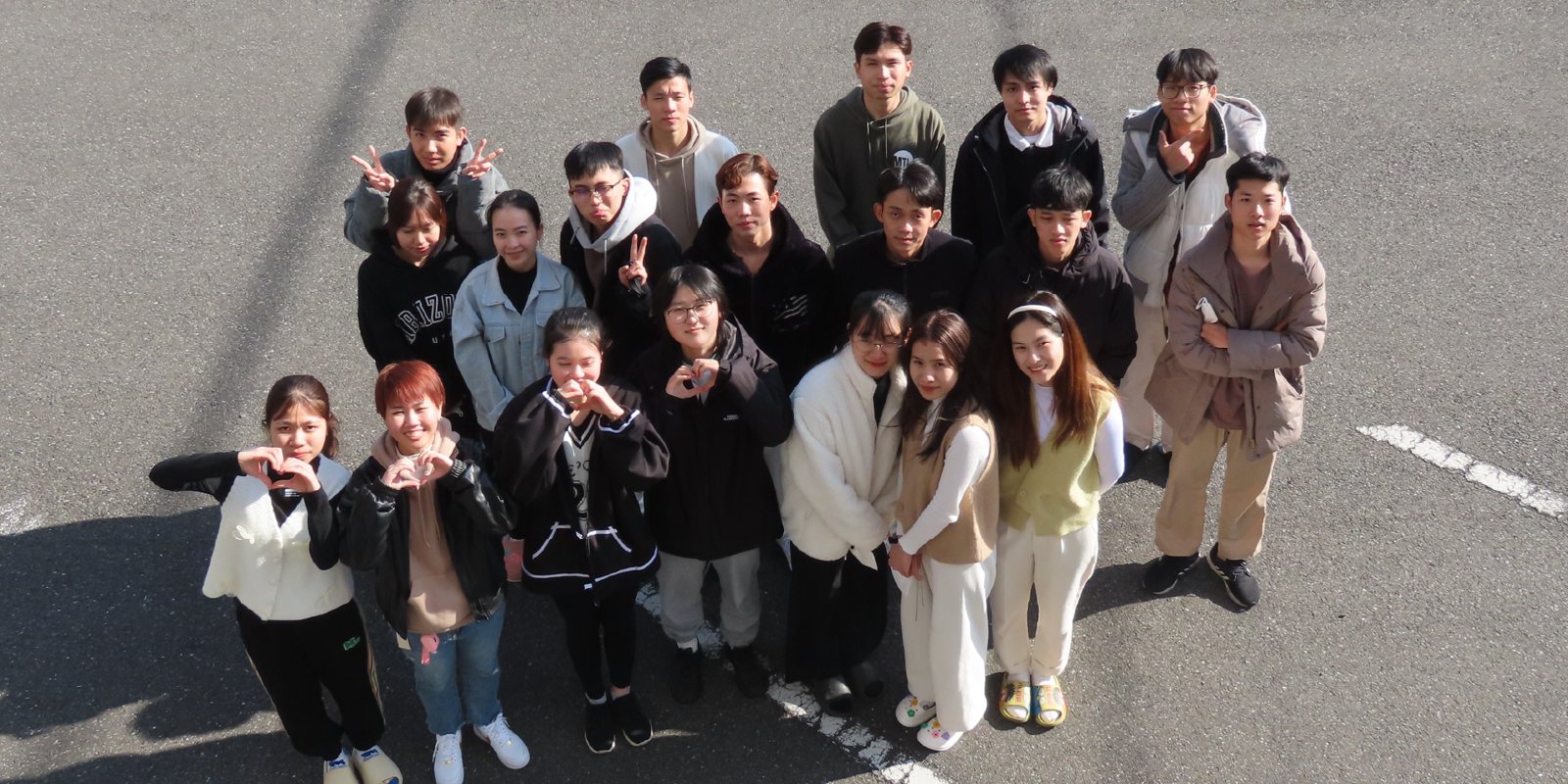
Two of the three courses offered are progression courses (2-year progression and 1 year 6 months progression). Of the 36 students who completed a course in FY2024, 16 went on to universities, vocational schools and similar institutions in Japan, and 10 changed to a status of residence that allows work. Besides individual progression guidance, the school supports job preparation such as Specified Skilled Worker exam study sessions. It is a small school in Kimitsu, Chiba, about 70 minutes by train from Tokyo Station, with a capacity of 112 and, as of April 2025, 43 international students and 6 teachers. For the first 6 months after enrollment, all students live in school-run dormitories (2–4 per room, ¥20,000 per month).
Published data and school website
Tuition
If you saw a lower amount elsewhere, it may not include the admission fee and application fee
Median 1-year tuition in other areas — Kyoto ¥911,000(7 schools) · Kanagawa ¥880,000(8 schools) · Okinawa ¥858,000(6 schools) · Tokyo ¥840,600(56 schools) · Fukuoka ¥835,000(12 schools) · Hyogo ¥825,500(7 schools) · Osaka ¥814,000(27 schools) · Shizuoka ¥790,000(9 schools) · Chiba ¥745,333(10 schools) · Aichi ¥740,667(5 schools)
Admission & dates
- Apr intake
- 2-year course · Application Spring (April entry): Round I Jul 15–Jul 31, Round II Aug 1–Aug 15, Round III Aug 16–Sep 30 (closes once capacity is filled). · Classes 1,600 (1 class period = 45 minutes)
- Apr intake
- 1-year course · Application Spring (April entry): Round I Jul 15–Jul 31, Round II Aug 1–Aug 15, Round III Aug 16–Sep 30 (closes once capacity is filled). · Classes 800 (1 class period = 45 minutes)
- Oct intake
- 1 year 6 months course · Application Autumn (October entry): Round I Feb 15–Feb 28, Round II Mar 1–Mar 15, Round III Mar 16–Apr 30 (closes once capacity is filled). · Classes 1,200 (1 class period = 45 minutes)
- Japanese level
- Persons who passed an exam at about JLPT N5 level or above
Completed 150 hours or more of Japanese study and passed an exam at about N5 level or above. For the general 1-year course, about N4 or above. For the 1 year 6 month progression course, N4 level or above at enrollment is the guide
Deadline and capacity rules
2-year progression (April, 40 students), general 1-year (April, 20 students), 1 year 6 months progression (October, 20 students). 12 years of schooling completed, within 5 years of graduating from the last school. Document screening and interview.
School website · 2025-10-10 updated
Classes
- Morning
- 09:00-12:20 Morning: homeroom 8:50–9:00, class 9:00–10:30, break 10:30–10:50, class 10:50–12:20, cleaning and homeroom 12:20–12:30.
- Afternoon
- 13:10-16:30 Afternoon: homeroom 13:00–13:10, class 13:10–14:40, break 14:40–15:00, class 15:00–16:30, cleaning and homeroom 16:30–16:40.
- Class assignment
- Level-based 5 stages
Materials · Subjects · Timetable · Details
Class hours by subject
| Subject | 2 years | 1 year 6 months | 1 year |
|---|---|---|---|
| Beginner | 400 hours | 200 hours | 200 hours |
| Lower intermediate | 200 hours | 200 hours | 200 hours |
| Intermediate | 400 hours | 400 hours | 200 hours |
| Upper intermediate | 200 hours | 400 hours | — |
| Advanced | 400 hours | — | 200 hours |
Instruction hours by level, FY2024: 2-year progression 1,600; 1 year 6 months progression 1,200; general 1-year 800 class hours (45 minutes each). Target levels N1, N2, N3.
School website · 2025-11-10 updated
Documents
- Admission application formAll fields handwritten by the applicant
- Résumé
- Statement of reason for studying abroadHandwritten by the applicant
- 4 ID photos Size: 4 cm tall × 3 cm wide * Upper body, no hat, plain background and clear, taken within 3 months of application.
- Diploma from the highest level of education
- Certificate of completion of a Japanese-language schoolCertificate of Japanese study hours
- Copy of passport (all pages except blank ones)
- Other documents the school deems necessary
Financial supporter's documents · only if applicable · 3 application requirements
Submitted by the person paying the tuition (financial sponsor)
- Financial sponsorship statementPrescribed form
- Bank deposit balance certificate
- Bank transaction certificatePast 1 year
- Income certificate
- Certificate of employment
- Documents proving family relationship, such as a copy of the family register or birth certificates (of the applicant and the sponsor).
Only if applicable
- Certificate of expected graduation (If you are currently enrolled in a school)
- Originals of the certificate and transcript (If you passed any level of the Japanese-Language Proficiency Test)
- Grades from that study (if you have studied Japanese in high school or university)
- Certificate of employment (if the applicant is currently employed)
- Income certificate, tax payment certificate (past 1 year), company registry copy (If the sponsor is a company owner)
Application requirements
A. When a relative (father, mother, husband or wife) pays the expenses Submit originals, not copies, of all certificates unless otherwise instructed. Attach a Japanese translation to any certificate not in Japanese. Write the translator's name, address and phone number below the translation, and affix a seal or signature to the right of the name.
Required documents differ by country, and no separate criteria for applicants of Korean nationality are given. SALLAE is confirming this with the school.
School website · 2025-10-10 updated
Admission process
- Request an admission consultation — Contact the school by phone at 0439-32-1905, by email at info@tia.tsubasa-gr.jp, or through the inquiry page.
- Career briefing — Information sessions are held in August for April entrants and in February for October entrants.
- Application — Application form (every field handwritten by the applicant), resume, statement of reasons for studying in Japan (handwritten by the applicant) and photo. Applications accepted: spring term Jul 15–Sep 30, autumn term Feb 15–Apr 30.
- Interview and document screening — Screening consists of document screening and an interview, checking financial means, academic ability and aptitude, and the qualities needed to complete study abroad. Interviews are held in September for April entrants and March for October entrants.
- Submit application documents in the way the school specifies — Documents are submitted in November for April entrants and May for October entrants. The Japanese language school handles the Certificate of Eligibility application.
- Eligibility result and admission fee payment — Notification comes in the second half of February for April entrants and the second half of August for October entrants. Within 2 weeks of the Certificate of Eligibility being issued, transfer the first year's tuition to the designated account.
- Receive Certificate of Eligibility and admission permit, apply for visa, arrive in Japan — In exchange for the payment certificate, the admission permit and Certificate of Eligibility are issued. Sending of the Certificate of Eligibility, visa application and arrival in Japan: March for April entrants, September for October entrants.
- Admission — There are October entrants (October entry) and April entrants (April entry). In classes before the entrance ceremony, orientation and an evacuation drill were held.
- Placement test
- The school assigns classes. New students are divided into a class that starts from the basics, a class that starts from the middle of the elementary level, and an upper-intermediate class.
School website · 2025-10-10 updated
Short-term study
- Open now?
- Rolling admissions, so availability varies from time to time — SALLAE will confirm with the school
Course without a student visa
- Japanese classes for foreign residents in Japan — One-on-one. Mainly everyday conversation and business Japanese. From ¥3,300 per hour (textbooks extra), by reservation only. Attending at least once a week is recommended.
- Post-arrival training for technical intern trainees — A general technical intern course and a nursing care course. For nursing care, choose 1 or 2 months. Training that meets the JITCO statutory requirements.
- Follow-up study — For technical intern trainees already placed at companies. Offered by purpose, such as JLPT, everyday workplace conversation and evaluation exams. Evaluation exam prep ¥3,300 per session; assessor nursing care practical prep ¥22,000 per day (travel costs extra).
★Short-term courses are not listed in the published data — it counts only student-visa courses.
School website · 2024-01-19 updated
Graduate outcomes
| FY2024 | Admitted |
|---|---|
| Employment | 10 students |
| Graduates | 36 students |
FY2024: completers 36, meeting the standard 30 (83.3%), withdrawals 0. Breakdown (2-year + 1 year 6 months): progression 1+15 · change of status of residence 5+5 · exams 2+2 · Main employers: Hotel Mikazuki / Hiday Hidaka Corporation / Nishiyori Co., Ltd. (Thailand branch) · School website · Updated 2025-11-10
Reviews
If you study here or used to, tell others what the classes, teachers and daily life were like. It helps anyone deciding on this school.
Write the first reviewUniversity prep
- Career planning from before enrollment — From the start of enrollment, the school draws up a life plan together with each student and gives guidance suited to their career aspirations.
- Individual progression guidance for each student — Career guidance for vocational schools and various universities. Progression guidance for each student according to their education in their home country and life plan; supplementary classes if needed.
- Application support and interview practice — In the second half of summer break, interview practice for vocational school entrance exams (self-analysis, interview practice with teachers, group interview practice), plus essays on target schools' assignments.
- JLPT and EJU preparation — FY2025 calendar: EJU mock exams 1 and 2 (May), JLPT mock exams 1 and 2 (June and November).
- Support for obtaining qualifications such as Specified Skilled Worker and care helper — Support for obtaining qualifications such as Specified Skilled Worker and care helper. In summer break, study sessions for the Specified Skilled Worker exams in food service, food and beverage manufacturing and accommodation (2023).
- Cooperation with local companies, job placement agencies and vocational schools — Support through cooperation with local companies, job placement agencies and vocational schools.
- Career information session — Annual schedule: career information session in January.
- Supplementary lessons — Supplementary classes such as a Specified Skilled Worker exam prep course, university entrance exam coaching (extra fee) and a short essay course can be taken separately (April 2024 entry, English-language admission guidelines).
School website · 2025-11-10 updated
Daily-life support
- Mobile phone and insurance procedures · City hall procedures — Life support with procedures such as mobile phones and insurance, plus city hall procedures and help buying a SIM card.
- Help finding a part-time job — Support in finding part-time work, in cooperation with local employers. With permission, up to 28 hours per week; exceeding this may lead to expulsion or being sent home.
- Accompaniment to the hospital — When you go to a hospital, staff will help if needed.
- Health checkup and National Health Insurance — All students receive a health checkup after enrollment. Everyone enrolls in National Health Insurance, with a 30% out-of-pocket share of medical costs.
- Guidance for life in Japan, such as daily habits. — Guidance for life in Japan, such as daily habits.
- Orientation (evacuation drill) — In classes before the entrance ceremony, orientation and an evacuation drill simulating an earthquake were held.
- Airport pickup — Airport-to-dorm transfer is ¥3,000 per person(April 2024 entry, English-language admission guidelines).
Monthly living costs · School information
| Item | 1 month |
|---|---|
| Food costs | ¥25,000 |
| Housing costs | ¥20,000 |
| Phone purchase | ¥5,000 |
| Miscellaneous (clothes, books) | ¥10,000 |
| Savings for travel | ¥5,000 |
| Savings for further study | ¥35,000 |
| Total | ¥100,000 |
Part-time job wage from about ¥950/hour; mobile phone from ¥5,000/month; Kimitsu–Tokyo express bus from ¥1,500. Example of a student's living costs: part-time work + ¥100,000.
School website · 2025-11-10 updated
Scholarship
- Introduction of scholarships for motivated students
- Introduction of scholarships for motivated students. Information on various scholarships is also provided.
School website · 2025-03-31 updated
Students
90 enrolled (2025) · Capacity 112 National median: 180 students
Based on 90 students enrolled in 2025.
Public data from the Association for the Promotion of Japanese Language Education (Nisshinkyo) · verified 2026-09-20
School life
For 1 year
- 4
- Orientation (evacuation drill) · Entrance ceremony
- 5
- EJU mock exam 1 and mock exam 2 · Sports tournament
- 6
- JLPT mock exam 1 and mock exam 2 · EJU · Midterm exam (afternoon)
- 7
- JLPT · Summer break
- 8
- Summer vacation
- 9
- Final exam
- 10
- Autumn break · Orientation (evacuation drill) · Entrance ceremony · Field study
- 11
- JLPT mock exam 1 and mock exam 2
- 12
- JLPT · Midterm exams · Winter break
- 1
- Winter break · Cultural presentation rehearsal
- 2
- Culture presentation
- 3
- Final exams (morning) and final exams (afternoon) · Graduation ceremony · Spring break
FY2025 annual calendar (April 2025 – March 2026)
- A sports tournament (volleyball and badminton) at the Minowa Sports Park gymnasium in Kimitsu.
- Field trips: Boso no Mura (2022), Mother Farm (2023), Kamogawa Sea World (2024).
- At the Lifelong Learning Exchange Center, students present on their countries' cultures and tourist spots. Local people, including colleagues from part-time jobs, attend.
- Tanabata decorations (July). Barbecue and social gathering after the graduation ceremony.
- Participation in cultural events such as local festivals.
- Cleaning and homeroom after class (12:20–12:30 in the morning, 16:30–16:40 in the afternoon).
- Annual schedule: cultural experience and disaster drill in May, summer courses and barbecue in August, Tsubasa Festival in October, Culture Introduction Day in February, speech contest in March.
2025–2026 academic calendar · Older data
- Saturdays, Sundays and public holidays
- Every week · calendar holidays
- Spring break
- Apr 1–14, Mar 20–31
- Summer vacation
- Jul 30–Aug 24
- Autumn break
- Oct 1–7
- Winter break
- Dec 24–Jan 12
School website · 2025-10-10 updated
Access
- Nearby
- Kubo, Kimitsu, Chiba. By train: about 71 minutes from Tokyo Station (Yaesu South Exit), about 44 minutes from Haneda Airport (limousine bus). By car: about 60 minutes from Tokyo Station, about 68 minutes from Haneda.
- Dormitory
- Available¥20,000 per month · Apartments run by the school, with 2–4 people per room. 6 months of dorm fees ¥120,000 (utilities separate); within walking or cycling distance of the school. · Based on school website
School website · 2024-01-19 updated
Dorm — For the first 6 months after enrollment, all students live in a school-designated dormitory (those who wish to leave after 6 months may move out). Entrance fee ¥20,000 + 6 months of dorm fees ¥120,000 = ¥140,000 for the first payment; utilities are separate.
School website · 2025-10-11 updated
SALLAE has organized the school website and published data in English.
The update date is the day that material was last revised.
Photos are materials published by the school.
This information is compiled from official sources and is not updated daily. Please confirm with the official contact before signing or applying.