UJS Language Institute
UJS Language Institute
- Employment results
- Employment etc. 24% ›
- Course
- Further-study course only ›
- AM & PM classes
- Decided by the school ›
- Progression
- University etc. 67% · National median 86% ›
Compare side by side with other schools →
Tuition and conditions may change depending on the intake. If you contact us, we will check with the school and give you accurate details.
Nearby schools comparedBy distance · no ads or paid placement
- UJS Language InstituteThis schoolTuition/yr¥780,000Progression67%IntakesJan · Apr · Jul · Oct
- Toa Gakuin (Kazankai Foundation)0.8km›Tuition/yr¥830,000Progression81%IntakesJan · Apr · Jul · Oct
- Aoyama International Education Academy2.1km›Tuition/yr¥920,000Progression65%IntakesJan · Apr · Jul · Oct
- TCJ Japanese Language School for International Student2.5km›Tuition/yr¥1,111,000Progression88%IntakesJan · Apr · Jul · Oct
— means SALLAE has not yet found the data.
About the school
All courses are Japanese progression courses, and the school focuses on progression to graduate schools, universities and vocational schools. According to the May 2026 report, 72 of the 112 completers progressed to further study and 26 changed their status of residence through employment or similar. It opened in 1986 in Roppongi, Minato-ku, Tokyo (3 minutes on foot from Roppongi-itchome Station) with entry in April, July, October and January; classes of 10–20 students study in morning or afternoon classes according to level. There is also a Special Selection Class for those aiming for universities through the EJU (October entry), in-school company briefings and internships, and a 6-month job support program.
Published data and school website
Tuition
If you saw a lower amount elsewhere, it may not include the admission fee and application fee
Median 1-year tuition in other areas — Kyoto ¥911,000(7 schools) · Kanagawa ¥880,000(8 schools) · Okinawa ¥858,000(6 schools) · Tokyo ¥840,600(56 schools) · Fukuoka ¥835,000(12 schools) · Hyogo ¥825,500(7 schools) · Osaka ¥814,000(27 schools) · Shizuoka ¥790,000(9 schools) · Chiba ¥745,333(10 schools) · Aichi ¥740,667(5 schools)
Admission & dates
⚠ The Japanese level required for admission differs by source. Please confirm with the school. JLPT N4 level or higher. The Special Selection Class requires N3 or an equivalent qualification. · English school brochure (April 2023): N5 equivalent or higher — the 1 year 6 months course requires N5 completion (N4 equivalent), the 1 year 3 months course N4 completion, and the 1-year course N3 completion or higher. Both are from the school's materials, so please confirm with the school which is the current standard.
- Apr intake
- 2-year course · Application April term: application period Sep 1 – Nov 5, Certificate of Eligibility issued in late February (recruitment Aug–Oct). · Classes 400 class days per course, 80 weeks, 20 hours per week (1 class hour = 45 minutes).
- Jul intake
- 1 year 9 months course · Application July term: application period Jan 1 – Feb 20, Certificate issued in late May (recruitment Dec–Feb). · Classes 350 class days per course, 70 weeks.
- Oct intake
- 1 year 6 months course · Application October term: application period Mar 15 – May 20, Certificate issued in late August (recruitment Mar–May). · Classes 300 class days per course, 60 weeks.
- Jan intake
- 1 year 3 months course · Application January term: application period Jul 1 – Aug 31, Certificate issued in late November (recruitment Jun–Aug). · Classes 250 class days per course, 50 weeks.
- Japanese level
- JLPT N4 or above
The Special Selection Class requires N3 or an equivalent qualification. The Japanese test result notice must be proof of 150 or more hours of study or of N5 or higher.
Deadline and capacity rules
Admission 4 times a year (April, July, October, January). 12 or more years of schooling completed, aged 18 or older (School Rules, Article 11). For those who wish to go on to university, graduate school or vocational school.
School website · 2023-02-14 updated
Classes
- Morning
- 09:00-12:30 4 periods of 45 minutes
- Afternoon
- 13:20-16:50 4 periods of 45 minutes
- AM/PM placement
- Classes are assigned by Japanese level, so morning or afternoon preferences may not be accommodated.
- Class size
- Max 20 students
- Class assignment
- Level-based 5 stages
- Elective classes
- Essay class · Business Japanese · Added as one class period to the intermediate, upper-intermediate and advanced timetables (based on the April 2023 guide)
Materials · Subjects · Timetable · Details
Class hours Mon–Fri, 4 periods a day (45 minutes each), 20 periods a week.
| Morning | Afternoon | |
|---|---|---|
| Period 1 | 09:00-09:45 | 13:20-14:05 |
| Period 2 | 09:55-10:40 | 14:15-15:00 |
| Period 3 | 10:50-11:35 | 15:10-15:55 |
| Period 4 | 11:45-12:30 | 16:05-16:50 |
Beginner class April 2023 English guide
| Mon | Tue | Wed | Thu | Fri | |
|---|---|---|---|---|---|
| Period 1 | Pronunciation and characters | Pronunciation and characters | Pronunciation and characters | Pronunciation and characters | Pronunciation and characters |
| Period 2 | Characters and listening | Characters and listening | Characters and listening | Characters and listening | Characters and listening |
| Period 3 | Textbook | Textbook | Textbook | Textbook | Textbook |
| Period 4 | Textbook | Textbook | Textbook | Textbook | Textbook |
Pre-intermediate timetable April 2023 English guide · On Tuesdays from April to June and October to November, a JLPT prep class is held
| Mon | Tue | Wed | Thu | Fri | |
|---|---|---|---|---|---|
| Period 1 | Pronunciation and kanji | JLPT prep class | Pronunciation and kanji | Pronunciation and kanji | Pronunciation and kanji |
| Period 2 | JLPT grammar and listening | JLPT prep class | JLPT grammar and listening | JLPT grammar and listening | JLPT grammar and listening |
| Period 3 | Textbook | JLPT prep class | Textbook | Textbook | Textbook |
| Period 4 | Textbook | JLPT prep class | Textbook | Textbook | Textbook |
Intermediate class April 2023 English guide · On Tuesdays from April to June and October to November, a JLPT prep class is held
| Mon | Tue | Wed | Thu | Fri | |
|---|---|---|---|---|---|
| Period 1 | Pronunciation and kanji | JLPT prep class | Pronunciation and kanji | Pronunciation and kanji | Pronunciation and kanji |
| Period 2 | JLPT grammar | JLPT prep class | JLPT grammar | JLPT grammar | JLPT grammar |
| Period 3 | Textbook | JLPT prep class | Textbook | Textbook | Textbook |
| Period 4 | Textbook | JLPT prep class | Textbook | Textbook | Textbook |
| Added | — | Essay class | — | Business Japanese | — |
Upper-intermediate timetable April 2023 English guide · On Tuesdays from April to June and October to November, a JLPT prep class is held
| Mon | Tue | Wed | Thu | Fri | |
|---|---|---|---|---|---|
| Period 1 | Pronunciation and kanji | JLPT prep class | Pronunciation and kanji | Pronunciation and kanji | Pronunciation and kanji |
| Period 2 | JLPT grammar and speech | JLPT prep class | JLPT grammar and speech | JLPT grammar and speech | JLPT grammar and speech |
| Period 3 | Textbook | JLPT prep class | Textbook | Textbook | Textbook |
| Period 4 | Textbook | JLPT prep class | Textbook | Textbook | Textbook |
| Added | — | Essay class | — | Business Japanese | — |
Advanced class April 2023 English guide · On Tuesdays from April to June and October to November, a JLPT prep class is held
| Mon | Tue | Wed | Thu | Fri | |
|---|---|---|---|---|---|
| Period 1 | Pronunciation and kanji | JLPT prep class | Pronunciation and kanji | Pronunciation and kanji | Pronunciation and kanji |
| Period 2 | JLPT grammar and presentations | JLPT prep class | JLPT grammar and presentations | JLPT grammar and presentations | JLPT grammar and presentations |
| Period 3 | Textbook | JLPT prep class | Textbook | Textbook | Textbook |
| Period 4 | Textbook | JLPT prep class | Textbook | Textbook | Textbook |
| Added | — | Essay class | — | Business Japanese | — |
Special Selection Class, per day Mon–Fri
| EJU Japanese prep class | EJU online class | |
|---|---|---|
| Time | 09:00-12:30 | 13:30-17:00 |
| Classes | 4 periods of 45 minutes | Online study (3 hours 30 minutes) |
| Per week | 20 periods a week | 37 hours 30 minutes/week |
Weeks of instruction by course Each course has 20 class hours per week (1 class hour = 45 minutes).
| 2 years | 1 year 9 months | 1 year 6 months | 1 year 3 months | 1 year | |
|---|---|---|---|---|---|
| Beginner | 30 weeks | 30 weeks | 20 weeks | 10 weeks | — |
| Lower intermediate | 10 weeks | 10 weeks | 10 weeks | 10 weeks | — |
| Intermediate | 20 weeks | 20 weeks | 20 weeks | 20 weeks | 20 weeks |
| Upper intermediate | 10 weeks | 10 weeks | 10 weeks | 10 weeks | 10 weeks |
| Advanced | 10 weeks | — | — | — | 10 weeks |
| Total | 80 weeks · 400 days | 70 weeks · 350 days | 60 weeks · 300 days | 50 weeks · 250 days | 40 weeks · 200 days |
One term is 3 months (50 days); promotion or repeating a level is decided by the final exam result. A class has about 10–20 students.
What each level covers · 4 stages
- Beginner
- 6 monthsTarget level N4. Students gain conversation skills for daily life without trouble and can hold simple conversations with Japanese people.
- Lower intermediate
- 3 months N4–N3 level. Students can pick up necessary information, communicate with Japanese people outside school, and use honorific expressions.
- Intermediate
- 9 months N2 level. Students can understand most of what Japanese people say and converse on a variety of subjects. N1, N2 and EJU preparation is also offered.
- Advanced
- 6 months N1 level. Students discuss Japanese culture and current affairs and write short essays and reports, developing logical ways of speaking and thinking.
School website · 2025-04-16 updated
Documents to prepare — student visa course
- Admission application formSigned by hand · Excel version × 1 copy
- RésuméSigned by hand · Excel version × 4 copies · Japanese or English translation attached
- Graduation diploma, originalJapanese or English translation attached
- Academic transcript of the highest education, originalJapanese or English translation attached
- Full copy of the family registerFor the whole family including the applicant · Japanese or English translation attached
- Proof of 150 or more hours of study, or of N5 or higher (study period, attendance rate, content studied, course name, completion goal, textbook name). JLPT test-takers also submit their results.
- ID photos, 4 cm tall × 3 cm wide × 6Within 3 months · no hat · plain background · front view
Sponsor documents · Only if applicable · 7 application requirements
Submitted by the person paying the tuition (financial sponsor)
- Financial sponsorship statement, sponsor's family list and contract (Excel version × 3, filled out by the sponsor, with Japanese or English translation attached).
- Notarized kinship certificate or similar: materials proving the relationship between the sponsor and the applicant (family register extract, etc.). Japanese or English translation attached.
- Deposit balance certificateIn the financial sponsor's name
- Bankbook copy and similar: materials showing how the funds for sponsorship were accumulated (3 years' worth).
- Occupation certificate: employment certificate (including period), copy of corporate registry (owners), business license (owners).
- Income certificateMost recent 3 years
- Tax payment certificateMost recent 3 years
Only if applicable
- Certificate of enrolment or employment (Submit only if you are enrolled in school or employed at the time of application.)
- Transcript showing scores (If you took a common university entrance exam)
- Passport copy (holder only)
- Explain the circumstances of the discrepancy in a statement of reasons (any format). (If a certificate's content differs from the facts)
Application requirements
Date on application documents: Sep 1 or later (recruitment Aug–Oct), Dec 20 or later (Dec–Feb), Mar 15 or later (Mar–May), Jun 25 or later (Jun–Aug). Submit Japanese translations to the Tokyo Regional Immigration Services Bureau. The school handles English; for languages other than English, submit a Japanese or English translation. The applicant and sponsor fields are filled out and signed by the person themselves. For corrections, draw a double line and sign small. Depending on nationality, Immigration checks the original diploma. Also submit the cover with the issuing institution's name printed; the original is returned later. The sponsor is basically the applicant's parents. Relatives such as siblings, uncles and aunts are also acceptable. If there is no blood relationship, explain the relationship and circumstances. If a sponsor living in Japan has no dependents, the guideline is savings and annual income each of ¥3,000,000 or more. If they do, savings of ¥3,000,000 or more and annual income of ¥4–5 million or more. If you cannot prove your Japanese study history (private tutor, self-study, etc.), consult the school (UJS).
Differs by the applicant's region and nationality. SALLAE is confirming this with the school.
For short-term courses, submit Application form (handwritten signature; Excel version × 1) · Copy of passport · Copy of residence card (except for short-term visitors) · ID photo only.
School website · 2023-02-14 updated
Admission process
- Request an admission consultation — School tours require advance contact and a reservation. Inquire through the inquiry form or by email (ujsli1986@gmail.com).
- Fill out the application documents and send them to UJS 6 months before the month of enrollment. — Fill out the application documents and send them to UJS. Start preparing the application documents 7 months before enrollment.
- 5 months before: UJS checks the documents and submits them to the Tokyo Immigration Bureau. — UJS checks the documents and submits them to the Tokyo Immigration Bureau, and Immigration conducts a preliminary review of the status of residence.
- 35 days before: UJS reports the document result to the applicant. — UJS reports the document screening result to the applicant.
- 25 days before: pay tuition. — Tuition must be sent only via Flywire or international telegraphic transfer (T/T), in the student's own name. After payment, the Certificate of Eligibility is sent.
- 20 days before: apply for a student visa at the Japanese embassy (consulate) abroad. — Apply for a student visa at the Japanese embassy (consulate) in your country.
- Arrival in Japan — Come to Japan after obtaining the visa. Arrive by the day before orientation and send your e-ticket to the school in advance.
- Placement test
- After admission is granted, you take a placement test before the first class, and your class is decided by the result.
- After entry
- An online learning system is provided jointly with Linc Co., Ltd. Afternoon EJU comprehensive and elective subjects are studied on a PC, with a response within 24 hours. Study laptops are lent out.
School website · 2023-02-14 updated
Short-term study
- Visa
- Temporary visitor or Working holiday(not a student visa)
- Admission
- RollingNo fixed intake months
- Open now?
- Rolling admissions, so availability varies from time to time — SALLAE will confirm with the school
Course without a student visa
- General and short-term courses — For visa holders other than international students. Minimum 3 months; Elementary I starts on term start dates (April, July, October, January). Mon–Fri, morning 9:00–12:30 / afternoon 13:20–16:50.
- Elementary class for residents — Afternoon class starting July 7, 2026 (13:20–16:50, Mon–Fri). A 3-month intensive course for foreigners living in Japan; not for student visa applicants.
- Japanese training for companies — Content, class size and class hours are adjusted to the job duties and learning goals, and fees are quoted individually.
★Short-term courses are not listed in the published data — it counts only student-visa courses.
School website · 2026-01-05 updated
Graduate outcomes
| FY2025 | Admitted |
|---|---|
| Employment | 26 students |
| Graduates | 112 students |
See 13 more schools
+26 more schools
See 7 more schools
Prepared May 18, 2026. Completers 112, meeting the standard 107 (95.5%). · Employment fields: IT (engineer), airports (counter work), machinery (engineer), overseas shipping (trade administration), logistics (office work), trade (management), and others. · School website · Updated 2026-05-18
Reviews 13
External reviewAuto-translatedPersonal review · Google review · Jan 2026
I graduated from this school and now work in Tokyo.
I got a job thanks to the help of the teachers at this school. All of the teachers were sincere, kind, and very patient.
I'm also grateful for the school's job-hunting class. It let me learn about Japanese workplace culture in advance (which was really important for me as a foreigner!). The résumé coaching and mock interviews were also very helpful.
The inside of the school and the surrounding area are really great too. I can see Tokyo Tower on my way to school every day, and transportation is very convenient. It's a really great school 🥹이 학교를 졸업하고 지금 도쿄에서 일하고 있어요.
취업이 잘된 건 이 학교 선생님들 도움 덕분이에요. 선생님들이 모두 성실하고 친절하고 참을성이 많았어요.
학교 취업 수업에도 고마워요. 그 수업으로 일본 직장 문화를 미리 알 수 있었거든요(외국인인 저한테는 정말 중요했어요!). 이력서 지도와 모의 면접도 아주 도움이 됐어요.
학교 안과 주변 환경도 정말 좋아요. 매일 학교 가는 길에 도쿄 타워가 보이고 교통도 아주 편해요. 정말 좋은 학교예요🥹External reviewAuto-translatedPersonal review · Google review · Apr 2024
It's a fun school.
재미있는 학교예요.
External reviewAuto-translatedPersonal review · Google review · Apr 2023
The teachers change every day, so a different teacher comes in each day. In my experience, there were only 2 good teachers. A male teacher (I had only one class with him as a substitute) and a Korean teacher (I had class with her once a week). The male teacher is probably the kindest person at the school, and he doesn't make you feel small for not knowing something. The Korean teacher connects grammar and kanji well and pays a lot of attention to correct pronunciation. The other teachers can't explain grammar differences, skip around the textbook, don't really care whether you can speak, or make you feel very small for not knowing something. The focus is on exams. So there are many students who can't speak well but do very well on exams. For me, I meet a good teacher once out of 5 days, so only 20% is good, which makes it one star. Another thing that's hard to believe is the office staff. They hold the key to admission, but they are overbearing and subtly aggressive.
선생님이 날마다 바뀌어서 매일 다른 선생님이 들어와요. 제 경험으로는 좋은 선생님이 2명뿐이었어요. 남자 선생님(대강으로 딱 한 번 수업을 들었어요)과 한국인 선생님(일주일에 한 번 수업을 들었어요)이에요. 남자 선생님은 아마 학교에서 제일 친절한 분이고, 모른다고 기죽게 하지 않아요. 한국인 선생님은 문법과 한자를 잘 연결해 주고, 정확한 발음에 신경을 많이 써요. 나머지 선생님들은 문법 차이를 설명하지 못하거나, 교재를 여기저기 건너뛰거나, 말을 할 수 있는지 크게 신경 쓰지 않거나, 뭘 모른다고 아주 작아지게 만들어요. 시험이 중심이에요. 그래서 말은 잘 못하는데 시험은 아주 잘 보는 학생이 많아요. 저한테는 5일 중에 좋은 선생님을 1번 만나니 20%만 좋은 셈이라 별 하나예요. 또 하나 믿기 어려운 건 사무 직원이에요. 입학을 쥐고 있는데 고압적이고 은근히 공격적이에요.
External reviewAuto-translatedPersonal review · Google review · Mar 2023
I'm really glad I came to this school. After studying for a while, my Japanese has improved noticeably. All the teachers are professional and conscientious, and their teaching methods are systematic and practical. They observe how each student studies and where they fall short, and give good advice.
The school's location is good too. The surroundings are quiet, and there are many well-known art museums and parks nearby.
Students come from all over the world and are of all different ages, and everyone talks in Japanese and respects one another. The study atmosphere is great.
If you're choosing a language school, this is my number one.이 학교에 와서 정말 다행이에요. 한동안 공부하니 일본어가 눈에 띄게 늘었어요. 선생님마다 다 전문적이고 성실하고, 가르치는 방법이 체계적이고 실용적이에요. 학생이 어떻게 공부하는지, 어디가 부족한지 살펴보고 좋은 조언을 해 줘요.
학교 위치도 좋아요. 주변이 조용하고 이름난 미술관과 공원도 많아요.
학생들이 세계 곳곳에서, 나이도 제각각으로 와서 다 같이 일본어로 이야기하고 서로 존중해요. 공부하는 분위기가 좋아요.
어학교를 고른다면 여기가 첫째예요.External reviewAuto-translatedPersonal review · Google review · Mar 2023
It's an old Japanese language school in Roppongi. The teachers are responsible and warm, and they teach their classes very thoroughly. What impressed me most was that from the very first day, the teachers had memorized all the students' names. I'm especially grateful to the administrative staff teacher. They also helped generously with daily life. For us, wandering in a foreign country, this place feels like home. Don't worry, it's a place you can fully trust!
롯폰기에 있는 오래된 일본어학교예요. 선생님들이 책임감 있고 따뜻하고, 수업을 아주 꼼꼼하게 해요. 제일 감동한 건 처음 간 날부터 선생님이 학생 이름을 다 외웠다는 거예요. 사무 선생님께 특히 고마워요. 생활 쪽으로도 아낌없이 많이 도와줬어요. 외국에서 떠도는 저희에게 여기는 집 같은 곳이에요. 안심하셔도 돼요, 충분히 믿어도 되는 곳이에요!
External reviewAuto-translatedPersonal review · Google review · Mar 2023
It's the worst. I've attended several language schools, but this is the first time I've seen one this terrible.
최악이에요. 여러 어학교를 다녀 봤지만 이렇게 심한 학교는 처음 봐요.
External reviewAuto-translatedPersonal review · Google review · Jun 2022
I graduated🎓 The year I spent at this school was fun. There were two reasons I chose this school in the first place.
When I was in my home country, the teacher who introduced me to this school was someone who really put care into their work. I had never been to Japan and didn't know a lot of things, but the teacher never found it a bother and always explained things calmly. Even after I came to Japan, they helped me with lots of things besides studying. I'm really grateful to the teachers at this school👩🏻🏫
Also, I liked the school's location. It's quiet even though it's in the middle of Tokyo, and when I got here I found out Minato Ward is a wealthy area of Japan, haha! 🤩 I went to school every day looking at Tokyo Tower, and since this area is where embassies from many countries are gathered, the safety is very good. Now that I've graduated, I really miss it.졸업했어요🎓 이 학교에서 보낸 일 년이 즐거웠어요. 처음 이 학교를 고른 이유는 두 가지예요.
고국에 있을 때 이 학교를 소개해 준 선생님이 일을 정말 정성껏 하는 분이었어요. 일본에 와 본 적이 없어서 모르는 게 많았는데, 선생님이 조금도 귀찮아하지 않고 늘 차분히 설명해 줬어요. 일본에 와서도 공부 말고 다른 일도 많이 도와줬어요. 이 학교 선생님들께 정말 고마워요👩🏻🏫
그리고 학교 위치도 마음에 들었어요. 도쿄 한가운데인데도 조용하고, 와서 보니 미나토구가 일본의 부자 동네더라고요 하하! 🤩 매일 도쿄 타워를 보면서 학교에 가고, 이쪽은 여러 나라 대사관이 모인 곳이라 치안이 아주 좋아요. 졸업하니 정말 아쉬워요.External reviewAuto-translatedPersonal review · Google review · Jun 2022
The school is cramped, and one of the administrative staff is a bit harsh!
학교가 좁은 데다, 어떤 사무 직원은 좀 세요!
External reviews are public posts that SALLAE collected and rewrote in the writer’s own voice. SALLAE keeps the original links.
University prep
- Homeroom teacher — Each class has a homeroom teacher who guides students from enrollment to graduation, and the school gives individual guidance as one team.
- Progression guidance — Preparation for the JLPT and EJU, written exam preparation, and interview preparation for entrance exams and job hunting.
- Special Selection Class (EJU progression) — A class aiming for well-known Tokyo universities through the EJU. October entry, 1 year 6 months, N3 or higher. About 10 students per class, 9:00 to 17:00.
- Job-support staff — Job-support staff with professional qualifications handle individual consultations, and job seminars are also held at the school.
- Job-hunting guidance and interview prep — In May–July 2025, the school invited the public Employment Service Center for Foreigners and a job placement agency specializing in international students to hold job-hunting guidance and first-round interview prep sessions.
- In-school internship: company briefings and presentations — In 2025 and 2026, Hankyu Travel, Japan Ski Resort Development and Narita Transport visited for company briefings and in-school internships. Interviews were also offered to those who wished.
- Job support program — For those at about JLPT N2 or above who hold (or are earning) a bachelor's degree or higher in their home country or a Specialist degree or higher in Japan. Course length 6 months, normally 150 minutes per session.
- Job counseling (bachelor's or higher) — For those who hold a bachelor's degree or higher from an educational institution in their home country and are considering employment: individual interview coaching and job information and related materials.
School website · 2022-05-13 updated
Daily-life support
- Native-language consultation — Office staff support students from admission to graduation in English, Chinese, Korean and Vietnamese (the FAQ is listed in Japanese, English, Chinese and Vietnamese).
- Finding housing — The school partners with a real-estate company run by staff fluent in foreign languages and introduces rooms convenient for commuting. Rooms cost about ¥60,000–¥120,000 each.
- National Health Insurance and medical institution guidance — If you feel unwell, tell reception right away. With international student insurance, the 30% out-of-pocket share is eliminated. Hospitals that accommodate foreign languages are introduced by Himawari.
- Health checkup — A health checkup is held once a year: in June for April entrants and in September for July entrants.
- Part-time work — With permission for activities outside the status of residence, you can work part-time up to 28 hours per week. Short-term visitors cannot work part-time.
- Bank account and SIM card — With a residence card and a Japanese bank account, you can sign a mobile phone contract. Japan Post Bank lets you open an account even within 6 months of arrival.
- Commuter pass — Toei Subway (Oedo, Mita, Shinjuku and Asakusa lines), Toei Bus and others offer student discounts.
- Advice on rules for living in Japan — Guidance covers address registration, carrying your residence card, enrolling in National Health Insurance, sorting garbage, the ban on smoking on the street, and places where part-time work is prohibited.
School website · 2023-07-20 updated
Scholarship
- UJS Believe in Your Efforts Scholarship
- ¥150,000 Once¥150,000 paid in a lump sum. For international students enrolled for 6 months or more, with attendance of 97% or more over the last 6 months among other conditions. Screening in April, notice in May, payment in September.
- MEXT learning incentive for international students (JASSO)
- Monthly ¥30,000 × 1 year Listed in FY2021. ¥30,000 per month for 12 months. Requires a grade evaluation coefficient of 2.30 or higher, average remittances of ¥90,000 per month or less (excluding tuition), and a dependents' annual income in Japan under ¥5,000,000.
- Kyoritsu Maintenance Scholarship Fund scholarship
- Monthly ¥60,000 × 1 year¥60,000 per month for 12 months. For privately financed international students of Asian nationality enrolled for 1 year or more. Can be combined with other scholarships if those are ¥50,000 per month or less.
- LSH Asia Scholarship Society scholarship
- ¥100,000 Once ¥100,000 (5 months, August–December). For Asian students with Student status, with attendance of 90% or more before July 1 and no other scholarship. UJS students were selected in 2022 and 2025.
- Perfect attendance award
- ¥3,000 OnceEach term, students with 100% attendance receive a ¥3,000 QUO card.
School website · 2022-05-13 updated
Students
147 enrolled (2024) · Capacity 320 National median: 180 students
Based on the 147 students enrolled in 2024.
Public data from the Association for the Promotion of Japanese Language Education (Nisshinkyo) · verified 2026-09-20
School life
For 1 year
- 4
- Apr intake enrollment
- 5
- Golden Week
- 6
- EJU (1st session) · Regular exams · Health checkup (April entrants) · Extracurricular class
- 7
- July term entrance · JLPT (1st session)
- 8
- Summer break · Speech contest
- 9
- Regular exams · Health checkup (July entrants)
- 10
- Oct intake enrollment
- 11
- EJU (2nd session) · Extracurricular class
- 12
- JLPT (2nd session) · Regular exams · Health checkup (October entrants) · Winter break
- 1
- Jan intake enrollment
- 2
- Extracurricular classes
- 3
- Regular exams · Health checkup (January entrants) · Graduation ceremony · Spring break
Events may change depending on circumstances. Tuition includes school event costs (speech contest, health checkup, completion ceremony) and international student accident insurance; a portion of extracurricular class costs is collected from participants.
- A speech contest is held every year as a place to show off Japanese skills. The 26th in-school speech contest was held in 2026.
- Extracurricular classes — National Museum of Nature and Science, Miraikan, Edo-Tokyo Museum, Edo-Tokyo Open Air Architectural Museum, Tama Zoological Park, Kasai Rinkai Aquarium, Mt. Takao, Mt. Fuji 5th Station and Oshino Hakkai, Tokyo Disneyland, wind chime making, bowling.
- In-school activities — tea ceremony, Tanabata, Setsubun, Halloween, visits to the Bank of Japan Currency Museum, the National Diet Building, the Tokyo District Court and NHK Studio Park, joint prefecture presentation classes, graduation ceremony.
On campus
- (Main school)
- Classroom — Every classroom has a projector
- (Main school)
- Library room
- (Main school)
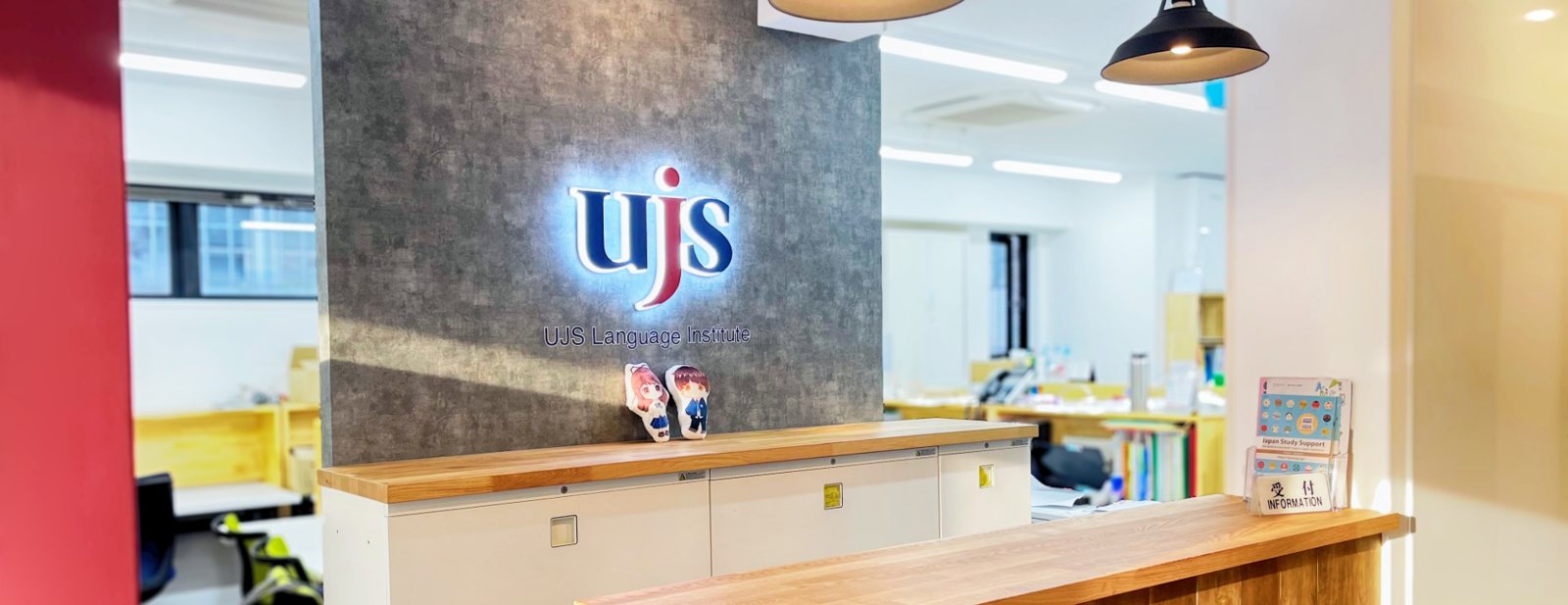
- Lobby and reception counter
- (Main school)
- wi-fi — Available as long as you are not far from the school office.
- Classroom and study room exclusively for the Special Selection Class — You can study from morning until evening.
2025–2026 academic calendar · Older data
- Golden Week closure
- About 10 days starting the 4th week of April
- End-of-term closure
- About 2 weeks starting the 4th week of June
- Summer break
- About 10 days starting the 2nd week of August · In 2026 it was August 8–16 (from the guide for the elementary class for residents)
- End-of-term closure
- About 2 weeks starting the 4th week of September
- Winter break
- About 2 weeks starting the 4th week of December
- Spring break
- About 3 weeks starting the 3rd week of March
School website · 2021-02-03 updated
Access
- Transit
- Tokyo Metro Roppongi-itchome Station on foot 3 minExit the west ticket gate (Exit 1).
Toei Oedo Line, Roppongi Station, 6 min walk Exit 5
Metro, Roppongi Station, 6 min walk Exit 3 - Nearby
- 2 km from Tokyo Station, 3 km from Shibuya Station, 4 km from Shinjuku Station. Also reachable by bus from Shibuya, Shinagawa and Shimbashi stations.
- Dormitory
- Available · Partner student dormitories and share houses. 1–3 person rooms; 3-month contracts are common. · Based on school website
School website · 2023-07-20 updated
Dormitory — Until your housing is settled, the school can introduce weekly or monthly apartments near the school.
School website · 2025-07-22 updated
SALLAE has organized the school website and published data in English.
The update date is the day that material was last revised.
Photos are materials published by the school.
This information is compiled from official sources and is not updated daily. Please confirm with the official contact before signing or applying.