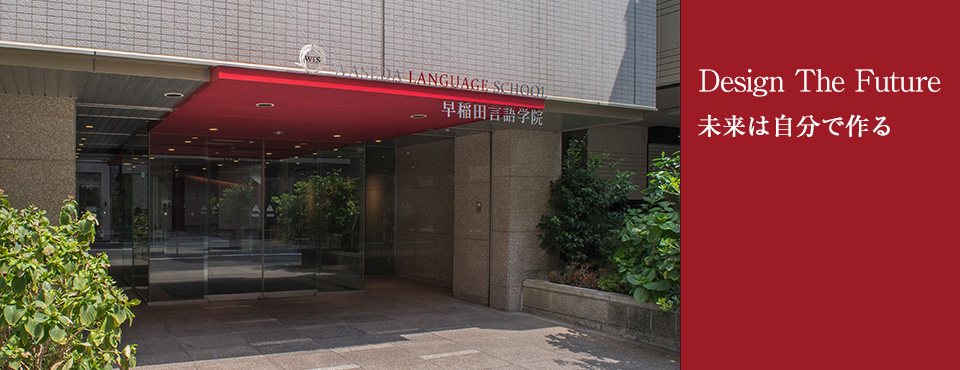
Waseda Language Institute
Waseda Language Institute
- Course
- Further-study course only ›
- Admission
- 4 times a year · choose your intake month ›
- AM & PM classes
- Decided by the school ›
Compare side by side with other schools →
Tuition and conditions may change depending on the intake. If you contact us, we will check with the school and give you accurate details.
Nearby schools comparedBy distance · no ads or paid placement
- Waseda Language InstituteThis schoolTuition/yr¥817,000Progression91%IntakesJan · Apr · Jul · Oct
- Yoshida Japanese Language Institute1km›Tuition/yr¥807,000Progression71%IntakesJan · Apr · Jul · Oct
- Academy of Language Arts1.5km›Tuition/yr—Progression42%IntakesJan · Apr · Jul · Oct
- Waseda EDU Japanese Language School1.6km›Tuition/yr¥759,000Progression—IntakesJan · Apr · Jul · Oct
— means SALLAE has not yet found the data.
About the school
All 4 study-abroad courses (2 years, 1 year 9 months, 1 year 6 months, 1 year 3 months) are progression courses, and the list of successful applicants among 2025 graduates published by the school shows 67 to graduate schools and 174 to universities, making this a progression-focused school — it offers 1:1 corrections of research plans and statements of purpose, mock interviews, and even an affiliated progression cram school (EJU subjects, graduate-school majors) for an extra fee. It is in Waseda-Tsurumakicho, Shinjuku-ku, Tokyo, near Waseda University, 6 minutes on foot from Tokyo Metro Edogawabashi Station and 8 minutes from Waseda Station. Two school-owned dormitories are 3–4 minutes away on foot. Of the 755 students enrolled in 2025, 558 are from China and 195 from Nepal; there are no Korean students in the published materials.
Published data and school website
Tuition
If you saw a lower amount elsewhere, it may not include the admission fee and application fee
Median 1-year tuition in other areas — Kyoto ¥911,000(7 schools) · Kanagawa ¥880,000(8 schools) · Okinawa ¥858,000(6 schools) · Tokyo ¥840,600(56 schools) · Fukuoka ¥835,000(12 schools) · Hyogo ¥825,500(7 schools) · Osaka ¥814,000(27 schools) · Shizuoka ¥790,000(9 schools) · Chiba ¥745,333(10 schools) · Aichi ¥740,667(5 schools)
Total by intake
| Intake · length | Full course |
|---|---|
| 1 year 3 months | ¥998,000 |
| 1 year 6 months | ¥1,179,000 |
| 1 year 9 months | ¥1,361,000 |
| 2 years | ¥1,542,000 |
Cost details · Course tables · Notes
- Per term
- ¥181,333 3 months
- One-time fees
- ¥91,335Application fee · Admission fee
| Duration | Total |
|---|---|
| 1 year 3 months | ¥998,000 |
| 1 year 6 months | ¥1,179,333 |
| 1 year 9 months | ¥1,360,666 |
| 2 years | ¥1,541,999 |
★"Per term" and "One-time at start" were calculated by SALLAE from each course's total. The courses this school actually offers are 1 year 3 months onward — all amounts in the table are values calculated by SALLAE.
Calculated by SALLAE · verified 2026-09-16
Admission & dates
- Apr intake
- 2-year course · Application April admission: recruitment and document preparation Sep–Nov of the previous year, procedures in November.
- Jul intake
- 1 year 9 months course · Application July admission: recruitment and document preparation Jan–Mar, procedures in March.
- Oct intake
- 1 year 6 months course · Application October admission: recruitment and document preparation Apr–Jun, procedures in May.
- Jan intake
- 1 year 3 months course · Application January admission: recruitment and document preparation Jul–Sep, procedures in September. Currently, January admission is only for students at or above a certain Japanese level.
- Japanese level
- JLPT Level 5
Someone who has studied beginner Japanese for 150 hours or more and is certified at JLPT N5, J.TEST Level F or higher, NAT-TEST Level 5 or higher, or GNK semi-intermediate. January enrollment is limited to students with Japanese ability above a certain level.
Deadline and capacity rules
Intake months are January, April, July and October each year. 12 years of school education completed or more (the desirable age is around 20 for high school graduates and around 24 for university graduates). Capacity is limited, so apply early.
School website · 2025-11-06 updated
Classes
- Morning
- 09:00-12:20
- Afternoon
- 13:10-16:30
- AM/PM placement
- You cannot choose — the morning or afternoon class is decided by the results of the placement test
- Class size
- Max 20 students
- Class assignment
- Level-based 3 stages
- Elective classes
- EJU preparation · The N1 class of the free elective classes (EJU, N1, N2 preparation). · The N2 class of the free elective classes (EJU, N1, N2 preparation). · Free electives
Materials · Subjects · Timetable · Details
- Materials
- The school uses its own teaching materials for each level — Beginner uses its own materials and "Minna no Nihongo" (Can-do-style lessons based on the JF Standard for Japanese-Language Education); Intermediate and Advanced use its own materials and "Shin Kanzen Master" grammar · JLPT and EJU prep workbooks · authentic materials such as newspapers, magazines and TV.
- Subject
- Japanese · JLPT preparation · EJU preparation · Writing a statement of purpose · Writing a research plan · How to write short essays · Interview manners and techniques · Presentation practice · The courses are divided into a Japanese language program and a progression guidance program.
Courses: progression to national and public universities, national and public graduate schools, prestigious private universities, mid-ranked universities and vocational schools, plus an intensive Japanese conversation course. Class capacity is 20.
What each level aims for · 3 levels
- Beginner
- Students learn basic Japanese knowledge and vocabulary, accurate pronunciation and grammar, everyday conversation, and reading and writing short texts — target JLPT N3 and N4
- Intermediate
- Students learn to express their ideas accurately in Japanese, pick up Japanese customs and ways of thinking, read and write moderately difficult texts, and work on understanding Japanese culture and adapting to life — target JLPT N2
- Advanced
- Students learn to present opinions logically, read difficult specialist academic texts, and practice listening, speaking, reading and writing with materials such as newspapers to prepare for further study — target JLPT N1
School website · 2025-11-06 updated
Documents to prepare — student visa course
- Application form, résumé and statement of reasonsInstitute-designated form
- Graduation certificate and academic transcript of the final school attended
- Certificate of Japanese study history150 hours or more
- Certificate of enrollment and certificate of employment
- Copy of household registerAll family members
- Notarized certificate of family relationshipKinship between the applicant and the financial sponsor) (address stated
- 8 photos3 cm × 4 cm, no hat, facing front
Sponsor documents · Only if applicable
Submitted by the person paying the tuition (financial sponsor)
- Financial sponsorship statementInstitute-designated form
- Balance certificateAbout ¥3,000,000 in Japanese yen) · (copy of deposit certificate
- Copy of passbookShowing income and expenses for the most recent 3 years
- Certificate of employmentCopy of business license if self-employed
- Annual income certificateIncome for the most recent 3 years, bearing the company's financial seal
- Copy of household registerAll family members
Only if applicable
- Certificate of school admission (if entered primary school at age 5 or under, or at age 8 or over)
The document list is based on Chinese documents (household register · notarized kinship certificate), so what to substitute for each nationality is not published — the school's requirements differ by nationality, so it advises asking first · Short-course documents are also based on applicants from China. SALLAE is confirming this with the school.
For short-term programs, only the short-term study survey form (school-designated format), a copy of both sides of an ID, and the passport (photo page) are submitted.
School website · 2025-11-06 updated
Admission process
- Request an admission consultation — Required qualifications differ by the applicant's nationality. Please contact the school first.
- Fill in the Japan study survey form and undergo document screening. — Fill in the application to enroll (Japan study survey form) and undergo document screening. The result is notified by email or phone.
- Online interview — Take a web interview with a staff member. Selection consists of document screening, an interview with the applicant, an interview with the guarantor and an aptitude test.
- After the acceptance notice is issued, pay the application fee — After the acceptance notice is issued, pay the application fee.
- Application for status of residence (the school applies on your behalf) — The school applies for the Certificate of Eligibility on the applicant's behalf to the Immigration Services Agency.
- Results notice — About 3 months later, the admission guide and other materials are sent together with notice of whether the certificate was issued. The Certificate of Eligibility reaches the school about 1 month before enrollment.
- Tuition payment — Pay tuition and the international student insurance premium. Tuition is deposited into the school's designated account.
- Apply for a student visa — After payment is confirmed, the original Certificate of Eligibility, the admission permit, the educational certificate and other documents are sent, and the applicant applies for a student visa at a Japanese embassy or consulate abroad.
- Preparing to enter Japan — Decide where you will stay, book your flight, and tell the school your arrival flight and time.
- Arrival and start of classes — After arriving in Japan, register your residence and enroll in National Health Insurance at the local government office. Classes are then decided by the placement test at the new-student orientation, and lessons begin.
- Placement test
- A placement test is given at enrollment, and classes are divided by each student's Japanese level.
School website · 2025-11-06 updated
Short-term study
- Duration
- 3 months
- Admission
- RollingNo fixed intake months
- Open now?
- Rolling admissions, so availability varies from time to time — SALLAE will confirm with the school
Course without a student visa
- Short-term 3-month course — Three classes: Introductory Basic (N3 and N4), Intermediate-Advanced (N1 and N2), and preparation for university and graduate school (Chinese-language page).
- Residents of Japan (for permanent residents and family-stay visa holders) — 3-month, 6-month and 1-year courses for residents of Japan (enrollment at any time).
★Short-term courses are not listed in the published data — it counts only student-visa courses.
School website · 2025-11-06 updated
Graduate outcomes
| FY2025 | Admitted |
|---|---|
| Graduate school | 67 students |
| University | 174 students |
| Employment | 20 students |
| Graduates | 431 |
+33 more schools
All schools accepted to so far
+24 more schools
+23 more schools
FY2025 (prepared June 22, 2026): completers 431, meeting the standard 489 (89.4%). Progression 447, change of status of residence 20. · Persons permitted a change of status of residence: 2-year course 8, 1 year 9 months 5, 1 year 6 months 7, 1 year 3 months 0 (FY2025). · School website · Updated 2025-12-03
Reviews
If you study here or used to, tell others what the classes, teachers and daily life were like. It helps anyone deciding on this school.
Write the first reviewUniversity prep
- Homeroom teachers and full-time teachers' progression guidance — Homeroom-teacher system and special progression guidance by full-time teachers.
- One-on-one guidance and interviews — One-on-one guidance and interview time with teachers is built into the regular course.
- Essay and interview guidance — Essay and interview guidance as well. Help writing a statement of purpose, past exam collections, and multiple mock interviews.
- Graduate school progression guidance — For graduate school applicants: JLPT prep, writing a research plan, how to write essays, interview manners and techniques, and presentation practice.
- Soigen Juku — Soigen Juku: undergraduate basic knowledge and graduate-level specialist courses. Extra fees apply.
- Full-day elite class (extra fee) — A class listed in the 2024 guide booklet — a class of 20 for students aiming at prestigious universities such as the University of Tokyo, Waseda University, Hitotsubashi University, Tokyo Institute of Technology and Keio University; students must pass the school's exam · Japanese from 9:30 to 12:50 in the morning, and in the afternoon from 14:00 to 17:00 an EJU humanities or science course or an art course (drawing, color, portfolio).
- On-campus university information session — Progression information sessions for international students and open campus visits.
- Job skills certification course — Corporate training, business Japanese, job aptitude tests, theory of working at Japanese companies, self-analysis, self-promotion and more. Resume guidance, and training in business etiquette and interviews.
- Continued support after completion — The school keeps supporting progression even for students who have not decided on their path after completing the course · Since FY2020, it has sent information to graduates through a mailing list.
School website · 2025-11-06 updated
Daily-life support
- Airport pickup — An airport pickup service is provided for students living in the dormitory. Pickup is available only on dates designated by the school.
- Address registration and National Health Insurance application — The school handles dormitory residents' address registration and National Health Insurance enrollment · With a student ID, insurance premiums are reduced.
- Phone purchase — The school helps students buy mobile phones at student discount prices (2024 guide booklet).
- Part-time work information — Student visa holders can work part-time after obtaining permission to engage in activity other than that permitted by their status of residence. There are restrictions on types of work, explained in detail at the orientation after enrollment.
- Counseling, SOS system, student support — Counseling (study, daily life, progression, etc.) and an SOS system (for when a student faces an emergency).
- Native-language support — Chinese office staff and Japanese teachers teach together, and since FY2024 a Nepali office staff member supports Nepali students in their native language · Office staff serve as assistant homeroom teachers for each class.
- Orientation and legal education — Right after enrollment, the school holds a life orientation and legal compliance education, teaching traffic rules for bicycles and electric kick scooters and how to evacuate in a disaster.
- Insurance — All eligible students enroll in National Health Insurance and international student insurance.
Monthly living costs · School information
| Item | 1 month |
|---|---|
| Rent plus utilities ¥30,000–60,000 | ¥30,000 |
| Food costs (¥20,000–¥30,000) | ¥20,000 |
| Communication costs | ¥5,000 |
| Transportation | ¥10,000 |
| Other expenses ¥15,000–20,000 | ¥15,000 |
| Total | ¥80,000 |
Average monthly living costs are about ¥70,000–120,000. Part-time work is allowed up to 28 hours a week (up to 8 hours a day during long breaks).
School website · 2025-11-06 updated
Scholarship
- School scholarships: perfect attendance award, academic excellence award, special excellence award, Japanese speech contest award
- Perfect attendance award = no lateness, absence or early leaving. Academic excellence award = graduates with good attendance, a serious study attitude and excellent grades. Special excellence award = perfect JLPT score or highest EJU Japanese score (including the written section). Speech contest award = top performers.
- IHNO Scholarship
- Monthly ¥30,000 × 1 year Recruited in March, 5 students, in principle 1 year from April, up to ¥30,000/month (depending on monthly working hours). Attendance rate of 95% or higher, excellent grades, an essay (400–800 characters), and an internal interview.
- LSH Asia Scholarship (specified nonprofit organization)
- ¥100,000 Once Recruited in June (every other year), 1 student, ¥100,000 in total from August to December of the same year. Attendance rate of 95% or higher, an essay (400–800 characters), and an internal interview.
- Japan Student Services Organization (JASSO) MEXT Honors Scholarship for Privately Financed International Students (while enrolled at this school)
- Monthly ¥30,000 × 1 year Recruited in April, 3 students, ¥30,000/month from April to March of the next year. For those who plan to progress to university or similar next year; attendance rate of 95% or higher (calculated in hours); grade coefficient of 2.30 or higher; monthly remittance from home of ¥90,000 or less; internal interview.
- Japan Student Services Organization (JASSO) MEXT Honors Scholarship for Privately Financed International Students, advance reservation (after entering university)
- Monthly ¥48,000 × 1 year Recruited in June and November (additional recruitment in February), a few students, ¥48,000/month from April to March of the next year. Must have decided to enter university (graduate school not eligible); attendance rate of 90% or higher (April to December of the previous year); EJU 300 points or higher (must take subjects other than Japanese); grade coefficient of 2.30 or higher; monthly remittance from home of ¥90,000 or less; internal interview.
- Nitori International Scholarship Foundation (after progression)
- Monthly ¥80,000 × 1 year Recruited from May to October, a few students, ¥80,000/month from April to March of the next year. Students with excellent grades. Entry screening → web test → document screening → interview.
School website · 2025-11-06 updated
Students
Enrolled 755 (2025) · Capacity 736 National median: 180 students
Based on 755 students enrolled in 2025.
Public data from the Association for the Promotion of Japanese Language Education (Nisshinkyo) · verified 2026-09-20
School life
For 1 year
- 4
- First-term start · April enrollment ceremony
- 5
- Progression information session
- 6
- 1st Examination for Japanese University Admission for International Students
- 7
- 1st Japanese-Language Proficiency Test
- 8
- Summer vacation
- 9
- First semester final exam
- 10
- Second-term start · October enrollment ceremony
- 11
- EJU 2nd sitting
- 12
- JLPT 2nd sitting
- 1
- Field trip
- 2
- Japanese culture experience
- 3
- Graduation ceremony
This is the annual schedule from the 2024 guide booklet.
- Speech contest, kimono experience, gyoza party, excursions, Disneyland, a beer factory, a visit to the Toshiba Science Museum, and more
- The guide booklet also lists fireworks · a Mt. Fuji trip · Yokohama Hakkeijima Sea Paradise · kimono, tea ceremony and hot spring experiences · exchange meetings with students of Waseda University and the University of Tokyo.
- Each class goes on extracurricular outings to places chosen in student surveys — in 2025–2026 these were a trip to Hakone · a barbecue at Kasai Rinkai Park · Tokyo Dome City and others (school announcements).
- The school moved to its current Waseda campus in October 2013.
On campus
- Classroom — Every classroom has its own PC and projection equipment.
- Progression materials and student terminals — The school keeps various printed materials on further education and has terminals that students can use freely.
- Self-study space — The school itself assesses that self-study rooms usable outside class hours are still not sufficient.
- Step plate (slope) — A step plate (slope) is installed at the entrance.
2026–2027 academic calendar
- Spring break
- Mar 20–Apr 5, 2026
- Summer vacation
- Jul 25–Aug 16, 2026
- Winter break
- Dec 24, 2026–Jan 4, 2027 · This is the notice of FY2026 long holidays from the school's announcements · Dates may change.
School website · 2025-11-06 updated
Access
⚠ The starting amount of the dormitory fee differs by source. Please confirm with the school. From ¥38,000/month · Dormitory fee: from ¥43,000/month for a double room, from ¥70,000/month for a single room (school apartment page). The amount on the overview page may be an older figure — please confirm with the school.
- Transit
- From Ikebukuro Station, Tokyo Metro Yurakucho Line, Edogawabashi Station, 6 min walk Exit 1b
From Takadanobaba Station, Tokyo Metro Tozai Line, Waseda Station, 8 min walk Exit 1 - Nearby
- 543 Waseda-Tsurumakicho, Shinjuku-ku, Tokyo
- Dormitory
- Available¥40,000–70,000/month · There are 2 school apartment buildings (student dormitories). Dormitory fees are from ¥43,000/month for a double room and from ¥70,000/month for a single room. 3 minutes on foot (Building 1) and 4 minutes (Building 2) from the school. · Based on school website
School website · 2026-02-04 updated
Student dormitory — Contract start dates are the 1st of January, April, July and October, with a minimum 6-month contract. Utilities are ¥12,000/month for a double room and ¥15,000/month for a single room. If you cancel your move-in for personal reasons, the dormitory fee is not refunded.
School website · 2025-11-06 updated
SALLAE has organized the school website and published data in English.
The update date is the day that material was last revised.
Photos are materials published by the school.
This information is compiled from official sources and is not updated daily. Please confirm with the official contact before signing or applying.