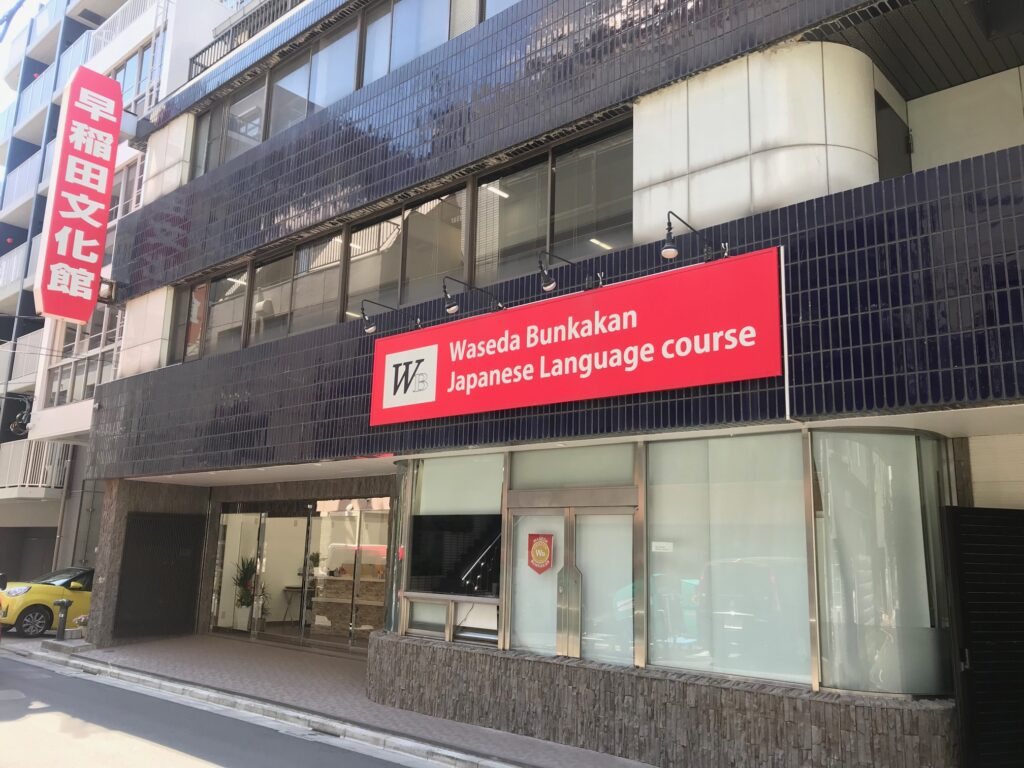
Waseda Bunkakan
Waseda Bunkakan
- AM & PM classes
- Decided by the school ›
- Tuition
- On the pricier side for Tokyo ›
- Admission
- 3 times a year · Apr, Jul, Oct ›
Compare side by side with other schools →
Tuition and conditions may change depending on the intake. If you contact us, we will check with the school and give you accurate details.
Nearby schools comparedBy distance · no ads or paid placement
- Waseda BunkakanThis schoolTuition/yr¥930,000Progression—IntakesApr · Jul · Oct
- Tokyo International Business College0.1km›Tuition/yr¥845,000Progression88%IntakesApr · Oct
- JSL Japan Academy, Tokyo Campus0.5km›Tuition/yr¥830,000Progression—IntakesApr
- Tamagawa International Institute0.5km›Tuition/yr¥841,000Progression90%IntakesJan · Apr · Jul · Oct
— means SALLAE has not yet found the data.
About the school
From April 2027, all 4 courses aim at progression to universities and graduate schools, making this a progression-focused school. Each class has a progression staff member, who gives weekly individual guidance and interview practice for the 2 months before exams. In the FY2025 completion report, 476 students progressed to universities and similar institutions. Founded in 1988 with a capacity of 1,070, it is a large school with 3 buildings in Yanagibashi, Taito-ku, all within a 10-minute walk of Asakusabashi Station (one stop from Akihabara). The published enrollment for 2026 is 721, of whom 675 are from China. The office also has staff who speak Korean.
Published data and school website
Tuition
If you saw a lower amount elsewhere, it may not include the admission fee and application fee
Median 1-year tuition in other areas — Kyoto ¥911,000(7 schools) · Kanagawa ¥880,000(8 schools) · Okinawa ¥858,000(6 schools) · Tokyo ¥840,600(56 schools) · Fukuoka ¥835,000(12 schools) · Hyogo ¥825,500(7 schools) · Osaka ¥814,000(27 schools) · Shizuoka ¥790,000(9 schools) · Chiba ¥745,333(10 schools) · Aichi ¥740,667(5 schools)
Admission & dates
- Apr intake
- 2-year course · Classes 1,520 hr
- Jul intake
- 1 year 9 months course · Classes 1,330 hours
- Oct intake
- 1 year 6 months course · Classes 1,140 instructional hours(1 unit = 45 minutes)
- Apr intake
- 1-year course · Classes: 760 unit hours(1 unit = 45 minutes)
- Japanese level
- 150 hours of Japanese study (self-study not included) / Pass the A1 (N5 equivalent) exam / Pass the B1 (N3 equivalent) exam
Progression 2 years and 1 year 9 months: 150 hours of Japanese study (self-study not included) / Progression 1 year 6 months: pass the A1 (N5 equivalent) exam / Progression 1 year: pass the B1 (N3 equivalent) exam
Deadline and capacity rules
* From April 2027 / All 4 courses are for progression to Japanese universities or graduate schools / The admission guidelines from April 2027 are currently being prepared
School website · 2026-05-26 updated
Classes
- Morning
- 09:00-12:30 Morning 9:00–12:20, afternoon 13:10–16:30 (4 periods of 45 min), 5 days a week (Mon–Fri)
- Afternoon
- 13:00-16:30 Morning 9:00–12:20, afternoon 13:10–16:30 (4 periods of 45 min), 5 days a week (Mon–Fri)
- AM/PM placement
- You cannot freely choose between morning and afternoon classes.
- Class assignment
- Level-based 8 stages
- Elective classes
- Japanese culture in practice · Japanese folk tales · Japanese children's songs and school songs · Tourist sites and history of Japan · Social participation · Listening training · Pronunciation training · Improving everyday conversation · How to write a research plan · Interview preparation · EJU listening training · JLPT listening training · Current affairs · Electives are divided into 4 areas (Japanese culture, social participation, overcoming weaknesses, exam preparation) / Electives are scheduled on Tuesdays of the level-based timetable
Materials · Subjects · Timetable · Details
- Materials
- Uses "Minna no Nihongo Beginner 1" and "Minna no Nihongo Beginner 2"
- Subject
- Comprehensive Japanese · Grammar in use · Language knowledge · Listening · Reading · Dialogue and expression practice · Writing skills · Electives · Comprehensive Japanese (Beginner 1 – Beginner 2) / Grammar in use, reading, dialogue and expression practice (Pre-intermediate – Advanced 2) / Language knowledge, listening, writing skills (Beginner 1 – Advanced 2)
Beginner 1 and 2
| Mon | Tue | Wed | Thu | Fri | |
|---|---|---|---|---|---|
| 09:00-09:45 / 13:00-13:45 | Language knowledge | Language knowledge | Language knowledge | Language knowledge | Listening comprehension |
| 09:55-10:40 / 13:55-14:40 | Comprehensive Japanese | Comprehensive Japanese | Comprehensive Japanese | Comprehensive Japanese | Comprehensive Japanese |
| 10:50-11:35 / 14:50-15:35 | Comprehensive Japanese | Comprehensive Japanese | Comprehensive Japanese | Comprehensive Japanese | Comprehensive Japanese |
| 11:45-12:30 / 15:45-16:30 | Writing skills | Comprehensive Japanese | Listening comprehension | Writing skills | Independent study |
Lower intermediate
| Mon | Tue | Wed | Thu | Fri | |
|---|---|---|---|---|---|
| 09:00-09:45 / 13:00-13:45 | Language knowledge | Language knowledge | Language knowledge | Language knowledge | Conversation and expression practice |
| 09:55-10:40 / 13:55-14:40 | Grammar in use | Listening comprehension | Grammar in use | Listening comprehension | Grammar in use |
| 10:50-11:35 / 14:50-15:35 | Grammar in use | Conversation and expression practice | Grammar in use | Writing skills | Reading comprehension |
| 11:45-12:30 / 15:45-16:30 | Writing skills | Reading comprehension | Reading comprehension | Reading comprehension | Independent study |
Intermediate 1
| Mon | Tue | Wed | Thu | Fri | |
|---|---|---|---|---|---|
| 09:00-09:45 / 13:00-13:45 | Language knowledge | Language knowledge | Language knowledge | Language knowledge | Conversation and expression practice |
| 09:55-10:40 / 13:55-14:40 | Grammar in use | Listening comprehension | Grammar in use | Listening comprehension | Grammar in use |
| 10:50-11:35 / 14:50-15:35 | Grammar in use | Conversation and expression practice | Grammar in use | Writing skills | Reading comprehension |
| 11:45-12:30 / 15:45-16:30 | Writing skills | Reading comprehension | Reading comprehension | Reading comprehension | Independent study |
Intermediate 2 and Upper-intermediate
| Mon | Tue | Wed | Thu | Fri | |
|---|---|---|---|---|---|
| 09:00-09:45 / 13:00-13:45 | Language knowledge | Elective / Conversation and expression practice | Language knowledge | Language knowledge | Conversation and expression practice |
| 09:55-10:40 / 13:55-14:40 | Grammar in use | Elective / Conversation and expression practice | Grammar in use | Reading comprehension | Grammar in use |
| 10:50-11:35 / 14:50-15:35 | Grammar in use | Reading comprehension | Grammar in use | Writing skills | Reading comprehension |
| 11:45-12:30 / 15:45-16:30 | Writing skills | Listening comprehension | Reading comprehension | Listening comprehension | Independent study |
Advanced 1
| Mon | Tue | Wed | Thu | Fri | |
|---|---|---|---|---|---|
| 09:00-09:45 / 13:00-13:45 | Language knowledge | Elective / Conversation and expression practice | Language knowledge | Language knowledge | Conversation and expression practice |
| 09:55-10:40 / 13:55-14:40 | Grammar in use | Elective / Conversation and expression practice | Grammar in use | Reading comprehension | Grammar in use |
| 10:50-11:35 / 14:50-15:35 | Grammar in use | Reading comprehension | Grammar in use | Writing skills | Reading comprehension |
| 11:45-12:30 / 15:45-16:30 | Writing skills | Listening comprehension | Reading comprehension | Listening comprehension | Independent study |
Advanced 2
| Mon | Tue | Wed | Thu | Fri | |
|---|---|---|---|---|---|
| 09:00-09:45 / 13:00-13:45 | Language knowledge | Elective / Listening | Language knowledge | Language knowledge | Reading comprehension |
| 09:55-10:40 / 13:55-14:40 | Grammar in use | Elective / Listening | Grammar in use | Reading comprehension | Conversation and expression practice |
| 10:50-11:35 / 14:50-15:35 | Grammar in use | Grammar in use | Grammar in use | Writing skills | Conversation and expression practice |
| 11:45-12:30 / 15:45-16:30 | Writing skills | Reading comprehension | Reading comprehension | Listening comprehension | Independent study |
*From April 2027 / 8 levels: Beginner 1, Beginner 2, Pre-intermediate, Intermediate 1, Intermediate 2, Upper-intermediate, Advanced 1, Advanced 2 (every 3 months)
School website · 2026-05-26 updated
Documents
- Admission application formSchool-designated form, signed by the applicant — once you decide to apply, you receive the form from the school
- ID photo dataTaken within 3 months, no hat, facing front, no background
- Copy of passportThe photo page and pages with Japanese entry and exit stamps
- Certificate of graduation from the highest level of educationDegree certificate
- Transcript from last school attended
- Proof of Japanese abilityExam results such as JLPT N5 or higher, a certificate of 150 or more hours of study at a Japanese language school, or Japanese-language course grades from high school or university
Financial supporter's documents · only if applicable · 4 application requirements
Submitted by the person paying the tuition (financial sponsor)
- Bank balance certificate¥2 million (US$18,000) or more
- Certificate of employmentIssued by the current employer
- Explanation of how the funds were accumulatedCopy of bank passbook, if applicable
- Copy of official ID (passport or ID card)If applicable
Only if applicable
- Certificate of enrollment and transcript (if currently enrolled)
- Business certificate (if the financial supporter is a business owner)
- Family relationship certificate (if the financial supporter is not a parent)
- Additional documents such as original bank statements for the past 3 years (if age 30 or older)
- Additional documents such as original bank statements for the past 3 years (if 3 or more years have passed since high school graduation)
- Additional documents such as original bank statements for the past 3 years (if 5 or more years have passed since university graduation)
- Additional documents (contact the school; if the applicant pays tuition personally)
- Additional documents (contact the school; if the applicant stayed in Japan on a student visa)
Application requirements
Self-study is not counted toward the 150 hours of Japanese study. The Japanese school's study certificate must state the period, attendance, class content, course name, target level and materials. Besides the JLPT, the following are also accepted: BJT 300 points, J.TEST Level F (250 points), NAT-TEST Level 5, STBJ 350 points, TOPJ Beginner A, J-cert Pre-intermediate, JLCT JCT1–5, PJC Bridge C- or higher, and JPT 315 points or higher. The employment certificate must state the company name, issue date, issuer's title, signature and seal, the company's address, phone and fax, monthly and annual income, and the financial supporter's title and length of service.
Required documents differ by country of origin / Documents required for application differ by nationality and visa type / The application guidelines from April 2027 are currently being prepared. SALLAE is confirming this with the school.
School website · 2021-09-03 updated
Admission process
- Request an admission consultation — Inquiries accepted through the contact form or contact details / Inquiries in Japanese, English, Chinese, Korean and Vietnamese / Required documents differ by country of origin
- 6 months before enrollment: prepare application documents — Please check the application guidelines / Documents required for application differ by nationality and visa type / Application forms: one for kanji-using countries and one for non-kanji countries
- Application
- Document screening
- Japanese conversation test and interview in the native language — Japanese conversation test and interview in the native language
- Notification of selection results — Successful applicants send their documents by post
- 5 months before enrollment: prepare visa application documents and apply to the Immigration Bureau
- 2 months before enrollment: Certificate of Eligibility issued
- 1 month before enrollment: pay the admission fee and half a year of tuition — Those issued a Certificate of Eligibility pay the full admission fee and half a year of tuition and other fees by the due date.
- Visa application — The Japanese embassy or consulate in the applicant's country
- Arrival in Japan · entrance ceremony
- Placement test
- A Japanese-language proficiency test (level test) is given to place students into classes more accurately (self-evaluation).
School website · 2026-05-24 updated
Short-term study
- Visa
- Temporary visitor(not a student visa)
- Duration
- Up to 3 months
- Open now?
- Rolling admissions, so availability varies from time to time — SALLAE will confirm with the school
Course without a student visa
- Short-term course — General courses: Japanese culture course, business course and short-term course / Study period 3 months to 1 year (Japanese culture course)
- Summer course and winter course — If you want to join events and fully enjoy Japan, choose the summer or winter course / Please request materials
★Short-term courses are not listed in the published data — it counts only student-visa courses.
School website · 2021-11-22 updated
Progression
| FY2025 | Admitted |
|---|---|
| Graduates | 439 students |
All schools accepted to so far
+8 more schools
Prepared June 22, 2026: completers 439 / meeting the standard: a. 476, b. 0, c. 81 / share meeting the standard 97.5% · School website · Updated 2026-06-22
Reviews
If you study here or used to, tell others what the classes, teachers and daily life were like. It helps anyone deciding on this school.
Write the first reviewUniversity prep
- School's own progression notebook — From enrollment, students set their progression goals through independent study and think with their homeroom teacher about what they need now / Uses the school's own progression notebook
- One progression staff member is assigned to each class — One progression staff member is assigned to each class. For exam takers, individual career guidance and interview practice of about 30 minutes once a week for 2 months.
- Guidance on writing statements of purpose and research plans — Homeroom teachers and progression staff check together the application documents, which differ by school / Guidance on writing statements of purpose and research plans
- Well-equipped facilities such as progression materials and interview rooms — The campus keeps materials and application forms for universities and graduate schools, which can be viewed at any time / Rooms for interview practice and progression consultation can be used at any time / The latest progression information is announced in class
- On-campus further-study briefing — A school-hosted progression information session is held around June each year. Teachers from well-known universities such as Waseda University, Aoyama Gakuin University and Meiji University visit the school, and there are trial classes
- Attending outside progression briefings — In June 2025, as part of class, intermediate-level and higher students attended a progression information session for international students held in Shibuya (226 institutions).
- Career guidance for beginner-level students is given individually by career guidance staff (self-evaluation) — Career guidance for beginner-level students is given individually by career guidance staff (self-evaluation)
School website · 2026-07-14 updated
Daily-life support
- Multilingual consultation — Inquiries in Japanese, English, Chinese, Korean and Vietnamese
- Airport pickup — Welcoming the new July-intake students (Welcome to Japan!)
- Number of life guidance staff — Number of life-guidance staff, full-time and concurrent (Inspection Report No. 45)
- Health checkup — A health checkup is held as early as possible after enrollment, and then every year
- National Health Insurance — All eligible students are enrolled in National Health Insurance
- Activity outside status of residence — The school keeps track of each student's period of stay and whether they have permission for activity outside their status of residence, and gives appropriate advice and guidance / Students are asked to report the name of their part-time workplace
- Advice on rules for living in Japan — The school ensures all students know about the "blue ticket system for bicycle traffic violations" that starts next fiscal year / Students are informed of Japanese laws on certificate issuance and everyday manners
School website · 2026-08-03 updated
Scholarship
- School scholarship students (full tuition waiver, half tuition waiver)
- School scholarship students were chosen from the FY2026 October intake: 1 with a full tuition waiver and 1 with a half tuition waiver
- Principal's award
- ¥20,000 Once The top scorers on the EJU, JLPT and J.TEST receive the Principal's Award and a scholarship (September 2025: scholarship of ¥20,000)
School website · 2026-09-11 updated
Students
Enrolled 721 (2026) · Capacity 1,070 National median: 180 students
Based on 721 students enrolled in 2026.
Public data from the Association for the Promotion of Japanese Language Education (Nisshinkyo) · verified 2026-09-20
School life
For 1 year
- 4
- Entrance ceremony for April intake new students
- 5
- Field trip
- 6
- EJU 1st sitting
- 7
- July enrollment ceremony · JLPT 1st sitting
- 8
- Summer vacation · Summer course
- 10
- October-intake entrance ceremony
- 11
- EJU 2nd sitting
- 12
- School festival · JLPT 2nd sitting
- 3
- Graduation ceremony
On-campus progression information session: July 23, 2026 / July 23, 2025
- Scenes from the "Taito Clean-Up Day" held on the 10th of every month (February–March, Reiwa 8)
- Certified for "excellent self-defense firefighting skills" at the self-defense firefighting competition (November 2025)
- 2024: visits to Ashikaga Flower Park and Nikko Edomura, split into 3 days: May 16, 23 and 30
- Summer vacation works contest, Principal's Award; school festival (December 2025)
- The graduation ceremony was held on March 19, 2026 at Hilton Tokyo Bay this year.
On campus
- Building A
- 2-18-9 Yanagibashi — Building A has a large hall on the 2nd floor. You can wait for friends or eat lunch there. There are also a microwave and vending machines.
- Building B
- 2-21-2 Yanagibashi, Obata Building, 2nd and 4th floors — Across from Building A
- Building C
- 1-3-10 Yanagibashi, Toya Building, 2nd, 3rd and 4th floors — Building C has a progression guidance room. It has materials on further study and an interview room, where students can receive progression guidance suited to them.
- On campus
- Self-study room — Because more students use the self-study room before the EJU and JLPT, the school is considering adding more self-study rooms during those periods.
2026–2027 academic calendar
- Saturdays and Sundays
- Weekly · Full-day classes (Mon–Fri)
- Jun 19–Jul 5, 2026
- 2026-06-19~2026-07-05
- Summer vacation
- 2026-08-07~2026-08-16
- Sep 19–Oct 4, 2026
- 2026-09-19~2026-10-04
- Winter break
- 2026-12-17~2027-01-03
- Spring break
- 2027-03-19~2027-04-04 · * Planned
School website · 2026-05-23 updated
Access
⚠ The student dormitory varies by source — please confirm with the school. School website's Chinese-language guide (2026-07-22): the school has no dormitory and supports room searches · School website: school-run men's and women's dormitories and reliable partner dormitories · Public materials of the Association for the Promotion of Japanese Language Education: yes, ¥50,000–70,000 (monthly). Please confirm with the school whether it still operates dormitories
- Transit
- JR Sobu Line, Asakusabashi Station, 6 min walkEast exit
Toei Asakusa Line Asakusabashi Station, 4 min walk Exit A6 - Nearby
- Building C is 3 minutes on foot from the east exit of Asakusabashi Station on the JR Sobu Line and 2 minutes from Exit A1 of the Toei Asakusa Line (8 minutes on foot from Building A) / Building B is across from Building A
- Dormitory
- Available¥50,000–70,000/month · The school has no dormitory but introduces furnished rooms near the school that accept international students · Based on the school website
School website · 2026-07-09 updated
Student dormitory — In addition to the school-run men's and women's dormitories, there are several partner dormitories, about 10 to 20 minutes on foot or 5 to 15 minutes by bicycle from the school.
School website · 2026-07-22 updated
SALLAE has organized the school website and published data in English.
The update date is the day that material was last revised.
Photos are materials published by the school.
This information is compiled from official sources and is not updated daily. Please confirm with the official contact before signing or applying.