ZERO Japanese Language School
ZERO Japanese Language School
Compare side by side with other schools →
Tuition and conditions may change depending on the intake. If you contact us, we will check with the school and give you accurate details.
Nearby schools comparedBy distance · no ads or paid placement
- ZERO Japanese Language SchoolThis schoolTuition/yr—Progression—IntakesApr
- WBP Academy Japanese Language School0.9km›Tuition/yr¥789,000Progression—IntakesApr · Oct
- Kobe Japanese Language Institute2.3km›Tuition/yr¥811,000Progression—IntakesApr · Jul · Oct
- Asian International Center3.1km›Tuition/yr¥865,000Progression84%IntakesJan · Apr · Jul · Oct
— means SALLAE has not yet found the data.
About the school
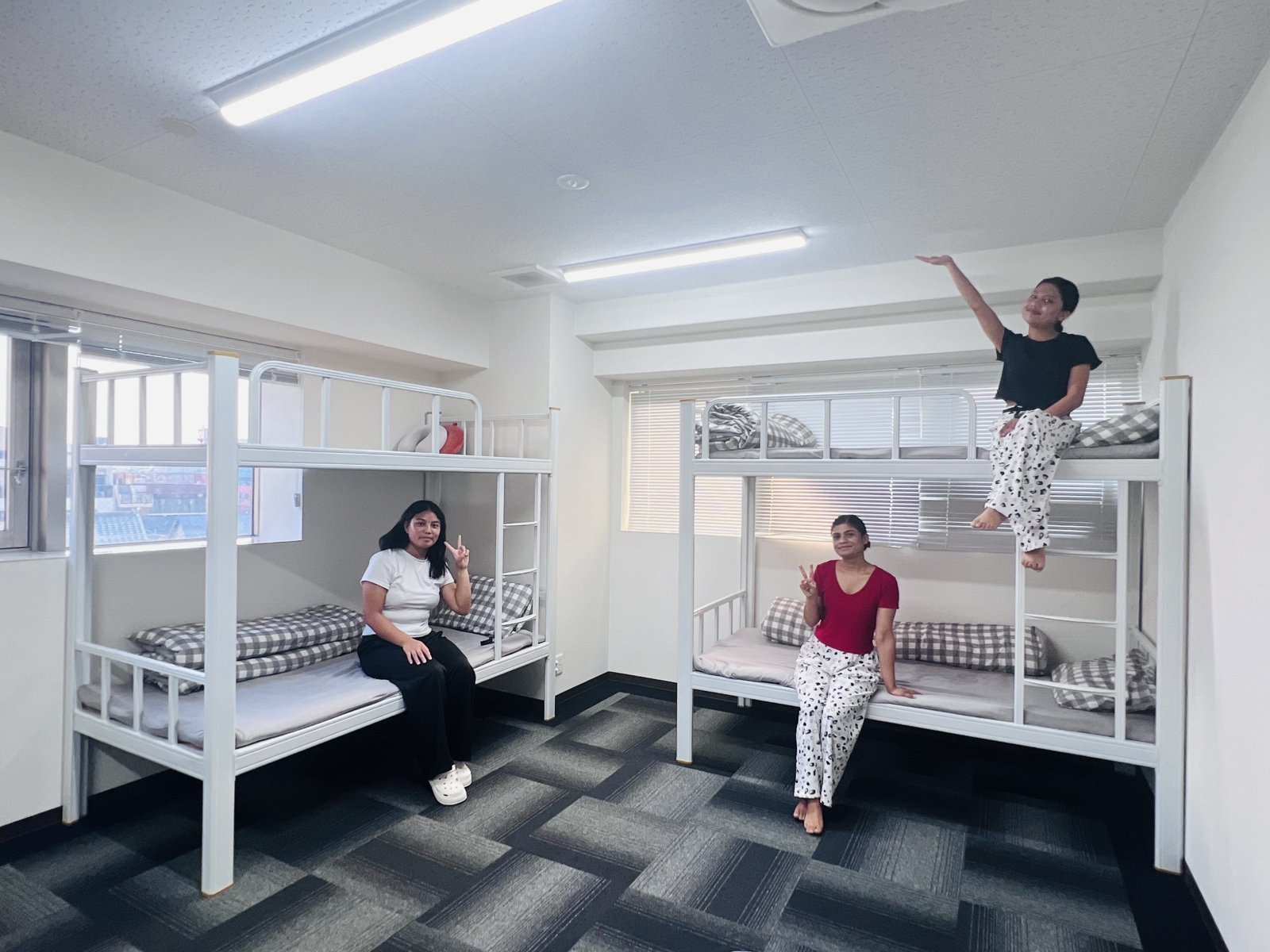
A Japanese language school with a capacity of 100 in Amagasaki, Hyogo, a 10-minute walk from Amagasaki Station. It offers only a 2-year course with April entry, divided into two courses by level at entry, with JLPT N2 as the completion goal. Most of the 41 enrolled students (2025) are from Nepal, and there is a prayer room. Dormitories with rooms for 2–4 people cost up to ¥33,000 a month, and the school also provides airport pick-up and guidance on part-time work.
Published data and school website
Tuition
If you saw a lower amount elsewhere, it may not include the admission fee and application fee
Total by intake
| Intake · length | Full course |
|---|---|
| April intake · 2 years | ¥1,544,000 |
Cost details, tables by course and notes · 2 items
- One-time fees
- ¥827,000Tuition ¥600,000 · Entrance examination fee ¥20,000 · Admission fee ¥50,000 · Facility fee ¥20,000 · Equipment fee ¥40,000 · Materials ¥40,000 · Extracurricular activities ¥10,000 · Insurance ¥20,000 · Health management ¥10,000 · Other ¥17,000
According to the school guide, fees are paid in one lump sum at enrollment. SALLAE will check with the school whether you can pay in installments.
| Intake · course | Extra 2nd-year costs | All |
|---|---|---|
| April · 2 years | ¥717,000 | ¥1,544,000 |
Extra cost paid in the 2nd year — the application fee and admission fee are not charged again. In the second year, the application fee, admission fee and insurance are shown as "-". You pay tuition, facility fees, equipment fees, materials (¥22,000), extracurricular activity fees, health management fees, qualification exam fees and community exchange fees.
School rules, Appendix 6: Year 1 ¥827,000, Year 2 ¥717,000 (consumption tax charged separately). Application guidelines (tax included): first year ¥909,700, second year ¥788,700.
If you decline admission after obtaining the COE, ¥770,000 must be paid regardless of the reason.
Calculated by SALLAE · Confirmed 2026-09-21
Admission & dates
- Apr intake
- 2-year course · Application Aug 2026 – Sep 30, 2026 · Classes 1,720 hr
Deadline and capacity rules
Capacity: 114 students (maximum). Applications close as soon as capacity is reached.
School website · Confirmed 2026-09-21
Classes
- Morning
- 09:00-12:20
- Afternoon
- 13:20-16:40
- Class size
- Max 20 students
Materials · Subjects · Timetable · Details
- Materials
- Uses materials created by ZERO Japanese Language School. The materials are developed with not only the JLPT but also entrance exams for vocational schools, junior colleges and universities in mind.
- Subject
- Comprehensive Japanese · Reading · Japanese Life and Culture · Expression · Progression · Notebook
Class hours by subject
| Subject | 2 years |
|---|---|
| (A1) Beginner: Comprehensive Japanese | 330 hr |
| (A1) Beginner: Reading | 110 hours |
| (A1) Intermediate: Comprehensive Japanese | 256 hr |
| (A1) Intermediate: Life and Culture in Japan | 64 hr |
| (A1) Intermediate: Expression | 256 hr |
| (A1) Intermediate: Further Study | 64 hr |
| (A1) Upper intermediate: Comprehensive Japanese | 256 hr |
| (A1) Upper intermediate: Life and Culture in Japan | 176 hr |
| (A1) Upper intermediate: Expression | 80 hours |
| (A1) Upper intermediate: Further Study | 64 hr |
| (A1) Upper intermediate: Notes | 64 hr |
| (A2) Pre-intermediate: Comprehensive Japanese | 165 hr |
| (A2) Pre-intermediate: Reading | 55 hr |
| (A2) Intermediate: Comprehensive Japanese | 256 hr |
| (A2) Intermediate: Life and Culture in Japan | 128 hr |
| (A2) Intermediate: Expression | 192 hr |
| (A2) Intermediate: Further Study | 64 hr |
| (A2) Upper intermediate: Comprehensive Japanese | 264 hr |
| (A2) Upper intermediate: Life and Culture in Japan | 132 hr |
| (A2) Upper intermediate: Expression | 132 hr |
| (A2) Upper intermediate: Further Study | 66 hr |
| (A2) Upper intermediate: Notes | 66 hr |
| (A2) Advanced: Comprehensive Japanese | 92 hr |
| (A2) Advanced: Life and Culture in Japan | 28 hr |
| (A2) Advanced: Expression | 40 hr |
| (A2) Advanced: Further Study | 20 hours |
| (A2) Advanced: Notes | 20 hours |
The goal at completion of both courses is level B2 (equivalent to JLPT N2). The A1 course starts from the beginner level, and the A2 course from the pre-intermediate level.
What each level aims for · 3 levels
- Beginner to lower intermediate
- Can understand sentences and expressions about very basic personal and family information, shopping, the neighborhood, work and other areas of direct relevance, and can exchange information on familiar everyday matters.
- Intermediate
- Can understand the main points of familiar topics encountered at work, school and leisure, and can produce connected text.
- Upper intermediate to advanced
- Can understand the main content of complex texts, including discussions in a field of specialization, and can interact fluently and naturally with proficient Japanese speakers.
School website · Confirmed 2026-09-21
Documents
- Academic transcript from the highest level of education
- Certificate of graduation
- Applicant information filled in in Japanese
- Admission application form
- Résumé
- Statement of reason for study
- ID of the applicantPassport, etc.
Sponsor documents · 3 application requirements
Submitted by the person paying the tuition (financial sponsor)
- Financial sponsorship statement
- Sponsor's bank deposit balance certificate
- Tax payment certificate
Application requirements
A second interview may be held if needed to assess Japanese ability. Deadline for submitting originals: October 8, 2026 The school checks the supporting documents submitted and confirms in the interview that there are no discrepancies with them.
The standard for Korean students is not published. SALLAE is confirming this with the school.
School website · Confirmed 2026-09-21
Admission process
- Request an admission consultation — Free consultation by email or Facebook
- Apply and submit documents — Prepare and submit the required documents
- Document screening and interview — Based on the document screening result, the school contacts you and holds an interview via Teams. A second interview may be held if needed.
- Obtain the COE — Screening by the school and Immigration. Certificate of Eligibility (about 2–3 months)
- Tuition payment — After the COE is obtained, pay the first-year tuition through Flywire
- Visa application and arrival preparation — After obtaining the visa, travel to Japan and start studying at ZERO Japanese Language School.
- Placement test
- A written placement test is given and classes are formed from the scores. The interview is held via Teams.
School website · Confirmed 2026-09-21
Reviews
If you study here or used to, tell others what the classes, teachers and daily life were like. It helps anyone deciding on this school.
Write the first reviewUniversity prep
- Individual career guidance — A career interview, one-on-one with the homeroom teacher, once every six months
- Application and exam preparation — Correction of statements of purpose, interview practice and short-essay coaching
- Path to further study — Support with setting goals, choosing schools, preparing applications, exam preparation, procedures after acceptance and preparing for further study
- Whether up-to-date materials on further study, employment and other paths are kept available for students to read — Information about career paths is available in the library on paper and through Google Chat in electronic form.
School website · Confirmed 2026-09-21
Daily-life support
- Pick-up at the airport on arrival in Japan — Pick-up at the airport on arrival in Japan, dormitory preparation, resident registration and bank account opening
- Orientation on study and daily life — Rules and manners for life in Japan are explained carefully. Orientation is held right after enrollment and afterward in homeroom (HR).
- Support with procedures needed for daily life — Staff help with resident and address registration, mobile phone contracts and opening a bank account.
- Disaster drills and emergency response system — Explanation of how to respond to earthquakes and typhoons, guidance on evacuation sites, and an emergency contact system. Evacuation drills are held regularly.
- Health support — Health and mental well-being are monitored through an annual health checkup in April and interviews with homeroom teachers. Students enroll in National Health Insurance and international student insurance
- Part-time work guidance — Records students' work situations, and sets up guidance and support measures for students who may be violating the Immigration Control Act, labor standards laws or similar laws.
- Support with status of residence — Support with Certificate of Eligibility applications, visa applications, visa renewals, part-time work permission, address changes and other procedures
- Housing — Staff check your preferred area, rent and room type, and suggest housing that fits your conditions. You can also consult about finding housing before you come to Japan.
School website · Confirmed 2026-09-21
Scholarship
- Japanese ability scholarship
- ¥20,000 OnceFor students from Vietnam and Nepal: a scholarship is paid to students who have obtained JLPT N4 or higher before enrollment.
- Top award
- ¥50,000 OnceScreened comprehensively on academic results, Japanese ability and the school's entrance exam results (Top award ¥50,000, 1 student)
- Excellence award
- ¥30,000 OnceScreened comprehensively on academic results, Japanese ability and the school's entrance exam results (Excellence award ¥30,000, 1–3 students)
- Effort award
- ¥10,000 OnceScreened comprehensively on academic results, Japanese ability and the school's entrance exam results (Effort award ¥10,000, 1–5 students)
School website · Confirmed 2026-09-21
Students
41 students enrolled (2025) · Capacity 100 National median: 180 students
Based on the 41 students enrolled in 2025.
Published by MEXT · Confirmed 2026-09-20
School life
On campus
- Classroom
- Small classes — Small classes of up to 20 students each
- Shared space
- Student hall, prayer room, library, PC space, sink — Used for resting, praying, studying, writing resumes, searching for further-study and job information, and simple cooking and washing dishes
- On campus
- Infirmary — A space where you can rest for a while when you feel unwell or are injured; first aid is also given as needed
2026–2027 academic calendar
- Summer vacation
- 2026-08-08~2026-08-30 · Fiscal 2026
- Winter break
- 2026-12-26~2027-01-11 · Fiscal 2026
- Spring break
- 2027-03-20~2027-04-04 · [Planned]
School website · Confirmed 2026-09-21
Access
- Transit
- Hanshin Railway, Amagasaki Station 10 min on foot
JR Amagasaki Station 10 min on foot South Exit
Hanshin Railway, Dehaya-shiki Station 10 min on foot - Nearby
- From the south exit of JR Amagasaki Station, take a city bus or Hanshin Bus and get off at "Nishi-Nanba" or "Nanba Shogakko-mae." It is about a 3-minute walk from the bus stop.
- Dormitory
- Available · 2-, 3- and 4-person rooms. Rent (up to 6 months) up to ¥198,000 · Based on the school website
School website · Confirmed 2026-09-21
Dormitory — Move-in fee ¥110,000. At move-in, a cleaning fee of ¥11,000 and fire insurance of ¥5,500 are charged separately. Water, electricity, gas and common-area fees are separate. The school decides room assignments and roommates.
School website · Confirmed 2026-09-21
Japanese language institution certified by MEXT Certification no. 20241280016 · Certified Oct 30, 2024 →
SALLAE has organized the school website and published data in English.
The update date is the day that material was last revised.
Photos are materials published by the school.
This information is compiled from official sources and is not updated daily. Please confirm with the official contact before signing or applying.